Email: [email protected] Whatsapp: +8618266768780

Email: [email protected] Whatsapp: +8618266768780


You see rapid changes shaping the 2026 Trends in Compact and Utility Farm Tractors. Farmers now benefit from IoT, AI, and automation, which boost efficiency and productivity.
IoT and AI help you manage over half of major crop acreage with digital assistance, making your operation more competitive and sustainable.
You see the 2026 Trends in Compact and Utility Farm Tractors reshaping how you approach daily operations. These trends focus on smarter, more connected, and sustainable machines that help you work efficiently and make better decisions.
You can now equip your Kompakttraktor with smart sensors that monitor everything from soil moisture to engine health. These sensors collect data in real time, giving you instant feedback on field conditions and machine performance. For example, you might use a sensor to track soil compaction, which helps you adjust your tillage practices and protect your land. Many farmers use these tools to reduce input waste and improve yields.
Tip: Start with basic sensors for soil and fuel monitoring, then expand as you see results.
With connected operations, your tractor communicates with other equipment and your mobile devices. This connectivity allows you to coordinate tasks across your farm, even when you are not in the field. You can receive alerts about maintenance needs or track your tractor’s location and usage. Many farmers use cloud-based platforms to store and analyze this data, making it easier to plan and manage operations. For more information on connected farming, you can visit AgFunderNews oder folgen #SmartFarming auf Twitter.
Here is a table showing how these trends have evolved:
| Trend | Beschreibung |
|---|---|
| Compact Tractors Driving Growth | Under-40 HP tractors support mechanization in small and fragmented farms, enhancing market trends. |
| Smart Farming Adoption | IoT-enabled tractors provide real-time monitoring and predictive maintenance, driving market growth. |
| Electric Tractors Rising | Electric models reduce fuel costs and emissions, promoting sustainable agriculture. |
| Autonomous Tractors Expansion | Driverless tractors address labor shortages and enable continuous field operations. |
| Precision Farming Integration | GPS-guided and AI-powered tractors optimize resource use, improving productivity and crop yields. |
Artificial intelligence now plays a major role in the 2026 Trends in Compact and Utility Farm Tractors. You can use AI-powered platforms to analyze soil data, weather patterns, and crop health. These insights help you make quick decisions, such as when to irrigate or fertilize. For example, AI soil analysis can show you which parts of your field need less traffic, reducing soil compaction and improving long-term productivity. Many farmers report higher yields and lower costs after adopting these tools.
You can learn more about AI in agriculture by visiting PrecisionAg Alliance or joining discussions on LinkedIn Agriculture.
Predictive maintenance uses AI and data analytics to forecast when your tractor needs service. Instead of waiting for a breakdown, you receive alerts before problems occur. This approach reduces downtime and repair costs. For instance, if your tractor’s engine temperature trends higher than normal, the system notifies you to check it before it fails. Many farmers see a 15-20% reduction in fuel use and up to 30% improvement in operational efficiency with these smart systems.
Here is a table that shows how AI-driven data analytics improves your productivity:
| Beweisart | Beschreibung | Auswirkungen |
|---|---|---|
| AI-Powered Robots | AI-driven agricultural robots perform tasks like seeding and harvesting autonomously. | Increases efficiency and reduces labor costs. |
| Autonome Traktoren | GPS-guided tractors operate with high precision, reducing overlap in field operations. | Fuel savings of 15-20% and operational efficiency improvements of up to 30%. |
| Smart Farming Integration | Compact tractors connect with farm management software for real-time data analysis. | Enhances decision-making and productivity through data-driven insights. |
Note: You can start with basic AI features, such as automated alerts, and expand to more advanced analytics as you become comfortable.
You can follow the latest updates on predictive maintenance and AI in farming by checking Fortschritte auf dem Bauernhof or engaging with the #AgTech community on social media.
The 2026 Trends in Compact and Utility Farm Tractors show that technology is not just for large-scale operations. You can adopt these innovations step by step, starting with sensors and basic AI tools, and see real benefits in your daily work.
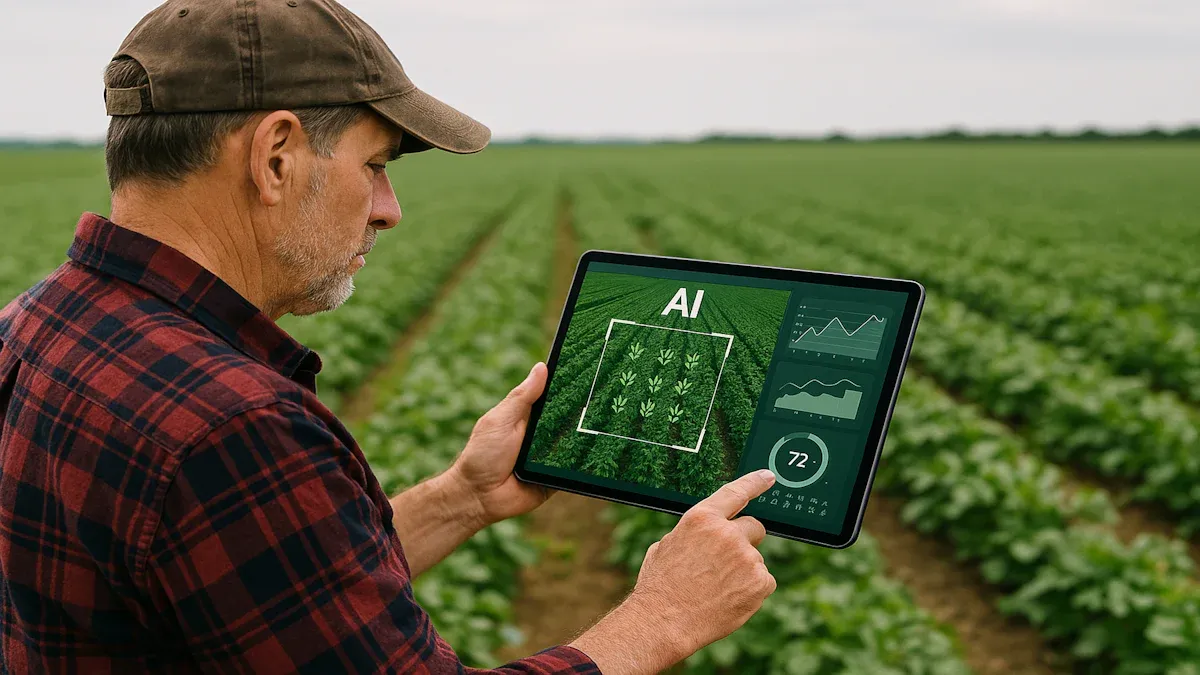
Precision agriculture continues to transform how you manage your fields. The 2026 Trends in Compact and Utility Farm Tractors highlight the importance of GPS guidance and variable rate technology for boosting efficiency and sustainability.
You can use GPS guidance systems to create detailed field maps. These maps show soil types, elevation changes, and past yield data. With this information, you plan planting and input application more accurately. For example, a small vegetable farm in Iowa used GPS field mapping to identify low-yield zones. By adjusting fertilizer rates in those areas, the farm increased overall yields by 12% and reduced input waste.
| Improvement Type | Percentage Increase/Reduction |
|---|---|
| Farm Yields | Up to 20% |
| Input Waste | Up to 15% |
| Benzinpreis | Up to 15% |
| Crop Yields (Precision Tech) | 4% |
You can learn more about field mapping and its benefits by following PrecisionAg Alliance on LinkedIn.
Automated steering systems use GPS and advanced sensors to guide your tractor along precise paths. You reduce overlap and avoid missed spots, which saves time and fuel. Many farmers report that automated steering lowers fatigue during long workdays. In a recent case, a family-owned grain farm adopted automated steering and saw a 9% reduction in herbicide use and a 6% drop in fossil fuel consumption. These improvements support sustainable agriculture and help you meet environmental goals.
For more insights, you can join discussions on #SmartFarming on Twitter.
Variable rate technology (VRT) lets you adjust seeding rates based on soil quality and field conditions. Smart seed drills and IoT sensors control seeding depth and spacing in real time. You achieve uniform germination and maximize crop yields. For instance, a small-scale corn grower used VRT to plant at different rates across the field, which reduced seed waste and increased profits. Remote monitoring lets you track planting operations from your phone or computer.
Yield monitoring systems collect data as you harvest. These systems create spatial maps of grain yield, which help you manage resources more efficiently. You can see which parts of your field perform best and adjust your practices for the next season. Many farmers use yield maps to create prescription plans for fertilizer and seed application. This approach helps you manage risk and optimize the use of fertilizers, seeds, and herbicides.
You can stay updated on the latest in variable rate technology by visiting AgFunderNews or following #AgTech on Twitter.
The 2026 Trends in Compact and Utility Farm Tractors show that precision agriculture tools are now accessible for farms of all sizes. You can start with basic GPS mapping or yield monitoring and expand as you see results.
You can now operate Kompakttraktoren without sitting in the driver’s seat. Autonomous operation uses a combination of cameras, lidar, radar, and GPS systems to guide your tractor through the field. These technologies work together to capture real-time images, measure distances, and track objects, even in low visibility. Artificial intelligence processes this data to make decisions, while telematics lets you monitor and control your tractor remotely.
Recent field trials show that autonomous compact tractors can operate continuously for up to two hours without performance loss. They maintain speeds between 0.71 and 0.77 meters per second and demonstrate strong navigation accuracy, especially in vineyards. These machines tow implements for tasks like weeding and tilling, achieving up to 40% weed removal in a single pass. The average energy consumption remains low, around 1.43 kWh per hour.
| Feature/Capability | Beschreibung |
|---|---|
| Betrieb | Fully autonomous, no human control needed |
| Technologie | GPS, AI, cameras, sensors |
| Vorteile | Higher productivity, lower labor costs, longer work hours |
| Leistung | Reliable navigation, effective implement towing, energy efficient |
Note: Autonomous tractors enable you to extend working hours and address labor shortages, especially during peak seasons.
Safety remains a top priority with autonomous operation. Your tractor uses radar and lidar to detect moving and stationary objects, ensuring it stops or reroutes when obstacles appear. Cameras provide a 360-degree view, and AI interprets this data to prevent accidents. Remote monitoring through telematics allows you to intervene if necessary. These safety systems undergo systematic testing under various conditions to ensure reliability.
Robotic implements now handle repetitive and labor-intensive tasks. You can automate tillage, seeding, and harvesting, reducing your reliance on manual labor. Drones and robotic harvesters also support real-time crop monitoring and targeted interventions. These tools increase precision and accuracy, helping you analyze data and make better decisions.
| Type of Implement | Beschreibung |
|---|---|
| Autonome Traktoren | Driverless machines for tillage, seeding, harvest |
| Drones | Aerial crop monitoring and targeted spraying |
| Robotic Harvesters | Automated fruit and vegetable picking |
You can now use robotic systems to perform multiple tasks without human intervention. Autonomous tractors enable 24/7 field operations, which increases overall efficiency. Automation allows for consistent performance, especially during busy seasons. The integration of robotic systems can reduce labor costs by up to 40%, making your operation more competitive.
Tip: Start with automated implements for simple tasks, then expand to multi-tasking robots as you see results.
You can follow the latest trends in automation and robotics by joining discussions on #AgTech und LinkedIn Agriculture.
Siehst du electric compact tractors gaining momentum in 2026. These machines use advanced lithium-ion batteries that deliver longer run times and faster charging. Many farmers in Europe have already adopted electric tractors, with the market holding a 48.1% share and valued at $0.28 billion. The market is expected to grow rapidly, reaching $6.7 billion by 2035. You benefit from several factors driving this adoption:
You can operate electric tractors for $2.50 to $3.75 per hour, compared to $7.50 per hour for diesel models. If you use your tractor for 500 hours a year, you could save up to $2,500 annually. You also help the environment, as electric tractors can cut greenhouse gas emissions by up to 84% compared to diesel.
You need reliable charging solutions to keep your electric tractor running. Many farms now install dedicated charging stations in their equipment sheds. Fast-charging options allow you to recharge batteries during lunch breaks or overnight. Some rural communities invest in shared charging infrastructure, making it easier for small farms to transition to electric power. You can follow updates on electric tractor infrastructure through AgFunderNews und #AgTech.
Tip: Plan your charging schedule around fieldwork to maximize uptime and efficiency.
You may want to explore hybrid and biofuel tractors if you need flexibility. Hybrid models combine electric and diesel power, which helps you operate longer without frequent charging. Biofuel tractors use blends of plant-based oils and diesel. These blends can include palm oil, linseed oil, and diesel in various ratios. You can switch between fuels based on availability and cost, making your operation more adaptable.
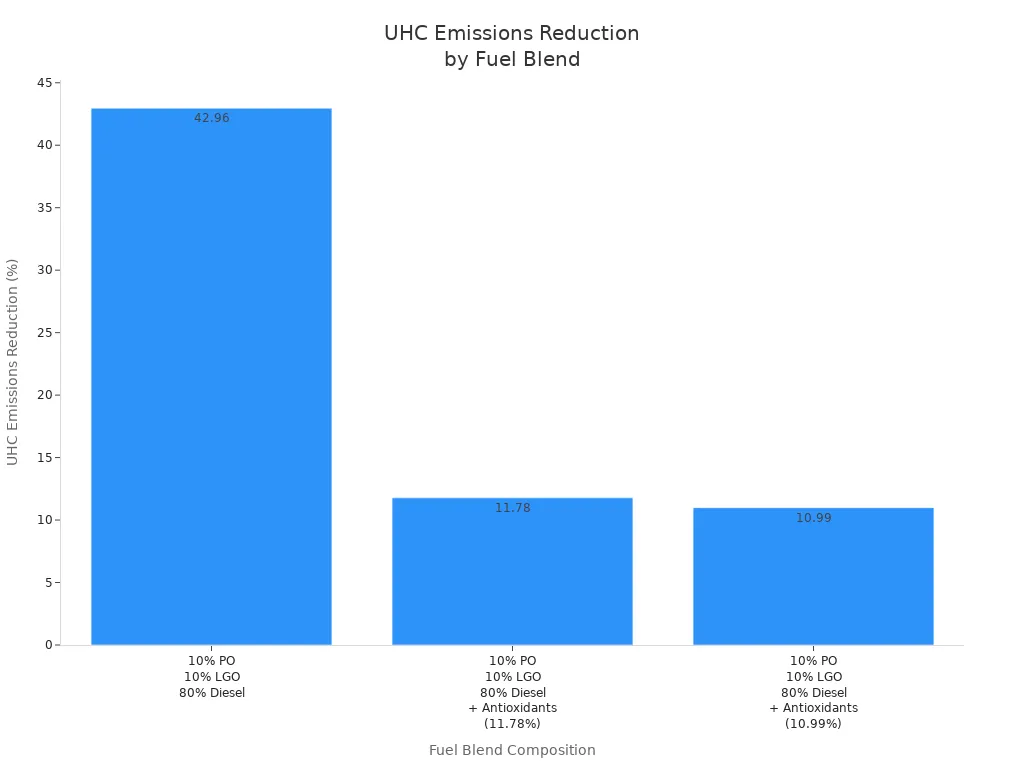
You can achieve significant emissions reductions with hybrid and biofuel technologies. Recent studies show that using a blend of 10% palm oil, 10% linseed oil, and 80% diesel can lower unburned hydrocarbon emissions by nearly 43%, carbon monoxide by 21%, and smoke by 26%. Adding antioxidants to the blend further reduces emissions. The chart below shows how different blends impact emissions:
You can compare the emissions performance of different tractor types in the table below:
| Traktortyp | Emissionsreduzierung | Drawbacks |
|---|---|---|
| Hybrid Tractors | Improved efficiency | Possible increases in certain emissions |
| Biofuel Tractors | Reduced specific pollutants | Higher CO and NOx emissions, reduced engine power |
| Conventional Tractors | High emissions | N / A |
You can stay informed about sustainable power trends by following LinkedIn Agriculture and joining the conversation on #SmartFarming.
Note: You can start with a hybrid or biofuel tractor to reduce emissions while maintaining flexibility in your operation.
You see a clear trend toward higher capacity in utility tractors. Farmers like you now demand machines that handle heavier loads and deliver consistent performance across a range of tasks. The U.S. market shows a shift toward precision agriculture and smart farming technologies. You benefit from GPS guidance and telematics, which help you monitor fuel use and machine health. These features let you manage your resources more efficiently and reduce downtime.
The need for improved productivity drives the adoption of utility tractors. You can use these machines for plowing, planting, and harvesting, which boosts your operational efficiency. Mechanized operations also support better crop rotation and soil health management. As the agricultural sector grows at about 4.5% each year, you will find that investing in high-capacity tractors helps you keep up with rising food production needs.
Tip: Choose a tractor with the right horsepower for your farm size. Models in the 20-40 HP range offer flexibility for both agricultural and non-agricultural tasks.
You want a tractor that adapts to many jobs. The popularity of compact and utility tractors among small farms and non-agricultural users continues to rise. Many people use these machines for landscaping, hobby farming, and municipal work. This versatility means you can invest in one tractor and handle multiple tasks, saving money and space.
Investments in advanced tractor technologies focus on multi-functional equipment. You can attach different implements and switch between tasks quickly. This approach aligns with modern farming strategies, where efficiency and adaptability matter most.
Digital integration changes how you manage your farm. You can use farm management software to track field activities, monitor equipment, and analyze data. These platforms give you a holistic view of your operations, making it easier to plan and make decisions. For example, automated guidance systems help you reduce labor costs and improve planting accuracy. Machine learning tools optimize your planting strategies, leading to better crop performance and less manual effort.
Here is a table showing how digital tools improve your workflow:
| Technologie | Vorteile |
|---|---|
| Machine Learning Analytics | Optimizes planting, saves time, improves decisions |
| Automated Guidance Systems | Reduces labor, increases accuracy, boosts productivity |
| Smart Farm Software | Provides a complete view, automates data analysis |
You can join discussions on #AgTech or follow updates from PrecisionAg Alliance to learn more about digital farm management.
Cloud connectivity lets you access your farm data from anywhere. You can store records, track equipment, and share information with your team in real time. This feature supports better collaboration and faster decision-making. Many farmers use cloud-based platforms to automate record-keeping and analyze trends over time. You can compare yields, monitor input use, and adjust your strategies based on accurate data.
Note: Start with basic digital tools and expand as you see results. Staying connected helps you adapt to new challenges and opportunities in modern farming.
You now have access to modular systems that work like building blocks. You can mix and match different modules, such as power units and control panels, to create a tractor that fits your needs. This approach gives you flexibility and makes maintenance easier. Imagine assembling a custom LEGO set—each module adds adaptability to your machine.
A vegetable grower in California uses a modular compact tractor to switch between planting and harvesting modules. This change takes less than ten minutes, reducing downtime and increasing productivity during busy seasons.
Modular design lets you retrofit existing equipment. You avoid the cost of buying new machinery and extend the life of your current tractor. Many farmers report a 4% increase in crop yield after adopting precision farming technologies with modular systems. Optimized inputs from these systems lead to better yields and less waste, which improves your financial outcomes.
| Nutzen | Beschreibung |
|---|---|
| Reduzierte Ausfallzeiten | Quick module swaps keep your tractor working |
| Increased Adaptability | Modules fit different crops and field conditions |
| Improved Yields | Precision inputs boost crop performance |
| Lower Costs | Retrofitting saves money on new equipment |
Tip: Start with basic modules for your main tasks, then add more as your needs grow.
You now operate tractors with advanced touch screen human machine interfaces (HMI). These systems help you collect, display, and record performance data. You monitor engine health, fuel use, and field progress in real time. The user-friendly design makes it easy to switch between functions and view important information at a glance.
A small farm in Iowa uses touch controls to track daily operations. The farmer reviews data on planting rates and fuel consumption, then adjusts strategies for better results. This technology helps you make quick decisions and improves overall efficiency.
Modern tractors focus on operator comfort. You find adjustable seats, climate control, and ergonomic controls in the cab. These features reduce fatigue and make long workdays easier. Many tractors include noise reduction and vibration dampening, which protect your health and improve your experience.
| Besonderheit | Impact on User Experience |
|---|---|
| Adjustable Seats | Reduziert Müdigkeit |
| Klimakontrolle | Keeps you comfortable in any weather |
| Ergonomic Layout | Simplifies operation |
| Lärmminderung | Protects hearing and reduces stress |
Note: Comfortable tractors help you stay focused and productive throughout the day.
You can learn more about modular design and user interface trends by following PrecisionAg Alliance or joining discussions on #AgTech.
You should start by evaluating your readiness for adopting new compact tractor technologies. This process helps you identify gaps in your current operation and prepares you for a smooth transition. Many farmers find it useful to ask themselves a few key questions:
Investing time in agricultural knowledge systems can help you overcome barriers. You may need to address behavioral influences, such as hesitation to change or uncertainty about new tools. Farmers who increase their awareness of the benefits often adopt technology more successfully.
Tip: Write down your answers to these questions and discuss them with your team or local extension agent.
You should analyze the costs before making any investment. Start by listing the initial purchase price, installation fees, and ongoing maintenance expenses. Compare these costs to your expected savings in labor, fuel, and inputs. Many farmers use a simple table like the one below to organize their analysis:
| Artikel | Estimated Cost | Expected Savings (Yearly) |
|---|---|---|
| Equipment Purchase | $X,XXX | |
| Installation/Setup | $XXX | |
| Maintenance/Upgrades | $XXX/year | |
| Labor/Fuel Savings | $X,XXX | |
| Input Reduction | $XXX |
You can adjust the numbers based on your farm size and needs. This approach helps you make informed decisions and avoid surprises.
You need the right skills to get the most from advanced tractor technologies. Many farmers benefit from hands-on training sessions that cover setup, operation, and troubleshooting. Training programs often include step-by-step guides and real-world scenarios. You can also join online forums or social media groups to share experiences and ask questions.
Note: Continuous learning keeps you up to date and confident in using new tools.
Building strong partnerships with your equipment dealer or service provider can make adoption easier. A responsive support team can answer your questions and provide timely repairs. Many farmers report that having access to robust tech support is crucial during the transition period. You should look for dealers who offer comprehensive training and prioritize your needs.
You can stay informed about the latest trends by attending industry events, such as farm shows, workshops, or webinars. These events offer hands-on demonstrations and expert advice. You can see new technologies in action and ask questions directly to specialists. Many events also provide networking opportunities with other farmers.
Connecting with other farmers helps you learn from their experiences. Peer groups, online forums, and local cooperatives offer valuable insights and support. You can share tips, discuss challenges, and celebrate successes together. Many farmers find that peer networking boosts their confidence and speeds up the adoption process.
Tip: Regularly connect with your peers to exchange ideas and stay motivated on your technology journey.
You have seen how compact tractor technology trends like IoT, AI, automation, and electric power can transform your farm. These tools help you save time, reduce costs, and improve sustainability.
You gain higher efficiency and better resource management. Smart features help you save time, reduce input waste, and increase yields. You also improve sustainability by using less fuel and making data-driven decisions.
Begin with basic sensors for soil and equipment monitoring. Use mobile apps or farm management software to collect and analyze data. Expand your system as you see positive results and feel more comfortable with the technology.
Yes. Electric tractors offer lower operating costs and reduced emissions. You can charge them overnight or during breaks. Many small farms find these tractors reliable for daily tasks and appreciate the quiet operation.
You should attend hands-on workshops or online courses. Many dealers and extension services offer training on setup, operation, and troubleshooting. Peer groups and online forums also provide valuable support and tips.
Create a cost-benefit analysis. Track your savings in labor, fuel, and inputs. Review your results each season. Adjust your strategy based on data and feedback from your team.
Look for systems with obstacle detection, emergency stop functions, and remote monitoring. Regular software updates and thorough operator training also improve safety. Always review the safety manual before using new features.
In many cases, yes. Modular kits and retrofit packages let you add sensors, GPS, or automation features to existing tractors. Check compatibility with your model and consult your dealer or service provider for installation guidance.
Follow agricultural news sites, attend farm shows, and join online communities. Subscribe to newsletters and participate in webinars. Networking with other farmers helps you learn about the latest tools and best practices.


-1.png)