Willkommen bei Shandong Qilu Industrial Co., Ltd

 German
 English
 Arabic
 Bulgarian
 Bengali
 Czech
Czech
 Danish
 Greek
Greek
 Spanish
 Finnish
 French
 Hindi
Hindi
 Croatian
 Hungarian
 Indonesian
 Italian
 Japanese
 Korean
 Lithuanian
 Dutch
Dutch
 Norwegian
 Polish
 Portuguese
 Romanian
 Russian
 Slovak
 Slovenian
 Swedish
 Thai
Thai
 Turkish
 Ukrainian
 Vietnamese
 Tagalog
 Malay
Malay
 Estonian
 Catalan
 Latvian
 Urdu
Urdu
 Serbian
 Persian
 Swahili
 Albanian
 Armenian
 Icelandic
 Bosnian
 Luxembourgish
 Afrikaans
German English
Arabic
Bulgarian
Bengali
Czech
Danish
Greek
Spanish
Finnish
French
Hindi
Croatian
Hungarian
Indonesian
Italian
Japanese
Korean
Lithuanian
Dutch
Norwegian
Polish
Portuguese
Romanian
Russian
Slovak
Slovenian
Swedish
Thai
Turkish
Ukrainian
Vietnamese
Tagalog
Malay
Estonian
Catalan
Latvian
Urdu
Serbian
Persian
Swahili
Albanian
Armenian
Icelandic
Bosnian
Luxembourgish
Afrikaans
Afrikaans
German English
Arabic
Bulgarian
Bengali
Czech
Danish
Greek
Spanish
Finnish
French
Hindi
Croatian
Hungarian
Indonesian
Italian
Japanese
Korean
Lithuanian
Dutch
Norwegian
Polish
Portuguese
Romanian
Russian
Slovak
Slovenian
Swedish
Thai
Turkish
Ukrainian
Vietnamese
Tagalog
Malay
Estonian
Catalan
Latvian
Urdu
Serbian
Persian
Swahili
Albanian
Armenian
Icelandic
Bosnian
Luxembourgish
Afrikaans

2026 Leitfaden zur effizienten Pflege und Anpassung kompakter Traktoren
Effiziente Wartung und intelligente Anpassung von kompakten Traktoren helfen Ihnen, die Produktivität zu steigern und die Lebensdauer der Ausrüstung auf Ihrem kleinen Bauernhof zu verlängern Sie profitieren von routinemäßigen vorbeugenden Wartungsarbeiten und täglichen Kontrollen, die durch die einfache Konstruktion von kompakten Traktoren erleichtert werden.
- Kompakttraktoren erfordern im Allgemeinen eine seltenere Wartung als größere landwirtschaftliche Geräte.
- Das Design verwendet oft mehr Metall und weniger Kunststoffteile, was die Haltbarkeit und Zuverlässigkeit erhöht.
Sie können Ihren Traktor auf spezifische Bedürfnisse abstimmen, wodurch die Maximierung der Leistung Ihres kleinen Bauernhofs mit einem vielseitigen Gebrauchstraktor erreichbar ist Diese Anleitung bietet umsetzbare Schritte, praktische Checklisten und Tipps zur Fehlerbehebung für jeden Besitzer.
Wichtige Erkenntnisse
- Führen Sie tägliche Kontrollen von Flüssigkeiten, Batterien und Reifen durch Pannen verhindern und für einen effizienten Betrieb sorgen.
- Befolgen Sie einen vorbeugenden Wartungsplan, um Filter und Flüssigkeiten auszutauschen und so die Lebensdauer Ihres Traktors zu verlängern.
- Bewahren Sie Ihren Traktor im Innenbereich auf oder verwenden Sie eine witterungsbeständige Abdeckung, um ihn vor Rost und Beschädigungen zu schützen.
- Wählen Sie die Rechte Anhänge Vielseitigkeit Ihres Traktors für verschiedene landwirtschaftliche Aufgaben zu erhöhen.
- Investieren Sie in Komfortfunktionen wie verstellbare Sitze und Klimaanlage, um die Produktivität des Bedieners über lange Stunden zu verbessern.
- Führen Sie detaillierte Wartungsaufzeichnungen, um den Serviceverlauf zu verfolgen und den Wiederverkaufswert Ihres Traktors zu erhöhen.
- Nutzen Sie Technologie-Upgrades wie GPS und Telematik, um die Effizienz zu steigern und die Eingabekosten zu senken.
- Regelmäßige Inspektion und Wartung von Hydrauliksystemen, um Lecks zu verhindern und einen reibungslosen Betrieb zu gewährleisten.
Wartungsgrundlagen
Tägliche Kontrollen
Flüssigkeiten und Kraftstoff
Sie müssen den Flüssigkeitsspiegel jeden Tag vor Beginn Ihrer Kompakttraktor. Diese Gewohnheit verhindert Pannen und hält Ihre Ausrüstung effizient am Laufen.
Tipp: Überprüfen Sie immer nach dem Parken über Nacht auf Undichtigkeiten unter dem Traktor.
Kritische tägliche Kontrollen, die von den Herstellern empfohlen werden Einschließen:
- Visuelle Inspektion: Achten Sie auf Lecks, abgenutzte Teile und Trümmer rund um den Motor und die Hydrauliksysteme.
- Flüssigkeitsspiegel: Bestätigen Sie, dass Motoröl, Kühlmittel, Hydraulikflüssigkeit und Kraftstoff auf dem richtigen Niveau sind. Nach Bedarf auffüllen.
- Batterieprüfung: Untersuchen Sie Batterieklemmen auf Korrosion und stellen Sie sicher, dass die Batterie eine Ladung hält.
- Reifendruck: Stellen Sie sicher, dass die Reifen für Ihre geplanten Aufgaben auf den empfohlenen PSI aufgepumpt sind.
- Sicherheitssysteme: Testen Sie Sicherheitsgurt, Lichter und andere Sicherheitsfunktionen.
Tägliche Checkliste für Flüssigkeit und Kraftstoff
| Aufgabe | Aktion | Häufigkeit |
|---|---|---|
| Motorölstand überprüfen | Bei Bedarf auffüllen | Täglich |
| Kühlmittelstand prüfen | Kühlmittel hinzufügen, wenn es niedrig ist | Täglich |
| Überprüfen Sie die Hydraulikflüssigkeit | Zur Markierung füllen | Täglich |
| Kraftstofftank überprüfen | Nachfüllen, wenn weniger als die Hälfte | Täglich |
| Suchen Sie nach Lecks | Adresse sofort | Täglich |
Durch die Durchführung eines täglichen Rundgangs können Sie beschädigte Teile oder lose Bolzen erkennen, bevor diese während der Arbeit Probleme verursachen.
Batterie und Reifen
Batterie - und Reifenkontrollen sind für einen sicheren Betrieb unerlässlich.
- Überprüfen Sie Batterieklemmen auf Korrosion und stellen Sie sicher, dass die Kabel fest sind.
- Testen Sie die Akkuladung mit einem Voltmeter, wenn Sie langsame Starts bemerken.
Für Reifen:
- Untersuchen Sie Schnitte, Einstiche oder ungleichmäßige Abnutzung.
- Passen Sie den Reifendruck an die Arbeitsbelastung und das Gelände des Tages an.
Schnellreferenztabelle für Reifen und Batterie
| Komponente | Was zu überprüfen | Aktion, wenn Problem gefunden wird |
|---|---|---|
| Batterie | Terminals, Ladung | Reinigen, straffen, aufladen |
| Reifen | Druck, Beschädigung | Aufblasen, reparieren, ersetzen |
Regelmäßige Kontrollen von Antriebsstrang - und Aufhängungssystemen tragen dazu bei, den optimalen Betrieb aufrechtzuerhalten und kostspielige Reparaturen zu verhindern.
Vorbeugende Wartung
Filteränderungen
Sie müssen in regelmäßigen Abständen Filter austauschen, damit Ihr Traktor reibungslos läuft.
- Motorölfilter, Luftfilter und Hydraulikfilter fangen Verunreinigungen ein, die interne Komponenten beschädigen können.
Vorbeugender Wartungsplan
| Wartungsaufgabe | Häufigkeit |
|---|---|
| Motorölwechsel | Alle 100 – 250 Stunden oder jährlich |
| Filterersatz | Alle 200 Stunden 200 Stunden |
| Änderung der Übertragungsflüssigkeit | Alle 500 Stunden |
| Händlerventilprüfung | Alle 1000 Stunden |
Gerätehersteller empfehlen spezifische Wartungsintervalle, um eine optimale Leistung aufrechtzuerhalten. Die Einhaltung dieser Richtlinien verhindert kostspielige Motorausfälle.
Schmierpunkte
Schmieren Sie alle Fettbeschläge und beweglichen Teile nach Bedarf.
- Fettbeschläge an den Laderarmen, Lenkgelenken und Zapfwellen erfordern Aufmerksamkeit, um Verschleiß zu verhindern.
- Schmieren Sie Ketten, Lager und Schneiden, um einen effizienten Betrieb aufrechtzuerhalten.
Gemeinsame Schmierpunkte:
- Ladearme
- Lenkgelenke
- Zapfwellen
- Ketten und Lager
Tägliches Schmieren von Fettarmaturen reduziert die Reibung und verlängert die Lebensdauer kritischer Komponenten.
Saisonpflege
Winterlich machend
Bereiten Sie Ihren Traktor auf den Winter vor, um Ausfälle bei kaltem Wetter zu vermeiden.
- Reinigen Sie die Maschine, um Staub und Ablagerungen zu entfernen und Rost und Korrosion zu verhindern.
- Wechseln Sie zu winterfestem Kraftstoff mit Zusatzstoffen, um eine Gelierung zu verhindern.
- Kühlmittelstand überprüfen und mischen, um ein Einfrieren zu verhindern.
- Führen Sie den Traktor regelmäßig aus, um die Batterie geladen zu halten.
Winterisierungs-Checkliste
| Aufgabe | Aktion |
|---|---|
| Sauberes Äußeres | Entfernen Sie Staub und Ablagerungen |
| Kraftstoffsystem | Verwenden Sie winterlichen Kraftstoff |
| Kühlmittel | Mischen Sie zum Gefrierschutz |
| Batterie | Regelmäßig laden |
Regelmäßige Winterwartung hält Ihren Traktor für unerwartete Schnee - oder Eisereignisse bereit.
Frühjahrs-startup
Der Frühjahrsstart erfordert eine gründliche Inspektion nach der Winterlagerung.
- Planen Sie eine professionelle Wartungsüberprüfung zur Inspektion kritischer Komponenten.
- Entwässern und ersetzen Sie trübe oder getrennte Flüssigkeiten.
- Überprüfen Sie das Bedienungsanleitung für modellspezifische Richtlinien.
- Füllen Sie alle Flüssigkeitsstände auf, einschließlich Motoröl, Kühlmittel, Hydraulikflüssigkeit und Getriebeöl.
Checkliste für den Start im Frühjahr
| Aufgabe | Aktion |
|---|---|
| Professionelle Kontrolle | Überprüfen Sie alle Systeme |
| Flüssigkeitsersatz | Ablassen und nach Bedarf auffüllen |
| Manuelle Überprüfung | Modellrichtlinien befolgen |
| Flüssigkeitsnachschub | Alle Stauseen abfüllen |
Dokumentieren Sie die Ergebnisse bei Inspektionen, um den zukünftigen Wartungsbedarf vorherzusagen und kostspielige Reparaturen zu vermeiden.
Fallbeispiel:
Eine kleine Farm in Iowa reduzierte unerwartete Ausfälle durch die Einführung eines täglichen Durchgangs und eines saisonalen Wartungsplans. Der Bediener fing vor der Pflanzsaison einen undichten Hydraulikschlauch auf, was Zeit und Reparaturkosten sparte.
Übersichtstabelle: Wartungshäufigkeit
| Wartungsaufgabe | Häufigkeit |
|---|---|
| Überprüfen Sie den Motorölstand und -zustand | Täglich |
| Überprüfen Sie den Kühlmittelstand und die Schläuche | Täglich |
| Überprüfen Sie den Hydraulikflüssigkeitsstand | Täglich |
| Untersuchen Sie Reifen auf Beschädigungen oder niedrigen Druck | Täglich |
| Testen Sie alle Leuchten und Sicherheitsausrüstung | Täglich |
| Schmierfettbeschläge | Täglich |
| Führen Sie eine Runduminspektion durch | Täglich |
| Proaktiver Teileaustausch | Regelmäßig |
Ein vorbeugender Wartungsplan reduziert unerwartete Ausfälle erheblich und verlängert die Betriebslebensdauer Ihres kompakten Traktors.
Lagerlösungen
Indoor vs. Outdoor
Sie müssen den richtigen Lagerort für Ihren Kompakttraktor Um Ihre Investition zu schützen und ihre Lebensdauer zu verlängern Die Lagerung Ihres Traktors im Innenbereich bietet den besten Schutz vor Feuchtigkeit, UV-Strahlen und Temperaturschwankungen Ein trockener, geschützter Schuppen schützt Ihre Ausrüstung vor Rost und Korrosion. Wenn Sie Ihren Traktor im Freien lagern, setzen Sie ihn Regen, Schnee und Sonne aus, was Verschleiß und Schäden beschleunigen kann.
Best Practices für die Traktorlagerung
| Best Practice |
|---|
| Lagern Sie Maschinen in einem trockenen, geschützten Schuppen. |
| Batterien entfernen und an einem warmen Ort aufbewahren. |
| Rostschutzbeschichtungen auf Metalloberflächen auftragen. |
Sie sollten Ihren Traktor vor der Lagerung gründlich reinigen Schmutz und Ernterückstände fangen Feuchtigkeit ein, die zu Rost führt Überprüfen Sie alle Flüssigkeitsstände und decken Sie nach Bedarf auf, wenn Sie Ihren Traktor draußen lagern müssen, verwenden Sie eine schwere, witterungsbeständige Abdeckung Positionieren Sie Ihren Traktor auf ebenem Boden und vermeiden Sie überschwemmungsgefährdete Bereiche.
Tipp: Die richtige Lagerung Ihres Traktors in der Nebensaison schützt ihn vor Witterungseinflüssen und stellt sicher, dass er startklar ist, wenn Sie ihn als nächstes brauchen.
Wetterschutz
Der Wetterschutz spielt eine entscheidende Rolle für die Aufrechterhaltung der Zuverlässigkeit Ihres Traktors Sie können wetterbedingte Schäden verhindern, indem Sie diese Schritte befolgen:
- Reinigen Sie alle Oberflächen und entfernen Sie Schmutz.
- Rostschutzbeschichtungen auf freiliegende Metallteile auftragen.
- Decken Sie den Abgas- und Lufteinlass ab, um Feuchtigkeit und Schädlinge fernzuhalten.
- Nehmen Sie den Akku ab und lagern Sie ihn an einem warmen, trockenen Ort, um ein Einfrieren und einen Ladeverlust zu verhindern.
- Verwenden Sie eine atmungsaktive Abdeckung, die Feuchtigkeit entweichen lässt und gleichzeitig Regen und Schnee blockiert.
Sie sollten Ihren Traktor während der Lagerung regelmäßig überprüfen Suchen Sie nach Anzeichen von Kondenswasser, Nagetieraktivität oder decken Sie Schäden ab Beheben Sie alle Probleme sofort, um langfristige Probleme zu verhindern.
Anmerkung: Investitionen in die Innenlagerung und den Wetterschutz senken die Reparaturkosten und erhöhen die Betriebsdauer Ihres Traktors.
Wartungsaufzeichnungen
Protokolle und Planung
Sie müssen detaillierte Wartungsaufzeichnungen führen, um die Zuverlässigkeit zu verbessern und den Wiederverkaufswert zu erhöhen Wartungsprotokolle helfen Ihnen, Serviceintervalle, Reparaturen und Upgrades zu verfolgen Durch die Planung regelmäßiger Wartungsarbeiten wird sichergestellt, dass Sie kritische Aufgaben nie verpassen.
Vorteile von Wartungsunterlagen
| Aspekt | Wert |
|---|---|
| Wertsteigerung beim Wiederverkauf | 10-15% höherer Wiederverkaufswert |
| Beispiel Traktorpreis | 35.000 £ (dokumentiert) |
| Beispiel Wiederverkaufspreis | 38.500-40.000 £ (dokumentiert) |
| Preisunterschied | 3.500 £ (mit Dokumentation) |
Eine gut dokumentierte Wartungshistorie demonstriert Sorgfalt und Aufmerksamkeit für potenzielle KäuferSie können den Wiederverkaufspreis Ihres Traktors mit vollständigen Aufzeichnungen um bis zu 151TP11 T erhöhen Zum Beispiel ein kompakter Traktor mit dokumentierter Historie, der für 3.500 £ mehr verkauft wird als ähnliche Modelle ohne Aufzeichnungen.
Sie sollten ein einfaches Logbuch oder eine digitale App verwenden, um jede Wartungsaufgabe aufzuzeichnen Geben Sie Datum, Art der Dienstleistung, ersetzte Teile und Techniker-Notizen an Stellen Sie Erinnerungen für bevorstehende Serviceintervalle ein Überprüfen Sie Ihre Protokolle monatlich, um Muster zu identifizieren und zukünftige Bedürfnisse vorherzusehen.
Muster-Wartungsprotokolleintrag
Datum: 2026-03-15 Aufgabe: Motorölwechsel Stunden: 250 Teile: Ölfilter, Motoröl Hinweise: Keine Lecks erkannt Nächster Service um 350 Stunden.
Profi-Tipp: Eine konsistente Aufzeichnung steigert nicht nur den Wiederverkaufswert, sondern hilft Ihnen auch bei der Planung des Teileaustauschs und des Budgets für zukünftige Reparaturen.
Fallstudie:
Eine Farm in Nebraska führte detaillierte Wartungsprotokolle für ihren kompakten Traktor Der Besitzer plante Ölwechsel, Filterwechsel und saisonale Inspektionen rechtzeitig, Beim Verkauf des Traktors erhöhte die dokumentierte Geschichte das Vertrauen der Käufer und führte zu einem höheren Verkaufspreis.
Vorlagen für Wartungsprotokolle finden Sie bei landwirtschaftlichen Beratungsdiensten und Branchenforen. Viele Landwirte teilen ihre Aufzeichnungsstrategien auf Social-Media-Plattformen und bieten praktische Tipps und herunterladbare Formulare.
Maximierung der Leistung Ihres kleinen Bauernhofs mit einem vielseitigen Gebrauchstraktor
Sie können Ihren kompakten Traktor in ein Mehrzweck-Arbeitstier verwandeln, indem Sie die richtigen Anbaugeräte auswählen und Bedienerfunktionen anpassen. Die Maximierung der Leistung Ihres kleinen Bauernhofs mit einem vielseitigen Nutztraktor hängt von Ihrer Fähigkeit ab, Geräte für eine Vielzahl von Aufgaben anzupassen, von der Bodenvorbereitung bis zur Materialhandhabung. Sie gewinnen Flexibilität und Effizienz, indem Sie Anbaugeräte auswählen, die den Anforderungen Ihres Bauernhofs entsprechen, und die Komfortfunktionen für lange Arbeitstage verbessern.
Auswahl von Anhängen
Anbaugeräte erweitern die Fähigkeiten Ihres Traktors und ermöglichen es Ihnen, verschiedene Jobs über das Jahr hinweg anzugehen Sie sollten die Arbeitsbelastung Ihres Bauernhofs bewerten und Geräte auswählen, die die liefern Größter Einfluss auf die Produktivität.
Lader und Backhoes
Lader und Baggerlader erhöhen den Nutzen Ihres Traktors beim Heben, Graben und Transportieren von Materialien. Sie können Erde, Kies und Kompost mit einem Frontlader bewegen, während ein Bagger Sie in die Lage versetzt, Gräben auszuheben oder Entwässerungssysteme zu reparieren. Durch Schnellkupplungen können Sie Geräte innerhalb weniger Minuten austauschen, wodurch Ausfallzeiten reduziert und die Effizienz gesteigert werden.
| Anbautyp | Auswirkungen auf die Vielseitigkeit |
|---|---|
| Lader | Verbessern Sie die Hebe- und Bewegungsfähigkeiten und ermöglichen Sie so verschiedene Aufgaben wie das Laden und Transportieren von Materialien. |
| Backhoes | Ermöglichen Sie Grabungs-, Graben- und Reparaturarbeiten und erweitern Sie so das Spektrum der Wartungsaufgaben in landwirtschaftlichen Betrieben. |
Sie sparen Zeit und Arbeit, indem Sie Lader für die täglichen Aufgaben und Bagger für saisonale Projekte einsetzen.
Mäher und Bodenfräsen
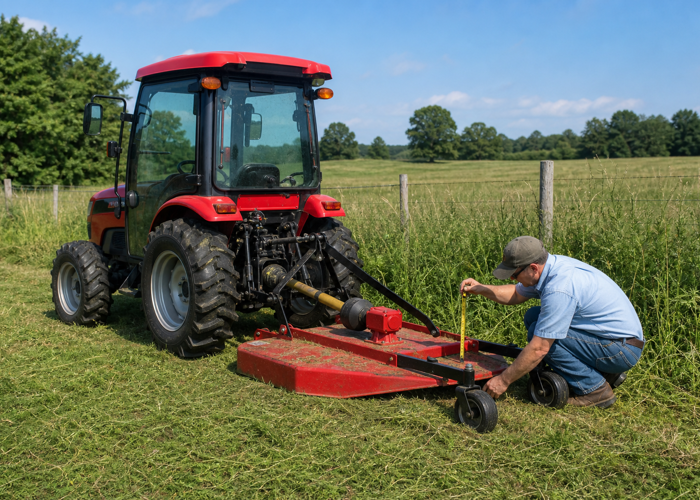
Mäher und Ackerschneider helfen Ihnen, Felder zu erhalten und den Boden für die Bepflanzung vorzubereiten Dreschflegelmäher behandeln Unkraut und hohes Gras und hinterlassen eine saubere Oberfläche, die sicher um Bäume und Zäune herum ist Rotationsschneider verwalten Gestrüpp und überwucherte Flächen, während Bodenschneider für eine effektive Bewirtschaftung aufbrechen.
Beliebte Mäh- und Pinnenbefestigungen:
- Dreschflegelmäher: Behandelt Unkraut, hohes Gras und Feldränder; hinterlässt ein einheitliches Finish.
- Rotationsschneider: Pflegt Weiden und reinigt Bürsten.
- Bodenbefestigungen: Boden für die Anpflanzung vorbereiten und die Ernteerträge verbessern.
| Anbautyp | Auswirkungen auf die Vielseitigkeit |
|---|---|
| Mähmaschinen | Bewahren Sie Weiden und Feldränder auf und verbessern Sie die Sicherheit. |
| Bodenfräsen | Bereiten Sie den Boden für die Bepflanzung vor und steigern Sie den Ernteerfolg. |
Sie verbessern die Feldbedingungen und die Pflanzengesundheit, indem Sie die richtige Mäh- und Bodenbearbeitungsausrüstung auswählen.
Spezialimplementierungen
Spezialgeräte ermöglichen es Ihnen, einzigartige landwirtschaftliche Aufgaben und saisonale Bedürfnisse zu erfüllen Sie können eine Kastenklinge für die Bewertung von Einfahrten, einen Landschaftsrechen für die Vorbereitung von Saatbeeten oder eine Schnecke für das Pflanzen von Bäumen und die Installation von Zäunen verwenden Palettengabeln und Greifer verwandeln Ihren Traktor in einen leistungsstarken Materialhandler.
Beliebteste kompakte Traktoraufsätze für kleine Bauernhöfe:
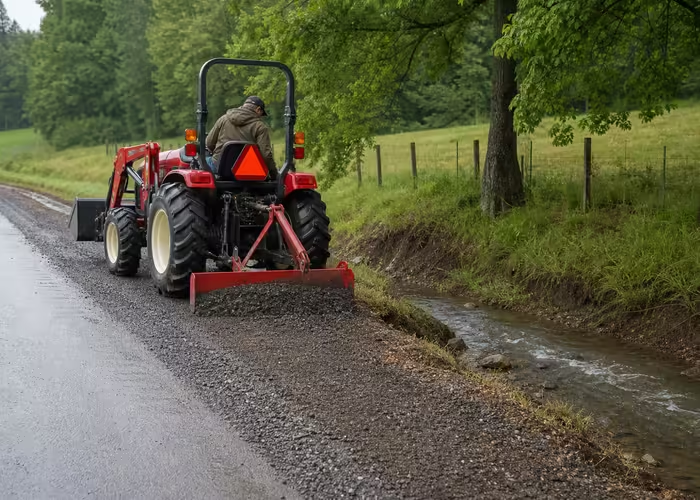
- Box Blade: Grades, Levels und Kontrollen von Kies.
- Landschaftsrechen: Reinigt Oberflächen und bereitet Saatbeete vor.
- Auger: Graben Sie konsistente Löcher zum Pflanzen und Zäunen.
- Palettengabel: Hebe und bewege schwere Materialien effizient.
- Eimer und Greifer: Bewegen Sie Erde, räumen Sie Schmutz und laden Sie Materialien.
Mehr Aufsätze führen zu einem größeren Aufgabenspektrum Einfache Geräte-Swaps steigern die Effizienz Schnellaufhänger reduzieren Ausfallzeiten.
Anpassungsoptionen
Sie können Ihren Traktor durch das Hinzufügen von Komfortfunktionen und ergonomischen Bedienelementen an spezifische landwirtschaftliche Anforderungen anpassen. Um die Leistung Ihres kleinen Bauernhofs mit einem vielseitigen Traktor zu maximieren, müssen Sie Ihre Ausrüstung sowohl an die Produktivität als auch an das Wohlbefinden des Bedieners anpassen.
Komfortfunktionen
Komfort-Upgrades machen lange Arbeitstage überschaubarer Verstellbare Sitze und Klimatisierungssysteme schaffen eine angenehme Betriebsumgebung Lärmreduzierende Isolierung hilft Ihnen, durch abstumpfende Motorgeräusche konzentriert zu bleiben. Fahrerhausaufhängung Verbessert die Fahrqualität und reduziert Ermüdung.
Checkliste für Komfortfunktionen:
- Verstellbarer Sitz mit Lendenwirbelstütze
- Klimatisierung (Heizung und Kühlung)
- Geräuschreduzierende Isolierung
- Fahrerhausaufhängung für sanftere Fahrten
Sie reduzieren körperliche Belastung und verbessern die Produktivität, indem Sie in den Komfort des Bedieners investieren.
Ergonomische Kontrollen
Ergonomische Steuerungen minimieren körperliche Belastungen und machen die Traktorbedienung intuitiver Leicht erreichbare Hebel und integrierte hydraulische Funktionen im Mittelventil sorgen für taktiles Feedback und reduzieren Ermüdung Sie profitieren von einem Layout, das einen effizienten Arbeitsablauf und schnelle Anpassungen unterstützt.
Ergonomische Kontrollverbesserungen:
- Leicht erreichbare Hebel und Schalter
- Integrierte hydraulische Steuerungen
- Verstellbares Lenkrad und Pedale
Sie behalten den Fokus und reduzieren Fehler, indem Sie die Platzierung und Reaktionsfähigkeit der Steuerung optimieren.
Betreiber-upgrades
Bediener-Upgrades erhöhen den Komfort und die Sicherheit weiter, insbesondere bei längeren Einsätzen. Um die Leistung Ihres kleinen Bauernhofs mit einem vielseitigen Traktor zu maximieren, müssen Kabinenmodifikationen und Klimamanagement in Betracht gezogen werden.
Cab-modifikationen
Cab-Modifikationen schaffen einen sichereren und komfortableren Arbeitsplatz Sie können Aufhängungssysteme installieren, um Stöße und Vibrationen zu absorbieren und so Ermüdungserscheinungen zu reduzieren Verbesserte Isolierung senkt den Geräuschpegel und hält die Kabine leise.
Vorteile der Kabinenmodifikation:
- Verbesserte Fahrqualität
- Reduzierter Lärm in der Kabine
- Erhöhte Bedienersicherheit
Sie erleben weniger Müdigkeit und mehr Komfort während langer Schichten.
Klima- und Lärmschutz
Klimatisierungssysteme passen sich dem wechselnden Wetter an und halten Sie in jeder Jahreszeit bequem. Klimaanlage und Heizung halten eine stabile Temperatur aufrecht, während eine lärmmindernde Isolierung Ihnen hilft, sich auf Aufgaben zu konzentrieren.
Klima- und Lärmschutzfunktionen:
- Klimaanlage und Heizung
- Lärmdämpfende Materialien
- Abgedichtete Kabine für Staub - und Feuchtigkeitsschutz
Sie schützen Ihre Gesundheit und erhalten die Produktivität, indem Sie Temperatur und Lärm kontrollieren.
Fallstudie: Anpassung an Produktivität
Ein kleiner Bauernhof im Mittleren Westen rüstete seinen kompakten Traktor mit Schnelllader, Schlegelmäher und ergonomischen Kabinenfunktionen auf Der Betreiber berichtete von einer 301TP11 T-Reduzierung des Zeitaufwands für Mähen und Materialhandling Verbesserte Komfortfunktionen erlaubten längere Arbeitszeiten ohne Ermüdung, was zu einer höheren Gesamtproduktivität führte.
Vergleichstabelle: Anpassungsoptionen
| Anpassungsoption | Produktivitätsauswirkungen | Komforteinwirkung | Benutzerfreundlichkeit |
|---|---|---|---|
| Schnelllader | Hoch | Mäßig | Hoch |
| Dreschflegelmäher | Hoch | Niedrig | Hoch |
| Fahrerhausaufhängung | Mäßig | Hoch | Mäßig |
| Klimatisierung | Niedrig | Hoch | Hoch |
| Ergonomische Kontrollen | Mäßig | Hoch | Hoch |
Praktische Tipps zur Maximierung der Leistung Ihres kleinen Bauernhofs mit einem vielseitigen Traktor
- Bewerten Sie den Bedarf Ihres Hofes, bevor Sie Anhänge kaufen.
- Priorisieren Sie Geräte, die die größte Vielseitigkeit bieten.
- Investieren Sie in Komfort und ergonomische Upgrades für längere Arbeitstage.
- Führen Sie Aufzeichnungen über Anpassungen und Wartung, um Produktivitätssteigerungen zu verfolgen.
- Teilen Sie Ihre Erfahrungen mit anderen Landwirten, um neue Lösungen zu entdecken.
Klein - und Hobbylandwirte legen Wert auf Vielseitigkeit, Benutzerfreundlichkeit und Erschwinglichkeit Mittelgroße Familienbetriebe benötigen zuverlässige, effiziente und vielseitige Maschinen Großproduzenten konzentrieren sich auf die Maximierung von Produktivität und Effizienz mit fortschrittlichen Technologien.
Sie können Ihren kompakten Traktor für Pflanzung, Mähen, Materialtransport und Wartung anpassen, indem Sie die richtigen Anbaugeräte und Upgrades auswählen. Durch die Maximierung der Leistung Ihres kleinen Bauernhofs mit einem vielseitigen Nutztraktor stellen Sie sicher, dass Sie den saisonalen Anforderungen gerecht werden und die Effizienz des gesamten Bauernhofs verbessern.
Technologie-Upgrades
Moderne Technologie-Upgrades verändern Ihre Kompakttraktor In ein Präzisionslandwirtschaft-Werkzeug Sie erhalten mehr Kontrolle, Effizienz und Einblick in jeden Betrieb Durch die Einführung fortschrittlicher Systeme rationalisieren Sie Aufgaben und maximieren die Produktivität.
Präzisionswerkzeuge
GPS-Systeme
Sie können Ihren Traktor mit GPS-Navigation ausstatten, um eine hochpräzise Feldarbeit zu erreichen Erweiterte Systeme liefern bis zu 2,5 cm Reihengenauigkeit mit GNSS - und RTK-Technologie Diese Genauigkeit eliminiert Überschneidungen und verpasste Bereiche, wodurch jeder Durchgang zählt Benutzerfreundliche Schnittstellen unterstützen mehrere Sprachen, wodurch die Bedienung für alle Benutzer unkompliziert wird Flexible Signaloptionen ermöglichen Ihnen die Auswahl der kostengünstigsten Lösung für Ihren Betrieb.
Wichtige GPS-Systemfunktionen:
- Hochpräzise Navigation für genaues Pflanzen und Sprühen
- Geländekompensation für konsistente Ergebnisse auf unebenem Boden
- Vielseitige Pfadplanungsmodi für unterschiedliche Feldarbeitsbedarf
Tipp: GPS-geführte Traktoren helfen Ihnen, den Eingangsabfall zu reduzieren und die Ernteerträge zu verbessern.
Telematik
Telematiksysteme bieten Echtzeitüberwachung und Datenerfassung Sie verfolgen den Standort, die Leistung und den Systemzustand Ihres Traktors von jedem Gerät aus Diese Tools befähigen Sie, fundierte Entscheidungen zu treffen und den Betrieb zu optimieren.
Vergleichstabelle für Präzisionswerkzeuge
| Merkmal | Nutzen | Effizienzsteigerung |
|---|---|---|
| GPS-Navigation | Genaue Feldarbeit, reduzierte Überschneidungen | Höhere Erträge, geringere Inputkosten |
| Telematiküberwachung | Echtzeitdaten, Ferndiagnose | Weniger Ausfallzeiten, bessere Wartung |
| Automatische Lenkung | Konsistente Reihen, weniger Ermüdung des Bedieners | Verbesserte Produktivität |
Intelligente Funktionen
Automatisierung
Automatisierung bringt ein neues Maß an Effizienz in Ihren kompakten Traktor KI-betriebene Systeme steuern Anwendungsraten für Saatgut, Düngemittel und Agrochemikalien Sie minimieren Umweltauswirkungen und optimieren den Ressourcenverbrauch Automatisierte Lenkung und Implementierungssteuerung reduzieren die Ermüdung des Bedieners und erhöhen die Konsistenz.
- Die präzise Anwendung von Inputs unterstützt eine nachhaltige Landwirtschaft.
- Optimierter Wasserverbrauch und reduzierte Kraftstoffemissionen helfen Ihnen, die Ziele einer klimafreundlichen Landwirtschaft zu erreichen.
Fernüberwachung
Mit der Fernüberwachung können Sie den Traktorbetrieb von überall aus überwachen Sie erhalten Warnungen für Wartungsbedarf und Systemfehler Die Flottenverfolgung in Echtzeit ermöglicht eine effiziente Verwaltung mehrerer Maschinen Mit der Ferndiagnose können Sie Probleme schnell beheben und Ausfallzeiten minimieren.
Vorteile intelligenter Funktionen:
- Die Überwachung des Systemzustands sorgt für eine optimale Leistung.
- Datengetriebene Erkenntnisse Bessere Entscheidungen über die Betriebsführung unterstützen.
Hinweis: Intelligente Landbaumaschinen sammeln und melden wichtige Betriebsmetriken und helfen Ihnen so, Ihre Strategie zur Maximierung der Produktion Ihres kleinen Bauernhofs mit einem vielseitigen Nutztraktor zu verfeinern.
Energieeffizienz
Hybridoptionen
Hybridtechnologie bietet erhebliche Kraftstoffeinsparungen und geringere Emissionen Sie kombinieren Elektro - und Dieselkraft für einen effizienten Betrieb unter verschiedenen Bedingungen Hybridtraktoren laufen leise und benötigen weniger Wartung, sodass sie ideal für kleine, auf Nachhaltigkeit ausgerichtete Betriebe sind.
Kraftstoffsparende Mods
Sie können brennstoffsparende Modifikationen installieren, um die Betriebskosten weiter zu senken. Die Variable Rate-Technologie wendet Ressourcen nur dort an, wo sie benötigt wird, wodurch Abfall reduziert wird. Ertragsüberwachungssysteme sammeln Erntedaten, sodass Sie die Feldleistung analysieren und zukünftige Praktiken anpassen können.
Checkliste für Energieeffizienz:
- Hybrid-Stromversorgungssysteme für einen geringeren Kraftstoffverbrauch verwenden.
- Wenden Sie die Technologie mit variabler Rate an, um die Eingabennutzung zu optimieren.
- Überwachen Sie die Erträge, um zukünftige Managemententscheidungen zu beeinflussen.
Fallstudie: Technologieeinführung
Ein kleiner Bauernhof übernahm GPS-Navigations, Telematik - und Automatisierungsfunktionen für seinen kompakten Traktor Der Betreiber berichtete von einer Reduzierung des Kraftstoffverbrauchs um 201 TP11 T und einer Steigerung der Ernteerträge um 151 TP11 T. Die Echtzeitüberwachung half dabei, den Wartungsbedarf frühzeitig zu ermitteln, wodurch Ausfallzeiten und Reparaturkosten reduziert wurden.
Technologie-Upgrade-Einführungstabelle
| Upgrade-typ | Adoptionsrate (%) | Gemeldeter Nutzen |
|---|---|---|
| GPS-Navigation | 65 | Verbesserte Genauigkeit, höhere Erträge |
| Telematik | 58 | Schnellere Fehlerbehebung, weniger Ausfallzeiten |
| Automatisierung | 42 | Reduzierter Input-Abfall, bessere Nachhaltigkeit |
| Hybridsysteme | 27 | Geringere Kraftstoffkosten, leiserer Betrieb |
Sie bleiben wettbewerbsfähig und nachhaltig, indem Sie investieren in Technologie-upgrades Für Ihren kompakten Traktor.
Leistungsoptimierung
Motorabstimmung
Software-Updates
Sie können eine bessere Kraftstoffeffizienz und einen reibungsloseren Betrieb freischalten, indem Sie die Motorsteuerungssoftware Ihres Traktors aktualisieren Konsultieren Sie vor Änderungen immer die Herstellerrichtlinien Spezialisierte Software und Diagnosegeräte helfen Ihnen, Motorparameter sicher anzupassen Beginnen Sie mit der Durchführung von Basistests, um die aktuelle Leistung zu messen Nach der Aktualisierung kalibrieren Sie das Steuergerät, um neue Einstellungen zu überwachen, Daten und verfeinern Anpassungen für optimale Ergebnisse.
Motorabstimmschritte für verbesserte Leistung:
- Überprüfen Sie die Empfehlungen des Herstellers.
- Führen Sie grundlegende Leistungstests durch.
- Verwenden Sie spezielle Software, um Motorparameter anzupassen.
- Kalibrieren Sie das Steuergerät für neue Einstellungen.
- Testen und verfeinern Sie, um die besten Ergebnisse zu erzielen.
Regelmäßige Software-Updates und sorgfältige Kalibrierung helfen Ihnen, Motorschäden zu vermeiden und die Effizienz zu maximieren.
Aufnahme und Abgas
Saubere Luft - und Kraftstofffilter halten Ihren Motor effizient am Laufen Ersetzen Sie verstopfte Filter, um den Luftstrom und die Verbrennungsqualität aufrechtzuerhalten Verwenden Sie die empfohlene Motorölsorte und ändern Sie sie termingerecht, um die Reibung zu reduzieren Überprüfen Sie die Einlass - und Auslassanlage auf Verstopfungen oder Lecks Die ordnungsgemäße Wartung dieser Komponenten senkt den Kraftstoffverbrauch und verlängert die Lebensdauer des Motors.
Schnell-Checkliste:
- Reinigen oder ersetzen Sie Luftfilter regelmäßig.
- Wechseln Sie die Kraftstofffilter wie empfohlen.
- Verwenden Sie die richtige Motorölqualität.
- Überprüfen Sie den Einlass und Auslass auf Hindernisse.
Hydraulik
Flussanpassungen
Mit der hydraulischen Durchflussregelung können Sie die Systemausgabe an bestimmte Aufgaben anpassen. Die Anpassung der Durchflussraten verbessert die Reaktion des Geräts und reduziert Energieverschwendung. Überprüfen Sie regelmäßig Hydraulikfilter, um die Flüssigkeit sauber zu halten und Schäden zu verhindern. Sichern Sie Armaturen und überprüfen Sie Schläuche auf Verschleiß, um die Systemintegrität aufrechtzuerhalten.
Leckprävention
Die Vermeidung von Lecks in Ihrem Hydrauliksystem ist für die Zuverlässigkeit unerlässlich Überprüfen Sie Dichtungen, O-Ringe und Schläuche auf Anzeichen von Verschleiß oder Beschädigung Ersetzen Sie Komponenten nach Bedarf, um Druck und Effizienz aufrechtzuerhalten. Eine gut gewartete Hydraulik reduziert Ausfallzeiten und verlängert die Lebensdauer der Ausrüstung.
| Hydraulische Wartungsaufgabe | Auswirkungen auf die Leistung |
|---|---|
| Filterprüfung | Verhindert Schäden |
| Schlauchkontrollen | Vermeidet Ausfälle |
| Dichtungsaustausch | Druck aufrechterhält |
| Passsicherheit | Verhindert Flüssigkeitsverlust |
Konsequente hydraulische Wartung sorgt für einen reibungslosen Betrieb und reduziert unerwartete Reparaturen.
Reifen und Ballastierung
Profilauswahl
Die Wahl der richtigen Reifenlauffläche verbessert die Traktion und reduziert die Bodenverdichtung Passen Sie Reifentyp und - größe an Ihre Feldbedingungen und Aufgaben an Erfassen Sie Achsgewichte und passen Sie den Reifendruck an die Last an Richtige Profilauswahl erhöht die Zugkraft und Kraftstoffeinsparungen.
Stabilität
Ballastierung erhöht die Stabilität des Traktors, insbesondere bei der Verwendung schwerer Geräte Wiegen Sie jede Achse und passen Sie die Gewichtsverteilung an, um eine ausgewogene Leistung zu gewährleisten. Fügen Sie Ballast hinzu oder entfernen Sie ihn, um den Schlupf und die Traktion der Räder zu optimieren. Diese Praxis verbessert die Sicherheit und reduziert Bodenschäden.
| Ballastierungsvorteil | Ergebnis |
|---|---|
| Verbesserte Traktion | Weniger Radschlupf |
| Erhöhte Stabilität | Sichererer Betrieb |
| Optimiertes Gewicht | Bessere Kraftstoffeffizienz |
| Reduzierte Verdichtung | Gesünderer Boden |
Die Traktorballastierung verändert die Handhabung und Sicherheit Ihrer Ausrüstung bei anspruchsvollen Aufgaben.
Fallstudie: Leistungssteigerungen
Eine Farm in Ohio hat ihre Optimierung optimiert Kompakttraktor Durch Aktualisierung der Motorsoftware, Anpassung des hydraulischen Durchflusses und Auswahl der richtigen Reifenlauffläche Nach diesen Änderungen verbesserte sich die Kraftstoffeffizienz um 121TP11 T und die Ausfallzeit sank um 181TP11 T. Der Betreiber teilte Ergebnisse in landwirtschaftlichen Foren mit und löste Diskussionen unter Kollegen aus. Für weitere technische Details können Sie Ressourcen von Universitätserweiterungsdiensten erkunden und auf Plattformen wie Twitter und Reddit mit landwirtschaftlichen Gemeinden in Kontakt treten.
Tabelle zur Leistungsverbesserung
| Optimierungsschritt | Effizienzgewinn (%) | Ausfallzeitreduzierung (%) |
|---|---|---|
| Motorabstimmung | 7 | 5 |
| Hydraulische Einstellung | 3 | 8 |
| Reifen/Ballastierung | 2 | 5 |
| Insgesamt | 12 | 18 |
Durch den Fokus auf Motor-, Hydraulik- und Reifenoptimierung erzielen Sie messbare Effizienz- und Zuverlässigkeitsgewinne.
Fehlerbehebung bei häufigen Problemen
Motorprobleme
Startprobleme
Möglicherweise stoßen Sie bei Ihrem Motor auf Startprobleme Kompakttraktor, (insbesondere bei saisonalen Änderungen oder nach längerer Lagerung, Die schnelle Bewältigung dieser Probleme hilft Ihnen, Ausfallzeiten zu vermeiden und die Produktivität aufrechtzuerhalten.
Häufige Ursachen und Schritte zur Fehlerbehebung:
- Überprüfen Sie die Batterieladung und die Anschlüsse. Lose oder korrodierte Anschlüsse verhindern häufig ein Umdrehen des Motors.
- Überprüfen Sie die Stromkreise auf durchgebrannte Sicherungen Ersetzen Sie alle fehlerhaften Sicherungen, um die Stromversorgung wiederherzustellen.
- Stellen Sie sicher, dass das Kraftstoffsystem ordnungsgemäß funktioniert Achten Sie auf verstopfte Kraftstoffleitungen oder einen verstopften Kraftstofffilter.
- Reinigen oder ersetzen Sie die Luftansaugfilter Schmutzige Filter schränken den Luftstrom ein und erschweren das Anfahren.
Tipp: Beginnen Sie immer mit einer Sichtprüfung, Sie können oft lose Drähte oder offensichtliche Schäden erkennen, bevor Sie tiefer eintauchen.
Wenn der Motor nach diesen Prüfungen immer noch nicht startet, konsultieren Sie das Bedienungsanleitung für modellspezifische Anleitung Anhaltende Probleme erfordern möglicherweise eine professionelle Diagnose.
Überhitzung
Eine Überhitzung des Motors kann zu schweren Schäden führen, wenn nicht umgehend dagegen vorgegangen wird Sie sollten Temperaturmessgeräte während des Betriebs überwachen und sofort auf Warnschilder reagieren.
Fehlerbehebung bei Überhitzung:
- Überprüfen Sie den Öl- und Kühlmittelgehalt. Niedrige Flüssigkeiten verringern die Kühleffizienz und erhöhen die Reibung.
- Überprüfen Sie den Lüftergurt auf Beschädigungen oder Spannungsprobleme Ein loser oder verschlissener Riemen kann den Kühlventilator nicht effektiv antreiben.
- Reinigen Sie Filter und den Heizkörper, um einen ordnungsgemäßen Luftstrom zu gewährleisten. Staub und Schmutz blockieren Kühlkanäle und fangen Wärme ein.
| Problemfeld | Was zu überprüfen | Empfohlene Maßnahme |
|---|---|---|
| Öl-/kühlmittelgehalt | Flüssigkeitsreservoirs | Flüssigkeiten auffüllen oder ersetzen |
| Fangürtel | Spannung, Verschleiß, Ausrichtung | Gürtel anpassen oder ersetzen |
| Kühler/Filter | Schmutz, Trümmer, Verstopfungen | Gründlich reinigen |
Anmerkung: Regelmäßige Reinigung und Flüssigkeitskontrollen helfen Ihnen, die meisten Überhitzungsprobleme zu verhindern.
Wenn die Überhitzung anhält, schalten Sie den Motor ab und lassen Sie ihn abkühlen, bevor Sie weitere Untersuchungen durchführen Schwere Fälle können auf interne Probleme hinweisen, die fachkundige Aufmerksamkeit erfordern.
Elektrisches System
Batterie und Aufladen
Elektrische Probleme beginnen oft mit der Batterie und dem Ladesystem Sie sollten diese Komponenten regelmäßig überprüfen, um unerwartete Ausfälle zu vermeiden.
Schritte zur Fehlerbehebung bei Batterie - und Ladeproblemen:
- Untersuchen Sie Batterieklemmen auf Korrosion Reinigen Sie sie bei Bedarf mit einer Drahtbürste.
- Testen Sie die Akkuladung mit einem Voltmeter Ersetzen Sie die Batterie, wenn sie keine Ladung aufnehmen kann.
- Überprüfen Sie die Lichtmaschine und die Ladekabel auf Schäden Fehlerhafte Ladesysteme verhindern, dass sich der Akku während des Betriebs wieder auflädt.
Profi-Tipp: Batterien im Winter an einem warmen, trockenen Ort lagern, um ihre Lebensdauer zu verlängern.
Wenn Sie schwache Lichter oder langsames Ankurbeln des Motors bemerken, beheben Sie sofort Batterie- und Ladeprobleme, um weitere Komplikationen zu verhindern.
Beleuchtungsfehler
Beleuchtungsfehler verringern die Sicherheit und Sicht, insbesondere bei Arbeiten am frühen Morgen oder am späten Abend. Sie sollten alle Lichter vor jedem Gebrauch überprüfen.
Checkliste zur Fehlerbehebung bei der Beleuchtung:
- Überprüfen Sie die Glühbirnen auf Burnout Ersetzen Sie alle nicht funktionierenden Glühbirnen.
- Überprüfen Sie die Verkabelung auf Frays oder lose Verbindungen. Sichern oder reparieren Sie beschädigte Drähte.
- Prüfschalter und Relais Fehlerhafte Steuerungen können die Stromversorgung der Leuchten unterbrechen.
| Beleuchtungskomponente | Gemeinsames Problem | Lösung |
|---|---|---|
| Glühbirnen | Burnout | Glühbirne ersetzen |
| Verkabelung | Ausgefranst/locker | Reparieren oder sichern |
| Schalter/Relays | Fehlerhafte Kontakte | Ersetzen oder reinigen |
Sie verbessern die Sicherheit und reduzieren Ausfallzeiten, indem Sie ein zuverlässiges Beleuchtungssystem aufrechterhalten.
Hydraulik und Getriebe
Flüssigkeitslecks
Hydraulik - und Getriebeflüssigkeitslecks können zu Leistungsverlusten führen und empfindliche Bauteile beschädigen, Sie sollten Ihren Traktor bei täglichen Kontrollen auf Lecks untersuchen.
Fehlerbehebung bei Flüssigkeitslecks:
- Suchen Sie nach Pfützen oder nassen Stellen unter dem Traktor. Spurenlecks an Schläuchen, Dichtungen oder Armaturen.
- Überprüfen Sie den Hydraulikölstand und decken Sie ihn nach Bedarf auf. Niedrige Flüssigkeitsspiegel reduzieren den Systemdruck.
- Ersetzen Sie abgenutzte Dichtungen und ziehen Sie lose Beschläge fest, um die Integrität wiederherzustellen.
Regelmäßige Wartung und zeitnahe Reparaturen helfen Ihnen, kostspielige Hydraulikausfälle zu vermeiden.
Verschiebungsprobleme
Beim Bergsteigen oder beim Wechseln der Geschwindigkeitsbereiche treten häufig Probleme mit der Getriebeschaltung auf. Möglicherweise bemerken Sie Schwierigkeiten beim Einlegen der Gänge oder eine langsame Reaktion.
Zu den effektiven Lösungen gehören:
- Stellen Sie die mechanische Kupplung ein, um ein ordnungsgemäßes Einrücken zu gewährleisten.
- Überprüfen Sie die Gestänge auf Verschleiß oder Fehlausrichtung. Schmieren und passen Sie sie nach Bedarf an.
- Verwenden Sie das richtige Hydrauliköl und wechseln Sie es regelmäßig Frisches Öl verbessert die Schaltleistung.
| Ausgabe | Was zu prüfen ist | Empfohlene Maßnahme |
|---|---|---|
| Kupplungseingriff | Kupplungseinstellung | Einstellen oder ersetzen |
| Gestängeverschleiß | Gestängeausrichtung | Schmieren/neu ausrichten |
| Hydrauliköl | Ölart/bedingung | Ersetzen Sie durch korrekt |
Sie sorgen für einen reibungslosen Betrieb und verlängern die Übertragungslebensdauer, indem Sie Schaltprobleme frühzeitig angehen.
Wenn nach diesen Schritten weiterhin Verschiebungsprobleme auftreten, suchen Sie professionelle Hilfe bei der Diagnose tieferer mechanischer Fehler auf.
Bindungsfragen
Montage
Sie müssen montieren Zugmaschinenaufsätze Richtig, um einen sicheren Betrieb und optimale Leistung zu gewährleisten Eine unsachgemäße Montage kann zu Schäden an der Ausrüstung, Sicherheitsrisiken und Zeitverschwendung führen. Beginnen Sie mit der Inspektion der Befestigungs- und Traktorverbindungspunkte auf Verschleiß, Rost oder Schmutz. Reinigen Sie alle Oberflächen, bevor Sie versuchen, ein Gerät zu montieren.
Befolgen Sie diese Schritte zur sicheren Montage:
- Richten Sie den Aufsatz aus Mit der Anhängerkupplung oder Montageplatte des Traktors Verwenden Sie, sofern vorhanden, Führungsstifte oder Markierungen.
- Sperrmechanismen überprüfen. Alle Stifte, Riegel oder Bolzen vollständig einrasten Hören Sie auf Klicks oder prüfen Sie visuell, um das Einrasten zu bestätigen.
- Überprüfen Sie hydraulische und elektrische Anschlüsse. Schläuche und Kabel sicher befestigen Suchen Sie nach Undichtigkeiten oder ausgefransten Drähten.
- Testbewegung. Heben und senken Sie das Gerät langsam Achten Sie auf ungewöhnliche Geräusche oder Widerstand.
Tipp: Spezifische Montagevorgänge entnehmen Sie immer dem Handbuch Ihres Bedieners. Jeder Aufsatz kann einzigartige Anforderungen haben.
Häufige Montageprobleme sind falsch ausgerichtete Stifte, fehlende Hardware und blockierte Hydraulikkupplungen. Sie können diese Probleme verhindern, indem Sie Ersatzstifte und Werkzeuge griffbereit halten.
Montage-Fehlerbehebungstisch
| Ausgabe | Ursache | Lösung |
|---|---|---|
| Befestigung wird nicht verriegeln | Fehlstellung | Neupositionierung und Wiederversuch |
| Hydraulische Leckage | Lose Verbindung | Armaturen festziehen |
| Elektrischer Fehler | Beschädigtes Kabel | Ersetzen oder reparieren |
Leistung
Die Leistung der Befestigung beeinflusst Ihre Produktivität und Sicherheit Sie müssen überwachen, wie jedes Gerät während des Gebrauchs funktioniert Schlechte Leistung resultiert oft aus unsachgemäßer Montage, abgenutzten Teilen oder falschen Einstellungen.
Bewerten Sie die Bindungsleistung anhand dieser Kriterien:
- Reaktionszeit: Geräte sollten umgehend auf Steuereingaben reagieren.
- Stabilität: Befestigungen müssen während des Betriebs stabil bleiben Übermäßige Vibrationssignale stellen ein Problem dar.
- Schneid - oder Grabarte: Mäher, Putzmaschinen und Bagger sollten saubere Ergebnisse liefern Ungleichmäßige Schnitte oder verpasste Stellen weisen auf Anpassungsbedarf hin.
- Hydraulische Funktion: Überprüfen Sie auf gleichmäßige Bewegung und gleichmäßigen Druck.
Wenn Sie Leistungsprobleme bemerken, prüfen Sie die Befestigung auf lose Bolzen, abgenutzte Klingen oder gebogene Komponenten. Passen Sie Einstellungen wie Schnitthöhe oder Grabtiefe entsprechend Ihrer Aufgabe an Schmieren Sie bewegliche Teile regelmäßig, um Reibung und Verschleiß zu reduzieren.
Anmerkung: Routinewartung und rechtzeitige Reparaturen verlängern die Lebensdauer Ihrer Anbaugeräte und verbessern die Gesamteffizienz.
Checkliste zur Anhängungsleistung
- Überprüfen Sie auf lose oder fehlende Hardware.
- Hydraulische und elektrische Systeme testen.
- Einstellungen für optimale Ergebnisse anpassen.
- Bewegliche Teile schmieren.
- Abgenutzte oder beschädigte Komponenten ersetzen.
Sie können die meisten Befestigungsprobleme lösen, indem Sie diese Schritte befolgen Wenn die Probleme weiterhin bestehen, konsultieren Sie einen qualifizierten Techniker für die weitere Diagnose Zuverlässige Anbaugeräte helfen Ihnen, die Vielseitigkeit und Leistung Ihres Traktors zu maximieren.
Sie erreichen eine effiziente Kompakttraktorpflege, indem Sie tägliche Kontrollen durchführen, vorbeugende Wartungsarbeiten planen und Anbaugeräte an die Bedürfnisse Ihres Bauernhofs anpassen. Regelmäßige Inspektionen identifizieren Probleme frühzeitig, während eine siebenstufige Reifenprüfung die Zuverlässigkeit und Rentabilität erhöht. Die Autosteuertechnologie steigert die Genauigkeit der Feldarbeit und reduziert verschwendete Ressourcen. Die Maximierung des Outputs Ihres kleinen Bauernhofs mit einem vielseitigen Nutztraktor hängt von Ihrem Engagement für proaktive Pflege und kontinuierliche Effizienzverbesserungen ab. Teilen Sie unten Ihre eigenen Tipps oder Fragen, um anderen zum Erfolg zu verhelfen.
- Regelmäßige Inspektionen fangen Probleme auf, bevor sie eskalieren.
- Die Autosteuertechnologie verbessert die Genauigkeit und senkt die Inputkosten.
- Die Reifenwartung verlängert die Lebensdauer der Ausrüstung.
Ihr proaktiver Ansatz sorgt für dauerhafte Produktivität und Ausrüstungswert.
FAQ
Wie oft sollten Sie tägliche Kontrollen an Ihrem kompakten Traktor durchführen?
Sie sollten vor jedem Gebrauch tägliche Kontrollen durchführen Diese Routine hilft Ihnen, Lecks, wenig Flüssigkeit oder abgenutzte Teile frühzeitig zu erkennen Konsequente Kontrollen verhindern unerwartete Ausfälle und sorgen dafür, dass Ihr Traktor effizient läuft.
Wie lagert man seinen kompakten Traktor am besten in der Nebensaison?
Bewahren Sie Ihren Traktor drinnen in einem trockenen, geschützten Schuppen auf, wenn eine Lagerung im Innenbereich nicht möglich ist, verwenden Sie eine robuste, witterungsbeständige Abdeckung Reinigen Sie Ihren Traktor gründlich und entfernen Sie die Batterie, um optimale Ergebnisse zu erzielen.
Welche Anbaugeräte bieten die größte Vielseitigkeit für kleine Bauernhöfe?
Frontlader, Baggerlader und Rotationsschneider bieten die größte Vielseitigkeit. Mit diesen Aufsätzen können Sie Materialbewegungs-, Grab- und Mähaufgaben erledigen. Schnellbefestigungssysteme machen den Austausch von Geräten schnell und einfach.
Wie können Sie den Bedienerkomfort an langen Arbeitstagen verbessern?
Rüsten Sie Ihren Sitz mit Lendenwirbelstütze auf und fügen Sie Klimatisierungsfunktionen hinzu Installieren Sie eine geräuschreduzierende Isolierung und passen Sie die Bedienelemente für eine einfache Reichweite an Diese Änderungen reduzieren Ermüdung und helfen Ihnen, produktiv zu bleiben.
Was sollten Sie tun, wenn Ihr Traktor nicht anspringt?
Überprüfen Sie zuerst die Batterieladung und die Klemmen Überprüfen Sie Kraftstoff - und Luftfilter auf Verstopfungen Untersuchen Sie Sicherungen und Verkabelungen auf sichtbare Schäden Wenn das Problem weiterhin besteht, konsultieren Sie die Bedienungsanleitung Ihres Bedieners oder wenden Sie sich an einen qualifizierten Techniker.
Wie verhindert man hydraulische Lecks?
Prüfen Sie Schläuche, Dichtungen und Armaturen regelmäßig Abgenutzte oder beschädigte Komponenten sofort austauschen Halten Sie Hydraulikflüssigkeit sauber und auf dem richtigen Niveau Routinewartung reduziert das Risiko von Lecks und Systemausfällen.
Können Sie Technologie-Upgrades bei älteren Kompakttraktoren verwenden?
Viele Technik-Upgrades, wie GPS-Führung und Telematik, lassen sich auf ältere Modelle nachrüsten Prüfen Sie die Kompatibilität mit der Elektrik Ihres Traktors Eine professionelle Installation sorgt für zuverlässige Leistung.
Warum sollten Sie Wartungsunterlagen für Ihren Traktor führen?
Wartungsaufzeichnungen helfen Ihnen, Serviceintervalle und Reparaturen zu verfolgen Detaillierte Protokolle erhöhen den Wiederverkaufswert Ihres Traktors und erleichtern die Planung der Vorsorge. Käufer vertrauen Geräten mit einer dokumentierten Historie.