Willkommen bei Shandong Qilu Industrial Co., Ltd

 German
 English
 Arabic
 Bulgarian
 Bengali
 Czech
Czech
 Danish
 Greek
Greek
 Spanish
 Finnish
 French
 Hindi
Hindi
 Croatian
 Hungarian
 Indonesian
 Italian
 Japanese
 Korean
 Lithuanian
 Dutch
Dutch
 Norwegian
 Polish
 Portuguese
 Romanian
 Russian
 Slovak
 Slovenian
 Swedish
 Thai
Thai
 Turkish
 Ukrainian
 Vietnamese
 Tagalog
 Malay
Malay
 Estonian
 Catalan
 Latvian
 Urdu
Urdu
 Serbian
 Persian
 Swahili
 Albanian
 Armenian
 Icelandic
 Bosnian
 Luxembourgish
 Afrikaans
German English
Arabic
Bulgarian
Bengali
Czech
Danish
Greek
Spanish
Finnish
French
Hindi
Croatian
Hungarian
Indonesian
Italian
Japanese
Korean
Lithuanian
Dutch
Norwegian
Polish
Portuguese
Romanian
Russian
Slovak
Slovenian
Swedish
Thai
Turkish
Ukrainian
Vietnamese
Tagalog
Malay
Estonian
Catalan
Latvian
Urdu
Serbian
Persian
Swahili
Albanian
Armenian
Icelandic
Bosnian
Luxembourgish
Afrikaans
Afrikaans
German English
Arabic
Bulgarian
Bengali
Czech
Danish
Greek
Spanish
Finnish
French
Hindi
Croatian
Hungarian
Indonesian
Italian
Japanese
Korean
Lithuanian
Dutch
Norwegian
Polish
Portuguese
Romanian
Russian
Slovak
Slovenian
Swedish
Thai
Turkish
Ukrainian
Vietnamese
Tagalog
Malay
Estonian
Catalan
Latvian
Urdu
Serbian
Persian
Swahili
Albanian
Armenian
Icelandic
Bosnian
Luxembourgish
Afrikaans
So entscheiden Sie sich zwischen einem Grabenbagger und einem Mini-Bagger für schnellere und kostengünstigere Grabenausbrüche
Meist sparen Sie am meisten Zeit und Geld, indem Sie einen Grabenfräser für Standard-Grabenbauarbeiten auswählen, wenn Sie Trencher vs Mini Bagger vergleichen, beenden Grabenfräsen die Arbeiten oft drei - bis viermal schneller und können bis zu $182 weniger pro Tag für die Miete kosten, so kann ein Grabenfräse beispielsweise die meisten Gräben in weniger als acht Stunden fertigstellen, während ein Minibagger mehr als fünfzehn benötigen kann, wenn Sie effiziente, unkomplizierte Grabenfräsen wünschen, sollten Sie zuerst einen Grabenfräsen in Betracht ziehen.
Wichtige Erkenntnisse
- Wählen Sie einen Grabenfräser für Standard-Grabenbauarbeiten, um Zeit und Geld zu sparen. Schützengräben können Arbeiten abschließen Drei - bis viermal schneller als Minibagger.
- Mietkosten berücksichtigen Ein Grabenfräse kostet in der Regel $325 pro Tag, während ein Minibagger etwa $350 kostet, Grabenfräsen wirtschaftlicher machen.
- Grabenfräsen legen enge, saubere Gräben mit minimaler Bodenstörung an, dies reduziert die Aufräumzeit und die Arbeitskosten erheblich.
- Bei langen, geraden Nutzleitungen zeichnen sich Grabenfräsen aus. Sie können im Vergleich zu Minibaggern, insbesondere in weichen Böden, in der Hälfte der Zeit arbeiten.
- Minibagger eignen sich hervorragend für komplexe Projekte mit Hindernissen, sie bieten Vielseitigkeit und können zwischen Aufgaben wie Graben und Planieren wechseln.
- Bewerten Sie die Bodenbedingungen, bevor Sie sich für die Ausrüstung entscheiden Grabenfräsen funktionieren am besten in weichem, offenem Boden, während Minibagger felsige oder mit Wurzeln gefüllte Bereiche besser handhaben.
- Planen Sie Ihr Projekt sorgfältigMessen Sie die Grabenlänge, überprüfen Sie den Bodentyp und beurteilen Sie den Standortzugang, um sicherzustellen, dass Sie die richtige Maschine auswählen.
- Behalten Sie Ihr Budget im Auge Grabenfräsen haben im Allgemeinen niedrigere Betriebskosten und sind einfacher zu bedienen, sodass sie für weniger erfahrene Benutzer geeignet sind.
Trencher vs Mini Bagger: Zeit & Kosten Vergleich
Wenn man vergleicht Grabenfräse vs. Minibagger Bei Grabenprojekten müssen Sie Geschwindigkeit, Kosten, Aufräumarbeiten und Genauigkeit berücksichtigen. Die folgende Tabelle fasst die Hauptunterschiede zusammen:
| Merkmal | Grabenbagger | Mini-Bagger |
|---|---|---|
| Durchschnittsgeschwindigkeit | 300-600+ Fuß/Tag | 75-200 Fuß/Tag |
| Mietkosten (1 Tag) | $325 | $350 |
| Mietkosten (1 Woche) | $1300 | $1400 |
| Arbeitszeiten (100 Fuß) | 6-7 Stunden | 12-15 Stunden |
| Bereinigung | Minimaler, schmaler Abraumhaufen | Mehr Bodenverdrängung, größere Aufräumarbeiten |
| Präzision | Hoch für gerade, flache Gräben | Gut für komplexe Formen, weniger präzise für gerade Linien |
Geschwindigkeit und Effizienz
Einen signifikanten Geschwindigkeitsunterschied werden Sie feststellen, wenn Sie Grabenbagger vs. Minibagger für gerade, flache Gräben vergleichen Feldversuche und Berichte von Auftragnehmern zeigen, dass Grabenbagger 300 bis über 600 Fuß pro Tag schaffen können, während Minibagger normalerweise nur 75 bis 200 Fuß schaffen Beispielsweise hat ein Auftragnehmer 425 Fuß Wasserleitung in nur 5,5 Stunden mit einem Grabenbagger fertig gestellt Derselbe Auftrag dauerte 15 Stunden mit einem Minibagger Wenn Sie einen 100-Fuß-Graben graben müssen, können Sie damit rechnen, dass ein Schützengraben in etwa 6 Stunden fertig ist, während ein Minibagger möglicherweise doppelt so lange wie lange benötigt. Dieser Geschwindigkeitsvorteil bedeutet, dass Sie insgesamt weniger Arbeitsdauer abschließen können.
Miet- und Arbeitskosten
Die Mietpreise für beide Maschinen sind ähnlich, aber Sie werden oft weniger für einen Grabenbagger bezahlen Eine typische Tagesmiete für einen Minibagger kostet etwa $350, während ein Mini-Rutschgrabenbagger für etwa $325 mietet Da die wöchentlichen Tarife nach dem gleichen Muster arbeiten, kosten Grabenbagger $1300 und Minibagger $1400. Die Arbeitskosten begünstigen auch Grabenbagger. Da Grabenbagger schneller arbeiten und weniger manuelle Aufräumarbeiten erfordern, können Sie mit der Zeit Hunderte von Dollar sparen, insbesondere bei längeren Projekten. Mini-Ketten-Aufbaubedarf, um den Motor zu verbessern und zu verbessern.
Reinigung und Präzision
Grabenfräsen legen einen schmalen, sauberen Graben mit minimaler Bodenstörung an Sie haben weniger Abraum zum Bewegen und weniger Boden zum Wiederherstellen nach dem Auftrag Dies reduziert sowohl die Arbeits - als auch die Entsorgungskosten, Auf der anderen Seite entfernen die Bagger mehr Erde und legen einen breiteren Graben an, was mehr Aufräumen und Zurücklegen bedeutet Wenn Ihr Projekt gerade, flache Trenches wie für Bewässerung oder Versorgungsleitungen eine bessere Genauigkeit und ein netteres Finish liefert Für komplexe Verlegungen oder mit vielen Hindernissen bietet ein Bagger mehr Flexibilität, kann aber etwas Präzision und Aufräumzeit opfern.
Tipp: Für die meisten Standard-Grabenbauarbeiten, insbesondere solche, die lang, gerade und flach sind, spart Ihnen ein Graben sowohl Zeit als auch Geld. Wählen Sie einen Minibagger, wenn Ihr Projekt Kurven, Hindernisse oder Grabungen unter schwierigen Bodenbedingungen erfordert.
Wann Sie einen Grabenfräsen auswählen sollten
Beste Projekttypen
Solltest du Grabenfräse wählen Wenn Ihr Projekt Geschwindigkeit, Kosteneffizienz und präzise Grabenabmessungen erfordert, zeigen Auftragnehmeruntersuchungen mehrere Szenarien auf, in denen Grabenfräsen Minibagger durchweg übertreffen. Erwägen Sie einen Grabenfräsen für diese Art von Arbeiten:
- Installation langer, gerader Versorgungsleitungen wie Wasser, Gas oder elektrische Leitungen Schützengräben können diese Installationen im Vergleich zu Baggern in der Hälfte der Zeit abschließen.
- Arbeiten in Sand, Lehm oder Lehmböden Unter diesen Bedingungen zeichnen sich Grabenfräsen aus und erreichen Geschwindigkeiten von 40-60 Fuß pro Stunde mit Kettenmodellen und über 100 Fuß pro Stunde mit Radgräben.
- Projekte, die exakte Grabenbreiten und flache Böden erfordern, die für eine ordnungsgemäße Rohrbettung und die Einhaltung der Vorschriften unerlässlich sind.
- Jobs, bei denen Sie Bodenstörungen minimieren müssen Grabenfräsen entfernen normalerweise 30-501TP11 T weniger Boden als Bagger, wodurch Verfüllungs - und Verdichtungsaufwand reduziert werden.
- Projekte mit engen Zeitvorgaben Versorgungsunternehmen berichten, dass Schützengräben an einem Tag Arbeiten erledigen können, die mit Baggern zwei bis drei Tage dauern würden.
Wenn Ihr Projekt mit einem dieser Szenarien übereinstimmt, sparen Sie wahrscheinlich sowohl Zeit als auch Geld, indem Sie einen Grabenbagger auswählen.
Ideale Standortbedingungen
Die Standortbedingungen spielen eine große Rolle bei Ihrer Ausrüstungswahl Verwenden Sie die folgende Tabelle, um festzustellen, wann ein Grabenfräse am besten passt:
| Standortzustand | Empfohlene Ausrüstung | Vernunft |
|---|---|---|
| Weicher, offener Boden | Grabenbagger | Schnelle, saubere Grabenbildung |
| Felsig oder wurzellastig | Mini-Bagger | Weniger Aufschlüsselungen |
| Enge Räume | Mini-Bagger | Manövrierfähig |
| Untergrundhindernisse | Mini-Bagger | Sichere Entfernung |
Die besten Ergebnisse erhalten Sie bei einem Graben in weichem, offenem Boden mit wenigen Hindernissen, wenn Ihr Standort felsig oder mit Wurzeln gefüllt ist, oder wenn Sie auf engstem Raum arbeiten müssen, ist ein Minibagger möglicherweise besser geeignet.
Vorteile von Genauigkeit und Reinigung
Ein Grabenbohrer gibt Ihnen einen sauberen, schmalen Graben mit minimaler Bodenstörung Diese Genauigkeit bedeutet, dass Sie weniger Zeit mit Verfüllung und Wiederherstellung des Geländes verbringen Sie senken auch die Arbeitskosten, weil es weniger Abraum zu bewegen und weniger Boden zu reparieren gibt Für Landschaftsbau oder Versorgungsvorhaben, bei denen Sauberkeit und Präzision wichtig sind, liefert ein Grabenbohrer professionelle Ergebnisse mit weniger Aufwand.
Wenn Sie Trencher vs Mini Bagger für die Reinigung und Genauigkeit vergleichen, stechen Grabenfräsen hervor Ihr Design ermöglicht es Ihnen, Gräben mit exakten Abmessungen zu erstellen, was für die richtige Rohrinstallation und langfristige Haltbarkeit von entscheidender Bedeutung ist Sie werden auch die reduzierte Reinigung zu schätzen wissen, insbesondere bei größeren Projekten, bei denen sich Zeit- und Arbeitsersparnisse schnell summieren.
Tipp: Wenn Sie Ihr Grabenbauprojekt schneller, mit weniger Chaos und geringeren Arbeitskosten abschließen möchten, ist ein Grabenbagger oft die beste Wahl.
Wann Sie einen Mini-Bagger auswählen sollten
Vielseitigkeit und Anhänge
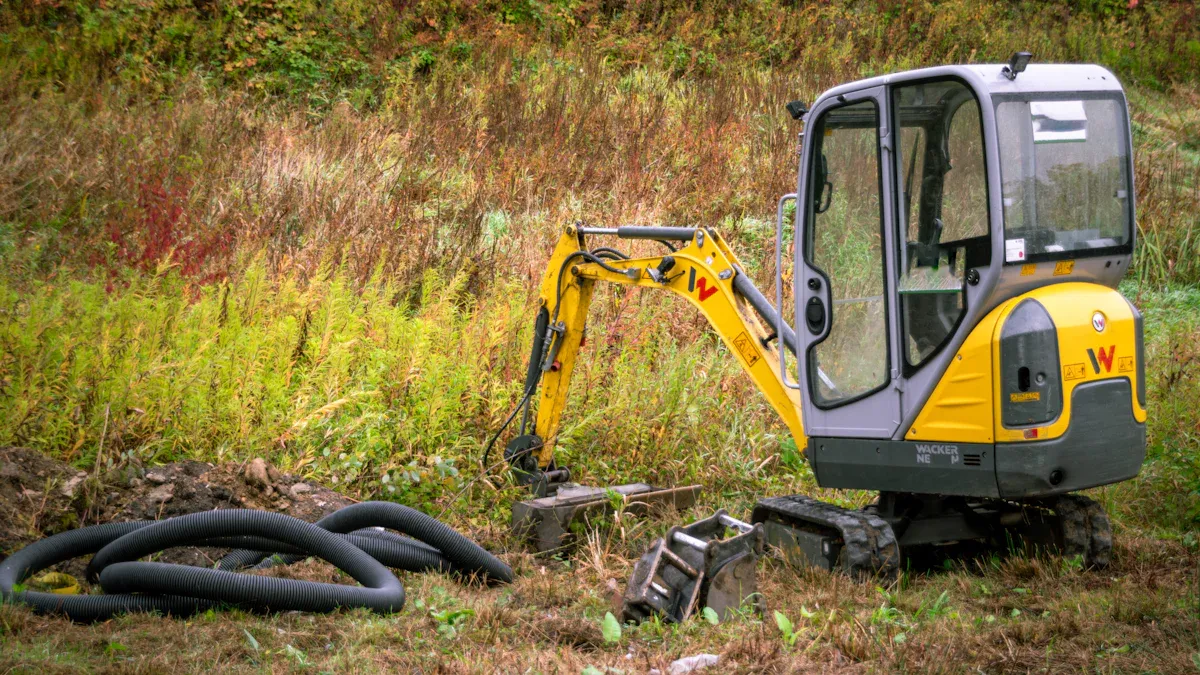
Sie sollten über einen nachdenken Minibagger Wenn Ihr Grabenbauprojekt Flexibilität und Anpassungsfähigkeit erfordert Mini-Bagger zeichnen sich in Situationen aus, in denen Sie schnell zwischen Aufgaben wechseln müssen Sie können sie mit einer Reihe von Aufsätzen ausstatten, wie Eimer zum Graben, Planiermesser, hydraulische Hämmer und Verdichter Diese Vielseitigkeit ermöglicht es Ihnen, mehr als nur Graben zu bewältigen Sie können beispielsweise graben, nivellieren und nachfüllen, ohne die Maschine zu wechseln Wenn Sie auf unerwartete Hindernisse wie Steine oder Versorgungskreuzungen stoßen, können Sie Ihren Ansatz durch den Austausch von Aufsätzen anpassen Diese Anpassungsfähigkeit spart Zeit und reduziert den Bedarf an zusätzlicher Ausrüstung, wodurch Minibagger in komplexen Projekten effizienter als Schützengräber sind.
Tipp: Wenn Ihre Baustelle mehrere Arten von Ausgrabungen oder häufige Aufgabenänderungen erfordert, hilft Ihnen ein Minibagger dabei, die Arbeiten schneller und mit weniger Unterbrechungen abzuschließen.
Mini-Baggeraufsätze verbessern Ihren Arbeitsablauf um:
- Damit Sie mit einer Maschine graben, gradieren und auffüllen können.
- Ermöglichung einer schnellen Anpassung an unerwartete Standortbedingungen.
- Reduzierung der Ausfallzeiten durch Werkzeugwechsel vor Ort.
- Handhabung von Aufgaben, die Grabenfräsen nicht möglich sind, wie Betonbrechen oder Hebematerialien.
Anspruchsvolle Standortbedingungen
Sie profitieren von einem Minibagger, wenn Sie in rauen Umgebungen arbeiten Experten empfehlen Minibagger für Standorte mit großen Felsen, Baumwurzeln oder Betonschutt Diese Maschinen können felsigen Boden mit Hilfe von verstärkten Eimern durchdrehen und auf hydraulische Hämmer zum Aufbrechen von Beton umsteigen, Sie können vor dem Graben Wurzeln freilegen und schneiden, was Schäden an wertvoller Landschaftsgestaltung minimiert Die Fähigkeit, die Kabine vollständig zu drehen, verleiht Ihnen eine überlegene Manövrierfähigkeit auf engstem Raum, wo lange Grabenfräsen nicht passen.
| Bedingung | Mini-Baggerfähigkeit | Grabenbegrenzung |
|---|---|---|
| Felsboden | Kann mit verstärkten Eimern durchstarten | Kette kann beschädigt werden |
| Baumwurzeln | Kann vor dem Graben Wurzeln freilegen und schneiden | Begrenzte Fähigkeit, sich um Wurzeln herum zurechtzufinden |
| Enge Räume | Kann die Kabine vollständig drehen und ermöglicht so Manövrierfähigkeit | Lange Gräben passen nicht in kleine Bereiche |
Sie sollten einen Minibagger wählen, wenn Ihr Standort unvorhersehbare Herausforderungen oder eingeschränkten Zugang bietet Ihre Fähigkeit, sich an Hindernisse anzupassen, macht sie zu einer zuverlässigen Wahl für komplexe Grabenarbeiten.
Multitasking-Jobs
Minibagger fallen auf, wenn Ihr Projekt mehr als nur Grabenarbeiten umfasst Sie können sie zum Graben, Heben und Verfüllen verwenden, alles mit der gleichen Maschine Diese Multitasking-Fähigkeit rationalisiert Ihren Arbeitsablauf und steigert die Gesamteffizienz des Projekts Sie müssen die Ausrüstung nicht für verschiedene Aufgaben wechseln, was Ihnen Zeit und Arbeitskosten spart Wenn Sie mit unerwarteten Problemen konfrontiert sind, wie vergrabenem Schutt oder der Notwendigkeit, schweres Material zu bewegen, können Sie diese Probleme bewältigen, ohne zusätzliche Maschinen mitzubringen.
| Merkmal | Mini-Bagger | Grabenfräsen |
|---|---|---|
| Vielseitigkeit | Kann graben, heben und verfüllen | Spezialisiert nur für das Graben |
| Geräteumschaltung | Keine Notwendigkeit, Ausrüstung zu wechseln | Erfordert das Umschalten für andere Aufgaben |
| Projekteffizienz | Verbessert die Gesamteffizienz des Projekts | Beschränkt auf Grabenarbeiten |
| Umgang mit unerwarteten Problemen | Kann unerwartete Probleme ohne zusätzliche Ausrüstung bewältigen | Begrenzte Flexibilität |
Wenn Sie Trencher vs Mini Bagger für Multitasking-Jobs vergleichen, bieten Minibagger einen klaren Vorteil Sie können ein breiteres Aufgabenspektrum mit einer Maschine erledigen und sind damit ideal für Projekte, die Flexibilität und Effizienz erfordern.
Anmerkung: Wenn Ihr Grabenbauprojekt unterschiedliche Grabenformen, mehrere Aufgaben oder schwierige Bodenbedingungen umfasst, hilft Ihnen ein Minibagger, Herausforderungen zu meistern und die Arbeit mit weniger Verzögerungen abzuschließen.
Wichtige Entscheidungsfaktoren
Boden- und Bodentyp
Sie müssen Ihre Ausrüstung an die Bodenbedingungen auf Ihrem Gelände anpassen Die Bodenzusammensetzung wirkt sich direkt darauf aus, wie effizient Sie Graben können In idealen Böden wie Sand oder Lehm liefern Grabenfräsen die schnellsten und saubersten Ergebnisse Sie werden feststellen, dass Grabenfräsen diese Materialien schnell durchschneiden und so einen schmalen, gleichmäßigen Graben mit minimalem Aufwand hinterlassen Mini-Bagger bieten unter diesen Bedingungen keinen Geschwindigkeitsvorteil.
Wenn Sie jedoch auf felsigen Boden oder Hartpfannen stoßen, werden Minibagger die bessere Wahl Ihre robusten Eimer und hydraulische Kraft ermöglichen es Ihnen, zähe Materialien zu durchbrechen, die einen Graben verlangsamen oder sogar beschädigen würden Wenn Ihr Standort gemischten oder unvorhersehbaren Boden hat, passen sich Minibagger leichter an veränderte Bodenbedingungen an.
| Bodenzustand | Trencher-Leistung | Leistung des Mini-Baggers |
|---|---|---|
| Ideal (Sand oder Lehm) | Schneller und effizienter | N/A |
| Fels oder Hartpfanne | N/A | Entspricht oder übertrifft die Produktivität des Grabenfräsens |
| Herausfordernde Bedingungen | N/A | Besser geeignet für Hindernisse und Anpassungen |
Tipp: Überprüfen Sie immer Ihren Boden, bevor Sie sich für Ausrüstung entscheiden Sie sparen Zeit und vermeiden kostspielige Reparaturen, indem Sie die richtige Maschine auf Ihren Bodentyp abstimmen.
Grabengröße und -tiefe
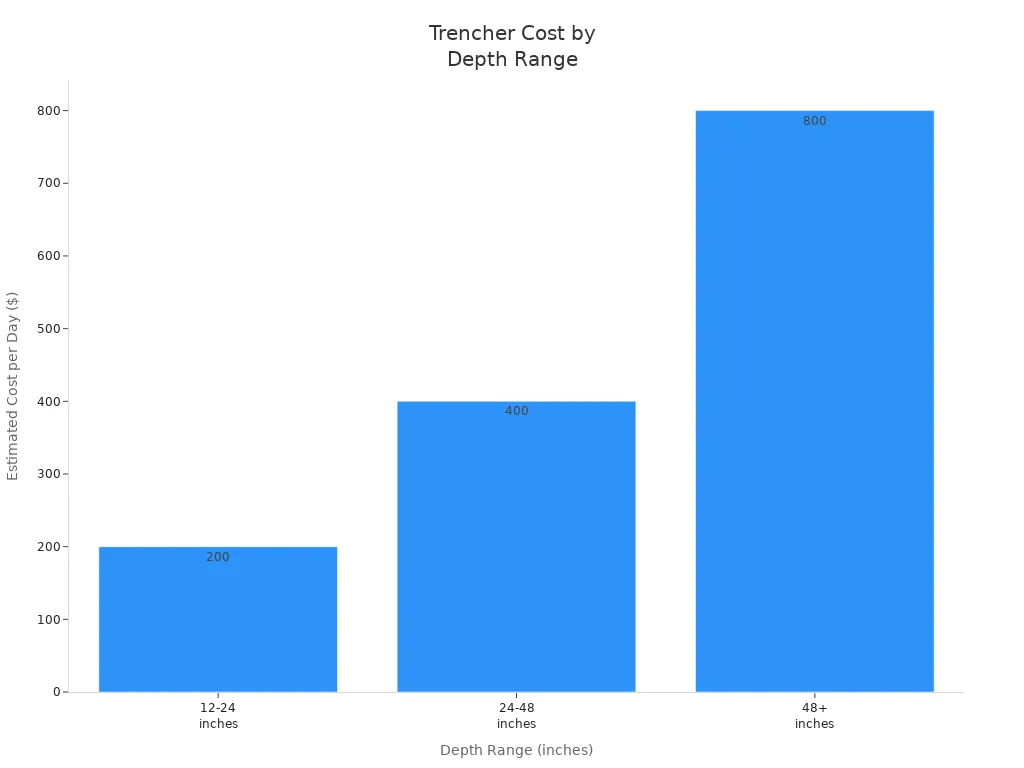
Grabenabmessungen spielen eine große Rolle bei Ihrer Ausrüstungsentscheidung Grabenfräsen zeichnen sich durch die Schaffung einheitlicher, flacher bis mitteltiefer Gräben aus. Für die meisten Bewässerungs-, Elektro- oder Entwässerungsleitungen benötigen Sie einen Graben mit einer Tiefe zwischen 12 und 48 Zoll. Hintergelagerte Schützengräben bewältigen flache Arbeiten effizient, während Aufsitz- und Gleisgräben tiefere Einschnitte bewältigen.
Die folgende Tabelle hilft Ihnen bei der Auswahl des richtigen Grabenfräsens für Ihre erforderliche Tiefe und Ihr Budget:
| Tiefenbereich (Zoll) | Empfohlener Grabenfräsentyp | Geschätzte Kosten pro Tag |
|---|---|---|
| 12-24 | Hintersteggraben | $200 |
| 24-48 | Mittelgroßer Aufsitzgraben | $400 |
| 48+ | Großer Gleisgraben | $800 |
Fügen Sie immer 6 Zoll zu Ihrer erforderlichen Tiefe hinzu, um das richtige Bettungsmaterial zu erhalten.
Minibagger bieten mehr Flexibilität für variable Grabenbreiten und - tiefen, wenn Ihr Projekt Gräben benötigt, die tiefer als 48 Zoll oder mit unregelmäßigen Formen sind, profitieren Sie von den verstellbaren Ausleger - und Eimergrößen des Baggers, Sie können auch einen Minibagger für breitere Gräben verwenden oder wenn Sie neben Standardgräben auch Fundamente und Gruben graben müssen.
Anmerkung: Bei langen, geraden, flachen Gräben spart Ihnen ein Grabengraben Zeit und Geld. Bei tiefen, breiten oder unregelmäßigen Gräben bietet Ihnen ein Minibagger mehr Kontrolle und Vielseitigkeit.
Hindernisse und Layout
Hindernisse auf Ihrer Website können Ihre Geräteanforderungen schnell ändern Sie können auf Baumwurzeln, unterirdische Versorgungseinrichtungen oder unebenes Gelände stoßen Minibagger bewältigen diese Herausforderungen aufgrund ihrer Konstruktion und Manövrierfähigkeit besser.
- Minibagger funktionieren gut auf weichem und unebenem Boden, ihre Kettenkonstruktion reduziert den Bodendruck, so vermeiden Sie, stecken zu bleiben oder die Oberfläche zu beschädigen.
- An Hängen können Sie Minibagger sicher bedienen, ihr niedriger Schwerpunkt und ihr Stabilisierungsarm halten die Maschine stabil.
- Minibagger schützen Rasenflächen und fertige Oberflächen, Sie können die Kabine ohne Schleudern drehen, was Rasenschäden minimiert.
Grabenfräsen schneiden am besten auf offenen, hindernisfreien Standorten ab, wenn Sie sich um Bäume, über Hänge oder in der Nähe bestehender Versorgungseinrichtungen graben müssen, finden Sie einen Minibagger sicherer und präziser, Sie können sorgfältig um Gefahren graben und Ihren Grabenweg nach Bedarf anpassen.
Profi-Tipp: Gehen Sie vor dem Start auf Ihrer Seite vorbei Identifizieren Sie Hindernisse und planen Sie Ihre Grabenroute Wenn Sie viele Wurzeln, Hänge oder vergrabene Linien sehen, wählen Sie einen Minibagger für Sicherheit und Flexibilität.
Budget und Qualifikationsniveau
Ihr Budget und Ihr Erfahrungsniveau spielen eine große Rolle bei der Wahl zwischen einem Grabenbagger und einem Minibagger. Sie möchten den Wert maximieren und gleichzeitig Risiken und unerwartete Kosten minimieren. Schauen Sie sich zunächst Ihr gesamtes Projektbudget an, einschließlich Ausrüstungsmiete oder -kauf, Treibstoff, Wartung und Arbeit.
Wenn Sie ein knappes Budget haben oder ein kleines Vertragsunternehmen betreiben, sind kompakte Grabenfräsen oft sinnvoller Sie geben im Vorfeld weniger aus und halten die Betriebskosten niedrig Hier sind einige Gründe, warum kompakte Maschinen Ihnen helfen, im Rahmen des Budgets zu bleiben:
- Sie zahlen für Kompaktgräber eine geringere Anfangsinvestition im Vergleich zu größeren Baggern.
- Die Kraftstoffkosten bleiben niedrig, da kompakte Maschinen weniger Kraftstoff pro Stunde verbrauchen.
- Die Wartungskosten sinken aufgrund einfacherer Designs und weniger beweglicher Teile.
- Sie können eine vielseitige Kompaktmaschine für mehrere Aufgaben verwenden, was die Notwendigkeit verringert, mehrere Geräte zu mieten oder zu kaufen.
Vergleichen Sie bei der Miete Tages - und Wochenpreise Schützengräben kosten in der Regel weniger pro Tag und benötigen weniger Arbeitsstunden, wodurch Sie sowohl bei der Ausrüstung als auch beim Lohn sparen Minibagger kosten mehr in Miete und Betrieb, insbesondere wenn Sie Anbaugeräte oder zusätzliche Zeit für die Aufräumarbeiten benötigen.
Tipp: Berücksichtigen Sie immer die Kosten für die Aufräumarbeiten und Verfüllungen. Schützengräben verursachen weniger Chaos, sodass Sie weniger für Arbeit und Wiederherstellung des Standorts ausgeben.
Der Fähigkeitsgrad ist genauso wichtig wie das Budget, wenn Sie nur begrenzte Erfahrung mit schwerem Gerät haben, werden Sie Grabenfräsen leichter zu bedienen finden Die meisten begehbaren und aufsitzenden Grabenfräsen verwenden einfache Bedienelemente und erfordern nur minimale Schulung, Sie können gerade, einheitliche Gräben mit wenig Übung graben Dies verringert das Risiko von Fehlern und kostspieligen Nacharbeiten.
Minibagger erfordern mehr Geschick Sie müssen mehrere Steuerungen beherrschen, Anbaugeräte verwalten und sicher um Hindernisse herumarbeiten, wenn Ihnen die Erfahrung fehlt, müssen Sie möglicherweise einen qualifizierten Bediener beauftragen, was Ihre Arbeitskosten erhöht Fehler mit einem Minibagger können zu breiteren Gräben, mehr Boden zum Bewegen und höheren Aufräumkosten führen.
| Faktor | Grabenbagger | Mini-Bagger |
|---|---|---|
| Vorkosten | Untere | Höher |
| Kraftstoff und Wartung | Untere | Höher |
| Qualifikationsanforderungen | Grundlegend | Fortgeschritten |
| Arbeit und Aufräumarbeiten | Minimal | Umfangreichere |
| Vielseitigkeit | Beschränkt auf Grabenbildung | Multitasking-fähigkeit |
Anmerkung: Wenn Sie die Kosten niedrig halten und die Arbeit mit minimaler Schulung beenden möchten, wählen Sie einen Grabenbagger, wenn Ihr Projekt mehr Vielseitigkeit erfordert und Sie die Fähigkeiten oder den Zugang zu einem geschulten Bediener haben, kann ein Minibagger eine kluge Investition sein.
Sie sollten Ihre Wahl immer auf Ihr Budget und Komfortniveau abstimmen, vermeiden Sie damit kostspielige Überraschungen und sorgen für einen reibungslosen Ablauf Ihres Grabenprojekts von Anfang bis Ende.
Beispiele aus der realen Welt
Wohnbewässerung
Sie wollen ein neues Bewässerungssystem für einen großen Hinterhof installieren Das Projekt erfordert 250 Fuß geraden, flachen Graben durch weichen Lehm Sie wählen einen begehbaren Graben Sie beenden die Arbeit in weniger als fünf Stunden, einschließlich Aufräumen Der schmale Graben lässt nur minimale Erde zum Verfüllen zurück, und Sie stellen den Rasen schnell wieder her Ihre gesamten Miet - und Arbeitskosten bleiben unter $350.
Ein Nachbar versucht dasselbe Projekt mit einem Minibagger, Die Grabung dauert fast zehn Stunden, durch den breiteren Graben entsteht ein großer Abraumhaufen, der zwei weitere Stunden für die Aufräumarbeiten und Verfüllung hinzufügt Die Gesamtkosten steigen durch zusätzliche Arbeits - und Gerätezeit auf über $500. Bei unkomplizierten Bewässerungsarbeiten sparen Sie sowohl Zeit als auch Geld, indem Sie sich für einen Grabenbagger entscheiden.
Tipp: Bei langen, geraden Bewässerungslinien in weichem Boden liefert ein Grabenfräse die schnellsten und saubersten Ergebnisse.
Versorgungsliniengraben
Versorgungsunternehmen müssen oft mit strengen Fristen rechnen und benötigen genaue Grabenabmessungen. Erwägen Sie ein Projekt, bei dem 425 Fuß elektrische Leitung entlang eines geraden Weges installiert werden. Sie verwenden einen Graben und erledigen die Arbeiten in 5,5 Stunden. Der Graben erfüllt die Codeanforderungen für Breite und Tiefe, und Sie beenden die Arbeit an einem Tag.
Wenn Sie für den gleichen Job einen Minibagger benutzen, verbringen Sie 15 Stunden mit Graben und Aufräumen Der Graben ist breiter und weniger einheitlich, was die Nachfüllzeit verlängert Das Projekt erstreckt sich bis in einen zweiten Tag, was die Arbeits - und Mietkosten erhöht.
Anhand der folgenden Tabelle können Sie die beiden Maschinen vergleichen:
| Bedingung | Trencher-Leistung | Leistung des Mini-Baggers |
|---|---|---|
| Lange, gerade Versorgungseinrichtungen | Wird in der Hälfte der Zeit abgeschlossen (z. B. 425 Fuß in 5,5 Stunden) | Dauert 15 Stunden für den gleichen Job |
| Bodentyp (Sand, Lehm, Ton) | Schneidet leicht durch, 40-100+ Fuß/Std | Langsamer unter diesen Bedingungen |
| Präzise Grabenabmessungen | Exakte Breiten und flache Böden | Weniger Präzision |
| Bodenstörung | Entfernt 30-50% weniger Boden | Grabt mehr Erde |
| Enge Zeitpläne | Findet an einem Tag | Kann 2-3 Tage dauern |
Einen klaren Vorteil erlangen Sie mit einem Graben für Versorgungsleitungsvorhaben, die Geschwindigkeit und Genauigkeit im offenen, weichen Untergrund erfordern.
Herausforderungen für den felsigen Boden
Beim Graben für eine Entwässerungsleitung trifft man auf felsigen Boden. Der Grabenfänger kämpft mit Steinen, die größer als ein paar Zoll sind. Die Schneidzähne verschleißen schnell, und Sie riskieren, die Maschine zu beschädigen, wenn Sie auf vergrabenes Geröll oder Beton stoßen. Der Fortschritt verlangsamt sich und Sie verbringen mehr Zeit mit Reparaturen.
Sie wechseln zu einem Minibagger, der mit einem Bewehrter Felseimer. Sie passen Ihren Grabansatz an, wenn Sie auf Widerstand stoßen Sie verwenden einen hydraulischen Hammer, um größere Steine und Beton aufzubrechen Der Minibagger dringt durch die Hindernisse, sodass Sie den Graben sicher und effizient beenden können.
- Schützengräben haben mit großen Steinen zu kämpfen, zermürben die Zähne und riskieren Schäden durch Trümmer.
- Minibagger verarbeiten felsigen Boden mit verstärkten Eimern, ermöglichen Anpassungen im Handumdrehen und können Beton mit Aufsätzen brechen.
Anmerkung: Bei felsigem oder unvorhersehbarem Boden vermeiden Sie kostspielige Verzögerungen und Schäden an der Ausrüstung, indem Sie sich für einen Minibagger entscheiden.
Checkliste für schnelle Entscheidungen
Die Wahl zwischen einem Grabenbagger und einem Minibagger kann sich überwältigend anfühlen, aber eine klare Checkliste hilft Ihnen, den richtigen Anruf für Ihr Projekt zu tätigen Nutzen Sie diesen Leitfaden, um Ihre Optionen schnell zu vergleichen und kostspielige Fehler zu vermeiden.
Schritt-für-schritt-anleitung
Befolgen Sie diese Schritte, um zu entscheiden, welche Maschine Ihren Anforderungen entspricht:
- Messen Sie Ihre Grabenlänge und - anordnung Skizzieren Sie Ihre geplante Route und notieren Sie sich eventuelle Kurven oder Richtungsänderungen.
- Testen Sie Ihren Boden an drei Stellen entlang des Grabenwegs. Suchen Sie nach Steinen, Wurzeln oder Hartpfannen, die Ihr Vorankommen verlangsamen könnten.
- Berücksichtigen Sie Ihren Zeitplan Entscheiden Sie, wie schnell Sie den Graben fertigstellen müssen und ob Sie enge Fristen haben.
- Zugangsbeschränkungen messen Überprüfen Sie die Torbreiten, die Freiräume über dem Kopf und den Wenderaum, um sicherzustellen, dass die Ausrüstung den Standort erreichen kann.
- Listen Sie alle Aufgaben auf Identifizieren Sie, ob Sie nur Grabenarbeiten benötigen oder ob Sie auch graben, heben oder nachfüllen müssen.
Fragen Sie sich: Für einen geraden, flachen Graben in weichem Boden, wird ein Graben Sie Zeit und Geld sparen? für komplexe Layouts oder harten Boden, tut ein Minibagger Mehr Wert bieten? auf diese praktischen Details kommt es oft bei der Entscheidung Trencher vs Mini Bagger an.
Rote Flaggen
Achten Sie auf diese Warnzeichen, die Sie möglicherweise noch einmal überdenken müssen: Ihre Ausrüstungsauswahl
- Bei Ihrem Bodentest finden Sie große Steine, dichte Wurzeln oder vergrabene Trümmer.
- Die Grabenroute umfasst scharfe Kurven, enge Kurven oder Hindernisse.
- Ihr Standort hat einen eingeschränkten Zugang oder steile Hänge.
- Sie müssen mehrere Aufgaben ausführen, die über das Graben hinausgehen, wie z. B. Planieren oder Heben.
- Ihnen oder Ihrer Crew fehlt die Erfahrung mit komplexen Maschinen.
Wenn Sie eines dieser Probleme bemerken, halten Sie inne und bewerten Sie es erneut, bevor Sie Geräte mieten oder kaufen.
Tipps zum Geldsparen
Branchenexperten empfehlen diese Strategien, um Ihre Grabenkosten niedrig zu halten:
| Überlegung | Grabenbagger | Lader mit Trencher-Anbau |
|---|---|---|
| Anfangskosten | Höher | Untere |
| Vielseitigkeit | Begrenzt | Vielseitiger für andere Aufgaben |
| Häufigkeit der Nutzung | Hoch | Niedrig |
| Produktivität | Höher | Untere |
- Wenn das Grabenfräsen Ihre Hauptaufgabe ist, kann die Investition in einen speziellen Grabenfräser durch höhere Produktivität zu langfristigen Einsparungen führen.
- Für gelegentliche Grabenausbrüche sollten Sie einen Lader mit Grabenbefestigung in Betracht ziehen, insbesondere wenn Sie bereits über kompatible Geräte verfügen.
- Vergleichen Sie immer Tages - und Wochenmietpreise Manchmal bietet ein Wochenpreis auch bei kurzen Projekten ein besseres Preis-Leistungs-Verhältnis.
- Faktor bei den Aufräum - und Arbeitskosten Grabenfräsen reduzieren diese Ausgaben häufig aufgrund minimaler Bodenstörungen.
Tipp: Überprüfen Sie Ihre Checkliste, bevor Sie eine endgültige Entscheidung treffen Die richtige Wahl zwischen Graben - und Minibagger kann Ihnen bei jedem Projekt sowohl Zeit als auch Geld sparen.
Sie sparen die meiste Zeit und Geld, indem Sie Ihre Ausrüstung auf die spezifischen Bedürfnisse Ihres Projekts abstimmen Für gerade, flache Gräben in weichem Boden liefert ein Grabenbagger Geschwindigkeit und geringere Kosten Mini-Bagger zeichnen sich durch felsigen Boden aus oder wenn Sie Vielseitigkeit benötigen Verwenden Sie die Checkliste, um zu beurteilen:
- Projektumfang und Grabenaufteilung
- Standort - und Bodenbeschaffenheit
- Über das Graben hinaus erforderliche Aufgaben
Eine sorgfältige Planung stellt sicher, dass Sie die richtige Maschine auswählen und Ihre Ersparnisse maximieren Überprüfen Sie Ihre Projektdetails, wählen Sie Ihre Ausrüstung aus und beginnen Sie Ihren Grabenbauauftrag mit Zuversicht.
FAQ
Was ist der Hauptunterschied zwischen einem Grabenbagger und einem Minibagger?
Sie verwenden einen Graben für schnelle, gerade, flache Gräben mit minimaler Reinigung Sie wählen einen Minibagger für Vielseitigkeit, tiefere oder unregelmäßige Gräben und wenn Sie Hindernisse oder mehrere Aufgaben auf der Baustelle bewältigen müssen.
Kann ich einen Graben - oder Minibagger ohne spezielle Ausbildung bedienen?
Sie können die meisten begehbaren Grabenfräsen mit einer grundlegenden Anleitung bedienen Minibagger erfordern mehr Geschick und Übung Für Sicherheit und Effizienz, überprüfen Sie das Handbuch der Ausrüstung und erwägen Sie, sich Trainingsvideos von seriösen Quellen wie OSHA.
Welche Maschine funktioniert besser in felsigem oder wurzelgefülltem Boden?
Sie sollten einen Minibagger in felsigem oder mit Wurzeln gefülltem Boden verwenden. Sein verstärkter Eimer und seine hydraulische Kraft helfen Ihnen, harten Boden zu durchbrechen. Schützengräben können unter diesen Bedingungen Probleme haben oder Schäden erleiden.
Wie schätze ich die Kosteneinsparungen zwischen den beiden Maschinen?
Sie vergleichen Mietpreise, Arbeitsstunden und Aufräumzeit, Grabenfräsen kosten normalerweise weniger für gerade, flache Gräben Mini-Bagger können Geld für komplexe Arbeiten sparen Nutzen Sie Online-Rechner von Branchenseiten wie ForConstructionPros für detaillierte Schätzungen.
Welche Sicherheitsvorkehrungen sollte ich vor dem Grabenbau treffen?
Sie müssen Ihren örtlichen Versorgungsortungsdienst anrufen, bevor Sie graben Alle unterirdischen Leitungen markieren Tragen Sie richtige Sicherheitsausrüstung, einschließlich Handschuhe, Stiefel und Augenschutz Überprüfen Sie die Sicherheitsrichtlinien von 811 und alle örtlichen Vorschriften befolgen.
Kann ich einen Minibagger für andere Aufgaben als das Grabenarbeiten verwenden?
Ja, das können Sie Minibagger bewältigen das Graben, Planieren, Heben, und den Abbruch mit den richtigen Aufsätzen Diese Vielseitigkeit macht sie wertvoll für Projekte, die mehr als nur Grabenbildung erfordern.
Wie minimiere ich die Aufräumarbeiten nach dem Graben?
Sie wählen einen Graben für minimale Bodenstörungen und einen schmalen Abraumhaufen. Planen Sie bei Minibaggern die Platzierung und Verfüllung Ihres Abraums, während Sie gehen. Stellen Sie den Standort immer umgehend wieder her, um den Arbeitsaufwand zu reduzieren und Gefahren vorzubeugen.
Wo finde ich weitere Tipps und Branchen-Updates?
Bauforen und Berufsgruppen können Sie auf LinkedIn oder Reddits Baugemeinschaft. Branchenwebsites wie Equipment World bieten ebenfalls regelmäßige Updates und Best Practices.