Willkommen bei Shandong Qilu Industrial Co., Ltd

 German
 English
 Arabic
 Bulgarian
 Bengali
 Czech
Czech
 Danish
 Greek
Greek
 Spanish
 Finnish
 French
 Hindi
Hindi
 Croatian
 Hungarian
 Indonesian
 Italian
 Japanese
 Korean
 Lithuanian
 Dutch
Dutch
 Norwegian
 Polish
 Portuguese
 Romanian
 Russian
 Slovak
 Slovenian
 Swedish
 Thai
Thai
 Turkish
 Ukrainian
 Vietnamese
 Tagalog
 Malay
Malay
 Estonian
 Catalan
 Latvian
 Urdu
Urdu
 Serbian
 Persian
 Swahili
 Albanian
 Armenian
 Icelandic
 Bosnian
 Luxembourgish
 Afrikaans
German English
Arabic
Bulgarian
Bengali
Czech
Danish
Greek
Spanish
Finnish
French
Hindi
Croatian
Hungarian
Indonesian
Italian
Japanese
Korean
Lithuanian
Dutch
Norwegian
Polish
Portuguese
Romanian
Russian
Slovak
Slovenian
Swedish
Thai
Turkish
Ukrainian
Vietnamese
Tagalog
Malay
Estonian
Catalan
Latvian
Urdu
Serbian
Persian
Swahili
Albanian
Armenian
Icelandic
Bosnian
Luxembourgish
Afrikaans
Afrikaans
German English
Arabic
Bulgarian
Bengali
Czech
Danish
Greek
Spanish
Finnish
French
Hindi
Croatian
Hungarian
Indonesian
Italian
Japanese
Korean
Lithuanian
Dutch
Norwegian
Polish
Portuguese
Romanian
Russian
Slovak
Slovenian
Swedish
Thai
Turkish
Ukrainian
Vietnamese
Tagalog
Malay
Estonian
Catalan
Latvian
Urdu
Serbian
Persian
Swahili
Albanian
Armenian
Icelandic
Bosnian
Luxembourgish
Afrikaans

So holen Sie das meiste Leben aus Ihrem Traktor heraus
Sie möchten Ihren Traktor jahrelang stark am Laufen halten Regelmäßige Pflege und tägliche Kontrollen machen einen großen Unterschied Intelligente Gewohnheiten wie die Inspektion von Flüssigkeiten, die Beobachtung auf Lecks und die Reinigung beweglicher Teile helfen Ihnen, kostspielige Reparaturen zu vermeiden. Jeder kann die Lebensdauer Ihres Traktors verlängern: Ein Pflegeleitfaden mit einfachen Schritten Sie verbessern die Zuverlässigkeit und sparen Geld, wenn Sie jeden Tag auf Details achten.
Wichtige Erkenntnisse
- Durchführen Tägliche Inspektionen Kleinigkeiten zu fangen, bevor sie zu kostspieligen Reparaturen werden.
- Überwachen Sie den Flüssigkeitsstand regelmäßig, um Überhitzung und mechanische Ausfälle zu verhindern.
- Befolgen Sie einen routinemäßigen Wartungsplan, um den reibungslosen Betrieb Ihres Traktors zu gewährleisten.
- Verwenden Hochwertiges Öl und Filter zur Verbesserung der Motorleistung und Langlebigkeit.
- Halten Sie Ihren Traktor sauber, insbesondere das Fahrwerk, um Rost und Beschädigungen vorzubeugen.
- Bewahren Sie Ihren Traktor ordnungsgemäß auf, um ihn vor Wetterschäden und Schädlingen zu schützen.
- Führen Sie detaillierte Wartungsaufzeichnungen, um den Wiederverkaufswert und die Zuverlässigkeit zu erhöhen.
- Kleine Probleme schnell angehen, um größere Pannen zu vermeiden und Geld zu sparen.
Verlängerung der Lebensdauer Ihres Traktors: Ein Pflegeleitfaden
Tägliche Inspektionen
Überprüfung auf Lecks und Schäden
Sie schützen Ihre Investition, wenn Sie Ihren Traktor jeden Tag überprüfen Beginnen Sie mit der Suche nach Lecks unter dem Motor und dem Hydrauliksystem Untersuchen Sie die Vorderachsen und die Lenkung auf Lockerheit Fetten Sie die Lager ein, wenn Sie einen Widerstand bemerken Überprüfen Sie den Kühler auf Schmutz und stellen Sie sicher, dass das Kühlmittelsystem frei bleibt Prüfen Sie die Riemen auf Risse und Spannung Halten Sie einen Ersatzriemen in Ihrem Werkzeugkasten Halten Sie den Luftfilter an, um zu bestätigen, dass er nicht verstopft ist Untersuchen Sie die Batteriekabel auf Korrosion und überprüfen Sie den Flüssigkeitsstand. Passen Sie die Kupplungs- und Bremsgestänge bei Bedarf an. Überprüfen Sie die Rückseite des Traktors sauber. Stellen Sie sicher, dass die Reifen richtig aufgeblüftet bleiben.
Tipp: Ein kurzer Rundgang vor dem Starten Ihres Traktors kann kleine Probleme auffangen, bevor es zu teuren Reparaturen kommt.
Checkliste für tägliche Inspektionen:
- Überprüfen Sie die Vorderachsen und die Lenkung auf Lockerheit.
- Fettlager, falls erforderlich.
- Überprüfen Sie das Kühlmittelsystem und den Kühler auf Schmutz.
- Untersuchen Sie Riemen auf Spannung und Risse.
- Bestätigen Sie, dass der Luftfilter klar ist.
- Überprüfen Sie Motoröl auf Verunreinigungen oder Wasser.
- Überprüfen Sie den Flüssigkeitsstand und die Kabel der Batterie.
- Kupplungs - und Bremsgestänge einstellen.
- Überprüfen Sie den Flüssigkeitsstand des Hydraulikbehälters.
- Stellen Sie sicher, dass die Reifen ordnungsgemäß aufgeblasen sind.
- Reinigen Sie die Rückseite des Traktors und überprüfen Sie die Hydraulikschlauchverbindungen.
Überwachung des Flüssigkeitsstands
Sie verlängern die Lebensdauer Ihres Traktors, indem Sie den Flüssigkeitsstand jeden Tag überwachen Überprüfen Sie Motoröl, Kühlmittel und Hydraulikflüssigkeit vor jedem Gebrauch Suchen Sie nach Anzeichen einer Kontamination, wie Wasser im Öl oder trübes Kühlmittel Nach Bedarf Flüssigkeiten auffüllen Reinigen Sie Reservoirs und Kappen, um zu verhindern, dass Schmutz in das System gelangt Konsequente Flüssigkeitskontrollen helfen Ihnen, Überhitzung und mechanische Ausfälle zu vermeiden.
Routine-Wartungsplan
100-Stunden-Inspektionen (Gurte, Schläuche, Leitungen)
Sie sollten einen routinemäßigen Wartungsplan einhalten, damit Ihr Traktor reibungslos läuft Alle 100 Betriebsstunden prüfen Sie Riemen, Schläuche und Hydraulikleitungen Suchen Sie nach Rissen, Lecks und Gebrauchsspuren Ersetzen Sie alle Teile, die Schäden aufweisen Ziehen Sie lose Verbindungen fest und prüfen Sie die richtige Ausrichtung Diese Gewohnheit hilft Ihnen, Ausfälle und kostspielige Reparaturen zu verhindern.
200/500-Stunden-Service (Filter, umfassende Kontrollen)
Planen Sie alle 200 bis 500 Stunden eine umfassende Wartung ein Wechseln Sie das Motoröl und ersetzen Sie Ölfilter Prüfen Sie Lenkgestänge und Vorderradausrichtung Ersetzen Sie Luftfilter und überprüfen Sie den Hydraulikflüssigkeitsstand Untersuchen Sie Riemen und Schläuche auf Verschleiß Diese Schritte halten Ihren Traktor in Top-Zustand und verlängern Sie seine Lebensdauer.
| Wartungsaufgabe | Häufigkeit |
|---|---|
| Tägliche Kontrollen | Überprüfen Sie den Flüssigkeitsstand, den Reifendruck und sichtbare Schäden |
| Motoröl und Filter wechseln | Alle 100 Stunden oder jährlich |
| Serviceübertragung und hydraulische Systeme | Alle 200-300 Stunden oder jährlich |
| Umfassende Wartungsaufgaben | Alle 400-600 Stunden |
Hinweis: Die Einhaltung des Wartungsplans des Herstellers hilft Ihnen, kleinere Probleme frühzeitig zu erkennen und teure Reparaturen zu vermeiden.
- Regelmäßige Wartung hält Traktoren effizient am Laufen und verlängert ihre Lebensdauer.
- Eine ordnungsgemäße Wartung kann den Austauschbedarf verzögern und Ihre Investition maximieren.
- Das frühzeitige Erkennen kleinerer Probleme verhindert teure Reparaturen und minimiert Ausfallzeiten.
Öl- und Filteränderungen
Empfohlene Intervalle
Sie sollten den Ölstand alle 10 Stunden überprüfen und Motoröl - und Ölfilter je nach Arbeitsbelastung Ihres Traktors alle 50 bis 200 Stunden wechseln, Luftfilter austauschen und Riemen und Schläuche jährlich prüfen Diese Intervalle helfen Ihnen, die Motorleistung und Zuverlässigkeit zu erhalten.
| Intervall | Wartungsaufgabe |
|---|---|
| Alle 10 Stunden | Überprüfen Sie den Ölstand, den Kühlmittelstand, prüfen Sie den Luftfilter, überprüfen Sie den Reifendruck und prüfen Sie ihn auf Schäden. |
| Alle 50 Stunden | Motoröl und Ölfilter wechseln, Hydraulikflüssigkeitsstand überprüfen, Kraftstofffilter prüfen, auf Beschädigungen untersuchen. |
| Alle 100 Stunden | Service den Motor. |
| Alle 200 Stunden | Wechseln Sie das Motoröl und ersetzen Sie den Ölfilter, überprüfen Sie das Lenkgestänge und die Ausrichtung des Vorderrads, prüfen Sie auf Schäden, überprüfen Sie Riemen und Schläuche, Hydraulikleitungen und ersetzen Sie den Luftfilter. |
| Jährlich | Überprüfen Sie Riemen und Schläuche, Hydraulikleitungen, ersetzen Sie den Luftfilter. |
Auswahl hochwertiger Öl- und Filterprodukte
Sie verbessern die Motorleistung und verlängern die Lebensdauer Ihres Traktors durch den Einsatz von hochwertigem Öl und Filtern Premium-Schmierstoffe reduzieren den Verschleiß von Motorbauteilen Zuverlässige Filter halten Verunreinigungen aus dem Motor Regelmäßige Ölwechsel und Filterwechsel sorgen dafür, dass Ihr Traktor effizient arbeitet und länger hält.
Tipp: Wählen Sie immer Öl und Filter, die den Vorgaben Ihres Traktorenherstellers entsprechen oder diese übertreffen.
Verlängerung der Lebensdauer Ihres Traktors: Ein Pflege-Guide gibt Ihnen die Werkzeuge, um Ihre Ausrüstung stark laufen zu halten Tägliche Inspektionen, routinemäßige Wartung und Qualität Öl und Filter helfen Ihnen, Pannen zu vermeiden und Ihre Investition zu maximieren Wenn Sie diese Schritte befolgen, stellen Sie sicher, dass Ihr Traktor über Jahre zuverlässig bleibt.
Luftfilter- und Kraftstoffsystem
Reinigung und Austausch von Luftfiltern
Sie halten Ihren Traktor effizient am Laufen, wenn Sie auf den Luftfilter achten Staub und Schmutz können den Filter verstopfen, die Motorleistung verringern und den Kraftstoffverbrauch erhöhen Sie sollten den Luftfilter regelmäßig inspizieren, besonders wenn Sie in staubigen Umgebungen arbeiten Monatliche Kontrollen funktionieren gut für die meisten Benutzer, aber Sie müssen den Filter möglicherweise öfter reinigen oder austauschen, wenn Sie einen verringerten Luftstrom oder sichtbaren Schmutz bemerken.
- Überprüfen Sie den Luftfilter jeden Monat oder nach der Arbeit unter staubigen Bedingungen.
- Reinigen Sie den Filter mit Druckluft, wenn er nur leicht verschmutzt ist Ersetzen Sie ihn, wenn Sie starke Ansammlungen oder Schäden sehen.
- Befolgen Sie immer die Anweisungen des Herstellers zur Reinigung und zum Austausch.
Ein Bauer in Kansas teilte mit, dass die Reinigung des Luftfilters nach jeder Woche Feldarbeit Motorprobleme reduziert und die Kraftstoffeffizienz verbessert hat. Sie können eine einfache Inspektionsroutine verwenden, um Probleme frühzeitig zu erkennen. Wenn Sie Staub im Inneren des Filtergehäuses sehen, reinigen Sie den Bereich, bevor Sie einen neuen Filter installieren Diese Gewohnheit unterstützt die Verlängerung der Lebensdauer Ihres Traktors: Ein Pflegeleitfaden und hilft Ihnen, kostspielige Reparaturen zu vermeiden.
| Wartungsaufgabe für Luftfilter | Häufigkeit | Aktion |
|---|---|---|
| Luftfilter prüfen | Monatlich oder nach Bedarf | Sichtprüfung |
| Reinluftfilter | Monatlich oder nach starker Anwendung | Druckluft verwenden |
| Luftfilter ersetzen | Bei Verschmutzung oder Beschädigung | Neuen Filter installieren |
Tipp: Ein Reinluftfilter hält Ihren Motor atmend und verhindert, dass Schmutz in empfindliche Bauteile gelangt.
Kraftstofftank voll halten und Stabilisator verwenden
Sie schützen das Kraftstoffsystem Ihres Traktors, indem Sie den Tank voll halten und einen Kraftstoffstabilisator verwenden Ethanol im Kraftstoff kann unbehandelt Instabilität und Schäden verursachen Kraftstoffstabilisatoren helfen, diese Probleme zu verhindern, Kraftstoffleitungen und Vergaser vor Korrosion und Ansammlung zu schützen Sie verlängern die Lebensdauer des Kraftstoffsystems Ihres Traktors, wenn Sie Stabilisator vor langen Lagerzeiten oder während saisonaler Ausfallzeiten hinzufügen.
- Füllen Sie den Kraftstofftank nach jedem Gebrauch, um Kondenswasser zu reduzieren und Rost zu verhindern.
- Fügen Sie einen Kraftstoffstabilisator hinzu, bevor Sie Ihren Traktor länger als einen Monat lagern.
- Führen Sie den Motor einige Minuten lang durch, um den Stabilisator durch das System zu zirkulieren.
Ein Traktorbesitzer in Texas berichtete von weniger Problemen mit der Kraftstoffleitung, nachdem er während der Winterlagerung Stabilisatoren verwendet hatte. Untersuchungen zu landwirtschaftlichen Erweiterungen zeigen, dass Kraftstoffstabilisatoren zu einem Problem führen können Längere Lebensdauer für das Kraftstoffsystem des Traktors. Sie unterstützen die Verlängerung der Lebensdauer Ihres Traktors: Ein Pflegeleitfaden, wenn Sie die Pflege des Kraftstoffsystems zu einem Teil Ihrer Routine machen.
| Wartungsaufgabe für Kraftstoffsysteme | Nutzen | Empfohlene Maßnahme |
|---|---|---|
| Tank voll halten | Verhindert Kondenswasser und Rost | Nach jedem Gebrauch füllen |
| Kraftstoffstabilisator verwenden | Schützt Kraftstoffleitungen und Vergaser | Vor der Lagerung hinzufügen |
| Motor nach Hinzufügen eines Stabilisators ausführen | Zirkuliert Stabilisator | Mehrere Minuten laufen |
Hinweis: Eine regelmäßige Kraftstoffsystempflege hilft Ihnen, kostspielige Reparaturen zu vermeiden und hält Ihren Traktor arbeitsbereit.
Sie verbessern Zuverlässigkeit und Leistung, wenn Sie sich auf die Wartung von Luftfiltern und Kraftstoffsystemen konzentrieren. Verlängerung der Lebensdauer Ihres Traktors: Ein Pflegeleitfaden gibt Ihnen praktische Schritte, um Ihre Ausrüstung am Laufen zu halten.
Schmier- und Bewegungsteile
Behaltend Die beweglichen Teile Ihres Traktors Gut geschmiert ist eine der effektivsten Möglichkeiten, um Ausfälle zu verhindern und seine Lebensdauer zu verlängern Sie reduzieren die Reibung, schützen Komponenten und sorgen für einen reibungslosen Betrieb Ihrer Maschine, wenn Sie auf Fettstellen und hydraulische Systeme achten.
Schmierpunkte
Wie oft zu schmieren
Sie sollten die beweglichen Teile Ihres Traktors regelmäßig einfetten Die meisten Experten empfehlen, alle kritischen Punkte alle 10 Betriebsstunden oder mindestens einmal pro Woche einzufetten, wenn Sie Ihren Traktor seltener benutzen, wenn Sie bei schlammigen oder nassen Bedingungen arbeiten, müssen Sie möglicherweise öfter fetten Überprüfen Sie immer die Bedienungsanleitung für bestimmte Intervalle.
Tipp: Machen Sie das Schmieren nach jedem Einsatz zu einem Teil Ihrer Routine Diese Gewohnheit hilft Ihnen, sich frühzeitig abzunutzen und hält Ihren Traktor in Topform.
Schlüsselbereiche zum Schmieren
Sie müssen wissen, wo Sie Fett auftragen können, um die besten Ergebnisse zu erzielen Konzentrieren Sie sich auf Laderarme, Lenkkomponenten, Antriebswellen und Mähgelenke Das Fehlen einer Fettstelle kann zu vorzeitigem Verschleiß und kostspieligen Reparaturen führen Die folgende Tabelle zeigt die kritischsten Fettpunkte auf, die von Wartungsexperten identifiziert wurden:
| Kategorie Schmierpunkt | Anzahl der Punkte | Standortbeschreibung |
|---|---|---|
| Lader-Fettpunkte | 6 (jede Seite) | Zwei vorne, zwei in der Mitte, zwei hinten |
| Kraftlenkung und Antriebslinienpunkte | 6 | Zwei auf der Allrad-Antriebswelle, zwei auf der Hauptantriebswelle |
| Zusätzliche Punkte für Bauchmähermodelle | 3 | Jeweils eine an jedem U-Gelenk und eine in der Mitte des Schaftes |
Regelmäßige Schmierung an diesen Stellen verringert die Reibung zwischen beweglichen Teilen erheblich Diese Reduzierung führt zu einem reibungsloseren Betrieb und weniger Reparaturen, außerdem verhindern Sie unnötigen Verschleiß und verlängern die Lebensdauer Ihres Traktors, was das Risiko unerwarteter Ausfälle senkt.
Hydraulische Systempflege
Überprüfung des Flüssigkeitsspiegels
Sie sollten die Hydraulikflüssigkeit Ihres Traktors in regelmäßigen Abständen überprüfen Bei vielen beliebten Modellen, wie Jinma, ist der empfohlene Abstand jedes Jahr oder alle 100 Stunden der Nutzung, je nachdem, was zuerst eintritt Verwenden Sie den Messstab oder das Schauglas, um zu bestätigen, dass die Flüssigkeit auf dem richtigen Niveau ist. Eine geringe Flüssigkeit kann zu einer trägen Leistung führen und die Hydraulikpumpe beschädigen.
| Traktormodell | Hydraulisches Flüssigkeitsprüfintervall |
|---|---|
| Jinma | Alle 1 Jahr oder 100 Stunden |
Hinweis: Verwenden Sie immer den in Ihrem Handbuch angegebenen Hydraulikflüssigkeitstyp, um Systemprobleme zu vermeiden.
Untersuchung auf Lecks
Sie schützen die Leistung Ihres Traktors, wenn Sie das Hydrauliksystem auf Undichtigkeiten untersuchen Suchen Sie nach nassen Stellen um Schläuche, Armaturen und Zylinder Hydrauliklecks niedrigerer Druck, was Ihren Traktor verlangsamen oder sogar zu Systemausfällen führen kann Unzureichende Flüssigkeit kann zu Überhitzung und Schäden an teuren Komponenten führen. Undichtigkeiten erhöhen auch die Wartungskosten, da Flüssigkeitsverlust zu mehr Verschleiß an Geräten führt.
- Überprüfen Sie unter dem Traktor und rund um die Hydraulikleitungen nach Tropfen oder Pfützen.
- Ziehen Sie lose Beschläge an und ersetzen Sie beschädigte Schläuche sofort.
- Reinigen Sie verschüttete Flüssigkeit, um zu verhindern, dass Schmutz an Bauteilen haftet.
Indem Sie Schmierung und hydraulische Pflege zu einem Teil Ihrer regulären Routine machen, halten Sie Ihren Traktor effizient am Laufen und vermeiden kostspielige Reparaturen Diese einfachen Gewohnheiten helfen Ihnen, das Beste aus Ihrer Ausrüstung herauszuholen.
Batterie- und Elektriksystem
Eine zuverlässige Batterie und elektrische Anlage hält Ihren Traktor jeden Tag arbeitsbereit, Sie können frustrierende Pannen und kostspielige Reparaturen vermeiden, indem Sie ein paar einfache Wartungsschritte befolgen Achten Sie auf Ihre Batterie und elektrischen Anschlüsse hilft Ihnen, das meiste Leben aus Ihre Ausrüstung.
Batteriewartung
Reinigungsterminals
Korrosion an Batterieklemmen kann zu Stromausfällen und Startproblemen führen Sie sollten Ihre Batterieklemmen jeden Monat überprüfen Wenn Sie weiße oder grüne Ansammlung sehen, reinigen Sie die Klemmen mit einer Natronlösung und einer Drahtbürste, tragen Sie nach der Reinigung eine dünne Schicht Vaseline oder ein Schutzmittel auf, um zukünftige Korrosion zu verhindern Korrosionsbeständige Abdeckungen können auch dazu beitragen, zu reduzieren, wie oft Sie die Klemmen reinigen müssen.
Tipp: Tragen Sie bei der Arbeit mit Batterien immer Handschuhe und Schutzbrille.
Hier ist eine Zusammenfassung der effektiven Batteriewartungspraktiken:
| Wartungspraxis | Beschreibung |
|---|---|
| Regelmäßige Inspektionen (monatlich) | Überprüfen Sie Batterieklemmen auf Korrosion und reinigen Sie sie, um Stromverluste zu vermeiden. |
| Optimierte Ladepraktiken | Vermeiden Sie tiefe Entladungen und verwenden Sie geeignete Ladegeräte, um die Batterieleistung aufrechtzuerhalten. |
| Umweltschutz | Halten Sie die Batterie sauber und trocken und lagern Sie sie bei längerer Lagerung an einem kühlen, trockenen Ort. |
| Präventive Ersetzungen | Tauschen Sie die Batterie aus, bevor Sie völlig ausfallen, um Schäden an der elektrischen Anlage des Traktors zu vermeiden. |
Ein Bauer in Iowa teilte mit, dass die monatliche Terminalreinigung die Startprobleme bei kaltem Wetter reduziert. Diese einfache Gewohnheit kann das Leben Ihrer Batterie um Jahre verlängern.
Verwendung eines Batterietenders
Sie können die Lebensdauer Ihrer Traktorbatterie verlängern, indem Sie einen intelligenten Batterietender verwenden, insbesondere während der Lagerung außerhalb der Saison. Intelligente Ladegeräte halten die Batterie auf der idealen Spannung und verhindern so Überladung und Sulfatierung. Untersuchungen zeigen, dass AGM-Batterien länger halten, wenn sie auf eine Höchstspannung von 14,7 Volt geladen und auf 13,6 Volt gehalten werden. Die meisten Hersteller empfehlen intelligente Wartungsgeräte gegenüber herkömmlichen Rieselladegeräten, da sie eine bessere Kontrolle ermöglichen und die Gesundheit Ihrer Batterie schützen.
Wenn Sie Ihren Traktor über längere Zeiträume lagern, schließen Sie einen Batterietender an, um die Ladung stabil zu halten. Diese Praxis stellt sicher, dass Ihr Traktor problemlos startet, wenn Sie ihn benötigen. Viele Agrarexperten diskutieren in Foren und Artikeln über die Vorteile von Batterietendern, z Dieser Leitfaden von der University of Nebraska Extension.
Elektrische Prüfungen
Verbindungen prüfen
Lose oder schmutzige elektrische Verbindungen können viele häufige Traktorprobleme verursachen Sie sollten alle paar Monate alle Kabelverbindungen, Sicherungen und Schalter überprüfen Suchen Sie nach ausgefransten Drähten, losen Klemmen oder Anzeichen von Hitzeschäden Ziehen Sie alle losen Verbindungen fest und ersetzen Sie beschädigte Drähte sofort.
- Überprüfen Sie Kabelbäume auf Verschleiß oder Nagetierschäden.
- Testen Sie Lichter, Messgeräte und Warnsignale vor jedem Einsatz.
- Ersetzen Sie durchgebrannte Sicherungen durch den richtigen Typ, um elektrische Fehler zu vermeiden.
Ein Traktorbesitzer in Georgia stellte fest, dass regelmäßige elektrische Kontrollen unerwartete Abschaltungen während der Feldarbeit verhinderten, indem Sie diese Inspektionen zu einem Teil Ihrer Routine machen, halten Sie das elektrische System Ihres Traktors zuverlässig und sicher.
Hinweis: Elektrische Probleme sind eine der Hauptursachen für Traktorausfallzeiten Regelmäßige Kontrollen helfen Ihnen, Zeitverlust und teure Reparaturen zu vermeiden.
Weitere Tipps und Community-Diskussionen zur Traktorbatteriepflege finden Sie im Elektroforum von TractorByNet.
Reifen und Fahrwerk
Reifenpflege
Überprüfung von Druck und Lauffläche
Sie halten Ihren Traktor sicher und effizient, wenn Sie genau auf Reifendruck und Lauffläche achten Richtig aufgeblasene Reifen helfen Ihrem Traktor, den Boden zu greifen und schwere Lasten zu tragen, ohne zu rutschen Unteraufgeblasene oder überaufgeblasene Reifen verschleißen schneller und können gefährliche Auspuffungen verursachen Sie sollten den Reifendruck mindestens einmal im Monat überprüfen, indem Sie eine zuverlässige Anzeige verwenden Vergleichen Sie Ihre Messwerte immer mit den empfohlenen Werten in Ihrer Bedienungsanleitung.
Außerdem müssen Sie die Profiltiefe prüfen Getragenes Profil verringert die Traktion und erhöht das Risiko, stecken zu bleiben oder die Kontrolle zu verlieren Verwenden Sie den Penny-Test, um die Profiltiefe zu überprüfen: Stecken Sie einen Penny mit Lincolns Kopf nach unten in das Profil Wenn Sie die Oberseite seines Kopfes sehen, ist es Zeit, den Reifen auszutauschen Regelmäßig alle 5.000 bis 8.000 Meilen drehen, hilft ihnen, sich gleichmäßig zu tragen und länger zu halten.
- Überprüfen Sie den Reifendruck monatlich, um eine ordnungsgemäße Inflation sicherzustellen.
- Rotieren Sie die Reifen alle 5.000 bis 8.000 Meilen, um sie gleichmäßig zu tragen.
- Halten Sie die richtige Radausrichtung ein, um ungleichen Profilverschleiß zu verhindern.
- Balancieren Sie Reifen, um Vibrationen und ungleichmäßigen Verschleiß zu vermeiden.
- Fahren Sie reibungslos, um harte Stöße zu minimieren.
- Nutzen Sie den Penny-Test, um die Profiltiefe zu überwachen.
Systematische Reifenprogramme können die Kosten um 651TP11 T senken, die Lebensdauer der Reifen um 501TP11 T verlängern und 951TP11 T Ausfälle durch proaktive Pflege verhindern.
Schutz vor UV-Strahlung und trockener Fäulnis
Sonnenlicht und Wetter können Schaden anrichten Ihrem Traktor’Reifen mit der Zeit UV-Strahlen zersetzen Gummi, wodurch Risse und Hausschwamm entstehen, Sie können Ihre Reifen schützen, indem Sie Ihren Traktor in einem schattigen Bereich oder in einem Schuppen abstellen Wenn Sie Ihren Traktor im Freien lagern müssen, verwenden Sie Reifenabdeckungen, um das Sonnenlicht zu blockieren Reinigen Sie Ihre Reifen regelmäßig, um Schmutz und Chemikalien zu entfernen, die die Alterung beschleunigen Vermeiden Sie es, Ihren Traktor längere Zeit an einer Stelle sitzen zu lassen, da dies zu flachen Stellen führen und das Risiko von Hausschwamm erhöhen kann.
- Parken Sie im Schatten oder nach Möglichkeit drinnen.
- Verwenden Sie Reifenabdeckungen für die Lagerung im Freien.
- Reinigen Sie Reifen, um Schmutz und Chemikalien zu entfernen.
- Bewegen Sie Ihren Traktor gelegentlich, um flache Stellen zu verhindern.
Fahrwerksreinigung
Entfernen von Schmutz und Trümmern
Du verlängerst die Lebensdauer von Ihrem Traktor Wenn Sie das Fahrwerk sauber halten Schmutz, Schlamm und Ernterückstände können sich unter Ihrem Traktor ansammeln, Feuchtigkeit einfangen und Rost verursachen. Trümmer können auch Schäden oder Undichtigkeiten verbergen, wodurch es schwieriger wird, Probleme frühzeitig zu erkennen. Überprüfen Sie nach jedem Gebrauch das Fahrwerk und entfernen Sie etwaige Ansammlungen mit einer steifen Bürste oder einem Niederdruck-Wasserschlauch. Achten Sie besonders auf Bereiche um Achsen, Verbindungen und hydraulische Leitungen.
- Überprüfen Sie das Fahrwerk nach jedem Gebrauch.
- Entfernen Sie Schlamm, Gras und Schmutz mit einer Bürste oder einem Schlauch.
- Lassen Sie das Fahrwerk trocknen, bevor Sie Ihren Traktor lagern.
- Prüfen Sie während der Reinigung auf Anzeichen von Rost oder Beschädigungen.
Ein sauberes Fahrwerk hilft Ihnen, Probleme frühzeitig zu erkennen und sorgt dafür, dass Ihr Traktor reibungslos läuft. Sie sparen Geld und vermeiden Ausfallzeiten, indem Sie diesen einfachen Schritt zu einem Teil Ihrer Routine machen.
Reinigung und Lagerung
Regelmäßige Reinigung
Waschen von Außen- und Anbaugeräten
Sie verlängern die Lebensdauer Ihres Traktors, wenn Sie ihn nach jedem Gebrauch reinigen Schmutz, Schlamm, Ernterückstände, Salz können sich an der Außenseite und den Aufsätzen ansammeln Diese Materialien fangen Feuchtigkeit ein und verursachen Korrosion, Sie sollten besonders auf das Fahrwerk und die versteckten Bereiche achten, wo häufig Rost einsetzt Verwenden Sie eine Bürste oder einen Schaber, um große Trümmer zu entfernen Sprühen Sie Wasser oder verwenden Sie einen Luftkompressor, um Staub und Schlamm zu beseitigen, aber vermeiden Sie Hochdruckwasser in der Nähe von elektrischen Komponenten Im Winter auf Salzansammlungen und spülen Sie es weg, um Rost zu verhindern Regelmäßige Reinigung kann die Lebensdauer Ihres Traktors um bis zu 301 TP11 T erhöhen.
- Entfernen Sie Schlamm und Schmutz mit einer Bürste oder einem Schaber.
- Spritzen Sie Wasser oder verwenden Sie Druckluft, um schwer zugängliche Stellen zu reinigen.
- Gründlich abspülen und alle Teile an der Luft trocknen lassen.
- Vermeiden Sie direkte Hochdrucksprays auf Elektronik.
Tipp: Reinigen Sie Ihren Traktor am Ende jeder Saison, um Korrosion und Verschleiß zu verhindern.
| Schritt | Aktion |
|---|---|
| Vorbereitung | Entfernen Sie große Ablagerungen mit einer Bürste oder einem Schaber |
| Anwendung | Sprühen oder Eintauchen von Teilen für volle Abdeckung |
| Verweilzeit | Reinigungslösung wie empfohlen ziehen lassen |
| Spülen | Mit klarem Wasser abspülen |
| Trocknen | Teile vollständig lufttrocknen |
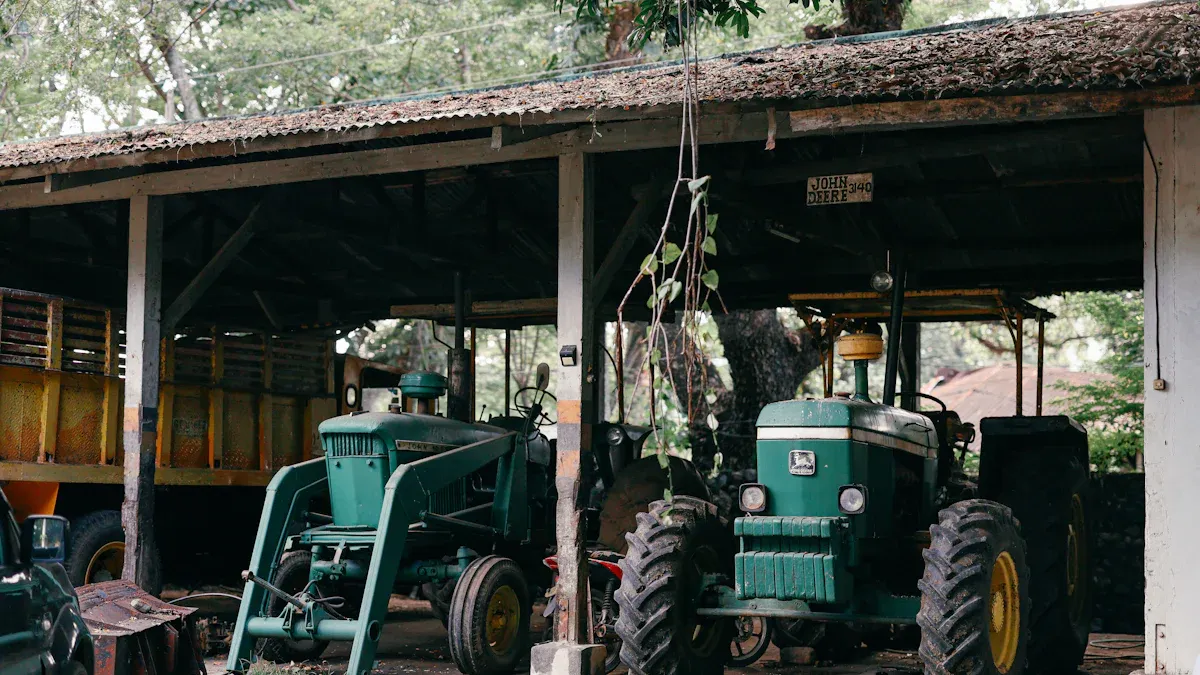
Richtige Lagerung
Innen- und Außenlagerung
Sie schützen Ihren Traktor vor Rost und Wetterschäden, wenn Sie ihn richtig lagern Kaltes Wetter und Feuchtigkeit können Metallteile korrodieren und Flüssigkeiten einfrieren, wenn Sie Zugang zu einer Garage oder Scheune haben, lagern Sie Ihren Traktor im Innenbereich, dies schützt ihn vor Regen, Schnee, Sonne, wenn kein Innenlager verfügbar ist, verwenden Sie eine hochwertige Abdeckung, um Ihren Traktor vor Witterungseinflüssen zu schützen Eine richtige Lagerung verhindert Rost und hält Ihren Traktor arbeitsbereit.
- Nach Möglichkeit drinnen lagern.
- Verwenden Sie eine langlebige Abdeckung für die Lagerung im Freien.
- Schützen Sie Ihren Traktor vor Schnee, Eis und direkter Sonneneinstrahlung.
Abdeckung und Nagetierprävention
Sie verringern das Risiko von Schäden, wenn Sie Ihren Traktor abdecken und verhindern, dass Nagetiere nisten Nagetiere können Drähte kauen und Nester in Motorräumen bauen Verwenden Sie Abdeckungen, die eng sitzen und die Einstiegspunkte blockieren Überprüfen Sie Ihren Traktor regelmäßig auf Anzeichen von Schädlingen Entfernen Sie Nahrungsquellen und halten Sie den Lagerbereich sauber.
Hinweis: Die Vorbeugung von Nagetieren hilft Ihnen, elektrische Probleme und kostspielige Reparaturen zu vermeiden.
Vorbereitung außerhalb der Saison
Kraftstoffstabilisator und Batterieentfernung
Sie bereiten Ihren Traktor auf lange Zeiträume der Inaktivität vor, indem Sie wichtige Schritte befolgen Fügen Sie Kraftstoffstabilisator in den Tank, wenn Sie Ihren Traktor länger als eine Woche nicht benutzen werden Dadurch wird verhindert, dass sich Wasser im Kraftstoff ansammelt und der Motor vor Rost geschützt Lassen Sie den Motor einige Minuten laufen, um den Stabilisator zu zirkulieren Nehmen Sie die Batterie ab und lagern Sie sie an einem kühlen, trockenen Ort. Reinigen Sie die Anschlüsse und prüfen Sie auf Korrosion Diese Schritte helfen Ihnen, Batterieausfall und Schäden an der Kraftstoffanlage zu vermeiden.
- Kraftstoffstabilisator vor der Lagerung hinzufügen.
- Führen Sie den Motor aus, um den Stabilisator zu verteilen.
- Entfernen und lagern Sie den Akku an einem sicheren Ort.
- Saubere Batterieklemmen und überprüfe den Flüssigkeitsstand.
| Checkliste außerhalb der Saison | Aktion |
|---|---|
| Kraftstoffsystem | Stabilisator hinzufügen, Motor laufen lassen |
| Batterie | Entfernen, reinigen, sicher lagern |
| Außen- und Anbaugeräte | Gründlich waschen und trocknen |
| Lagerbereich | Auf Nagetiere untersuchen |
Du Halten Sie Ihren Traktor in einem Top-Zustand Wenn Sie es regelmäßig reinigen, lagern Sie es richtig und bereiten Sie sich auf die Nebensaison vor. Diese Gewohnheiten helfen Ihnen, Korrosion, Rost und kostspielige Reparaturen zu vermeiden.
Intelligente Bedienung und Schulung

Intelligente Bedienung und fortlaufende Schulungen helfen Ihnen, das meiste Leben aus Ihrem Traktor herauszuholen Wenn Sie Ihre Ausrüstung verstehen und sichere Gewohnheiten befolgen, reduzieren Sie den Verschleiß, verhindern Unfälle und sparen Geld bei Reparaturen.
Bedienungsanleitung
Wichtige Abschnitte zur Überprüfung
Wertvolles Wissen gewinnen Sie, wenn Sie die Bedienungsanleitung Ihres Traktors lesen Viele Besitzer überspringen diesen Schritt, aber das Handbuch enthält wesentliche Informationen, die Ihnen helfen, Ihren Traktor richtig zu warten und zu bedienen.
- Wartungschecklisten führen Sie durch tägliche, wöchentliche und saisonale Aufgaben.
- Kalibrierungsanweisungen helfen Ihnen, Einstellungen für verschiedene Jobs anzupassen.
- In den Abschnitten zur Fehlerbehebung erfahren Sie, wie Sie häufige Probleme alleine lösen können.
Durch das Verständnis dieser Abschnitte gehen Sie Probleme schnell an und reduzieren Ausfallzeiten Sie vermeiden auch unnötige Reparaturkosten Ein Bauer in Ohio teilte mit, dass die Überprüfung des Handbuchs ihm geholfen hat, ein hydraulisches Leck zu beheben, ohne einen Mechaniker anzurufen Sie finden Bedienungsanleitungen und Sicherheitsleitfäden unter Penn State-Erweiterung und Seite zur Agrarsicherheit der OSHA.
Sichere Nutzungsgewohnheiten
Warm-Up und Cool-Down
Sie schützen den Motor und die Hydrauliksysteme Ihres Traktors, wenn Sie die Maschine vor schwerer Arbeit aufwärmen Lassen Sie den Motor einige Minuten im Leerlauf laufen, um Öl zu zirkulieren und Betriebstemperatur zu erreichen Lassen Sie den Traktor nach dem Ende abkühlen, bevor Sie ihn abschalten Diese Gewohnheit verhindert einen Thermoschock und verlängert die Lebensdauer des Bauteils.
Vermeidung von Überlastung
Sie vermeiden kostspielige Schäden, indem Sie die empfohlenen Belastungsgrenzen Ihres Traktors nie überschreiten Überlastung belastet Motor, Getriebe und Hydrauliksystem Immer Kupplungsausrüstung an die vom Hersteller empfohlenen Punkte und überprüfen, ob die Kupplungen stabil und ordnungsgemäß montiert sind. Überprüfen Sie vor dem Abschleppen oder der Verwendung von Waggons die Verbindungen und bestätigen Sie, dass sie sicher sind.
Sicherheitsorganisationen empfehlen diese Gewohnheiten jedem Bediener:
- Sich sicher anschnallen.
- Vermeiden Sie Gräben, Böschungen und Löcher.
- Reduzieren Sie die Geschwindigkeit beim Wenden oder Überqueren von Pisten.
- Halten Sie sich abseits von steilen Hängen auf.
- Fahrgäste nicht zulassen.
- Bestätigen Sie, dass alle klar sind, bevor Sie umziehen.
- Reibungslos arbeiten.
- Nur an genehmigte Punkte anschließen.
- Bremsen sicher einstellen, wenn sie angehalten werden.
Tipp: Immer die Zapfwelle ausschalten, den Motor abstellen und die Tasten ausziehen, bevor Sie den Sitz verlassen.
Sie können mehr über den sicheren Traktorbetrieb in der National Ag Safety Database erfahren und #TractorSafety in den sozialen Medien folgen, um Community-Tipps zu erhalten.
Wartungsaufzeichnungen
Vorteile des Tracking-Dienstes
Sie erhöhen den Wiederverkaufswert und die Zuverlässigkeit Ihres Traktors, indem Sie detaillierte Wartungsaufzeichnungen führen Käufer suchen Traktoren mit einer kompletten Service-Historie, die eine gute Pflege und regelmäßige Wartung zeigt Der Gesamtzustand und die dokumentierte Pflege sind wichtiger als die stundenlange Nutzung.
| Nutzen von Wartungsunterlagen | Auswirkungen auf die Langlebigkeit von Traktoren |
|---|---|
| Einhaltung des Serviceplans | Weniger Pannen, längere Lebensdauer |
| Vollständiger Serviceverlauf | Höherer Wiederverkaufswert |
| Nachweis der regelmäßigen Wartung | Größeres Käufervertrauen |
Eine aktuelle Studie ergab, dass Traktoren mit dokumentierten Service-Historien für bis zu 201 TP11 T mehr verkauft werden als solche ohne Aufzeichnungen Sie können ein Notebook, eine Tabellenkalkulation oder eine mobile App verwenden, um Ölwechsel, Inspektionen und Reparaturen zu verfolgen.
Hinweis: Eine konsistente Aufzeichnung hilft Ihnen, Muster zu erkennen, vorbeugende Wartungsarbeiten zu planen und zukünftigen Käufern Sorgfalt zu zeigen.
Sie bauen einen sichereren, zuverlässigeren Traktor, wenn Sie intelligente Bedienung, fortlaufende Schulung und sorgfältige Aufzeichnung kombinieren. Diese Gewohnheiten zahlen sich aus, da weniger Reparaturen, eine längere Lebensdauer der Ausrüstung und ein besserer Wiederverkaufswert erforderlich sind.
Häufige Fehler, die Sie vermeiden sollten
Wartung überspringen
Sie riskieren die Zuverlässigkeit Ihres Traktors, wenn Sie die regelmäßige Wartung überspringen Viele Besitzer glauben, dass ihre Ausrüstung lange Stunden ohne Aufmerksamkeit bewältigen kann, aber diese Gewohnheit führt zu Ausfällen und teuren Reparaturen Sie sollten immer den Wartungsplan in Ihrem Bedienungsanleitung beachten Vernachlässigung der Schmierung führt dazu, dass bewegliche Teile schnell verschleißen Vergessen, den Flüssigkeitsstand zu überprüfen, kann zu Überhitzung oder Hydraulikversagen führen Wenn Sie Serviceaufzeichnungen ignorieren, können Sie wichtige Inspektionen und Austausch verpassen.
Tipp: Richten Sie Erinnerungen für Ölwechsel, Filterwechsel und Inspektionen ein. Konsequente Pflege sorgt dafür, dass Ihr Traktor reibungslos läuft.
Traktor Service Profis berichten oft von diesen häufigen Fehlern:
- Maschinen an ihre Grenzen bringen, Fehlfunktionen und kostspielige Reparaturen riskieren.
- Vernachlässigung der regelmäßigen Schmierung, die für einen reibungslosen Betrieb und eine lange Lebensdauer unerlässlich ist.
- Vergessen, den Überblick über die Serviceaufzeichnungen zu behalten, was zu verpassten Wartungsplänen führt.
- Das Versäumnis, die Gerätenutzung an saisonale Bedingungen anzupassen, was den Betrieb erschweren kann.
- Werkzeuge werden nicht regelmäßig gereinigt, was zu einer verminderten Effizienz und möglicherweise Rost führt.
Sie vermeiden die meisten Probleme, indem Sie sich an eine Routine halten und Ihren Traktor sauber und gut geschmiert halten.
Verwendung falscher Teile oder Flüssigkeiten
Sie denken vielleicht, dass jedes Öl oder jeder Filter funktioniert, aber die Verwendung falscher Teile oder Flüssigkeiten kann Ihren Traktor beschädigen Hersteller konstruieren Motoren und Hydrauliksysteme für bestimmte Produkte Wenn Sie die falsche Viskosität verwenden, kann Ihr Traktor überhitzen Dicke Flüssigkeiten können Pumpenhungern und - ausfall verursachen Inkompatible Additive schwächen die hydraulische Leistung und beschädigen Dichtungen oder Schläuche Nasses Bremsengeschwätz und - ausfall resultieren oft aus der Verwendung nicht zugelassener Flüssigkeiten.
- Systemüberhitzung durch falsche Viskosität.
- Pumpenkavitation und Ausfall aufgrund unsachgemäßer Flüssigkeitsführung.
- Schlechte hydraulische Leistung durch falsche Additive.
- Dichtungs- und Schlauchschäden durch inkompatible Flüssigkeiten.
- Nasses Bremsengeschwätz und Ausfall durch falsche Flüssigkeiten.
- Gewährleistungsausfall bei Verwendung nicht konformer Flüssigkeiten.
Hinweis: Überprüfen Sie immer Ihr Handbuch auf empfohlene Flüssigkeiten und Teile. Verwendung zugelassener Produkte Schützt Ihren Traktor und behält Ihre Garantie gültig.
Schlechte Lagerungspraktiken
Sie verkürzen das Leben Ihres Traktors, wenn Sie ihn unsachgemäß lagern Die Einwirkung von Regen, Schnee und Sonnenlicht verursacht Rost und schwächt die Reifen Nagetiere können sich im Motorraum einnisten und Drähte kauen, wenn Sie Ihren Traktor ohne Abdeckung draußen lassen, sammelt sich Feuchtigkeit und beschädigt elektrische Anlagen, Sie sollten Ihren Traktor drinnen lagern oder eine hochwertige Abdeckung verwenden, den Lagerbereich reinigen und Einstiegspunkte blockieren, um Schädlingen vorzubeugen.
- Bewahren Sie Ihren Traktor an einem trockenen, geschützten Ort auf.
- Verwenden Sie Abdeckungen zum Schutz vor Witterungseinflüssen und UV-Strahlen.
- Auf Nagetiere untersuchen und Nahrungsquellen entfernen.
- Reinigen Sie Ihren Traktor vor der Lagerung, um Korrosion vorzubeugen.
Callout: Gute Lagergewohnheiten verhindern Rost, elektrische Probleme und kostspielige Reparaturen Sie halten Ihren Traktor bereit für die Arbeit, wenn Sie ihn vor Witterungseinflüssen schützen.
Sie vermeiden diese häufigen Fehler, indem Sie einen Wartungsplan einhalten, Verwendung der richtigen Produkte, ‘und Ihren Traktor richtig zu lagern Diese Gewohnheiten helfen Ihnen, das meiste Leben aus Ihrer Ausrüstung herauszuholen.
Kleine Probleme ignorieren
Möglicherweise bemerken Sie einen kleinen Tropfen unter Ihrem Traktor oder hören ein leises Quietschen, wenn Sie das Lenkrad drehen Viele Besitzer ignorieren diese kleineren Probleme, weil sie denken, dass sie die Leistung nicht beeinträchtigen Kleine Probleme signalisieren oft größere Probleme, die darauf warten, dass sie passieren Wenn Sie sie frühzeitig angehen, sparen Sie Zeit und Geld.
Ein loser Bolzen oder ein winziges Leck können zu einer großen Panne heranwachsen, zum Beispiel kann ein kleines hydraulisches Leck den Flüssigkeitsstand senken und die Pumpe beschädigen Ein abgenutzter Riemen kann bei schwerer Arbeit einrasten und Ihren Traktor auf dem Feld aufhalten, Sie verhindern diese Situationen, indem Sie schnell handeln.
Tipp: Untersuchen Sie immer neue Geräusche, Gerüche oder Veränderungen in der Funktionsweise Ihres Traktors. Die frühzeitige Aufmerksamkeit sorgt dafür, dass Ihre Ausrüstung zuverlässig ist.
Häufige kleine Probleme, die Sie niemals ignorieren sollten, sind:
- Geringfügige Flüssigkeitslecks unter dem Motor oder Hydrauliksystem
- Ungewöhnliche Geräusche vom Getriebe oder der Lenkung
- Leichte Änderungen im Brems- oder Kupplungsverhalten
- Risse in Schläuchen oder Gürteln
- Flackernde Armaturenbrettleuchten
- Kleine Rostflecken auf Metalloberflächen
- Lose oder fehlende Bolzen und Befestigungselemente
Sie können diese Probleme mit einer einfachen Checkliste erkennen, bevor sie sich verschlimmern:
| Kleines Problem | Mögliche Ursache | Empfohlene Maßnahme |
|---|---|---|
| Flüssigkeitstropf | Getragene Dichtung oder Dichtung | Überprüfen und ersetzen Sie das Teil |
| Quietschende Lenkung | Trockengelenk oder Buchse | Bewegliche Teile schmieren |
| Dim-lichter | Schwache Batterie oder Verkabelung | Klemmen reinigen, Drähte überprüfen |
| Rissschlauch | Alter oder Hitzeschaden | Schlauch sofort ersetzen |
| Rostfleck | Feuchtigkeitsexposition | Reinigen und Schutzmittel auftragen |
Wenn Sie eines dieser Anzeichen bemerken, warten Sie nicht Sie sollten die betroffene Stelle inspizieren und so schnell wie möglich Reparaturen durchführen Kleine Reparaturen kosten weniger und nehmen weniger Zeit in Anspruch als die Behebung eines größeren Fehlers.
Callout: Das Ignorieren kleiner Probleme kann zu teuren Reparaturen und unerwarteten Ausfallzeiten führen. Sie schützen Ihre Investition, indem Sie wachsam bleiben und schnell handeln.
Mehr Ratschläge zur Problemfrüherkennung finden Sie unter Penn State Extension: Traktorwartung und nehmen Sie an Diskussionen mit anderen Eigentümern in TractorByNet-Foren teil.
Sie bauen eine Gewohnheit der regelmäßigen Inspektion und schnellen Reaktion Diese Gewohnheit hilft Ihnen, kostspielige Pannen zu vermeiden und hält Ihren Traktor am Laufen, wenn Sie es am meisten brauchen Kleine Probleme sind heute leichter zu beheben als große morgen.
Sie verlängern die Lebensdauer Ihres Traktors, wenn Sie täglichen Inspektionen, routinemäßigen Wartungsarbeiten und intelligenten Betriebsgewohnheiten folgen Regelmäßige Pflege hilft Ihnen, kleine Probleme frühzeitig zu erkennen und teure Reparaturen zu vermeiden Verwenden Sie Qualitätsteile und Flüssigkeiten, halten Sie Ihren Traktor sauber und lagern Sie ihn ordnungsgemäß. Verfolgen Sie Ihre Wartungsaufzeichnungen für eine bessere Zuverlässigkeit.
Beginnen Sie noch heute mit diesen Gewohnheiten Sie sparen Geld, reduzieren Ausfallzeiten und genießen jahrelang einen zuverlässigen Traktor. . Die Pflege Ihrer Ausrüstung belohnt Sie jede Saison.
FAQ
Wie oft sollten Sie den Flüssigkeitsstand Ihres Traktors überprüfen?
Sie sollten Motoröl, Kühlmittel und Hydraulikflüssigkeit vor jedem Gebrauch überprüfen Diese Gewohnheit hilft Ihnen, Lecks zu fangen und Überhitzung zu verhindern Tägliche Kontrollen sorgen dafür, dass Ihr Traktor reibungslos läuft und verringern das Risiko kostspieliger Reparaturen.
Wie lagert man seinen Traktor am besten im Winter?
Bewahren Sie Ihren Traktor möglichst drinnen auf Verwenden Sie eine hochwertige Abdeckung, um ihn vor Feuchtigkeit und Sonnenlicht zu schützen Nehmen Sie die Batterie ab und fügen Sie Kraftstoffstabilisator hinzu Reinigen Sie den Traktor gründlich, um Rost - und Nagetierschäden zu vermeiden.
Woher wissen Sie, wann Sie den Luftfilter Ihres Traktors austauschen müssen?
Überprüfen Sie den Luftfilter monatlich oder nach dem Arbeiten unter staubigen Bedingungen Ersetzen Sie ihn, wenn Sie starken Schmutz, Beschädigungen oder einen verringerten Luftstrom sehen Ein Reinluftfilter verbessert die Motorleistung und Kraftstoffeffizienz.
Warum ist das Einfetten von beweglichen Teilen wichtig?
Das Einfetten beweglicher Teile verringert die Reibung und verhindert Verschleiß, Sie sollten alle 10 Betriebsstunden Laderarme, Lenkkomponenten und Antriebswellen einfetten Regelmäßige Schmierung verlängert die Lebensdauer Ihres Traktors und senkt die Reparaturkosten.
Was ist zu tun, wenn man ein kleines Leck bemerkt?
Untersuchen Sie sofort die Quelle Überprüfen Sie Dichtungen, Schläuche und Armaturen auf Schäden Ersetzen Sie verschlissene Teile und reinigen Sie den Bereich Kleine Lecks können zu größeren Problemen führen, wenn sie ignoriert werden, so dass promptes Handeln Zeit und Geld spart.
Wie kann man Reifenschwamm und UV-Schäden vorbeugen?
Parken Sie Ihren Traktor im Schatten oder im Innenbereich Verwenden Sie Reifenabdeckungen für die Lagerung im Freien Reinigen Sie Reifen regelmäßig und bewegen Sie Ihren Traktor gelegentlich, um Flat Spots zu verhindern Diese Schritte schützen Reifen vor Rissen und verlängern ihre Lebensdauer.
Ist es notwendig, Wartungsunterlagen zu führen?
Ja. Wartungsaufzeichnungen helfen Ihnen, Serviceintervalle und Spotmuster zu verfolgen Detaillierte Aufzeichnungen erhöhen den Wiederverkaufswert und zeigen den Käufern, dass Ihr Traktor die richtige Pflege erhalten hat Verwenden Sie ein Notebook, eine Tabelle oder eine App für eine einfache Verfolgung.
Was sind die Anzeichen für Batterieprobleme?
Suchen Sie nach langsamen Motorstarts, gedämpftem Licht oder Korrosion an Klemmen Testen Sie die Batteriespannung regelmäßig Reinigen Sie Klemmen und verwenden Sie während der Lagerung einen Batterietender. Früherkennung verhindert unerwartete Ausfälle.