Correo electrónico: [email protected] WhatsApp: +8618266768780
Correo electrónico: [email protected] WhatsApp: +8618266768780


Explore las diferencias clave para encontrar su excavadora ideal.
| Características | Qilu Miniexcavadora 1.0T | Mini excavadora Qilu 2.0T |
|---|---|---|
| Peso operativo | 1,0 toneladas para tareas compactas. | 2,0 toneladas para trabajos más pesados. |
| Opciones de motor | Múltiples opciones de motores disponibles. | Desarrollado por Yanmar Diésel de 3 cilindros. |
| Altura máxima de excavación | 2580 mm para proyectos pequeños. | 3540 mm para tareas mayores. |
| Altura máxima de descarga | 1830 mm para una carga eficiente. | 2440 mm para un mejor alcance. |
| Profundidad máxima de excavación | 1630 mm para zanjas poco profundas. | 2310 mm para excavación más profunda. |
| Características de la cabina | Ergonómico con jaula antivuelco opcional. | Ergonómico con opciones de calefacción y ventilador. |
| Sistema hidráulico | Avanzado, aumenta la eficiencia en 30%. | Control piloto para un buen funcionamiento. |
| Estándares de emisión | Cumple con los estándares internacionales. | Certificado EURO5 y EPA. |
| Capacidad del cucharón | 0,02 « 0,025 m³ para cargas pequeñas. | 0,04 m³ para materiales de mayor tamaño. |
| Dimensiones | ~2650 x 880 x 1330 mm. | ~3770 x 1050 x 2200 mm. |
Elegir entre una excavadora de 1,0T y 2,0T depende del tamaño, el espacio y la carga de trabajo de su proyecto. Si trabaja con frecuencia en patios traseros estrechos o necesita navegar por caminos estrechos, apreciará el diseño compacto de un modelo de 1,0T. Para tareas de paisajismo o construcción más grandes que requieren más potencia de excavación, la opción 2.0T le brinda alcance y fuerza adicionales. Piense en su lugar de trabajo, los tipos de materiales que mueve y su presupuesto antes de decidir. Su elección determina la eficiencia con la que completa su trabajo.
Quiere tomar una decisión informada al elegir entre las miniexcavadoras 1.0T y 2.0T. La siguiente tabla compara las especificaciones más importantes una al lado de la otra. Estas especificaciones provienen de Qilu Machinery y de los principales estándares de la industria, para que pueda confiar en los números.
| Especificación | Mini excavadora Qilu 1.0T | Mini excavadora Qilu 2.0T |
|---|---|---|
| Peso operativo | 1,0 tone | 2,0 tone |
| Opciones de motor | Koop/Kubota/Briggs & Stratton | Yanmar diésel de 3 cilindros |
| Potencia del motor | 7,6 kW -10 KW | 13,5 KW |
| Altura máxima de excavación | 2580mm | 3540mm |
| Altura máxima de descarga | 1830mm | 2440mm |
| Profundidad máxima de excavación | 1630 mm | 2310mm |
| Capacidad del cucharón | 0,02 -0,025 m³ | 0,04 m³ |
| Sistema hidráulico | Aumento avanzado de eficiencia 30% | Control piloto, buen funcionamiento |
| Características de la cabina | Jaula antivuelco ergonómica opcional | Cabina de ventilación/ventilador ergonómica opcional |
| Estándares de emisión | Internacional (UE/EE.UU.) | EURO5, EPA |
| Dimensiones (L x W x H) | ~2650 x 880 x 1330 mm | ~3770 x 1050 x 2200 mm |
Puede ver especificaciones más detalladas y comparaciones de la industria en Mundo de equipos o Guía de equipos de construcción.
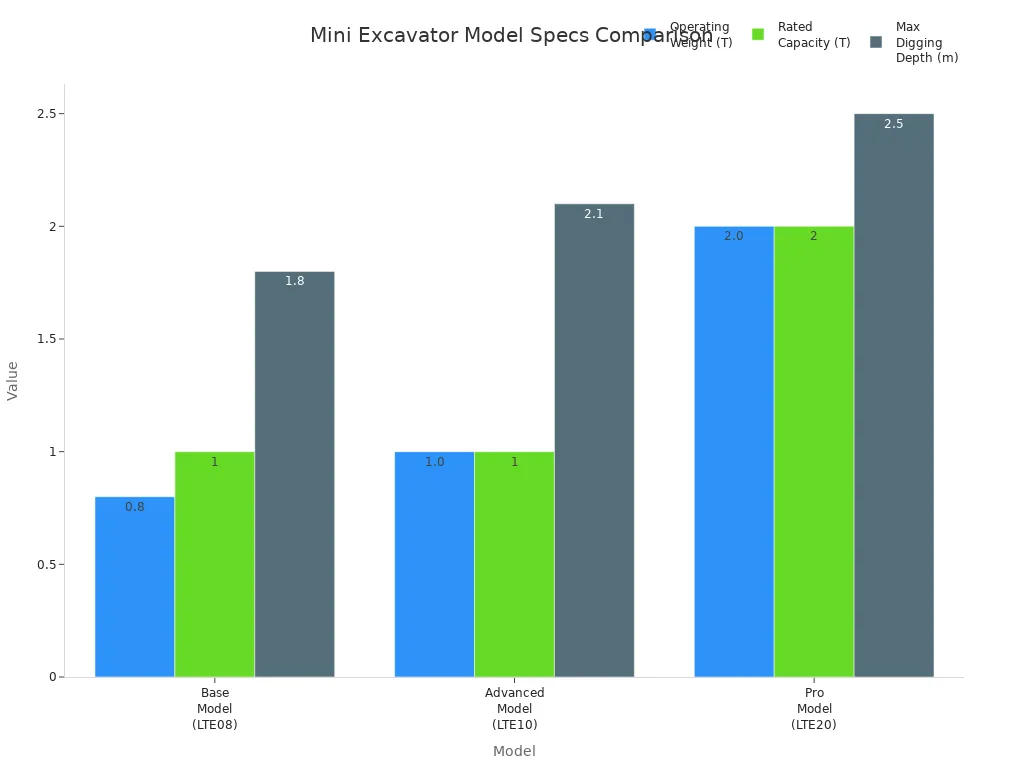
Notas varias diferencias clave al comparar estas dos excavadoras. El Modelo 2.0T le brinda más profundidad de excavación, mayor alcance y un cucharón más grande. Obtienes un motor más potente y controles piloto hidráulicos avanzados, lo que significa un funcionamiento más suave y más potencia para trabajos difíciles. La cabina del 2.0T ofrece mejoras de comodidad, como opciones de calefacción y ventilador, que te ayudan a trabajar más horas en diferentes climas.
La miniexcavadora de 1,0T destaca por su tamaño compacto y peso más ligero. Puedes maniobrarlo fácilmente en espacios reducidos, como patios urbanos o interiores de edificios. Las opciones de motor te permiten elegir lo que se adapta a tus regulaciones locales y preferencias de combustible. El avanzado sistema hidráulico aumenta tu eficiencia, por lo que terminas las tareas de paisajismo o construcción pequeña más rápido.
Por ejemplo, si necesitas cavar zanjas para riego en un jardín pequeño, el modelo 1.0T te permite moverte entre macizos de flores sin dañar el paisaje. Si trabaja en un sitio más grande, como la instalación de tuberías para una nueva subdivisión, el modelo 2.0T le brinda alcance y potencia de elevación para manejar cargas más grandes y zanjas más profundas.
Consejo: Haga coincidir siempre el tamaño de la excavadora con el de su lugar de trabajo. Una máquina más grande puede ahorrar tiempo en proyectos grandes, pero una más pequeña le ayuda a evitar obstáculos y reduce el daño al césped.
Puede explorar más estudios de casos y experiencias de usuario en Para ConstructionPros o siga las actualizaciones de la industria en Construcción LinkedIn.
Al comprender estas principales diferencias, puede elegir la excavadora que se adapte a sus necesidades y maximice su productividad.
Encontrará que la miniexcavadora de 1,0T sobresale en entornos donde el espacio es limitado y la precisión importa. Si trabaja en barrios urbanos, esta máquina le permite moverse entre casas y por caminos estrechos sin dañar la propiedad. Los paisajistas suelen utilizarla para cavar pequeñas zanjas para riego o plantar árboles en jardines estrechos. Para la demolición en interiores, puede llevar la excavadora a través de puertas estándar y operar de forma segura dentro de los edificios. Un ejemplo del mundo real proviene de un contratista de una ciudad concurrida que utilizó el modelo 1.0T para reemplazar las líneas de agua en un patio trasero con solo una puerta de 90 cm. El tamaño compacto permitía el acceso sin quitar vallas ni paisajismo. Puede leer más sobre aplicaciones similares en Para ConstructionPros.
Obtienes varios beneficios importantes al elegir la miniexcavadora de 1,0T. El tamaño compacto significa que puedes maniobrar fácilmente para sortear obstáculos, lo cual es esencial para proyectos de pequeña escala. El tren de aterrizaje con orugas te lo ofrece estabilidad en terrenos irregulares, para que puedas trabajar con confianza en pendientes o terrenos accidentados. Los costos de mantenimiento se mantienen bajos porque Eaton la bomba hidráulica aumenta la eficiencia y reduce el desgaste. La siguiente tabla resume estas ventajas:
| Ventaja | Descripción |
|---|---|
| Estabilidad en terrenos irregulares | El tren de aterrizaje con orugas mejora la estabilidad en terrenos irregulares, lo que lo hace ideal para diversas condiciones. |
| Tamaño compacto | Permite operar en espacios reducidos, lo cual es esencial para proyectos de pequeña escala. |
| Eficiencia en Costos de Mantenimiento | El uso de una bomba hidráulica Eaton contribuye a la eficiencia general, impactando positivamente los costos de mantenimiento. |
También te beneficias de una cabina ergonómica que reduce la fatiga durante turnos largos. El sistema de monitoreo inteligente lo mantiene actualizado sobre el estado del equipo, para que pueda abordar los problemas antes de que se conviertan en problemas. Por ejemplo, el propietario de una empresa de paisajismo informó que el monitoreo en tiempo real les ayudó a programar el mantenimiento de manera eficiente, reduciendo el tiempo de inactividad y manteniendo los proyectos en marcha.
Consejo: si trabaja con frecuencia en áreas residenciales o necesita mover equipos entre sitios, la miniexcavadora de 1,0T ofrece fácil transporte y almacenamiento.
Debe considerar las limitaciones de la miniexcavadora de 1,0T antes de tomar una decisión. El tamaño más pequeño significa que tiene menos profundidad de excavación y capacidad de elevación en comparación con los modelos más grandes. Si sus proyectos implican mover materiales pesados o cavar zanjas profundas, es posible que deba planificar múltiples pases o utilizar equipo adicional. Por ejemplo, un contratista que trabaja en un nuevo camino de entrada descubrió que el modelo 1.0T manejaba la nivelación inicial pero necesitaba tiempo adicional para mover rocas más grandes. Puede encontrar más información sobre las capacidades del equipo en Mundo de equipos. Adapte siempre la máquina a las exigencias de su proyecto para garantizar eficiencia y seguridad.
Quieres saber si la miniexcavadora de 1.0T se adapta a tu estilo de trabajo y necesidades del proyecto. Este modelo atiende a una amplia gama de usuarios que valoran la precisión, la maniobrabilidad y la rentabilidad. Estos son los tipos de usuarios que más se benefician de la miniexcavadora de 1,0T:
Consejo: Si valora el transporte y el almacenamiento fáciles, la miniexcavadora de 1,0T cabe en un remolque pequeño y se guarda en un garaje o cobertizo estándar. Ahorras tiempo moviéndote entre sitios y reduces los costos de almacenamiento.
Cuando comparas el modelo 1.0T con el 2.0T, ves que el 1.0T sobresale para los usuarios que priorizan el acceso, la precisión y los menores costos operativos. Si tus proyectos involucran espacios reducidos o movimientos frecuentes, esta excavadora compacta te brinda la flexibilidad y eficiencia que necesitas.
Puede utilizar la miniexcavadora de 2,0T para una amplia gama de proyectos. Esta máquina maneja cargas más pesadas y tareas más grandes sin dejar de encajar en espacios reducidos. Los expertos en equipos de construcción recomiendan el modelo 2.0T para los siguientes tipos de trabajo:
| Tipo de aplicación | Descripción |
|---|---|
| Pequeños proyectos | Ideal para obras pequeñas en varios entornos. |
| Trabajo agrícola | Adecuado para tareas en jardines, huertas y granjas. |
| Obras Municipales | Eficaz para cavar trincheras y otras tareas municipales. |
Por ejemplo, un contratista de paisajismo utilizó la miniexcavadora de 2,0T para cavar zanjas de riego en un gran huerto. El alcance y la profundidad de excavación de la máquina permitieron al equipo terminar el trabajo en menos tiempo que con un modelo más pequeño. En entornos municipales, puedes utilizar esta excavadora para reparar aceras o instalar sistemas de drenaje sin bloquear el tráfico. Para más ejemplos de aplicaciones municipales, puedes visitar Guía de equipos de construcción.
Obtienes varias ventajas al elegir la miniexcavadora de 2.0T. Este modelo equilibra potencia y versatilidad, por lo que puedes afrontar trabajos exigentes y aun así maniobrar en áreas estrechas. El avanzado sistema de control del piloto hidráulico le brinda un funcionamiento suave y preciso. Puede levantar materiales más pesados y cavar zanjas más profundas en comparación con máquinas más pequeñas. El motor diésel Yanmar de 3 cilindros proporciona un rendimiento confiable y cumple con estrictos estándares de emisiones, lo que le ayuda a cumplir con las regulaciones ambientales.
Muchos usuarios aprecian la cabina ergonómica, que reduce la fatiga durante turnos largos. Características opcionales como calefacción o cabina de ventilador te mantienen cómodo en cualquier época del año. Una empresa constructora utilizó la miniexcavadora 2.0T para limpiar los escombros después de una tormenta. El operador trabajó durante horas sin molestias gracias a la cabina mejorada. Puedes leer más sobre los beneficios de las miniexcavadoras Para ConstructionPros.
Consejo: Si necesitas una máquina que se adapte a diferentes lugares de trabajo y condiciones climáticas, la miniexcavadora 2.0T ofrece la flexibilidad que deseas.
Puede personalizar la miniexcavadora de 2,0T para satisfacer sus necesidades específicas. Qilu Machinery ofrece varias opciones de actualización, como una cabina de ventilador para climas cálidos o una cabina de calefacción para climas fríos. Puede seleccionar accesorios como cubos, barrenas o martillos hidráulicos para ampliar las capacidades de su máquina. Por ejemplo, un administrador de propiedades agregó un pulgar hidráulico a su excavadora de 2.0T, lo que facilitó la recogida y el movimiento de ramas caídas después de una tormenta.
El diseño de cola cero mejora la estabilidad y el control, especialmente en sitios urbanos o concurridos. El avanzado sistema hidráulico le permite cambiar entre modos de trabajo, para que pueda manejar todo, desde zanjas hasta nivelación. Si administra una flota, puede solicitar varias unidades con diferentes configuraciones para cubrir una variedad de tareas. Para obtener más información sobre personalización y accesorios, puede seguir las actualizaciones de la industria Construcción LinkedIn.
Nota: Personalizar su excavadora le ayuda a obtener el máximo valor de su inversión y garantiza que esté listo para cualquier proyecto.
Quieres saber si la miniexcavadora 2.0T se adapta a tu estilo de trabajo y necesidades del proyecto. Este modelo atiende a una amplia gama de usuarios que necesitan potencia adicional, excavación más profunda y más versatilidad que el modelo 1.0T. Estos son los tipos de usuarios que más se benefician de la miniexcavadora 2.0T:
Consejo: Si cambia con frecuencia entre diferentes sitios de trabajo o tipos de proyectos, la miniexcavadora 2.0T se adapta rápidamente. Puede agregar accesorios o mejorar la cabina para mayor comodidad, lo que la convierte en una inversión inteligente para empresas en crecimiento.
| Tipo de usuario | Necesidades clave | Cómo ayuda la miniexcavadora de 2,0T |
|---|---|---|
| Contratistas Generales | Potencia, alcance, versatilidad | Maneja cargas pesadas, excavación profunda |
| Trabajadores Municipales | Seguridad, funcionamiento compacto | Diseño de cola cero, acceso rápido al sitio |
| Empresas paisajísticas | Eficiencia, modelado del terreno | Cubo más grande, motor potente |
| Agricultores/Agrícolas | Suelo duro, riego, cercas | Excavación profunda, eliminación de escombros |
| Operadores de flotas de alquiler | Flexibilidad, amplio atractivo | Versátil, fácil de transportar |
Verás que la miniexcavadora de 2.0T se adapta a usuarios que necesitan más capacidad y flexibilidad que el modelo de 1.0T. Si sus proyectos exigen energía adicional, excavación más profunda o funciones avanzadas, esta máquina le ayudará a trabajar de forma más inteligente y rápida.
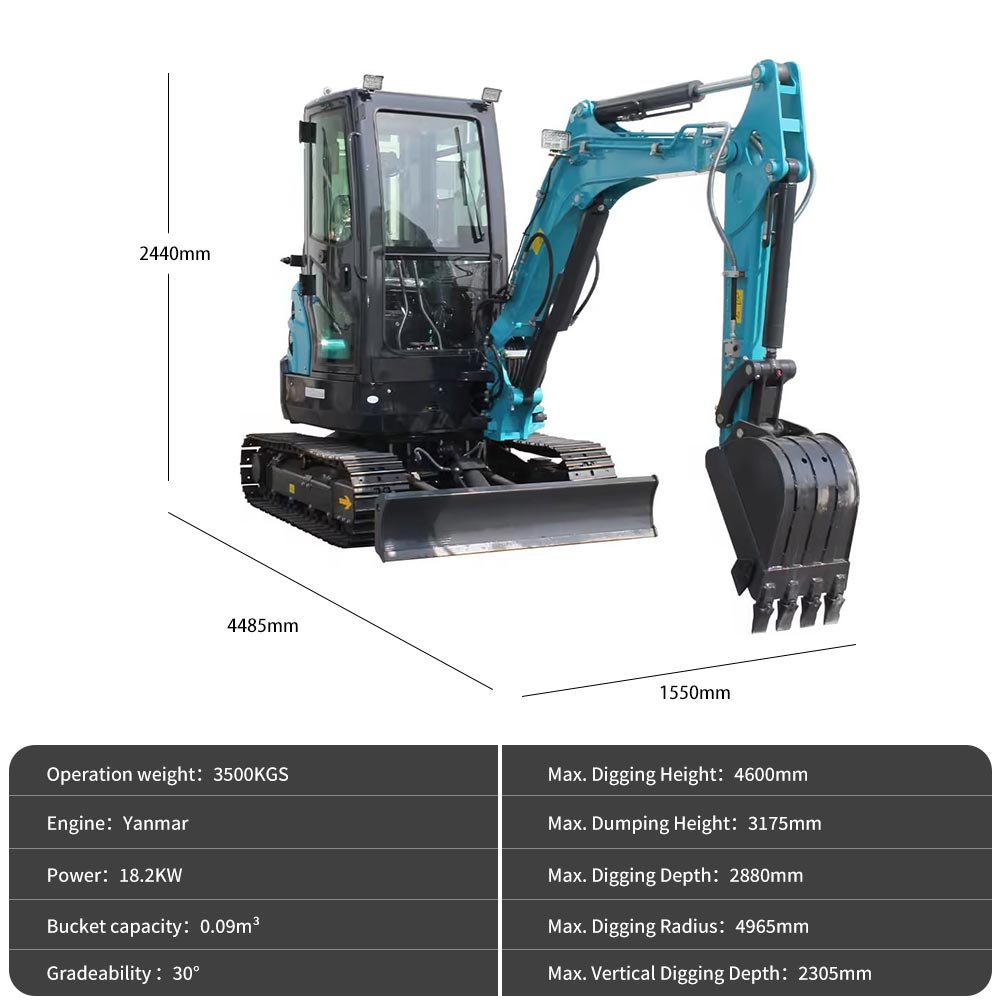
Quieres saber cuánto trabajo puede soportar cada máquina. El modelo 2.0T te brinda más profundidad de excavación y resistencia de elevación. Esto significa que puedes mover mayores cantidades de tierra o grava en una sola pasada. El modelo 1.0T funciona bien para trabajos más ligeros, como cavar pequeñas zanjas o plantar árboles. Si trabaja con frecuencia en proyectos que requieren excavación profunda o levantamiento de objetos pesados, el modelo 2.0T le ayudará a terminar más rápido.
| Característica | Miniexcavadora 1.0T | Mini excavadora de 2,0T |
|---|---|---|
| Profundidad máxima de excavación | 1630 mm | 2310mm |
| Altura máxima de excavación | 2580mm | 3540mm |
| Altura máxima de descarga | 1830mm | 2440mm |
| Capacidad del cucharón | 0,02 -0,025 m³ | 0,04 m³ |
| Fuerza máxima de excavación | 10,5 kN | Superior a 10,5 kN |
| Fuerza de excavación de cubos | 11,5 kN | Superior a 11,5 kN |
Consejo: si necesita cavar zanjas profundas para líneas de servicios públicos o levantar materiales pesados, el modelo 2.0T es la mejor opción. Para trabajos de paisajismo o reparación más pequeños, el modelo 1.0T ahorra tiempo y reduce el daño al césped.
El motor y el sistema hidráulico determinan la suavidad y eficiencia con la que puedes trabajar. La miniexcavadora de 2,0T utiliza un motor más potente y un sistema hidráulico de mayor capacidad. Esto le brinda tiempos de ciclo más rápidos y un control más preciso, especialmente cuando maneja suelos duros o cargas pesadas. El modelo 1.0T utiliza un motor más pequeño, que ahorra más combustible y es más fácil de mantener.
| Especificación | Miniexcavadora 1.0T | Mini excavadora de 2,0T |
|---|---|---|
| Potencia del motor | 7,6 -10 kW | 13,5 kW |
| Opciones de motor | Koop/Kubota/Briggs y Stratton | Yanmar diésel de 3 cilindros |
| Presión de trabajo | 6 MPa | Superior a 6 MPa |
| Sistema hidráulico | Aumento avanzado de eficiencia 30% | Control piloto, buen funcionamiento |
| Caudal | 2×24,2 + 3,2 L/min | Mayor caudal |
Notarás la diferencia cuando operes las máquinas. El modelo 2.0T responde rápidamente y maneja tareas exigentes con facilidad. El modelo 1.0T ofrece un rendimiento confiable para trabajos más livianos y le ayuda a ahorrar en costos de combustible.
A menudo trabajas en zonas con espacio limitado para moverse. La miniexcavadora de 1,0T destaca por su tamaño compacto. Puede conducirlo a través de puertas estrechas, entre edificios o incluso dentro de estructuras grandes. Los paisajistas y contratistas urbanos prefieren este modelo para trabajos en patios traseros o callejones estrechos. El modelo de 2,0T es más grande pero aún lo suficientemente compacto para la mayoría de los sitios residenciales y comerciales.
| Dimensión | Miniexcavadora 1.0T | Mini excavadora de 2,0T |
|---|---|---|
| Ancho | 880 mm | 1050 mm |
| Longitud | 2650 mm | 3770 mm |
| Altura | 1330 mm | 2200mm |
Nota: Si necesita evitar dañar el césped o el paisajismo, el modelo 1.0T le brinda más flexibilidad. Puede leer más sobre equipos compactos para espacios reducidos Mundo de equipos.
Puede enfrentarse a sitios de trabajo con puntos de acceso limitados. La miniexcavadora de 1,0T pasa por puertas estándar y puede transportarse en remolques más pequeños. Esto lo hace ideal para proyectos residenciales o sitios con entrada restringida. El modelo 2.0T requiere un poco más de espacio pero aún ingresa a la mayoría de las propiedades comerciales sin problemas. Si administra varios sitios en un día, la máquina más pequeña le ahorra tiempo al moverse entre ubicaciones.
Quiere obtener el mejor valor por su inversión. La miniexcavadora de 1,0T tiene un precio de compra más bajo, lo que la hace atractiva para pequeñas empresas, empresas de alquiler o propietarios de viviendas. El modelo de 2,0T cuesta más pero ofrece mayor productividad y versatilidad para proyectos más grandes.
| Modelo | Rango de precios (USD) |
|---|---|
| Miniexcavadora 1.0T | $3.000 --$3.500 |
| Mini excavadora de 2,0T | $10.000 --$12.000 |
También hay que considerar los costes operativos. El modelo 1.0T consume menos combustible y requiere menos energía, lo que mantiene bajos los gastos diarios. El modelo 2.0T consume más combustible pero le permite terminar grandes trabajos más rápido, lo que puede ahorrar dinero a largo plazo.
Quieres una máquina que sea fácil de mantener. La miniexcavadora de 1,0T presenta un diseño simple y menos componentes, lo que significa que gastas menos tiempo y dinero en servicios de rutina. El modelo 2.0T utiliza sistemas avanzados que pueden requerir atención más especializada, pero también incluye funciones que extienden los intervalos de servicio y reducen el tiempo de inactividad.
Consejo: El mantenimiento regular mantiene su máquina funcionando sin problemas y protege su inversión. Utilice el sistema de monitoreo inteligente en ambos modelos para realizar un seguimiento del rendimiento y programar el servicio antes de que surjan problemas.
Puede encontrar más consejos sobre mantenimiento y estrategias de ahorro de costos de expertos de la industria en Para ConstructionPros.
Debe considerar cómo moverá su excavadora entre sitios de trabajo. La miniexcavadora de 1,0T destaca por su diseño liviano. Puede transportarlo utilizando un remolque pequeño o incluso un remolque utilitario estándar. Muchos paisajistas y pequeños contratistas utilizan una camioneta con enganche de remolque. Esta configuración le ahorra tiempo y dinero, especialmente si trabaja en varios sitios en un solo día.
La miniexcavadora de 2,0T requiere un remolque más grande debido a su mayor peso y tamaño. Es posible que necesite un remolque de dos ejes y un vehículo con mayor capacidad de remolque. Esta configuración funciona bien para contratistas que manejan proyectos más grandes y no necesitan mover equipos con tanta frecuencia. Si gestiona una flota de alquiler, encontrará que el modelo 2.0T todavía se adapta a la mayoría de los remolques comerciales, pero debe consultar las normas de transporte locales.
Consejo: Siempre verifique la capacidad de remolque de su vehículo antes de transportar cualquier excavadora. La sobrecarga de su remolque puede generar riesgos de seguridad y problemas legales.
También debe pensar dónde guardará su excavadora cuando no esté en uso. La miniexcavadora de 1,0T cabe fácilmente en un garaje, cobertizo o unidad de almacenamiento pequeña estándar. Esto lo hace ideal para propietarios de viviendas, pequeñas empresas o cualquier persona con espacio limitado. Puede proteger su inversión contra el clima y los robos sin necesidad de un patio de equipos exclusivo.
La miniexcavadora de 2,0T ocupa más espacio. Es posible que necesite un cobertizo más grande o un área exterior segura. Muchos contratistas utilizan lotes cercados o bahías cubiertas para almacenar sus máquinas. Si opera en áreas urbanas, debe planificar el acceso y la seguridad. El almacenamiento adecuado prolonga la vida útil de su equipo y reduce los costos de mantenimiento.
Nota: Las máquinas compactas como el modelo 1.0T ofrecen más flexibilidad para el almacenamiento y el transporte. Los modelos más grandes como el 2.0T proporcionan más potencia pero requieren más planificación logística.
Quiere que su excavadora se encargue de una variedad de trabajos. Tanto las miniexcavadoras de 1,0T como las de 2,0T admiten una amplia gama de accesorios. Esta flexibilidad aumenta el valor de su inversión y le permite asumir más proyectos sin comprar máquinas adicionales.
Aquí hay una comparación de apegos comunes y sus usos:
| Adjunto | Caso de uso |
|---|---|
| Interruptor automático | Ideal para demolición y rotura de rocas. |
| Barrena | Perfecto para perforar agujeros en suelo o roca blanda. |
| Destripador | Eficiente para romper terrenos duros o asfaltos. |
Puedes cambiar entre estas herramientas rápidamente, lo que te ayuda a adaptarte a diferentes tareas en el mismo sitio. Por ejemplo, puedes usar un balde para cavar por la mañana y luego cambiar a una barrena para plantar árboles por la tarde.
Las tareas más comunes que puede realizar con archivos adjuntos incluyen:
Un contratista de paisajismo podría usar la miniexcavadora de 1,0T con un desgarrador para romper tierra compactada y luego colocar una barrena para perforar agujeros para postes de cercas. En un sitio más grande, podría usar el modelo de 2.0T con un rompedor para demoler concreto viejo y luego cambiar a un cucharón para hacer zanjas.
Consejo: Elija accesorios según sus tareas más frecuentes. Invertir en las herramientas adecuadas aumenta su productividad y le ayuda a aprovechar al máximo su excavadora.
Verá que tanto las miniexcavadoras de 1,0T como las de 2,0T ofrecen una gran versatilidad. El modelo 2.0T maneja accesorios más pesados y trabajos más grandes, mientras que el modelo 1.0T sobresale en espacios reducidos y cambios rápidos. Su elección depende de los tipos de proyectos que maneja con más frecuencia.
Debes comenzar evaluando los requisitos específicos de tu proyecto. El tipo de trabajo que planeas realizar guiará tu elección entre una miniexcavadora de 1,0T y una de 2,0T. Si trabaja en una construcción urbana o necesita operar en espacios reducidos, una máquina más liviana con un radio de giro más pequeño te ayudará a maniobrar fácilmente. Para tareas más grandes, como mover cargas pesadas o cavar zanjas más profundas, necesita un modelo con mayor capacidad de carga útil.
Considere la siguiente tabla para satisfacer las necesidades de su proyecto con la clase de peso operativo adecuada:
| Categoría | Escenarios de uso | Características | Ventajas | Desventajas |
|---|---|---|---|---|
| Clase de peso operativo | Construcción urbana, espacios reducidos | 1,0-2,0 tone (ISO 12183) | Ligero para callejones estrechos (radio de giro de 0,8-1,5 m) | Capacidad de carga limitada para proyectos de gran escala |
| Sitios más grandes, tareas más pesadas | 2,0 toneladas (Qilu Avanzado) | 20% mayor capacidad de carga útil para tareas más pesadas | Requiere un mayor acceso para el transporte |
Por ejemplo, si necesita reemplazar las líneas de agua en un patio trasero con acceso limitado, la miniexcavadora de 1,0T pasará por puertas estrechas y funcionará de manera eficiente. Si planea cavar cimientos para un edificio pequeño o mover grandes cantidades de tierra, el modelo de 2.0T le ahorrará tiempo y esfuerzo.
Consejo: anota las tareas principales que esperas completar. Adapte cada tarea a las capacidades enumeradas anteriormente. Este paso le ayuda a evitar elegir una máquina que sea demasiado pequeña o demasiado grande para sus necesidades.
Debes considerar tu presupuesto antes de tomar una decisión final. El precio de compra inicial y los costos operativos continuos pueden variar significativamente entre los dos modelos. La miniexcavadora de 1,0T ofrece una inversión inicial más baja, lo que se adapta a pequeñas empresas, empresas de alquiler y propietarios de viviendas. El Modelo 2.0T cuesta más pero ofrece mayor productividad para proyectos más grandes.
Aquí hay una lista de verificación simple para ayudarlo a evaluar su presupuesto:
Por ejemplo, una empresa de paisajismo con frecuentes trabajos pequeños puede beneficiarse del menor costo y eficiencia del modelo 1.0T. Un contratista que maneje desarrollos más grandes puede encontrar que la mayor inversión en el modelo 2.0T se amortiza a través de una mayor productividad.
Nota: Incluya siempre tanto el precio de compra como los gastos operativos a largo plazo en sus cálculos. Un costo inicial más alto puede resultar en mayores ahorros con el tiempo si la máquina coincide con su carga de trabajo.
Necesita analizar las limitaciones físicas de su lugar de trabajo. El espacio disponible, los puntos de acceso y el terreno influirán en qué excavadora se adapta mejor. La miniexcavadora de 1,0T sobresale en áreas con puertas estrechas, callejones estrechos o espacio de almacenamiento limitado. El modelo 2.0T requiere un acceso más amplio y más espacio para maniobrar.
Hazte estas preguntas:
Un administrador de propiedades que trabaja en un área urbana eligió la miniexcavadora de 1,0T porque pasa por una puerta de 90 cm y puede guardarse en un garaje estándar. Un contratista en un sitio más grande seleccionó el modelo 2.0T por su capacidad para manejar terrenos accidentados y cargas más pesadas, aunque requería un remolque más grande para el transporte.
Consejo: Mida los puntos de acceso y las áreas de almacenamiento de su sitio antes de comprarlo. Este paso evita errores costosos y garantiza un funcionamiento fluido.
Quieres que tu inversión dure. Cuando comparas las miniexcavadoras de 1,0T y 2,0T, debes pensar en cómo tus necesidades podrían cambiar con el tiempo. Puede comenzar con pequeños trabajos de paisajismo, pero su negocio podría crecer. Es posible que asuma proyectos más grandes o necesite manejar materiales más resistentes en el futuro.
Si eliges el modelo 1.0T, obtendrás una máquina fácil de mantener y almacenar. Puedes moverlo entre sitios con poco esfuerzo. Muchos propietarios de pequeñas empresas aprecian los menores costos de mantenimiento y el diseño simple. Por ejemplo, una empresa de paisajismo utilizó su miniexcavadora 1.0T durante cinco años en proyectos residenciales. Descubrieron que el mantenimiento regular mantenía la máquina funcionando sin problemas y podían guardarla en un garaje estándar fuera de temporada. Esto les ayudó a ahorrar dinero y evitar daños climáticos.
La miniexcavadora de 2,0T ofrece más potencia y funciones avanzadas. Puedes utilizarlo para una gama más amplia de trabajos. Si planea ampliar sus servicios, este modelo le brinda flexibilidad. Un contratista que comenzó con pequeñas reparaciones y luego asumió proyectos municipales. El modelo 2.0T les permitió cavar zanjas más profundas y levantar cargas más pesadas. También agregaron accesorios con el tiempo, lo que hizo que la máquina fuera aún más útil. Las opciones avanzadas de cabina, como calefacción y mejoras de ventiladores, mantuvieron cómodos a los operadores durante turnos largos en diferentes estaciones.
También deberías considerar el valor de reventa. Ambos modelos de Qilu Machinery mantienen bien su valor si te mantienes al día con el mantenimiento. El modelo 2.0T puede atraer a más compradores si decide vender, especialmente si ha agregado accesorios o actualizaciones populares.
Consejo: anote sus objetivos comerciales para los próximos cinco años. Elija la excavadora que coincida con sus planes de crecimiento y cambios en los tipos de proyectos.
Ha comparado especificaciones, costos y ejemplos del mundo real. Ahora, debes tomar tu decisión final. Utilice la lista de verificación a continuación para satisfacer sus necesidades con la miniexcavadora adecuada:
Si trabaja principalmente en espacios reducidos y desea costos bajos, la miniexcavadora de 1,0T es una opción inteligente. Si espera realizar trabajos más importantes o desea más flexibilidad, el modelo 2.0T le resultará muy útil.
Aquí hay una tabla de referencia rápida para ayudarle a decidir:
| Factor | Miniexcavadora 1.0T | Mini excavadora de 2,0T |
|---|---|---|
| Mejor para | Espacios pequeños y reducidos | Proyectos más grandes y variados |
| Mantenimiento | Sencillo, de bajo coste | Avanzado, más funciones |
| Transporte/Almacenamiento | Fácil, compacto | Necesita más espacio |
| Potencia y alcance | Moderado | Alto |
| Potencial de actualización | Accesorios básicos | Amplia gama de opciones |
| Valor de reventa | Bueno para usuarios pequeños | Alto para empresas en crecimiento |
Nota: No existe una respuesta única para todos. La mejor excavadora es la que se adapta a sus necesidades actuales y respalda su crecimiento futuro.
Puede comunicarse con Qilu Machinery para obtener más detalles o solicitar una demostración. Este paso le ayuda a ver las máquinas en acción y tomar una decisión segura.
Ahora tiene una comparación clara entre las miniexcavadoras de 1,0T y 2,0T. Utilice la lista de verificación para satisfacer las necesidades de su proyecto, el presupuesto y las limitaciones del sitio. Revise las tablas y ejemplos del mundo real para guiar su decisión. Si desea ver qué excavadora se adapta mejor a su trabajo, comuníquese con Qilu Machinery o solicite una demostración hoy.
Deberías elegir el Miniexcavadora de 1,0T para la mayoría de proyectos de patio trasero. Su tamaño compacto le permite moverse a través de puertas estrechas y trabajar cerca de cercas o paisajismo. Por ejemplo, puede cavar parterres de jardín o instalar riego sin dañar su jardín.
Necesita un remolque más grande y un vehículo con mayor capacidad de remolque para el Miniexcavadora de 2,0T. Muchos contratistas utilizan remolques de dos ejes. Siempre verifique los límites de remolque de su vehículo antes del transporte.
Deberías utilizar la miniexcavadora de 2,0T para zanjas profundas. Ofrece una profundidad máxima de excavación de 2310 mm. Por ejemplo, con este modelo se pueden instalar líneas de servicios públicos o sistemas de drenaje en sitios más grandes.
Enumere sus tareas más comunes. Si cava, nivela o rompe concreto, elija cubos, barrenas o rompedores. Por ejemplo, un paisajista suele utilizar un desgarrador para suelos compactados y un sinfín para plantar árboles.
Sí, puedes utilizar la miniexcavadora de 1,0T en interiores. Su ancho estrecho pasa por puertas estándar. Por ejemplo, puede quitar pisos o romper concreto dentro de edificios con una mínima interrupción.
Debe seguir el cronograma del fabricante para cambios de aceite, reemplazos de filtros y controles hidráulicos. El modelo 1.0T tiene un diseño más simple, lo que acelera el mantenimiento de rutina. El modelo 2.0T incluye funciones avanzadas que lo ayudan a monitorear las necesidades de servicio.
Sí, puedes agregar opciones como cabina de ventilador o cabina de calefacción a la miniexcavadora de 2.0T. Estas mejoras lo mantienen cómodo durante turnos prolongados en climas cálidos o fríos.
Los propietarios de viviendas, las pequeñas empresas y los paisajistas son los que más se benefician. Puede completar proyectos de fin de semana, como cavar estanques o reparar cercas, sin comprar una máquina más grande.




-1.png)