Correo electrónico: [email protected] WhatsApp: +8618266768780
Correo electrónico: [email protected] WhatsApp: +8618266768780


Puede afrontar los desafíos más difíciles del invierno utilizando tractores para quitar la nieve. Las hojas de arado, los cubos de carga y los quitanieves se encuentran entre los mejores accesorios. Elegir la herramienta adecuada y configurarla correctamente le permite despejar caminos de entrada y lotes rápidamente. La operación segura lo protege a usted y a su equipo. Siga métodos probados y mantenga su tractor para obtener los mejores resultados en todo momento.
Elegir lo correcto accesorio de tractor hace que la eliminación de nieve sea más rápida y segura. Puede seleccionar entre varias opciones mejor calificadas, cada una diseñada para tareas y condiciones específicas. Así es como puedes aprovechar al máximo cada herramienta.
Cuchillas de arado siga siendo uno de los favoritos para quitar la nieve de los caminos de entrada, caminos y estacionamientos. Puede encontrar cuchillas rectas, cuchillas en V y arados de ala hidráulicos. Estos accesorios empujan la nieve de manera eficiente y funcionan bien tanto en condiciones livianas como pesadas.
Coloca la mayoría de las hojas de arado mediante un enganche de 3 puntos o un sistema de enganche rápido. Compruebe siempre que la hoja esté al nivel del suelo. Ajuste el ángulo para dirigir la nieve hacia el lado que desee. Asegure todos los pasadores y líneas hidráulicas antes de comenzar. Si su tractor utiliza un enganche rápido o una placa de dirección deslizante, puede cambiar los accesorios rápidamente, ahorrando tiempo durante los cambios climáticos.
Comience planificando su ruta. Empuje la nieve en línea recta y evite amontonarla donde bloqueará el acceso. Para nieve pesada y húmeda, las hojas de arado sobresalen porque no se obstruyen fácilmente. Los arados hidráulicos se adaptan a superficies irregulares, lo que los hace ideales para nieve profunda o a la deriva. Utilice marchas más bajas para un mejor control y tracción.
Consejo: Para espacios abiertos grandes, utilice un arado de caja empujador de nieve. Recoge y mueve grandes volúmenes de nieve sin maniobras complejas.
Los cubos de carga ofrecen versatilidad para quitar la nieve. Puedes empujar, levantar y transportar nieve con un solo accesorio. Estos cubos funcionan mejor en áreas confinadas o cuando necesitas apilar nieve para apartarla.
Monte el cubo del cargador de forma segura en los brazos del cargador. Mantenga el cubo cerca del suelo para mayor estabilidad. Incline el cubo ligeramente hacia adelante para recoger la nieve sin cavar en la superficie de abajo. Para obtener mejores resultados, utilice un cubo diseñado para nieve, que tiene una mayor capacidad que los cubos de tierra estándar.
Levante la nieve lentamente para evitar volcar su tractor. Mueva la nieve a un área designada y tírela en montones controlados. Los cubos de carga le permiten apilar nieve por encima de las hojas del arado, lo que ayuda cuando el espacio es limitado. Esté siempre atento a los obstáculos y evite sobrecargar el cubo.
Quitanieves fíjelo a la parte delantera o trasera de su tractor. Utilizan barrenas mecánicas para romperse y arrojar nieve lejos de su camino. Los quitanieves funcionan mejor para derrapes profundos o cuando necesita despejar grandes áreas rápidamente.
Conecte el quitanieves mediante un enganche de 3 puntos o un sistema de montaje frontal. Verifique que el eje de la toma de fuerza esté alineado y que todos los protectores de seguridad estén en su lugar. Ajuste el conducto para controlar dónde aterriza la nieve. Quitanieves de dos etapas maneje la nieve pesada y húmeda mejor que los modelos de una sola etapa.
| tipo de equipo | Rendimiento en nieve intensa y húmeda |
|---|---|
| Sopladores de nieve | Los modelos de una sola etapa pueden obstruirse. Los modelos de dos etapas manejan mejor la nieve densa y húmeda. |
| Hojas de arado | Mueva bien la nieve mojada y fangosa sin obstruirla. Versátil para muchas condiciones. |
Siempre limpie el área de escombros antes de comenzar. Use equipo de protección y mantenga alejados a los transeúntes. Opere a un ritmo constante para evitar obstrucciones, especialmente en nieve húmeda. Nunca meta la mano en la barrena o el conducto mientras la máquina esté en funcionamiento. Para obtener mejores resultados, siga las pautas de mantenimiento y operación del fabricante.
Nota: Si se enfrenta a nieve intensa y húmeda con frecuencia, elija un quitanieves de dos etapas para obtener un rendimiento confiable.
Puede encontrar guías más detalladas y consejos comunitarios sobre plataformas industriales acreditadas y grupos de redes sociales centrados en la operación de tractores y la remoción de nieve.
Puede utilizar empujadores de nieve y escobas giratorias para realizar una amplia gama de tareas de eliminación de nieve. Los empujadores de nieve se fijan a los brazos del cargador o a la placa de fijación rápida de su tractor. Aseguras el empujador bloqueando los pasadores y comprobando que el accesorio quede al nivel del suelo. Las escobas giratorias se conectan mediante un sistema de enganche frontal o de 3 puntos. Antes de comenzar, inspeccione las cerdas en busca de desgaste y asegúrese de que la escoba gire libremente.
Cuando opere un empujador de nieve, avance a un ritmo constante. El diseño de caja ancha recoge y mueve la nieve en una sola pasada. Puede limpiar grandes estacionamientos o caminos de entrada rápidamente. Las escobas giratorias funcionan mejor para nieve ligera. Baje la escoba hasta que toque la superficie y luego barra en pases superpuestos. Ajuste la velocidad de la escoba para que coincida con la profundidad de la nieve y el tipo de superficie.
Consejo: Para obtener mejores resultados, limpie la nieve temprano y con frecuencia. Esto evita la acumulación y facilita cada pasada.
Obtiene varias ventajas cuando utiliza estos accesorios para la remoción de nieve comercial:
Debe hacer coincidir su fijación con la superficie que planea limpiar. Los empujadores de nieve funcionan bien en lotes pavimentados, concreto y asfalto. El borde de goma se desliza sobre la superficie, protegiéndola de daños. Evite el uso de empujadores de nieve sobre grava, ya que pueden excavar y mover el material base.
Las escobas rotativas destacan en superficies lisas y duras. Puede utilizarlas en aceras, caminos de entrada y estacionamientos. Quitan la nieve sin rayar ni raspar la superficie. Para adoquines de ladrillo o decorativos, las escobas rotativas proporcionan una limpieza suave. Siempre verifique el estado de la superficie antes de comenzar. Retire escombros y obstáculos para evitar daños al equipo.
Nota: Si administra propiedades comerciales, considere usar ambos accesorios. Los empujadores de nieve manejan nieve intensa, mientras que las escobas giratorias terminan el trabajo con un barrido limpio.
La mayoría de los tractores compactos y utilitarios vienen equipados con un Enganche de 3 puntos de categoría 1. Este sistema le permite conectar una amplia gama de accesorios para quitar nieve, incluidas cuchillas, sopladores y escobas giratorias. Regresa al accesorio, alinea los brazos inferiores y asegura los pasadores. Después de conectar el eslabón superior, verifique la estabilidad y ajuste la altura según sea necesario.
El enganche de 3 puntos te da flexibilidad. Puede cambiar entre accesorios rápidamente, lo que hace que su tractor sea más versátil durante el invierno. La mayoría de los implementos de remoción de nieve diseñados para tractores utilizan este sistema, por lo que tiene muchas opciones para diferentes condiciones.
Los sistemas de enganche rápido, como iMatch o placas universales de fijación rápida, hacen que cambiar los accesorios sea aún más rápido. Se conduce hasta el accesorio, lo bloquea en su lugar y conecta cualquier línea hidráulica. Las placas de dirección deslizante funcionan con muchas herramientas montadas en la parte delantera, incluidos empujadores de nieve y cubos de carga.
Una parte importante de los tractores compactos soportan estos sistemas. Esta compatibilidad significa que puede utilizar una variedad de accesorios sin herramientas adicionales ni ajustes complicados. Las placas de enganche rápido y dirección deslizante le ahorran tiempo, especialmente cuando necesita cambiar entre tareas de remoción de nieve.
| Sistema de fijación | Accesorios compatibles | Facilidad de uso |
|---|---|---|
| Enganche de 3 puntos | Cuchillas, sopladores, escobas | Moderado |
| Enganche rápido | Cuchillas, escobas, empujadores | Fácil |
| Placa de dirección deslizante | Cubos, empujadores, escobas | Muy fácil |
Consejo: Siempre consulte el manual de compatibilidad de su tractor antes de comprar nuevos accesorios. Puede encontrar más consejos en foros industriales acreditados y grupos de redes sociales dedicados a la operación de tractores.
Obtienes un gran ventaja cuando se utilizan tractores para quitar la nieve. Los tractores manejan grandes volúmenes de nieve rápidamente, reemplazando a menudo el trabajo de varios camiones. Ahorra tiempo y combustible porque los tractores necesitan menos paradas para repostar y cubren más terreno en cada paso. Su posición alta para sentarse y sus grandes ventanales le brindan una vista clara de los obstáculos y los bordes de las cuchillas, lo que le ayuda a evitar accidentes y trabajar de manera más segura.
Los tractores se adaptan a las condiciones cambiantes. Puede cambiar los accesorios para que coincidan con la nevada o el tipo de superficie. Por ejemplo, puede utilizar un quitanieves para ventisqueros profundos y una hoja de arado para nieve más ligera. Esta flexibilidad significa que puede despejar caminos de entrada, estacionamientos y caminos agrícolas sin necesidad de varias máquinas.
Consejo: Utilice tractores durante todo el año intercambiando accesorios. En verano, corte campos o transporte de materiales. En invierno, cambie a herramientas para quitar nieve. Este enfoque maximiza su inversión y mantiene su tractor funcionando en cada temporada.
Los tractores también ofrecen una mejor maniobrabilidad en espacios reducidos en comparación con las camionetas. Puede navegar por caminos estrechos y lotes pequeños con facilidad. Muchos operadores eligen tractores porque su mantenimiento cuesta menos que los cargadores de ruedas y ofrecen más opciones de accesorios.
Aquí hay un vistazo rápido a cómo le sirven los tractores durante todo el año:
| Estación | Tareas comunes de tractores |
|---|---|
| Invierno | Quitar nieve, mover heno o ensilaje |
| Primavera | Preparación del suelo, plantación |
| Verano | Cortar, regar, acarrear |
| Otoño | Cosecha, desmonte de tierras |
Mantiene su propiedad accesible durante las inclemencias del tiempo. Los tractores evitan interrupciones en las operaciones agrícolas y lo ayudan a mantener la seguridad de su familia o empresa.
Debe elegir el tractor adecuado para sus necesidades de eliminación de nieve. Los tractores compactos funcionan bien para propiedades residenciales. Su tamaño más pequeño le permite maniobrar en curvas cerradas y caminos estrechos. Puede equiparlos con quitanieves o quitanieves para una limpieza eficiente.
Para áreas más grandes o propiedades comerciales, los tractores utilitarios ofrecen más caballos de fuerza y opciones de accesorios. Estas máquinas manejan nieve intensa y trabajos más grandes. Puede usarlos con hojas de arado anchas, quitanieves grandes o empujadores de cajas para despejar estacionamientos y caminos de entrada largos.
Considere estos puntos al seleccionar un tractor:
Nota: Siempre haga coincidir la potencia y la compatibilidad de los accesorios de su tractor con el tamaño del área que planea despejar. Para obtener más consejos, visite foros agrícolas acreditados o grupos de redes sociales centrados en el funcionamiento de tractores.
Usted hace una inversión inteligente cuando elige un tractor para quitar nieve. Los tractores ofrecen eficiencia, versatilidad y valor durante todo el año. Mantienes tu propiedad segura y accesible, sin importar la temporada.
Prepararse para el invierno significa algo más que esperar la primera nevada. Necesitas preparar tu tractor y accesorios para que puedas trabajar de manera eficiente y segura cuando llegue la nieve. Esta sección lo guía a través de pasos esenciales para garantizar que su equipo funcione al máximo.
Antes de que comience la temporada de nieve, debe inspeccionar minuciosamente su tractor y sus accesorios. Los principales fabricantes recomiendan varias tareas de mantenimiento clave para mantener su equipo confiable en climas fríos:
Consejo: Cree una lista de verificación para estas tareas y complételas antes de la primera tormenta de nieve. Este hábito ahorra tiempo y reduce el riesgo de averías durante operaciones críticas de retirada de nieve.
No debes esperar hasta las primeras fuertes nevadas prueba tu equipo. Practique conectar y operar cada herramienta con anticipación. Este enfoque le ayuda a identificar cualquier problema y le garantiza confianza cuando las condiciones se vuelven desafiantes.
Pruebe estos pasos para una configuración fluida:
Una breve carrera de práctica le ayuda a detectar peligros potenciales y ajustar su técnica. También tendrá la oportunidad de revisar su plan de remoción de nieve y realizar ajustes para lograr eficiencia.
La fijación adecuada es crucial para un funcionamiento seguro y eficaz. Siga siempre las instrucciones del fabricante para conectar cada herramienta. Aquí hay algunas mejores prácticas:
| Paso | Qué comprobar | Por qué es importante |
|---|---|---|
| Alineación | El accesorio se sienta nivelado | Previene el desgaste desigual |
| Seguridad PIN | Pasadores y cerraduras en su lugar | Evita la liberación accidental |
| Hidráulico/Eléctrico | Mangueras y cables seguros | Evita fugas o cortocircuitos |
| Movimiento de prueba | Suaviza el movimiento hacia arriba/abajo/lateral | Confirma el correcto funcionamiento |
Nota: Si es nuevo en el uso de un archivo adjunto específico, consulte foros en línea o grupos de redes sociales centrados en el funcionamiento de tractores. Puede encontrar videos de configuración útiles y consejos para la resolución de problemas de usuarios experimentados.
Al preparar su tractor y sus accesorios antes del invierno, se prepara para una temporada de remoción de nieve más segura y eficiente.
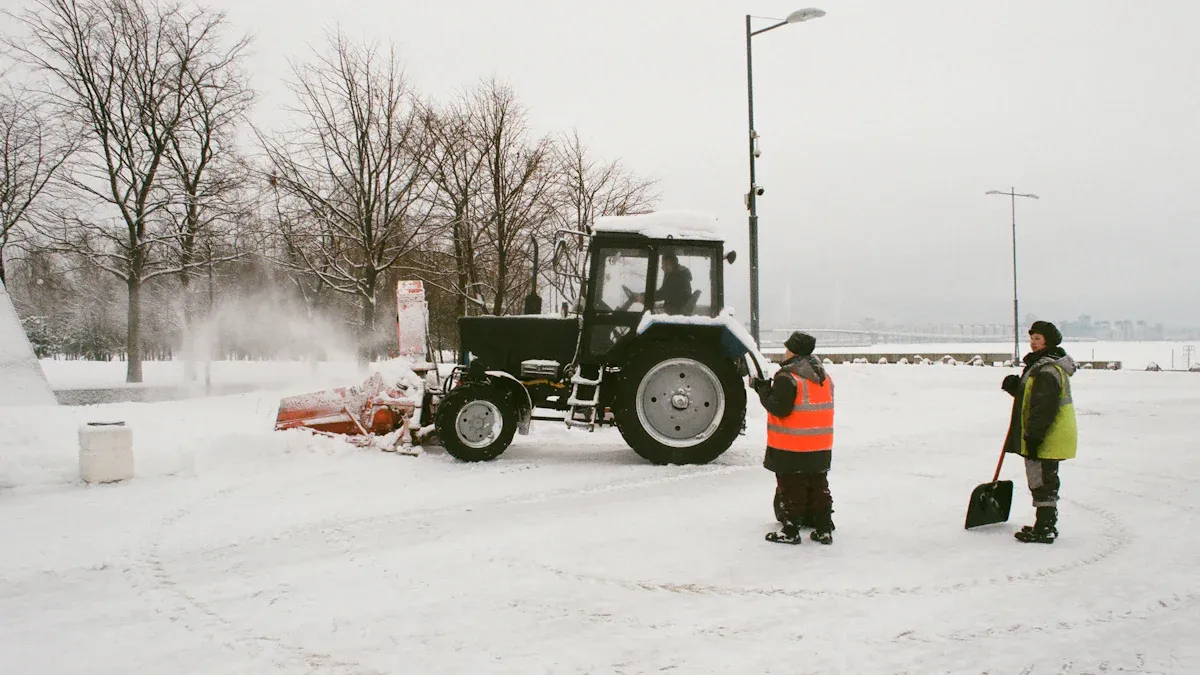
Mejora la eficiencia y la seguridad al planificar su ruta de remoción de nieve antes de comenzar. Comience identificando las áreas que necesitan limpieza, como caminos de entrada, estacionamientos y pasillos. Marque cualquier obstáculo, incluidos bordillos, bocas de incendio y elementos paisajísticos. Evitas daños y reduces el riesgo de accidentes cuando conoces tu ruta.
Utilice un enfoque paso a paso para una planificación de rutas eficaz:
También puedes adoptar tecnología para optimizar tu ruta. Las aplicaciones de planificación de rutas y mapeo GPS te ayudan a rastrear el progreso y ajustar tu plan según sea necesario. Manténgase flexible y adapte su ruta si las condiciones cambian o aparecen nuevos obstáculos.
| Estrategia | Descripción |
|---|---|
| Adopción de tecnología | Utilizar tecnologías avanzadas para una planificación óptima de rutas mejora la eficiencia y reduce costes. |
| Flexibilidad de ruta | Ser adaptable en la planificación de rutas puede mejorar la eficacia operativa. |
| Selección de equipos | Elegir el equipo adecuado es crucial para una eliminación eficaz de la nieve. |
Consejo: Siempre despeje primero las áreas de mucho tráfico. Esto mantiene abiertas las rutas principales y reduce el riesgo de acumulación de hielo.
Obtiene un mejor control y tracción cuando opera su tractor en marchas más bajas durante la remoción de nieve. Las marchas bajas le ayudan a mantener una velocidad constante, especialmente en superficies resbaladizas. Reduces la posibilidad de patinar o perder el control cuando conduces lentamente.
Usted se protege a sí mismo y a su equipo siguiendo estas prácticas. Los operadores suelen enfrentar riesgos cuando trabajan en pendientes. La maquinaria pesada puede deslizarse hacia los lados, especialmente en colinas heladas. Permanezca siempre en el lado cuesta arriba del tractor y evite desmontar mientras la máquina esté en movimiento.
Nota: Nunca se apresure a quitar la nieve. Los movimientos lentos y constantes lo mantienen seguro y evitan daños al equipo.
Mantiene su tractor y sus accesorios funcionando sin problemas realizando un mantenimiento regular. El clima frío puede dañar el sistema hidráulico y los motores si descuida los controles de rutina. Haga que el mantenimiento forme parte de su preparación para la remoción de nieve.
Evita averías y reparaciones costosas manteniéndose proactivo. Los problemas de mantenimiento más frecuentes incluyen fugas hidráulicas, problemas en el motor y piezas móviles desgastadas. Aborde estos problemas temprano para garantizar un funcionamiento confiable.
| Tarea de mantenimiento | Por qué es importante |
|---|---|
| Control de fluidos | Previene daños hidráulicos y del motor |
| Engrase de piezas móviles | Reduce el desgaste y la congelación |
| Inspección de neumáticos | Mejora la tracción y la seguridad |
| Arranque periódico del motor | Previene problemas de batería y motor |
| Inspección de accesorios | Garantiza un funcionamiento seguro y protegido |
Consejo: Cree una lista de verificación de mantenimiento y revísela antes de cada sesión de remoción de nieve. Este hábito ahorra tiempo y mantiene su equipo en óptimas condiciones.
Reduce el riesgo de lesiones y fallas del equipo siguiendo estas mejores prácticas. La remoción de nieve se vuelve más segura y eficiente cuando planifica su ruta, usa marchas más bajas y mantiene su tractor con regularidad.
Usted se protege a sí mismo y a su equipo cuando sigue las pautas del fabricante para herramientas de remoción de nieve montadas en tractores. Cada fabricante proporciona instrucciones específicas para una operación segura. Estos pasos le ayudan a evitar accidentes y a mantener su tractor funcionando sin problemas.
Comience leyendo el manual de su tractor y cada accesorio. Los fabricantes diseñan estas guías para abordar riesgos comunes y necesidades de mantenimiento. Encontrará detalles importantes sobre montaje, ajuste y operación.
Estos son los pasos clave que debe seguir cada vez que utilice su tractor para quitar la nieve:
Consejo: Practique cambiar accesorios en un área segura antes de la primera nevada. Esto le ayudará a sentirse cómodo con el proceso y reducirá los errores durante las sesiones de remoción de nieve ocupadas.
Los fabricantes también recomiendan utilizar patines de trineo para las hojas de caja. Estos patines mantienen la hoja por encima de la superficie, protegiendo el pavimento y la grava. Reduces el desgaste y evitas dañar tu propiedad.
Puede encontrar guías de seguridad más detalladas y consejos para la resolución de problemas en plataformas industriales y grupos de redes sociales dedicados a la operación de tractores. Estos recursos ofrecen asesoramiento de operadores experimentados y le ayudan a resolver problemas rápidamente.
Aquí hay una tabla de referencias rápidas para ayudarlo a recordar las pautas más importantes del fabricante:
| Paso | Qué hacer | Por qué es importante |
|---|---|---|
| Montaje y ajuste | Enganche seguro, verifique la altura, configure los controles | Previene el desgaste desigual, aumenta la seguridad |
| Compromiso de la OTP | Comience lentamente, manténgase alejado de las piezas móviles | Reduce el riesgo de lesiones |
| Dirección del conducto | Apunta lejos de las personas y las propiedades | Previene accidentes y daños |
| Movimiento | Velocidad constante, esté atento a los obstáculos | Protege equipos y superficies |
| Borrar zuecos | Apague el motor, utilice herramientas | Evita lesiones y daños al equipo |
Nota: Mantenga siempre cerca el manual de su operador. Si tiene preguntas, visite foros agrícolas acreditados o grupos de redes sociales para obtener asesoramiento de usuarios experimentados.
Mejora la seguridad y la eficiencia cuando sigue estas pautas. Las instrucciones del fabricante le ayudan a obtener el mejor rendimiento de su tractor y sus accesorios. También reduce el riesgo de costosas reparaciones y tiempo de inactividad durante la temporada de nieve.
Puede mantener su operación de remoción de nieve funcionando sin problemas evitando obstrucciones y atascos en el quitanieves de su tractor. La nieve húmeda o pegajosa suele provocar obstrucciones, pero puede tomar varias medidas para reducir este riesgo:
Consejo: Si nota que el conducto disminuye la velocidad o que la nieve no se descarga correctamente, detenga el tractor y elimine el bloqueo de manera segura antes de continuar.
Usted protege su inversión tomando medidas para evitar daños al equipo durante la remoción de nieve intensa. Elegir el archivo adjunto adecuado y usarlo correctamente marca una gran diferencia.
| Acción Preventiva | Beneficio |
|---|---|
| Utilice un accesorio adecuado para el trabajo | Reduce el desgaste |
| Cubrir el equipo después de su uso | Previene el óxido y la corrosión |
| Plan de materiales peligrosos | Protege máquina y operador |
| Deseche la nieve contaminada | Cumple con la normativa |
Nota: Las inspecciones periódicas le ayudan a detectar signos tempranos de desgaste o daños. Aborde los problemas de inmediato para evitar reparaciones costosas.
El almacenamiento adecuado de su tractor y sus accesorios fuera de temporada extiende su vida útil y le ahorra dinero a largo plazo. Siga estos pasos para obtener mejores resultados:
Consejo: Mantenimiento regular y un almacenamiento adecuado puede generar importantes ahorros de costos con el tiempo. Los equipos bien mantenidos funcionan de manera más eficiente, duran más y mantienen mejor su valor si decide venderlos o actualizarlos.
Al seguir estos pasos de mantenimiento y solución de problemas, se asegura de que sus accesorios para quitanieves y tractores sigan siendo confiables y listos para la próxima temporada de invierno.
Elegir el accesorio adecuado para tractor hace que la eliminación de nieve sea más rápida y segura. Adapta cada herramienta al tipo y trabajo de nieve, lo que mejora la eficiencia y la confiabilidad. Las hojas de arado funcionan bien para nieve intensa o húmeda. Los cubos de carga ayudan en espacios reducidos. Los quitanieves limpian los ventisqueros profundos. Concéntrese siempre en la seguridad, el mantenimiento regular y la planificación. Utilice esta lista de verificación antes de cada trabajo:
Debe utilizar un tractor compacto para caminos de entrada y aceras pequeños. Para lotes grandes o propiedades comerciales, elija un tractor utilitario con mayor potencia. Haga coincidir el tamaño del tractor con su propiedad y los accesorios que planea usar.
Sí, puedes quitar la nieve de los caminos de grava. Levante la hoja o utilice guías de trineo para evitar mover la grava. Las escobas giratorias también funcionan bien para nieve ligera en superficies de grava.
Aplique un spray antiadherente a la barrena y al conducto. Opere a la velocidad recomendada de la PTO. Quite la nieve a un ritmo constante. Detenga el tractor antes de eliminar cualquier bloqueo.
Use guantes aislados, botas con buena tracción y protección para los ojos. Utilice protección auditiva si su tractor o accesorio hace ruido. La ropa brillante le ayuda a mantenerse visible con poca luz.
Inspeccione y mantenga los accesorios antes de cada uso. Compruebe si hay pernos flojos, piezas desgastadas y fugas hidráulicas. Lubrique las piezas móviles con regularidad. Realice una inspección exhaustiva antes de almacenar el equipo fuera de temporada.
Los cubos de carga funcionan mejor para nieve ligera a moderada y apilados. Para ventisqueros profundos o nieve intensa y húmeda, utilice un quitanieves o una hoja de arado para obtener mejores resultados.
Limpie bien todos los accesorios. Aplique un inhibidor de óxido a las piezas metálicas. Guarde el equipo en un área seca y cubierta. Utilice una tabla como la siguiente para obtener una lista de verificación rápida:
| Paso de almacenamiento | Por qué es importante |
|---|---|
| Limpiar bien | Previene la corrosión |
| Aplicar inhibidor de óxido | Amplía la vida útil |
| Tienda cubierta | Reduce los daños climáticos |
Puede unirse a foros en línea y grupos de redes sociales centrados en la operación de tractores y la remoción de nieve. Estas comunidades comparten consejos prácticos y consejos para la resolución de problemas de usuarios experimentados.
-1.png)