E-mail: [email protected] WhatsApp: +8618266768780

E-mail: [email protected] WhatsApp: +8618266768780

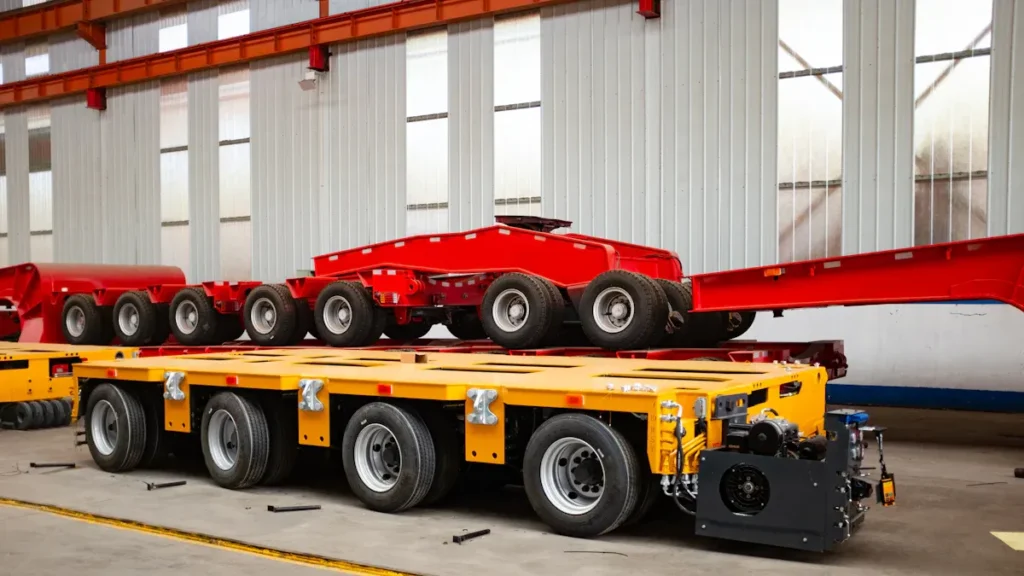
You might feel overwhelmed when you first think about importing tractors from China. The process can seem complex, but clear steps make it possible for anyone to succeed. China stands out as a major player in the tractor export market:
If you want to make smart decisions, start by reviewing the Top 10 Questions to Ask Before Importing a Tractor from China. This approach helps you build confidence and avoid common mistakes.
You can achieve significant savings when you import tractors from China. Chinese manufacturers offer competitive pricing, which helps you lower your initial investment. Over time, you also benefit from reduced maintenance costs. The following table compares the average costs between Chinese and US/European tractors:
| Barang | Chinese Brand Tractor | US/European Brand Tractor |
|---|---|---|
| Initial purchase cost | ¥168,000 | ¥268,000 |
| Average annual fuel consumption | ¥8,000 | ¥7,500 |
| Maintenance cost (average per year) | ¥2,000 | ¥6,500 |
| Total cost over three years | ¥198,000 | ¥299,500 |
| Resale salvage value | ¥70,000 | ¥90,000 |
| Actual depreciation | ¥98,000 | ¥178,000 |
| Payback cycle | 2~3 years | 4~5 years |
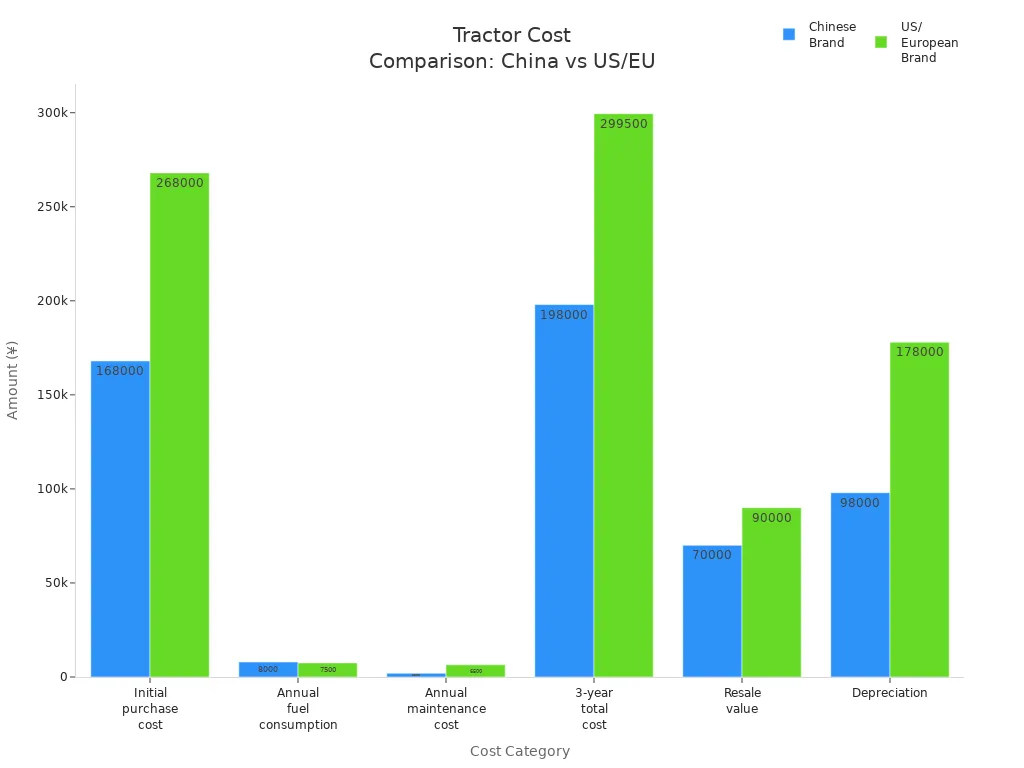
You notice that the payback cycle for a Chinese tractor is much shorter. Lower depreciation and maintenance costs help you recover your investment faster. This cost advantage makes Chinese tractors a practical choice for many buyers.
Chinese manufacturers provide a wide range of tractor models. You can find options for small farms, large commercial operations, and everything in between. This variety means you can select a tractor that matches your specific needs, whether you focus on crop farming, livestock, or mixed agriculture.
You also have the flexibility to request custom features. Many suppliers allow you to adjust specifications, such as horsepower, attachments, and cabin design. This level of customization is broader than what you find in other major exporting countries. For example, manufacturers in India often focus on a narrower horsepower range, while Chinese suppliers cover a wider spectrum.
Itu growing popularity of Chinese tractors in regions like Africa and Latin America shows their ability to meet diverse requirements. Farmers in these areas choose Chinese models for their balance of technology, affordability, and adaptability.
Tip: When you contact suppliers, ask about available options and customization services. This helps you get a tractor that fits your exact needs.
You benefit from teknologi canggih when you choose a Chinese tractor. Manufacturers now include features that support modern farming and improve efficiency. Common technologies found in Chinese tractors include:
These features help you increase productivity and reduce manual labor. Chinese tractors now compete with global brands by offering technology that supports precision agriculture. You can find more information about modern farming technologies on platforms like AgFunderNews atau Kemajuan Pertanian.
By choosing a Chinese tractor, you gain access to affordable, customizable, and technologically advanced equipment that supports your farming goals.
When you consider importing tractors from China, you benefit from the country’s extensive export experience. Chinese manufacturers have built a strong reputation for handling international orders efficiently. You see this expertise reflected in the steady growth of export volumes over recent years. The following table shows how tractor exports from China have increased:
| Month/Year | Export Volume (Units) |
|---|---|
| Jan 2020 | 10,260 |
| Oct 2025 | 150,390 |
| Nov 2025 | 167,393 |
You notice a dramatic rise in export numbers. This upward trend demonstrates that Chinese suppliers have adapted to global demand and improved their logistics. The average export volume from January 2020 to November 2025 reached 128,876 units. The highest recorded volume was 167,393 units in November 2025. These figures show that Chinese manufacturers have the capacity to fulfill large orders and meet delivery schedules.
Catatan: High export volumes often indicate reliable supply chains and established shipping procedures. You can expect smoother transactions when working with experienced exporters.
Chinese suppliers understand the requirements of different markets. They prepare documentation, comply with international standards, and offer support throughout the shipping process. You benefit from their familiarity with customs regulations and import procedures. This experience reduces the risk of delays and errors during transit.
You also gain access to a network of freight forwarders and logistics partners. Many exporters maintain relationships with shipping companies that specialize in agricultural machinery. These connections help you secure competitive shipping rates and reliable delivery timelines.
Consider these advantages when evaluating suppliers:
Chinese exporters often provide multilingual customer service. You can communicate your needs clearly and resolve issues quickly. This level of support makes the import process less stressful and more predictable.
If you want to learn more about global agricultural machinery trade, you can visit resources like UN Comtrade atau Statista.
You want to work with a supplier who delivers on promises and maintains high standards. Before you commit, evaluate reliability using clear criteria. Reliable suppliers respond quickly, ship on time, and have a proven track record. Use the following table to guide your assessment:
| Kriteria | Keterangan |
|---|---|
| Operational Reliability | Check if the supplier responds within 2 hours and maintains a delivery rate above 97%. |
| Manufacturing Capacity | Look for factories with at least five years of experience, a skilled workforce, and high output. |
| Jaminan Kualitas | Ask for ISO 9001 certification and documentation of their quality control procedures. |
You can request references from previous buyers or search for supplier reviews on platforms like Alibaba atau Made-in-China. You may also join industry groups on LinkedIn to see feedback from other importers. Always ask for proof of past shipments and quality certifications.
Tip: Reliable suppliers often provide detailed answers and transparent documentation. If you notice delays or vague responses, consider other options.
You must ensure your tractor meets all U.S. import requirements. Missing a single document can delay your shipment or result in fines. The main regulations include:
You also need to confirm that your tractor complies with standards set by organizations such as ASTM International, ANSI, and UL. For environmental and safety compliance, prepare forms like EPA Form 3520-1, EPA Form 3520-21, and HS-7. You can find more details on the U.S. Customs and Border Protection website or join discussions on Reddit’s r/legaladvice for practical tips.
Note: Always double-check requirements with a licensed customs broker. Regulations change, and expert advice helps you avoid costly mistakes.
You need to confirm every technical detail before placing your order. The right specifications ensure your tractor fits your farm’s needs and local conditions. Use this table to review the most important features:
| Spesifikasi | Rincian |
|---|---|
| Engine Type and Displacement | Water-cooled diesel engines last longer and perform better. |
| Tenaga Kuda (HP) | Verify net flywheel output; avoid inflated numbers. |
| Penularan | Choose manual or hydrostatic based on servicing needs. |
| Three-Point Hitch Category | Make sure lift arms are adjustable and compatible with your implements. |
| Daya Lepas Landas (PTO) | Look for live PTO with a standard speed of 540 RPM for safety. |
| Sistem Hidrolik | Check flow rate and reservoir capacity; dual remotes add flexibility. |
| Jenis Ban | Select ag, turf, or industrial tires based on your terrain. |
| Weight and Ground Clearance | Heavier tractors offer better traction; aim for at least 10 inches clearance. |
You can discuss specifications with suppliers on AgTalk or follow updates on Twitter using hashtags like #TractorSpecs. Always request technical datasheets and photos before finalizing your order.
Tip: Matching specifications to your farm’s needs helps you avoid costly modifications after delivery.
If you follow the Top 10 Questions to Ask Before Importing a Tractor from China, you will reduce risks and make informed decisions. Each question guides you through a critical step in the import process.
You need to pay close attention to quality control when importing tractors from China. This step helps you avoid costly repairs and ensures your tractor meets your expectations. You should use several measures to check the quality before shipment. The table below summarizes the most important quality control steps:
| Quality Control Measure | Keterangan |
|---|---|
| Inspeksi Pabrik | Assess the manufacturer’s production capabilities and quality management system. |
| Pre-Shipment Inspection (PSI) | Hire an independent inspection service for thorough checks before shipping. |
| Inspeksi Visual | Look for paint peeling, rust, damage, and proper assembly. |
| Functional Testing | Test engine start, transmission, hydraulics, and electrical systems. |
| Component Verification | Confirm main components match specifications and come from reputable sources. |
| Documentation Review | Make sure manuals, parts lists, and certifications are included. |
| Ongoing Production Monitoring | For large orders, arrange random inspections during production. |
| Certification Verification | Request and verify current certification documents from the manufacturer. |
Tip: Always ask for inspection reports and certification documents before you finalize your order. You can use third-party inspection services for unbiased results. This step is essential in the Top 10 Questions to Ask Before Importing a Tractor from China.
You must choose the right shipping method for your tractor. The method you select affects cost, delivery time, and safety. The table below outlines the most common shipping options for tractors imported from China to the United States:
| Shipping Method | Keterangan | Cost Range |
|---|---|---|
| Container Shipping | Offers weather protection and suits most global ports. | Varies based on size |
| RoRo Shipping | Cost-effective for drivable tractors; driven on and off the vessel. | $800 – $2,000 per unit |
| Flat Rack Shipping | Used for oversized cargo; open platforms with collapsible ends. | 50-150% more than containers |
Container shipping works well for most tractors and protects them from weather. RoRo shipping is best for tractors that can be driven onto the ship. Flat rack shipping is suitable for oversized tractors but costs more. You should compare these options and ask your supplier for recommendations based on your tractor’s size and destination.
Note: Always confirm shipping timelines and insurance coverage with your logistics provider. Reliable shipping ensures your tractor arrives safely and on schedule.
You need to prepare all required documents before your tractor ships. Missing paperwork can delay customs clearance and increase costs. The main documents include:
You should check with your customs broker for updates on document requirements. Each country may have different rules, so staying informed helps you avoid problems. You can find more details on official sites like the U.S. Customs and Border Protection website.
Tip: Keep copies of all documents and organize them in a secure folder. Proper documentation speeds up customs clearance and protects you from unexpected issues.
You need to understand every component of your import costs before you make a decision. A clear cost breakdown helps you avoid surprises and plan your budget. The following table summarizes the main components you should consider when importing tractors from China:
| Komponen | Keterangan |
|---|---|
| Harga Pembelian | Compare quotes from multiple suppliers. Avoid choosing solely based on the lowest price. |
| Shipping and Insurance | Ocean freight costs vary by container type, route, and fuel surcharges. Include marine insurance to protect against damage or loss. |
| Taxes and Import Fees | Factor in customs duties, handling fees, port charges, and any applicable environmental levies. |
| Maintenance and Spare Parts | Confirm availability and cost of replacement parts. Some brands have better global support networks than others. |
| Warranty and After-Sales Service | Inquire about warranty duration, service support, and technical training for operators. |
You should request a detailed quote from your supplier. Ask for a breakdown of each cost item. This step ensures you know exactly what you are paying for. You can also consult with a customs broker to estimate taxes and import fees. Planning for maintenance and spare parts keeps your tractor running smoothly after arrival.
Tip: Always include insurance in your shipping plan. Insurance protects your investment if your tractor gets damaged during transit.
You can secure better deals by using effective negotiation strategies. Understanding Chinese business culture helps you build trust and achieve favorable terms. Here are some practical tips for negotiating with suppliers:
You should prepare questions in advance and keep records of all agreements. Good negotiation skills help you save money and avoid misunderstandings.
Note: Negotiation is a key part of the Top 10 Questions to Ask Before Importing a Tractor from China. Strong negotiation skills can improve your overall import experience.
Reliable after-sales support ensures your tractor performs well after delivery. You should ask your supplier about the types of support they offer. The table below outlines common after-sales services provided by Chinese manufacturers:
| Jenis Layanan | Keterangan |
|---|---|
| Online Support | Reliable after-sales service ensures optimal tractor performance. |
| Masa Garansi | Warranty coverage typically ranges from 12 to 24 months. |
| Ketersediaan Suku Cadang | Sufficient spare parts reserves with free accessories during warranty. |
| 24/7 Online Service | Some suppliers provide round-the-clock online support for customer issues. |
| Response Time | Solutions often provided within 1-3 days after receiving complaints. |
You should confirm the warranty period and ask about spare parts availability. Reliable suppliers respond quickly to service requests and offer technical support online. Some companies provide free accessories during the warranty period. Fast response times help you resolve issues and keep your tractor running.
Tip: After-sales support is essential for long-term satisfaction. Always check the details before you finalize your purchase.
You need to understand current market trends before you import a tractor from China. Staying informed helps you make smart decisions and anticipate changes in the industry. The global tractor market is evolving quickly, and Chinese exports play a major role in shaping these trends.
Many farmers now look for tractors with advanced technology. Autonomous tractors are becoming more popular because they reduce labor needs and improve efficiency. You can see more farms using self-driving models to handle routine tasks. Data analytics and precision farming also influence buying decisions. Real-time data collection lets you optimize tractor use and manage crops more effectively.
Environmental concerns drive demand for electric and hybrid tractors. These models offer cleaner alternatives and often qualify for government incentives. If you want to lower your carbon footprint, you should consider these options. The sharing economy is another trend. Tractor-sharing platforms allow small-scale farmers to access equipment without large investments. This model helps you save money and use resources more efficiently.
Smart farming technologies continue to grow. You can find tractors with integrated sensors, GPS guidance, and automated controls. These features boost productivity and support precision agriculture. Government support shapes the market as well. Subsidies and technology incentives encourage innovation and make advanced tractors more accessible.
Chinese manufacturers respond to these trends by offering a wide range of models. Export opportunities for Chinese tractors keep expanding. Many international buyers recognize the value and reliability of these machines. You benefit from competitive pricing and access to the latest features.
The table below summarizes the main trends in the global tractor import market:
| Trend | Keterangan |
|---|---|
| Traktor Otonom | Self-driving tractors are gaining traction, reducing labor requirements and increasing efficiency. |
| Data Analytics and Precision Farming | Real-time data collection and analysis enable farmers to optimize tractor usage and enhance crop management. |
| Traktor Listrik dan Hibrida | Environmentally conscious alternatives are gaining popularity in response to government incentives and consumer preferences. |
| Sharing Economy for Tractors | Collaborative ownership models, including tractor-sharing platforms, offer cost-effective solutions for small-scale farmers. |
| Teknologi Pertanian Cerdas | Integration of smart farming technologies enhances productivity and precision. |
| Dukungan Pemerintah | Government initiatives, such as subsidies and technology incentives, shape market growth and innovation. |
| Growing Export Opportunities | Chinese farm tractors are gaining recognition and demand in international markets, presenting significant growth potential for manufacturers. |
Tip: You should monitor market trends regularly. Following industry news and joining online farming communities helps you stay ahead. Resources like Kemajuan Pertanian Dan AgFunderNews provide updates on technology and global trade.
When you review the Top 10 Questions to Ask Before Importing a Tractor from China, include market trends in your research. Understanding these changes helps you choose the right tractor and plan for future needs.
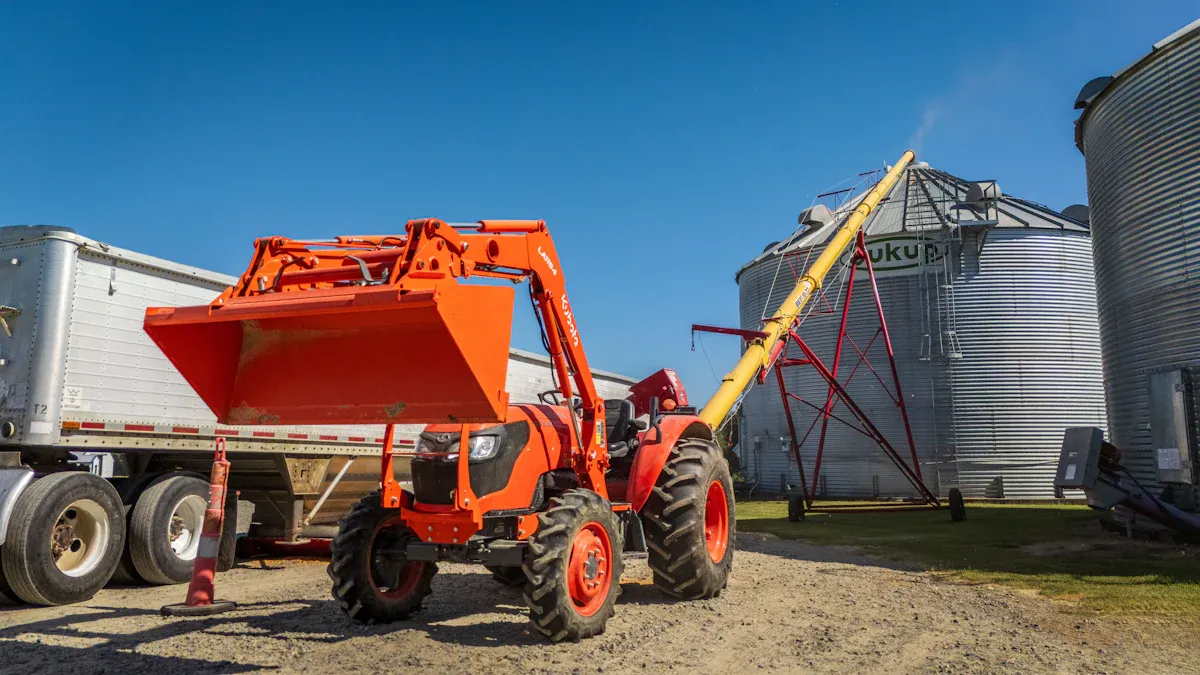
You start your import journey by defining your requirements. Clear goals help you choose the right tractor and avoid costly mistakes. Begin by listing the tasks you want your tractor to perform. For example, you may need a tractor for plowing, hauling, or planting. Consider the size of your farm and the type of crops you grow. Write down the horsepower, transmission type, and attachments you need.
Tip: Use online farming forums like AgTalk to see what other farmers recommend for similar operations.
Set a realistic budget before you contact suppliers. Your budget should include the purchase price, shipping fees, taxes, insurance, and inspection costs. You can use a simple spreadsheet to track your expenses. Planning your budget helps you avoid overspending and prepares you for unexpected fees.
Note: You can find sample budget templates on Google Sheets or farming groups on Reddit.
Identify how you will use your tractor. Will you use it daily or seasonally? Do you need it for heavy-duty work or light tasks? Your usage affects the specifications you choose. If you plan to use the tractor for multiple jobs, look for models with flexible attachments and durable engines.
Callout: Matching your tractor to your usage ensures long-term satisfaction and reduces maintenance costs.
Essential Steps for Researching Tractor Import Needs:
You can find suppliers using online platforms. Websites like Alibaba Dan Made-in-China list thousands of tractor manufacturers. Use filters to narrow your search by location, certification, and product type. Read supplier profiles and check their transaction history.
Tip: Join social media groups such as LinkedIn industry forums to get recommendations from other importers.
Attend trade shows to meet suppliers face-to-face. Agricultural expos in China and international events often feature tractor manufacturers. Trade shows give you a chance to inspect products, compare models, and discuss terms directly with company representatives.
Note: You can find upcoming trade shows on sites like 10Times atau Eventbrite.
Check supplier credentials before you make a decision. Reliable suppliers hold certifications such as ISO 9001 and CE Marking. You should verify their production capacity and technical expertise. Ask for factory audit reports and third-party inspection results.
Checklist for Supplier Verification:
Callout: Suppliers who respond quickly and provide clear documentation are more likely to deliver quality products.
Read reviews from other buyers to evaluate supplier performance. Reviews reveal strengths and weaknesses in product quality, delivery speed, and customer service. Use platforms like Trustpilot atau Reddit to find honest feedback.
Ask suppliers for references from previous customers. Contact these references to confirm their experience with the supplier. Reliable suppliers will provide contact information for satisfied buyers. You can ask about product quality, delivery times, and support services.
| Kriteria | China Tractor Supplier | Custom Dealer |
|---|---|---|
| Faktor Biaya | Competitive rates, bulk discounts | Higher upfront price, includes services |
| Opsi Kustomisasi | Kustomisasi terbatas | Extensive customization available |
| Support and Service Quality | Available, may cost extra | Sering termasuk |
| Pemeliharaan dan Keandalan | Lower maintenance costs | Tailored service packages |
| Nilai Jual Kembali | Stable resale value | Potentially higher resale value |
| Efisiensi Operasional | Kemampuan manuver tinggi | Kapasitas angkat tinggi |
| Ketersediaan Suku Cadang | Global distribution network | Local support |
Tip: Use this table to compare suppliers and choose the one that best fits your needs.
You can also join online communities to discuss supplier experiences. Platforms like Facebook Groups Dan Twitter offer real-time advice from other importers.
You need to confirm every specification before you finalize your tractor order. This step ensures your tractor matches your operational needs and meets local standards. Start by reviewing the technical details with your supplier. Ask for a complete specification sheet and compare it with your requirements.
| Spesifikasi | Keterangan |
|---|---|
| Tenaga Kuda (HP) | Determines the work capacity; consider both engine HP and PTO HP. |
| Jenis Transmisi | Options include manual, hydrostatic, and CVT; affects speed control and operation ease. |
| Drivetrain | 4WD improves traction; consider terrain conditions. |
| Hydraulic System Capacity | Measured in GPM; higher capacity allows for faster operation of multiple implements. |
| Three-Point Hitch Category | Category 1 for smaller tractors; ensure compatibility with implements. |
| PTO Shaft Speed | Commonly 540 or 1000 RPM; verify with implement requirements. |
| Efisiensi Bahan Bakar | Diesel engines provide better torque; compare gallons-per-hour under load. |
| Cab & Comfort | Enclosed cabs with HVAC and suspension seats enhance safety and productivity. |
You can request customization to fit your specific needs. Many suppliers offer options such as adjustable horsepower, different transmission types, and specialized attachments. You may also choose features like air-conditioned cabs, ergonomic seats, or advanced control panels. Customization helps you optimize your tractor for your farm’s size, terrain, and workload.
Tip: List your must-have features before you negotiate with suppliers. Clear communication about customization prevents misunderstandings and ensures you get the right equipment.
You must verify that your tractor meets all required certifications. Certifications prove that the tractor complies with safety, environmental, and quality standards. Common certifications include ISO 9001 for quality management and CE Marking for safety compliance. Ask your supplier for copies of these certificates and check their validity.
Note: Certified tractors are easier to clear through customs and qualify for insurance coverage.
You need to conduct thorough quality inspections to avoid costly repairs and ensure long-term reliability. Quality checks help you catch issues before your tractor ships.
Ask your supplier for sample units or detailed photos of completed tractors. Samples allow you to inspect build quality, paint finish, and assembly standards. You can also request videos showing the tractor in operation. Reviewing samples gives you confidence in the supplier’s workmanship.
Arrange for third-party inspections at different stages of production. Independent inspectors assess the tractor’s quality and verify that it meets your specifications. You should:
Callout: Third-party inspections provide unbiased results and protect your investment. You can find inspection services through platforms like SGS atau Intertek.
You must understand all regulations before importing your tractor. Compliance with rules ensures smooth customs clearance and prevents legal issues.
Prepare all required import documents. These typically include:
Keep copies of every document and organize them for easy access. Missing paperwork can delay your shipment and increase costs.
Your tractor must meet U.S. standards for safety and environmental protection. Check requirements from agencies such as the Environmental Protection Agency (EPA) and the Department of Transportation (DOT). Confirm that your tractor complies with emission limits and safety features.
Tip: Consult a licensed customs broker for updates on U.S. standards. Regulations change frequently, and expert advice helps you stay compliant.
Familiarize yourself with customs rules for agricultural machinery. U.S. Customs and Border Protection (CBP) provides guidelines for importing tractors. You need to declare the tractor’s value, origin, and specifications accurately. Pay attention to tariff codes and duty rates.
Note: Following customs rules reduces the risk of delays and fines. You can find more information on the CBP website.
You need to secure accurate quotes and negotiate favorable terms before you commit to a supplier. This step helps you control costs and avoid misunderstandings. You should approach negotiations with a clear strategy and well-defined expectations.
Start by requesting detailed quotes from multiple suppliers. Ask for a breakdown of all costs, including the base price, customization fees, shipping charges, and any additional expenses. Compare these quotes to current market prices to ensure you receive fair offers. Suppliers often provide discounts for bulk orders, so clarify your order quantity and inquire about possible price reductions.
Steps for negotiating price with Chinese tractor suppliers:
Tip: Always request written confirmation of the final price and included services. This documentation protects you from unexpected charges.
You must negotiate payment terms that protect your interests. Suppliers may offer several options, such as wire transfers, letters of credit, or escrow services. Escrow services add an extra layer of security by holding funds until you receive your tractor. Clarify the payment schedule, including deposit amounts and final payments. Ask about refund policies in case of delays or quality issues.
Common payment term considerations:
Note: Reliable suppliers will explain payment terms in detail and provide transparent policies. If you notice vague answers, proceed with caution.
You need a formal contract to finalize your agreement. The contract should outline all terms, including pricing, payment schedule, delivery timelines, and quality standards. Review the contract carefully before signing. Make sure it includes clauses for dispute resolution and warranty coverage. You can consult with a legal expert or customs broker to verify the contract’s validity.
| Contract Element | Keterangan |
|---|---|
| Harga | Specifies total cost and any discounts |
| Payment Terms | Details deposit, final payment, and method |
| Delivery Timeline | Sets expected shipping and arrival dates |
| Quality Standards | Lists required specifications and inspection |
| Jaminan | Defines coverage period and conditions |
| Dispute Resolution | Outlines steps for handling disagreements |
Callout: A clear contract protects your investment and sets expectations for both parties.
You must plan shipping and logistics to ensure your tractor arrives safely and on time. This step involves choosing the right shipping method, confirming delivery timelines, and securing insurance.
Select a shipping method based on your tractor’s size, destination, and budget. Common options include container shipping, RoRo (roll-on/roll-off), and flat rack shipping. Container shipping offers protection from weather and damage. RoRo shipping works well for drivable tractors. Flat rack shipping suits oversized equipment but may cost more.
| Shipping Method | Fitur | Terbaik Untuk |
|---|---|---|
| Container | Enclosed, weather-protected | Most tractor models |
| RoRo | Driven on/off vessel | Drivable tractors |
| Flat Rack | Open platform, oversized cargo | Large or heavy tractors |
Tip: Ask your supplier for recommendations based on your tractor’s specifications and destination port.
Confirm shipping timelines before you finalize your order. Ask for estimated departure and arrival dates. Factor in production lead time, customs clearance, and transit duration. Reliable suppliers provide regular updates on shipment status.
Note: Planning for realistic timelines helps you coordinate delivery and avoid disruptions to your operations.
You need insurance to protect your tractor during transit. Marine insurance covers loss or damage caused by accidents, theft, or natural disasters. Ask your supplier or freight forwarder about available insurance options. Review the coverage details and claim procedures.
| Insurance Type | Coverage Scope | Direkomendasikan Untuk |
|---|---|---|
| Marine Cargo | Damage, loss, theft, accidents | All shipments |
| All-Risk | Comprehensive protection | High-value equipment |
| Limited Coverage | Specific risks only | Low-risk shipments |
Callout: Insurance safeguards your investment and provides peace of mind during shipping.
You must prepare all required documents to ensure smooth customs clearance and delivery. Proper documentation speeds up the import process and reduces the risk of delays.
The commercial invoice lists the transaction details, including the tractor’s description, quantity, unit price, and total value. You should verify that the invoice matches your contract and includes all necessary information.
Tip: Keep copies of all invoices for your records and future reference.
The packing list details the contents of each shipment. It includes item descriptions, quantities, weights, and packaging types. Customs officials use the packing list to verify your shipment.
| Packing List Element | Keterangan |
|---|---|
| Item Description | Name and type of each product |
| Quantity | Number of units per item |
| Berat | Gross and net weight |
| Packaging Type | Box, crate, or pallet |
Note: Accurate packing lists help prevent customs delays and ensure proper handling.
You must include certificates that prove compliance with safety, environmental, and quality standards. Common certificates include ISO 9001, CE Marking, and EPA compliance documents. Ask your supplier for copies of all required certificates and verify their authenticity.
Callout: Complete documentation streamlines the import process and supports regulatory compliance.
You must complete customs clearance before your tractor enters the United States. This process involves several important steps. Each step ensures your shipment meets all legal and regulatory requirements.
Tip: Start preparing your documents early. Early preparation helps you avoid last-minute delays at the port.
You can ensure a smooth delivery by following these practical tips:
Catatan: Quick action after customs clearance reduces storage fees and prevents unnecessary delays.
You should confirm the warranty terms before finalizing your purchase. Most suppliers offer warranties that cover major components for a set period. Review the warranty policy to understand what is included and how to make a claim.
| Aspek | Rincian |
|---|---|
| Masa Garansi | Coverage usually ranges from 12 to 24 months. |
| Coverage Scope | Includes engine, transmission, and main structural parts. |
| Claim Process | Requires proof of purchase and service records. |
Callout: A clear warranty gives you peace of mind and protects your investment.
You need reliable access to spare parts for ongoing maintenance. Ask your supplier about their spare parts inventory and delivery times. Confirm that parts are available for the specific model you import.
Tip: Fast access to spare parts keeps your tractor running and reduces downtime.
You should evaluate the supplier’s after-sales service. Good service includes technical support, troubleshooting, and repair assistance. Many suppliers offer online support and have experienced staff to answer your questions.
| Jenis Layanan | Rincian |
|---|---|
| Dukungan Teknis | Available through email, phone, or online chat. |
| Response Time | Most issues resolved within 1-3 business days. |
| Jaringan Layanan | Some suppliers have local partners for repairs. |
Catatan: Reliable after-sales service ensures your tractor operates efficiently for years.
When you import a tractor from China, you face several types of costs. Understanding these costs helps you plan your budget and avoid surprises. You should look at both main costs and hidden fees to get a complete picture.
You pay the base price for the tractor itself. This price depends on the model, features, and level of customization you choose. Suppliers often provide quotes in U.S. dollars or Chinese yuan. Always ask for a detailed breakdown of what the price includes.
Shipping your tractor from China adds a significant cost. Freight charges depend on the shipping method, distance, and size of the tractor. Container shipping, RoRo (roll-on/roll-off), and flat rack shipping each have different rates. You can compare shipping options on platforms like Freightos.
You must pay tariffs and import taxes when your tractor arrives in the United States. Customs officials calculate these fees based on the tractor’s value and classification. You can check current tariff rates on the U.S. International Trade Commission website.
Insurance protects your tractor during transit. Marine cargo insurance covers damage, loss, or theft. You should always include insurance in your shipping plan to safeguard your investment.
Quality inspections add another cost. You may hire third-party inspectors to check the tractor before shipment. Inspection fees vary based on the level of detail and the number of units inspected.
| Main Cost | Keterangan |
|---|---|
| Tractor Price | Base cost of the tractor |
| Freight Charges | Shipping fees from China to your location |
| Tariffs & Taxes | Import duties and government taxes |
| Asuransi | Coverage for damage or loss during shipping |
| Inspection Fees | Fees for quality checks and certifications |
Tip: Request a full cost breakdown from your supplier before you agree to purchase.
Ports charge fees for handling, unloading, and processing your shipment. These charges can add up quickly, especially if your tractor stays at the port for several days.
If you do not pick up your tractor right away, you may pay storage fees. Ports and warehouses charge daily rates for storing your equipment until you arrange delivery.
You may face extra costs for meeting regulatory requirements. These can include fees for special certifications, emissions testing, or compliance with local standards.
| Hidden Fee | Keterangan |
|---|---|
| Port Charges | Handling and unloading fees at the port |
| Penyimpanan | Daily fees for storing your tractor |
| Regulatory Costs | Expenses for compliance and certifications |
You can find more details about import costs and regulations on the U.S. Customs and Border Protection website.
Catatan: Always include hidden fees in your budget. Careful planning helps you avoid unexpected expenses and keeps your import process on track.
You risk your investment when you choose suppliers without proper verification. Many beginners fall into this trap by trusting online profiles or attractive offers. You might receive poor-quality tractors, delayed shipments, or even lose your payment. To avoid this mistake, always check supplier credentials. Request certifications such as ISO 9001 and ask for factory audit reports. Reliable suppliers provide references from previous buyers and respond quickly to your questions.
Contoh Kasus:
A buyer ordered tractors from an unknown supplier found on a marketplace. The shipment arrived late, and several units failed to meet promised specifications. The buyer struggled to get support or compensation.
How to Prevent:
Tip: Suppliers with transparent documentation and responsive communication are more trustworthy.
You face serious delays and extra costs if you ignore import regulations. Many beginners overlook the need for proper documentation and compliance with safety standards. Customs officials may hold your shipment or impose fines if paperwork is incomplete or incorrect. You must prepare all necessary forms, including customs declarations and safety certificates, before shipping.
Contoh Kasus:
A farmer imported tractors without checking EPA compliance. Customs held the shipment for weeks, and the buyer paid extra fees to resolve the issue.
How to Prevent:
Catatan: Regulations change often. Consult a licensed customs broker for the latest updates.
You may underestimate the total cost of importing tractors. Many buyers focus only on the purchase price and forget about shipping, insurance, tariffs, and hidden fees. This mistake can lead to budget overruns and financial stress. You should request a detailed cost breakdown from your supplier and include all possible expenses in your budget.
Contoh Kasus:
A buyer calculated only the tractor price and shipping fee. After arrival, unexpected port charges and storage fees increased the total cost by 15%.
How to Prevent:
| Common Mistakes | Solusi |
|---|---|
| Poor quality control | Monitor production quality; arrange third-party inspections. |
| Incomplete documentation | Prepare all paperwork early, including customs forms and certifications. |
| Inadequate shipping prep | Reserve containers early; ensure proper packing to avoid damage and delays. |
| Ignoring safety standards | Confirm machinery meets destination safety regulations; verify supplier’s export experience. |
| Skipping machinery testing | Test machinery before shipment to confirm correct function and compliance. |
For more tips on budgeting and cost management, join discussions on Subreddit r/farming di Reddit or consult resources at Kemajuan Pertanian.
You need a clear and detailed contract when importing tractors from China. Poor contracts create confusion, increase risk, and make it hard to resolve disputes. Many beginners overlook contract details and rely on informal agreements. This mistake can lead to unexpected costs, shipment delays, or receiving tractors that do not meet your requirements.
A strong contract protects your interests. You should include all key terms and conditions. Make sure you and your supplier agree on every point before you sign. Use the following checklist to guide your contract review:
Tip: Always request a bilingual contract if you and your supplier speak different languages. This step helps prevent misunderstandings.
The table below summarizes essential contract elements and their importance:
| Contract Element | Mengapa Hal Ini Penting |
|---|---|
| Product Specifications | Ensures you receive the correct tractor |
| Payment Terms | Prevents disputes over deposits and final payments |
| Delivery Timeline | Sets clear expectations for shipping and arrival |
| Quality Standards | Protects you from receiving substandard equipment |
| Warranty & Support | Guarantees help if problems arise after delivery |
| Dispute Resolution | Provides a process for solving disagreements |
You should avoid vague language in your contract. Phrases like “as discussed” or “subject to change” create loopholes. Insist on precise wording for every clause. If you do not understand a term, ask for clarification or consult a legal expert.
Catatan: You can find sample international trade contracts and legal advice on sites like Export.gov atau Trade.gov.
You should keep a signed copy of the contract and all related documents. Store digital backups in a secure location. If a dispute arises, you will need these records to support your case.
A well-written contract gives you confidence and control throughout the import process. Take time to review every detail before you commit. This step reduces risk and helps you achieve a successful import experience.
You now have a clear roadmap for importing tractors from China. Start by defining your needs, then research suppliers and compare options. Confirm specifications, arrange inspections, and prepare all documents. Follow each step to avoid costly mistakes. When you stay informed and use this guide, you can import with confidence. If you need help, return to this resource for support and updates. Your successful import journey begins here.
You need a commercial invoice, bill of lading, import license, customs declaration, and compliance certificates. Check the U.S. Customs and Border Protection site for updates.
Request certifications, factory audit reports, and references from previous buyers. Use platforms like Alibaba Dan LinkedIn to check reviews and transaction history.
| Jenis Biaya | Keterangan |
|---|---|
| Tractor Price | Base unit cost |
| Freight Charges | Shipping fees |
| Tariffs & Taxes | Import duties |
| Asuransi | Transit protection |
| Inspection Fees | Quality checks |
Confirm EPA and DOT compliance. Review emission and safety standards. Consult a licensed customs broker for the latest requirements. Visit EPA Importing Vehicles for details.
Contact your customs broker for updates. Review your documentation for errors. Pay any outstanding duties or fees. Track your shipment using your logistics provider’s system.
Use secure payment methods like letters of credit or escrow services. Request written contracts and keep records of all transactions. For more tips, see Export.gov.
You should receive warranty coverage, spare parts availability, and technical support. Ask about response times and service channels before purchase. Reliable suppliers offer online support and clear warranty terms.
Follow industry news on Kemajuan Pertanian Dan AgFunderNews. Join farming communities on Reddit for real-time discussions.



-1.png)