Selamat datang di Shandong Qilu Industrial Co., Ltd

 Indonesian
 English
 Arabic
 Bulgarian
 Bengali
 Czech
Czech
 Danish
 German
 Greek
Greek
 Spanish
 Finnish
 French
 Hindi
Hindi
 Croatian
 Hungarian
 Italian
 Japanese
 Korean
 Lithuanian
 Dutch
Dutch
 Norwegian
 Polish
 Portuguese
 Romanian
 Russian
 Slovak
 Slovenian
 Swedish
 Thai
Thai
 Turkish
 Ukrainian
 Vietnamese
 Tagalog
 Malay
Malay
 Estonian
 Catalan
 Latvian
 Urdu
Urdu
 Serbian
 Persian
 Swahili
 Albanian
 Armenian
 Icelandic
 Bosnian
 Luxembourgish
 Afrikaans
Indonesian English
Arabic
Bulgarian
Bengali
Czech
Danish
German
Greek
Spanish
Finnish
French
Hindi
Croatian
Hungarian
Italian
Japanese
Korean
Lithuanian
Dutch
Norwegian
Polish
Portuguese
Romanian
Russian
Slovak
Slovenian
Swedish
Thai
Turkish
Ukrainian
Vietnamese
Tagalog
Malay
Estonian
Catalan
Latvian
Urdu
Serbian
Persian
Swahili
Albanian
Armenian
Icelandic
Bosnian
Luxembourgish
Afrikaans
Afrikaans
Indonesian English
Arabic
Bulgarian
Bengali
Czech
Danish
German
Greek
Spanish
Finnish
French
Hindi
Croatian
Hungarian
Italian
Japanese
Korean
Lithuanian
Dutch
Norwegian
Polish
Portuguese
Romanian
Russian
Slovak
Slovenian
Swedish
Thai
Turkish
Ukrainian
Vietnamese
Tagalog
Malay
Estonian
Catalan
Latvian
Urdu
Serbian
Persian
Swahili
Albanian
Armenian
Icelandic
Bosnian
Luxembourgish
Afrikaans

Memilih Antara Traktor Kompak dan Utilitas untuk Peternakan Anda
Anda menginginkan traktor yang tepat untuk tanah Anda, tetapi jawaban untuk Compact vs. Traktor Utilitas: Mana yang Tepat untuk Pertanian Anda? tergantung pada kebutuhan unik Anda. Pertimbangkan berapa hektar yang Anda kelola, tugas apa yang mengisi hari Anda, dan berapa banyak yang Anda rencanakan untuk diinvestasikan. Pikirkan tentang pertumbuhan masa depan pertanian Anda. Luangkan waktu sejenak untuk menilai prioritas Anda sebelum membuat keputusan.
Key Takeaways
- Nilai ukuran dan tugas peternakan Anda sebelumnya memilih traktor. Traktor kompak sesuai dengan properti kecil, sedangkan traktor utilitas cocok dengan operasi yang lebih besar.
- Buat daftar tugas Anda yang paling sering untuk menentukan jenis traktor yang tepat. Ini membantu menyelaraskan pilihan Anda dengan kebutuhan sehari-hari Anda.
- Traktor kompak menawarkan keterjangkauan dan kemampuan manuver untuk tugas-tugas ringan, menjadikannya ideal untuk petani hobi dan properti kecil.
- Traktor utilitas memberikan tenaga kuda dan keserbagunaan yang lebih tinggi untuk pekerjaan tugas berat, menjadikannya penting untuk pertanian yang lebih besar dan tugas yang berat.
- Pertimbangkan pertumbuhan di masa depan saat memilih traktor. Pilih model dengan daya ekstra dan kapasitas pemasangan untuk beradaptasi dengan perubahan kebutuhan.
- Evaluasi fitur kenyamanan seperti kabin tertutup dan kontrol ergonomis, terutama jika Anda menghabiskan waktu berjam-jam mengoperasikan traktor.
- Lacak biaya perawatan dan pengoperasian untuk memastikan traktor Anda tetap menjadi investasi berharga dari waktu ke waktu.
- Uji coba berbagai model di dealer lokal untuk menemukan yang paling sesuai dengan kenyamanan dan kebutuhan operasional Anda.
Traktor Kompak vs.: Mana yang Tepat untuk Peternakan Anda?
Jawaban Cepat
Anda perlu mencocokkan pilihan traktor dengan ukuran peternakan Anda, tugas sehari-hari, dan rencana masa depan. Jika Anda mengelola properti kecil atau fokus pada pekerjaan yang lebih ringan seperti memotong rumput, lansekap, atau berkebun, traktor kompak menawarkan keseimbangan terbaik antara keterjangkauan, kemampuan manuver, dan kemudahan penggunaan. Untuk peternakan yang lebih besar atau operasi yang membutuhkan pekerjaan tugas berat seperti membajak, mengangkut, atau mengelola ternak, traktor utilitas memberikan kekuatan dan keserbagunaan yang Anda butuhkan.
Tip: Mulailah dengan membuat daftar tugas dan areal Anda yang paling sering. Ini akan membantu Anda memutuskan jenis traktor mana yang sesuai dengan alur kerja Anda.
Pertimbangkan contoh ini:
Seorang petani hobi dengan 8 hektar menggunakan traktor kompak untuk memotong, mengolah ringan, dan memindahkan mulsa. Ukuran yang lebih kecil memungkinkan Anda menavigasi ruang sempit dan memelihara halaman rumput secara efisien. Sebaliknya, seorang petani komersial dengan 60 hektar bergantung pada traktor utilitas untuk menangani pengolahan dalam, pengangkutan skala besar, dan persiapan lapangan. Opsi tenaga kuda dan lampiran ekstra membuat pekerjaan berat lebih cepat dan lebih efisien.
Untuk panduan lebih lanjut, Anda dapat menjelajahi diskusi ahli tentang pemilihan traktor di Farm Progress dan melihat pengalaman pengguna di dunia nyata Komunitas pertanian Reddit.
Faktor Kunci
Saat Anda membandingkan Compact vs. Traktor Utilitas: Mana yang Tepat untuk Peternakan Anda?, fokus pada perbedaan kritis ini:
| Fitur | Traktor Utilitas Ringkas (CUT) | Traktor Utilitas Sub-Kompak (SCUT) |
|---|---|---|
| Kekuatan kuda | Lebih dari 30 hp | Kurang dari 25 hp |
| Penggunaan Ideal | Tugas intensif, skala lebih besar | Tugas yang lebih ringan, penggunaan perumahan |
| Izin | Izin lebih tinggi | Lebih rendah ke tanah |
| Kemampuan manuver | Kurang bermanuver | Radius belok yang lebih bermanuver dan rapat |
| Berat | Lebih berat | Lebih ringan |
| Opsi Kabin | Mungkin termasuk kabin tertutup | Biasanya tidak ada kabin tertutup |
| Ideal untuk | Kawasan hutan, pertanian | Ruang rumput dan taman |
Anda juga harus mempertimbangkan hal-hal berikut:
| Jenis Traktor | Ideal Untuk | Fitur Utama |
|---|---|---|
| Compact Tractors | Peternakan kecil, lingkungan perkotaan | Ukuran lebih kecil, bermanuver, terjangkau, hemat bahan bakar, cocok untuk pemula dan penghobi. |
| Traktor Utilitas | Operasi pertanian skala besar | Lebih besar, lebih bertenaga, serbaguna dengan berbagai perlengkapan, ideal untuk tugas berat dan efisiensi. |
Studi Kasus:
Anda mengoperasikan pertanian serba guna seluas 15 hektar dengan petak sayuran, beberapa ternak, dan kebun kecil. Anda memerlukan traktor yang dapat memotong, menggarap, dan mengangkut pakan. Traktor kompak memberi Anda daya yang cukup untuk tugas-tugas ini, cocok di antara barisan kebun, dan menjaga biaya tetap terkendali. Jika Anda memperluas hingga 40 hektar dan menambahkan produksi jerami, traktor utilitas menjadi penting untuk menangani peralatan yang lebih besar dan beban yang lebih berat.
Catatan: Traktor utilitas unggul dalam daya tahan dan nilai jangka panjang untuk peternakan yang berencana untuk meningkatkan. Traktor kompak bersinar dalam kemudahan penggunaan dan biaya operasi yang lebih rendah untuk properti yang lebih kecil atau khusus.
Anda dapat menemukan perbandingan dan cerita pengguna yang lebih rinci di Successful Farming dan bergabung dalam diskusi Peralatan Pertanian # Twitter.
Compact vs. Traktor Utilitas: Mana yang Tepat untuk Pertanian Anda? tergantung pada areal, beban kerja, dan anggaran Anda. Tinjau kebutuhan Anda, konsultasikan dengan dealer lokal, dan terhubung dengan petani lain secara online untuk membuat keputusan yang tepat.
Ikhtisar Jenis Traktor
Compact Tractors
Features
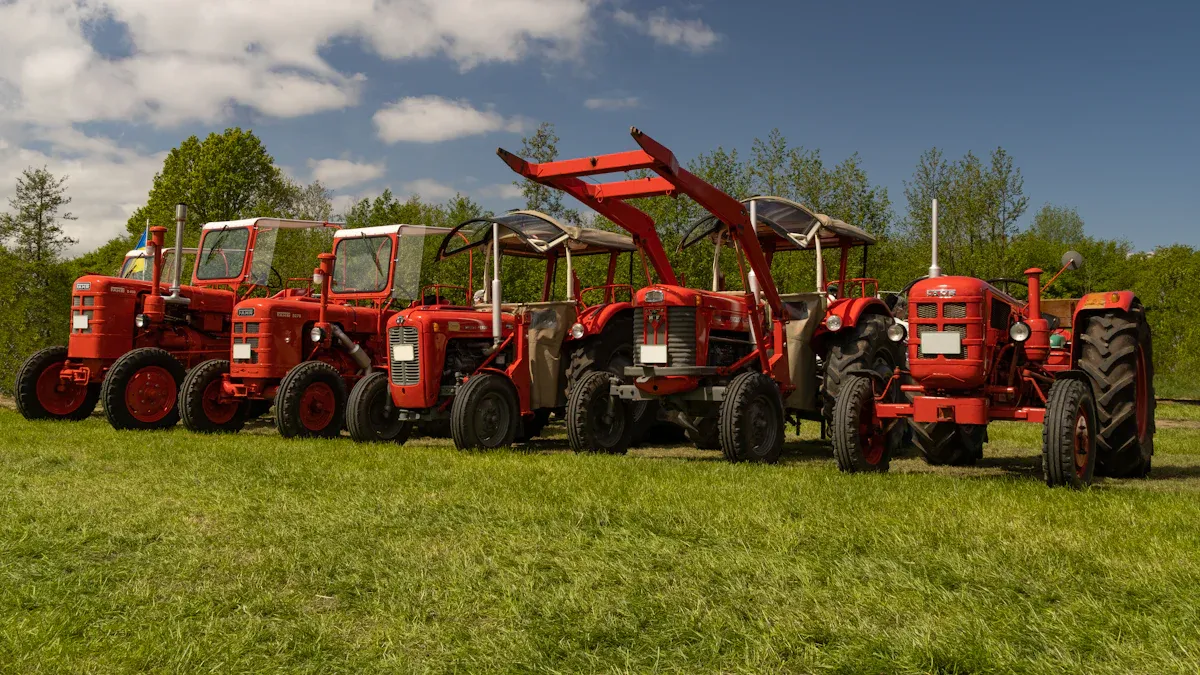
Traktor kompak memberikan perpaduan antara kekuatan dan kelincahan yang sesuai dengan peternakan berukuran kecil hingga menengah. Anda biasanya menemukan mesin ini dalam kisaran 20 hingga 60 tenaga kuda. Untuk tugas yang lebih ringan seperti memotong rumput atau lansekap dasar, 20 ¡30 tenaga kuda seringkali cukup. Jika Anda mengelola tugas yang lebih berat atau properti ukuran menengah, Anda mungkin memerlukan setidaknya 40 tenaga kuda. Traktor kompak memiliki bingkai yang lebih kecil, radius belok yang ketat, dan kontrol yang ramah pengguna. Banyak model menawarkan penggerak empat roda, transmisi hidrostatik, dan berbagai opsi pemasangan. Anda mendapat manfaat dari efisiensi bahan bakar dan biaya pengoperasian yang lebih rendah, menjadikan traktor ini ideal untuk pemilik yang sadar anggaran.
| Fitur | Compact Tractors |
|---|---|
| Kisaran Horsepower | 20 ͕60 HP |
| Size | Kecil hingga menengah |
| Kemampuan manuver | High |
| Efisiensi Bahan Bakar | Excellent |
| Opsi Lampiran | Serbaguna |
| Keterampilan Operator Khas | Pemula hingga mahir |
Tip: Traktor kompak bekerja dengan baik di ruang sempit, seperti kebun buah-buahan, kebun, atau area ternak kecil. Anda dapat mempelajari lebih lanjut tentang fitur traktor kompak dan pengalaman pengguna di Komunitas pertanian Reddit.
Penggunaan Khas
Anda dapat menyelesaikan berbagai tugas dengan traktor kompak di peternakan Anda. Kegunaan umum meliputi:
- Perawatan rumput: memotong rumput, mengendalikan gulma, dan mengelola vegetasi yang keras.
- Manajemen hewan: memberi makan ternak dan membersihkan kios secara efisien.
- Pemeliharaan jalan masuk: memperbaiki rute kerikil dan membersihkan salju.
- Lansekap: menyapu, memindahkan sikat, dan mengaerasi tanah.
- Menggali parit: mempersiapkan tiang pagar atau menanam pohon.
Misalnya, jika Anda mengoperasikan properti seluas 10 hektar dengan lansekap campuran dan beberapa hewan, traktor kompak memungkinkan Anda memotong, mengangkut pakan, dan memelihara tanah Anda dengan mudah. Banyak pemilik pertanian kecil berbagi proyek traktor kompak mereka dan tips tentang platform seperti Peralatan Pertanian # Twitter.
Traktor Utilitas
Features
Traktor utilitas menawarkan lebih banyak daya dan keserbagunaan untuk operasi yang lebih besar. Anda biasanya melihat peringkat tenaga kuda antara 50 dan 100, yang mendukung tugas yang menuntut dan peralatan yang lebih besar. Traktor ini memiliki bangunan yang lebih berat, ground clearance yang lebih tinggi, dan sistem hidrolik canggih. Anda dapat memasang loader, mesin pemotong rumput, dan peralatan lain untuk pekerjaan khusus. Traktor utilitas sering kali menyertakan fitur kenyamanan seperti kabin tertutup dan pengatur suhu, yang membantu Anda bekerja lebih lama dalam berbagai kondisi cuaca.
| Fitur | Traktor Utilitas |
|---|---|
| Kisaran Horsepower | 50 ج100 HP |
| Size | Sedang hingga besar |
| Kemampuan manuver | Moderat |
| Efisiensi Bahan Bakar | Good |
| Opsi Lampiran | Sangat serbaguna |
| Keterampilan Operator Khas | Menengah hingga ahli |
Catatan: Traktor utilitas unggul ketika Anda perlu untuk menutupi lebih banyak areal atau menangani pekerjaan tugas berat. Untuk perbandingan mendalam dan saran, kunjungi Kemajuan Pertanian.
Penggunaan Khas
Anda mengandalkan traktor utilitas untuk spektrum luas tugas pertanian menengah dan besar, seperti:
- Membajak dan mengolah ladang yang luas.
- Mengangkut beban berat, termasuk bal jerami dan peralatannya.
- Mendukung beberapa lampiran seperti loader dan mesin pemotong rumput.
- Pembuatan jerami dan penghilangan salju.
- Pekerjaan pertanian umum, termasuk menyiapkan ladang dan mengangkut material.
Pertimbangkan skenario dunia nyata: Di ladang jerami seluas 50 hektar, Anda menggunakan traktor utilitas untuk menarik baler besar, mengangkut hasil panen, dan membersihkan salju dari jalan akses. Tingkat kekuatan dan fleksibilitas ini membantu Anda memaksimalkan produktivitas dan beradaptasi dengan perubahan kebutuhan pertanian.
Ketika Anda bertanya, Compact vs. Traktor Utilitas: Mana yang Tepat untuk Pertanian Anda?, meninjau fitur-fitur ini dan penggunaan khas membantu Anda mencocokkan mesin yang tepat dengan areal dan beban kerja Anda. Untuk wawasan lebih lanjut, jelajahi kisah pengguna dan saran ahli di Successful Farming.
Perbandingan Traktor
Ukuran & Kemampuan Manuver
Ketika Anda mengevaluasi traktor untuk pertanian Anda, ukuran dan kemampuan manuver sering menjadi faktor penentu. Traktor kompak memiliki tapak yang lebih kecil, yang memungkinkan Anda menavigasi ruang sempit dengan mudah. Desain ini membuatnya ideal untuk tugas di kebun, kebun, atau area dengan akses terbatas. Anda dapat membalikkan rintangan, bekerja di antara baris, dan beroperasi secara efisien di lingkungan terbatas. Misalnya, banyak model traktor kompak menawarkan radius belok seketat 9,84 kaki, yang berarti Anda dapat membuat belokan tajam dan meminimalkan waktu yang dihabiskan untuk reposisi.
Traktor utilitas, di sisi lain, memiliki bingkai yang lebih besar dan membutuhkan lebih banyak ruang untuk beroperasi. Ukurannya yang meningkat memberikan stabilitas dan kekuatan untuk pekerjaan tugas berat, tetapi Anda mungkin menemukan mereka kurang gesit di area kecil atau berantakan. Jika peternakan Anda mencakup bidang terbuka lebar atau Anda perlu menutupi areal yang luas, ukuran ekstra menjadi keuntungan. Namun, untuk properti dengan banyak rintangan atau lorong sempit, traktor kompak memberikan kemampuan manuver yang unggul.
Tip: Jika Anda mengelola properti dengan sudut sempit, pepohonan, atau beberapa bangunan tambahan, traktor kompak akan membantu Anda menyelesaikan tugas lebih cepat dan dengan lebih sedikit kerumitan.
Tenaga Kuda & Performa
Tenaga kuda secara langsung memengaruhi apa yang dapat dicapai traktor Anda. Traktor kompak biasanya berkisar antara 20 hingga 60 tenaga kuda, yang mendukung sebagian besar tugas pertanian ringan hingga sedang. Anda dapat memotong, menggarap, dan mengangkut beban sedang dengan percaya diri. Beberapa model kompak bahkan menangani pekerjaan tugas berat, berkat desain yang efisien dan kapasitas angkat loader yang kuat.
Traktor utilitas menawarkan tenaga kuda yang lebih tinggi, biasanya antara 50 dan 100. Kekuatan ekstra ini memungkinkan Anda untuk menarik peralatan yang lebih besar, mengangkat beban yang lebih berat, dan bekerja lebih lama tanpa ketegangan. Jika Anda berencana untuk membajak ladang besar, jerami bale, atau mengangkut material substansial, Anda akan mendapat manfaat dari kinerja traktor utilitas.
Berikut adalah perbandingan tenaga kuda dan kapasitas angkat loader untuk model traktor kompak yang khas:
| Model | Tenaga Kuda (HP) | Kapasitas Angkat Loader (lbs) | Cocok untuk Tugas Berat |
|---|---|---|---|
| 1023R | 23.9 | T/A | Ya |
| 2032R | 31.1 | T/A | Ya |
| 3038E | 37.3 | T/A | Ya |
| 4044M | 43.1 | 2,222 | Ya |
Anda dapat melihat bahwa bahkan traktor kompak dengan tenaga kuda yang lebih rendah dapat menangani pekerjaan yang menuntut, tetapi traktor utilitas unggul ketika Anda membutuhkan daya berkelanjutan dan kapasitas angkat yang lebih tinggi. Untuk perbandingan yang lebih teknis dan pengalaman pengguna, Anda dapat mengunjungi Successful Farming.
Keserbagunaan & Lampiran
Keserbagunaan mendefinisikan seberapa baik traktor Anda beradaptasi dengan tugas yang berbeda sepanjang tahun. Baik traktor kompak maupun utilitas mendukung berbagai macam attachment, tetapi skala dan kapasitasnya berbeda.
Anda dapat melengkapi traktor kompak dengan lampiran seperti:
- Backhoe dan peralatan penggalian
- Bilah untuk penilaian
- Alat penanganan material
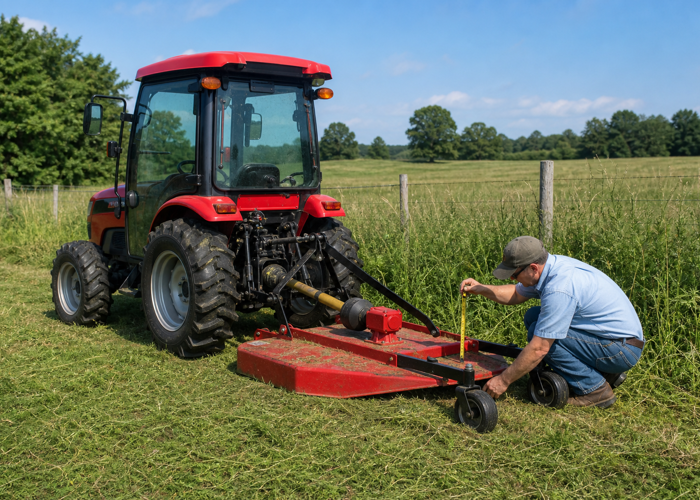
- Mesin pemotong rumput dan pemotong
- Peralatan penghilang salju
- Alat pengolahan tanah
- Front-end loader
Traktor utilitas menerima lampiran serupa tetapi dapat menangani peralatan yang lebih besar dan lebih berat. Kemampuan ini memungkinkan Anda untuk menangani pekerjaan yang lebih menuntut, seperti produksi jerami skala besar atau pengolahan tanah yang dalam. Anda juga mendapat manfaat dari peralatan khusus untuk ternak, penyemaian, dan penyemprotan.
Kedua jenis traktor menawarkan:
- Pemberat dan penyeimbang
- Alat penilaian
- Bergulat
- Memotong lampiran pemeliharaan
- Lampiran pengolahan tanah
Traktor kompak menonjol karena kemampuannya untuk beralih di antara tugas dengan cepat dan beroperasi di ruang sempit. Mereka datang dalam berbagai ukuran, dari subkompak hingga tugas berat, sehingga Anda dapat mencocokkan tenaga kuda dan lampiran dengan kebutuhan Anda. Desain mereka memastikan stabilitas di medan yang tidak rata dan kemampuan manuver yang mudah, membuatnya cocok untuk penggunaan komersial dan pribadi.
Catatan: Ketika Anda mempertimbangkan Compact vs. Traktor: Mana yang Tepat untuk Pertanian Anda?, pikirkan tentang berbagai tugas yang Anda lakukan setiap musim. Traktor yang tepat harus menangani beban kerja Anda saat ini dan beradaptasi seiring dengan perkembangan pertanian Anda. Untuk lebih banyak ide tentang memaksimalkan keserbagunaan traktor, lihat diskusi tentang Komunitas pertanian Reddit.
Biaya & Nilai
Anda harus mempertimbangkan baik investasi awal dan nilai jangka panjang ketika memilih antara traktor kompak dan utilitas. Traktor kompak biasanya memiliki harga beli yang lebih rendah, sehingga dapat diakses untuk pertanian kecil atau mereka yang memiliki anggaran terbatas. Traktor utilitas biaya lebih dimuka, tetapi mereka menawarkan kekuatan yang lebih besar dan kapasitas untuk operasi yang lebih besar.
Berikut adalah perbandingan harga pembelian rata-rata:
| Jenis Traktor | Rentang Harga |
|---|---|
| Compact Tractors | $10,000 Φ$25,000 |
| Traktor Utilitas | $25,000 Φ$50,000 |
Anda harus menimbang biaya ini terhadap tugas yang paling sering Anda lakukan. Jika Anda mengelola properti kecil dan fokus pada pemotongan, lansekap, atau pengangkutan ringan, traktor kompak memberikan nilai yang kuat tanpa memperpanjang anggaran Anda. Untuk pertanian atau operasi yang lebih besar yang membutuhkan pekerjaan tugas berat, traktor utilitas membenarkan harganya yang lebih tinggi dengan menangani peralatan yang lebih besar dan pekerjaan yang lebih menuntut.
Tip: Pertimbangkan nilai jual kembali dan umur yang diharapkan. Traktor utilitas sering mempertahankan nilai dengan baik, terutama jika Anda merawatnya dengan benar. Traktor kompak juga memegang nilai di pasar bekas, khususnya untuk petani hobi dan penata taman.
Anda dapat menemukan lebih banyak wawasan tentang harga traktor dan retensi nilai di TractorData dan bergabung dalam diskusi tentang biaya kepemilikan dunia nyata Komunitas pertanian Reddit.
Efisiensi Bahan Bakar
Efisiensi bahan bakar berdampak pada biaya operasi Anda dari waktu ke waktu. Traktor kompak umumnya menggunakan lebih sedikit bahan bakar per jam karena mesinnya yang lebih kecil dan rangka yang lebih ringan. Ketika Anda melakukan pekerjaan berat, seperti menggarap atau mengangkut, traktor kompak seperti BX22 mengkonsumsi sekitar satu galon diesel per jam. Traktor utilitas, dengan mesinnya yang lebih besar, menunjukkan tingkat konsumsi bahan bakar yang serupa selama tugas yang menuntut, tetapi mereka menutupi lebih banyak tanah dan menyelesaikan pekerjaan lebih cepat.
Anda harus mencocokkan ukuran traktor dengan areal dan beban kerja Anda untuk memaksimalkan efisiensi. Untuk peternakan kecil, penggunaan bahan bakar traktor kompak yang lebih rendah membuat pengeluaran tetap dapat dikelola. Pada properti yang lebih besar, kemampuan traktor utilitas untuk menyelesaikan pekerjaan besar dengan cepat dapat mengimbangi konsumsi bahan bakar per jam yang lebih tinggi.
Catatan: Lacak rata-rata penggunaan bahan bakar Anda untuk setiap musim. Ini membantu Anda menganggarkan secara akurat dan membandingkan biaya kepemilikan sebenarnya antara jenis traktor.
Untuk detail lebih lanjut tentang efisiensi bahan bakar dan pengalaman pengguna, kunjungi bagian peralatan Successful Farming atau telusuri tips dari petani lain di Peralatan Pertanian # Twitter.
Kemudahan Penggunaan
Kemudahan penggunaan memainkan peran utama dalam produktivitas sehari-hari. Traktor kompak memiliki fitur kontrol intuitif, dasbor sederhana, dan tempat duduk yang nyaman. Anda dapat belajar mengoperasikannya dengan cepat, bahkan jika Anda memiliki pengalaman terbatas. Ukurannya yang lebih kecil dan bobotnya yang lebih ringan membuatnya mudah bermanuver, terutama di ruang sempit atau di sekitar rintangan.
Traktor utilitas membutuhkan lebih banyak keterampilan karena ukurannya dan fitur canggih. Anda mendapat manfaat dari ground clearance yang lebih tinggi dan hidrolika yang lebih kuat, tetapi Anda mungkin memerlukan pelatihan tambahan untuk menggunakan semua fungsi dengan aman. Banyak traktor utilitas menyertakan peningkatan kenyamanan, seperti kabin tertutup dan kontrol iklim, yang membantu Anda bekerja lebih lama dalam kondisi cuaca yang berbeda.
Anda harus mempertimbangkan siapa yang akan mengoperasikan traktor paling sering. Jika Anda berbagi peralatan dengan anggota keluarga atau karyawan, desain traktor kompak yang ramah pengguna mengurangi kurva pembelajaran. Untuk tim yang lebih besar atau tugas khusus, traktor utilitas menawarkan fitur canggih yang meningkatkan efisiensi setelah Anda menguasai kontrol.
Tip: Uji coba kedua jenis di dealer lokal. Pengalaman langsung membantu Anda menilai kenyamanan, visibilitas, dan kemudahan pengoperasian sebelum Anda berkomitmen.
Anda dapat membaca lebih lanjut tentang pengalaman operator dan tips pelatihan di Farm Progress dan terhubung dengan pemilik lain di Komunitas pertanian Reddit.
Pertanyaan tentang Traktor Kompak vs. Utilitas: Mana yang Tepat untuk Peternakan Anda? tergantung pada bagaimana Anda menyeimbangkan biaya, efisiensi bahan bakar, dan kemudahan penggunaan dengan kebutuhan unik peternakan Anda.
Daya Tahan & Pemeliharaan
Ketika Anda berinvestasi dalam traktor, daya tahan dan pemeliharaan membentuk kepuasan jangka panjang dan biaya kepemilikan Anda. Anda menginginkan mesin yang tahan terhadap penggunaan sehari-hari dan membutuhkan waktu henti minimal. Traktor kompak dan utilitas keduanya menawarkan konstruksi yang kuat, tetapi umur dan kebutuhan perawatannya berbeda berdasarkan ukuran, beban kerja, dan kondisi pengoperasian.
Perbandingan Umur
Anda dapat mengharapkan traktor kompak yang dirawat dengan baik untuk bertahan antara 4.000 dan 8.000 jam operasi, yang diterjemahkan menjadi sekitar 10 hingga 20 tahun di pertanian kecil yang khas. Traktor utilitas, yang dibangun untuk beban kerja yang lebih berat, sering mencapai 6.000 hingga 10.000 jam atau 15 hingga 25 tahun. Jika Anda beroperasi di lingkungan yang menuntut atau menjalankan peralatan Anda sepanjang tahun, angka-angka ini dapat bervariasi.
| Jenis Traktor | Umur Rata-rata (Jam Operasional) | Umur Rata-rata (Tahun) |
|---|---|---|
| Compact Tractors | 4.000 hingga 8.000 | 10 hingga 20 |
| Traktor Utilitas | 6.000 hingga 10.000 | 15 hingga 25 |
| Tugas Berat 4WD | Lebih dari 15.000 | 25 hingga 30 |
Tip: Lacak jam pengoperasian traktor Anda dan jadwalkan perawatan rutin. Praktik ini memperpanjang masa manfaat peralatan Anda dan membantu Anda merencanakan peningkatan di masa mendatang.
Masalah Pemeliharaan Umum
Anda akan menemukan tugas pemeliharaan rutin dengan traktor kompak dan utilitas. Namun, frekuensi dan kompleksitas tugas ini bisa berbeda. Traktor kompak, karena bentuknya yang lebih ringan, mungkin memerlukan pemeriksaan yang lebih sering pada komponen seperti sabuk dan filter. Traktor utilitas, dengan hidrolika yang lebih canggih dan mesin yang lebih besar, perlu perhatian rutin terhadap cairan dan bagian yang bergerak.
Berikut adalah beberapa masalah pemeliharaan paling umum yang mungkin Anda hadapi:
| Masalah Pemeliharaan | Deskripsi |
|---|---|
| Masalah Mulai Mesin | Masalah dalam menghidupkan mesin, termasuk masalah baterai, sirkuit listrik, sistem bahan bakar, dan asupan udara. |
| Overheating Mesin | Penyebab panas berlebih termasuk rendahnya tingkat oli atau cairan pendingin, masalah sabuk kipas, dan masalah aliran udara. |
| Masalah Kemudi | Masalah dengan kemudi dapat timbul dari oli hidrolik yang rendah, filter tersumbat, kurangnya pelumasan, atau poros yang bengkok. |
Anda dapat mengurangi waktu henti dengan memeriksa sistem ini secara teratur dan mengatasi masalah kecil sebelum menjadi perbaikan besar. Untuk tips pemeliharaan yang lebih praktis, Anda dapat mengunjungi panduan pemeliharaan Successful Farming atau bergabung dalam diskusi tentang Komunitas pertanian Reddit.
Studi Kasus: Daya Tahan Dunia Nyata
Pertimbangkan sebuah peternakan sayuran kecil yang mengoperasikan traktor kompak untuk memotong, mengolah, dan mengangkut setiap hari. Dengan perubahan oli yang konsisten, penggantian filter, dan pemeriksaan musiman, traktor tetap dapat diandalkan selama lebih dari 15 tahun. Sebaliknya, operasi peternakan menggunakan traktor utilitas untuk pengangkutan berat dan kerja lapangan melihat 20 tahun layanan dengan jadwal perawatan disiplin dan penggantian bagian tepat waktu.
Strategi Pemeliharaan Praktis
- Buat log pemeliharaan untuk melacak interval servis dan perbaikan.
- Periksa tingkat cairan, sabuk, dan filter sebelum digunakan.
- Simpan traktor Anda di tempat terlindung untuk melindunginya dari kerusakan akibat cuaca.
- Ikuti jadwal perawatan pabrikan untuk hasil terbaik.
Pemeliharaan rutin tidak hanya memperpanjang umur traktor Anda tetapi juga meningkatkan keselamatan dan kinerja. Anda dapat menemukan lebih banyak saran dan terhubung dengan pemilik lain di Peralatan Pertanian # Twitter.
Ketika Anda bertanya, Compact vs. Traktor Utilitas: Mana yang Tepat untuk Pertanian Anda?, pertimbangkan berapa banyak waktu dan sumber daya yang dapat Anda dedikasikan untuk pemeliharaan. Traktor yang terawat baik, baik kompak atau utilitas, akan melayani pertanian Anda dengan andal selama bertahun-tahun.
Memilih untuk Peternakan Anda
Ukuran Pertanian
Dibawah 10 Hektar
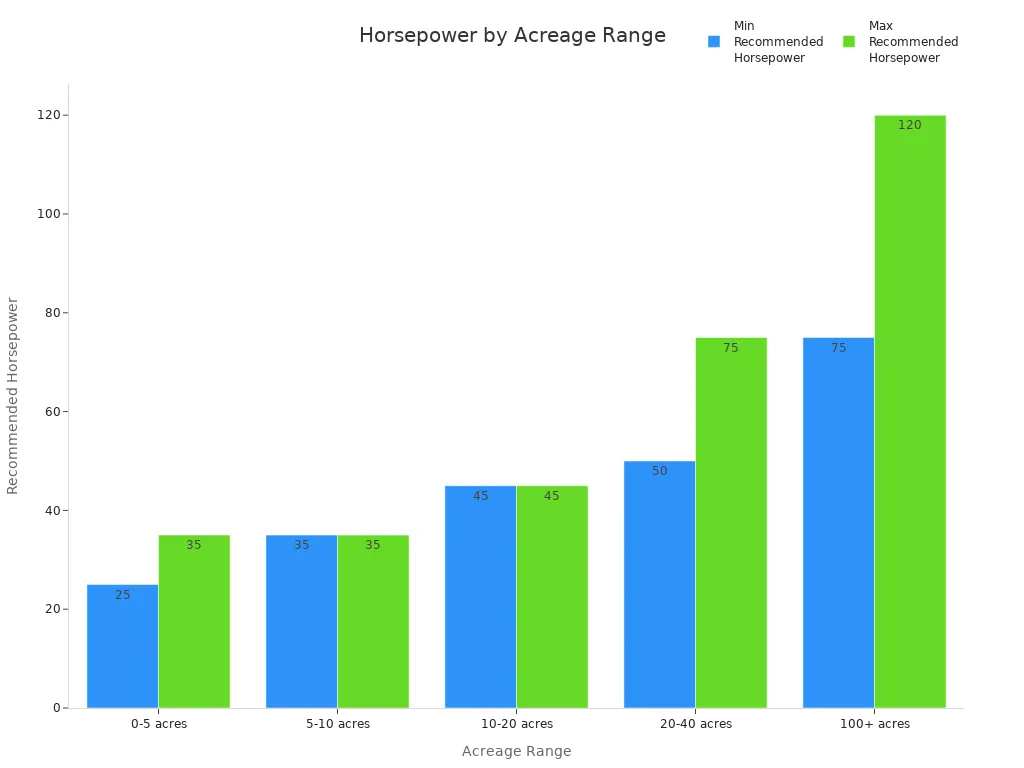
Anda mengelola properti kecil, jadi Anda memerlukan traktor yang menawarkan kelincahan dan efisiensi. Traktor kompak dengan 20 ¡35 tenaga kuda bekerja paling baik untuk memotong rumput, mengangkut cahaya, dan persiapan taman. Bingkai mereka yang lebih kecil memungkinkan Anda untuk bermanuver di sekitar fitur lansekap dan ruang sempit. Anda dapat melihat tenaga kuda yang direkomendasikan untuk rentang areal yang berbeda dalam tabel di bawah ini:
| Acreage Range | Horsepower yang Disarankan | Seri Traktor yang Cocok |
|---|---|---|
| 0ج5 hektar | 25ج35 hp | Subkompak/Kompak |
| 5ج10 hektar | 35+ hp | Compact |
10 ج50 Hektar
Untuk peternakan berukuran sedang, Anda memerlukan lebih banyak daya dan keserbagunaan. Traktor dalam kisaran 35 جي 75 tenaga kuda menangani pekerjaan loader, penggarapan, pengelolaan padang rumput, dan penanganan jerami. Mesin-mesin ini mendukung peralatan yang lebih berat dan mencakup lebih banyak tanah secara efisien. Tabel berikut menguraikan penggunaan khas oleh areal:
| Areal | Rentang HP yang Direkomendasikan | Penggunaan Khas |
|---|---|---|
| 10ج20 hektar | 35͕50 HP | Penanganan jerami, pengolahan tanah yang lebih berat, ternak kecil |
| 20ج40 hektar | 50 ͕75 HP | Peralatan yang lebih besar, produksi yang lebih tinggi |
Lebih dari 50 Hektar
Peternakan besar menuntut traktor utilitas dengan 75 ج 120 tenaga kuda. Anda memerlukan tingkat daya ini untuk pembajakan skala besar, baling, dan transportasi berat. Traktor ini mendukung lampiran canggih dan tahan operasi terus menerus. Untuk properti lebih dari 100 hektar, Anda mendapat manfaat dari tenaga kuda dan daya tahan tertinggi.
Tugas Umum
Pemotongan & Lansekap
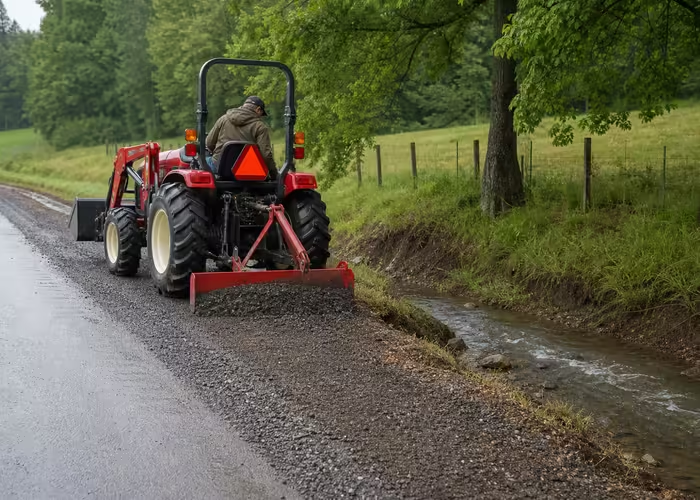
Baik traktor kompak dan utilitas berkinerja baik untuk memotong dan pemeliharaan properti. Model kompak unggul di ruang sempit dan di sekitar rintangan. Traktor utilitas mencakup area yang luas dengan cepat dan menangani pemotongan di pinggir jalan dengan mudah.
Mengolah & Membajak
Anda perlu mencocokkan ukuran traktor dengan kebutuhan pengolahan tanah Anda. Traktor kompak menangani pengolah taman dan pembajakan ringan. Untuk pengolahan tanah yang dalam atau memecahkan tanah baru, traktor utilitas dengan tenaga kuda yang lebih tinggi memberikan hasil yang lebih baik.
Pengangkutan & Transportasi
Anda mengandalkan traktor Anda untuk memindahkan material, pakan, atau peralatan. Traktor kompak mengelola beban ringan, sementara traktor utilitas mengangkut barang yang lebih berat dan mendukung trailer yang lebih besar.
Peternakan & Spesialisasi
Jika Anda mengelola ternak, kedua jenis traktor membantu memberi makan dan membersihkan. Traktor utilitas menawarkan lebih banyak daya untuk menangani bal dan mengoperasikan lampiran khusus.
Anggaran & Pembiayaan
Biaya Di Muka
Traktor kompak biaya kurang awalnya, membuat mereka dapat diakses untuk pertanian kecil. Traktor utilitas membutuhkan investasi yang lebih tinggi tetapi memberikan kapasitas yang lebih besar. Anda dapat mengeksplorasi pilihan pembiayaan seperti rencana buy-now-pay-later, jalur kredit, dan akun bergulir untuk mengelola pembelian Anda.
Nilai Jangka Panjang
Traktor utilitas bertahan lebih lama, seringkali melebihi 5.000 jam layanan. Traktor kompak memiliki masa pakai yang lebih pendek tetapi mempertahankan nilai untuk dijual kembali. Mesin berkualitas lebih tinggi mengurangi biaya perbaikan dan menawarkan pengembalian jangka panjang yang lebih baik.
Tip: Tinjau areal, tugas utama, dan anggaran Anda sebelum memutuskan. Compact vs. Traktor Utilitas: Mana yang Tepat untuk Pertanian Anda? tergantung pada bagaimana Anda menyeimbangkan faktor-faktor ini untuk operasi Anda.
Perencanaan untuk Pertumbuhan
Anda perlu berpikir di luar kebutuhan Anda saat ini ketika memilih traktor. Perencanaan untuk pertumbuhan memastikan investasi peralatan Anda terus melayani Anda saat pertanian Anda berkembang. Banyak produsen tidak mengharapkan ekspansi yang cepat, tetapi Anda masih harus bersiap untuk perubahan areal, beban kerja, atau persyaratan operator.
Sebuah survei baru-baru ini menunjukkan bahwa sekitar setengah dari produsen tidak memiliki rencana untuk menumbuhkan pertanian mereka. Sekitar 40% berniat untuk mempertahankan ukuran mereka saat ini, sementara hanya sebagian kecil yang mengharapkan pertumbuhan tahunan yang signifikan. Bahkan jika Anda termasuk mayoritas, Anda mendapat manfaat dari memilih traktor yang beradaptasi dengan tantangan atau peluang baru.
Tip: Pilih traktor dengan tenaga kuda sedikit lebih banyak dan kapasitas lampiran dari yang Anda butuhkan saat ini. Pendekatan ini memberi Anda fleksibilitas jika Anda menambahkan ternak, memperluas ladang Anda, atau mendiversifikasi tanaman Anda.
Ketika Anda merencanakan masa depan, pertimbangkan faktor-faktor kunci ini:
- Evaluasi tujuan jangka panjang Anda. Apakah Anda ingin meningkatkan produksi, menambah perusahaan baru, atau meningkatkan efisiensi?
- Nilai tanah Anda. Apakah Anda akan memperoleh lebih banyak areal, atau apakah properti Anda saat ini akan tetap sama?
- Pikirkan tentang keluarga atau tim Anda. Apakah operator yang lebih muda atau kurang berpengalaman akan menggunakan traktor? Jika demikian, prioritaskan fitur ergonomis dan kontrol sederhana.
- Pertimbangkan kemampuan fisik Anda dan operator lain. Carilah kursi yang dapat disesuaikan, terutama jika Anda memiliki operator yang lebih pendek atau peralatan yang lebih tua.
- Tinjau fitur kenyamanan. Kabin tertutup dengan pengatur suhu dapat membuat jam kerja yang panjang di lapangan lebih mudah dikelola, terutama jika Anda bekerja dalam cuaca ekstrem.
- Rencana untuk upgrade teknologi. traktor modern sering mendukung panduan GPS, telematika, dan fitur pintar lainnya yang meningkatkan produktivitas.
Anda juga harus mencocokkan sistem pemasangan traktor dengan kebutuhan masa depan Anda. Model yang mendukung berbagai macam peralatan memungkinkan Anda beradaptasi seiring perubahan pertanian Anda. Misalnya, Anda dapat memulai dengan memotong dan mengolah ringan, lalu menambahkan produksi jerami atau penanganan ternak seiring pertumbuhan operasi Anda.
Catatan: Jika Anda berharap untuk berbagi traktor Anda dengan anggota keluarga atau karyawan, pilih model dengan kontrol kode warna dan panel instrumen sederhana. Fitur-fitur ini mengurangi kurva pembelajaran dan meningkatkan keselamatan bagi operator yang kurang berpengalaman.
Anda dapat menemukan lebih banyak saran tentang perencanaan pertumbuhan pertanian dan kebutuhan peralatan dari layanan penyuluhan pertanian dan forum petani seperti Komunitas pertanian Reddit. Dengan berpikir ke depan, Anda melindungi investasi Anda dan memastikan traktor Anda tetap menjadi alat yang berharga selama bertahun-tahun yang akan datang.
Pro & Kontra
Pro Traktor Kompak
Anda mendapatkan beberapa keuntungan ketika Anda memilih traktor kompak untuk peternakan Anda. Mesin-mesin ini menawarkan fleksibilitas dan efisiensi untuk properti berukuran kecil hingga menengah. Anda dapat bermanuver dengan mudah di sekitar ruang sempit, seperti kebun buah-buahan, kebun, dan kandang ternak. Traktor kompak menggunakan lebih sedikit bahan bakar, yang membantu Anda mengendalikan biaya operasi dari waktu ke waktu. Anda mendapat manfaat dari investasi awal yang lebih rendah, membuat traktor ini dapat diakses jika Anda memiliki anggaran terbatas.
- Kemampuan manuver: Anda menavigasi jalur sempit dan bekerja secara efisien di area dengan rintangan.
- Keterjangkauan: Anda menghabiskan lebih sedikit untuk pembelian awal dan pemeliharaan berkelanjutan.
- Efisiensi Bahan Bakar: Anda menghemat uang untuk bahan bakar, terutama selama tugas ringan yang sering.
- Kemudahan Penggunaan: Anda belajar mengoperasikan kontrol dengan cepat, bahkan jika Anda memiliki sedikit pengalaman.
- Keserbagunaan: Anda melampirkan peralatan untuk memotong, mengolah tanah, lansekap, dan mengangkut.
Tip: Jika Anda mengelola properti di bawah 20 hektar, traktor kompak sering memenuhi kebutuhan Anda untuk pekerjaan sehari-hari dan proyek musiman. Anda dapat membaca lebih lanjut tentang keuntungan traktor kompak di Successful Farming dan bergabunglah dalam diskusi tentang Komunitas pertanian Reddit.
| Keuntungan | Contoh Praktis |
|---|---|
| Kemampuan manuver | Anda memotong di antara barisan kebun tanpa merusak pohon. |
| Efisiensi Bahan Bakar | Anda menggunakan kurang dari 1 galon solar per jam memotong. |
| Keterjangkauan | Anda menginvestasikan $10,000͕$25,000 untuk mesin yang andal. |
Kontra Traktor Kompak
Anda mungkin menghadapi keterbatasan dengan traktor kompak, terutama jika pertanian Anda tumbuh atau beban kerja Anda meningkat. Mesin-mesin ini berjuang dengan tugas-tugas berat, seperti membajak dalam atau mengangkut beban besar. Anda mungkin menemukan kapasitas angkat dan tenaga kuda tidak cukup untuk operasi yang menuntut. Traktor kompak sering kekurangan fitur kenyamanan canggih, seperti taksi tertutup atau kontrol iklim, yang dapat mempengaruhi produktivitas Anda selama hari kerja yang panjang.
- Daya Terbatas: Anda tidak dapat menarik alat besar atau menangani bahan berat.
- Kapasitas Angkat Lebih Rendah: Anda mungkin perlu beberapa perjalanan untuk memindahkan barang-barang besar.
- Kenyamanan Dasar: Anda bekerja tanpa kontrol iklim atau pilihan tempat duduk canggih.
- Pembatasan Lampiran: Anda menggunakan implementasi yang lebih kecil, yang dapat memperlambat proyek besar.
Catatan: Jika Anda berencana untuk memperluas pertanian Anda atau menambahkan perusahaan baru, pertimbangkan apakah traktor kompak akan terus memenuhi kebutuhan Anda. Untuk pengalaman pengguna yang lebih banyak, kunjungi Peralatan Pertanian # Twitter.
| Kekurangan | Contoh Praktis |
|---|---|
| Daya Terbatas | Anda berjuang untuk membajak ladang baru setelah hujan lebat. |
| Lower Lift | Anda tidak dapat memindahkan bal jerami besar dalam satu perjalanan. |
| Kenyamanan Dasar | Anda bekerja di cuaca terbuka selama pekerjaan musim dingin. |
Pro Traktor Utilitas
Anda mendapatkan manfaat yang signifikan ketika Anda berinvestasi dalam traktor utilitas. Mesin-mesin ini memberikan tenaga kuda yang lebih tinggi dan kapasitas angkat yang lebih besar, yang memungkinkan Anda untuk mengatasi tugas-tugas yang menuntut pada properti yang lebih besar. Anda mengoperasikan lampiran canggih untuk membajak, baling, dan pengangkutan berat. Traktor utilitas sering kali menyertakan peningkatan kenyamanan, seperti kabin tertutup dan kontrol ergonomis, yang membantu Anda bekerja lebih lama di musim apa pun.
- High Power: Anda menyelesaikan pengolahan tanah yang dalam, pemotongan skala besar, dan transportasi berat secara efisien.
- Kapasitas Angkat Lebih Besar: Anda memindahkan beban besar, seperti bal jerami atau peralatan, dalam perjalanan yang lebih sedikit.
- Keserbagunaan: Anda menggunakan berbagai macam peralatan untuk pekerjaan pertanian khusus.
- Kenyamanan Operator: Anda mendapat manfaat dari kontrol iklim dan tempat duduk yang dapat disesuaikan.
- Daya tahan: Anda mengandalkan konstruksi yang kuat untuk operasi berkelanjutan.
Tip: Jika Anda mengelola lebih dari 50 hektar atau menjalankan operasi komersial, traktor utilitas mendukung produktivitas dan pertumbuhan jangka panjang Anda. Jelajahi lebih lanjut tentang keuntungan traktor utilitas di Farm Progress dan terhubung dengan pemilik lain di Komunitas pertanian Reddit.
| Keuntungan | Contoh Praktis |
|---|---|
| High Power | Anda membajak 40 hektar dalam waktu lebih singkat dengan peralatan yang lebih besar. |
| Kapasitas Angkat | Anda mengangkut beberapa bal jerami dalam satu perjalanan. |
| Kenyamanan | Anda bekerja dengan nyaman di dalam taksi tertutup selama musim panas. |
Kontra Traktor Utilitas
Sementara traktor utilitas menawarkan daya dan keserbagunaan yang mengesankan, Anda harus menimbang beberapa kelemahan sebelum melakukan investasi Anda. Memahami keterbatasan ini membantu Anda menghindari kejutan dan merencanakan biaya kepemilikan yang sebenarnya.
- Biaya Awal Lebih Tinggi
Anda akan membayar lebih untuk traktor utilitas daripada untuk model kompak. Bingkai yang lebih besar, fitur-fitur canggih, dan peningkatan tenaga kuda mendorong harga pembelian. Jika Anda mengoperasikan pertanian kecil atau menengah, biaya ini dapat membebani anggaran Anda. Anda harus membandingkan opsi pembiayaan dan menghitung laba atas investasi Anda. Untuk lebih lanjut tentang penganggaran untuk peralatan, kunjungi panduan biaya TractorData. - Mengurangi Kemampuan Manuver
Traktor utilitas membutuhkan lebih banyak ruang untuk beroperasi. Radius belok yang lebih besar dan bangunan yang lebih berat membuat sulit untuk bekerja di area yang sempit, seperti kebun buah-buahan, kebun, atau di sekitar beberapa bangunan. Jika properti Anda termasuk lorong sempit atau banyak rintangan, Anda mungkin menemukan tugas sehari-hari membutuhkan waktu lebih lama. - Peningkatan Konsumsi Bahan Bakar
Anda akan melihat biaya bahan bakar yang lebih tinggi dengan traktor utilitas. Mesin yang lebih besar mengkonsumsi lebih banyak diesel, terutama selama pekerjaan tugas berat. Seiring waktu, pengeluaran ini bertambah. Anda harus melacak penggunaan bahan bakar Anda dan faktor ini ke dalam anggaran operasi tahunan Anda. Banyak petani berbagi tips untuk meningkatkan efisiensi pada Komunitas pertanian Reddit. - Pemeliharaan Kompleks
Traktor utilitas memiliki fitur hidrolika, elektronik, dan sistem kenyamanan canggih. Komponen-komponen ini memerlukan perawatan khusus dan terkadang layanan profesional. Anda mungkin perlu berinvestasi dalam alat atau pelatihan tambahan. Pemeriksaan rutin membutuhkan waktu lebih lama, dan perbaikan dapat memakan biaya lebih banyak daripada dengan model yang ringkas. - Kurva Pembelajaran Lebih Curam
Mengoperasikan traktor utilitas menuntut lebih banyak keterampilan. Kontrol, lampiran, dan sistem keselamatan dapat membanjiri pengguna baru. Jika Anda berencana untuk berbagi traktor dengan keluarga atau karyawan, Anda harus menjadwalkan sesi pelatihan. Banyak kantor penyuluhan pertanian menawarkan kursus keselamatan operator.
Catatan: Anda harus selalu mencocokkan pilihan traktor dengan ukuran properti, tugas utama, dan pengalaman operator Anda. Pengeluaran berlebihan untuk tenaga kuda atau fitur yang tidak Anda gunakan dapat mengurangi efisiensi peternakan Anda.
| Kekurangan | Dampak terhadap Peternakan Anda |
|---|---|
| Biaya Upfront Tinggi | Membatasi arus kas untuk investasi lainnya |
| Manuverabilitas Bawah | Memperlambat pekerjaan di area yang sempit atau penuh rintangan |
| Penggunaan Bahan Bakar Lebih Tinggi | Meningkatkan biaya operasional tahunan |
| Pemeliharaan Kompleks | Membutuhkan lebih banyak waktu, alat, dan terkadang spesialis |
| Curve Pembelajaran Curam | Menuntut pelatihan ekstra untuk pengoperasian yang aman |
Anda harus meninjau tata letak pertanian, beban kerja, dan pengalaman tim Anda sebelum memilih traktor utilitas. Untuk saran dunia nyata lainnya, bergabunglah dengan diskusi tentang Peralatan Pertanian # Twitter atau berkonsultasi dengan dealer peralatan lokal.
Rekomendasi
Small Farms
Jika Anda mengelola pertanian kecil, Anda memerlukan traktor yang sesuai dengan skala dan tugas harian Anda. Traktor kompak bekerja paling baik untuk properti di bawah 10 hektar. Anda mendapat manfaat dari kemampuan manuver dan kemudahan penggunaannya. Mesin-mesin ini menangani pemotongan, pengolahan ringan, lansekap, dan mengangkut beban kecil. Anda menghemat biaya bahan bakar dan pemeliharaan, yang membantu Anda menjaga anggaran Anda tetap terkendali.
Rekomendasi Utama untuk Pertanian Kecil:
- Pilih traktor kompak dengan 20 ج35 tenaga kuda.
- Prioritaskan model dengan transmisi hidrostatik untuk pengoperasian sederhana.
- Pilih lampiran seperti mesin pemotong rumput yang dipasang di tengah, pemuat ujung depan, dan bilah belakang.
- Cari kontrol ergonomis dan tempat duduk yang dapat disesuaikan untuk kenyamanan.
- Pertimbangkan opsi pembiayaan untuk menyebarkan investasi Anda.
Tip: Uji coba beberapa model di dealer lokal Anda. Ini membantu Anda menemukan yang sesuai untuk properti dan tingkat kenyamanan Anda. Untuk saran lebih lanjut, kunjungi Komunitas pertanian Reddit untuk membaca tentang pengalaman pengguna yang sebenarnya.
Medium Farms
Peternakan menengah, mulai dari 10 hingga 50 hektar, membutuhkan lebih banyak daya dan keserbagunaan. Anda sering perlu mengelola ladang yang lebih besar, ternak, dan tugas yang lebih luas. Traktor utilitas dalam kisaran 35 ¡75 tenaga kuda menawarkan keseimbangan kekuatan dan fleksibilitas terbaik. Mesin-mesin ini mendukung implementasi yang lebih berat dan membantu Anda menyelesaikan pekerjaan lebih cepat.
Fitur yang Direkomendasikan untuk Peternakan Menengah:
- Pilih traktor utilitas dengan setidaknya 40 tenaga kuda.
- Investasikan dalam lampiran seperti pemotong putar, penggali pasca-lubang, dan tombak bale.
- Pilih model dengan penggerak empat roda untuk traksi yang lebih baik di medan yang tidak rata.
- Cari fitur kenyamanan seperti kursi suspensi dan kabin opsional.
- Rencanakan pertumbuhan di masa depan dengan memilih traktor dengan kapasitas hidrolik ekstra.
Catatan: Anda harus meninjau tata letak dan tugas utama peternakan Anda sebelum memilih traktor. Untuk wawasan lebih lanjut, lihat bagian peralatan Successful Farming.
Farms Besar
Peternakan besar, dengan luas lebih dari 50 hektar, memerlukan peralatan yang kuat. Anda memerlukan a traktor utilitas dengan 75 φ120 tenaga kuda untuk menangani pekerjaan tugas berat. Traktor ini mendukung peralatan besar untuk membajak, baling, dan mengangkut material. Anda mendapat manfaat dari fitur-fitur canggih dan peningkatan daya tahan.
Praktik Terbaik untuk Peternakan Besar:
- Pilih traktor dengan tenaga kuda tinggi dan hidrolika canggih.
- Berinvestasi dalam peningkatan kenyamanan, seperti kabin dengan pengatur suhu dan kursi suspensi udara.
- Pilih lampiran untuk operasi skala besar, termasuk mesin pemotong rumput lebar dan pemuat tugas berat.
- Jadwalkan perawatan rutin untuk memaksimalkan waktu kerja dan masa pakai peralatan.
- Latih semua operator tentang keselamatan dan kontrol tingkat lanjut.
Tip: Terhubung dengan produsen skala besar lainnya di Peralatan Pertanian # Twitter untuk berbagi pengalaman dan belajar tentang teknologi baru.
Dengan mencocokkan pilihan traktor Anda dengan ukuran peternakan Anda, Anda memastikan operasi yang efisien dan nilai jangka panjang. Selalu pertimbangkan kebutuhan Anda saat ini dan rencana masa depan sebelum membuat keputusan akhir.
Peternakan Penggunaan Campuran
Jika Anda mengoperasikan pertanian serba guna, Anda menghadapi tantangan unik. Kemungkinan besar Anda mengelola kombinasi tanaman, ternak, kebun buah-buahan, dan perusahaan khusus. Traktor Anda harus menangani berbagai macam tugas, mulai dari memotong dan mengolah hingga mengangkut pakan dan mengelola peralatan berat. Anda memerlukan peralatan yang beradaptasi dengan perubahan beban kerja sepanjang tahun.
Pertimbangan Utama untuk Pertanian Mixed-Use:
- Keserbagunaan: Anda harus memprioritaskan traktor yang mendukung berbagai macam attachment. Carilah model dengan sistem quick-attach dan kapasitas hidraulik yang kuat. Fleksibilitas ini memungkinkan Anda beralih antara memotong rumput, pekerjaan loader, dan tugas khusus tanpa kehilangan waktu.
- Kisaran Horsepower: Untuk sebagian besar peternakan serba guna, traktor dalam kisaran 40 φ75 tenaga kuda menawarkan keseimbangan terbaik. Anda mendapatkan daya yang cukup untuk kerja lapangan dan produksi jerami, tetapi Anda juga mempertahankan kemampuan manuver untuk pekerjaan ternak dan pemeliharaan kebun.
- Kenyamanan Operator: Anda menghabiskan waktu berjam-jam di lapangan. Pilih traktor dengan kontrol ergonomis, tempat duduk yang dapat disesuaikan, dan, jika memungkinkan, kabin tertutup. Fitur-fitur ini meningkatkan produktivitas dan mengurangi kelelahan selama musim sibuk.
- Kompatibilitas Lampiran: Buat daftar tugas Anda yang paling umum. Pastikan traktor Anda mendukung peralatan seperti loader, pemotong putar, penggali pasca-lubang, dan tombak bale. Pendekatan ini membantu Anda memaksimalkan investasi Anda.
Tip: Buat kalender tugas musiman. Ini membantu Anda mengidentifikasi lampiran mana yang paling sering Anda butuhkan dan merencanakan peningkatan peralatan Anda sesuai dengan itu. Untuk lebih banyak ide, bergabunglah dengan diskusi tentang Komunitas pertanian Reddit atau tinjau saran ahli di Successful Farming.
Tabel Pemilihan Traktor Sampel untuk Peternakan Penggunaan Campuran
| Ukuran Peternakan (Acres) | HP yang direkomendasikan | Lampiran Utama | Manfaat Utama |
|---|---|---|---|
| 10–30 | 40–55 | Loader, mesin pemotong rumput, anakan | Fleksibilitas, manuver mudah |
| 30–60 | 55–75 | Loader, baler, pemotong putar | Tenaga untuk ladang dan ternak |
| 60+ | 75+ | Loader, alat jerami, penyemprot | Efisiensi, tugas berat |
Anda juga harus mempertimbangkan masa depan peternakan Anda. Jika Anda berencana untuk memperluas atau melakukan diversifikasi, pilih traktor dengan outlet hidrolik ekstra dan kapasitas angkat yang lebih tinggi. Pandangan ke depan ini memastikan peralatan Anda tetap berguna seiring dengan pertumbuhan operasi Anda.
Langkah Tindakan untuk Pertanian Mixed-Use:
- Buat daftar lima tugas berulang teratas Anda berdasarkan musim.
- Cocokkan setiap tugas dengan lampiran yang diperlukan.
- Uji coba traktor dengan peringkat tenaga kuda berbeda di dealer lokal.
- Konsultasikan dengan petani serba guna lainnya secara online untuk mendapatkan masukan dari dunia nyata.
- Tinjau opsi pembiayaan untuk menyeimbangkan biaya dimuka dengan nilai jangka panjang.
Catatan: Peternakan serba guna paling diuntungkan dari traktor yang menawarkan daya dan kemampuan beradaptasi. Dengan memilih dengan bijak, Anda menyiapkan diri untuk produktivitas yang efisien sepanjang tahun. Untuk tips yang lebih praktis, jelajahi Peralatan Pertanian # Twitter dan terhubung dengan operator berpengalaman.
Ketika Anda memutuskan antara traktor kompak dan utilitas, fokuslah pada tenaga kuda, fitur keselamatan, pemilihan ban, dan jenis transmisi. Tanyakan pada diri Anda apa tugas utama Anda, pekerjaan terbesar yang Anda harapkan, dan kisaran harga ideal Anda. Cocokkan traktor Anda dengan areal, beban kerja, dan anggaran Anda. Untuk hasil terbaik, buat daftar periksa kebutuhan Anda dan kunjungi dealer lokal untuk saran langsung. Memilih dengan bijak memastikan Anda mendapatkan nilai maksimal dari investasi Anda. Traktor Kompak vs. Utilitas: Mana yang Tepat untuk Pertanian Anda? menjadi jelas ketika Anda menyelaraskan peralatan Anda dengan tujuan Anda.
Berinvestasi pada traktor yang tepat akan meningkatkan produktivitas dan pertumbuhan pertanian Anda selama bertahun-tahun.
FAQ
Berapa ukuran traktor yang Anda butuhkan untuk pertanian seluas 5 hektar?
Anda harus memilih traktor kompak dengan 25 ج 35 tenaga kuda. Ukuran ini menangani pemotongan, pengolahan ringan, dan pengangkutan. Anda mendapatkan kemampuan manuver untuk taman dan ruang sempit. Untuk saran lebih lanjut, kunjungi Komunitas pertanian Reddit.
Bisakah Anda menggunakan traktor kompak untuk tugas-tugas berat?
Traktor kompak menangani pekerjaan ringan hingga sedang. Anda mungkin berjuang dengan membajak dalam atau memindahkan bal besar. Untuk tugas berat, Anda memerlukan traktor utilitas dengan tenaga kuda dan kapasitas angkat yang lebih tinggi.
Bagaimana Anda memutuskan antara traktor kompak dan utilitas?
Daftar tugas utama dan areal Anda. Jika Anda fokus pada memotong rumput, lansekap, atau pekerjaan skala kecil, pilih traktor kompak. Untuk ladang besar, ternak, atau pengangkutan berat, pilih traktor utilitas.
Apakah traktor utilitas lebih sulit dioperasikan?
Traktor utilitas membutuhkan lebih banyak keterampilan karena fitur canggih dan ukuran yang lebih besar. Anda mungkin perlu pelatihan untuk pengoperasian yang aman. Traktor kompak menawarkan kontrol yang lebih sederhana dan sesuai dengan pemula.
Lampiran apa yang berfungsi dengan traktor kompak?
Anda dapat menggunakan loader, mesin pemotong rumput, anakan, pisau, dan alat penghilang salju. Traktor kompak mendukung banyak peralatan, tetapi Anda harus memeriksa berat dan kompatibilitas sebelum membeli.
Bagaimana pilihan traktor mempengaruhi biaya jangka panjang?
Traktor kompak biaya dimuka kurang dan menggunakan bahan bakar kurang. Traktor utilitas bertahan lebih lama dan menangani pekerjaan yang lebih besar, tetapi memerlukan investasi yang lebih tinggi dan pemeliharaan. Melacak pengeluaran Anda untuk membandingkan total biaya kepemilikan.
Haruskah Anda membeli traktor dengan tenaga kuda lebih dari yang Anda butuhkan sekarang?
Anda mendapat manfaat dari tenaga kuda ekstra jika Anda berencana untuk memperluas atau menambahkan tugas baru. Traktor yang sedikit lebih besar memberikan fleksibilitas untuk pertumbuhan di masa depan. Hindari pengeluaran berlebihan untuk daya yang tidak akan Anda gunakan.