Welkom by Shandong Qilu Industrial Co., Ltd

 Afrikaans
 English
 Arabic
 Bulgarian
 Bengali
 Czech
Czech
 Danish
 German
 Greek
Greek
 Spanish
 Finnish
 French
 Hindi
Hindi
 Croatian
 Hungarian
 Indonesian
 Italian
 Japanese
 Korean
 Lithuanian
 Dutch
Dutch
 Norwegian
 Polish
 Portuguese
 Romanian
 Russian
 Slovak
 Slovenian
 Swedish
 Thai
Thai
 Turkish
 Ukrainian
 Vietnamese
 Tagalog
 Malay
Malay
 Estonian
 Catalan
 Latvian
 Urdu
Urdu
 Serbian
 Persian
 Swahili
 Albanian
 Armenian
 Icelandic
 Bosnian
 Luxembourgish
Afrikaans English
Arabic
Bulgarian
Bengali
Czech
Danish
German
Greek
Spanish
Finnish
French
Hindi
Croatian
Hungarian
Indonesian
Italian
Japanese
Korean
Lithuanian
Dutch
Norwegian
Polish
Portuguese
Romanian
Russian
Slovak
Slovenian
Swedish
Thai
Turkish
Ukrainian
Vietnamese
Tagalog
Malay
Estonian
Catalan
Latvian
Urdu
Serbian
Persian
Swahili
Albanian
Armenian
Icelandic
Bosnian
Luxembourgish
Luxembourgish
Afrikaans English
Arabic
Bulgarian
Bengali
Czech
Danish
German
Greek
Spanish
Finnish
French
Hindi
Croatian
Hungarian
Indonesian
Italian
Japanese
Korean
Lithuanian
Dutch
Norwegian
Polish
Portuguese
Romanian
Russian
Slovak
Slovenian
Swedish
Thai
Turkish
Ukrainian
Vietnamese
Tagalog
Malay
Estonian
Catalan
Latvian
Urdu
Serbian
Persian
Swahili
Albanian
Armenian
Icelandic
Bosnian
Luxembourgish
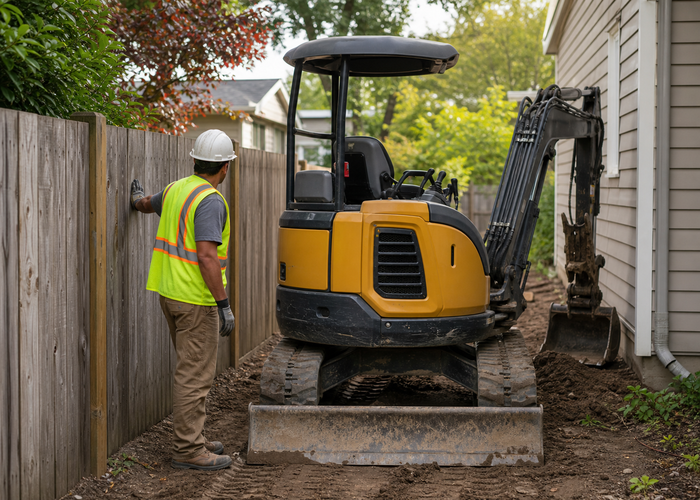
Hoe kies verspreiders die beste mini-graafverskaffer?
Die keuse van beste mini graaf verskaffer verskaffer is nie oor die jaag van die laagste eenheid prys. As 'n verspreider, jou besluit moet werklike werk te masjien specs, verifieer EU/VSA mark toegang, bevestig dele en diens gereedheid, en belyn logistieke terme om jou risiko toleransie. In hierdie gids, ons anker die koop van die werklike wêreld werk aan vyf hoë frekwensie scenario's durban nut trenking naby bestaande lyne; residensiële landskap en agterplaas projekte; plaas dreinering en heining post grawe; sloping in beperkte ruimtes; pad instandhouding en leivoor werk so kan jy 'n herhaalbare werkvloei bou om die kies die vyf hoë. beste mini graaf verskaffer verskaffer vir jou grondgebied.
Begin met scenario's: bind spesifikasies aan regte werk van die beste mini-graafmasjienverskaffer
Voordat jy vergelyk aanhalings, raam jou evaluering rondom die einde van die finale? beste mini graaf verskaffer verskaffer moet jou help om masjiene op te stel om hierdie werk skoon te pas. Gebruik die tabel om bedryfsgewig, stert-afvalvormfaktor, onderstel, hidroulika en vervoerbeperkings in lyn te bring.
| Scenario | Bedryfsgewig (t) | Stert swaai | Onderklere en breedte | Hulpvloei/aanvalle | Vervoer en notas | Relatiewe risiko |
|---|---|---|---|---|---|---|
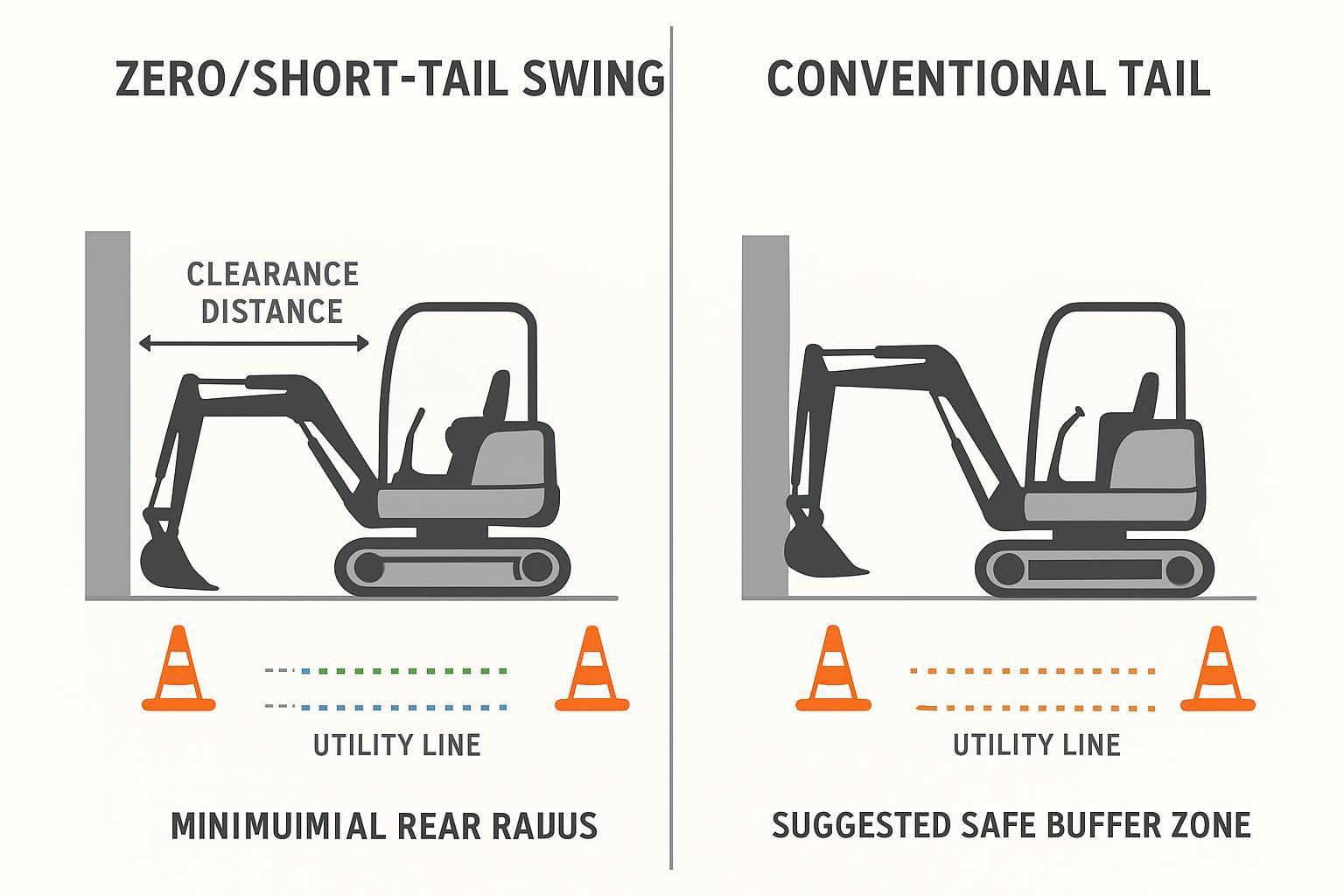
| Stedelike nut sloot naby bestaande lyne | 2.0–2.5 | Nul of kort stert | Intrekbare spore; ≈990 pardant1200 mm; rubber spore | Fyn, proporsionele hidroulika; vinnige koppelaar; emmers, smal slootgereedskap | Lae geraas prioriteit; presisie werk; operateur wagte | Medium |
| Residensiële landskap/agterplaas | 1.5–2.0 | Kort stert | Kompakte voetspoor; ≤1000 pardent1100 mm; lae gronddruk | Vinnige koppelaar; gradering emmer; moontlike battery-Clectric opsie | Hek toegang; turfbeskerming | Laag |
| Plaas dreinering en heining na grawe | 2.0–3.0 | Konvensioneel of kort | Verseëlde verbindings; korrosiebeskerming; lang darm opsie | Hoër oux vloei vir augers; gooi emmer | Nat grond; langer bereik behoeftes | Medium |
| Sloop in beperkte ruimtes | 1.8–2.5 | Nul stert | Intrekbare spore; versterkte wagte (boom/arm/buik) | Vinnige koppelaar; hidrouliese breker; gryp | Puingevare; operateurbeskerming | Hoog |
| Onderhoud langs die pad en leivoorwerk | 2.5–3.5 | Kort of konvensioneel | Stabiliteit prioriteit; sleepwa-vriendelike vervoergewig | Sterk aux stroombane; kantel emmer; telematika vir toesig | Verkeersbestuur; hellingswerk | Medium |
Nakoming eerste: dokumente om te verifieer met enige beste mini graaf verskaffer
Jou beste mini graaf verskaffer verskaffer moet 'n volledige mark bied. Verifieer dokumente teen gesaghebbende bronne, nie brosjures nie.
- CE-merk onder die EU-masjinerierichtlijn 2006/42/EC: versoek die EC Declaration of Conformity (Bylae II), verseker CE-merkvorm/affiksering pas by Bylae III, en bevestig dat instruksiehandleidings voldoen aan Bylae I, punt 1.7.4. Sien die gekonsolideerde richtlijn en annekseer ankers in in EUR NetanyLex (gekonsolideerde 2006/42/EG).
- EU Stage V NRMM-enjinnakoming: verseker dat die enjingesinsertifikaat ooreenstem met die geïnstalleerde enjin en kragband; verwysingsvrystellingslimiete in Bylae I-tabelle. Bron: Regulasie (EU) 2016/1628 (Bly V) gekonsolideer.
- Amerikaanse marktoegang (indien van toepassing): bevestig EPA nie-pad diesel regulasies en die toepaslike tegniese deel, 40 CFR Deel 1039, vir kompressie-gewyne enjins. Handleidings moet opdrag gee oor ULSD en, indien toegerus, DEF-hantering; EPA-bladsye verskaf konteks oor diesel uitlaatvloeistof.
- Bekende liggame (indien 'n konformiteitsevaluering vereis word): kruis-marchinecheck-identiteite via die EG se NANDO-portaal: Aangewese liggame deur wetgewing.
Dokumentversoek en verifikasiestappe met enige beste mini-graafmasjienverskaffer:
- Vra vir EC Declaration of Conformity (EC DoC), Technical File-indeks en enjinsertifikate.
- Verifieer model/reeks op etikette pas by dokumente; kyk CE-merkformaat en aanbring per Bylae III.
- Bevestig handleidings is in die amptelike taal van die bestemmingsmark en sluit veiligheid/onderhoud per aanhangsel I 1.7.4 in.
- Vir Stage V/EPA, foto-enjintikette/plate; kruis Titlecheck familie/tipe nommers met sertifikate.
- Teken alle tjeks in jou PDI/pre-aldelevery-lêer; behou kopieë vir oudits.
Hidroulika, onderstel, en aanhangsels: wat 'n beste mini graaf verskaffer moet ondersteun
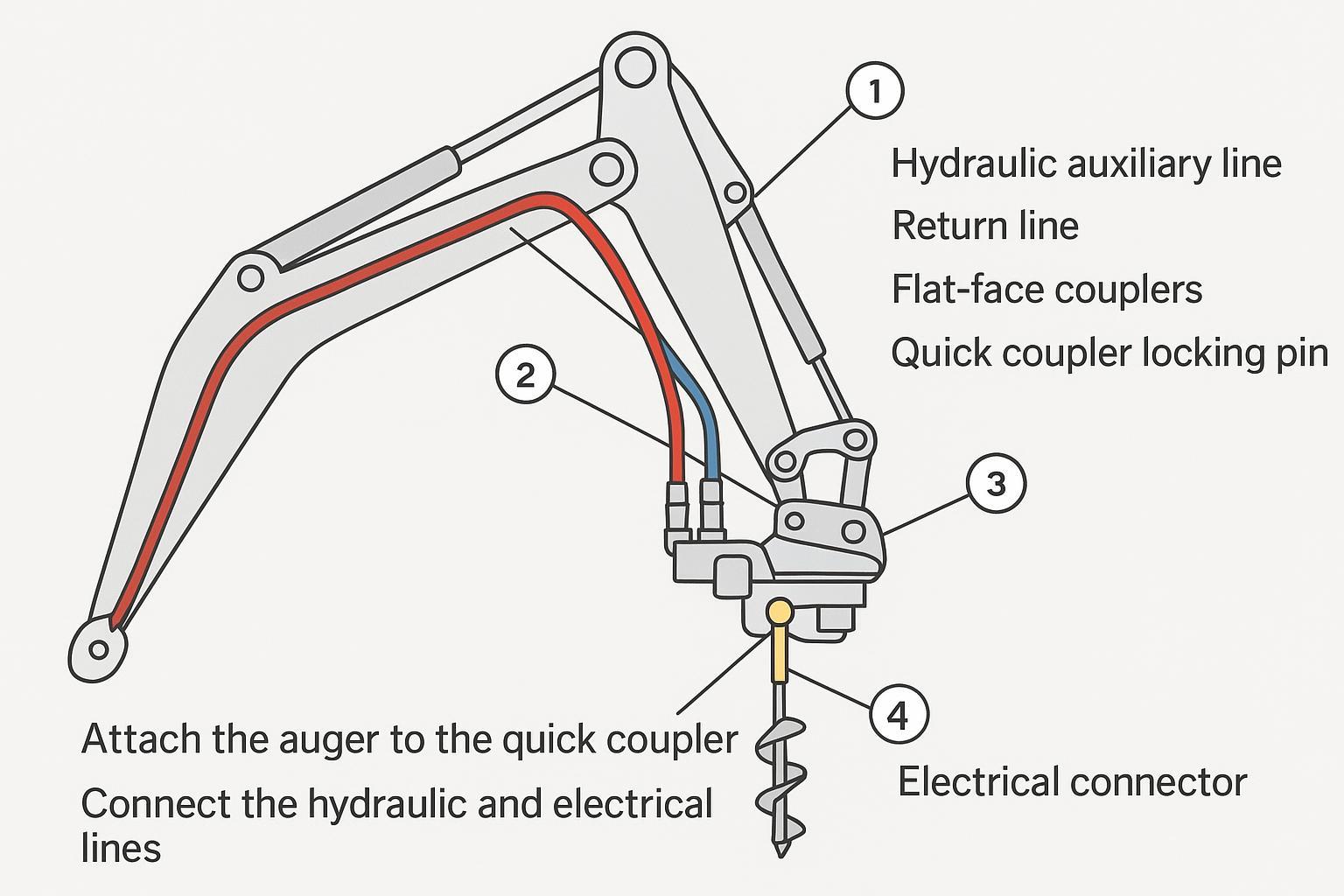
A beste mini graaf verskaffer verskaffer sal spesifiseer hulp hidrouliese vloei en druk aan aanhangsels (augers, breakers, worstel) en voorsien verenigbare vinnige koppelaars. Let op intrekbare onderstelle vir stywe toegang, rubber vs staal spore, en wag pakkette vir sloping of pad werk. Telematics feeds in lyn met ISO 15143 Complers3 is nuttig vir vloot toesig; voldoen voer verskaf tipies plek, loop ure, brandstof vlak, en fout kodes. Sien die ISO abstrakte: Sien die ISO abstrakte: ISO/TS 15143:2020 telematiese data.
Van kwotasie tot aflewering: hoe om die beste mini-graafmasjienverskafferaanbiedinge te vergelyk
Wanneer vergelyk aanbiedinge van a beste mini graaf verskaffer verskaffer, kyk verder as eenheidsprys tot risiko en gereedheid. Onderhandel MOQ, leitye en INCOTERMS in die lig van jou invoerprosesse en buffervoorraad.
| INCOTER | Risiko-oordragpunt | Tipiese notas vir verspreiders | Loodtydoorwegings |
|---|---|---|---|
| STOF | Aan boord by hawe van verskeping | Verkoper maak uitvoer skoon; koper hanteer seevrag, versekering, invoerklaring | Transit lood tyd hang af van jou expediteur; voorspelbaar as bane stabiel is |
| CIF | Aan boord by hawe van verskeping | Verkoper reël vrag en versekering na bestemmingshawe; koper hanteer invoerklaring/aflaai | Mag versekering vereenvoudig; invoer tydsberekening nog steeds jou verantwoordelikheid |
| CIP | By aflewering aan draer (benoemde plek) | Verkoper verseker na die naam plek; multimodale vriendelike; koper hanteer invoerklaring | Nuttig vir binnelandse draer oordragte en komplekse bene |
| DAP | Op 'n plek in bestemming | Verkoper reël aflewering met uitsluiting van invoerbelasting/belasting; koper maak doeane skoon | Verminder logistieke werklading; verseker dat jy vinnig kan skoonmaak |
| DDP | Op 'n plek in bestemming | Verkoper hanteer invoerformaliteite, pligte, belasting en aflewering | Maksimum verkoper verpligtinge; verifieer verkoper se vermoë om in jou land op te tree |
Verwys na die ICC-materiaal vir gesaghebbende definisies: Incoterms 2020 oorsig.
Voorafskaffing en aankoms tjeks met enige beste mini graaf verskaffer:
- Vereis 'n voor-afslaginspeksie (PDI) video en kontrolelys: vloeistowwe, lekkasies, spoorspanning, beheerfunksies, veiligheidsplakkers/toestelle, gelaaide funksionele toets (15 30 minute).
- By aankoms, volg inspeksie beginsels in ooreenstemming met HSE leiding oor werk toerusting: HSE inspeksie beginsels.
Praktiese voorbeeld: verifieer 'n model bladsy en dokumente met 'n beste mini graaf verskaffer
Openbaarmaking: Qilu Machinery is ons produk. As 'n voorbeeld van hoe 'n verspreider met 'n beste mini graaf verskaffer verskaffer:
- Maak 'n kompakte model bladsy oop (bv, 'n 1.2 Anteton mini graafmasjien). Let op die werk gewig, afmetings en aanhegtingsversoenbaarheid. As spesifikasies afgekort word, versoek die volle datasheet met hidrouliese vloei/druk en vervoerwydte.
- Vra die verskaffer vir die EC DoC, Stage V-enjinsertifikaat en US EPA-dokumentasie as gerig op daardie markte. Verifieer etikette/reekse pas by die dokumente. Vir 'n verskaffervergelykingsraamwerk, sien hierdie neutrale interne gids oor die bou van 'n 'n neutrale interne gids oor die bou van 'n mini graafmasjien verskaffer kontrolelys: Hoe om mini-graafskap verskaffer opsies maklik te vergelyk.
Vir 'n visuele oriëntasie, hersien 'n generiese rondloop en bedryfsoorsigvideo: Mini graafmasjien rondloop en bedryf oorsig (YouTube).
PDI en eerste 990 Perdag na die verhandeling beplan met enige beste mini-graafmasjienverskaffer
Jou beste mini graaf verskaffer verskaffer moet verbind tot die beskikbaarheid van onderdele, die waarborgreaksie SLA's en opleidingsondersteuning.
- PDI kontrolelys hoogtepunte: vloeistowwe/filters, slang lekkasies, spoor spanning, slou/boom/arm siklus toets, hulpkring funksie, veiligheid ineen, plakkers. Log bevindinge met foto's en operateur handtekeninge.
- Onderdele en verbruiksgoedere: stem 'n kritiese lys van vier dele (filters, seëlstelle, slange, koppelaarpenne), aanvanklike koushoeveelhede en reaksietye vir dringende bestellings in (bv. 24.772 uur teiken vir kritieke dele).
- Opleiding en handleidings: verseker operateur/diensopleidingsopsies en digitale handleidings in plaaslike taal; belyn telematiese dashboards (ligging, ure, benutting, foutkodes) by jou vlootgereedskap.
Gereelde vrae oor die keuse van die beste mini graaf verskaffer
- Wat maak die beste mini graaf verskaffer vir verspreiders? ’n Verskaffer wat masjien spesifikasies in lyn met jou kliënte se top scenario's, bewys CE/Stage V/EPA voldoening aan dokumente, en ondersteun jou met dele, opleiding, en duidelike INCOTERMS.
- Hoe verifieer ek EU-toegang van die beste mini-graafmasjienverskaffer? Versoek EC DoC, kontroleer CE-merkreëls en bevestig Stage V-enjinsertifikate met EUR NetanyLex-verwysings.
- Watter grootte reeks moet die beste mini graaf verskaffer voorstel vir residensiële werk? Algemeen 1.5 Budget2.0 t met kort stert, lae gronddruk, en vinnige koppelaars.
- Watter aanhegsels moet die beste mini-graafmasjienverskafferondersteuning vir boerdery? Augers vir heiningpale, slootemmers en verseëlde hidrouliese verbindings vir nat grond.
- Hoe kan telematika help met 'n vloot van die beste mini-graafmasjienverskaffer? Gestandaardiseerde voere bied ligging, loopure, brandstofvlakke en foutkodes vir instandhoudingsbeplanning.
- Watter INCOTERMS werk die beste met 'n nuwe beste mini-graafmasjienverskaffer? DAP of DDP verminder logistieke werklading; FOB/CIF/CIP gee jou meer beheer oor die gebruik van u invoervermoëns.
- Wat moet ek in my PDI insluit met enige beste mini-graafmasjienverskaffer? Vloeistowwe, lekkasies, spoorspanning, funksionele toetse, veiligheidstoestelle en dokumentasiekontroles, aangeteken met foto's.
As jou volgende stap, hersien 'n kompakte reeks voorbeeld en kontak verkope vir verspreider aktivering materiaal en 'n mini graafmasjien verskaffer seleksie deurloop. Begin met 'n kompakte modelbladsy vir konteks: 1.2 Masjin mini graaf verskaffer opsies.