Correo electrónico: [email protected] WhatsApp: +8618266768780

Correo electrónico: [email protected] WhatsApp: +8618266768780


A menudo encontrará problemas como problemas de arranque del motor, sobrecalentamiento, dificultades de dirección y fallas eléctricas en los tractores compactos. Muchos de estos problemas surgen de factores que puede controlar, como se muestra a continuación:
| Problema de mantenimiento | Causa percibida |
|---|---|
| Operación descuidada del tractor | Alta frecuencia de averías |
| Mantenimiento inadecuado | Comúnmente reportado por los propietarios |
| Tractores envejecidos | Contribuyente significativo a los problemas |
| Uso de repuestos falsos para mantenimiento | Conduce a reparaciones frecuentes |
Cuando realiza inspecciones periódicas y cambia los líquidos a tiempo, ayuda a prevenir averías inesperadas. Preste atención a las señales de advertencia tempranas y haga que los controles de rutina sean un hábito. Su Guía de mantenimiento estacional para tractores compactos le brinda pasos claros para mantener su equipo funcionando sin problemas.
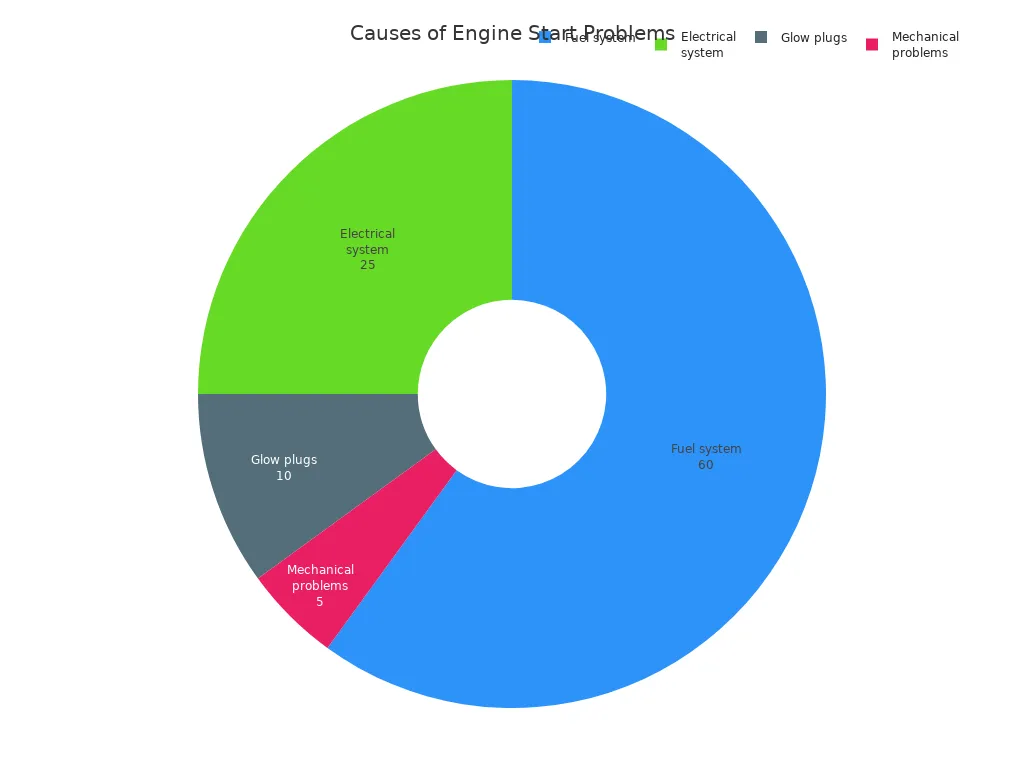
Los problemas iniciales se encuentran entre las frustraciones más comunes que puede enfrentar tractores compactos. Informes recientes de la industria muestran que la mayoría de los problemas de arranque provienen del sistema de combustible, seguidos de problemas eléctricos, bujías incandescentes y fallas mecánicas.
| Causa categoría | Participación porcentual | Elementos principales |
|---|---|---|
| Sistema de combustible | ~60% | Filtro de combustible, bomba de inyección, inyectores, sistema de entrada de aire |
| Sistema eléctrico | ~25% | Batería, arranque, alternador, terminales |
| Bujías luminosas | ~10% | Enchufes desgastados, controlador, sistema de calefacción |
| Problemas mecánicos | ~5% | Compresión, sincronización, sellos |
Es posible que notes que tu tractor no arranca o que las luces parecen tenues. Una batería agotada suele provocar estos síntomas. Comience comprobando si la batería está completamente cargada. Limpie los postes y terminales para asegurar una conexión sólida. Si ve corrosión, retírela con un cepillo de alambre. Las baterías pierden carga más rápido en climas fríos o si deja las luces encendidas después de su uso. Pruebe la batería con regularidad, especialmente antes de las temporadas altas.
Si la batería funciona pero el motor aún no gira, el motor de arranque podría ser el problema. Escuche un sonido de clic cuando gira la llave. Este ruido a menudo significa que el motor de arranque no se activa. Inspeccione el cableado en busca de conexiones sueltas o daños. Si no puede encontrar un problema obvio, es posible que necesite un técnico para probar o reemplazar el motor de arranque.
Consejo: Siempre revise los fusibles y consulte el manual del propietario para conocer los pasos correctos para la solución de problemas.
El sobrecalentamiento puede dañar el motor rápidamente. Debes estar atento a señales de advertencia como indicadores de aumento de temperatura o vapor del capó. Las causas más frecuentes incluyen aletas del radiador bloqueadas, poco refrigerante y cinturones desgastados.
Verifique el nivel de refrigerante antes de cada uso. Complete con la mezcla correcta si está baja. Inspeccione las mangueras en busca de fugas o grietas. Si ve charcos debajo de su tractor, repare las fugas de inmediato para evitar daños al motor.
El polvo y los residuos pueden obstruir el radiador y reducir el flujo de aire. Limpie las aletas y pantallas del radiador después de trabajar en campos polvorientos. Utilice aire comprimido o un cepillo suave. Lave el sistema de enfriamiento como se recomienda en su manual para eliminar los depósitos minerales.
Nota: La limpieza e inspección periódicas del sistema de refrigeración pueden evitar la mayoría de los problemas de sobrecalentamiento.
Un sistema saludable de aire y combustible mantiene el motor funcionando sin problemas. Los problemas aquí pueden causar un rendimiento deficiente o un arranque difícil.
| Problema | Causa | Solución |
|---|---|---|
| Filtro de combustible obstruido | La suciedad y los escombros restringen el flujo de combustible, provocando una combustión ineficiente. | Reemplace los filtros según las pautas. |
| Fallo en la bomba de combustible | La bomba que funciona mal no suministra suficiente combustible. | Inspeccione y reemplace según sea necesario. |
| Problemas con los inyectores | Los inyectores defectuosos provocan una distribución desigual del combustible. | Limpie o reemplace los inyectores con regularidad. |
| Filtro de aire obstruido | El polvo y los residuos restringen el flujo de aire, lo que provoca una combustión deficiente. | Reemplace o limpie cada 100-150 horas. |
| Fuga del sistema de admisión | Las grietas permiten que entre aire sin filtrar al motor, con riesgo de dañarlo. | Inspeccione si hay fugas en el sistema de admisión. |
Un filtro de aire sucio restringe el flujo de aire y reduce la potencia del motor. Revise el filtro de aire cada 50 horas de funcionamiento. Límpielo o reemplácelo si ve acumulación de polvo. En condiciones de mucho polvo, inspeccione con más frecuencia.
Los problemas de flujo de combustible a menudo comienzan con un filtro obstruido o una bomba defectuosa. Reemplace los filtros de combustible primario y final cada 400 horas. Inspeccione las líneas de combustible en busca de fugas o grietas. Si nota un funcionamiento brusco o una pérdida de energía, primero revise el sistema de combustible.
Para obtener más consejos de mantenimiento y consejos comunitarios, visite Foros de TractorByNet o seguir #TractorMantenimiento en las redes sociales.
Problemas eléctricos puede alterar el rendimiento de su tractor y provocar un tiempo de inactividad inesperado. Puede prevenir la mayoría de los problemas inspeccionando la batería y el cableado con regularidad y observando las señales de advertencia tempranas.
La batería de su tractor alimenta el motor de arranque y todos los componentes eléctricos. Las baterías débiles provocan un rendimiento deficiente y problemas de arranque. Debes revisar la batería antes de cada temporada y después de largos períodos de inactividad.
Una batería con corrosión o acumulación en los postes a menudo no entrega suficiente energía. Si nota un arranque lento o luces tenues, pruebe la batería y reemplácela si es necesario.
Consejo: Guarde su tractor en el interior durante el invierno para prolongar la duración de la batería.
Los problemas de cableado pueden causar una pérdida de energía intermitente o una pérdida total falla eléctrica. Debe inspeccionar todas las conexiones de cables, extremos de cables y tuercas en busca de suciedad o corrosión.
Las conexiones sueltas o sucias a menudo conducen a fusibles quemados o pantallas de tablero inactivas. Puede evitar estos problemas manteniendo las conexiones limpias y seguras.
Fallos eléctricos en los tractores compactos suele aparecer de repente. Es posible que vea luces parpadeantes, errores en el tablero o pérdida de energía. La siguiente tabla enumera fallas frecuentes y sus señales de advertencia:
| Fallo eléctrico | Señales de advertencia |
|---|---|
| Problemas con la batería | Mal rendimiento, batería agotada, acumulación de postes |
| Cortocircuitos | Fallas en el sistema eléctrico, cortocircuito parcial |
| Problemas con el circuito de tierra | Mal rendimiento de la electrónica |
| Problemas con el sistema de combustible | Disminución del rendimiento, sistema de combustible atascado |
Las luces parpadeantes o tenues indican un problema con el cableado, los fusibles o la batería. Debes inspeccionar los fusibles y reemplazar los que estén fundidos. Revise los mazos de cables en busca de daños o corrosión. Si el problema persiste, pruebe el alternador y el regulador de voltaje.
Nota: Las luces parpadeantes suelen indicar un problema eléctrico más profundo. Aborde estos síntomas rápidamente para evitar daños mayores.
Un alternador defectuoso no recarga la batería y puede provocar una pérdida de energía durante el funcionamiento. Es posible que notes la luz de advertencia de la batería en tu tablero o experimentes caladas frecuentes. Pruebe la salida del alternador con un voltímetro. Si la lectura es baja, reemplace el alternador o consulte a un técnico.
Estudio de caso:
El propietario de un tractor informó repetidos errores en el tablero y en el drenaje de la batería. La inspección reveló un cable de tierra suelto y un alternador defectuoso. Después de limpiar las conexiones e instalar un alternador nuevo, el tractor volvió a su funcionamiento normal.
Para obtener más consejos sobre solución de problemas, visite Consejo de Salud y Seguridad Agrícola de América o únete a las discusiones en #TractorEléctrico.
Los sistemas hidráulicos y de dirección desempeñan un papel fundamental en su rendimiento del tractor compacto. Si ignora las señales de advertencia tempranas, corre el riesgo de realizar reparaciones costosas y operaciones inseguras. Las comprobaciones y el mantenimiento periódicos le ayudan a evitar la mayoría de los problemas.
El fluido hidráulico impulsa muchas funciones esenciales, incluidas la elevación, la dirección y los accesorios. Los problemas a menudo comienzan con niveles bajos de líquido o fugas.
Cuando el líquido hidráulico se agota, es posible que lo notes funciones hidráulicas lentas o que no responden. Esto puede dificultar el levantamiento o la dirección. Siempre verifique los niveles de líquido antes de cada uso. Si ve una caída en el rendimiento, inspeccione el depósito y complete con el líquido correcto.
| Síntomas | Causas |
|---|---|
| Funciones hidráulicas lentas o que no responden | Bajo fluido hidráulico |
| Fugas | Sellos dañados |
| Filtros obstruidos |
También debes escuchar ruidos inusuales. Quejidos, gemidos o chillidos los sonidos a menudo significan que la bomba está aspirando aire debido a la escasez de líquido. Los gorgoteos o “swishing” sugieren que el aire se está mezclando con el líquido, lo que puede provocar movimientos erráticos y sobrecalentamiento.
Consejo: Cambiar fluido hidráulico según su manual, normalmente cada 400-600 horas o una vez al año. Reemplace los filtros con regularidad y verifique si hay fugas para mantener limpio el sistema.
Las fugas son un problema común en los tractores compactos. Los sellos dañados, las mangueras agrietadas o los conectores sueltos a menudo causan pérdida de líquido. Si detecta fugas o charcos visibles debajo de su tractor, actúe rápidamente. Las fugas pueden provocar sobrecalentamiento, comportamiento errático e incluso fallos del sistema.
| Síntomas | Efectos sobre el desempeño |
|---|---|
| Quejidos, gemidos o chillidos | Presión reducida, posible daño a la bomba |
| Sonidos gorgoteantes o “swishing” | Movimiento errático, sobrecalentamiento |
| Movimiento lento o brusco del actuador | Pérdida de precisión, riesgo de calado bajo carga |
| Sobrecalentamiento del fluido/sistema | Descomposición de líquidos, mayor desgaste de los componentes |
| Comportamiento errático o inconsistente | Controles impredecibles, riesgo para válvulas o actuadores |
| Fugas de fluidos visibles | Pérdida continua de líquidos, más problemas operativos |
Revise las mangueras y conexiones en busca de grietas o holgura. Reemplace los sellos desgastados y use el tipo correcto de líquido. Estos pasos ayudan a prevenir fugas y mantener confiable su sistema hidráulico.
Los problemas de dirección pueden hacer que su tractor sea difícil de controlar. La detección temprana y el cuidado de rutina le ayudan a evitar situaciones peligrosas.
Los componentes de la dirección desgastados a menudo causan una dirección floja o que no responde. Engrase los accesorios de los cargadores, los enganches de tres puntos y las piezas de la dirección con regularidad para evitar el desgaste. Usar un pistola engrasadora de alta calidad para una aplicación uniforme. Si nota juego en el volante o escucha ruidos metálicos, inspeccione el varillaje y los casquillos.
Nota: Engrasar e inspeccionar las piezas de la dirección prolonga su vida útil y mejora la seguridad.
La dirección brusca suele indicar un problema más profundo. Puede comprobar si hay fugas internas siguiendo esta sencilla prueba:
Si experimenta una dirección brusca, verifique si hay poco líquido hidráulico, sellos desgastados o mangueras agrietadas. Cambie el líquido hidráulico y los filtros según lo recomendado. Esté atento a un funcionamiento lento, ruidos inusuales o un rendimiento inconsistente.
Estudio de caso:
El propietario de un tractor notó un movimiento brusco del cargador y una dirección brusca después de varias horas de uso. La inspección reveló un nivel bajo de líquido hidráulico y una manguera agrietada. Después de llenar el líquido y reemplazar la manguera, el tractor volvió a funcionar sin problemas.
Para obtener más consejos sobre mantenimiento hidráulico y de dirección, visita Progreso de la granja o únete a las discusiones en #TractorCare.
Los sistemas de transmisión y frenos mantienen su tractor compacto seguro y eficiente. Debe reconocer las señales de advertencia tempranas y seguir una rutina de mantenimiento constante para evitar reparaciones costosas.
El cambio de marchas suave es esencial para una operación segura. Si nota ruidos de chirrido, dificultad para moverse entre marchas o el tractor se sale de la marcha, estos son claros signos de problema. Debe verificar el juego libre del pedal del embrague y ajustarlo de acuerdo con su manual. Inspeccione si hay herrajes sueltos o mangueras deshilachadas durante su recorrido diario. El líquido de transmisión bajo o contaminado también puede causar problemas de cambio. Comprométete a cambios regulares de líquido y utilízalo siempre fluido hidráulico premium para evitar el desgaste interno.
Consejo: Controle periódicamente los niveles de aceite y complete según sea necesario. Limpie la pantalla del radiador para evitar el sobrecalentamiento, lo que puede afectar el rendimiento de la transmisión.
Los ruidos inusuales de la transmisión, como gemidos, ruidos metálicos o chirridos, a menudo indican desgaste interno o niveles bajos de líquido. Estos sonidos pueden indicar engranajes o cojinetes desgastados. Si escucha ruidos persistentes, detenga el tractor e inspeccione el líquido de la transmisión. Busque fugas o signos de contaminación. Abordar estos síntomas temprano le ayuda a evitar reparaciones importantes.
| Ruidos comunes de transmisión | Posibles causas | Acción recomendada |
|---|---|---|
| Quejándose | Rodamientos desgastados y de bajo nivel de líquido | Revisar y rellenar líquido |
| Molienda | Daño en el engranaje, desalineación | Inspeccionar engranajes, ajustar |
| Clunking traducción | Hardware suelto | Apriete los pernos, inspeccione |
Las pastillas de freno se desgastan con el tiempo, lo que reduce su potencia de frenado. Debes inspeccionar las pastillas o zapatas de freno con regularidad. Si nota distancias de frenado más largas o chirridos, reemplace las pastillas inmediatamente. El líquido de frenos bajo o sucio también puede provocar frenos lentos. Verifique los niveles de líquido y complete con el tipo recomendado.
El ajuste adecuado del freno garantiza un funcionamiento seguro. Si siente que el recorrido del pedal del freno es excesivo o que los frenos no se activan suavemente, ajuste el juego libre del pedal. Examine las líneas de freno en busca de corrosión, grietas o fugas. Siga el manual del propietario para conocer los procedimientos de ajuste y siga siempre las pautas del fabricante.
Nota: Dirección cualquiera signos de vibración de los frenos inmediatamente. Utilice combustible limpio y lubrique los frenos mojados para un funcionamiento más suave.
Estudio de caso:
El propietario de un tractor informó de un chirrido y una potencia de frenado reducida. La inspección reveló pastillas de freno desgastadas y poco líquido. Después de reemplazar las pastillas y completar el líquido, los frenos volvieron a su máxima potencia. El propietario ahora revisa los componentes de los frenos y los niveles de líquido semanalmente.
Para obtener más consejos de mantenimiento, visite Progreso de la granja o únete a las discusiones en #TractorSeguridad.
Regular inspecciones de neumáticos y seguridad mantenga su tractor compacto confiable y seguro. Puede prevenir muchos accidentes y averías revisando sus neumáticos y componentes críticos de seguridad antes de cada uso.
Puede notar que los neumáticos de su tractor se desgastan más rápido en un lado. El desgaste desigual a menudo resulta de un inflado inadecuado, ruedas desalineadas o de transportar cargas pesadas en un lado. Revise sus neumáticos en busca de puntos calvos, grietas o cables expuestos. Rote los neumáticos como se recomienda en su manual para prolongar su vida útil. Si ve patrones desiguales, inspeccione la alineación del eje y ajústela según sea necesario.
Consejo: Engrase los cojinetes de las ruedas y verifique si hay tuercas sueltas durante cada inspección.
La baja presión de los neumáticos reduce la tracción y aumenta el riesgo de fallo de los neumáticos. Utilice un manómetro fiable para comprobar la presión de aire de cada neumático antes de operar su tractor. Infle los neumáticos al PSI recomendado por el fabricante. La baja presión puede provocar un mal manejo, un mayor consumo de combustible e incluso daños en las llantas. Los neumáticos demasiado inflados también pueden provocar una conducción brusca y un desgaste desigual.
| Problema de neumáticos | Causa común | Acción recomendada |
|---|---|---|
| Desgaste desigual | Desalineación, sobrecarga | Girar, alinear, equilibrar |
| Baja presión | Fugas, pinchazos | Inflar, reparar, reemplazar |
| Grieta | Edad, exposición a los rayos UV | Reemplace la llanta |
Una encuesta reciente encontró que más de 30% de propietarios de tractores compactos experimente el tiempo de inactividad relacionado con los neumáticos cada año. Puede reducir este riesgo haciendo que las revisiones de neumáticos formen parte de su rutina.
Sus frenos deben funcionar correctamente para mantenerlo seguro. Inspeccione las pastillas de freno en busca de desgaste y reemplácelas si parecen delgadas o escucha chirridos. Compruebe el nivel del líquido de frenos y rellénelo si es necesario. Ajuste el sistema de frenos para que el pedal se sienta firme y responda. Pruebe los frenos en un área segura antes de comenzar a trabajar.
Las bujías desempeñan un papel clave en el rendimiento del motor. Retire e inspeccione las bujías en busca de acumulación o desgaste de carbono. Límpielas o reemplácelas de acuerdo con su programa de mantenimiento. Las bujías defectuosas pueden provocar un arranque difícil, un ralentí brusco o una mala economía de combustible.
Nota: Deje siempre que el motor se enfríe antes de trabajar en bujías para evitar quemaduras.
Debes seguir estos pasos antes de cada uso para prevenir accidentes y fallas de equipos:
También debe leer el manual del operador, usar equipo de seguridad adecuado, usar cinturones de seguridad y mantenerse alerta mientras opera su tractor.
Estudio de caso:
El propietario de un tractor notó un mal manejo y una mayor distancia de frenado. La inspección reveló dos neumáticos traseros desinflados y pastillas de freno desgastadas. Después de inflar los neumáticos y reemplazar las pastillas, el tractor se manejó mejor y se detuvo de manera segura. El propietario ahora revisa los neumáticos y los frenos antes de cada uso.
Para obtener más consejos de seguridad, visite Base de datos nacional de seguridad agrícola o únete a las discusiones en #TractorSeguridad.
Mantener su tractor en óptimas condiciones significa seguir un plan claro durante todo el año. Su guía de mantenimiento estacional for Compact Tractors le ayuda a realizar las tareas correctas en el momento adecuado, para evitar reparaciones costosas y mantener su equipo funcionando sin problemas.
A medida que aumentan las temperaturas, su tractor enfrenta nuevos desafíos. Debes centrarte en estos pasos esenciales:
El polvo y el polen pueden obstruir el filtro de aire rápidamente en primavera y verano. Reemplace o limpie el filtro cada 100 a 150 horas o, más a menudo, en condiciones de mucho polvo. Un filtro limpio mantiene el motor eficiente y evita el sobrecalentamiento.
Los recortes de césped y la suciedad suelen bloquear las aletas del radiador. Utilice aire comprimido o un cepillo suave para limpiar el radiador después de cada uso. Este sencillo paso ayuda a que su sistema de refrigeración funcione correctamente y protege su motor de daños por calor.
Los meses más fríos conllevan diferentes riesgos. Su guía de mantenimiento estacional para tractores compactos lo prepara para el invierno enfocándose en estos pasos:
El aceite fresco y los filtros protegen su motor del desgaste durante los arranques en frío. Cambie los líquidos antes de que llegue el invierno y use la viscosidad correcta para bajas temperaturas.
El clima frío agota las baterías más rápido. Limpie los terminales, verifique la carga y guarde la batería en un lugar cálido si no usa el tractor con frecuencia.
Un horario regular mantiene confiable su tractor. Su Guía de mantenimiento estacional para tractores compactos recomienda estos intervalos:
El seguimiento de su trabajo le ayuda a detectar patrones y evitar tareas perdidas. Utilice un libro de registro simple o una aplicación digital para registrar cada inspección y servicio.
| Beneficio | Descripción |
|---|---|
| Mantenimiento oportuno | Los recordatorios automatizados garantizan que el mantenimiento se realice según lo previsto, evitando retrasos. |
| Tiempo de inactividad reducido | Las inspecciones periódicas ayudan a identificar problemas tempranamente, minimizando el tiempo de inactividad del equipo durante períodos críticos. |
| Eficiencia operativa mejorada | El seguimiento de los intervalos de servicio y el estado del equipo conduce a un mejor rendimiento y longevidad de los tractores. |
Configure alertas de calendario o utilice aplicaciones de mantenimiento para recordarle las próximas tareas. Estos sistemas le ayudarán a mantener el rumbo y proteger su inversión.
Consejo: Únase a foros en línea o siga #TractorMaintenance en las redes sociales para obtener más consejos y recordatorios de temporada.
Estudio de caso:
El otoño pasado, el propietario de un tractor siguió esta guía y cambió a combustible preparado para el invierno, revisó el refrigerante y almacenó la batería en el interior. El tractor arrancó fácilmente durante todo el invierno y no fue necesario realizar reparaciones en primavera. Mantener un tronco ayudó a seguir cada paso.
Su guía de mantenimiento estacional for Compact Tractors le brinda la estructura que necesita para el cuidado durante todo el año. Utilice estas listas de verificación y recordatorios para mantener su tractor confiable en cada estación.
Puedes manejar muchos tractor compacto las tareas de mantenimiento usted mismo, pero algunos problemas requieren la experiencia de un profesional. Saber cuándo buscar ayuda mantiene su tractor seguro y confiable.
Si te das cuenta sobrecalentamiento del motor, ruidos extraños como golpes o chirridos, o problemas persistentes de arranque, debes dejar de usar tu tractor y llamar a un profesional. Estos síntomas a menudo apuntan a problemas internos graves que pueden provocar daños costosos o incluso lesiones personales si se ignoran. Las fallas del sistema hidráulico, como fugas de fluido o pérdida de presión, también plantean riesgos para la seguridad. Es posible que vea rastros de aceite fresco o caminos limpios en la suciedad, que indican una fuga. Los controles erráticos, los movimientos bruscos o las respuestas retardadas generalmente indican fallas en el sistema hidráulico o electrónico. El sobrecalentamiento durante el trabajo normal, especialmente cuando ya ha limpiado el radiador y revisado el refrigerante, es otra señal de advertencia. Abordar estos problemas lo protege rápidamente a usted y a su equipo.
Alerta: Nunca ignore ruidos inusuales, sobrecalentamiento o fugas. Estos pueden indicar condiciones peligrosas que requieren atención inmediata.
Algunas reparaciones van más allá del mantenimiento básico. Si experimenta problemas de transmisión, como deslizamiento de marchas o dificultad para cambiar, debe consultar a un profesional. La elevación y el rizo lentos o desiguales, los ruidos extraños como chirridos o vibraciones bajo carga y el rendimiento hidráulico errático a menudo requieren herramientas y conocimientos especializados. Intentar reparaciones complejas sin la formación adecuada puede empeorar el problema y aumentar los costes de reparación. Los profesionales tienen la experiencia para diagnosticar y solucionar estos problemas de forma segura.
Cuando necesite ayuda de expertos, busque técnicos certificados. La certificación demuestra que un técnico tiene habilidades comprobadas en hidráulica, reparación de motores y sistemas eléctricos. Los profesionales certificados cumplen con estándares más altos de conocimiento y pueden ofrecer reparaciones de mejor calidad. Los empleadores reconocen la certificación como una marca de competencia, lo que significa que usted obtiene un servicio confiable.
La experiencia importa tanto como la certificación. Un técnico cualificado debe tener al menos dos años de trabajo práctico con tractores o equipos similares. La experiencia práctica mejora las habilidades de resolución de problemas y resolución de problemas. Busque técnicos que hayan completado formación profesional o pasantías en mecánica agrícola. Deben saber utilizar herramientas de diagnóstico y comprender las necesidades únicas de los tractores compactos.
| Calificación | Por qué es importante |
|---|---|
| Diploma de escuela secundaria o GED | Requisito básico de entrada |
| Formación profesional | Habilidades especializadas en reparación de tractores |
| 2+ años de experiencia | Capacidad demostrada para manejar problemas del mundo real |
| Competencia en herramientas de diagnóstico | Solución de problemas precisa y eficiente |
| Fuertes habilidades para resolver problemas | Reparaciones efectivas y seguras |
Consejo: Pregunte sobre la capacitación y experiencia de un técnico antes de programar reparaciones. Elegir al profesional adecuado garantiza que su tractor se mantenga en óptimas condiciones.
Mantiene su tractor compacto funcionando sin problemas cuando se concentra en el mantenimiento regular y la detección temprana de problemas. El cuidado de rutina le ayuda a evitar reparaciones costosas y mejora la seguridad.
Utilice estos consejos para prolongar la vida útil de su tractor. Para problemas complejos o persistentes, comuníquese con un profesional para obtener ayuda de expertos.
Debe revisar el aceite del motor, el líquido hidráulico y el refrigerante antes de cada uso. Los controles periódicos le ayudan a detectar fugas temprano y evitar daños. Siga siempre el manual de su tractor para intervalos específicos.
Las luces tenues, el arranque lento o los arranques frecuentes indican una batería débil. Si limpiar los terminales y cargarlos no ayuda, debe reemplazar la batería.
Las aletas del radiador bloqueadas, la cantidad baja de refrigerante o una correa del ventilador desgastada a menudo causan sobrecalentamiento. Limpie el radiador y verifique los niveles de refrigerante con regularidad. Reemplace las correas dañadas para mantener el motor frío.
Compruebe la presión de los neumáticos antes de cada uso. Inspeccione si hay grietas, desgaste desigual o pinchazos. Rote los neumáticos según lo recomendado y repare las fugas rápidamente para evitar tiempos de inactividad.
Primero, verifique la batería y las conexiones del motor de arranque. Inspeccione los filtros y líneas de combustible en busca de obstrucciones. Si estos pasos no solucionan el problema, consulte su manual o llame a un técnico.
Reemplace o limpie el filtro de aire cada 100-150 horas. Si trabaja en condiciones de mucho polvo, inspeccione con más frecuencia. Un filtro limpio mejora el rendimiento del motor.
Utilice un libro de registro o una aplicación digital para registrar inspecciones y reparaciones. Establezca recordatorios para el mantenimiento programado. El seguimiento le ayuda a evitar tareas perdidas y mantiene confiable su tractor.
Llame a un profesional si nota problemas persistentes en el motor, fugas hidráulicas o problemas de transmisión. Las reparaciones complejas necesitan herramientas y conocimientos expertos para evitar daños mayores.







-1.png)