Correo electrónico: [email protected] WhatsApp: 8618266768780


What Are Basic Parts of a Tractor de granja?
A farm tractor is more than just an engine on wheels – it’s a complex machine composed of multiple interconnected systems. A typical tractor consists of seven key systems: Motor, Transmisión, Chasis, Sistema hidráulico, Toma de fuerza (PTO), Sistemas de control, y Sistema eléctrico. Each of these plays a vital role in generating power, moving the tractor, controlling direction, and running implements. Understanding these basic parts can help operators perform better maintenance and troubleshoot issues effectively. Below, we break down each major component in plain language, along with tips on care and maintenance.
| Componente | Function / Role |
|---|---|
| Motor | The engine is the heart of the tractor, generating the mechanical power to pull, lift, and run implements. Modern tractors typically use diesel engines for their high torque, fuel efficiency, and durability. Gasoline engines are found mainly on older or small tractors (they start quickly but have lower torque), and electric/hybrid engines are emerging on compact or specialty models. Key engine components include the fuel delivery system (injectors, pumps, filters), cooling system (radiator, coolant pump), and lubrication system (oil, filter). Maintenance Tip: Change engine oil and filters per schedule, keep coolant topped up, and clean/replace air and fuel filters regularly to prevent wear and overheating. |
| Transmisión | The transmission transfers power from the engine to the wheels and the PTO shaft. It allows the tractor to move at different speeds and pull different loads. Common types include manual gearboxes, power-shuttle (synchro-shuttle) gearboxes, hydrostatic transmissions (HST), and continuously variable transmissions (CVT). For example, a manual gearbox uses a clutch and gear lever for direct mechanical shifting, while a hydrostatic system uses fluid pressure to change speed smoothly without shifting gears. Most tractors also have a differential and final drive gears: the differential splits power to the rear wheels for smooth turns, and the final drive gears boost torque for better traction. Maintenance Tip: Check transmission and hydraulic fluid levels regularly, change fluid/filters per the manual, and adjust the clutch as needed. |
| Chassis (Frame) | The chassis is the tractor’s structural backbone that supports all other systems. It houses the engine, transmission, axles, hydraulic pump and cylinders, and more. Tractors may use a full-frame chassis (heavy-duty, more rigid) or a frameless or semi-frame design (common on smaller tractors, where the engine/transmission act as part of the structure). The chassis must withstand high loads and vibrations while protecting internal parts. Maintenance Tip: Inspect the frame for cracks or loose bolts, especially after heavy use. Keep it clean from mud and debris to prevent corrosion and damage. |
| Sistema hidráulico | The hydraulic system uses pressurized fluid to power the tractor’s loader, three-point hitch, steering, and other attachments. It includes a hydraulic pump (driven by the engine), control valves, cylinders, and a reservoir with filters. When you lift a loader bucket or raise the hitch, hydraulic fluid is pumped through valves into cylinders, converting pressure into lifting force. Maintenance Tip: Check hydraulic oil level and condition often. Change hydraulic fluid and filters at recommended intervals. Inspect hoses, fittings and seals for leaks or damage, since leaks reduce power and allow contamination. |
| Toma de fuerza (PTO) | The PTO is a drive shaft that transfers engine power directly to external implements, such as mowers, balers, or augers. Most tractors have multiple PTO modes: a transmission PTO that disengages when the clutch is pressed, a live PTO that runs independently of clutch action, and an independent PTO (IPTO) controlled by a separate switch or lever. Standard PTO shaft speeds are typically 540 RPM or 1000 RPM for matching implements. Maintenance Tip: Keep the PTO shaft and universal joints greased regularly (e.g. every 8 hours of use). Always use the PTO safety guard and never leave it unshielded. Check PTO drive belts and clutches (if equipped) per service schedule. |
| Sistemas de control | Control systems are the operator’s interface to steer and operate the tractor. This includes the steering (usually hydraulic power steering on modern tractors, which greatly eases turning under load), the throttle, clutch and brake pedals, gearshift levers, the three-point hitch lever, hydraulic remote levers, PTO engagement switch/lever, and dashboard instruments. Power steering (hydraulic or electric) reduces operator fatigue and improves maneuverability. The dashboard (instrument panel) displays engine RPM, fuel level, temperature, and warning lights. Maintenance Tip: Keep controls clean and lubricated so they move freely. Adjust linkages and brakes as needed. Verify that gauges and lights work (replace bulbs or fuses if blown). |
| Sistema eléctrico | los electrical system provides power for starting the engine, running lights, sensors, and electronics. Key components include the battery (stores starting energy), alternator/generator (charges the battery and powers equipment when running), starter motor (cranks the engine), fuse/relay box (protects circuits), and the wiring harness. On-board electronics now often control engine management, precision farming sensors, and auto-steer functions. Maintenance Tip: Keep the battery charged and clean. Corroded battery terminals or a failing alternator can prevent starting. Check wiring for chafing and ensure lights work. Replace fuses or bulbs immediately if they fail. |
Each of the components above works together to make the tractor run. Regular inspection and maintenance are crucial. For example, checking fluid levels (engine oil, coolant, transmission and hydraulic oil) and replacing worn filters can prevent breakdowns. Keeping moving parts lubricated (like the PTO shaft) and watching tire pressure and condition will also extend the life of the tractor.
Engine – The Power Source
los motor generates the power that drives the farm tractor. In farm tractors, this is almost always a high-torque diesel engine. Diesel fuel has a higher energy density, so a diesel engine can produce more torque at low RPMs with better fuel economy than a gasoline engine. High-power tractors often use 4- or 6-cylinder diesel engines with turbochargers to boost output. They also meet modern emission standards using selective catalytic reduction (SCR) or exhaust gas recirculation (EGR) systems. Key point: The engine “cranks” the wheels, hydraulics, and PTO.
- Types of tractor engines: Besides diesel, some older or small tractors may use gasoline engines. These start quickly and have simpler maintenance, but they lack the torque and fuel efficiency of diesel. Electric or hybrid engines are emerging in specialized, low-power tractors. They offer quiet operation and zero emissions, but are not yet common on full-sized farm tractors.
- Engine components: Important parts of the engine include the fuel system (pump, injectors, fuel filters), the cooling system (radiator, coolant pump, thermostat), and the lubrication system (engine oil and oil filter). Air intake filters clean the air, and the exhaust system muffles noise and may include emission controls.
- Maintenance tips: Change the engine oil and oil filter according to schedule (typically every 100–300 hours of use). Replace the fuel filter regularly to keep fuel injectors clean. Flush the cooling system and replace coolant yearly or per the manual. Check for leaks, and replace any worn hoses or belts. A clean air filter is especially important in dusty fields – check and replace it to prevent engine wear.
Overall, a well-maintained engine provides reliable power for plowing fields, hauling loads, and powering implements through the PTO.
Transmission – Delivering Power to Wheels
The transmission is the gear assembly that sends engine power to the wheels and the PTO shaft. It lets you select different speeds and torque levels to match field conditions. For example, low gears provide high torque for pulling or heavy loads, while high gears let the tractor travel faster on roads.
According to farm equipment guides, “The transmission system transmits engine power to the wheels and PTO, enabling the tractor to effectively move and operate farming tools.” In practice, this means the transmission connects to the engine output shaft and has a set of gears or gear pumps.
There are several common transmission types:
- Manual (Gear) Transmission: This uses a clutch pedal and gearshift lever. The operator selects gears manually. Manual boxes are simple and very efficient but require clutching and shifting under load. Many entry-level and utility tractors use this type.
- Power Shuttle (Synchro-Shuttle) Transmission: A variation of a gear drive that allows clutch-less shifting between forward and reverse in the same gear range. Leveraging hydraulic clutches, it lets you change direction easily without stopping. This is handy for loader work or tasks requiring frequent forward/reverse motion.
- Hydrostatic (HST) Transmission: Think of this as a “hydraulic automatic” transmission. It uses fluid pumps and motors instead of gears. You control speed with a foot pedal or lever, and the tractor moves smoothly at any speed without shifting. Hydrostatic drives are popular in small to medium tractors and lawn tractors for ease of use.
- Transmisión continuamente variable (CVT): CVT offers stepless speed variation and keeps the engine at optimal RPM. It uses a combination of belts, pulleys, and often electronic control. Modern high-end tractors use CVT for precise speed control, fuel efficiency, and smooth power delivery.
Most tractors also include a differential and final drive. The differential splits power to the left and right rear wheels, allowing smooth cornering. The final-drive gears (at the wheel hubs) multiply torque for traction. Some tractors have a differential lock feature: engaging it locks both rear wheels together so that if one wheel slips (in mud, for example), the other still turns. As noted in industry guides, “Some tractors are equipped with differential locks to prevent the wheels from slipping in muddy conditions.”
Transmission Maintenance: Check gear lube levels as specified and look for metal particles. If equipped with a filter, replace it on schedule. Adjust clutch free-play and linkage so the clutch fully engages/disengages. Avoid overheating by not slipping the clutch and by servicing the transmission fluid regularly (many operators change transmission/hydrostatic fluid every 500–1000 hours or yearly, but follow the manufacturer’s schedule).
Chassis – The Structural Frame
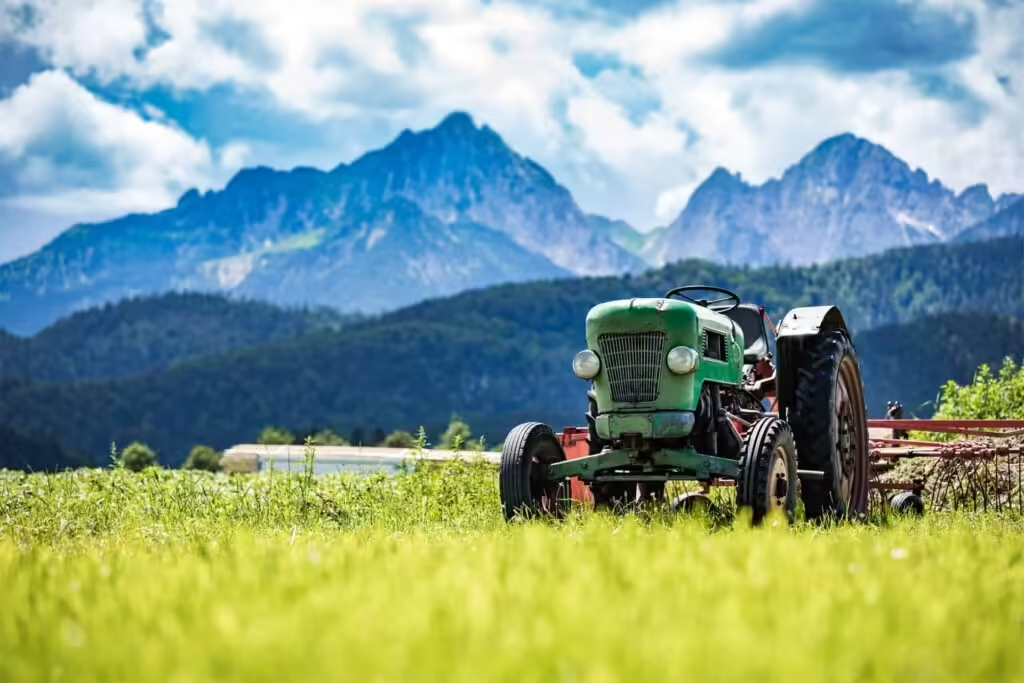
los chassis (or frame) is the tractor’s backbone. It supports the engine, transmission, axles, hydraulic components, and even the operator’s cab. In essence, “the chassis serves as the overall support for the tractor, supporting all mechanical and hydraulic systems.”. A sturdy chassis resists bending and twisting under heavy loads.
Functions of the chassis include:
- Holding components: It houses the engine, gearbox, hydraulic pump and cylinders, axles, and other major parts.
- Withstanding stress: It is built to carry heavy implements and live loads (like soil on a loader).
- Protection: It protects internal parts from rocks, debris, and minor collisions.
There are two main designs: a full-frame chassis (common on larger, heavy-duty tractors) which uses a rigid steel frame for maximum strength, and a frameless or half-frame design (common on compact or utility tractors) where the engine and transmission themselves form part of the structure. A full frame is more durable but heavier. A frameless design reduces weight and can make the tractor lighter in front for less soil compaction.
Maintenance tips: Inspect the frame periodically for cracks, especially near welds and mounting points. Tighten any loose bolts (e.g. those holding fenders or attachments). Keep the undercarriage clean of mud, which can hide damage and promote rust. Rustproofing and touch-up paint can extend the frame’s life.
Hydraulic System – Powering Attachments
Modern tractors use hydraulics to do much of their heavy work. The hydraulic system transfers power via pressurized fluid to lift implements, operate loaders/backhoes, and assist steering. In simple terms, the engine drives a hydraulic pump, which pushes fluid through hoses and valves to hydraulic cylinders or motors. When you raise the three-point hitch or tilt a loader bucket, you’re commanding that fluid flow.
Key hydraulic components include:
- Bomba hidráulica: Driven by the engine, it pressurizes hydraulic fluid (measured in gallons per minute, GPM).
- Control Valves: These direct pressurized fluid where it’s needed (lift valves, steering valves, remote valves for attachments).
- Cilindros hidráulicos: Convert fluid pressure into linear motion (they extend to lift or push a part). For example, a loader’s lift arms are raised by cylinders.
- Reservoir & Filters: Holds hydraulic oil and filters out dirt/particles.
Common hydraulic functions on a tractor: powering the front-end loader, retroexcavadora, rear three-point hitch, and steering system. Many tractors have one or more sets of remote hydraulic outlets so you can hook up hydraulic motors on implements (e.g. a rear-mounted hydraulic pump or log splitter). As one guide notes, the hydraulic system provides power for loaders, backhoes, and three-point implements and also supplies smooth steering.
Maintenance tips: Keep hydraulic oil at the proper level and check for milky appearance (which indicates coolant contamination). Replace hydraulic filters on schedule. Look for leaks at hose connections, cylinder seals, and fittings – even small leaks can starve the system of pressure. Flush/replace the hydraulic oil as recommended (many farmers do this annually or every 500 hours). Also, bleed air from the system after any service. In cold weather, use a winter-grade oil if necessary for proper viscosity.
Power Take-Off (PTO) – Driving Implements
los Toma de fuerza (PTO) is a rotating shaft (usually at the rear of the tractor) that transfers engine power to external implements. Implements such as mowers, balers, augers, chippers, and grain wagons often rely on PTO power. As one manufacturer notes, “The PTO transfers engine power to external equipment of the tractor, such as lawn mowers, balers, and augers.”.
Tractors typically have different PTO modes:
- Transmission PTO: This type is engaged through the transmission and stops turning whenever the clutch is pressed. It is common on older tractors.
- Live PTO (Real-Time PTO): Operates independently of the transmission. It keeps turning even when the tractor is stopped or the clutch is pressed. Useful for certain operations where you want the implement running while the tractor is stopped or turning.
- Independent PTO (IPTO): Fully controlled by a separate switch or lever in the cab. The operator can start/stop the PTO on demand, independent of the main clutch or gear settings.
Standard PTO shaft speeds are usually 540 RPM or 1000 RPM, which correspond to how many times the shaft rotates per minute at a given engine speed. 540 RPM is the most common and works for most implements, while 1000 RPM is used by heavy-duty equipment that needs more power (like large balers or wood chippers).
Safety note: Always use the PTO shield (guard) when an implement is attached. Entanglement in an exposed PTO shaft is a serious hazard. Ensure safety keys and covers are in place.
Maintenance tips:
- Grease and lubricate: Grease the PTO shaft splines and universal joints at regular intervals (for example, after every 8 hours of use). This prevents wear and makes it easier to attach implements.
- Check PTO clutch: On tractors with a friction clutch for the PTO, adjust and service it as directed.
- Inspect shaft and bearings: Periodically check the PTO driveshaft for bent parts or worn splines. Replace any u-joints that show play or rust.
- Transmission fluid: If using a transmission-driven PTO, keep the gearbox fluids clean and at level, as PTO loads share the tractor’s drivetrain.
Control Systems – Operator Interface
Control systems are how the driver commands the tractor. They include:
- Steering System: Most tractors use hydraulic power steering to reduce the effort needed to turn the wheels, especially under load. Some tractors still have manual steering (common on small, older models). Modern designs may also use electric-assist steering. Power steering not only reduces fatigue but also improves safety and precision.
- Operator Controls: This covers all levers and pedals the driver uses: the throttle, clutch, brake pedals, transmission gearshift, reverse shuttle lever, and the 3-point hitch control lever. Remote hydraulic levers control implements, and a dedicated PTO engagement switch or lever starts/stops PTO power. The dashboard includes gauges and lights for engine RPM, fuel level, engine temperature, oil pressure, etc.
- Instrumentation & Electronics: Newer tractors have electronic engine controls, GPS receivers, and touchscreen monitors. Instruments like a tachometer (RPM gauge), fuel gauge, and warning lights inform the operator about the tractor’s status.
Maintenance tips: Keep control linkages and pivots lightly greased so they move smoothly. Verify that steering fluid is topped up and the steering cylinder is leak-free. Clean the dashboard and check that all switches, lights, and gauges function correctly. Calibrate or repair any electronic controls according to the manufacturer’s instructions.
Electrical System – Power for Starting and Electronics
los electrical system powers everything from starting the engine to running lights and modern electronics. Essentially, it provides the juice needed for ignition, lighting, sensors, and more. As one technical guide puts it, “The tractor’s electrical system plays an essential role in its operation…From engine starting to lighting and signaling, this system is also responsible for auxiliary drive, power take-off, and monitoring systems.”.
Key electrical components:
- Battery: The battery stores electrical energy to start the tractor’s engine and to run electrical loads when the engine is off. A healthy battery has sufficient cold-cranking amps (CCA) to spin the starter. Battery maintenance includes keeping the terminals clean and tight and ensuring the battery stays charged.
- Alternator (Generator): When the engine runs, the alternator recharges the battery and supplies power to all electrical devices. It converts mechanical energy into electricity. A worn alternator or loose drive belt can cause dim lights or a dead battery.
- Starter Motor: A high-current electric motor that cranks the engine when you turn the key or push the button. It draws power from the battery to turn the flywheel until the engine starts.
- Fuses and Relays: The fuse box protects circuits by breaking the connection if there’s too much current. Also included are relays which control high-current circuits. Regularly checking and replacing blown fuses is a simple but critical task.
- Wiring Harness: All the insulated wires that connect switches, sensors, lights, and gadgets. Keep wiring routed properly and avoid chafing to prevent shorts.
- Instruments & Lights: This includes headlights, taillights, work lamps, and instrument panel gauges (tachometer, fuel, temperature, etc.). Good visibility and accurate indicators are vital for safe operation.
Maintenance tips: Periodically clean and tighten battery cable connections; corrosion on terminals impedes starting. Check that the alternator belt is properly tensioned and in good condition. Verify that lights and indicators all work (replace bulbs or fuses as needed). Keep the battery fully charged, especially if the tractor sits idle for long periods. During winter, ensure the battery is insulated or switched to a cold-weather type if needed.
By keeping the electrical system in top shape, you ensure the tractor will start reliably and that all gauges and lights accurately inform you of the tractor’s condition.
Comparing Key Parts
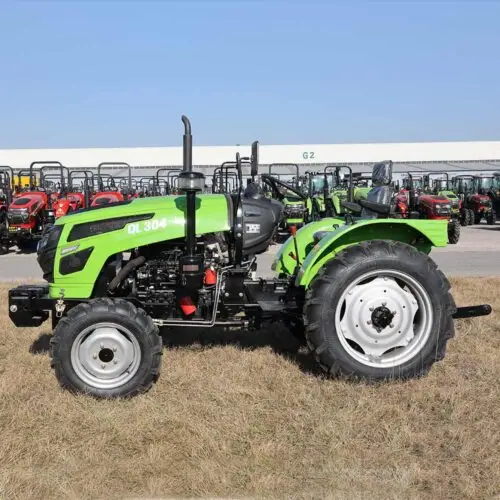
The table above summarizes each major component and its primary function. It is clear that although each system has a distinct role, they all work together. For example, the engine provides the power, which the transmission then routes to both the wheels and the PTO. The hydraulic system and PTO use that power to drive implements, while the chassis supports everything. Control and electrical systems let you safely operate and monitor the tractor.
Keeping each part in good repair maximizes performance and lifespan. For instance, allowing engine oil to become dirty or low on coolant can overheat the motor. Running the tractor on a torn hydraulic hose will quickly ruin the pump. Poorly maintained transmissions (like using old oil) can slip under load and cause damage. Regular checks and servicing – like the maintenance tips sprinkled above – are essential for safe and efficient operation.
Preguntas más frecuentes
Q: What is a PTO and how does it work on a tractor?
A: A PTO, or power take-off, is a driven shaft that transmits engine power to external implements. When the PTO is engaged, the tractor’s engine turns the PTO shaft at a set speed (usually 540 or 1000 RPM). For example, if you attach a rotary mower to the PTO, the engine’s rotation is transferred through the PTO to spin the mower blades. The PTO allows implements like mowers, balers, wood chippers, and spreaders to run using the tractor’s power. It is crucial to use the PTO safety shield and wear protective clothing, as the rotating shaft can be dangerous if exposed.
Q: What’s the difference between live (independent) PTO and transmission-driven PTO?
A: A transmission PTO is directly tied to the tractor’s gearbox. It stops turning whenever you press the clutch or put the tractor in neutral. In contrast, a live (or independent) PTO is powered through a separate clutch or hydraulic mechanism, so it can stay on even if the tractor stops moving or the clutch is depressed. Essentially, an independent PTO gives you more flexibility – for instance, you can raise the tractor’s position without stopping a hay baler attached to the PTO.
Q: Why do most tractors use diesel engines instead of gasoline?
A: Diesel engines are preferred on tractors because they produce higher torque at low speeds and use fuel more efficiently. In farming, you often need a strong pulling force (torque) rather than high speed, which diesel engines deliver. They also tend to be more durable and run longer between refueling. Even though gasoline engines start quicker, they can’t match diesel’s pulling power and fuel economy for heavy tractor work. That’s why virtually all new medium and large farm tractors are diesel-powered.
Q: How do hydrostatic transmissions differ from manual gear transmissions?
A: A hydrostatic transmission (HST) uses hydraulic fluid to transmit power, so it operates more like an automatic system. You simply press a pedal (or move a lever) for forward/reverse and speed, without shifting gears. It provides smooth, stepless control of speed. A manual gearbox uses a clutch pedal and a stick to physically engage different gears. Manual gearboxes generally give a direct mechanical link and often better power efficiency, but they require the operator to shift gears. HST transmissions allow easier operation (great for loader work or operators new to tractors), while manual/synchro-shuttle designs are very common on tractors used for heavy plowing or consistent-speed tasks.
Q: What is a differential lock and when should I use it?
A: A differential lock is a feature that locks the tractor’s rear wheels together so they turn at the same speed. Normally, a differential lets one wheel spin slightly faster than the other during a turn. Engaging the differential lock forces both wheels to rotate together with equal power.
This is useful when one wheel starts to slip (for example, in mud or on a slope); by locking them, the non-slipping wheel will keep pulling. You typically use diff lock from a standstill on level ground – push the diff-lock pedal or lever, then slowly accelerate. Never use diff lock on hard surfaces at speed, as it can damage the drivetrain. Always follow the tractor manual for proper use.
Q: What kind of maintenance does the tractor’s electrical system need?
A: Routine checks keep the electrical system reliable. Key tasks include: checking the battery charge and keeping battery cable terminals clean; inspecting the alternator belt for tension and wear; and verifying that all lights and gauges work (replace bulbs or fuses as soon as they fail). For safety systems, confirm that the PTO indicator, oil-pressure light, and other warning lamps light up and turn off properly during startup. The alternator and starter motor should be checked during service (look for unusual noises or performance drops).
In cold climates, ensure the battery is strong enough to crank the engine in low temperatures. By keeping the battery charged and the wiring intact, you ensure the tractor always starts and that critical indicators are functioning.
Q: How often should I grease and service moving parts like the PTO and the 3-point hitch?
A: High-use mechanical parts need frequent greasing. For example, the PTO drive shaft and universal joints should be greased with a high-quality grease after every few hours of use (some manufacturers suggest every 8 hours). The 3-point hitch lift arms, tilt link, and turnbuckles typically have grease zerks – grease these points about every 50 hours of work or according to the manual. Whenever the tractor is serviced (oil change interval), it’s good practice to also inspect and lubricate all pivot points, joints, and linkages. Keeping them greased prevents rust and wear, ensuring smooth operation.
Q: Any general tips for maintaining basic tractor parts?
A: Yes. In general, follow the manufacturer’s maintenance schedule for fluids and filters. Check all fluid levels (engine oil, coolant, hydraulic oil, transmission fluid) before each day’s work, and top up as needed. Inspect belts and hoses for cracks or fraying. Tighten wheel lug nuts and check tire pressure regularly – improperly inflated tires wear unevenly and can damage axles.
Keep an eye out for unusual noises, vibrations, or warning lights. Clean radiators and coolers of debris to prevent overheating. And finally, store the tractor in a dry place if possible and cover it or coat exposed metal to protect against rust. Routine care not only extends the life of each component, but also keeps your tractor ready for the job at hand.
Each of these Q&A answers draws on practical tractor knowledge and the component overviews above. By understanding how each part functions and maintaining it well, farmers and tractor enthusiasts can keep their machines running efficiently season after season.
-1.png)
 English
  Español
  Français
  Deutsch
  Русский
  Português do Brasil
  Bahasa Indonesia
  Italiano