Bienvenue sur Shandong Qilu Industrial Co., Ltd

 French
 English
 Arabic
 Bulgarian
 Bengali
 Czech
Czech
 Danish
 German
 Greek
Greek
 Spanish
 Finnish
 Hindi
Hindi
 Croatian
 Hungarian
 Indonesian
 Italian
 Japanese
 Korean
 Lithuanian
 Dutch
Dutch
 Norwegian
 Polish
 Portuguese
 Romanian
 Russian
 Slovak
 Slovenian
 Swedish
 Thai
Thai
 Turkish
 Ukrainian
 Vietnamese
 Tagalog
 Malay
Malay
 Estonian
 Catalan
 Latvian
 Urdu
Urdu
 Serbian
 Persian
 Swahili
 Albanian
 Armenian
 Icelandic
 Bosnian
 Luxembourgish
 Afrikaans
French English
Arabic
Bulgarian
Bengali
Czech
Danish
German
Greek
Spanish
Finnish
Hindi
Croatian
Hungarian
Indonesian
Italian
Japanese
Korean
Lithuanian
Dutch
Norwegian
Polish
Portuguese
Romanian
Russian
Slovak
Slovenian
Swedish
Thai
Turkish
Ukrainian
Vietnamese
Tagalog
Malay
Estonian
Catalan
Latvian
Urdu
Serbian
Persian
Swahili
Albanian
Armenian
Icelandic
Bosnian
Luxembourgish
Afrikaans
Afrikaans
French English
Arabic
Bulgarian
Bengali
Czech
Danish
German
Greek
Spanish
Finnish
Hindi
Croatian
Hungarian
Indonesian
Italian
Japanese
Korean
Lithuanian
Dutch
Norwegian
Polish
Portuguese
Romanian
Russian
Slovak
Slovenian
Swedish
Thai
Turkish
Ukrainian
Vietnamese
Tagalog
Malay
Estonian
Catalan
Latvian
Urdu
Serbian
Persian
Swahili
Albanian
Armenian
Icelandic
Bosnian
Luxembourgish
Afrikaans
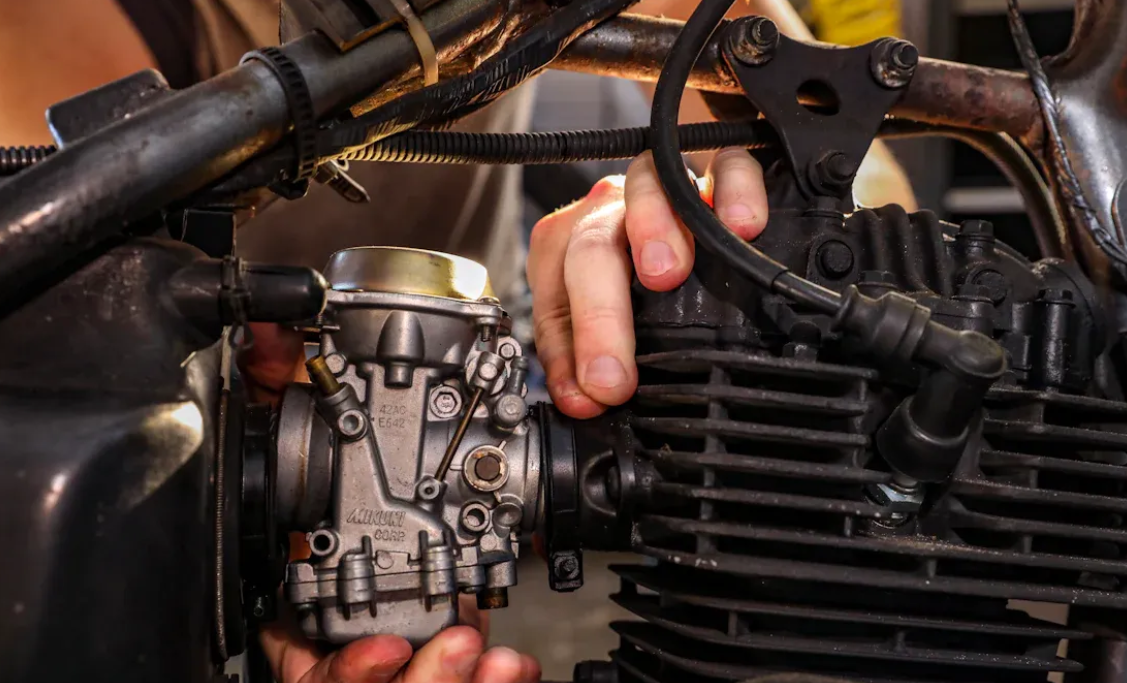
Comment nettoyer une tondeuse à gazon Carb de manière simple
Vous pouvez nettoyer facilement une charrette de tondeuse à gazon en suivant quelques étapes simples Tout d'abord, retirez le nettoyeur d'air pour exposer le carburateur Ensuite, utilisez un spray de nettoyeur de carburateur pour dissoudre la saleté et le vieux carburant Un tournevis et une petite brosse vous aideront à atteindre les endroits serrés Après le nettoyage, remettez tout ensemble Vous n'avez pas besoin de compétences spéciales ou d'outils coûteuxjust et attention aux détails N'importe qui peut restaurer les performances fluides du moteur avec ces étapes.
Principaux points à retenir
- Rassemblez les outils essentiels comme un tournevis, une petite brosse et un nettoyant au glucide avant de commencer. Cette préparation rend le processus de nettoyage plus fluide.
- Privilégier toujours la sécurité en portant des gants et des lunettes de sécurité Travaillez dans une zone bien ventilée pour éviter les fumées nocives.
- Débranchez la bougie et laissez le moteur refroidir avant de nettoyer Cela évite les accidents et assure votre sécurité.
- Utilisez un spray nettoyant pour glucides efficacement en l'appliquant sur toutes les surfaces du carburateur Laissez reposer pour dissoudre la crasse et les dépôts résistants.
- Gommage du carburateur avec une brosse rigide pour éliminer la saleté tenace Cette étape améliore le processus de nettoyage et améliore les performances.
- Inspectez toutes les pièces pour déceler tout dommage après le nettoyage Remplacez tous les joints usés ou joints toriques pour éviter les fuites et assurer le bon fonctionnement.
- Remontez le carburateur avec soin, en suivant vos notes ou vos photos Cela permet d'éviter les erreurs et garantit que tout s'adapte correctement.
- Testez la tondeuse à l'extérieur après le remontage Vérifiez les fuites et assurez-vous qu'elle fonctionne bien pour confirmer le nettoyage réussi.
Outils et Fournitures
Avant de commencer à nettoyer votre carburateur de tondeuse à gazon, rassemblez tous les outils et fournitures dont vous avez besoin Avoir tout prêt vous aidera à travailler efficacement et en toute sécurité Chaque article sert un but spécifique dans le processus de nettoyage.
Outils Essentiels
Vous avez besoin de quelques outils de base pour accéder et nettoyer le carburateur Ces outils vous aident à retirer des pièces, à atteindre les espaces restreints et à manipuler de petits composants sans dommage.
- Tournevis: Utilisez une tête plate ou un tournevis Phillips pour retirer les vis du filtre à air et du boîtier du carburateur Cet outil vous permet d'ouvrir le compartiment moteur de la tondeuse et d'atteindre le carburateur.
- Petite Brosse: Une brosse à poils raides vous aide à éliminer la saleté, l'herbe et les dépôts de carbone du corps du carburateur et des jets Vous pouvez utiliser une vieille brosse à dents pour cette tâche.
- Fourchette de jardin: Parfois, de l'herbe ou des débris restent coincés dans des endroits difficiles d'accès Une fourchette de jardin ou un outil similaire vous aide à déloger les touffes tenaces sans gratter les surfaces métalliques.
Conseil : Gardez vos outils organisés sur un plateau ou une serviette Cela évite de perdre de petites vis ou ressorts pendant le processus.
Produits Nettoyants
Choisir le bon produit de nettoyage est important pour un entretien efficace du carburateur Le spray nettoyant à l'herbe est la meilleure option pour dissoudre le vieux carburant, le vernis et la crasse à l'intérieur du carburateur.
Voici une comparaison des produits de nettoyage courants :
| Type de produit | Efficacité pour les carburateurs | Résidus laissés pour compte | Teneur en huile |
|---|---|---|---|
| Nettoyant pour glucides | Très efficace | Oui | Oui |
| Nettoyeur de freins | Ne convient pas | Non | Non |
Le spray nettoyant pour glucides décompose les dépôts résistants et lubrifie les pièces mobiles Il laisse quelques résidus et de l'huile, ce qui aide à protéger le carburateur Le nettoyant pour freins, par contre, ne fonctionne pas bien pour les carburateurs et manque de la teneur en huile nécessaire Choisissez toujours un produit étiqueté pour le nettoyage des carburateurs Pour plus d'informations sur les produits de nettoyage, vous pouvez visiter les forums de l'industrie ou vérifier Tutoriels YouTube.
Articles optionnels
Certains articles ne sont pas essentiels mais peuvent rendre le travail plus facile et plus sûr.
- Lunettes de sécurité: Protégez vos yeux des projections de nettoyant ou de carburant.
- Gants: Portez des gants pour garder vos mains propres et éviter les irritations cutanées dues aux produits chimiques.
- Achetez des serviettes ou des chiffons: Utilisez-les pour éliminer l’excès de nettoyant, de carburant ou de crasse.
- Petit Conteneur: Stockez les vis, les ressorts et les petites pièces dans un conteneur pour éviter toute perte.
Remarque : Travaillez toujours dans une zone bien ventilée Le spray nettoyant pour glucides produit de fortes fumées qui peuvent être nocives en cas d'inhalation.
Tableau Outils et Fournitures
Vous trouverez ci-dessous un résumé des principaux éléments dont vous avez besoin :
| Nom de l'article | But | Notes de sécurité |
|---|---|---|
| Tournevis | Retirez les vis du filtre à air et du carburateur | Évitez de glisser pour éviter les blessures |
| Petite Brosse | Gommage de la saleté et des dépôts | Portez des gants pour protéger vos mains |
| Fourchette de jardin | Déloger l'herbe et les débris | Utiliser doucement pour éviter les dommages |
| Spray nettoyant pour glucides | Dissoudre les résidus de carburant et le vernis | Utiliser dans la zone ventilée, porter des lunettes |
| Lunettes de sécurité | Protégez les yeux des éclaboussures | Essentiel lors de la pulvérisation d'un nettoyant |
| Gants | Prévenir le contact cutané avec les produits chimiques | Choisissez des gants résistants aux produits chimiques |
| Achetez des serviettes/sags | Nettoyer les déversements et les résidus | Éliminer correctement après utilisation |
| Petit Conteneur | Tenir les vis et les petites pièces | Tenir à l'écart des enfants et des animaux domestiques |
Vous pouvez trouver plus de conseils de sécurité et de recommandations d'outils sur Site officiel de l'OSHA et à travers communautés de soins de pelouse sur Reddit.
En préparant ces outils et fournitures, vous vous préparez pour un processus de nettoyage des carburateurs fluide et sûr Chaque article joue un rôle en facilitant le travail et en vous protégeant ainsi que votre équipement.
Conseils de sécurité
Nettoyer un carburateur de tondeuse à gazon implique de travailler avec du carburant, des produits chimiques et de petites pièces de moteur. Vous devez suivre les directives de sécurité pour vous protéger ainsi que votre espace de travail. Ces conseils vous aident à éviter les accidents courants et à maintenir votre processus de nettoyage fluide.
Sécurité des carburants
L'essence est inflammable et peut causer des accidents graves si elle est manipulée avec négligence Vous devez prendre des mesures pour prévenir les déversements, les incendies et l'exposition aux fumées De nombreux incidents se produisent lorsque les gens se précipitent ou sautent les précautions de base.
- Éteignez la tondeuse et débranchez le fil de la bougie d'allumage Cette étape empêche le moteur de démarrer de manière inattendue pendant que vous travaillez.
- Laissez le moteur refroidir complètement avant de commencer Les surfaces chaudes peuvent enflammer les vapeurs de carburant ou provoquer des brûlures.
- Videz le réservoir de carburant dans un conteneur sûr Cette action réduit le risque de déversements et empêche le carburant de contaminer votre espace de travail.
Conseil : Conserver l'essence dans un contenant approuvé à l'abri des sources de chaleur Ne jamais fumer ni utiliser de flammes nues à proximité du carburant.
Un propriétaire a déjà essayé de nettoyer son carburateur juste après la tonte Le moteur était encore chaud, et il a renversé du carburant sur le pont Les fumées se sont enflammées, provoquant un petit incendie Il a évité les blessures mais a appris à laisser le moteur refroidir en premier Vous pouvez en lire plus sur la sécurité du carburant sur Site officiel de la NFPA.
Protection personnelle
Vous vous exposez à des produits chimiques et à des pièces tranchantes pendant le nettoyage du carburateur. L’équipement de protection vous protège des éclaboussures, des coupures et des irritations.
- Portez des gants de protection pour protéger vos mains du nettoyant pour glucides et du carburant.
- Utilisez des lunettes de sécurité pour protéger vos yeux contre les projections de produits chimiques.
- Travaillez dans une zone bien ventilée Le nettoyant pour glucides produit de fortes fumées qui peuvent irriter vos poumons.
Remarque : Si vous ressentez des étourdissements ou ressentez une irritation cutanée, arrêtez-vous et passez immédiatement à l'air frais.
Un adolescent nettoyait autrefois son carburateur de faucheuse dans un garage fermé Il ne portait ni gants ni lunettes Le nettoyeur de glucides lui a éclaboussé les yeux, provoquant des douleurs et une perte temporaire de la vision Il s'est rétabli après s'être rincé les yeux, mais utilise maintenant toujours un équipement de sécurité Pour plus de conseils, visitez Les directives de sécurité de l'OSHA.
Préparation de l'espace de travail
Un espace de travail propre et organisé vous aide à éviter les accidents et facilite le travail Vous devez préparer votre zone avant de commencer.
- Éliminez l’encombrement et les matériaux inflammables.
- Posez une bâche ou un vieux drap pour attraper les déversements et les petites pièces.
- Gardez un petit récipient à proximité pour les vis et les ressorts.
Appel: Un bon éclairage vous aide à voir les petits composants et à éviter les erreurs.
Un jardinier a perdu une petite source en nettoyant son carburateur à l'extérieur Il a passé une heure à chercher dans l'herbe Utiliser un récipient et travailler sur une bâche évite ce problème Vous pouvez trouver plus de conseils d'organisation de l'espace de travail sur La communauté de soins de pelouse de Reddit.
En suivant ces conseils de sécurité, vous vous protégez ainsi que votre équipement Une préparation soignée et le bon rapport rendent le nettoyage du carburateur plus sûr et plus efficace.
Accès au Carburateur
Avant de pouvoir nettoyer le carburateur de votre tondeuse à gazon, vous devez l'atteindre en toute sécurité La plupart des carburateurs sont assis près du filtre à air et du moteur Vous pouvez suivre quelques étapes simples pour accéder à cette pièce sans confusion.
Supprimer le nettoyeur d'air
Commencez par vous assurer que votre tondeuse est éteinte et que le fil de la bougie d'allumage est déconnecté Cette étape empêche tout démarrage accidentel pendant que vous travaillez Vous trouverez généralement le filtre à air sur le côté ou le dessus du moteur Il se trouve souvent à l'intérieur d'un couvercle en plastique ou en métal fixé avec des vis ou des clips.
- Localisez le couvercle du filtre à air près du moteur.
- Utilisez un tournevis pour retirer les vis ou déclipser le couvercle.
- Sortez le filtre à air et mettez-le de côté.
Conseil : Placez les vis et les petites pièces dans un récipient Cette habitude permet de gagner du temps et d'éviter de perdre des pièces importantes.
Un propriétaire a perdu une fois une vis dans l'herbe en retirant le nettoyeur d'air Il a passé plus de temps à la chercher L'utilisation d'un petit plateau ou d'une tasse peut vous aider à éviter ce problème.
Logement dévissé
Après avoir retiré le filtre à air, vous verrez un boîtier ou un carénage qui recouvre le carburateur Cette partie protège les composants du moteur de la saleté et des débris Vous devez retirer ce boîtier pour exposer le carburateur.
- Trouvez les vis ou boulons maintenant le boîtier en place.
- Utilisez votre tournevis ou un tourne-écrou pour les desserrer et les retirer.
- Soulevez doucement le boîtier en l'éloignant du moteur.
Certaines tondeuses ont un couvercle simple, tandis que d'autres utilisent un carénage plus complexe Si vous ne vous sentez pas sûr, vérifiez le manuel de votre propriétaire pour les schémas Les manuels montrent souvent l'emplacement exact de chaque vis et pièce.
Remarque : Gardez toutes les vis et boulons organisés Les mélanger peut rendre le remontage difficile.
Localisez Carburateur
Le boîtier retiré, vous pouvez maintenant voir le carburateur Il ressemble généralement à une petite boîte ou un cylindre métallique fixé au moteur Le carburateur se connecte à la conduite de carburant et à la tringlerie des gaz.
Voici comment vous pouvez l'identifier :
- Vérifiez près de la zone du filtre à air Le carburateur se trouve à proximité.
- Tracer la conduite de carburant depuis le réservoir d'essence La conduite mène directement au carburateur.
- Cherchez une pièce avec des vis, des boulons, et parfois un petit bol en bas.
Si vous avez encore des problèmes, reportez-vous au manuel de votre tondeuse La plupart des manuels comprennent des diagrammes utiles Vous pouvez également trouver des guides visuels sur YouTube ou demandez conseil forums de soins de pelouse.
Appel: Prendre une photo avant de retirer des pièces peut vous aider à vous rappeler comment tout s'emboîte.
En suivant ces étapes, vous pouvez accéder au carburateur sur la plupart des modèles de tondeuses à gazon Une préparation minutieuse et une attention aux détails rendent le processus fluide et sûr.
Retirer et démonter Carb
Une fois que vous avez un accès clair au carburateur, vous pouvez commencer le processus de retrait et de démontage Cette étape nécessite de la patience et une attention aux détails Vous manipulerez de petites pièces et des conduites de carburant, alors restez organisé et travaillez lentement.
Déconnectez les conduites de carburant
Vous devez débrancher les conduites de carburant avant de retirer le carburateur Ces conduites transportent l'essence du réservoir au carburateur L'essence peut se renverser si vous vous précipitez ou tirez trop fort.
- Localisez la conduite de carburant en caoutchouc fixée au carburateur.
- Utilisez une pince pour presser doucement la pince en maintenant la ligne en place.
- Faites glisser la pince loin du carburateur.
- Tirez délicatement la conduite de carburant du mamelon du carburateur Vous devrez peut-être le tordre légèrement.
Conseil : Placez un petit récipient ou un chiffon sous la conduite de carburant pour attraper toute essence qui coule Cela maintient votre espace de travail propre et évite les taches.
Un propriétaire a un jour sauté cette étape et s'est retrouvé avec du carburant partout sur le sol de son garage Il a passé plus de temps à nettoyer le désordre Vous pouvez éviter cela en vous préparant aux déversements et en travaillant lentement.
Si la conduite de carburant semble coincée, vous pouvez utiliser un tournevis à tête plate pour la desserrer Ne forcez pas la conduite, car elle peut se déchirer ou se briser Si vous voyez des fissures ou des dommages, envisagez de remplacer la conduite avant le remontage Pour plus de conseils sur la manipulation des conduites de carburant, consultez ce guide depuis un petit forum de moteurs.
Décollez Carburateur
Après avoir débranché les conduites de carburant, vous pouvez retirer le carburateur du moteur Le carburateur se fixe généralement avec deux ou trois boulons ou vis.
- Utilisez votre tournevis ou votre clé à douille pour retirer les boulons de montage.
- Tenez le carburateur d'une main pour éviter qu'il ne tombe.
- Éloignez doucement le carburateur du moteur Surveillez toutes les liaisons ou ressorts reliés à l'accélérateur ou à l'étranglement.
Remarque : Prenez une photo de la configuration de la liaison avant de retirer quoi que ce soit Cela vous aide à vous rappeler où va chaque pièce pendant le remontage.
Un jardinier a oublié un jour comment la tringlerie des gaz s'est attachée et a EU du mal à démarrer sa tondeuse plus tard Une photo rapide peut vous faire gagner du temps et de la frustration.
Si vous voyez des joints entre le carburateur et le moteur, mettez-les de côté avec précaution Vous devrez peut-être les réutiliser s'ils sont en bon état S'ils semblent usés ou déchirés, vous devriez les remplacer Vous pouvez trouver plus de conseils sur l'entretien des joints à La communauté de soins de pelouse de Reddit.
Pièces principales séparées
Maintenant que vous avez le carburateur hors du moteur, vous devez séparer ses pièces principales pour le nettoyage La plupart des carburateurs ont un bol en bas qui recueille le carburant et les débris.
- Placez le carburateur sur une serviette ou un plateau propre.
- Utilisez un tournevis pour retirer la vis maintenant le bol en place.
- Tordre et retirer doucement le bol Surveillez un joint en caoutchouc ou un joint torique.
- Mettez de côté le bol, le joint et toutes les petites pièces.
Appel: Organisez toutes les vis, ressorts et joints dans un petit récipient. Cela évite les pertes et facilite le remontage.
Vous pouvez voir de la saleté, du vernis ou du vieux carburant à l'intérieur du bol. Prenez note de toute accumulation, car cela montre où vous devez concentrer votre nettoyage. Si vous trouvez un flotteur coincé ou un jet bouché, vous les aborderez lors des prochaines étapes de nettoyage.
Un propriétaire a perdu une fois un petit ressort pendant cette étape et a dû commander un remplacement Garder les pièces organisées permet de gagner du temps et du stress Pour plus de guides visuels, vous pouvez visiter Les tutoriels de nettoyage des carburateurs de YouTube.
En suivant ces étapes, vous pouvez retirer et démonter en toute sécurité le carburateur de votre tondeuse à gazon Une manipulation et une organisation minutieuses rendent le processus de nettoyage beaucoup plus fluide.
Nettoyez un carburateur de tondeuse à gazon
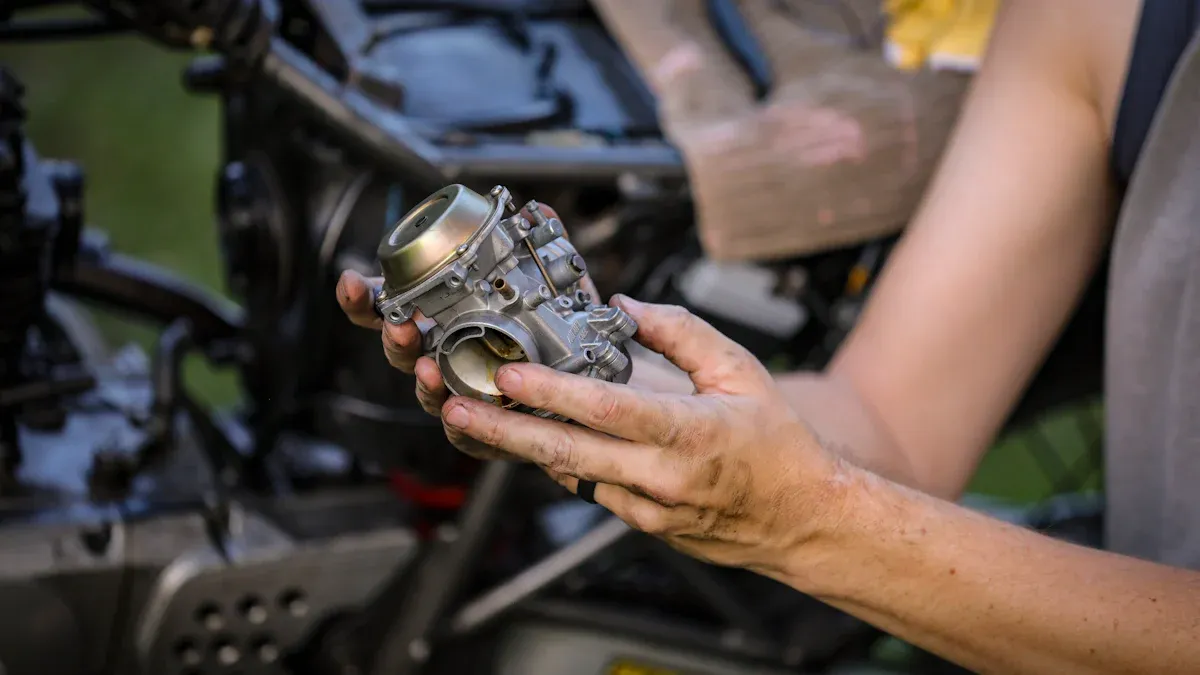
Le nettoyage d'un carburateur est l'étape la plus importante pour restaurer les performances de votre tondeuse Vous pouvez suivre un processus clair pour nettoyer un carburateur de tondeuse à gazon et éliminer la saleté tenace, le vieux carburant et l'herbe Cette section vous guide à travers chaque étape, en utilisant des techniques éprouvées et des conseils pratiques.
Étapes pour nettoyer une ampoule de tondeuse à gazon
Vous devez aborder le processus de nettoyage de manière méthodique Les étapes suivantes vous aident à nettoyer un carburateur de tondeuse à gazon de manière efficace et sûre.
Nettoyant pour glucides par pulvérisation
- Placez le carburateur sur une serviette ou un plateau propre.
- Agiter le jet de nettoyant pour glucides peut bien.
- Tenez la buse près de l'extérieur et de la gorge du carburateur.
- Pulvérisez une généreuse quantité de nettoyant sur toutes les surfaces, en vous concentrant sur les jets, le bol et la plaque d'accélérateur.
- Laissez le nettoyant reposer quelques minutes pour dissoudre la crasse et le vernis.
Conseil : Utilisez de courtes rafales de spray pour éviter de sursaturer les pièces. Le nettoyant pour glucides fonctionne mieux lorsque vous lui permettez de s’imprégner de dépôts tenaces.
De nombreux utilisateurs rapportent que la pulvérisation de nettoyant pour glucides directement dans la gorge du carburateur desserre les blocages internes Vous pouvez trouver plus de conseils de nettoyage sur la page de maintenance de Briggs & Stratton et Reddit's r/lawncare.
Gommage avec pinceau
- Utilisez une brosse à poils rigides ou une vieille brosse à dents pour frotter le corps du carburateur.
- Concentrez-vous sur les jets, le bol et toute accumulation visible.
- Travaillez la brosse dans des espaces restreints pour éliminer la saleté et les dépôts de carbone.
- Essuyez les débris détachés avec une serviette de magasin.
Appel: Le gommage permet d'éliminer les résidus que la pulvérisation seule ne peut atteindre Vous améliorez l'efficacité du nettoyage en combinant les deux méthodes.
Un exemple de cas : Un propriétaire a remarqué que sa tondeuse calait fréquemment Après avoir frotté les jets et le bol, il a trouvé une couche de vernis bloquant le débit de carburant Le nettoyage a restauré le bon fonctionnement Vous pouvez partager vos propres résultats de nettoyage sur Twitter ou YouTube.
Utilisez la fourche de jardin pour l'herbe
- Inspectez le carburateur pour détecter l'herbe ou les débris coincés dans les crevasses.
- Utilisez une fourchette de jardin ou un outil similaire pour déloger doucement les touffes.
- Évitez de rayer les surfaces métalliques en travaillant lentement.
- Retirez toute l'herbe visible et rincez la zone avec un nettoyant pour glucides.
Remarque : L'herbe et les débris organiques provoquent souvent des blocages chez les tondeuses plus anciennes. Leur élimination améliore le débit de carburant et les performances du moteur.
Une enquête récente sur Lawnsite a révélé que 30% d'utilisateurs ont connu une rude circulation en raison de l'accumulation d'herbe dans le carburateur.
Rincer et Inspecter
Après avoir nettoyé un carburateur de tondeuse à gazon, vous devez rincer et inspecter toutes les pièces avant le remontage.
- Rincer le carburateur avec une dernière pulvérisation de nettoyant pour carbures.
- Utilisez de l'air comprimé pour souffler les débris restants des jets et des passages.
- Séchez toutes les pièces avec une serviette propre.
Maintenant, inspectez le carburateur pour déceler tout signe de dommage ou d'usure Recherchez ces problèmes courants :
- Calage ou fonctionnement brutal : si vous constatez une accumulation importante ou une corrosion, le carburateur peut ne pas fournir le bon mélange de carburant.
- Performances instables de l'accélérateur : vérifiez les jets obstrués ou les plaques d'accélérateur endommagées.
- Consommation excessive de carburant : Inspectez les perturbations de l'équilibre air-carburant ou les fuites.
- Accumulation visible : La saleté ou le vernis à l'extérieur signifie souvent que des blocages internes subsistent.
Alerte: Remplacez les joints fissurés, les joints toriques déchirés ou les jets endommagés avant de les remonter Vous évitez de futurs problèmes et prolongez la durée de vie de votre tondeuse.
Vous pouvez comparer votre temps de nettoyage avec d'autres La plupart des utilisateurs passent 20 minutes 30 minutes pour nettoyer soigneusement un carburateur de tondeuse à loi.
| Source | Estimation temporelle |
|---|---|
| AHM Corp. | 30 minutes |
| Utilisateur du site de pelouse 1 | 20 minutes |
| Utilisateur du site de pelouse 2 | 30 minutes |
Un exemple de cas détaillé : Un jardinier a nettoyé son carburateur après avoir remarqué une consommation excessive de carburant et un roulage brutal Il a trouvé un jet bouché et un joint fissuré Après avoir nettoyé et remplacé le joint, sa tondeuse a fonctionné sans problème et a utilisé moins de carburant Vous pouvez lire plus d'études de cas sur DoItYourself.com et partager votre expérience sur Facebook Groupes.
Nettoyer un carburateur est une compétence pratique Vous pouvez nettoyer un carburateur de tondeuse à gazon avec des outils de base et de la patience Un nettoyage régulier évite les problèmes courants et permet à votre tondeuse de fonctionner efficacement.
Réassembler et tester
Après avoir fini de nettoyer et d'inspecter votre carburateur, vous devez tout remettre en place Un remontage soigné assure le bon fonctionnement de votre tondeuse et évite les fuites ou les problèmes de performances Suivez ces étapes pour terminer le processus.
Remettez le carburateur
Commencez par remonter les principales parties du carburateur Disposez tous les composants nettoyés sur une serviette afin de pouvoir voir chaque pièce Utilisez les photos que vous avez prises plus tôt comme référence.
- Installez de nouveaux bouchons de soudure à partir de votre kit de réparation Utilisez un poinçon à broche légèrement plus petit que le diamètre du bouchon Tapotez doucement avec un marteau jusqu'à ce que le bouchon reste à plat.
- Assembler le starter en plaçant le ressort de rappel à l'intérieur du joint en mousse Faire glisser cet ensemble sur l'arbre du starter.
- Insérez l'arbre de self dans le corps du carburateur Engagez le ressort de rappel pour qu'il fonctionne correctement.
- Fixez la plaque d'étranglement à l'arbre Assurez-vous que les fossettes font face au côté de l'entrée de carburant.
- Installez le joint de l'arbre des gaz avec la lèvre d'étanchéité tournée vers le bas.
- Placez le siège de l'aiguille d'entrée avec la rainure vers le bas, à l'aide d'un entraîneur de douille si nécessaire.
- Insérez l'axe de charnière et l'axe central. Ajustez le joint en caoutchouc et fixez le bol à carburant.
- Positionner le carburateur sur le tuyau d'admission de carburant Fixez-le avec des écrous ou des boulons, mais laissez-les légèrement desserrés pour l'instant.
- Réinstallez l'ensemble de filtre à air Assurez-vous que toutes les languettes s'engagent correctement.
Conseil : Resserrez tous les boulons uniformément une fois que tout s'aligne Cela évite les fuites d'air et assure une bonne étanchéité.
Un propriétaire a oublié un jour d'installer le joint avant de fixer le bol de carburant Sa tondeuse a fui du carburant et n'a pas voulu commencer Vérifiez à nouveau chaque étape pour éviter les erreurs courantes.
Reconnecter les conduites de carburant
Vous devez rebrancher les conduites de carburant de manière sécurisée pour éviter les fuites et garantir un bon débit de carburant.
- Inspectez chaque conduite de carburant pour déceler les plis, les courbures ou les dommages. Remplacez toute ligne qui semble usée.
- Fixez la conduite de carburant au mamelon du carburateur Faites glisser la pince vers la place.
- Installez un petit conteneur sous la ligne Faites tourner le moteur quelques fois pour vérifier le débit de carburant constant Si vous voyez un flux fort et régulier, la connexion est solide.
- Serrez toutes les pinces et vérifiez les fuites.
Alerte: Ne sautez jamais l'étape d'inspection Les conduites de carburant endommagées peuvent provoquer des fuites dangereuses.
Un jardinier a une fois rattaché une conduite de carburant fissurée sans vérifier L'essence s'est échappée sur le pont de la tondeuse, créant un risque d'incendie Une inspection minutieuse prévient les accidents.
Tondeuse d'essai
L'essai de votre tondeuse garantit que le carburateur fonctionne comme prévu Suivez ces étapes pour un résultat fiable :
- Confirmez que la soupape de carburant est ouverte Vérifiez que le réservoir a de l'essence fraîche et que la bougie est en bon état.
- Pulvérisez une petite rafale de nettoyeur de carburateur dans l'admission d'air Tirez le cordon de démarrage Si le moteur tourne brièvement, vous savez que le carburant atteint le carburateur.
- Serrer la conduite de carburant et retirer le tube du mamelon du carburateur Vérifier le débit de gaz Si aucun gaz n'apparaît, inspecter la conduite de carburant ou le filtre pour déceler les blocages.
Appel: Testez toujours votre tondeuse à l'extérieur dans un endroit bien ventilé.
Un utilisateur a déjà testé sa tondeuse dans un garage fermé Les fumées se sont accumulées rapidement, provoquant des vertiges Les tests en extérieur vous assurent la sécurité.
Si votre tondeuse démarre et fonctionne sans problème, vous avez terminé le travail avec succès Si vous remarquez des pulvérisations ou des fuites, passez en revue chaque étape et vérifiez les connexions manquées Pour plus de conseils de dépannage, visitez le forum des petits moteurs de DoItYourself.com ou Reddit's r/lawncare.
En suivant ces étapes, vous vous assurez que votre carburateur de tondeuse à gazon est remonté correctement et que votre tondeuse est prête à l'action Un entretien régulier permet de garder votre équipement fiable et de prolonger sa durée de vie.
Dépannage
La tondeuse ne démarrera pas
Si votre tondeuse refuse de démarrer après avoir nettoyé le carburateur, vous pouvez suivre une simple liste de contrôle pour identifier le problème De nombreux problèmes de départ proviennent de bases négligées Vous devez toujours vérifier ce qui suit :
| Étape | Description |
|---|---|
| Vérifiez la qualité du carburant | Assurez-vous d'utiliser de l'essence fraîche Le carburant ancien ou périmé peut empêcher le démarrage. |
| Inspectez la fiche d'allumage | Cherchez les bougies sales, déconnectées ou encrassées Nettoyez-les ou remplacez-les. |
| Assurez-vous que le filtre à air est propre | Un filtre à air bouché bloque le flux d'air et rend le démarrage difficile. |
Conseil : L'eau dans la conduite de gaz ou un mauvais carburant peut également empêcher votre tondeuse de démarrer. Égouttez le réservoir si vous soupçonnez un mauvais gaz.
Si votre tondeuse ne démarre toujours pas, essayez d'utiliser une petite quantité de liquide de démarrage dans l'entrée d'air Cela peut aider à diagnostiquer si le problème vient de la livraison de carburant Pour plus d'étapes de dépannage, vous pouvez visiter ce petit forum de moteur ou rejoindre la discussion sur Reddit's r/lawncare.
Problèmes communs
Après le nettoyage, vous pourriez remarquer des problèmes nouveaux ou persistants Vous pouvez utiliser le tableau ci-dessous pour identifier les problèmes courants liés aux carburateurs et leurs solutions :
| Type de problème | Description | Résolution |
|---|---|---|
| Problèmes liés au système de carburant | Carburateur sale ou conduite de carburant bouchée | Retirer et nettoyer le carburateur ; inspecter et dégager la conduite de carburant |
| Aération bouchée du réservoir de carburant | Vérifier le débit de carburant ; remplacer le bouchon de carburant si l'évent est bloqué | |
| Problèmes de filtre à air | Filtre à air sale ou bouché | Nettoyer ou remplacer le filtre à air |
| Problèmes de prise d'étincelle | Fil lâche, botte fissurée ou bougie d'allumage usée | Connexions sécurisées ; remplacer les pièces endommagées |
| Problèmes de timing | Clé de volant cisaillée provoquant de mauvaises performances | Inspectez et remplacez la clé du volant si nécessaire |
Remarque : Si vous trouvez une clé à volant cisaillé, vous devrez peut-être consulter un professionnel ou vous référer à un guide détaillé Vous pouvez trouver des instructions étape par étape sur YouTube et dans communautés de soins de pelouse.
Un utilisateur a un jour nettoyé son carburateur mais a oublié de reconnecter le fil de la bougie d'allumage La tondeuse ne démarrerait pas avant qu'il ait vérifié la connexion Vérifiez toujours chaque étape lors du remontage.
Corrections rapides
Vous pouvez résoudre de nombreux problèmes mineurs de carburateur avec des actions rapides :
- Si vous constatez une légère amélioration après le nettoyage, effectuez un nettoyage plus profond Parfois, les dépôts tenaces nécessitent une attention particulière.
- Remplacez le filtre à air s'il semble sale ou usé.
- Serrez toutes les vis et pinces pour éviter les fuites d'air.
- Utilisez le liquide de démarrage pour un test rapide si le moteur hésite.
- Égoutter et remplir le réservoir d'essence si vous soupçonnez de l'eau ou du vieux carburant.
Alerte: Certains carburateurs nécessitent une attention professionnelle Cherchez de l'aide si vous avez un modèle ancien ou rare, des pièces électroniques ou des composants coincés qui ont besoin d'outils spéciaux.
Si vous rencontrez des problèmes persistants, partagez votre expérience sur les groupes Facebook ou parcourez les forums industriels pour obtenir les conseils d'autres propriétaires de tondeuses.
En suivant ces étapes de dépannage, vous pouvez résoudre vous-même la plupart des problèmes de carburateur Des contrôles réguliers et des solutions rapides permettent à votre tondeuse de fonctionner fort toute la saison.
Vous pouvez nettoyer un carburateur de tondeuse à gazon avec des outils simples et un processus clair Un nettoyage régulier vous donne des démarrages plus fluides, un meilleur rendement énergétique et un moteur plus durable.
| Bénéfice | Description |
|---|---|
| Amélioration de l'efficacité énergétique | Un carburateur propre mélange bien l'air et le carburant pour une meilleure consommation d'essence. |
| Performances moteur améliorées | Vous obtenez une accélération plus douce et plus de puissance. |
| Durée de vie prolongée du moteur | Les pièces propres évitent les dommages et les réparations coûteuses. |
| Émissions réduites | Votre tondeuse fonctionne plus proprement et respecte les réglementations. |
La plupart des experts recommandent de nettoyer deux à trois fois par an, surtout avant la saison de tonte Ne laissez pas le nettoyage du carburateur intimider vous les soins de carbutine fiables garde votre tondeuse et vous fait économiser de l'argent.
Continuez votre maintenance et votre tondeuse vous récompensera avec des années de service fiable ! 🌱
FAQ
À quelle fréquence devez-vous nettoyer le carburateur de votre tondeuse à gazon ?
Vous devez nettoyer votre carburateur deux à trois fois par saison de tonte Si vous remarquez des problèmes de roulage ou de démarrage difficiles, nettoyez-le plus tôt Un nettoyage régulier évite les blocages de carburant Pour plus de conseils, visitez le forum des petits moteurs de DoItYourself.com.
Quels sont les signes que votre carburateur doit nettoyer ?
Vous remarquerez peut-être un démarrage difficile, un ralenti brutal ou de la fumée noire provenant de l'échappement Parfois, le moteur cale ou surgit Ces signes signifient que votre carburateur a de la saleté ou des résidus de carburant Vous pouvez trouver plus de symptômes sur Reddit's r/lawncare.
Pouvez-vous nettoyer un carburateur sans le retirer ?
Vous pouvez pulvériser un nettoyant pour carburateur dans l'entrée d'air pour une solution rapide Cette méthode aide à une accumulation mineure Pour un nettoyage en profondeur, vous devez retirer et démonter le carburateur Voir les guides étape par étape YouTube.
De quel équipement de sécurité avez-vous besoin pour le nettoyage du carburateur ?
Vous devez porter des lunettes de sécurité et des gants résistants aux produits chimiques Travaillez dans une zone bien ventilée pour éviter d'inhaler des fumées Un utilisateur a évité une fois une blessure aux yeux en portant des lunettes pendant le nettoyage Pour plus de conseils de sécurité, vérifiez Les lignes directrices de l'OSHA.
Et si votre tondeuse fuyait du carburant après le nettoyage ?
Vérifiez tous les joints, joints toriques et connexions de la conduite de carburant Remplacez toutes les pièces endommagées Serrez les vis uniformément pour éviter les fuites De nombreux utilisateurs partagent des expériences similaires sur les groupes Facebook.
Le vieux carburant peut-il causer des problèmes de carburateur ?
Oui, le vieux carburant laisse du vernis et de la gomme à l'intérieur du carburateur Cette accumulation bloque les jets et les passages Utilisez toujours de l'essence fraîche Pour plus d'informations, visitez La page de sécurité carburant de la NFPA.
Où peut-on obtenir de l'aide si on se coince ?
Vous pouvez demander de l'aide sur les forums de l'industrie, des, Reddit, ou regardez les tutoriels YouTube. De nombreux utilisateurs partagent des photos et des solutions pour des problèmes courants.
Est-il sécuritaire d'utiliser un spray nettoyant pour glucides à l'intérieur ?
Non, vous devez toujours utiliser un nettoyant pour glucides à l'extérieur ou dans un espace bien ventilé Les fumées peuvent causer des maux de tête ou des étourdissements Un jardinier s'est senti malade une fois après avoir pulvérisé à l'intérieur Pour plus de conseils de sécurité, visitez Site officiel de l'OSHA.