Բարի գալուստ Shandong Qilu Industrial Co., Ltd

 Armenian
 English
 Arabic
 Bulgarian
 Bengali
 Czech
Czech
 Danish
 German
 Greek
Greek
 Spanish
 Finnish
 French
 Hindi
Hindi
 Croatian
 Hungarian
 Indonesian
 Italian
 Japanese
 Korean
 Lithuanian
 Dutch
Dutch
 Norwegian
 Polish
 Portuguese
 Romanian
 Russian
 Slovak
 Slovenian
 Swedish
 Thai
Thai
 Turkish
 Ukrainian
 Vietnamese
 Tagalog
 Malay
Malay
 Estonian
 Catalan
 Latvian
 Urdu
Urdu
 Serbian
 Persian
 Swahili
 Albanian
 Icelandic
 Bosnian
 Luxembourgish
 Afrikaans
Armenian English
Arabic
Bulgarian
Bengali
Czech
Danish
German
Greek
Spanish
Finnish
French
Hindi
Croatian
Hungarian
Indonesian
Italian
Japanese
Korean
Lithuanian
Dutch
Norwegian
Polish
Portuguese
Romanian
Russian
Slovak
Slovenian
Swedish
Thai
Turkish
Ukrainian
Vietnamese
Tagalog
Malay
Estonian
Catalan
Latvian
Urdu
Serbian
Persian
Swahili
Albanian
Icelandic
Bosnian
Luxembourgish
Afrikaans
Afrikaans
Armenian English
Arabic
Bulgarian
Bengali
Czech
Danish
German
Greek
Spanish
Finnish
French
Hindi
Croatian
Hungarian
Indonesian
Italian
Japanese
Korean
Lithuanian
Dutch
Norwegian
Polish
Portuguese
Romanian
Russian
Slovak
Slovenian
Swedish
Thai
Turkish
Ukrainian
Vietnamese
Tagalog
Malay
Estonian
Catalan
Latvian
Urdu
Serbian
Persian
Swahili
Albanian
Icelandic
Bosnian
Luxembourgish
Afrikaans
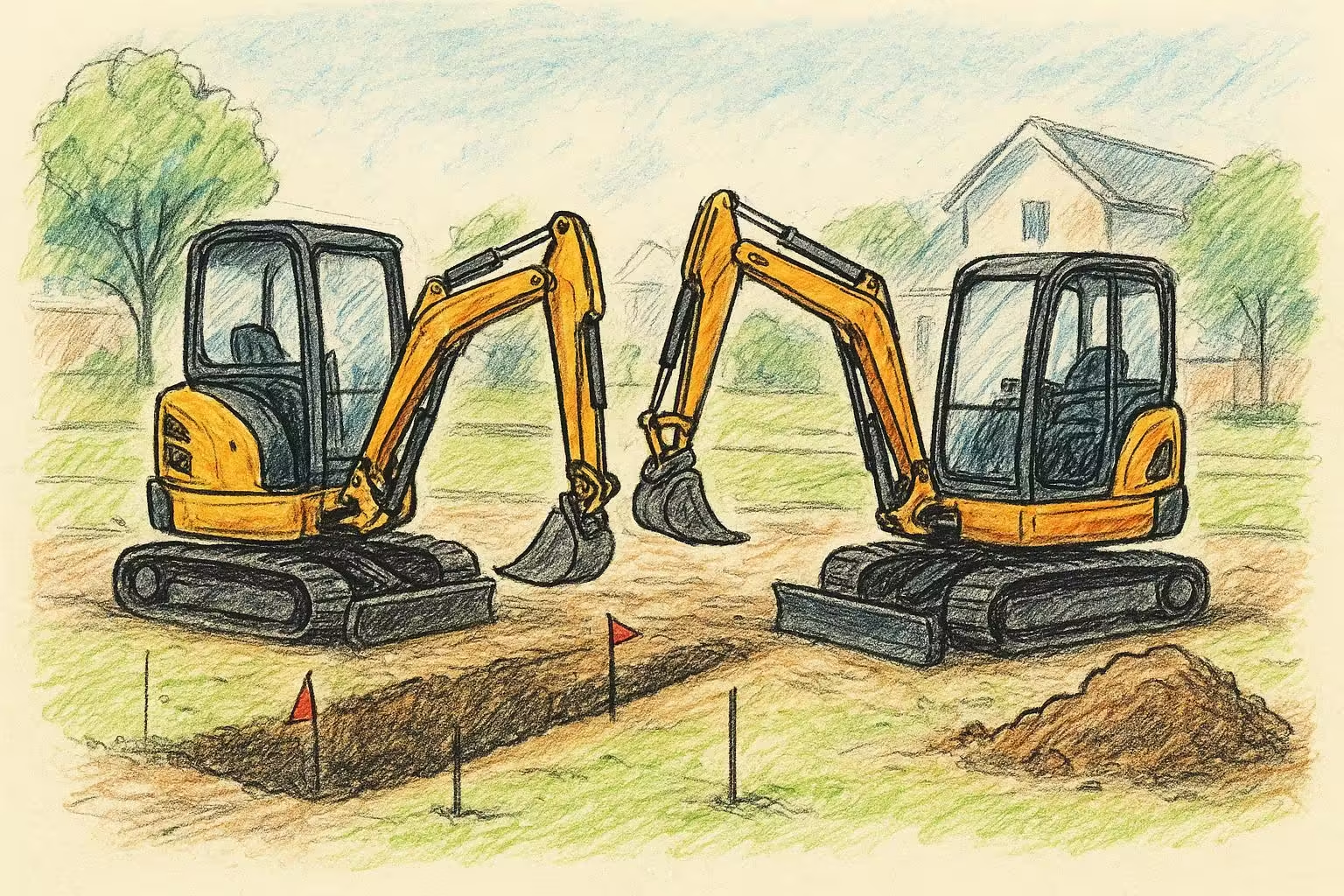
3 Տոննա ընդդեմ 3:5 տոննա մինի էքսկավատոր: QL-30Eco vs QL-35PRO խրամատ + գնահատման համար
Լանդշաֆտային եւ կոշտ կազմ ունեցող բրիգադները չեն գնում էքսկավատորներ “spec:” Դուք դրանք գնում եք երկու տեսակի օր
- Խիտ օրեր (կոմունալ հարմարություններ, ջրահեռացում, թեւեր քայլուղիների տակ)
- Ավարտական աշխատանքային օրեր (գնահատում, ձեւավորում, լիցքավորում, նվազագույնի հասցնել խանգարումները)
Եթե դուք բյուջեով ծածկված եք՝ իրական հարցը “Which մեքենան ավելի մեծ է:” Դա:
Ո՞ր քաշային դասը ձեզ տալիս է մեկ դոլարի դիմաց ամենաավարտված աշխատատեղերը՝ առանց տրանսպորտի եւ կայքի մշտական գլխացավանք դարձնելու:
Հիմնական ակնարկներ
- Եթե խրամուղի խորություն/հասանելիություն ձեր խցանն է (եւ դուք շատ եք վերադիրքավորում), QL-35PRO ունի հստակ աշխատանքային առավելություն, որը հիմնված է հրապարակված աշխատանքային տիրույթի թվերի վրա:.
- Եթե ամուր մուտք եվ “get in, դուրս եկեք uter” լոգիստիկա ամենակարեւորը, the QL-30Eco հաճախ ավելի պարզ, ավելի ցածր գնով սեփական ընտրությունն է:.
- Կոմունալ խրամատների համար, կայքի անվտանգություն եւ աշխատանքային հոսք կխնայեն ավելի շատ ժամանակ (եւ ռիսկ), քան ամեն անգամ մի փոքր լրացուցիչ սպեկտրի հետեւում OSHA-ի խրամատային ուղեցույցին:.
Արագ կոմպակտ էքսկավատորի համեմատության մատրիցա (այն իրերի մասին իրականում հոգ են տանում անձնակազմերը)
| Որոշման գործոն | QL-30Eco (3,0 տոննա դաս) | QL-35PRO (3,5 տոննա դաս) | Գործնական նշանակություն իրական աշխատանքների վրա |
|---|---|---|---|
| Բյուջեի ճնշում | Սովորաբար ավելի հեշտ է պահել առավելագույն բյուջեի սահմաններում | Կարող է պահանջել ավելի շատ նախնական ծախսեր | Եթե բյուջեն ֆիքսված է, գերծախսերը կարող են ստիպել ձեզ բաց թողնել այն հավելվածները, որոնք իրականում ձեզ գումար են վաստակում |
| Աշխատանքային տիրույթ (փորել խորությունը/շառավիղը/բարձրությունները)* | Ավելի փոքր աշխատանքային ծրար | Ավելի մեծ աշխատանքային ծրար | Ավելի մեծ ծրարը կարող է նշանակել ավելի քիչ վերադիրքավորում շարժումներ երկար խրամուղիների վրա |
| Մուտք եւ մանեւրումներ | Հաճախ ավելի հեշտ է խիտ բնակելի դասավորություններում | Մի փոքր ավելի պահանջկոտ | Դարպասները, ամուր կողային բակերը եւ մոտ կառուցվածքային խրամատները պատժում են մեծ չափերի մեքենաներին |
| Հողի խանգարում | Հաճախ ավելի մեղմ է պատրաստի խոտածածկի/լանդշաֆտի վրա | Կարող է ավելի բարձր լինել՝ կախված կարգավորումից | Քաշը եւ հետքերը ազդում են, թե որքան եք պատռում պատրաստի տարածքը |
| Տրանսպորտային պարզություն | Սովորաբար ավելի հեշտ է կցասայլը | Կարող է ձեզ մղել ավելի ծանր բեռնափոխադրումների | Ձեր բեռնափոխադրման կարգավորումը կարող է հանգիստ դառնալ ձեր ամենամեծ “hidden cost” |
| Լավագույն պիտանի | Մակերեսայինից միջին խրամատ + ավարտի դասակարգում | Ավելի երկար խրամատներ են անցնում + ավելի պահանջկոտ փորում | Ընտրեք՝ ելնելով այն բանից, թե ինչն է ձեզ դանդաղեցնում այսօր, այլ ոչ թե այն, ինչ տպավորիչ է թվում |
*Աշխատանքային տիրույթի համարները, որոնք հիշատակվում են ավելի ուշ այս հոդվածում:.
Ինչ է իրականում նշանակում “operating weight” (եւ ինչու 0,5 տոննան կարող է փոխել ամեն ինչ)
Նախքան որեւէ կոմպակտ էքսկավատոր համեմատելը, պարզ ստացեք երկու հիմնական սահմանումների վրա
- Ան էքսկավատոր շինարարական սարքավորում է բումով, փայտով, դույլով եւ խցիկով պտտվող վերին կառույցի վրա (“house”): Տես Պեղումներ (Վիքիպեդիա).
- Գործառնական քաշը արդյո՞ք մեքենայի “in-ի օգտագործման, հաղորդիչի ընդհանուր քաշը, ներառյալ հեղուկները եւ օպերատորը: Տես Օպերացիոն քաշը (Վիքիպեդիա).
Ահա թե ինչու “3 տոննա ընդդեմ 3:5 ton” չէ պարզապես մարքեթինգային պիտակը: Քաշը դասը փոխում է երեք բան՝ որոնք ծանր հարվածում են կանաչապատման/կոշտ քերթված անձնակազմին
- Կայունություն եւ բարձրացնել վստահությունը անհավասար բակերի վրա եւ խրամատների եզրերի երկայնքով:.
- Հողի ճնշում եւ խանգարում պատրաստի կայքերում:.
- Տրանսպորտ եւ լոգիստիկա, ՝ որը կարող է լինել ավելի մեծ արժեք՝ քան դուք ակնկալում է՝ երբ դուք փորձում եք մնալ առավելագույն բյուջեի տակ:.
Աշխատանքային տիրույթ: խրամատային իրականության ստուգում
Կոմունալ խրամատների համար մեքենայի “feel”-ը գեղեցիկ է, բայց աշխատանքը կառավարվում է երկրաչափությամբ
- Կարո՞ղ եք բավական հեռու հասնել ձեր տեղադրման դիրքից:
- Կարո՞ղ եք հարվածել ձեզ անհրաժեշտ խորությանը առանց ավելորդ փորելու:
- Կարո՞ղ եք փչացնել այնտեղ, որտեղ ցանկանում եք, առանց անընդհատ նորից նկատելու:
Հիմնվելով Qilu արտադրանքի էջերի վրա հրապարակված աշխատանքային տիրույթի թվերի վրա՝ QL-35PRO-ն ցույց է տալիս փորման խորության, շառավիղի եւ թափման բարձրության ավելի բարձր արժեքներ, քան QL-30Eco-ն:.
Աշխատանքային տիրույթի աղյուսակ (հրատարակված թվեր)
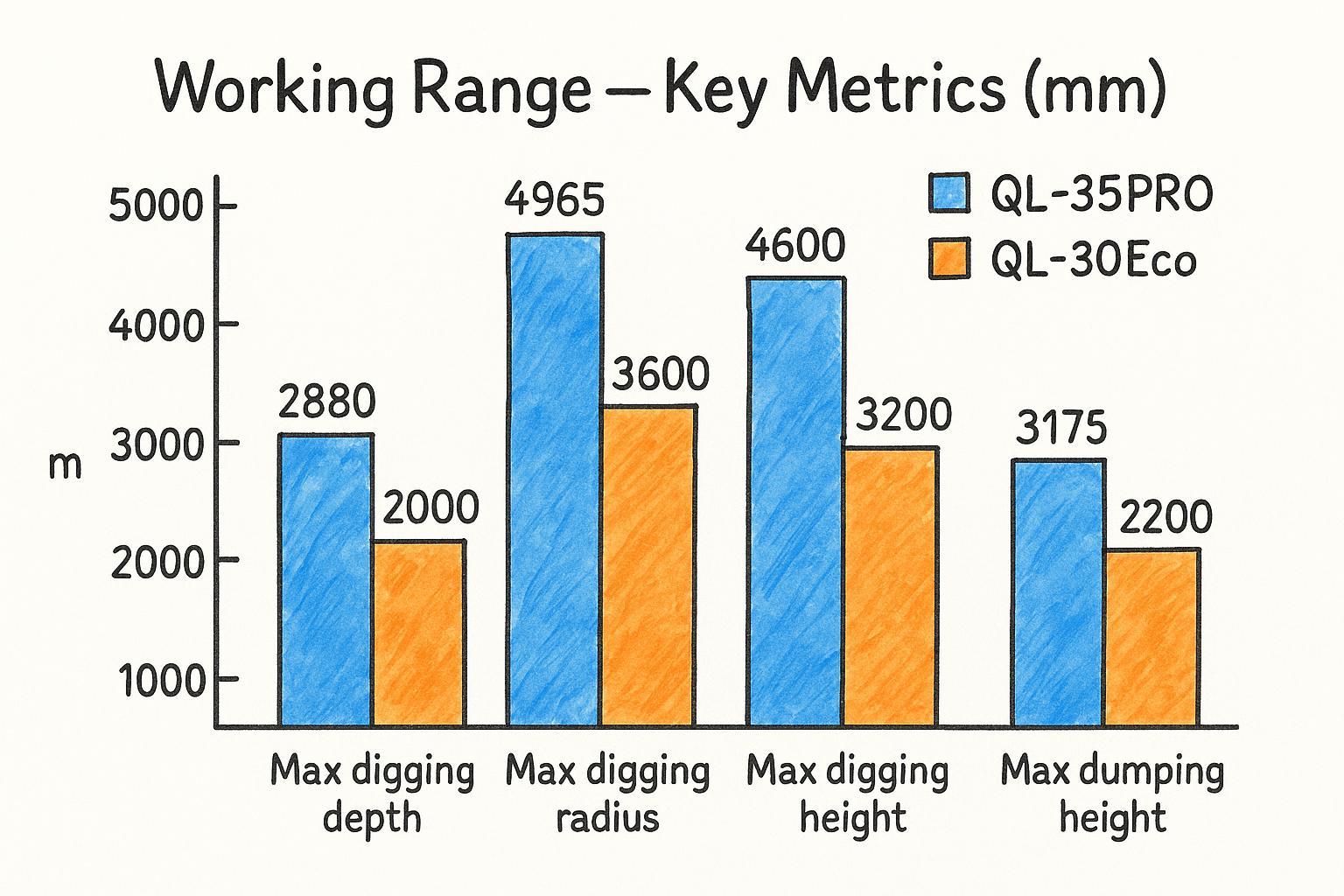
Փաստացի թվերը (մմ)
| Մետրիկ (մմ) | QL-35PRO | QL-30Eco |
|---|---|---|
| Առավելագույն փորման խորությունը | 2880 | 2000 |
| Առավելագույն ուղղահայաց փորման խորություն | 2305 | 2000 |
| Առավելագույն փորման շառավիղը | 4965 | 3600 |
| Առավելագույն փորման բարձրությունը | 4600 | 3200 |
| Առավելագույն թափոն/բեռնաթափման բարձրություն | 3175 | 2200 |
Եթե ցանկանում եք ամբողջական սպեկտր թերթիկը (դույլային ընտրանքներ, օժանդակ հիդրոտեխնիկա, չափսեր եւ կցման հնարավորություններ), սկսեք պաշտոնական էջերից QL-35PRO եւ QL-30Eco.
(Այդ էջերի հրապարակված աշխատանքային տիրույթի թվերից) QL-35PRO թվարկում է փորման առավելագույն բարձրությունը 4600 մմ, առավելագույն բեռնաթափման բարձրությունը 3175 մմ, փորման առավելագույն խորությունը 2880 մմ, առավելագույն ուղղահայաց փորման խորությունը 2305 մմ եւ փորման առավելագույն շառավիղը 4965 մմ; QL-30Eco-ն թվարկում է փորման առավելագույն բարձրությունը 3200 մմ, թափման առավելագույն բարձրությունը 2200 մմ, փորման առավելագույն խորությունը 2000 մմ, առավելագույն ուղղահայաց փորման խորությունը 2000 մմ եւ փորման առավելագույն շառավիղը 3600 մմ:.
Ինչու է սա կարեւոր խրամատելու համար
- ԽորությունԵթե ձեզ սովորաբար ավելի շատ խորություն է պետք (կամ ցանկանում եք ավելի շատ լուսանցք՝ առանց գերհատման), փորման լրացուցիչ խորությունը նվազեցնում է լուծումները:.
- Շառավիղ: Ավելի շատ շառավիղ կարող է նվազեցնել՝ թե որքան հաճախ եք վերադիրքավորում - սա իրական ժամանակն է խնայված ավելի երկար խրամուղիների վրա:.
- Աղբավայրի բարձրությունըԱղբավայրի ավելի բարձր բարձրությունը հեշտացնում է փչացումը կամ բեռը ավելի բարձր միակողմանի բեռնափոխադրումների մեջ դնելը:.
Խրամատային անվտանգություն: աշխատանքը փչացնելու ամենաարագ ճանապարհը (եւ ինչպես խուսափել դրանից)
Կոմունալ խրամատն այն է, որտեղ կանաչապատման բրիգադները կարող են պատահաբար հայտնվել լուրջ վտանգների մեջ: OSHA-ն կոպիտ է ամենամեծ ռիսկի մասին քարանձավներ.
Օգտագործեք OSHA- ի խրամատային ռեսուրսները որպես ձեր ելակետ՝ ոչ թե “nice- ը ունենալու համար:” Սկսեք OSHA- ի խրամատման եւ պեղումների ակնարկից եւ պաշտոնական PDF- ին OSHA հրատարակություն: Խրամատների եւ պեղումների անվտանգություն (OSHA 2226).
ՍՊԻՏԱԿ ԶԳՈՒՇԱՑՈՒՄOSHA- ն պահանջում է պաշտպանիչ համակարգեր խրամատային բազմաթիվ պայմանների համար եւ ընդգծում է 29 CFR 1926 ենթամաս P- ի պեղումների կանոնների համաձայն իրավասու անձի ամենօրյա ստուգումները: Եթե ձեր աշխատանքային հոսքը չի ներառում խրամուղիների անվտանգության պլանավորում՝ ձեր էքսկավատորի ընտրությունը չի փրկի ձեզ:.
Բյուջեի առաջին որոշման շրջանակը: ինչ արժե ձեզ գումար գնելուց հետո
Բյուջեի սահմանաչափը չի նշանակում “buy ամենաէժան:” Դա նշանակում է խուսափեք այն ծախսերից, որոնք հանգիստ խժռում են յուրաքանչյուր աշխատանքի շահույթը.
Ահա ծախսերի լծակները, որոնք ամենակարեւորն են խրամատավորման + գնահատման անձնակազմի համար
1) Տրանսպորտ: թաքնված ամսական վճար
Ավելի ծանր մեքենաները կարող են ձեզ մղել
- թրեյլերի այլ դաս
- բեռնատարի տարբեր կարգավորում
- ավելի շատ մաշվածություն, ավելի շատ վառելիք, ավելի շատ քաշքշուկ
Եթե դուք փորձում եք մնալ առավելագույն բյուջեով, ապա լավագույն էքսկավատորը հաճախ այն է, որը պարզ է պահում ձեր բեռնափոխադրման կարգավորումը:.
2) Վերաբաշխման ժամանակը: դանդաղ արտահոսքը խրամատային աշխատանքների վրա
Եթե դուք անընդհատ սողում եք առաջ՝ որպեսզի պահպանել հասանելիությունը եւ փչացնել տեղադրումը մաքուր՝ դուք վճարում եք
- օպերատորի ժամանակը
- աշխատատեղերի գերբնակվածություն
- խախտված խոտածածկ եւ ավելի շատ մաքրում
Այստեղ է, որ ավելի մեծ աշխատանքային ծրարը կարող է վերադարձնել:.
3) Ավարտել-աշխատանքի վնասը: ինչ եք վճարում “make այն կարծես թե մենք այստեղ չենք եղել”
Կոշտ տեսարանով եւ լանդշաֆտային անձնակազմերը ապրում եւ մահանում են վերջին հայացքից:.
Սխալ չափը կարող է նշանակել
- ավելի շատ փոսեր
- ավելի շատ վերանորոգման աշխատանքներ
- ավելի շատ վրդովված տների սեփականատերեր
Ո՞ր կանաչապատման էքսկավատորը պետք է ընտրեք: (Ոչ բմբուլ, պարզապես սցենարներ)
Ընտրեք QL-30Eco-ն՝ եթե դուք հիմնականում հաղթում եք լոգիստիկայի վրա
Ընտրել QL-30Eco երբ ձեր աշխատանքները նման են
- բնակելի սեփականություն ամուր մուտքով
- ավելի կարճ խրամատ է անցնում այնտեղ, որտեղ վերադիրքավորումը կառավարելի է
- հաճախակի մոբիլիզացիա (շաբաթական շատ փոքր աշխատատեղեր)
- խիստ առավելագույն բյուջե, որտեղ տրանսպորտի պարզությունն ավելի կարեւոր է, քան լրացուցիչ հասանելիությունը
Դուք օպտիմալանում եք հեշտությամբ տեղ հասնել, մաքուր ավարտել եւ վերահսկել սեփականության ծախսերը.
Ընտրեք QL-35PRO, եթե խրամատի արտադրողականությունը խոչընդոտ է
Ընտրել QL-35PRO երբ ձեր աշխատանքները նման են
- ավելի երկար խրամուղիներ, որտեղ վերադիրքավորման ժամանակը կուտակվում է
- ավելի խորը խրամուղիների կարիքներ, որտեղ լրացուցիչ խորությունը նվազեցնում է լուծումները
- ավելի հաճախակի բեռնման/փչացման տեղադրման սահմանափակումներ, որտեղ թափման բարձրությունը օգնում է
Դուք օպտիմալանում եք աշխատանքային տիրույթ, ավելի քիչ վերաբնակեցումներ եւ խրամուղիների ավելի բարձր թողունակություն.
Կցորդներ: էքսկավատորներից որեւէ մեկին “bigger” զգալու ամենաէժան միջոցը”
Եթե դուք բյուջեով սահմանափակված եք՝ ապա կցորդները հաճախ ամենաբարձր ROI լծակն են՝ հատկապես կանաչապատման բրիգադների համար՝ որոնք անցնում են խրամատների եւ գնահատման միջեւ:.
Հավելվածների ընդհանուր կատեգորիաների եւ կոնֆիգուրացիաների համար տե՛ս Qilu ակնարկի էջը մինի էքսկավատորի կցորդներ (բութ մատ, արագ կցորդ, պտուտակ).
Pro TipԵթե դուք փոխում եք դույլերը կամ գործիքները օրական մի քանի անգամ՝ ձեր կցորդի փոփոխության ժամանակը դառնում է իրական գումար: Կառուցեք ձեր գնման պլանը այն փոփոխությունների շուրջ՝ որոնք դուք իրականում անում եք աշխատավայրում:.
Մեկ տեսանյութ արժե դիտել նախքան ձեր հաջորդ խրամատային աշխատանքը
Հաջորդ քայլերը (ցածր ճնշում)
- Եթե ցանկանում եք համեմատել երկու մոդելները ամբողջական տեխնիկական թերթիկի հետ, վերանայեք պաշտոնական էջերը՝ QL-35PRO եւ QL-30Eco:.
- Բացահայտեք ավելի լայն կազմը վաճառքի համար կոմպակտ էքսկավատորներ եթե դուք դեռ վստահ չեք քաշային կարգի մասին:.
- Ընկերության նախապատմության եւ աջակցության ակնկալիքների համար տե՛ս Մոտ Qilu Machinery.
ՀՏՀ
Արդյո՞ք 3,5 տոննա կշռող մինի էքսկավատորը միշտ “better” է, քան 3 տոննա:
Ոչ: 3:5 տոննա դասի մեքենան կարող է ձեզ ավելի շատ աշխատանքային տիրույթ եւ կայունություն՝ բայց “better” կախված է մուտքի՝ տրանսպորտի եւ ինչպես հաճախ դուք վերադիրքավորում: Եթե ձեր աշխատանքը ամուր մուտքի բնակելի կայքեր՝ փոքր դասը կարող է ավարտվել ավելի արագ՝ պարզապես այն պատճառով՝ որ դա ավելի հեշտ է տեղափոխել եւ տեղադրել:.
Ի՞նչ խորություն եմ ինձ իրականում անհրաժեշտ կոմունալ խրամատների համար:
Դա կախված է ձեր տեղական պահանջներից եւ կոնկրետ օգտակարությունից: Գործնական մոտեցումն այն է, որ թվարկեք ձեր ամենատարածված խրամատների խորքերը եւ այնուհետեւ ընտրեք մեքենա, որը կարող է հարվածել այդ խորություններին՝ առանց ամբողջ օրը աշխատելու իր սահմանաչափով:.
Ո՞րն է տարբերությունը առավելագույն փորման խորության եւ առավելագույն ուղղահայաց փորման խորության միջեւ:
Առավելագույն փորման խորությունը սովորաբար չափվում է անկյան տակ երկայնքով բում/փայտիկ ուղու: Առավելագույն ուղղահայաց փորման խորությունը արտացոլում է՝ թե ինչ կարող եք հասնել՝ երբ փորում եք ուղիղ ներքեւ: Երկու նյութերն էլ -հատկապես երբ դուք խրամատ եք անում խոչընդոտների մոտ:.
Արդյո՞ք ես պետք է անհանգստանամ խրամատային քարանձավների մասին, եթե ես “only” եմ, որը մակերեսային օգտակար աշխատանք է կատարում:
Այո՝ պայմանները արագ փոխվում են հողի տեսակի՝ խոնավության՝ թրթռման եւ փչացած տեղադրման հետ: OSHA- ի ուղեցույցը եւ պահանջները գոյություն ունեն՝ քանի որ քարանձավները կարող են հանկարծակի տեղի ունենալ: Օգտագործեք OSHA- ի խրամատային եւ պեղումների ռեսուրսները որպես ելակետ:.
Ինչպե՞ս պետք է մտածեմ առավելագույն բյուջեի մասին այս երկու էքսկավատորները համեմատելիս:
Մեքենայի գինը դիտարկեք որպես որոշման միայն մաս: Տրանսպորտի կարգավորումը, աշխատատեղերի մաքրումը եւ կցորդների ընտրությունը կարող են փոխել ձեր իրական արժեքը մեկ աշխատանքի համար: Եթե ավելի մեծ աշխատանքային ծրարը խնայում է զգալի աշխատաժամանակ ձեր բնորոշ խրամատային աշխատանքների վրա, դա կարող է արդարացնել ավելի բարձր նախնական արժեքը: Եթե ոչ, կարգավորումները պարզ պահեք եւ բյուջե հատկացրեք թողունակությունը բարելավող կցորդներին:.
Արդյո՞ք պետք է գնեմ միայն տեխնիկական բնութագրերի հիման վրա:
Ոչ: Specs ասում ձեզ՝ թե ինչ հնարավոր է; նրանք չեն ասում ձեզ՝ թե ինչ է շահավետ ձեր կոնկրետ կայքերում: Օգտագործեք առանձնահատկությունները վերացնել անհամապատասխանությունները՝ ապա որոշեք՝ հիմնվելով այն աշխատանքի վրա՝ որը դուք աշխատում եք ամեն շաբաթ եւ ծախսերը՝ որոնք չեք կարող փոխել (մուտք եւ տրանսպորտ): Ամբողջական կարգավորող տեքստի համար՝ հղում OSHA 29 CFR 1926 Ենթամաս P (պեղումներ).