E-mail: [email protected] WhatsApp: +8618266768780

E-mail: [email protected] WhatsApp: +8618266768780


Anda meningkatkan keselamatan dan efisiensi ketika Anda mulai dengan membaca manual operator untuk excavator kompak Anda. Selalu beroperasi dari kursi yang ditentukan. Anda belajar bagaimana posisi pisau mempengaruhi tugas menggali dan mengangkat. Menghadiri kursus keselamatan untuk memahami praktik terbaik. Periksa kompatibilitas lampiran hidrolik sebelum memulai pekerjaan. Perhatikan baik-baik gigi Anda dan lingkungan tempat kerja. Jadikan keselamatan sebagai prioritas utama Anda setiap kali Anda bekerja.
Tip: Periksa alat pelindung diri Anda sebelum memasuki kabin. Langkah sederhana ini mengurangi risiko cedera.
Sebelum Anda mengoperasikan excavator kompak, Anda harus menyelesaikan pemeriksaan keselamatan menyeluruh. Langkah-langkah ini melindungi Anda, rekan kerja Anda, dan peralatan Anda. Selalu mulai dengan membaca manual operator. Manual menjelaskan kontrol, fitur keselamatan, dan interval perawatan. Anda harus beroperasi dari kursi yang ditentukan untuk mempertahankan kontrol dan menghindari kecelakaan.
Anda harus memeriksa excavator kompak Anda setiap hari sebelum digunakan. Rutinitas ini membantu Anda menangkap masalah lebih awal dan menjaga mesin tetap berjalan dengan aman.
Periksa semua tingkat cairan, termasuk oli mesin, cairan hidrolik, dan cairan pendingin. Cairan rendah dapat menyebabkan kerusakan atau operasi yang tidak aman. Periksa filter untuk kotoran atau kerusakan. Ganti sesuai kebutuhan untuk mencegah masalah mesin atau hidrolik.
| Interval Inspeksi | Keterangan |
|---|---|
| Inspeksi Harian | Pemeriksaan visual ketinggian oli, selang hidrolik, kebocoran, track/roda. |
| Layanan 250 Jam | Ganti oli/filter mesin, periksa pembersih udara, periksa sistem bahan bakar/hidrolik. |
| Layanan 500 Jam | Periksa oli hidrolik, ganti filter, periksa undercarriage. |
| Layanan 1.000 Jam | Ganti oli hidrolik, periksa filter udara, periksa mesin ayun. |
| Layanan 2.000 Jam | Ganti selang hidrolik, pendingin, periksa final drive. |
| Layanan 4.000 Jam | Periksa komponen utama, ganti bagian-bagian kunci sesuai kebutuhan. |
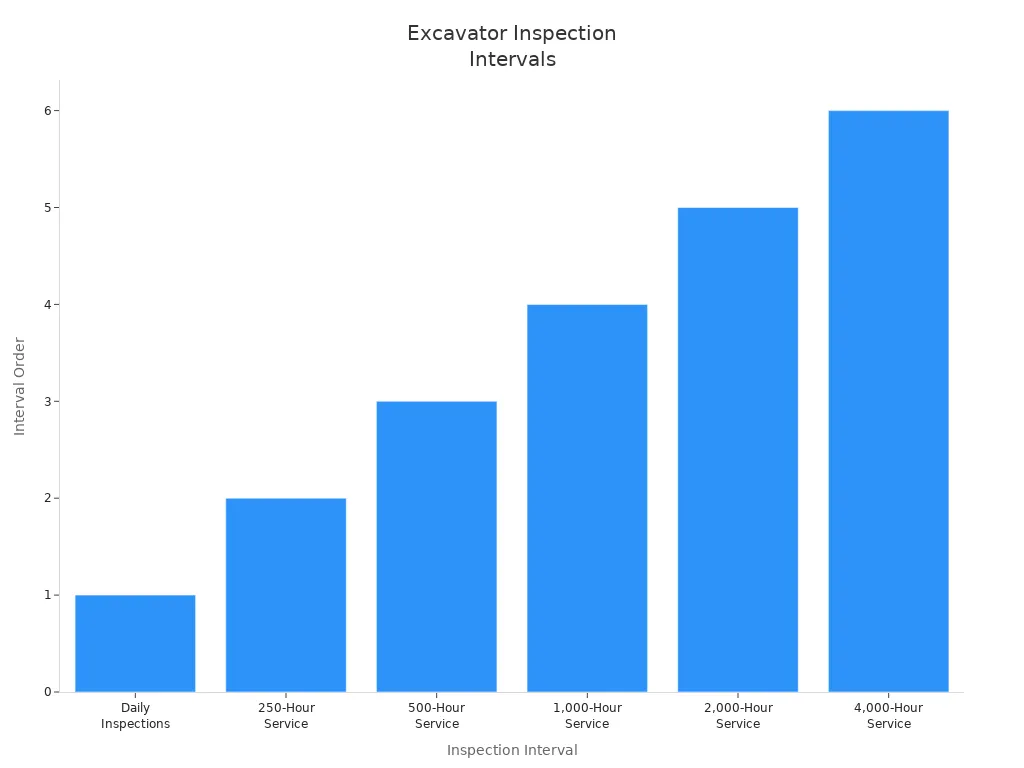
Tip: Simpan log pemeliharaan untuk melacak inspeksi dan perbaikan. Kebiasaan ini membantu Anda tetap teratur dan memenuhi rekomendasi produsen.
Periksa trek atau ban untuk kerusakan atau keausan berlebihan. Cari baut longgar, retak, atau potongan yang hilang. Bersihkan undercarriage untuk menghilangkan lumpur dan puing-puing. Trek yang rusak dapat menyebabkan ketidakstabilan atau kecelakaan, terutama di lereng.
| Masalah Keselamatan | Keterangan |
|---|---|
| Masalah Stabilitas Mesin | Bilah yang diposisikan salah dapat mengganggu kestabilan mesin, sehingga meningkatkan peluang mesin untuk terbalik. |
| Kecelakaan Terkait Kemiringan | Beroperasi di lereng dapat menyebabkan kecelakaan jika mesin miring ke depan atau jika pintu tidak terkunci. |
| Sistem Hidrolik | Inspeksi rutin terhadap kebocoran atau keausan sangat penting untuk keselamatan. |
| Trek atau Ban | Memeriksa kerusakan atau keausan berlebihan sangat penting untuk pengoperasian yang aman. |
| Tingkat Cairan | Memverifikasi tingkat cairan sebelum digunakan membantu mencegah kegagalan operasional. |
| Fitur Keamanan | Menguji alarm dan sinyal memastikan sistem keselamatan mesin berfungsi. |
| Lampiran | Memastikan semua alat terhubung dengan benar sangat penting untuk pengoperasian yang aman. |
Contoh dunia nyata: Seorang kru konstruksi di Texas menghindari kecelakaan yang mahal dengan menemukan kebocoran hidrolik selama inspeksi pagi mereka. Mereka memperbaiki kebocoran sebelum mulai bekerja, mencegah kegagalan peralatan dan kerusakan lingkungan. Untuk lebih banyak cerita dan tips keselamatan, kunjungi Halaman Keselamatan Konstruksi OSHA.
Anda harus meninjau tempat kerja sebelum mengoperasikan excavator kompak Anda. Langkah ini membantu Anda mengidentifikasi bahaya dan merencanakan rute yang aman.
Berjalanlah di lokasi dan cari rintangan, tanah yang tidak rata, dan bahaya di atas kepala. Tandai area mana pun dengan jarak pandang yang buruk. Di zona padat, gunakan pengintai untuk memandu Anda dan mencegah kecelakaan. Bintik buta di sekitar ekskavator dapat menyembunyikan pekerja atau peralatan.
| Tugas Pemeliharaan | Frekuensi |
|---|---|
| Periksa kebocoran | Mingguan |
| Ganti oli hidrolik | Setiap 500 jam |
| Layar katup bersih | Bulanan |
| Simpan log pemeliharaan | Sedang berlangsung |
Catatan: Selalu periksa perubahan terbaru di tempat kerja, seperti parit atau material baru. Perubahan ini dapat menimbulkan risiko baru.
Hubungi perusahaan utilitas lokal sebelum menggali. Tandai jalur bawah tanah untuk gas, air, dan listrik. Mencolok jalur utilitas dapat menyebabkan cedera serius atau pemadaman layanan. Gunakan bendera atau cat berwarna untuk menyorot area ini. Anda dapat menemukan informasi lebih lanjut tentang praktik penggalian yang aman di Hubungi 811 Sebelum Anda Menggali.
Alat pelindung diri (APD) membuat Anda aman dari cedera. Anda harus memakai gigi yang tepat setiap kali Anda mengoperasikan excavator kompak.
Kenakan topi keras, kacamata pengaman, rompi visibilitas tinggi, sarung tangan, dan sepatu bot berujung baja. Di lingkungan yang bising, gunakan pelindung pendengaran. Beberapa pekerjaan membutuhkan masker pernapasan atau pelindung jatuh.
Periksa apakah APD Anda pas dan tidak menunjukkan tanda-tanda kerusakan. Ganti gigi yang aus segera. Peralatan yang tidak pas atau rusak tidak dapat melindungi Anda dengan benar.
Peringatan Keselamatan: Jangan pernah melewatkan pemeriksaan APD. Bahkan robekan kecil di sarung tangan Anda atau tali helm yang longgar dapat meningkatkan risiko cedera.
Untuk panduan dan pembaruan APD lainnya, ikuti Dewan Keamanan Nasional di Twitter.
Dengan mengikuti pemeriksaan keamanan ini, Anda mengurangi risiko kecelakaan dan menjaga excavator kompak Anda berjalan lancar. Anda menetapkan fondasi yang kuat untuk operasi yang aman dan efisien.
Anda melindungi diri dari terpeleset dan jatuh ketika Anda menggunakan metode kontak tiga titik. Selalu jaga dua tangan dan satu kaki, atau dua kaki dan satu tangan, bersentuhan dengan mesin saat Anda naik atau keluar. Pegang pegangan tangan dengan kuat dan melangkah ke platform kabin dengan hati-hati. Jangan pernah melompat dari taksi atau melewati langkah, bahkan jika Anda sedang terburu-buru. Banyak operator menghindari cedera dengan mengikuti rutinitas sederhana ini setiap hari.
Tip: Bersihkan lumpur atau minyak dari tangga dan pegangan tangan sebelum masuk. Permukaan licin meningkatkan risiko Anda jatuh.
Anda perlu memeriksa panel kontrol sebelum memulai excavator kompak. Cari lampu peringatan atau pesan kesalahan. Uji klakson, lampu, dan alarm cadangan. Pastikan semua sakelar dan pengukur merespons dengan benar. Jika Anda melihat peringatan apa pun, atasi sebelum Anda melanjutkan.
Anda harus menjalankan pemeriksaan diagnostik cepat. Periksa rem, ban, dan hidrolika untuk tanda-tanda keausan atau kebocoran. Konfirmasikan bahwa baterai dan komponen elektronik berfungsi dengan baik. Masalah dengan sistem ini dapat menyebabkan kerusakan atau bahaya keselamatan. Tinjau bagan beban untuk memastikan Anda tidak melampaui batas mesin.
| Tahap Inspeksi | Item Checklist | Rincian |
|---|---|---|
| Inspeksi Pra-Operasi | Periksa rem, ban, dan hidrolik | Pastikan rem merespons, ban tidak bocor, dan hidrolika tidak bocor. |
| Periksa lampu dan sinyal peringatan | Verifikasi lampu depan, lampu rem, dan indikator bahaya berfungsi dengan baik. | |
| Pastikan kapasitas dan stabilitas beban | Periksa grafik beban dan periksa struktur penahan beban untuk retakan. | |
| Masalah Umum Terdeteksi | Komponen elektronik dan baterai | Masalah dapat menyebabkan kegagalan operasional dan bahaya keselamatan. |
Catatan: Banyak operator melaporkan bahwa masalah baterai dan lampu peringatan yang salah adalah masalah yang paling umum selama start-up. Atasi masalah ini sebelum Anda mulai bekerja.
Untuk rincian lebih lanjut tentang inspeksi pra-operasi, kunjungi Tips keselamatan Equipment World.
Sesuaikan tempat duduk Anda sehingga Anda dapat menjangkau semua kontrol dengan nyaman. Atur cermin untuk memberi Anda pandangan yang jelas tentang tempat kerja dan titik buta. Penyesuaian yang tepat membantu Anda menghindari ketegangan dan meningkatkan kesadaran Anda tentang lingkungan Anda.
Kencangkan sabuk pengaman Anda sebelum Anda menghidupkan mesin. Sabuk pengaman membuat Anda tetap aman di kursi operator dan melindungi Anda jika mesin bergeser atau tip. Banyak insiden keselamatan terjadi ketika operator melewati langkah ini.
Safety Alert: Selalu pasang sabuk pengaman, bahkan untuk tugas-tugas singkat. Sabuk pengaman dapat mencegah cedera serius dalam kecelakaan.
Contoh dunia nyata: Seorang operator di Florida menghindari cedera ketika excavator kompaknya meluncur di tanah basah. Dia tetap aman karena dia menggunakan sabuk pengaman dan menjaga kursinya disesuaikan untuk kontrol maksimum.
Anda meningkatkan keselamatan dan efisiensi ketika Anda mengikuti prosedur start-up ini setiap saat. Untuk praktik terbaik lainnya, ikuti Dewan Keamanan Nasional di LinkedIn.
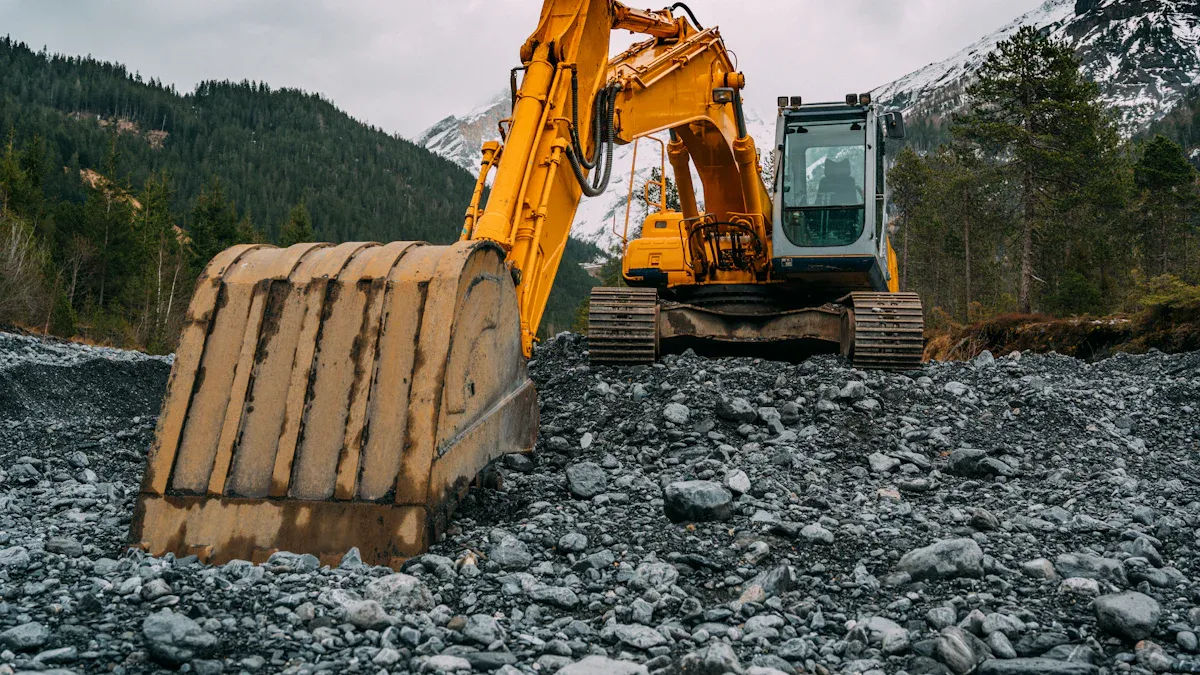
Anda mengontrol excavator kompak menggunakan dua joystick utama. Joystick kiri menggerakkan boom ke atas dan ke bawah dan mengayunkan struktur atas ke kiri atau ke kanan. Joystick kanan mengontrol lengan gayung dan ikal ember. Menguasai kontrol ini memungkinkan Anda untuk menggali, mengangkat, dan bermanuver dengan presisi. Anda harus berlatih gerakan yang halus dan terkoordinasi untuk menghindari operasi dendeng, yang dapat menyebabkan ketidakstabilan atau kerusakan.
Tips: Luangkan waktu di area yang aman dan terbuka untuk merasa nyaman dengan sensitivitas joystick sebelum bekerja di dekat rintangan atau orang.
Anda mengoperasikan trek dengan pedal kaki. Pedal kiri dan kanan menggerakkan mesin ke depan atau ke belakang. Beberapa model menyertakan pedal bantu untuk attachment hidrolik. Anda harus menekan pedal dengan lembut untuk mempertahankan kontrol, terutama di medan yang tidak rata. Gerakan pedal yang cepat atau kuat dapat menyebabkan pergeseran mendadak atau kehilangan keseimbangan.
Langkah-langkah Kontrol Penting untuk Pengoperasian yang Aman
Untuk tips operator dan sumber daya pelatihan lainnya, kunjungi Kontraktor Umum Terkait Amerika.
Anda meningkatkan kekuatan penggalian dengan menurunkan pisau dan menekannya dengan kuat ke tanah. Ini menstabilkan excavator kompak dan mencegah goyang selama penggalian berat. Posisi pisau yang tepat memungkinkan Anda menggunakan kekuatan breakout penuh dari ember, yang menentukan berapa banyak bahan yang dapat Anda pindahkan. Operator berpengalaman menyesuaikan sudut pisau agar sesuai dengan kondisi tanah, memaksimalkan efisiensi.
| Posisi Blade | Menggali Angkatan | Stabilitas | Penggunaan yang Direkomendasikan |
|---|---|---|---|
| Sepenuhnya Down | Maksimum | Tinggi | Parit dalam, tanah keras |
| Sebagian Turun | Sedang | Sedang | Penggalian ringan, penilaian |
| Up | Rendah | Rendah | Transportasi, manuver |
Catatan: Selalu periksa tanah untuk mencari rintangan tersembunyi sebelum menurunkan bilahnya. Batu atau puing-puing dapat merusak bilah atau mengurangi stabilitas.
Anda meningkatkan gaya angkat dengan menjaga pisau turun dan dekat dengan tanah. Ini meningkatkan pusat gravitasi mesin dan mencegah tipping saat Anda mengangkat beban berat. Anda tidak boleh mengangkat lebih dari kapasitas pengenal yang tercantum dalam manual operator. Kompatibilitas lampiran hidrolik juga mempengaruhi kinerja pengangkatan. Lampiran harus sesuai dengan laju aliran hidrolik dan output tekanan excavator untuk memastikan operasi yang aman.
Untuk panduan lebih lanjut tentang lampiran hidrolik, periksa Peralatan Panduan keselamatan lampiran hari ini.
Anda mencapai penggalian yang efisien dengan menjaga gigi ember tegak lurus dengan tanah. Ini memaksimalkan kekuatan breakout dan mengurangi keausan. Saat mengangkat, jaga ember tetap rendah dan dekat dengan mesin untuk stabilitas yang lebih baik. Hindari mengayunkan ember di atas orang atau kendaraan. Anda harus selalu memeriksa grafik beban untuk memastikan batas pengangkatan yang aman untuk excavator kompak Anda.
Anda harus menghormati batas beban yang ditentukan oleh pabrikan. Kebanyakan excavator mini dapat mengangkat antara 1.000 dan 20.000 pound, tergantung pada desain dan hidrolika. Overloading dapat menyebabkan kegagalan tipping atau mekanis. Operator berpengalaman mencapai kedalaman terukur penuh, sementara pengguna baru mungkin hanya mencapai 70-80% karena teknik. Anda harus berlatih mengangkat dan menggali dalam kondisi terkendali untuk membangun keterampilan dan kepercayaan diri.
| Pengalaman Operator | Nilai Kedalaman Tercapai | Risiko Keselamatan |
|---|---|---|
| Berpengalaman | 100% | Rendah |
| Tidak berpengalaman | 70-80% | Sedang |
Safety Alert: Jangan pernah melebihi kapasitas angkat terukur. Selalu gunakan sabuk pengaman dan periksa fitur perlindungan terguling sebelum mengangkat beban berat.
Untuk skenario dunia nyata dan saran ahli, ikuti Dewan Keselamatan Konstruksi di Facebook.
Anda meningkatkan keselamatan dan efisiensi dengan menguasai teknik operasi ini. Anda melindungi diri sendiri dan tim Anda ketika Anda menggunakan kontrol yang tepat, memposisikan pisau dengan benar, dan menghormati batas beban. Kedalaman penggalian tergantung pada boom dan panjang lengan, serta lampiran yang Anda gunakan. Selalu cocokkan lampiran hidrolik dengan spesifikasi mesin Anda untuk hasil terbaik.
Anda mengontrol radius ayunan excavator kompak Anda untuk menghindari tabrakan dan menjaga keselamatan. Radius ayunan adalah jarak dari pusat mesin ke titik terjauh yang dicapai oleh boom atau ember selama rotasi. Anda harus mengetahui pengukuran ini sebelum mulai bekerja, terutama di ruang sempit. Banyak kecelakaan terjadi ketika operator salah menilai radius ayunan dan menyerang benda atau orang di dekatnya.
Anda meningkatkan keselamatan dengan menandai zona pengecualian di sekitar mesin. Tempatkan kerucut atau penghalang untuk menunjukkan area di mana boom akan bergerak. Selalu periksa pekerja, kendaraan, atau peralatan di dalam jalur ayunan sebelum Anda memutar struktur atas. Anda dapat menggunakan cermin dan kamera untuk memantau titik buta. Jika Anda bekerja di dekat bangunan atau pagar, jaga radius ayunan sekecil mungkin.
| Radius Ayunan (kaki) | Zona Pengecualian yang Direkomendasikan (kaki) | Tingkat Risiko |
|---|---|---|
| 5 | 7 | Rendah |
| 8 | 10 | Sedang |
| 12 | 15 | Tinggi |
Tip: Tinjau manual operator untuk excavator kompak Anda untuk menemukan radius ayunan yang tepat. Langkah ini membantu Anda merencanakan gerakan yang aman dan menghindari kerusakan properti.
Untuk panduan keselamatan selengkapnya, kunjungi Institut Nasional untuk Keselamatan dan Kesehatan Kerja (NIOSH).
Anda harus memindai tempat kerja untuk mencari rintangan sebelum Anda memindahkan ekskavator kompak. Hambatan umum termasuk batu, parit, tiang listrik, dan mesin lainnya. Anda mengurangi risiko kecelakaan dengan merencanakan rute Anda dan menjaga ember tetap rendah selama perjalanan. Jika Anda melihat rintangan, berhenti dan menilai cara paling aman di sekitarnya. Jangan pernah mencoba mengemudi di atas puing-puing besar atau tanah yang tidak stabil.
Anda meningkatkan efisiensi dengan menggunakan pengintai di daerah padat. Pengintai dapat memandu Anda dan memperingatkan Anda tentang bahaya tersembunyi. Berkomunikasi dengan tim Anda menggunakan sinyal tangan atau radio. Banyak operator menggunakan grup media sosial untuk berbagi tips tentang teknik penghindaran rintangan dan manuver. Anda dapat bergabung dalam diskusi di Komunitas Konstruksi Reddit untuk saran dunia nyata.
| Tantangan Manuver | Tingkat Kecelakaan (%) | Larutan |
|---|---|---|
| Bintik buta | 35 | Gunakan cermin/kamera |
| Ruang sempit | 22 | Tandai zona pengecualian |
| Medan yang tidak rata | 18 | Rencanakan rute yang aman |
| Visibilitas yang buruk | 25 | Gunakan pengintai/lampu |
Contoh praktis: Anda beroperasi di lokasi perkotaan yang sibuk dengan gang-gang sempit dan kendaraan yang diparkir. Anda menandai radius ayunan dengan kerucut dan menetapkan pengintai untuk memandu Anda. Anda menghindari rintangan dengan merencanakan setiap gerakan dan menjaga ember tetap dekat dengan tanah. Pendekatan ini mengurangi risiko kerusakan properti dan menjaga tim Anda tetap aman.
Safety Alert: Selalu berhenti dan menilai kembali jika Anda merasa tidak yakin tentang manuver. Bergegas meningkatkan kemungkinan kecelakaan.
Anda menguasai manuver dengan memahami radius ayunan dan berlatih menghindari rintangan. Anda melindungi diri sendiri dan orang lain ketika Anda merencanakan gerakan, menggunakan zona pengecualian, dan berkomunikasi dengan tim Anda.
Anda menghadapi risiko terguling tertinggi saat Anda beroperasi di lereng atau tanah yang tidak stabil. Banyak kecelakaan terjadi karena operasi yang tidak tepat atau perencanaan yang buruk. Anda dapat mengurangi risiko ini dengan mengikuti praktik terbaik:
Tip: Selalu lakukan pemeriksaan pra-operasi dan gunakan sabuk pengamanmu. Jangan pernah membawa penumpang.
Contoh dunia nyata: Pada tahun 2022, kru di Colorado menghindari terguling dengan melakukan perjalanan vertikal ke atas lereng dan menjaga ember tetap rendah. Supervisor mereka telah menandai batas lereng dan mengingatkan tim untuk menghindari mengemudi diagonal. Langkah perencanaan sederhana ini mencegah kecelakaan.
Anda menjaga stabilitas dengan menjaga pisau turun saat menggali atau mengangkat. Selalu periksa tanah untuk ketegasan sebelum mulai bekerja. Hindari bekerja di dekat tepi parit atau permukaan yang tidak stabil. Pertahankan setidaknya jarak 2 kaki dari parit mana pun. Sebagian besar kecelakaan ekskavator diakibatkan oleh kesalahan prosedur, bukan kegagalan mekanis. Pelatihan dan perencanaan yang tepat membuat perbedaan.
| Penyebab Overturn | Tingkat Pencegahan (%) | Metode Pencegahan |
|---|---|---|
| Kelebihan beban | 90 | Ikuti grafik beban, jaga beban tetap rendah |
| Tanah yang tidak stabil | 85 | Periksa lokasi, hindari tepi yang lembut |
| Komunikasi yang buruk | 80 | Gunakan radio, tetapkan pengintai |
Untuk tips keselamatan lainnya, kunjungi Keamanan Konstruksi NIOSH.
Anda harus melindungi diri sendiri dan tim Anda dari pemogokan utilitas bawah tanah. Undang-undang negara mengharuskan Anda untuk meminta lokasi utilitas sebelum menggali, tidak peduli kedalamannya. Selalu hubungi 811 atau layanan penandaan utilitas lokal Anda. Garis yang ditandai membantu Anda menghindari bahaya gas, air, dan listrik.
| Prosedur | Keterangan |
|---|---|
| Penandaan Utilitas | Hubungi layanan utilitas untuk menandai jalur bawah tanah sebelum menggali. |
| Pemeriksaan Pra-Operasi | Konfirmasikan semua pekerjaan peralatan keselamatan sebelum memulai. |
| Alat Pelindung Diri | Kenakan topi keras, sarung tangan, dan sepatu bot untuk mengurangi risiko cedera. |
Sebuah studi kasus dari Texas: Seorang operator menghindari serangan saluran gas besar dengan mengikuti protokol penandaan dan menggunakan sekop untuk mengekspos saluran sebelum menggunakan ekskavator. Langkah ini mencegah insiden yang mahal dan berbahaya.
Untuk lebih lanjut tentang penggalian yang aman, periksa Hubungi 811 Sebelum Anda Menggali.
Anda membuat zona pengecualian untuk menjaga orang-orang di sekitar dan rekan kerja tetap aman. Tandai radius ayunan mesin Anda dengan kerucut atau penghalang. Hanya personel terlatih yang harus memasuki zona ini. Sebagian besar kecelakaan yang melibatkan orang-orang di sekitar terjadi ketika orang memasuki area bahaya tanpa peringatan.
Anda meningkatkan keselamatan dengan menggunakan sinyal tangan atau radio yang jelas. Tetapkan pengintai untuk memandu Anda di area yang padat. Komunikasi yang buruk dengan kru darat adalah penyebab utama kecelakaan. Selalu beri pengarahan kepada tim Anda sebelum mulai bekerja.
Peringatan Keselamatan: Jangan pernah mulai bekerja sampai semua orang memahami zona pengecualian dan rencana komunikasi.
Anda mencegah sebagian besar bahaya dengan merencanakan, berkomunikasi, dan mengikuti prosedur yang telah terbukti. Tetap waspada dan terus beri tahu tim Anda untuk memastikan tempat kerja yang aman setiap hari.
Anda melindungi diri sendiri dan peralatan Anda ketika Anda mengikuti langkah-langkah shutdown yang tepat. Selalu parkir excavator kompak Anda pada permukaan yang rata. Ini mencegah bergulir dan menjaga mesin tetap stabil. Sandarkan ember di tanah sebelum mematikan mesin. Tindakan sederhana ini menghentikan ember agar tidak jatuh dan menyebabkan cedera. Kunci kabin dan lepaskan kunci setiap kali Anda meninggalkan mesin. Anda mengurangi risiko pencurian dan penggunaan yang tidak sah.
Tip: Gunakan pegangan pegangan dan permukaan yang tahan selip saat Anda keluar dari kabin. Anda menghindari tergelincir dan jatuh dengan mempertahankan tiga titik kontak.
Anda memperpanjang masa pakai mesin dengan membiarkannya dingin sebelum dimatikan. Jalankan mesin dengan kecepatan setengah throttle selama beberapa menit. Langkah ini memungkinkan komponen turbocharger dan mesin mendingin secara bertahap. Shutdown mendadak dapat menyebabkan panas berlebih dan kerusakan. Banyak operator menggunakan waktu ini untuk meninjau pekerjaan hari itu dan merencanakan untuk besok.
Anda menjaga excavator kompak Anda dalam kondisi prima dengan membersihkannya setiap hari. Hapus lumpur, puing-puing, dan kotoran dari undercarriage dan trek. Bersihkan interior kabin untuk menjaga visibilitas dan kenyamanan. Gunakan sikat atau kain lembut untuk kontrol dan tampilan sensitif. Pembersihan rutin mencegah masalah korosi dan mekanis.
Anda melihat masalah lebih awal ketika Anda memeriksa mesin Anda setiap hari. Cari kebocoran, retakan, atau keausan abnormal pada semua bagian. Periksa oli mesin, cairan hidrolik, dan tingkat pendingin. Periksa ban untuk inflasi yang tepat dan tanda-tanda kerusakan. Uji semua kontrol, termasuk fungsi bucket, boom, dan swing. Periksa perangkat keselamatan seperti alarm dan lampu untuk memastikan mereka bekerja dengan benar.
| Masalah Pemeliharaan Umum | Frekuensi (%) | Tindakan yang Direkomendasikan |
|---|---|---|
| Kebocoran hidrolik | 32 | Periksa selang setiap hari |
| Lacak keausan | 27 | Bersihkan dan periksa trek |
| Kesalahan listrik | 18 | Uji alarm dan lampu |
| Masalah tingkat cairan | 23 | Periksa sebelum operasi |
Catatan: Perawatan harian yang konsisten mengurangi kerusakan dan memperpanjang umur peralatan. Untuk tips perawatan lebih lanjut, kunjungi Pemeliharaan Dunia Peralatan.
Anda meningkatkan keamanan dan efisiensi dengan mencatat setiap masalah yang Anda temukan. Catat kebocoran, suara yang tidak biasa, atau masalah kontrol dalam log pemeliharaan. Sertakan tanggal, lokasi, dan deskripsi setiap masalah. Kebiasaan ini membantu Anda melacak masalah berulang dan merencanakan perbaikan.
Anda mencegah downtime yang mahal dengan menjadwalkan perbaikan dengan segera. Hubungi supervisor atau tim pemeliharaan Anda ketika Anda menemukan masalah. Gunakan log Anda untuk memprioritaskan perbaikan mendesak. Banyak perusahaan menggunakan platform digital untuk mengelola jadwal pemeliharaan dan berbagi pembaruan. Anda dapat bergabung dengan diskusi industri pada Grup Konstruksi LinkedIn untuk mempelajari praktik terbaik.
Studi Kasus: Seorang kru di Ohio mengurangi kerusakan sebesar 40% setelah memperkenalkan log harian dan perbaikan terjadwal. Mereka berbagi proses mereka di media sosial, membantu tim lain meningkatkan rutinitas pemeliharaan mereka.
Anda menjaga keselamatan dan kinerja saat Anda mengikuti rutinitas shutdown dan pemeliharaan. Anda melindungi investasi Anda dan menjaga agar jobsite Anda berjalan lancar.
Anda menempatkan diri dan tim Anda dalam risiko ketika Anda melewatkan pemeriksaan keselamatan harian. Banyak operator terburu-buru untuk mulai bekerja dan mengabaikan langkah-langkah pemeriksaan penting. Kebiasaan ini mengarah pada masalah tersembunyi yang dapat menyebabkan kecelakaan atau kerusakan peralatan. Anda harus selalu memeriksa tingkat cairan, memeriksa undercarriage, dan menguji semua fitur keselamatan sebelum mengoperasikan excavator kompak Anda.
Pemeriksaan yang terlewat dapat mengakibatkan perbaikan yang buruk atau visibilitas yang tersumbat. Perbaikan yang tidak memenuhi syarat sering menyebabkan kegagalan mekanis. Jika Anda mencadangkan tanpa pandangan yang jelas, Anda mungkin menabrak rekan kerja atau rintangan. Tabel di bawah menyoroti kesalahan umum ketika Anda melewatkan pemeriksaan keselamatan:
| Kesalahan Umum | Keterangan |
|---|---|
| Perbaikan atau servis yang buruk | Perbaikan oleh individu yang tidak memenuhi syarat dapat menyebabkan kegagalan mekanis, membahayakan keselamatan dan menyebabkan kerusakan peralatan. |
| Pandangan terhalang saat mendukung | Jarak pandang yang terbatas dapat menyembunyikan pekerja atau hambatan, sehingga berbahaya untuk membuat cadangan di lokasi kerja yang sibuk. |
Tip: Selalu gunakan pengintai saat bekerja di area ramai. Untuk tips pemeriksaan lebih lanjut, kunjungi Dewan Keselamatan Nasional.
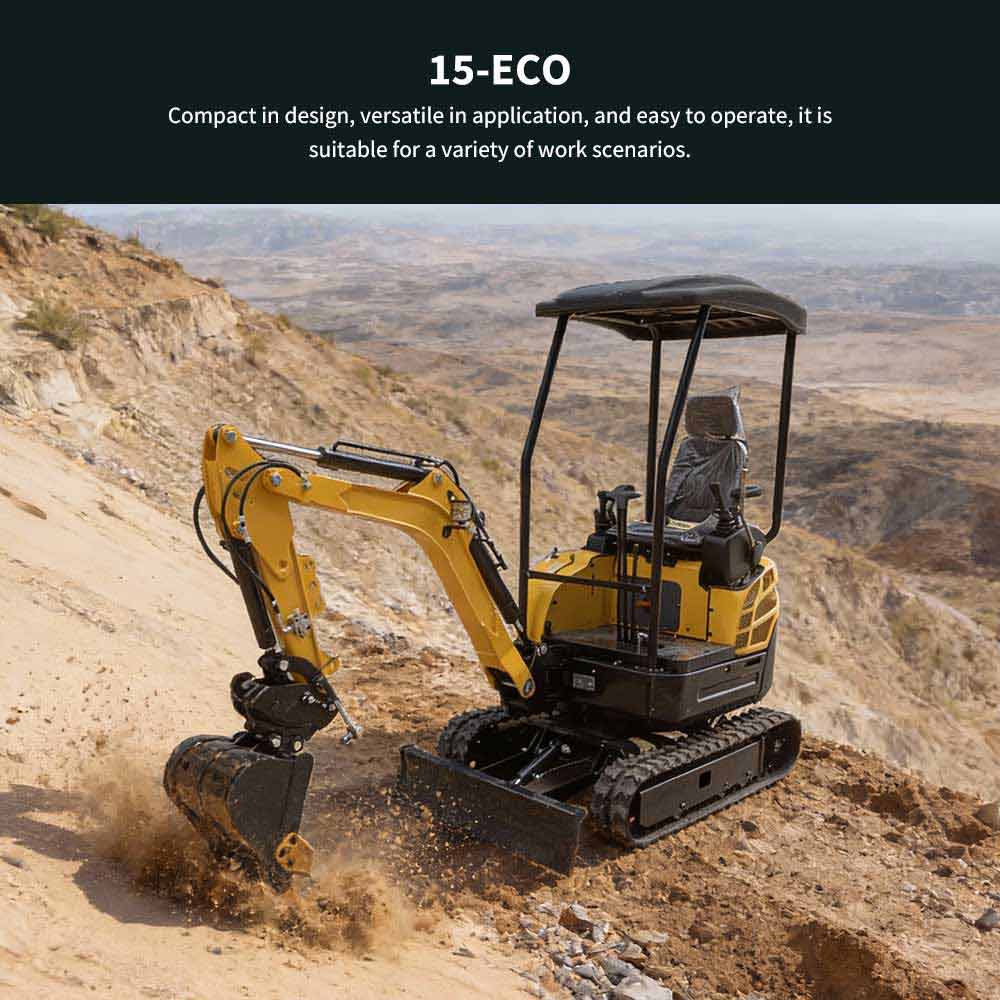
Anda berisiko mengalami kecelakaan serius ketika Anda membebani excavator kompak Anda. Melebihi kapasitas yang dinilai membuat mesin tidak stabil dan meningkatkan kemungkinan tipping. Banyak operator mencoba mengangkat benda berat tanpa memeriksa grafik beban. Kesalahan ini dapat menyebabkan cedera, kerusakan peralatan, dan klaim asuransi yang mahal.
A kru lansekap pernah mencoba memindahkan batu besar dengan mesin yang kelebihan beban. Ekskavator mengarah ke depan dan hampir terguling. Operator tetap aman dengan tetap berada di dalam kabin, tetapi insiden itu menyebabkan downtime dan perbaikan yang mahal. Anda harus selalu memeriksa batas beban pabrikan dan tidak pernah mendorong mesin Anda melampaui kapasitas amannya.
Peringatan Keselamatan: Jika Anda merasakan mesin bergeser atau kehilangan keseimbangan, turunkan beban segera dan menilai kembali. Untuk saran lebih lanjut, ikuti Dewan Keselamatan Konstruksi di Facebook.
Anda meningkatkan risiko kecelakaan ketika Anda mengabaikan pedoman pengoperasian. Panduan operator memberikan petunjuk langkah demi langkah untuk penggunaan yang aman. Melewati aturan ini sering menyebabkan kesalahan yang dapat dicegah. Misalnya, beberapa operator lupa menggunakan sabuk pengaman atau memotong interlock pengaman. Yang lain mengabaikan zona pengecualian atau gagal berkomunikasi dengan kru darat.
Anda harus selalu mengikuti prosedur dalam manual Anda. Gunakan sabuk pengaman, hormati zona pengecualian, dan berkomunikasi dengan jelas dengan tim Anda. Banyak kelompok industri berbagi praktik terbaik dan kisah dunia nyata di media sosial. Anda dapat bergabung dalam diskusi tentang Komunitas Konstruksi Reddit untuk belajar dari pengalaman operator lain.
Catatan: Pedoman berikut melindungi Anda, rekan kerja Anda, dan peralatan Anda. Jadikan keselamatan sebagai kebiasaan, bukan renungan.
Anda menempatkan semua orang pada risiko ketika Anda gagal berkomunikasi dengan jelas di lokasi kerja. Komunikasi yang buruk menyebabkan kebingungan, penundaan, dan kecelakaan. Anda harus berbagi informasi dengan tim Anda sebelum, selama, dan setelah mengoperasikan ekskavator kompak. Banyak insiden terjadi karena operator dan pekerja darat tidak memahami sinyal atau niat satu sama lain.
Contoh dunia nyata menunjukkan bagaimana komunikasi yang buruk dapat menyebabkan masalah. Di lokasi konstruksi yang sibuk, seorang operator mulai mengayunkan boom tanpa peringatan. Seorang pekerja darat, yang tidak mengharapkan gerakan, memasuki zona ayunan untuk mengambil alat. Pekerja tersebut mengalami cedera ringan, dan proyek berhenti untuk penyelidikan. Anda dapat mencegah situasi ini dengan menggunakan sinyal yang jelas dan mengkonfirmasi instruksi sebelum memindahkan mesin.
Tip: Selalu gunakan sinyal tangan atau radio dua arah untuk mengkonfirmasi langkah Anda selanjutnya. Jangan pernah menganggap tim Anda tahu apa yang Anda rencanakan untuk dilakukan.
Tabel di bawah ini menyoroti konsekuensi dari komunikasi yang buruk pada lokasi kerja excavator kompak:
| Kegagalan Komunikasi | Konsekuensi Potensial | Frekuensi (%) |
|---|---|---|
| Tidak ada isyarat tangan | Peningkatan risiko tabrakan | 40 |
| Pesan radio yang tidak jelas | Respons yang tertunda terhadap bahaya | 25 |
| Mengabaikan zona pengecualian | Cedera pengamat | 20 |
| Pengarahan keselamatan yang terlewatkan | Anggota tim yang tidak siap | 15 |
Sumber: Institut Nasional untuk Keselamatan dan Kesehatan Kerja (NIOSH)
Anda meningkatkan keselamatan dengan mengadakan pertemuan keselamatan harian. Gunakan pertemuan ini untuk meninjau tugas hari itu, menetapkan peran, dan mendiskusikan bahaya. Anda juga harus meninjau sinyal tangan dan protokol radio dengan tim Anda. Banyak kru menggunakan grafik atau poster cetak untuk mengingatkan semua orang tentang sinyal standar.
Anda juga dapat bergabung dengan forum online dan grup media sosial untuk belajar dari operator lain. Misalnya, Komunitas Konstruksi Reddit sering berbagi cerita tentang kesalahan dan solusi komunikasi. Anda mendapatkan wawasan berharga dengan membaca tentang insiden nyata dan praktik terbaik.
Berikut adalah beberapa langkah yang dapat ditindaklanjuti untuk meningkatkan komunikasi di situs pekerjaan Anda:
Peringatan Keselamatan: Jangan pernah mulai bekerja sampai semua orang memahami rencana dan peran mereka. Komunikasi yang jelas menyelamatkan nyawa dan membuat proyek Anda tetap pada jalurnya.
Anda membangun jobsite yang lebih aman dan efisien ketika Anda menjadikan komunikasi sebagai prioritas. Praktikkan kebiasaan ini setiap hari untuk menghindari kesalahan yang mahal dan melindungi tim Anda.
Anda membangun keterampilan dan kepercayaan diri Anda ketika Anda berinvestasi dalam pelatihan dan sertifikasi. Banyak organisasi menawarkan kursus keselamatan yang mengajarkan praktik terbaik untuk operasi excavator kompak. Anda belajar bagaimana mengidentifikasi bahaya, mengikuti protokol keselamatan, dan menggunakan peralatan dengan benar. Program sertifikasi sering kali mencakup pelatihan langsung dan ujian tertulis. Anda membuktikan kompetensi Anda dan meningkatkan nilai Anda di lokasi kerja.
Tip: Anda dapat menemukan program pelatihan terakreditasi melalui Dewan Keselamatan Nasional atau Pusat Pendidikan OSHA.
Sebuah studi baru-baru ini menunjukkan bahwa operator dengan sertifikasi formal memiliki 30% lebih sedikit kecelakaan daripada mereka yang tidak memiliki pelatihan. Anda mengurangi risiko dan meningkatkan efisiensi dengan menyelesaikan program-program ini.
| Jenis Pelatihan | Tingkat Sertifikasi (%) | Pengurangan Kecelakaan (%) |
|---|---|---|
| Kursus Keselamatan Formal | 85 | 30 |
| Pelatihan Kerja | 60 | 15 |
| Tanpa Pelatihan | 25 | 0 |
Sebuah studi kasus dari Illinois menyoroti dampak pelatihan. Seorang kru menghadiri kursus keselamatan dua hari dan melihat penurunan 40% dalam insiden kecil selama enam bulan. Anda dapat berbagi pengalaman Anda sendiri dan belajar dari orang lain di forum online seperti Reddit Konstruksi.
Anda tetap mengikuti standar keselamatan dengan mengikuti pembaruan dari organisasi industri. Standar berubah seiring dengan tersedianya teknologi dan penelitian baru. Anda harus meninjau pedoman dari sumber seperti NIOSH Dan ANSI. Standar ini mencakup topik seperti operasi mesin, identifikasi bahaya, dan persyaratan APD.
Anda meningkatkan keselamatan dengan menghadiri webinar dan membaca buletin keselamatan. Banyak perusahaan mengadakan pertemuan bulanan untuk membahas standar baru dan meninjau insiden baru-baru ini. Anda dapat bergabung dengan grup media sosial untuk bertukar tips dan pembaruan dengan operator lain.
Catatan: Anda melindungi diri sendiri dan tim Anda ketika Anda mengikuti standar keselamatan terbaru. Ulasan rutin membantu Anda menemukan celah dalam prosedur Anda.
Anda tumbuh sebagai operator dengan belajar dari pengalaman Anda sendiri dan orang lain. Setelah setiap proyek, tinjau apa yang berjalan dengan baik dan apa yang dapat Anda tingkatkan. Anda dapat menyimpan jurnal atau log untuk melacak pelajaran yang didapat. Banyak kru mengadakan pertemuan debrief untuk membahas tantangan dan berbagi solusi.
Contoh praktis: Sebuah tim di Georgia melihat sering nyaris celaka selama manuver ketat. Mereka mulai menggunakan pengintai dan menandai zona pengecualian dengan lebih jelas. Tingkat kecelakaan turun 25% dalam tiga bulan. Anda dapat berbagi cerita Anda di platform seperti Grup Konstruksi LinkedIn untuk membantu orang lain menghindari kesalahan serupa.
Peringatan Keselamatan: Perbaikan berkelanjutan berarti Anda tidak pernah berhenti belajar. Anda membangun jobsite yang lebih aman dan efisien dengan mencari umpan balik dan memperbarui keterampilan Anda.
Anda mencapai operasi excavator kompak yang aman dan efisien dengan mengikuti manual operator, memposisikan pisau dengan benar, dan berinvestasi dalam pelatihan yang sedang berlangsung. Pemeriksaan keamanan harian, rutinitas start-up yang tepat, dan manuver terampil membantu Anda menghindari bahaya dan menjaga peralatan Anda dalam kondisi prima. Untuk meningkatkan kesuksesan jangka panjang, Anda harus:
Tetap update pada standar keselamatan dan selalu mencari cara untuk meningkatkan keterampilan Anda.
Anda perlu memeriksa tingkat cairan, trek, dan fitur keselamatan. Tinjau manual operator. Uji alarm dan kontrol. Selalu kenakan APD yang tepat.
Tip: Simpan catatan inspeksi harian untuk keamanan dan pemeliharaan yang lebih baik.
Hubungi 811 sebelum menggali. Tandai semua jalur utilitas dengan bendera atau cat. Gunakan alat tangan untuk mengekspos garis di dekat area yang ditandai.
Pelajari lebih lanjut tentang penggalian yang aman.
Posisi pisau meningkatkan stabilitas dan kekuatan penggalian. Turunkan pisau untuk menggali atau mengangkat berat. Angkat saat menggerakkan mesin.
| Posisi Blade | Kasus Penggunaan |
|---|---|
| Down | Menggali/Mengangkat |
| Up | Mengangkut |
Anda harus mengenakan topi keras, kacamata pengaman, sarung tangan, rompi visibilitas tinggi, dan sepatu bot berujung baja. Gunakan pelindung pendengaran di area yang bising.
Peringatan Keselamatan: Ganti APD yang rusak segera.
Perjalanan lurus ke atas atau ke bawah lereng. Jaga beban tetap rendah. Hindari lereng yang lebih curam dari 70%.
Gunakan sinyal tangan atau radio dua arah. Adakan pengarahan keselamatan harian. Tandai zona pengecualian dengan kerucut atau pita.
Komunikasi yang baik mengurangi kecelakaan dan membuat semua orang aman.
Bersihkan dan periksa mesin Anda setiap hari. Periksa kebocoran, keausan, dan kerusakan.
| Tugas | Frekuensi |
|---|---|
| Pembersihan | Sehari-hari |
| Inspeksi | Sehari-hari |
Anda bisa berkunjung Keamanan Konstruksi NIOSH atau Dewan Keselamatan Nasional untuk pedoman, tips, dan pembaruan.





-1.png)