E-mail: [email protected] WhatsApp: +8618266768780
E-mail: [email protected] WhatsApp: +8618266768780


Choosing the right compact tractor in 2026 means you need to match its features to your land and daily tasks. You want a machine that fits your property size, handles your workload, and keeps you comfortable and safe. Focus on practical details like horsepower, attachments, and ease of use. Rely on The Complete Buyer’s Checklist for a Compact Farm Tractor to guide your decision and ensure your investment meets your needs for years to come.
Before you select a compact tractor, you need to clarify your main purpose. Residential and commercial properties have different requirements. Residential owners often maintain lawns, gardens, or small orchards. Commercial users manage larger fields, livestock, or heavy-duty tasks.
Tip: Write down your daily and seasonal tasks. This list helps you match tractor features to your workload.
The size and layout of your land directly influence the tractor model you need. A small property with tight spaces calls for a sub-compact tractor. Larger properties need more power and wider implements for efficiency.
| Property Size | Recommended Tractor Model | Kisaran Tenaga Kuda |
|---|---|---|
| Under 5 Acres | Sub-compact or small compact tractors | 20–25 HP |
| 5 to 15 Acres | Mid-range compacts | 25–35 HP |
| Over 15 Acres | Larger tractors with 4-wheel drive | 35–55 HP or higher |
A larger property benefits from a bigger tractor. You can cover more ground quickly and handle heavier tasks. Smaller properties usually need a sub-compact tractor for mowing, gardening, and light loader work.
Catatan: Measure your property and map out obstacles like fences, trees, and slopes. This step helps you choose a tractor that fits your terrain.
How often and how intensely you use your tractor affects its lifespan and maintenance needs. Frequent heavy-duty tasks, such as plowing or hauling, increase wear and tear. Occasional light work, like mowing or moving mulch, puts less strain on the machine.
Advice: Estimate how many hours per week you plan to use your tractor. This number guides your choice of durability and service intervals.
Consider a buyer named Alex. Alex owns a 12-acre property with rolling hills, a vegetable garden, and a gravel driveway. Alex wants to mow grass, move compost, and clear snow in winter. Alex starts by listing all tasks and measuring the property. The driveway is narrow, and the garden has tight rows.
Alex uses a property assessment tool from Data Traktor and checks advice on Kemajuan Pertanian Dan Facebook Groups for real-world experiences. Alex compares tractor models using a table like the one above. Alex chooses a mid-range compact tractor with 30 horsepower, four-wheel drive, and a quick-attach loader. This model fits the driveway, handles the garden, and manages snow removal.
Alex’s process:
| Melangkah | Action Taken |
|---|---|
| Property Assessment | Measured acreage, mapped obstacles |
| Daftar Tugas | Mowing, hauling, snow removal |
| Frequency & Intensity | Weekly mowing, seasonal snow clearing |
| Riset | Used online tools and community advice |
| Final Choice | Mid-range compact, 30 HP, 4WD, quick-attach |
When you plan for the future, consider these factors:
Pro Tip: Choose a tractor that can grow with your property. If you plan to expand your garden or add livestock, select a model with extra horsepower and attachment options.
For more guidance, visit TractorByNet Forums Dan Extension.org Agriculture.
By carefully assessing your needs and property, you set the foundation for a smart tractor purchase. You save time, reduce costs, and ensure your tractor supports your goals for years to come.
Choosing the right horsepower is one of the most important steps when buying a compact tractor. You want enough power to handle your main tasks, but not so much that you sacrifice maneuverability or efficiency. For most mowing, tilling, and light hauling jobs, you should look for a tractor in the 18 to 60 horsepower (HP) range. This range covers the needs of most small farms and residential properties.
Tip: Make a list of your most common tasks. Match each job to the horsepower needed. This approach helps you avoid over- or under-buying.
For more details on matching horsepower to your needs, visit TractorData’s Horsepower Guide.
You need to decide between a compact and a sub-compact tractor. Each type serves different property sizes and workloads. Sub-compact tractors excel at lighter jobs and fit well in tight spaces. Compact tractors offer more power and versatility for larger properties.
| Fitur | Traktor Sub-Kompak | Traktor Kompak |
|---|---|---|
| Daya kuda | Less than 30 hp | 30 to 75 hp |
| Ukuran Bingkai | Smaller frame | Larger frame |
| Berat | 1,446 – 2,778 pounds | Heavier (varies by model) |
| Aplikasi | Homeowners, snow removal, tight spaces | Larger properties, landscaping, farming |
| Kapasitas Angkat | 758 – 2,081.2 pounds | Higher, more robust |
| Jarak Bebas ke Tanah | Lower clearance | Higher clearance |
Catatan: If you plan to expand your property or take on bigger projects, a compact tractor gives you more flexibility.
Tractor size affects how easily you can move around your property and where you can store your machine. Smaller tractors turn more sharply and fit through narrow gates or between trees. Larger tractors need more space to operate and store.
Advice: Measure your storage area before you buy. Make sure your chosen tractor fits with room for attachments.
Imagine you own a 7-acre property with a mix of lawn, garden beds, and a gravel driveway. You need to mow, till, and haul mulch. You choose a traktor kompak with 28 HP. This model fits your shed, turns easily around trees, and handles all your tasks without being oversized.
For more on sizing and maneuverability, check Extension.org’s Tractor Selection Guide.
When you choose a traktor kompak, the transmission type shapes your daily experience. Each option offers unique benefits for different tasks and skill levels. The table below summarizes the most common transmission types available in 2026 and their key advantages:
| Jenis Transmisi | Keuntungan |
|---|---|
| Gear-drive | Affordable, maximum PTO performance, suitable for sloping and rough terrain. |
| Sliding gear | Lower cost, uses a shift fork to engage gears. |
| Collar shift | More reliable due to added components, but more expensive than sliding gear. |
| Synchro transmission | Provides smoother shifts, prevents grinding with synchronizer. |
| Power shift | Effortless shifting, uses clutch packs, ideal for seamless operation. |
| Power shuttle | Clutch-less operation, combines hydraulic and electronic controls, good for repetitive tasks. |
| Transmisi hidrostatik | Smooth ride, easy to operate, precise speed control, ideal for novice operators. |
You should match the transmission to your property’s needs and your comfort level. Gear-drive and sliding gear transmissions work well for rugged terrain and heavy-duty jobs. Hydrostatic transmissions (HST) provide smooth, foot-pedal control, making them a favorite for users who want simplicity and flexibility. Power shuttle and power shift options suit those who need to change direction or speed often, such as when using a front loader.
Tip: If you plan to share the tractor with family members or employees, hydrostatic transmissions offer the easiest learning curve.
Transmission choice affects both how easy your tractor is to operate and how efficiently it uses fuel. The following table compares the main types:
| Jenis Transmisi | Efisiensi Bahan Bakar | Kemudahan Penggunaan | Ideal Untuk |
|---|---|---|---|
| Hidrostatik | Generally more efficient for varied tasks | Easier to operate, ideal for inexperienced users | Tasks requiring frequent speed changes |
| Gear-driven | May be less efficient for varied tasks | Requires more skill to operate | Specific, demanding applications |
Hydrostatic transmissions allow you to adjust speed seamlessly with a foot pedal. This feature makes them perfect for tasks like mowing, loader work, or snow removal, where you need to change speed or direction often. Gear-driven transmissions deliver strong performance for plowing or tilling but require more skill and attention.
Catatan: Hydrostatic transmissions suit families or teams with varying experience levels. Gear-driven models reward experienced operators with maximum control and power.
Imagine you manage a 10-acre property with mixed tasks—mowing, hauling, and frequent loader work. You want a tractor that your spouse and teenage children can use safely. After reading expert advice on TractorByNet Forums Dan Extension.org Agriculture, you choose a hydrostatic transmission. The foot-pedal control lets everyone operate the tractor confidently, and you save time during frequent speed changes. Your neighbor, who tills large fields, prefers a gear-drive model for its power and efficiency during long, steady jobs.
Pro Tip: Test drive different transmission types before you buy. You will quickly notice which style matches your comfort and your property’s demands.
By understanding transmission types and their impact on performance, you can select a compact tractor that fits your skills, tasks, and long-term goals.
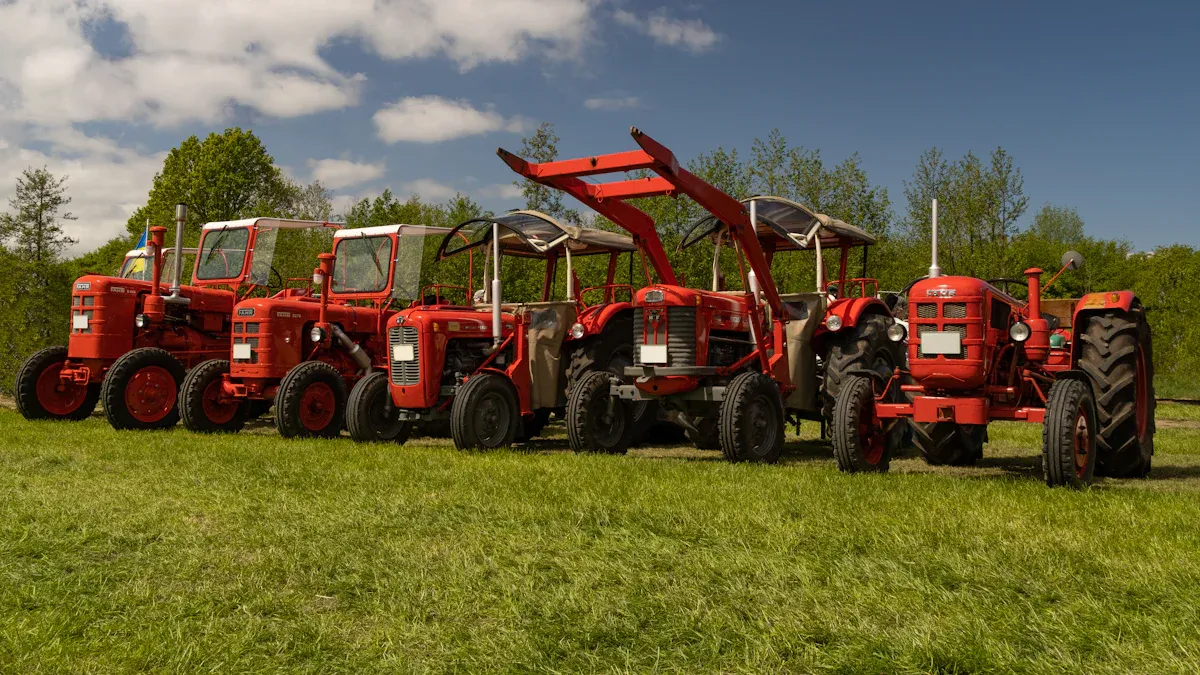
Choosing the right implements transforms your traktor kompak into a versatile workhorse. Industry experts recommend several attachments for new owners. You can tackle a wide range of tasks with these tools:
The following table summarizes essential implements and their primary uses:
| Melaksanakan | Penggunaan Utama |
|---|---|
| Snow Blade | Pembersihan salju |
| Log Hitch | Moving logs and timber |
| Garpu Palet | Lifting pallets and heavy items |
| Bergulat | Handling large debris |
| Hitch Kit | Attaching implements |
| Brush Fork | Managing brush and hay |
Tip: Start with implements that match your most frequent tasks. You can add more as your needs grow.
You need to ensure that your tractor and implements work together seamlessly. Compatibility depends on your tractor’s hitch type, hydraulic connections, and power take-off (PTO) system. Quick-attach systems save you time and effort. You can switch between implements without tools or complicated adjustments.
Many compact tractors feature universal quick-attach systems. These allow you to change from a loader to a pallet fork or grapple in minutes. Always check the specifications for both your tractor and the implement. Look for standardized connections like the three-point hitch or skid steer quick-attach.
Catatan: Consult your tractor’s manual and reputable sources such as Extension.org Agriculture for guidance on compatibility and safe operation.
Lampiran serbaguna increase your tractor’s value and usefulness. You can perform more jobs with fewer machines. This flexibility makes your tractor more attractive if you decide to sell or trade it in later. Buyers often pay more for equipment that handles multiple tasks.
Investing in well-known attachment types helps your tractor retain value over time. You can expand your capabilities by adding implements for landscaping, gardening, or livestock care. Plan for future needs by choosing a tractor with extra hydraulic capacity and standardized connections.
Pro Tip: Make a list of tasks you might tackle in the next few years. Select implements that support these goals and fit your tractor’s specifications.
Imagine you manage a 10-acre property with mixed terrain. You need to clear snow, move logs, and haul hay. You start with a snow blade and log hitch for winter and forestry work. Later, you add a grapple and brush fork to handle debris and hay. You choose implements with quick-attach compatibility, saving time during busy seasons. You consult online forums and agricultural extension sites to confirm fit and safety.
By selecting essential, compatible, and versatile implements, you maximize your tractor’s potential and prepare for future growth.
When you spend hours on your compact tractor, comfort matters as much as performance. Modern tractors offer several cab options and ergonomic features to keep you comfortable and alert. You can choose between open stations and enclosed cabs. Open stations provide easy access and better visibility, while enclosed cabs protect you from weather and reduce noise.
| Cab Option | Weather Protection | Pengurangan Kebisingan | Kontrol Iklim | Visibilitas | Biaya |
|---|---|---|---|---|---|
| Open Station | ❌ | ❌ | ❌ | ✅ | Lebih rendah |
| Enclosed Cab | ✅ | ✅ | ✅ | Bagus | Lebih tinggi |
Operators often request features that make long workdays easier. You will benefit from:
Tip: Try out different seat and control layouts before you buy. A comfortable ride reduces fatigue and helps you stay focused.
Safety should always be your top priority. Compact tractors in North America must include rollover protective structures (RoPS). This feature, combined with a seatbelt, greatly reduces the risk of injury during a rollover. Regulations from agencies like OSHA and the EPA require fail-safe mechanisms and operator alerts to enhance safety.
Here are the most important safety features to look for:
| Fitur Keamanan | Tujuan | Mandated in 2026? |
|---|---|---|
| RoPS | Prevents injury during rollovers | Ya |
| Seatbelt | Keeps operator secure | Ya |
| Fail-safe Mechanisms | Stops tractor if unsafe conditions detected | Ya |
| Operator Alerts | Warns of hazards or malfunctions | Ya |
Catatan: Always check that your tractor meets current safety standards. You can review guidelines from OSHA Dan Badan Perlindungan Lingkungan (EPA).
Your experience as an operator shapes your productivity and satisfaction. Comfortable and safe tractors help you work longer with fewer mistakes. You will notice less fatigue and more alertness during long days. This leads to higher productivity and fewer accidents.
Callout: Crew comfort improves job satisfaction and helps you keep skilled workers. Investing in comfort and safety features pays off in the long run.
Maria owns a 15-acre property with mixed terrain. She needs a tractor for mowing, hauling, and snow removal. Maria compares cab options and chooses an enclosed cab with climate control and a suspension seat. She checks for RoPS, seatbelt, and operator alerts. Maria reviews ergonomic guides and safety standards before making her decision. After a season, Maria reports less fatigue and higher productivity. Her team feels safer and more satisfied with their work.
By focusing on comfort and safety, you protect your health and boost your results. Always evaluate these features before you buy. Your investment in operator well-being will pay dividends for years.
You need to match your tractor’s tires to your property’s terrain for safe and efficient operation. Tire selection affects traction, stability, and soil impact. If you work on hilly or muddy ground, certain tire types stand out:
| Jenis Ban | Terbaik Untuk | Manfaat Utama |
|---|---|---|
| R1 | Soft soil, mud, hills | Maximum traction |
| R1W | Wet, muddy terrain | Enhanced stability |
| Flotation | Soft ground, lawns | Minimal ground disturbance |
Tip: Always check your soil type and slope before choosing tires. For more details, visit TractorData Tire Guide atau Extension.org Terrain Resources.
Drive type plays a major role in how your tractor handles uneven or slippery terrain. You must consider your property’s slopes, mud, and rocky areas when deciding between two-wheel drive (2WD) and four-wheel drive (4WD).
| Tipe Penggerak | Traction on Slopes | Performance in Mud | Stability on Rocks | Kasus Penggunaan Terbaik |
|---|---|---|---|---|
| 2WD | Terbatas | Poor | Rendah | Flat, dry terrain |
| Kendaraan berpenggerak 4 roda | Bagus sekali | Unggul | Tinggi | Slopes, mud, rocks |
4WD tractors distribute power to all wheels. You experience less wheel slippage and greater safety on challenging terrain.
Ground clearance determines how well your tractor navigates rocky or uneven land. Higher clearance helps you avoid obstacles and protects the undercarriage. For rocky terrain, experts recommend at least 13 inches of clearance.
| Model Series | Ground Clearance (inches) | Kesesuaian Medan |
|---|---|---|
| Typical Compact | 13.4 | Rocky, uneven terrain |
You should measure the roughest part of your property before choosing a tractor. Higher ground clearance improves stability and reduces the risk of getting stuck or damaging your equipment.
Catatan: If you plan to work on rocky slopes or uneven fields, prioritize models with higher clearance and sturdy tires.
Imagine you manage a 10-acre property with steep hills and muddy patches. You need to mow, haul, and clear debris year-round. You select a compact tractor with 4WD for superior traction. You choose R1W tires for wet conditions and a model with 13-inch ground clearance. This setup lets you work safely on slopes and through mud without getting stuck or damaging your tractor.
For more advice, explore TractorByNet Tire Forums Dan Extension.org Terrain Guides.
You need to set a clear budget before you shop for a compact tractor. Your budget shapes every decision, from choosing new or used equipment to planning for ongoing maintenance. New tractors usually cost between $10,000 and $25,000. Used models range from $5,000 to $80,000, depending on age, condition, and features.
| Jenis | Kisaran Harga |
|---|---|
| Traktor Baru | $10.000 – $25.000 |
| Traktor Bekas | $5,000 – $80,000 |
Maintenance costs vary by brand and model. You should expect regular oil changes, filter replacements, and occasional repairs. Extended warranties can help you manage unexpected expenses. Operating costs affect your total ownership cost, so factor them into your budget.
| Merek/Model | Biaya Pemeliharaan | Catatan |
|---|---|---|
| Merek A | $X | Regular oil changes required |
| Merek B | $Y | Higher filter replacement costs |
| Merek C | $Z | Extended warranty options |
Tip: Create a spreadsheet to track purchase price, financing, and estimated yearly maintenance. This helps you avoid surprises.
You have several financing choices when buying a compact tractor. Many dealers offer flexible plans with competitive rates. Some providers allow terms from two to seven years, with down payments as low as $0. You may find special offers, such as 0% for 84 months on select models, with minimum purchase requirements and loan documentation fees.
| Financing Provider | Interest Rate | Terms | Down Payment | Additional Notes |
|---|---|---|---|---|
| AgDirect | Fixed and variable rates | 2–7 years (most), up to 10 years (pivots) | As low as $0 | Flexible solutions for agricultural equipment |
Anda bisa compare options pada platform seperti AgDirect Dan Farm Credit. Always read the terms carefully and ask about early payoff penalties.
Selecting the right dealer ensures you get reliable support after your purchase. You should evaluate dealers based on reputation, customer reviews, service quality, and network strength.
| Kriteria | Keterangan |
|---|---|
| Reputasi Dealer | Consistently positive feedback from customers |
| Ulasan Pelanggan | Insights from platforms like Google or Yelp |
| Kualitas Layanan | Factory-trained technicians for timely, accurate repairs |
| Jaringan Dealer | Extensive parts availability and service options |
Catatan: Visit dealer review sites and ask for references. A strong dealer relationship saves you time and money over the life of your tractor.
Imagine you want a compact tractor for a 10-acre property. You set a budget of $18,000 and compare new and used models. You estimate yearly maintenance at $500. You explore financing through AgDirect and Farm Credit, choosing a plan with low interest and flexible terms. You read dealer reviews on Google and ask about after-sales support. You select a dealer with factory-trained technicians and a robust parts network. This process helps you stay within budget and ensures long-term satisfaction.
For more tips, visit AgDirect Financing Dan DealerRater.
When you reach the final stage of buying a compact tractor, you need a clear and practical checklist. The Complete Buyer’s Checklist for a Compact Farm Tractor helps you organize your thoughts, compare options, and make a confident decision. You can use this checklist whether you are a first-time buyer or an experienced owner upgrading your equipment.
You should follow a step-by-step process to ensure you select the right tractor for your property and needs. The Complete Buyer’s Checklist for a Compact Farm Tractor includes these essential steps:
Tip: Write down your answers for each step. This record helps you compare models and avoid missing important details.
You can use the following table to summarize your decision steps:
| Melangkah | Your Notes / Actions |
|---|---|
| Main Tasks | |
| Property Size & Terrain | |
| Horsepower Needed | |
| Ukuran Traktor | |
| Jenis Transmisi | |
| PTO & Attachments | |
| 2WD atau 4WD | |
| Comfort & Safety Features | |
| Budget & Financing | |
| Dealer Evaluation |
Before you commit to a purchase, you need to test drive the tractor. The Complete Buyer’s Checklist for a Compact Farm Tractor recommends that you evaluate several key factors during your test drive.
Roger Harrod, a seasoned dealer, advises, “A consumer shouldn’t make that investment without getting a feel for its maneuverability, ease of operation, comfort and power.”
During your test drive, pay attention to:
You should bring a checklist to the dealership and mark each item as you evaluate the tractor. You can also ask the dealer to demonstrate features you are unsure about.
| Evaluation Area | Apa yang Perlu Diperiksa | Your Notes |
|---|---|---|
| Seat Comfort | Adjustable, cushioned | |
| Kontrol | Accessible, intuitive | |
| Radius Putar | Tight circles, responsive steering | |
| Service Points | Easy access to oil, filters | |
| Lampiran | Loader, mower, snow blade operation | |
| Fitur Khusus | Engine heater, climate control |
🛠️ Catatan: If you plan to use the tractor in winter, test engine heaters and cab insulation.
After your test drive, you need to review your findings and make a final decision. The Complete Buyer’s Checklist for a Compact Farm Tractor encourages you to compare your notes, consult buyer’s guides, and seek advice from other owners.
Imagine you are Sam, a first-time buyer with a 9-acre property. You want a tractor for mowing, hauling, and snow removal. You start with The Complete Buyer’s Checklist for a Compact Farm Tractor. You list your main tasks, measure your property, and decide you need a compact model with 28 horsepower and 4WD. You research transmission types and choose hydrostatic for easy operation. You test drive two models, checking comfort, controls, and loader compatibility. You join a social media group and ask about maintenance costs. You compare dealer reviews and select one with strong after-sales support. You finalize your purchase, confident that your tractor matches your needs now and in the future.
| Melangkah | Sam’s Actions | Outcome |
|---|---|---|
| Task Assessment | Mowing, hauling, snow removal | Clear requirements |
| Property Evaluation | Measured acreage, checked terrain | Chose compact model |
| Horsepower Decision | Compared tasks to HP needs | Selected 28 HP |
| Transmission Choice | Researched, chose hydrostatic | Easy operation |
| Uji Coba | Evaluated comfort, controls, loader | Preferred Model B |
| Umpan Balik Komunitas | Asked owners about maintenance | Learned real costs |
| Dealer Selection | Compared reviews, checked support | Chose reliable dealer |
| Final Review | Checked checklist, confirmed fit | Confident purchase |
✅ Callout: Use The Complete Buyer’s Checklist for a Compact Farm Tractor to guide every step. You will make a smart, informed decision and enjoy your tractor for years.
You can find more buyer’s guides and connect with other owners at Extension.org Agriculture Dan Data Traktor.
You now have the essential tips for buying a compact tractor in 2026. Use The Complete Buyer’s Checklist for a Compact Farm Tractor to compare models and features. Visit local dealers and test drive tractors before making your choice. Write down your needs and follow each step in The Complete Buyer’s Checklist for a Compact Farm Tractor.
Careful research and planning help you find a tractor that fits your property and tasks. Take action today for long-term satisfaction and productivity.

You should choose a tractor with 20–30 horsepower for properties under 5 acres. This size offers easy maneuverability and enough power for mowing, hauling, and light landscaping.
You should follow the manufacturer’s maintenance schedule. Most tractors need oil changes every 50–100 hours of use. Regularly check filters, fluids, and tire pressure to keep your machine running smoothly.
Hydrostatic transmissions offer simple foot-pedal control. You can change speed and direction easily. This type suits new operators and tasks that require frequent speed adjustments.
You should look for rollover protection structures (RoPS), seatbelts, operator presence alerts, and fail-safe mechanisms. These features help prevent accidents and keep you safe during operation.
Many attachments fit multiple tractors if they use standard connections like a three-point hitch or quick-attach system. Always check compatibility before purchasing new implements.
| Tipe Medan | Recommended Tire |
|---|---|
| Muddy/Soft | R1 or R1W |
| Rocky/Uneven | High-clearance |
| Lawns | Flotation |
You should match tire type to your property’s conditions for best traction and safety.
You should buy new if you want warranty coverage and the latest features. Used tractors cost less but may need more repairs. Always inspect used equipment and review maintenance records.
You should test seat comfort, control layout, turning radius, and attachment operation. Make sure you feel confident using all features before making a decision.

-1.png)