E-mail: [email protected] WhatsApp: +8618266768780

E-mail: [email protected] WhatsApp: +8618266768780

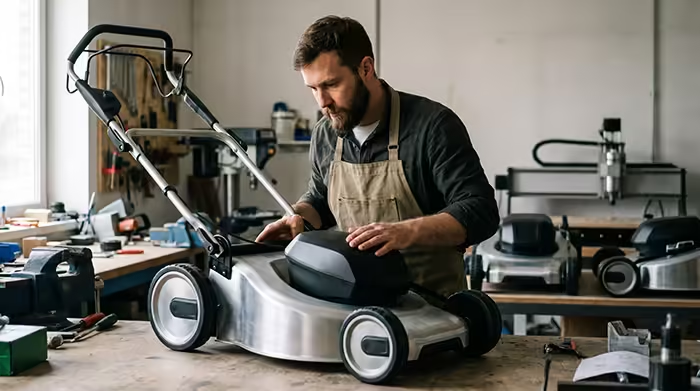
Industri mesin pemotong rumput sedang mengalami transformasi paling dramatis dalam lebih dari satu abad — dan perusahaan-perusahaan yang masih berpegang teguh pada rekayasa warisan tertinggal dengan cepat.
Pertimbangkan kesenjangan: American Lawn Mower Co. est 1895, dibangun di atas mekanika reel-blade dan kekuatan otot. Saat ini, kategori produk yang sama sedang didefinisikan ulang oleh motor brushless, sistem baterai lithium-ion, dan navigasi yang dibantu AI. Jarak antara kedua titik itu bukan hanya teknologi — itu filosofis.
Pasar mesin pemotong rumput global diproyeksikan mencapai $36,33 miliar pada tahun 2032, naik dari $23,97 miliar pada 2025, menurut Pasar dan Pasar. Pertumbuhan itu tidak didorong oleh lebih banyak orang yang membeli mesin pemotong dorong bertenaga gas. Ini didorong oleh pergeseran grosir ke arah drivetrain listrik, sistem otonom, dan platform rekayasa presisi yang memberikan keunggulan kinerja terukur dibandingkan pendahulunya di era pembakaran.
Dalam gelombang ini, produk-produk benchmark bermunculan yang mendefinisikan seperti apa manufaktur modern dalam praktiknya. itu Mesin Pemotong Rumput-QL-R1000 mewakili persis titik belok semacam ini — mesin yang dirancang dari bawah ke atas di sekitar efisiensi listrik, mengurangi kompleksitas mekanis, dan output yang konsisten di seluruh kondisi medan variabel. Dimana generasi mesin pemotong sebelumnya dioptimalkan untuk lebar pemotongan mentah, platform yang lebih baru seperti ini memprioritaskan kinerja sistem total: manajemen baterai, kurva torsi blade, dan metrik keandalan jangka panjang itu penting bagi operator komersial.
Narasi “Made in USA” mempersulit gambaran ini. Merek seperti Ariens mempertahankan operasi perakitan domestik, dan itu membawa bobot pemasaran asli dengan pembeli tertentu. Namun, sumber komponen semakin global di semua produsen, yang berarti label negara asal hanya menceritakan sebagian dari kisah kualitas.
Apa yang memisahkan mesin pemotong terkemuka sekarang bukan di mana mereka dibangun — itu seberapa cerdas mereka direkayasa. Dan pertanyaan itu menunjuk tepat pada mengapa model listrik mengungguli alternatif gas di hampir setiap kategori yang dapat diukur.
Mesin pemotong rumput listrik tidak lagi menjadi alternatif khusus — mereka dengan cepat menjadi tolok ukur kinerja yang harus dipenuhi oleh setiap produsen mesin pemotong rumput yang serius.
Mesin gas ternyata sangat kotor karena ukurannya. Menurut Badan Perlindungan Lingkungan AS, mesin pemotong bertenaga gas tunggal yang berjalan selama satu jam dapat menghasilkan sebanyak mungkin emisi nitrogen oksida dan VOC sebagai 11 mobil baru yang beroperasi secara bersamaan. Itu bukan hanya statistik lingkungan — mereka adalah indikator inefisiensi pembakaran yang dipanggang ke dalam teknologi itu sendiri. Setiap hidrokarbon yang tidak terbakar mewakili energi yang hilang, tidak diubah menjadi kinerja pemotongan.
Drivetrain listrik menghilangkan inefisiensi tersebut secara desain. Tanpa karburator, busi, filter oli, atau sistem pembuangan, motor listrik mengubah energi yang tersimpan menjadi putaran bilah dengan langkah mekanis yang jauh lebih sedikit. Dalam praktiknya, ini diterjemahkan menjadi pengiriman torsi yang lebih konsisten di berbagai kepadatan rumput — sesuatu mesin gas berjuang untuk mempertahankan tanpa fluktuasi rev. Lebih sedikit bagian yang bergerak juga berarti lebih sedikit titik kegagalan, yang penting secara signifikan selama periode kepemilikan multi-musim. Jika Anda mengevaluasi opsi untuk properti yang lebih kecil, pemahaman bagaimana skala runtime baterai ke ukuran halaman merupakan titik awal yang berguna untuk mencocokkan teknologi dengan kebutuhan dunia nyata.
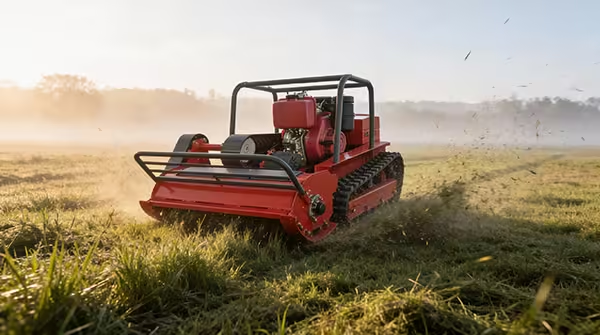
Industri telah memperhatikan pergeseran tersebut. Analis yang melacak pola adopsi komersial menggambarkan model listrik sebagai “pilihan de facto” bagi operator yang memprioritaskan total biaya operasional dan kepatuhan terhadap peraturan — khususnya di kota-kota yang memperketat peraturan kebisingan dan emisi.
Dimensi kebisingan itu layak mendapat perhatian langsung. Mesin pemotong gas biasanya beroperasi antara 85 ج95 desibel, jauh di atas tingkat yang menyebabkan kelelahan pendengaran selama penggunaan yang diperpanjang. Motor listrik berjalan jauh lebih tenang, mengurangi ketegangan operator dan gangguan lingkungan tanpa mengorbankan daya potong.
Keuntungan mekanis dan lingkungan yang menarik pada mereka sendiri — tetapi gambaran penuh hanya menjadi jelas ketika Anda menjalankan angka sebenarnya pada biaya kepemilikan jangka panjang.
Beralih ke listrik bukan hanya peningkatan kinerja — itu adalah keputusan keuangan yang membayar dividen atas setiap musim pemotongan yang mengikuti.
Seperti bagian sebelumnya didirikan, mesin pemotong listrik menutup kesenjangan kinerja dengan alternatif gas. Tapi kasus keuangan sama-sama menarik. Menurut Consumer Reports, mesin pemotong rumput listrik dapat menyelamatkan pemilik rumah kira-kira $145 selama lima tahun dibandingkan dengan model bertenaga gas — dan angka itu hanya memperhitungkan biaya bahan bakar dan pemeliharaan langsung.
Tabungan riil menumpuk di beberapa kategori:
Model konsumen kelas bawah menciptakan jebakan biaya yang menipu. Harga stiker terlihat menarik, tetapi sering rusak, interval layanan pendek, dan bagian yang dihentikan sering mendorong total biaya kepemilikan jauh di atas apa yang akan dikenakan biaya unit kelas menengah atau profesional di muka. Dalam praktiknya, dua atau tiga siklus perbaikan pada mesin pemotong murah dapat dengan mudah menghapus penghematan awal.
Daya tahan adalah tempat peralatan kelas profesional membenarkan harganya dengan paling jelas. Bingkai yang diperkuat, rakitan pisau spesifikasi komersial, dan elektronik tahan cuaca direkayasa untuk beroperasi musim demi musim tanpa degradasi. Jika Anda mengevaluasi model mana yang benar-benar memenuhi janji ini, rincian model terpercaya tahun 2026 ini menawarkan titik awal yang berguna untuk perbandingan.
Memahami persamaan ROI hanya setengah dari gambaran. Mengetahui yang manufacturers sebenarnya kembali bahwa daya tahan dengan dukungan, ketersediaan suku cadang, dan kredibilitas teknik adalah pertanyaan kritis berikutnya — dan itu salah satu yang layak diperiksa dengan cermat.
Ketika Anda berbelanja untuk mesin pemotong rumput, Anda menavigasi pasar yang dibentuk oleh lebih dari satu abad evolusi teknik — dan kesenjangan antara pembangun warisan dan inovator modern tidak pernah lebih signifikan.
Pabrikan yang Anda pilih tidak hanya menentukan mesin yang Anda dapatkan, tetapi sistem pendukung di belakangnya.
Warisan satu abad. The American Lawn Mower Co. est 1895, mewakili fondasi di mana perawatan rumput modern dibangun. Umur panjang semacam itu menandakan keandalan dan kepercayaan konsumen — tetapi warisan saja tidak menjamin mesin dibangun untuk lanskap listrik pertama saat ini. Apa yang ditawarkan merek warisan dalam pengenalan merek, produsen yang lebih baru sekarang cocok dalam output teknis dan infrastruktur dukungan langsung ke pembeli.
Munculnya produsen modern. Perusahaan seperti Qilu Machinery telah memasuki ruang dengan pendekatan yang berbeda secara mendasar: produk rekayasa dari bawah ke atas di sekitar kinerja drivetrain listrik, desain dek presisi, dan dukungan purna jual yang dapat diskalakan. Daripada memperbaiki kerangka kerja lama, mereka telah membangun sistem yang dirancang untuk bagaimana perawatan rumput benar-benar bekerja pada tahun 2025. Panduan praktis tentang pengaturan, kalibrasi, dan penggunaan jangka panjang sudah tersedia melalui sumber daya seperti mereka tips memotong dan praktik terbaik konten, yang mencerminkan jenis model dukungan pembeli pertama yang diharapkan pemilik modern.
Pemain ceruk dan pasar khusus. Merek menempati segmen tertentu — seperti premium berjalan-belakang spesialis atau desain komersial di luar depan — melayani kebutuhan nyata dalam lansekap profesional. Namun, fokus sempit mereka sering berarti adaptasi terbatas untuk teknologi listrik dan ketergantungan yang lebih tinggi pada jaringan dealer untuk servis. Dalam pasar bergerak menuju elektrifikasi, yang dapat menjadi kendala nyata.
Memilih produsen bukan hanya keputusan produk — itu komitmen untuk ekosistem dukungan. Sebagai bagian berikutnya mengeksplorasi, bahwa struktur pendukung menjadi sangat penting setelah mesin dalam penggunaan reguler dan tuntutan pemeliharaan mulai muncul ke permukaan.
Mesin pemotong rumput bertenaga gas menuntut perhatian konstan — dan permintaan itu persis mengapa “perbaikan mesin pemotong rumput di dekat saya” menempati peringkat di antara istilah yang paling sering dicari di antara pemilik rumah setiap musim semi.
Kenyataannya sederhana: lebih sedikit bagian yang bergerak berarti lebih sedikit kegagalan. Mesin gas membutuhkan penggantian oli, penggantian filter udara, pertukaran busi, pembersihan karburator, dan stabilisasi bahan bakar di akhir setiap musim. Mesin pemotong listrik menghilangkan sebagian besar daftar itu sepenuhnya. Sebagai Paul Hope of Pos Washington diamati, listrik akan menjadi “pilihan de facto dan gas akan menjadi bagian pasar yang terus menyusut karena persyaratan perawatan yang lebih rendah.” Lintasan itu sudah terlihat di beban kerja pusat layanan di seluruh negeri.
Untuk QL-R1000 secara khusus, jadwal perawatan sangat minim dibandingkan dengan alternatif zero-turn tradisional. Dalam praktiknya, perawatan rutin berfokus pada tiga area kritis:
Pemeriksaan ini memakan waktu beberapa menit, bukan jam — kontras yang berarti dengan multi-titik servis unit gas biasanya membutuhkan. Untuk panduan yang lebih dalam pada memperpanjang umur peralatan Anda, itu blog pemeliharaan Qilu Machinery mencakup protokol praktis yang layak untuk di-bookmark.
Ketika layanan dibutuhkan, mengetahui cara mengevaluasi perusahaan mesin pemotong rumput di dekat saya hal-hal. Cari teknisi bersertifikat yang akrab dengan drivetrains listrik, harga tenaga kerja transparan, dan akses ke suku cadang pengganti OEM. Sebuah pusat layanan berkualitas akan menilai keseimbangan pisau, kesehatan baterai, dan keselarasan dek sebagai paket pemeriksaan standar — bukan sebagai add-ons.
Kombinasi perawatan rutin yang rendah dan kemudahan servis yang mudah menetapkan panggung untuk memahami apa yang membuat model tertentu menonjol — yang persis seperti apa yang disampaikan oleh filosofi desain QL-R1000 dalam praktiknya.
Desain mesin pemotong modern semakin menuntut mesin tunggal yang dapat menangani halaman rumput pinggiran kota pada hari Senin dan rumput komersial ringan pada hari Jumat — dan justru celah QL-R1000 dibangun untuk ditutup.
Filosofi desain di sini berpusat pada keserbagunaan tanpa kompromi. Menurut Mesin Qilu, QL-R1000 direkayasa untuk menjembatani kesenjangan antara kemudahan penggunaan konsumen dan daya tahan profesional — keseimbangan yang paling tradisional platform nol-turn berjuang untuk menyerang. Daripada mengoptimalkan secara eksklusif untuk kenyamanan perumahan atau output komersial, tim desain mengejar jalan tengah: kontrol intuitif dipasangkan dengan sasis dibangun untuk menyerap beban kerja yang berkelanjutan.
Aplikasi pasar ganda adalah tempat pilihan spesifikasi QL-R1000 menjadi bermakna dalam praktiknya. Pengguna perumahan mendapat manfaat dari kurva pembelajaran yang lebih rendah dan tempat duduk ergonomis, sementara manajer properti dan operator komersial ringan mendapatkan daya tahan dek dan konsistensi pemotongan yang tidak dapat dipertahankan oleh mesin kelas akhir pekan. Pikirkan area umum HOA, kampus kecil, atau rute lansekap multi-properti — menggunakan kasus di mana waktu henti mahal dan keandalan bukan opsional.
Standar manufaktur Qilu Machinery memperkuat posisi itu. Perusahaan menerapkan proses kontrol kualitas tingkat industri di seluruh jajaran peralatannya — disiplin yang lebih umum dikaitkan dengan nya produksi peralatan tugas berat daripada dengan perawatan rumput. Ketelitian lintas kategori itu diterjemahkan langsung ke toleransi yang lebih ketat pada drivetrain QL-R1000 dan perakitan dek pemotongan.
Terhadap alternatif zero-turn tradisional, QL-R1000 memasuki segmen yang ramai namun rentan. Konsep seperti eden lawn mower model layanan — memprioritaskan desain yang bersih dan maju dari teknologi dibandingkan tenaga kuda mentah — mencerminkan pergeseran industri yang lebih luas yang selaras dengan QL-R1000 secara alami. Di mana pesaing lama bersandar pada perpindahan mesin sebagai proksi untuk kualitas, QL-R1000 membuat kasus bahwa presisi teknik dan desain yang dapat disesuaikan adalah metrik yang lebih relevan untuk operator saat ini. Argumen itu semakin sulit untuk dibantah.
Pembeli yang berbelanja mesin pemotong rumput saat ini menghadapi lanskap yang penuh dengan nama merek, cerita asal, dan model layanan yang tidak selalu seperti yang terlihat — sehingga kejelasan penting.
Dimana mesin pemotong rumput dibuat secara langsung mempengaruhi ketersediaan suku cadang, dukungan garansi, dan nilai jangka panjang. Ariens, produsen utama yang berbasis di AS, telah membangun reputasinya pada mesin pemotong rumput tanpa putaran dan peniup salju yang diproduksi dengan mempertimbangkan standar kualitas domestik. Warisan itu penting ketika Anda mengevaluasi infrastruktur pendukung. Perlu dicatat bahwa manufaktur mesin pemotong rumput Amerika memiliki akar yang dalam — the mesin pemotong rumput Amerika co est 1895 menjadi salah satu tolok ukur awal — dan bahwa warisan produksi dalam negeri terus mempengaruhi bagaimana pembeli menilai kepercayaan merek saat ini.
Walker Mower menempati sudut khas pasar zero-turn. Filosofi desain koleksi pertama mereka — memprioritaskan pengumpulan rumput daripada pelepasan sederhana — menarik bagi operator yang mengelola rumput visibilitas tinggi seperti lapangan golf di sekitarnya, taman kota, dan properti perumahan kelas atas. Apa yang membedakan mereka bukanlah kecepatan mentah; itu fokus teknik pada perawatan bersih dan selesai setelah satu kali lulus. Dalam praktiknya, spesialisasi itu memerintahkan harga premium dan kasus penggunaan yang lebih sempit, yang berarti mereka tidak cocok untuk setiap pembeli.
Model “Eden Lawn Mower” mewakili pendekatan berorientasi layanan daripada merek ritel tradisional. Ini menggabungkan peralatan dengan kontrak pemeliharaan yang sedang berlangsung, menargetkan manajer properti yang menginginkan biaya yang dapat diprediksi atas kompleksitas kepemilikan. Daya tariknya nyata, tetapi tradeoff berkurang fleksibilitas — Anda terkunci ke dalam ekosistem layanan mereka.
Memilih antara toko mesin pemotong rumput lokal dan membeli langsung dari produsen turun untuk mendukung kedalaman versus harga. Dealer lokal menawarkan diagnostik langsung dan perputaran suku cadang yang lebih cepat. Pembelian langsung, terutama dari produsen dengan catatan keandalan yang terbukti, dapat mengurangi biaya markup secara signifikan. Jika Anda ingin mengerti bagaimana peralatan sumber langsung menumpuk terhadap alternatif yang bersumber dari dealer, perbandingan sering kali menguntungkan produsen ketika infrastruktur pendukung pasca-penjualan kuat.
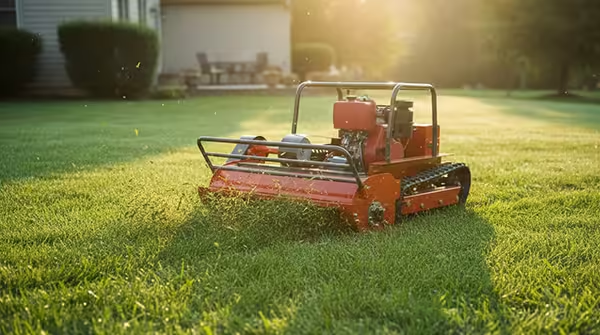
Ketika Anda menimbang pertanyaan merek dan sumber ini, gambaran yang lebih luas — total biaya, ROI selama lima tahun, dan peraturan arah menuju — menjadi langkah logis berikutnya.
Pasar mesin pemotong listrik tidak lagi menjadi eksperimen khusus — itu adalah pergeseran struktural yang pembeli tidak mampu mengabaikan menuju dekade berikutnya.
Bagian sebelumnya berjalan melalui rekayasa QL-R1000, kepercayaan merek, dan pertanyaan yang lebih luas yang diajukan pembeli saat ini. Sebelum pindah ke FAQ tertentu, ada baiknya mengkonsolidasikan apa yang sebenarnya dikatakan bukti tentang membuat keputusan pembelian cerdas hari ini.
Dengan dasar-dasar ini di tempat, pertanyaan praktis pembeli masih memiliki — tentang umur panjang baterai, bagian sumber, dan penyimpanan di luar musim — layak langsung, jawaban spesifik.
Pembeli cerdas mengajukan pertanyaan yang tepat sebelum melakukan — dan dengan teknologi mesin pemotong listrik yang berkembang pesat, jawabannya lebih penting dari sebelumnya.
Umur panjang baterai adalah salah satu kekhawatiran yang paling dicari di antara pemilik mesin pemotong listrik baru. Dalam praktiknya, sebagian besar baterai lithium-ion di mesin pemotong listrik berkinerja tinggi mempertahankan kapasitas yang dapat diandalkan untuk 500 hingga 1.000 siklus pengisian daya, yang diterjemahkan ke dalam beberapa tahun penggunaan komersial biasa atau ringan. Faktor-faktor seperti suhu penyimpanan, kedalaman pelepasan, dan kebiasaan pengisian semuanya memengaruhi hasilnya. Menghindari penipisan penuh sebelum mengisi ulang dan menjaga baterai dari panas ekstrem memperpanjang umur efektifnya secara signifikan. Menurut Payless Power, mesin pemotong listrik semakin dirancang dengan sistem baterai modular, yang berarti penggantian itu mudah daripada alasan untuk menghentikan seluruh mesin.
Ketersediaan suku cadang adalah perhatian yang sah untuk peralatan kelas profesional. QL-R1000 didukung melalui dealer dan jaringan layanan yang mapan, sehingga sumber penggantian pisau, ikat pinggang, dan komponen dek mengikuti proses yang dapat diprediksi. Pembeli menjelajahi lineup hybrid-listrik yang lebih luas — termasuk model yang menggabungkan tenaga listrik dan pembakaran — akan menemukan struktur pendukung serupa di tempat.
Penyimpanan yang tepat tidak dapat dinegosiasikan untuk melindungi investasi Anda. Menurut Carl’s Mower & Saw, penyimpanan yang benar dan perawatan pisau dapat memperpanjang umur mesin pemotong profesional selama beberapa tahun. Standar praktisnya sederhana: bersihkan dek secara menyeluruh setelah pemotongan terakhir musim ini, isi baterai hingga kira-kira 50 ¡ 80% sebelum disimpan, dan simpan unit di ruang kering yang dikontrol suhu.
Untuk rincian visual tentang bagaimana kinerja teknologi mesin pemotong generasi berikutnya dalam kondisi nyata, video di bawah ini sepadan dengan waktu Anda:
📺 [Video Embed Placeholder] — “Teknologi Ini AKHIRNYA Membuat Mesin Pemotong Rumput Robot Layak” — Tonton di YouTube
Pergeseran ke perawatan rumput listrik bukanlah tren yang jauh — itu sudah membentuk kembali apa yang diharapkan pembeli, apa stok dealer, dan apa yang dibangun produsen. Pertanyaannya bukan lagi apakah akan beralih, tetapi bagaimana melakukannya dengan percaya diri.



-1.png)