Benvenuti in Shandong Qilu Industrial Co., Ltd

 Italian
 English
 Arabic
 Bulgarian
 Bengali
 Czech
Czech
 Danish
 German
 Greek
Greek
 Spanish
 Finnish
 French
 Hindi
Hindi
 Croatian
 Hungarian
 Indonesian
 Japanese
 Korean
 Lithuanian
 Dutch
Dutch
 Norwegian
 Polish
 Portuguese
 Romanian
 Russian
 Slovak
 Slovenian
 Swedish
 Thai
Thai
 Turkish
 Ukrainian
 Vietnamese
 Tagalog
 Malay
Malay
 Estonian
 Catalan
 Latvian
 Urdu
Urdu
 Serbian
 Persian
 Swahili
 Albanian
 Armenian
 Icelandic
 Bosnian
 Luxembourgish
 Afrikaans
Italian English
Arabic
Bulgarian
Bengali
Czech
Danish
German
Greek
Spanish
Finnish
French
Hindi
Croatian
Hungarian
Indonesian
Japanese
Korean
Lithuanian
Dutch
Norwegian
Polish
Portuguese
Romanian
Russian
Slovak
Slovenian
Swedish
Thai
Turkish
Ukrainian
Vietnamese
Tagalog
Malay
Estonian
Catalan
Latvian
Urdu
Serbian
Persian
Swahili
Albanian
Armenian
Icelandic
Bosnian
Luxembourgish
Afrikaans
Afrikaans
Italian English
Arabic
Bulgarian
Bengali
Czech
Danish
German
Greek
Spanish
Finnish
French
Hindi
Croatian
Hungarian
Indonesian
Japanese
Korean
Lithuanian
Dutch
Norwegian
Polish
Portuguese
Romanian
Russian
Slovak
Slovenian
Swedish
Thai
Turkish
Ukrainian
Vietnamese
Tagalog
Malay
Estonian
Catalan
Latvian
Urdu
Serbian
Persian
Swahili
Albanian
Armenian
Icelandic
Bosnian
Luxembourgish
Afrikaans
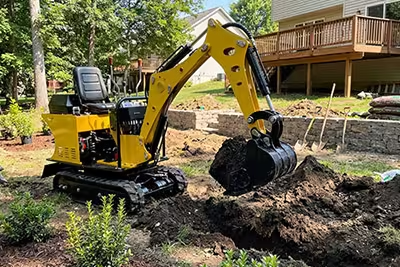
Una guida per l'acquirente ai migliori marchi e modelli di mini escavatori
Vuoi il miglior mini Escavatore per il tuo progetto nel 2026 Caterpillar e Kubota guidano il mercato in termini di affidabilità e prestazioni La tabella seguente mostra la loro attuale quota di mercato:
| Marchio | Quota di mercato (%) |
|---|---|
| Caterpillar Inc. | 18 |
| Kubota Corp. | 15 |
Troverai modelli di questi marchi eccellere in termini di durata e soddisfare una vasta gamma di lavori, dal paesaggio alla costruzione Scegli caratteristiche che si adattano al tuo budget, ambiente di lavoro e le esigenze tecnologiche per i migliori risultati.
Takeaway chiave
- Caterpillar e Kubota sono marchi di punta per mini escavatori, noti per affidabilità e prestazioni.
- Considera caratteristiche come l'idraulica avanzata, il comfort dell'operatore e la tecnologia intelligente quando scegli un modello.
- Prova diversi miniescavatori per trovare la soluzione migliore per le tue specifiche esigenze lavorative.
- Valutare le opzioni di assistenza e assistenza del rivenditore per garantire riparazioni rapide e disponibilità dei ricambi.
- La manutenzione regolare è fondamentale per preservare il valore dell'escavatore e prevenire costose riparazioni.
- Marchi emergenti come Takeuchi e JCB offrono funzionalità innovative e prezzi competitivi che vale la pena esplorare.
- Confrontare sempre i costi totali di proprietà, tra cui manutenzione e carburante, non solo il prezzo di acquisto.
- Fai domande dettagliate ai rivenditori su garanzie, contratti di servizio e opzioni di finanziamento prima di acquistare.
Le migliori marche di mini escavatori 2026
Panoramica dei marchi leader
Vuoi sapere quali marchi guidano il mercato dei mini Escavatori nel 2026 I primi cinque marchi per volume di vendite globali sono
- Bruco
- Komatsu
- Kubota
- John Deere
- Bobcat
Ognuno di questi marchi si distingue per punti di forza unici Caterpillar è leader con tecnologia avanzata e un forte supporto da parte dei concessionari Troverete macchine Caterpillar in grandi cantieri e in flotte a noleggio La loro integrazione di AI e funzionalità autonome vi aiuta a gestire le flotte in modo efficiente Ad esempio, un appaltatore in Texas ha utilizzato il sistema di guida intelligente di Caterpillar per ridurre i costi del carburante di 15% su un progetto di rinnovamento urbano della durata di un anno.
Komatsu porta l'eccellenza ingegneristica globale Puoi fare affidamento sulle loro macchine per la durata e le prestazioni costanti I modelli di altalena a coda zero di Komatsu funzionano bene in spazi ristretti, come i lavori paesaggistici della città A Chicago, un'azienda paesaggistica è passata a Komatsu per la sua affidabilità durante le operazioni invernali.
Kubota è riconosciuta per affidabilità ed efficienza Molti proprietari di piccole imprese scelgono Kubota per lavori paesaggistici e di utilità Il sistema idraulico riprogettato e la stabilità migliorata rendono Kubota uno dei preferiti dagli operatori che hanno bisogno di comfort durante i lunghi turni Un'azienda paesaggistica in Florida ha segnalato meno guasti e maggiore produttività dopo l'aggiornamento all'ultima serie pesante di Kubota.
John Deere offre prestazioni equilibrate e design user-friendly Vedrai i modelli di mini Escavatore John Deere su progetti municipali e piccoli cantieri Il loro design a battente a coda zero e l'idraulica migliorata ti aiutano a lavorare in sicurezza vicino a edifici e ostacoli In Oregon, una squadra di manutenzione della città ha ridotto i tempi di lavoro entro il 20% utilizzando i modelli efficienti di John Deere.
Bobcat ha un forte riconoscimento del marchio, soprattutto nel mercato del noleggio Puoi trovare i modelli Bobcat mini Excavator nelle flotte di noleggio attrezzature in tutto il Nord America Le loro dimensioni compatte e i controlli facili li rendono popolari per i lavori a breve termine Una società di noleggio in Ohio ha aumentato la soddisfazione del cliente aggiungendo gli ultimi modelli Bobcat alla sua flotta.
Suggerimento: quando scegli un marchio leader, ottieni l'accesso a reti estese di rivenditori e supporto affidabile per le parti. Ciò riduce i tempi di inattività e mantiene i tuoi progetti nei tempi previsti.
Anche le valutazioni di soddisfazione dei clienti evidenziano questi marchi Kubota, Takeuchi, Bobcat, John Deere, Caterpillar, Yanmar, Komatsu, JCB, CASE e Hyundai ricevono tutti voti alti per affidabilità, innovazione e supporto.
Ecco una tabella che mostra i punti salienti dell'innovazione tra i migliori marchi:
| Marchio | Punti salienti dell'innovazione |
|---|---|
| Nuova Olanda | Sistema idraulico avanzato, alta potenza, prestazioni superiori, forte forza di rottura |
| Volta | Comfort operatore, efficienza del carburante, idraulica personalizzabile, modalità Eco |
| Kubota | Idraulica riprogettata, comfort migliorato, stabilità migliorata |
| John Deere | Oscillazione a coda zero, idraulica migliorata, cabina user-friendly |
| Bruco | Integrazione AI, autonomia, guida in tempo reale, gestione intelligente della flotta |
Dovresti cercare funzionalità come l'idraulica avanzata, il comfort dell'operatore, l'efficienza del carburante e la tecnologia intelligente quando confronti i modelli.
Marchi emergenti da tenere d'occhio
Vedrete diversi marchi emergenti guadagnare attenzione nel 2026 Takeuchi si distingue per l'innovazione nella tecnologia degli escavatori compatti Molti appaltatori scelgono Takeuchi per progetti urbani in cui lo spazio è limitato A Los Angeles, una società di demolizione ha utilizzato la linea compatta di Takeuchi per completare strappi interni senza danneggiare le strutture circostanti.
Yanmar ha aperto la strada alla tecnologia di oscillazione a coda zero. Ciò rende i loro modelli mini Excavator ideali per il lavoro in città e gli spazi ristretti. Un'azienda di servizi pubblici a New York City si affida a Yanmar per le riparazioni sotterranee nei quartieri affollati.
JCB è leader nell'innovazione elettrica I loro modelli di mini escavatori elettrici si rivolgono alle aziende focalizzate sulla sostenibilità A Londra, un'impresa di costruzioni ha ridotto le emissioni e i reclami sul rumore passando alla flotta elettrica di JCB.
CASE, supportato da CNH Industrial, sfrutta un'ampia rete di concessionari Puoi trovare macchine CASE su progetti infrastrutturali in cui i tempi di attività e il supporto contano di più Ad Atlanta, un appaltatore di lavori stradali ha elogiato CASE per la consegna rapida dei ricambi e il servizio reattivo.
Altri marchi come Develon, Hitachi, Kato, Mecalac, New Holland, Typhon Machinery, SUNWARD e Shantui offrono valore e funzionalità specializzate, Ad esempio, la serie Flex di Typhon Machinery offre flessibilità per i piccoli appaltatori, mentre SUNWARD e Shantui offrono soluzioni convenienti per acquirenti attenti al budget.
Nota: i marchi emergenti spesso introducono nuove funzionalità e prezzi competitivi Dovresti valutare queste opzioni se desideri innovazione o hai bisogno di allungare il tuo budget.
Migliori Mini Escavatore Modelli
Bruco PC30MR-5
Desideri un mini Escavatore che offra prestazioni costanti in ogni lavoro Il Caterpillar PC30MR-5 si distingue per la tecnologia avanzata e il comfort dell'operatore Questo modello presenta un design compatto, che consente di lavorare in modo efficiente in spazi ristretti Si beneficia di un potente sistema idraulico che fornisce un controllo fluido e preciso Il PC30MR-5 include una cabina spaziosa con comandi ergonomici, riducendo l'affaticamento dell'operatore durante i lunghi turni.
Un appaltatore di Seattle ha utilizzato il PC30MR-5 per un progetto di fondazione residenziale L'oscillazione zero della coda della macchina ha consentito un funzionamento sicuro vicino alle strutture esistenti L'operatore ha completato lo scavo due giorni prima del previsto, grazie ai controlli intuitivi e ai tempi di ciclo rapidi È possibile vedere più esperienze utente e dettagli tecnici su Il sito ufficiale di Caterpillar.
Caratteristiche principali Tabella:
| Caratteristica | Beneficio |
|---|---|
| Altalena a coda zero | Funzionamento sicuro in spazi ristretti |
| Idraulica avanzata | Scavo liscio e preciso |
| Design ergonomico della cabina | Riduce l'affaticamento dell'operatore |
| Tecnologia intelligente | Diagnostica in tempo reale e tracciamento della flotta |
Suggerimento: utilizzare il PC30MR-5 per lavori di costruzione urbana, paesaggistica e di utilità in cui lo spazio è limitato.
Serie per carichi pesanti Kubota
Hai bisogno di affidabilità e durata per costruzioni urbane impegnative La serie Kubota Heavy-Duty, in particolare la serie U, è progettata per spazi ristretti Puoi operare vicino a pareti e ostacoli, grazie alla funzione di oscillazione della coda zero. Ciò riduce il rischio di danneggiare la proprietà o la macchina stessa.
- La Serie U si adatta perfettamente agli ambienti di costruzione urbana.
- L'operazione di oscillazione della coda zero ti consente di lavorare proprio accanto agli edifici.
- Si minimizzano i tempi di inattività perché le macchine Kubota sono costruite per durare.
Un imprenditore edile di Boston ha scelto il Kubota U55-5 per una riqualificazione dell'isolato. Il team ha completato lo scavo e la classificazione senza incidenti, anche in vicoli stretti. L'affidabilità della macchina ha significato meno riparazioni e più tempo sul lavoro. Puoi leggere di più sulle storie degli utenti e sulle specifiche La pagina delle attrezzature edili di Kubota.
Caratteristiche principali Tabella:
| Caratteristica | Beneficio |
|---|---|
| Altalena a coda zero | Ideale per spazi urbani e confinati |
| Robusta Costruire | Resiste alle difficili condizioni del cantiere |
| Idraulica affidabile | Funzionamento coerente e regolare |
| Comfort Operatore | Cabina spaziosa, comandi facili da usare |
Nota: la reputazione di Kubota in termini di durata ti garantisce un valore a lungo termine e meno interruzioni su progetti urbani molto affollati.
Linea compatta Takeuchi
Desideri un mini Escavatore che combini la durata con un design innovativo La linea compatta Takeuchi si è guadagnata una solida reputazione per affidabilità e prestazioni dal 1971 Puoi fidarti di queste macchine sia per l'edilizia residenziale che per quella commerciale.
- I modelli Takeuchi sono noti per la loro costruzione robusta e la lunga durata.
- Il marchio è leader nell'innovazione delle apparecchiature compatte.
- Beneficiate di caratteristiche come sistemi idraulici avanzati e comode stazioni operatore.
Una società di paesaggistica di Denver ha utilizzato il Takeuchi TB235-2 per una ristrutturazione del parco, L'equipaggio ha terminato il progetto prima del previsto, citando la manovrabilità della macchina e i tempi di fermo minimi, È possibile trovare ulteriori casi di studio e risorse tecniche sul sito ufficiale di Takeuchi.
Caratteristiche principali Tabella:
| Caratteristica | Beneficio |
|---|---|
| Costruzione Durevole | Lunga durata, meno riparazioni |
| Design Innovativo | Miglioramento della produttività e della sicurezza |
| Dimensione compatta | Facile accesso a siti stretti o urbani |
| Comfort Operatore | Fatica ridotta, efficienza migliorata |
Suggerimento: scegli Takeuchi per progetti in cui l'affidabilità e l'innovazione contano di più, soprattutto in ambienti difficili.
Serie urbana Yanmar
Hai bisogno di un mini escavatore che funzioni bene in spazi urbani ristretti La serie Urban di Yanmar ti offre tre modelli eccezionali: SV15VT, SV17 VT e SV19 VT. Ogni modello ti aiuta a lavorare in modo efficiente in ambienti affollati, come il paesaggio urbano o le riparazioni dei servizi pubblici.
| Modello | Caratteristiche principali |
|---|---|
| SV15VT | Raggio di sterzata corto, ampia ampiezza di oscillazione del braccio, ideale per lo scavo e il paesaggio in aree ristrette |
| SV17VT | Fornisce potenza e prestazioni di modelli più grandi, perfetti per lo scavo urbano e il paesaggio |
| SV19VT | Design compatto, raggio di sterzata corto, adatto per varie applicazioni di movimento terra in spazi limitati |
Puoi scegliere la SV15 VT per lavori che richiedono precisione in vicoli stretti o tra edifici La SV17 VT ti dà la potenza di una macchina più grande senza sacrificare la manovrabilità La SV19 VT offre un'elevata produttività per le attività di movimento terra in aree riservate Una squadra di paesaggisti a San Francisco ha completato una ristrutturazione del parco utilizzando la SV17 VT, terminando prima del previsto grazie al suo scavo efficiente e all'impronta compatta Puoi trovare maggiori dettagli e storie utente su Il sito ufficiale di Yanmar.
Suggerimento: selezionare il SV15 VT per lo scavo in spazi ristretti, il SV17 VT per il paesaggio urbano e il SV19 VT per il movimento terra in aree limitate.
Serie flessibile di macchinari Typhon
Desideri flessibilità per progetti diversi La serie Typhon Machinery Flex, in particolare il modello TYPHON 18 FLEX, si adatta alle attività di costruzione, paesaggistica e ristrutturazione Questo escavatore ha una capacità di scavo di 1,8 tonnellate, che ti dà abbastanza potenza per la maggior parte dei lavori di piccole e medie dimensioni La macchina è prodotta negli Stati Uniti, in modo da ottenere qualità e durata affidabili.
- Il modello TYPHON 18 FLEX funziona bene per gli appaltatori che devono passare dallo scavo, alla classificazione e alla movimentazione dei materiali.
- Il suo design versatile ti consente di aggiungere accessori come pollici e coclee idraulici, facilitando la movimentazione di materiali o fori.
- È possibile adattare rapidamente la macchina per le diverse esigenze lavorative, riducendo i tempi di inattività e aumentando la produttività.
Un appaltatore di Dallas ha utilizzato il TYPHON 18 FLEX sia per lo scavo delle fondamenta che per l'abbellimento di un progetto residenziale, Il team è passato da un allegato all'altro in pochi minuti, risparmiando tempo e costi di manodopera, Puoi vedere più esperienze utente e specifiche tecniche sulla pagina dei social media di Typhon Machinery.
Nota: scegli la serie Flex se hai bisogno di un mini escavatore in grado di gestire più attività e adattarsi alle mutevoli esigenze del cantiere.
Modelli di performance Komatsu
Desideri una tecnologia avanzata e prestazioni elevate I modelli di prestazioni Komatsu si collocano ai primi posti per l'automazione, l'efficienza del carburante e la classificazione di precisione Queste macchine sono dotate di un controllo intelligente della macchina, che ti aiuta a ottenere risultati accurati con meno sforzo manuale.
| Caratteristica | Punteggio/Descrizione |
|---|---|
| Power Score | 91/100 |
| Punti di forza chiave | Sistemi di automazione avanzati, efficienza del carburante superiore, tecnologia di classificazione di precisione, controllo intelligente della macchina, comfort e visibilità eccezionali dell'operatore. |
| Applicazioni ottimali | Classificazione di precisione, appaltatori avanzati di tecnologia, operazioni sensibili al carburante, progetti che richiedono capacità di controllo automatizzato avanzate. |
| Gamma Investimenti | $295,000-$825,000 |
È possibile utilizzare i modelli Komatsu per progetti che richiedono elevata precisione, come lavori stradali o preparazione del sito Una società di ingegneria civile di Miami ha utilizzato il sistema di controllo intelligente di Komatsu per completare un progetto di classificazione con 30% meno consumo di carburante e una migliore precisione della superficie Gli operatori hanno segnalato meno fatica a causa della cabina confortevole e della visibilità chiara Per maggiori dettagli tecnici e casi di studio, visitare il sito ufficiale di Komatsu.
Suggerimento: investi in modelli di prestazioni Komatsu se desideri massimizzare l'efficienza e sfruttare la più recente tecnologia di automazione per lavori complessi.
John Deere Modelli efficienti
Desideri un mini escavatore che offra sia efficienza che tecnologia avanzata I modelli efficienti di John Deere per il 2026 si concentrano sull'automazione e sul comfort dell'operatore Queste macchine ti aiutano a completare i lavori più velocemente e con maggiore precisione Benefici di funzionalità che automatizzano le attività ripetitive e forniscono dati in tempo reale per un migliore processo decisionale.
Ecco una tabella che mostra i principali miglioramenti in termini di efficienza negli ultimi modelli di John Deere:
| Caratteristica | Descrizione |
|---|---|
| Automazione predittiva della velocità al suolo | Regola la velocità in base alla variabilità del terreno e del raccolto, offrendoti un funzionamento più fluido e meno movimenti sprecati. |
| Automazione delle impostazioni di raccolta | Configura automaticamente le impostazioni per ridurre la perdita di materiale e migliorare la qualità del lavoro. |
| AutoTrac Turn Automation | Fornisce una tornitura a mani libere, che ti aiuta a mantenere la precisione e riduce la fatica. |
| Auto-Scaricare Fotocamera | I monitor riempiono i livelli per ottimizzare la distribuzione dei materiali e ridurre al minimo le fuoriuscite. |
| Potenziamento JDLink | Garantisce una connettività affidabile per la condivisione dei dati, anche in aree a bassa copertura. |
| Comfort operatore migliorato | Offre un nuovo sedile per istruttore e ricarica USB-C per una migliore esperienza utente. |
È possibile utilizzare queste funzionalità per ridurre l'errore dell'operatore e aumentare la produttività, ad esempio, un appaltatore in Minnesota ha utilizzato AutoTrac Turn Automation di John Deere per terminare un progetto di drenaggio municipale prima del previsto L'operatore ha segnalato meno fatica e risultati più coerenti È possibile trovare maggiori dettagli e storie utente su Il sito ufficiale di John Deere.
Suggerimento: scegli modelli efficienti John Deere se vuoi massimizzare i tempi di attività e beneficiare della più recente tecnologia di automazione.
Modelli di valore SUNWARD e Shantui
Potresti desiderare un mini escavatore che bilanci costi e affidabilità SUNWARD e Shantui offrono modelli incentrati sul valore che ti aiutano a allungare il budget senza sacrificare le prestazioni.
- Shantui porta un lunga storia nel settore, risalente al 1952. ci si può fidare del loro impegno per la qualità e l'affidabilità Molti appaltatori scelgono Shantui per progetti infrastrutturali in cui la durata conta di più.
- SUNWARD si concentra su integrità, qualità e innovazione Beneficiate della loro adattabilità ai cambiamenti del mercato e della dedizione al miglioramento del servizio clienti I modelli SUNWARD spesso includono funzionalità che migliorano le prestazioni delle apparecchiature e la soddisfazione dell'operatore.
Una piccola impresa edile in Georgia ha selezionato un modello di valore SUNWARD per una serie di progetti paesaggistici residenziali Il team ha completato ogni lavoro in tempo e ha segnalato bassi costi di manutenzione Puoi esplorare di più sulla linea di prodotti SUNWARD sul loro sito ufficiale.
Nota: considera SUNWARD e Shantui se hai bisogno di una macchina affidabile a un prezzo competitivo.
Altri modelli degni di nota
Hai più opzioni se desideri funzionalità specializzate o un valore unico Diversi altri modelli si distinguono nel mercato 2026:
- CASE Serie CX: Fornisce una forte capacità di sollevamento e una facile manutenzione Molti appaltatori di servizi pubblici preferiscono la serie CX per lo scavo e la posa di tubi.
- Serie HD Kato: Offre dimensioni compatte e controlli fluidi I paesaggisti spesso scelgono Kato per ristrutturazioni di giardini e parchi.
- Mecalac 6MCR: Combina la velocità di una minipale con la versatilità di un escavatore È possibile passare rapidamente dalle attività di scavo a quelle di carico.
- Serie Develon DX: Fornisce un'idraulica avanzata e una cabina confortevole Gli operatori segnalano un'elevata produttività nei cantieri urbani.
- Nuova serie Holland E: Dispone di motori a basso consumo di carburante e controlli intuitivi Gli equipaggi municipali utilizzano questi modelli per lavori stradali e scavi su piccola scala.
Dovresti abbinare la tua scelta alle tue esigenze lavorative Ad esempio, se hai bisogno di una macchina sia per scavare che per caricare, il Mecalac 6MCR ti offre flessibilità Se desideri bassi costi operativi, la New Holland E Series offre un'eccellente efficienza nei consumi.
Suggerimento: prova sempre diversi modelli e consulta i rivenditori locali per trovare la soluzione migliore per le tue esigenze.
Mini Escavatore Confronto
Affidabilità e Durabilità
Vuoi una macchina che resista a lavori difficili e continui a lavorare anno dopo anno Quando confronti i modelli leader, vedi chiare differenze nei risultati dei test di durata Ad esempio, il SANY SY35U supera il Bobcat E35 e il New Holland E37C in termini di forza di scavo Se hai bisogno di velocità, il Bobcat E35 offre la velocità della pista più veloce tra queste opzioni SANY fornisce anche una garanzia di 5 anni e 5.000 ore, che mostra una forte fiducia nella sua affidabilità a lungo termine Puoi utilizzare queste informazioni per scegliere un modello che corrisponda alle tue richieste di lavoro e alle aspettative di manutenzione.
Suggerimento: controlla sempre i termini di garanzia e chiedi informazioni sulle prestazioni reali di altri operatori nella tua zona.
Tecnologia e Innovazione
Beneficiate della tecnologia più recente quando scegliete un mini escavatore moderno I produttori offrono ora funzionalità che rendono il vostro lavoro più semplice e preciso Ecco una tabella che mostra alcuni dei progressi più importanti:
| Caratteristica | Descrizione |
|---|---|
| Configurazioni coda-oscillazione | Scegli tra l'oscillazione della coda convenzionale, ridotta o zero per una migliore manovra |
| Comforts cabina | Goditi il calore, l'aria condizionata e i posti a sedere ergonomici per lunghi turni |
| Configurazioni del braccio | Selezionare bracci standard o lunghi per diverse esigenze di scavo |
| Versatilità dell'attacco | Utilizzare l'idraulica ausiliaria per rapidi cambi di attacco |
| Sistemi di guida in profondità | Monitora la profondità di scavo per risultati accurati |
| Sistemi telematici | Monitora la salute e la posizione delle apparecchiature con le app mobili |
| Opzioni elettriche | Ridurre le emissioni con i modelli elettrici |
Puoi trovare macchine con cabine climatizzate, braccioli regolabili e sensori avanzati Queste caratteristiche ti aiutano a rimanere comodo e produttivo Se lavori in una città, l'oscillazione zero della coda e le opzioni alimentate elettricamente ti consentono di operare in modo sicuro e silenzioso in spazi ristretti I sistemi telematici ti forniscono aggiornamenti in tempo reale sullo stato di salute della tua macchina, in modo da poter pianificare la manutenzione prima che si verifichino problemi.
Nota: chiedi al tuo rivenditore una dimostrazione di queste funzionalità per vedere come si adattano alle tue attività quotidiane.
Prezzo e Valore
Devi bilanciare il tuo budget con le funzionalità che desideri I prezzi per le nuove macchine nel 2026 variano in base alle dimensioni e alla marca Ecco una rapida panoramica:
| Categoria Peso | Fascia di prezzo |
|---|---|
| 1-2 tonnellate | $30.000T10.000 |
| 3-4 tonnellate | $60.000T85.000 |
| 5-6 tonnellate | $85.000T10.000 |
Marche premium come Takeuchi e Caterpillar costano solitamente 10-15% più di altre Se vuoi un'opzione economica, guarda Yanmar o Kubota Per le macchine usate, i prezzi scendono con l'invecchiamento dell'attrezzatura Puoi aspettarti di pagare $0,000 10-15%7 modelli che hanno 1-3 anni$15,000 $5,000 per le macchine usate5,000 per le macchine 4-7 anni, e $10,000 12T30,000 per le macchine di età superiore a 8 anniTP.
Alcuni marchi, come AHM, offrono costi di proprietà inferiori a 15% in meno rispetto alla media del settore Trovi anche allegati convenienti, che ti aiutano a ottenere più valore dal tuo investimento.
Suggerimento: considera il costo totale di proprietà, non solo il prezzo di acquisto Fattore in costi di manutenzione, garanzia e allegato per prendere la decisione migliore.
Idoneità all'applicazione
Vuoi un mini escavatore che corrisponda ai tuoi requisiti lavorativi L'idoneità all'applicazione significa scegliere un modello che funzioni meglio per le tue attività specifiche, sia che tu lavori nel settore paesaggistico, nella demolizione o nell'installazione di servizi pubblici Ogni modello offre punti di forza unici, quindi dovresti confrontare le specifiche tecniche e le prestazioni del mondo reale prima di prendere una decisione.
Inizia considerando i tipi di lavori che gestisci più spesso Se lavori nel settore paesaggistico, hai bisogno di una macchina con controlli precisi e un ingombro compatto Per la demolizione, desideri una forza di rottura più elevata e una costruzione robusta Il lavoro di utilità richiede un'affidabile capacità di scavo e una facile manovrabilità in spazi ristretti.
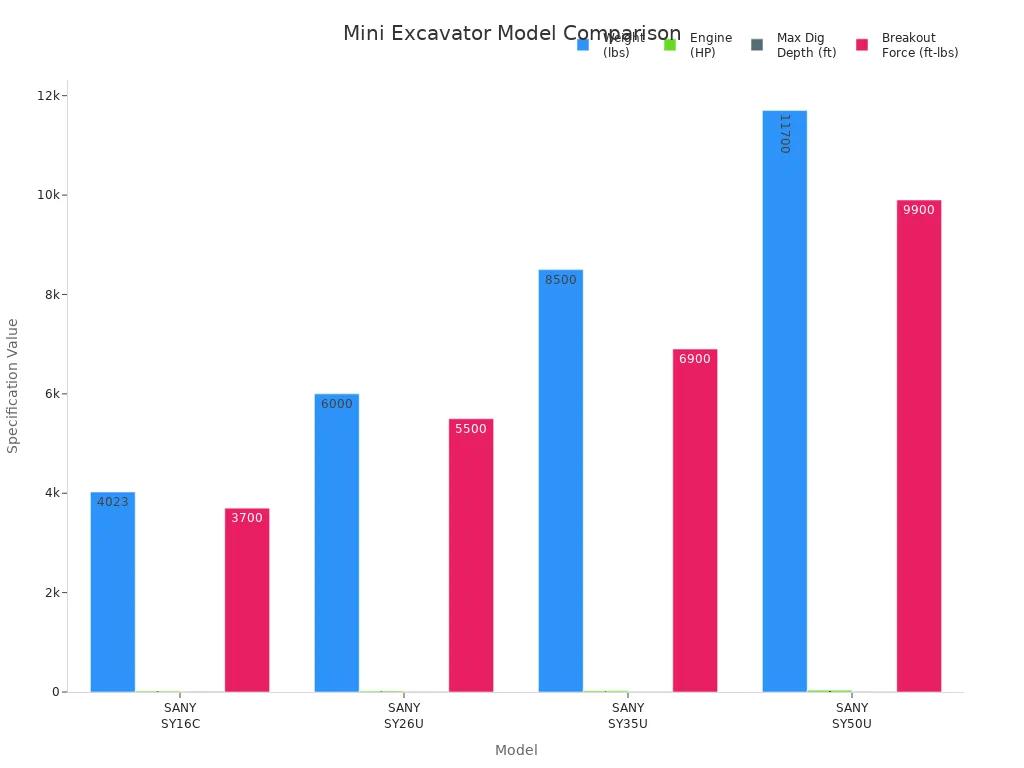
Ecco una tabella che confronta i modelli di mini escavatori più diffusi e la loro idoneità per applicazioni comuni:
| Modello | Peso (libbre) | Motore (HP) | Profondità massima di scavo (ft) | Forza di evasione (ft-lbs) | Casi di miglior utilizzo |
|---|---|---|---|---|---|
| SANY SY16C | 4,023 | 18.2 | 7.75 | 3,700 | Spazi ristretti, paesaggio urbano |
| SANY SY26U | 6,000 | 19.4 | 9.25 | 5,500 | Scavo, paesaggistica, lavori di utilità |
| SANY SY35U | 8,500 | 24 | 10.42 | 6,900 | Edilizia residenziale, paesaggistica |
| SANY SY50U | 11,700 | 37 | 12.08 | 9,900 | Compiti più grandi, applicazioni versatili |
| XCMGXE18U | <4.000 | 16 | N/D | N/D | Paesaggistica, lavoro di utilità |
Puoi vedere che i modelli più leggeri come SANY SY16C e XCMG XE18U eccellono negli ambienti urbani e nei progetti paesaggistici, le loro dimensioni compatte ti consentono di lavorare tra edifici o in giardini senza danneggiare l'ambiente circostante Se hai bisogno di più potenza per lo scavo o l'installazione di servizi pubblici, il SANY SY26U offre uno scavo più profondo e una forza di breakout più forte Per l'edilizia residenziale o un paesaggio più pesante, il SANY SY35U ti offre un equilibrio tra potenza e manovrabilità Il SANY SY50U si adatta a compiti più grandi, come la preparazione del sito o la movimentazione dei materiali.
Dovresti anche pensare alle attività specifiche che svolgi Le applicazioni comuni dei mini escavatori includono:
- Scavare fondamenta per piccole strutture
- Trincea per le utenze
- Livellamento e classificazione del terreno
- Rimozione moncone
- Recinzione post scavo
- Demolizione leggera
- Movimentazione materiale
Ad esempio, una squadra di paesaggisti a Phoenix ha utilizzato il SANY SY26U per scavare trincee per le linee di irrigazione e rimuovere i ceppi degli alberi Il design compatto ha permesso loro di finire il lavoro rapidamente, anche in cortili stretti Un appaltatore di servizi pubblici a Dallas si è affidato al SY35U per lo scavo e la classificazione, segnalando meno guasti e tempi di completamento più rapidi.
Suggerimento: abbina il peso, la potenza del motore e la profondità di scavo dell'escavatore alle attività più frequenti Prova i modelli di azionamento presso il tuo rivenditore locale per vedere quale macchina si sente meglio per il tuo ambiente di lavoro.
L'idoneità all'applicazione consente di massimizzare la produttività e ridurre i costi operativi Quando si sceglie il modello giusto, si dedica meno tempo alle riparazioni e più tempo a portare a termine il lavoro.
Come Scegliere un Mini Escavatore
Valutazione dei requisiti lavorativi
Devi abbinare la tua attrezzatura al tuo progetto Inizia considerando le dimensioni e la portata del tuo lavoro Se gestisci piccoli lavori paesaggistici o lavori in spazi urbani ristretti, una macchina compatta offre una migliore manovrabilità Per attività di costruzione più grandi, hai bisogno di un modello con maggiore capacità di sollevamento e capacità di scavo più profonda.
- La profondità di scavo è importante Scegli una macchina che raggiunga la profondità richiesta per il tuo lavoro di fondazione o di scavo.
- La portata del boom influisce sulla distanza che puoi scavare o sollevare i materiali Seleziona un modello con la giusta portata per il tuo cantiere.
- La capacità è fondamentale Valutare il peso necessario per spostare e scegliere una macchina con sufficiente potenza e forza di sollevamento.
Dovresti anche guardare la capacità operativa, la profondità massima di vaiolatura e le dimensioni fisiche Assicurati che il mini Escavatore si adatti all'interno del tuo spazio di lavoro e possa gestire il peso combinato dell'operatore e il carico di carburante Se il tuo terreno è irregolare o morbido, un escavatore cingolato ti dà una migliore stabilità Per le superfici pavimentate, un modello con ruote potrebbe essere più efficiente.
Suggerimento: visita un rivenditore locale e testa diversi modelli in condizioni simili al tuo sito di lavoro. Questo ti aiuta a trovare la soluzione migliore per le tue attività quotidiane.
Integrazione tecnologica
Le macchine moderne offrono funzionalità avanzate che aumentano la produttività e la sicurezza Beneficiate di display digitali che forniscono accesso immediato alle informazioni essenziali, riducendo gli errori durante il funzionamento I sistemi di controllo della macchina GPS vi aiutano a ottenere risultati precisi in attività complesse, come la classificazione o il trench La telematica e la diagnostica intelligente consentono di monitorare le prestazioni da remoto e di identificare i problemi in anticipo.
| Caratteristica | Impatto sulla produttività | Impatto sulla Sicurezza |
|---|---|---|
| Display digitali | Accesso immediato alle informazioni essenziali | Riduce gli errori operativi |
| Sistemi di controllo della macchina GPS | Migliora la precisione in attività complesse | Migliora il controllo della macchina |
| Telematica e diagnostica | Monitora le prestazioni da remoto | Identificazione precoce dei problemi |
Dovresti chiedere al tuo rivenditore una dimostrazione di queste tecnologie Ad esempio, un appaltatore a Denver ha utilizzato il controllo GPS per completare un progetto di classificazione con meno errori e meno rilavorazioni Telematics ha aiutato una squadra paesaggistica ad Atlanta a programmare la manutenzione prima che si verificassero guasti, risparmiando tempo e denaro.
Nota: l'integrazione tecnologica non solo migliora l'efficienza ma mantiene anche il tuo team più sicuro sul posto di lavoro.
Pianificazione del budget
È necessario bilanciare le funzionalità con il costo Inizia impostando un budget chiaro per il tuo acquisto Considera il costo totale di proprietà, tra cui manutenzione, carburante, assicurazione e allegati Le nuove macchine offrono la tecnologia più recente e garanzie più lunghe, ma i modelli usati possono farti risparmiare denaro in anticipo.
- Elenca le tue caratteristiche indispensabili e confronta i modelli all'interno della tua fascia di prezzo.
- Fattore nelle spese correnti, quali la manutenzione regolare e le parti di ricambio.
- Chiedi informazioni sulle opzioni di finanziamento e sulle promozioni dei produttori.
Un piccolo imprenditore di Houston ha scelto un modello usato con meno funzionalità ma costi operativi inferiori Il risparmio ha permesso loro di investire in allegati aggiuntivi, aumentando la versatilità per progetti futuri.
Suggerimento: pianifica sia i costi immediati che le spese a lungo termine. Ciò ti garantisce di ottenere il miglior valore senza sacrificare le capacità essenziali.
Supporto e servizio del rivenditore
Hai bisogno di un forte supporto del rivenditore per mantenere il tuo mini escavatore senza intoppi Rivenditori affidabili ti aiutano con la consegna rapida dei pezzi, riparazioni esperte e una comunicazione chiara Quando scegli un rivenditore, cerca uno con una comprovata esperienza nella tua regione Chiedi informazioni sui tempi di risposta per le chiamate di assistenza e la disponibilità di pezzi di ricambio Un rivenditore con un grande inventario può ridurre i tempi di inattività e mantenere i tuoi progetti nei tempi previsti.
Dovresti visitare la concessionaria prima di effettuare un acquisto Parla con i tecnici dell'assistenza e chiedi informazioni sulla loro formazione Il personale ben addestrato può diagnosticare rapidamente i problemi e offrire soluzioni pratiche Alcuni concessionari forniscono la manutenzione in loco, che consente di risparmiare tempo e costi di trasporto Altri offrono furgoni di servizio mobile che arrivano direttamente al tuo cantiere.
Considera il supporto della garanzia del concessionario Una garanzia completa ti dà tranquillità e protegge il tuo investimento Chiedi dettagli su ciò che copre la garanzia e su come vengono gestiti i sinistri I concessionari che offrono garanzie estese o pacchetti di manutenzione possono aiutarti a pianificare le tue spese ed evitare costi imprevisti.
Suggerimento: crea un rapporto con il tuo rivenditore Una comunicazione regolare ti aiuta a rimanere informato sugli aggiornamenti del servizio, sui richiami e sulle nuove tecnologie I rivenditori spesso condividono suggerimenti su come massimizzare i tempi di attività e ridurre i costi operativi.
Puoi anche controllare le recensioni online e le piattaforme di social media per ottenere feedback da altri clienti Le recensioni positive spesso evidenziano tempi di risposta rapidi, personale competente e prezzi equi Le recensioni negative potrebbero rivelare problemi con la disponibilità delle parti o un servizio lento Utilizza queste informazioni per prendere una decisione informata.
Manutenzione e Rivendita
Proteggi il tuo investimento seguendo un programma di manutenzione regolare La manutenzione ordinaria include il controllo dei fluidi, l'ispezione dei binari e la sostituzione delle parti usurate Trascurare queste attività può portare a costose riparazioni e ridurre il valore di rivendita della macchina Per la maggior parte dei mini escavatori, i costi di manutenzione annuali vanno da 8-12% del prezzo di acquisto Ad esempio, se acquisti una macchina per $40.000, puoi aspettarti di spendere da $8.000 a $15.000 ogni anno in manutenzione, carburante e assicurazione.
Una corretta manutenzione mantiene il tuo escavatore in buone condizioni e ti aiuta a evitare guasti Dovresti tenere registri dettagliati di tutti i servizi e le riparazioni Questi registri mostrano ai potenziali acquirenti che ti sei preso cura della macchina, il che può aumentare il suo valore di rivendita Dopo tre anni, un mini escavatore ben mantenuto può trattenere circa 60% del suo valore originale Se hai pagato $40.000, potresti venderlo per circa $24.000. macchine con una scarsa storia di manutenzione spesso vendono per molto meno.
Gli escavatori usati offrono un risparmio di 30-60% rispetto ai nuovi modelli Tuttavia, potrebbero richiedere riparazioni più frequenti e costi di manutenzione più elevati Ad esempio, un nuovo escavatore al prezzo di $200.000 potrebbe essere venduto per $80.000 a $140.000 come macchina usata, a seconda delle sue condizioni e della cronologia di servizio. Dovresti fattorizzare queste spese nel costo totale di proprietà.
Nota: la manutenzione regolare non solo protegge i tempi di attività ma preserva anche il valore di rivendita Attenersi agli intervalli di assistenza consigliati dal produttore e risolvere tempestivamente i problemi.
Puoi chiedere consiglio al tuo rivenditore sui programmi di manutenzione e sulle migliori pratiche Alcuni rivenditori offrono contratti di assistenza che coprono la manutenzione ordinaria e le riparazioni Questi contratti possono aiutarti a gestire i costi e mantenere le tue apparecchiature in funzione in modo efficiente.
Consigli di acquisto ed errori da evitare
Passi di valutazione
Vuoi fare un investimento intelligente quando scegli un mini Escavatore Inizia definendo i requisiti del tuo progetto Annota le attività che devi completare, come il trenching, la classificazione o il paesaggio Visita più rivenditori e confronta il loro inventario Chiedi una frecciatina di prova per vedere come si comporta ogni macchina in condizioni reali Controlla la reputazione del rivenditore leggendo le recensioni dei clienti su piattaforme affidabili come Google o Facebook Cerca certificazioni e affiliazioni con produttori affidabili Esamina le opzioni di garanzia e chiedi informazioni sui servizi di supporto post-vendita Considera sia le apparecchiature nuove che quelle usate, ma ispeziona sempre i registri di manutenzione prima di prendere una decisione.
Passi consigliati per la valutazione:
- Definire le esigenze del progetto e le specifiche richieste.
- Ricerca e confronta diversi rivenditori per qualità e servizio.
- Organizzare un test dig per valutare le prestazioni della macchina.
- Visita le sedi dei rivenditori per valutare l'inventario e il servizio clienti.
- Ispezionare la cronologia di manutenzione, in particolare per le macchine usate.
- Esaminare le opzioni di garanzia e contratto di servizio.
- Confermare prezzi trasparenti e finanziamenti disponibili.
Suggerimento: un processo di valutazione approfondito ti aiuta a evitare costose sorprese e ti assicura di selezionare le attrezzature che corrispondono alle tue esigenze lavorative.
Insidie comuni
Molti acquirenti commettono errori che portano a sprechi di denaro e scarse prestazioni Dovresti evitare queste insidie comuni:
- Ignorando le esigenze specifiche del tuo progetto Se scegli attrezzature che non si adattano al tuo lavoro, rischi inefficienza e ritardi.
- Concentrandosi solo sul prezzo Le macchine a basso costo possono avere problemi nascosti o mancare di caratteristiche essenziali, con conseguenti maggiori spese a lungo termine.
- Affacciarsi sulle reali condizioni di lavoro Le specifiche contano, ma bisogna considerare l'ambiente dove si utilizzerà la macchina.
- Trascurando le prestazioni idrauliche Testare sempre il sistema idraulico per garantire un funzionamento regolare e l'efficienza.
- Non riuscendo a controllare la cronologia di manutenzione Le macchine usate con record di servizio scadenti spesso richiedono riparazioni costose.
- Non collaborare con un fornitore di fiducia I rivenditori affidabili offrono un supporto migliore e la garanzia della qualità.
- Dimenticare i costi totali di proprietà Trasporto, manutenzione e assicurazione si sommano rapidamente.
Nota: evita questi errori prendendoti del tempo per ricercare, ispezionare e porre domande prima di acquistare.
Domande per i rivenditori
È necessario porre le domande giuste per prendere una decisione informata Preparare un elenco prima di visitare la concessionaria Ecco alcune domande importanti:
- Quali opzioni di garanzia offrite, e cosa coprono?
- Posso vedere i registri di manutenzione delle apparecchiature usate?
- Fornite contratti di servizio o assistenza post-vendita?
- Quali opzioni di finanziamento sono disponibili?
- Quanto velocemente puoi consegnare le parti e programmare le riparazioni?
- I vostri tecnici sono certificati dal produttore?
- Posso organizzare un test dig o una dimostrazione in loco?
- Quali modelli si adattano meglio ai requisiti del mio progetto?
| Nome rivenditore | Valutazione Clienti | Gamma di Modelli Offerti | Opzioni Garanzia | Opzioni di finanziamento | Supporto post-vendita |
|---|---|---|---|---|---|
| Rivenditore A | 4.5/5 | Opzioni multiple | 1-3 anni | Sì | Eccellente |
| Rivenditore B | 4.3/5 | Ampia selezione | 1-2 anni | Sì | Bene |
| Rivenditore C | 4.2/5 | Varie categorie | 1-2 anni | No | Media |
Suggerimento: porre domande dettagliate ti aiuta a valutare l'affidabilità del rivenditore e ti assicura di ottenere il supporto di cui hai bisogno durante tutta la proprietà del tuo mini Escavatore.
Ora conosci i migliori marchi e modelli di mini escavatori per il 2026 Utilizza le tue tabelle di confronto e i suggerimenti di selezione per abbinare la macchina giusta alle tue esigenze Concentrati sull'affidabilità, sul supporto del rivenditore e sulle funzionalità adatte ai tuoi progetti.
- Visita i rivenditori locali per le demo pratiche.
- Leggi le recensioni degli utenti su piattaforme attendibili.
- Confronta le quotazioni prima di decidere.
Gli acquirenti intelligenti testano sempre le apparecchiature e pongono domande. Adotta questi passaggi per effettuare un investimento sicuro.
FAQ
Che dimensione mini escavatore si dovrebbe scegliere per il paesaggio?
Dovresti selezionare un modello tra 1,5 e 3 tonnellate per la maggior parte delle attività paesaggistiche Questa dimensione si adatta a spazi ristretti e gestisce lo scavo, la classificazione e la rimozione dei monconi Testare la macchina presso un rivenditore per vedere se soddisfa le tue esigenze.
Quanto spesso dovresti servire il tuo mini escavatore?
Dovresti seguire il programma di manutenzione del produttore La maggior parte dei proprietari controlla fluidi e tracce quotidianamente, con un servizio completo ogni 250 ore. La manutenzione regolare previene guasti e mantiene alto il valore di rivendita.
Puoi utilizzare un mini escavatore per più attività?
Sì. È possibile aggiungere accessori come coclee, pollici o interruttori per gestire lo scavo, la classificazione o la demolizione, ad esempio, un appaltatore a Dallas è passato da un secchio a un pollice idraulico per terminare sia lo scavo che la movimentazione dei materiali in un giorno.
Qual è la durata media di un mini escavatore?
Puoi aspettarti da 8.000 a 12.000 ore con cure adeguate Molti proprietari tengono macchine per 8 anni 10. tenere registri di servizio dettagliati ti aiuta a raggiungere il limite superiore di questa gamma.
Come si trasporta un mini escavatore in modo sicuro?
Dovresti utilizzare un rimorchio valutato per il peso della macchina Fissare l'escavatore con catene e leganti Abbassare sempre il braccio e la lama Molti operatori condividono consigli di trasporto e video su YouTube.
Quali caratteristiche migliorano il comfort dell'operatore?
Cercate cabine con sedili regolabili, climatizzatore e display di facile lettura, ad esempio, gli ultimi modelli di Kubota e Caterpillar offrono controlli ergonomici e porte di ricarica USB Gli operatori confortevoli lavorano più a lungo e commettono meno errori.
Come si fa a controllare un mini escavatore usato prima di acquistare?
Ispezionare eventuali perdite, tracce usurate e perni allentati Chiedere i registri di manutenzione Testare tutte le funzioni durante una demo Un acquirente a Houston ha riscontrato problemi idraulici nascosti richiedendo un test dig completo prima dell'acquisto.
Meglio comprare o noleggiare un mini escavatore?
Se si utilizza la macchina oltre 500 ore all'anno, l'acquisto consente di risparmiare denaro a lungo termine Per il lavoro a breve termine o stagionale, il noleggio riduce i costi Molte società di noleggio pubblicano tariffe e disponibilità sul loro Pagine Instagram.