Эл. адрес: [email protected] Вотсап: +8618266768780
Эл. адрес: [email protected] Вотсап: +8618266768780


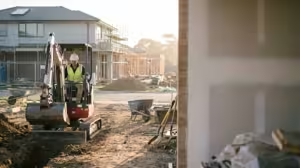
Picture this: A mid-size landscaping contractor wins a $400,000 municipal contract, deploys a newly purchased мини-экскаватор on day three, and watches it stall — permanently — by week two. The machine was the cheapest option on the market. The downtime cost? Roughly $18,000 in idle labor, rental equipment, and contract penalties. The initial savings? $6,000.
This scenario plays out across construction sites and farms more often than most sourcing teams care to admit. Machinery downtime isn’t just an operational inconvenience — it’s a cascading financial event. In agriculture, a single day of harvester failure during peak season can erase weeks of margin. In construction, stalled equipment triggers penalty clauses and poisons client relationships that took years to build.
Reliability isn’t a premium feature — it’s the baseline that determines whether a sourcing decision was ever a decision at all.
The data backs this up decisively. According to a Gartner Supply Chain Survey, 75% of supply chain professionals now prioritize reliability and quality over lowest possible cost when selecting new manufacturing partners. The “lowest bidder” model is losing ground fast.
This shift is reshaping how B2B buyers approach factory-direct sourcing. Digital tools — from live factory audits via video to standardized factory audit checklists — have made it easier than ever to evaluate manufacturers before a single purchase order is signed. Buyers are no longer flying blind.
Central to this new approach is Total Cost of Ownership (TCO) — a framework that accounts for purchase price, parts availability, maintenance intervals, and operational lifespan. For equipment like mini excavators and compact tractors, the TCO picture looks dramatically different from the sticker price, especially when you factor in long-term ownership costs across a five-to-ten-year service window.
The following guide walks through each critical stage of a modern factory audit — starting where it matters most: the technical foundation of the factory itself.
Before a single purchase order gets signed, the foundational question in any serious heavy machinery manufacturing evaluation is simple: does this factory have the systems in place to build equipment consistently, not just occasionally? Flashy brochures and competitive pricing mean very little if the production environment can’t back them up.
ISO 9001:2015 is the global benchmark for confirming that a factory operates a documented Quality Management System (QMS) — the internal framework that governs how machinery is designed, built, tested, and corrected when something goes wrong. For B2B buyers, this certification isn’t a nice-to-have; it’s a minimum entry requirement.
What typically happens is that suppliers will display ISO logos on their websites without buyers verifying whether those certificates are current or in scope. Always request the actual certificate and cross-reference it against the issuing body’s registry. Check the certificate scope carefully — it should explicitly cover the manufacturing processes relevant to your equipment category, whether that’s excavators, tractors, or skid steer loaders. A certificate scoped only to “administrative services” offers zero assurance about production quality.
Buyers sourcing specialized or modified equipment — say, a custom-spec tractor configuration or a compact loader with non-standard attachments — need to probe the factory’s engineering depth. Key questions include: Does the factory employ in-house mechanical engineers or rely entirely on outsourced design?, Is there a dedicated prototyping area or CAD simulation capability?, and Can the factory provide documented performance comparisons between design iterations? Factories with genuine R&D infrastructure will answer these questions with specifics. Those without it will pivot quickly to catalog specs.
Component-level verification is where many buyers fall short. Requesting a virtual or in-person production tour should be standard practice, not an optional step. Specifically, confirm that the factory maintains direct control — or at minimum transparent oversight — over three critical subsystems:
Понимание total cost of ownership starts at this stage — production shortcuts in these subsystems are the leading driver of maintenance costs down the line.
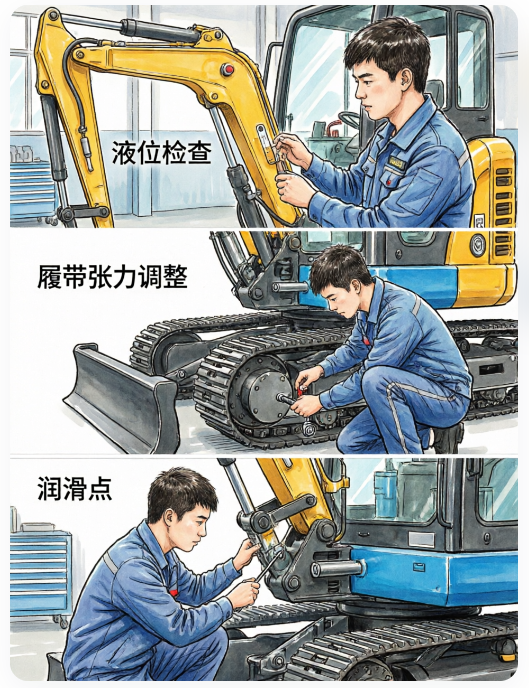
Verification Checkpoint: QMS Manual Request
At the conclusion of your initial factory evaluation, formally request the factory’s Quality Management System manual. A credible supplier will provide at minimum: the QMS scope document, internal audit schedules, corrective action logs, and documented standard operating procedures (SOPs) for critical assembly stages. Reluctance to share this documentation is itself a red flag.
Once you’ve confirmed baseline compliance and infrastructure, the next step is getting eyes on the actual production floor — which is exactly where a structured factory audit checklist becomes indispensable.
With ISO compliance and technical infrastructure confirmed — as covered in Step 1 — the next layer of due diligence is the hands-on audit itself. This is where a solid direct sourcing guide separates buyers who get reliable equipment from those who inherit someone else’s quality problems. Walking through a factory floor without a structured checklist is like inspecting a vehicle by only checking the paint. What follows is a category-by-category framework for auditing heavy machinery production facilities before committing capital.
The foundation of any durable excavator, tractor, or skid steer loader starts with what’s feeding the production line. Substandard steel grades are one of the most common — and least visible — cost-cutting measures at lower-tier factories.
If you’re evaluating a tractor designed for sustained high-horsepower applications, understanding the steel and drivetrain component sourcing is critical. This guide on evaluating high-HP tractor specs provides useful context on what material quality translates to in real-world performance.
Reliable factories follow standardized processes for welding, assembly, and hydraulic testing — and they’ll have documentation to prove it. A factory that resists showing you its in-process controls is telling you something important.
This is the non-negotiable stage. Equipment that skips rigorous final testing creates liability the moment it leaves the port.
For buyers importing into North America or the EU, export compliance isn’t optional. Equipment that fails at customs or requires costly retrofits eliminates any price advantage the factory offered.
| Audit Item | What to Look For |
|---|---|
| Steel mill certificates | Grade spec, heat number, third-party lab stamp |
| Hydraulic component sourcing | OEM brand or certified equivalent documentation |
| Welder certifications | ISO 9606 card, renewal date within 2 years |
| Assembly line traceability | Serial-linked traveler cards or digital build logs |
| Load/PTO test reports | Signed, dated, stored by unit serial number |
| Emissions documentation | EPA/CE certificates matching the specific model ordered |
| Environmental compliance | ISO 14001 certificate, current audit date |
A thorough factory audit generates real leverage — both in negotiations and in long-term risk reduction. However, the audit itself only tells half the story. What happens after the sale — when a hydraulic seal fails at hour 800 or a replacement part is needed mid-project — is where the relationship with your factory partner gets truly tested. That’s exactly what Step 3 addresses next.
With your factory audit checklist completed and ISO compliance confirmed, it’s easy to assume the hard work is done. In practice, however, one of the most consequential — and consistently underestimated — factors in B2B equipment procurement is what happens after the machinery ships. Support infrastructure separates reliable long-term partners from one-time vendors.
“The most critical factor in a factory partnership is not the initial production, but the speed and transparency of their technical support and after-sales resolution.” — McKinsey & Company, Operations Practice
That insight reframes how procurement teams should weight their evaluation criteria. A factory offering a 10% lower unit price but 48-hour response windows can cost significantly more over a three-year ownership cycle than a slightly pricier partner with round-the-clock technical access.
Heavy machinery doesn’t break down on a schedule. Downtime on a job site — whether it’s a skid steer mid-project or a tractor during peak season — translates directly into lost revenue. A supplier’s ability to provide 24-hour technical support is no longer a premium feature; it’s a baseline expectation for any serious industrial partner. When evaluating a factory, ask specifically how support is structured: dedicated engineers, shift-based coverage, or outsourced call centers. The answer reveals a great deal. When factoring in long-term costs like maintenance and operational uptime, understanding total ownership economics before signing is equally important.
Modern after-sales support increasingly relies on digital infrastructure. Reputable manufacturers maintain accessible libraries of wiring diagrams, hydraulic schematics, exploded parts views, and error-code databases. More advanced partners now offer video-based troubleshooting — short, model-specific clips that allow field technicians to resolve issues without waiting for an engineer. According to best practices in procurement solutions, buyers in 2026 should expect digital-first support ecosystems as standard, not as an add-on.
Even the best technical support fails if critical replacement parts take six weeks to arrive. Ask prospective suppliers directly: Where are regional parts depots located? What’s the average lead time for fast-wear components like hydraulic seals, filters, and drive belts? Can emergency air freight be arranged?
Before any contract is signed, test the factory’s responsiveness directly. Send a technical question via email and track response time and quality. What you’re screening for:
How a factory handles a pre-sale question often mirrors exactly how they’ll handle a post-sale crisis. Once you’ve validated support capability, the next layer of protection before equipment ships is the pre-shipment inspection — a critical checkpoint that third-party specialists are uniquely positioned to manage.
Even with a thorough factory audit and robust after-sales agreements in place, one critical safeguard remains before your equipment leaves the production floor: the Pre-Shipment Inspection (PSI). This step transforms everything confirmed on paper into verified, physical reality — and the numbers back that up.
Pre-Shipment Inspections conducted by qualified third-party inspectors reduce the risk of receiving defective heavy equipment by up to 80%, according to Quality Inspection Blog / Bay Source Global.
Independent inspection firms bring enforced neutrality that internal factory QA teams simply cannot provide. Agencies certified for industrial equipment conduct structured evaluations against agreed quality control standards, testing what the factory reports against what the machine actually delivers. For B2B buyers sourcing excavators, loaders, or tractors — where total cost of ownership matters far more than the sticker price — this neutrality is non-negotiable.
A credible PSI for heavy machinery covers three core performance pillars:
For excavator-specific metrics — including undercarriage wear tolerances and attachment compatibility — a detailed spec breakdown provides useful benchmarks before commissioning your inspection report.
What happens when the inspector flags an issue? A structured response protocol matters:
Certain findings should halt shipment outright, regardless of delivery pressure:
With PSI results documented and any defects resolved, the next logical question is: what does a properly organized, audit-ready production line actually look like in practice? The following visual guide takes you inside a modern assembly environment.
Before committing to a factory-direct purchase, seeing the production process in action can confirm what your audit checklist already flagged on paper. The video below offers a behind-the-scenes look at a modern mini excavator assembly line — pay close attention to worker spacing, parts organization, and whether quality checkpoints appear at multiple stages rather than just at final inspection.
[VIDEO PLACEHOLDER: Modern Mini Excavator Production Line Assembly]
A well-run production line isn’t accidental. Visual cues of a disciplined manufacturer include clearly labeled component stations, minimal clutter between workstations, and visible ISO signage posted throughout the facility. If you’re evaluating sourcing options and want context on how long-term ownership costs factor into equipment selection, assembly consistency at this stage matters enormously.
A disorganized floor is a leading indicator of inconsistent output — one that no price advantage can fully offset down the line.
In practice, facilities meeting modern procurement standards also display real-time production tracking boards, as highlighted in the Industrial Equipment Selection Guide 2026. These visual management tools signal that a manufacturer prioritizes traceability — a quality that carries directly into your after-sales and PSI outcomes explored in earlier steps, and ultimately shapes the kind of long-term partnership worth building.

Sourcing heavy machinery factory-direct is never just a transaction — it’s the foundation of a long-term operational relationship. Every step covered in this guide, from initial factory audits and quality control protocols to pre-shipment inspections and production line evaluations, reflects a single core principle: the audit-first mindset pays dividends long after the equipment arrives on-site.
Skipping due diligence might save time upfront, but the downstream costs — unplanned downtime, expensive repairs, and unreliable parts availability — quickly erase any perceived savings. In practice, buyers who invest in structured audits before committing to a supplier consistently report stronger equipment performance and fewer contract disputes over the life of the partnership.
The long-term ROI of choosing a manufacturer with 24-hour technical support deserves particular emphasis. For construction and agricultural operations, equipment failure during peak season isn’t just inconvenient — it’s financially damaging. A supplier backed by round-the-clock support, documented response protocols, and proven parts logistics transforms from a vendor into a genuine business asset. Procurement compliance frameworks consistently identify after-sales infrastructure as one of the most underweighted factors in B2B equipment decisions, a gap that experienced sourcing teams close by making support capability a non-negotiable audit criterion.
For agricultural buyers specifically, evaluating long-term ownership costs across tractor models can sharpen your factory selection criteria before the audit even begins — aligning expected lifespan with the manufacturer’s proven track record.
Final advice is straightforward: treat every factory visit as a structured interview. Bring your checklist, verify certifications independently, and never let a competitive price override a weak audit result.
Pro Tip: Request a live video walkthrough of the production line before any site visit — suppliers confident in their quality control will accommodate this without hesitation. Those who resist are telling you something important.
Ready to audit smarter? Connect with a technical sourcing consultant to build a customized factory evaluation framework tailored to your construction or agricultural equipment requirements — because the right partnership starts well before the first invoice.


-1.png)