Karibu Shandong Qilu Industrial Co., Ltd

 Swahili
 English
 Arabic
 Bulgarian
 Bengali
 Czech
Czech
 Danish
 German
 Greek
Greek
 Spanish
 Finnish
 French
 Hindi
Hindi
 Croatian
 Hungarian
 Indonesian
 Italian
 Japanese
 Korean
 Lithuanian
 Dutch
Dutch
 Norwegian
 Polish
 Portuguese
 Romanian
 Russian
 Slovak
 Slovenian
 Swedish
 Thai
Thai
 Turkish
 Ukrainian
 Vietnamese
 Tagalog
 Malay
Malay
 Estonian
 Catalan
 Latvian
 Urdu
Urdu
 Serbian
 Persian
 Albanian
 Armenian
 Icelandic
 Bosnian
 Luxembourgish
 Afrikaans
Swahili English
Arabic
Bulgarian
Bengali
Czech
Danish
German
Greek
Spanish
Finnish
French
Hindi
Croatian
Hungarian
Indonesian
Italian
Japanese
Korean
Lithuanian
Dutch
Norwegian
Polish
Portuguese
Romanian
Russian
Slovak
Slovenian
Swedish
Thai
Turkish
Ukrainian
Vietnamese
Tagalog
Malay
Estonian
Catalan
Latvian
Urdu
Serbian
Persian
Albanian
Armenian
Icelandic
Bosnian
Luxembourgish
Afrikaans
Afrikaans
Swahili English
Arabic
Bulgarian
Bengali
Czech
Danish
German
Greek
Spanish
Finnish
French
Hindi
Croatian
Hungarian
Indonesian
Italian
Japanese
Korean
Lithuanian
Dutch
Norwegian
Polish
Portuguese
Romanian
Russian
Slovak
Slovenian
Swedish
Thai
Turkish
Ukrainian
Vietnamese
Tagalog
Malay
Estonian
Catalan
Latvian
Urdu
Serbian
Persian
Albanian
Armenian
Icelandic
Bosnian
Luxembourgish
Afrikaans
Jinsi ya Kulinganisha Chaguo za Wasambazaji wa Mini Excavator kwa Urahisi
When you compare mini Excavator supplier options, you face several challenges that can affect your decision. You need to consider factors such as safety, cost, and support. The table below displays common obstacles buyers encounter:
| Changamoto | Maelezo |
|---|---|
| Mazingatio ya Mazingira na Usalama | Aligns with sustainability and safety standards. |
| Customer Support and After-Sales Services | Ensures reliable assistance after purchase. |
| Quality Control and Reliability | Guarantees consistent performance with strict inspections. |
| Uchambuzi wa Gharama | Includes both initial price and long-term operating expenses. |
You gain confidence by clarifying your needs and using a step-by-step approach.
Kuchukua njia muhimu
- Define your needs before comparing suppliers. Knowing your project requirements simplifies the selection process.
- Fikiria vipimo vya mashine like size, power, and attachments. These factors determine the excavator’s suitability for your tasks.
- Set a clear budget that includes purchase price and long-term costs. This helps you avoid overspending and narrow your options.
- Evaluate supplier reputation through customer reviews and certifications. A trustworthy supplier ensures quality and reliable support.
- Check warranty terms carefully. A strong warranty indicates supplier confidence and protects your investment.
- Assess after-sales support and maintenance services. Good support keeps your machine running smoothly and minimizes downtime.
- Use a structured checklist to compare suppliers. This organized approach helps you track important criteria and make informed decisions.
- Ask the right questions when contacting suppliers. Clear communication reveals their expertise and commitment to customer service.
Bainisha Mahitaji Yako
Before you start comparing options, you need to know exactly what you want from a mini excavator. This step helps you narrow down your choices and makes the process much easier.
Vipimo vya Mashine
Size & Power
Start by deciding what size and power you need. Think about the types of projects you plan to handle. For example, if you work in tight spaces, a mfano compact with lower horsepower may suit you best. If you need to dig deeper or move heavier materials, look for a machine with more power and a larger bucket capacity.
Kidokezo: Always check the maximum digging depth and lifting capacity. These numbers tell you if the machine can handle your toughest jobs.
Viambatisho
Attachments can turn a basic excavator into a multi-purpose tool. Consider which attachments you need, such as buckets, augers, or hydraulic breakers. Make sure the machine you choose supports these attachments. Compatibility matters because it prevents mechanical failures and ensures smooth operation.
| Specification/Factor | Umuhimu |
|---|---|
| Ubora wa Bidhaa | Ensures longevity and operational efficiency, reducing downtime and improving safety. |
| Utangamano | Prevents mechanical failures and ensures efficient integration with excavator models. |
| Sifa ya wasambazaji | Reflects product reliability and quality of customer service, indicating trustworthiness. |
| Warranty and Return Policies | Protects against defects, adding value and security to purchases. |
| Ukaguzi wa Wateja | Provide insights into supplier reliability and product performance from other users. |
| Supplier Certifications | Ensure compliance with safety and environmental regulations, indicating product reliability. |
Use this table to guide your checklist when you talk to any mini Excavator supplier.
Bajeti
Set a clear budget before you start shopping. Include not only the purchase price but also costs for maintenance, attachments, and possible repairs. If you plan to finance your purchase, check what payment options are available. A well-defined budget helps you avoid overspending and narrows your choices to what you can afford.
Kumbuka: Some suppliers offer flexible financing or seasonal discounts. Ask about these options to get the best deal.
Mahali
Your location affects both the availability of machines and the cost of delivery. If you live far from major cities, shipping costs may rise. Difficult-to-reach areas can also make delivery more expensive. Consider these factors when you compare suppliers.
| Sababu | Maelezo |
|---|---|
| Distance | Longer transport distances increase costs due to fuel, driver time, and potential overnight lodging. |
| Transport Methodology | Different transport methods incur varying costs; specialized methods for larger equipment are more expensive. |
| Location Accessibility | Difficult-to-reach areas can complicate delivery and increase costs due to the need for specialized equipment. |
| Gas Prices | Fluctuating gas prices directly affect shipping costs, especially for long-distance transport. |
When you know your needs, you can ask the right questions and focus on suppliers who meet your requirements. This approach saves you time and helps you make a confident decision.
Matumizi
You should always consider how you plan to use your mini excavator before you compare suppliers. Your main usage scenario will guide your decision and help you focus on the right features and services. Different tasks require different machine capabilities, so you need to match your needs with what each mini Excavator supplier offers.
Here are some of the most common usage scenarios for mini excavators:
| Usage Scenario | Maelezo |
|---|---|
| Mazingira | Mini excavators are used for various landscaping tasks, enhancing outdoor spaces. |
| Small-scale excavation | Ideal for projects requiring limited excavation work in confined areas. |
| Kukausha | Effective for creating trenches for utilities and drainage systems. |
| Demolitions | Useful in small demolition projects, especially in urban settings. |
If you work in landscaping, you may need a machine that supports a wide range of attachments, such as grading buckets or augers. You should ask suppliers about attachment compatibility and quick-change systems. For small-scale excavation, you want a compact model that can maneuver in tight spaces. Look for suppliers who offer machines with zero-tail swing or reduced tail swing designs.
When your main task is trenching, focus on digging depth and reach. You should check if the supplier provides models with long arms or specialized trenching buckets. For demolition work, you need a machine with strong hydraulic power and reinforced structures. Ask the supplier about available safety features and protective guards.
Kidokezo: Make a list of your top three tasks. Use this list when you talk to each mini Excavator supplier. This will help you get clear answers about which models fit your needs.
You should also think about how often you will use the machine. If you plan to use it daily, you need a supplier who offers strong after-sales support and easy access to spare parts. For occasional use, you might prioritize lower upfront costs or flexible financing options.
By understanding your usage, you can filter out suppliers who do not meet your requirements. This step saves you time and helps you avoid costly mistakes. Always match your main tasks with the features and services each supplier provides.
Mini Excavator Supplier Criteria
Kuchagua haki mtoa huduma mdogo wa Excavator requires you to look at several important criteria. Each factor helps you compare options and find the best fit for your needs. Use the following guide to evaluate suppliers with confidence.
Ubora wa Bidhaa
Kuegemea
You want a mini excavator that performs well every day. Reliable machines reduce downtime and keep your projects on schedule. When you compare suppliers, check if their equipment meets international standards. Look for certifications that show the machines have passed safety and performance tests.
| Standard Type | Requirement Details |
|---|---|
| International Certification | Must pass CE certification (compliant with EN 474-5:2022), including static/dynamic load tests, hydraulic system pressure tests, and noise control (≤92dB(A)). |
| Environmental Requirements | Engines must meet China IV/Euro V emission standards; electric models achieve zero emissions, suitable for indoor or ecologically sensitive areas. |
Ask each mini Excavator supplier about their testing process. For example, some suppliers use advanced technology to improve reliability in tough conditions. Others focus on strong construction and efficient performance. Compact designs with powerful engines also help ensure the machine works well in different tasks.
Makala
Features can set one supplier apart from another. You should look for machines with easy-to-use controls, quick-change attachment systems, and advanced safety features. Some suppliers offer models with noise reduction, which is important for urban or indoor work. Others provide machines with eco-friendly engines that meet strict emission standards.
Kidokezo: Make a checklist of must-have features before you compare suppliers. This helps you focus on what matters most for your projects.
Bei
Gharama ya Juu
Price is a key factor when you choose a mini Excavator supplier. Compare the base price of similar models from different suppliers. Some suppliers include basic attachments or free shipping in the price, while others charge extra for these options. Always ask for a detailed quote that lists all included features and any additional costs.
Fedha
Many suppliers offer flexible financing to help you manage your budget. You might find options such as 0% financing for up to 48 or 60 months, or even cash back offers. Some suppliers provide longer-term financing with low interest rates. Review the terms carefully to see which plan fits your needs.
| Chaguo la Ufadhili | Istilahi |
|---|---|
| 0% Ufadhili | Up to 48 Months |
| 0% Ufadhili | Up to 60 Months |
| 1.54% Financing | For 72 Months |
| Pesa Nyuma | Up to $10,500 |
Kumbuka: Ask each mini Excavator supplier if they offer seasonal promotions or special deals for first-time buyers.
Huduma na Usaidizi
Matengenezo
Good service and support keep your machine running smoothly. Leading suppliers provide a full maintenance suite, including regular checkups, emergency repairs, and remote diagnostics. Some suppliers offer maintenance contracts that cover all routine services. Others provide 24/7 technical support, so you can get help any time you need it.
| Aina ya Huduma | Maelezo |
|---|---|
| Full Maintenance Suite | Comprehensive maintenance services, including scheduled checkups and repairs. |
| 24/7 Support | Round-the-clock technical assistance for urgent issues. |
| Matengenezo na Matengenezo | Includes remote diagnostics and emergency troubleshooting. |
When you compare suppliers, ask about the availability of spare parts and how quickly they can respond to service requests.
Mafunzo
Proper training helps you use your mini excavator safely and efficiently. Many suppliers offer hands-on training, including on-site demonstrations and operator courses. Some provide end-user training to teach you basic maintenance and safe operation techniques. Equipment rental companies often include a basic orientation session when you pick up the machine.
- On-site demos and operator training build your confidence and reduce accidents.
- Short operator courses teach safe operation and improve efficiency.
- End-user training ensures you know how to perform basic maintenance.
Kidokezo: Choose a mini Excavator supplier that offers training tailored to your experience level. This support helps you avoid mistakes and keeps your team safe.
By focusing on these criteria, you can compare suppliers more effectively. Look for clear information on product quality, pricing, and support services. This approach helps you make a smart, informed decision.
Dhamana
You should always check the warranty when you compare mini excavator suppliers. A strong warranty shows that the supplier trusts their machines. Most suppliers offer warranties that last from one to three years. Some suppliers provide longer coverage for certain models, which can give you extra peace of mind. More complex machines sometimes have shorter warranties because they may need more repairs.
Here are common warranty periods you might find:
- One to three years for standard models.
- Longer warranties from established suppliers.
- Shorter warranties for advanced or highly technical models.
You can use the table below to compare typical warranty terms:
| Supplier Example | Hatima |
|---|---|
| Msambazaji A | 5 years / 5,000 hours |
| Msambazaji B | 4 years / 4,000 hours |
| Msambazaji C | Extended warranty available |
Some suppliers add extra value to their warranties. For example, you might get remote monitoring or telematics support for the first few years. These features help you track your machine’s health and schedule maintenance on time.
Kidokezo: Always ask your mini Excavator supplier for a copy of the warranty policy. Read the fine print to see what is covered and what is not.
Sifa
A supplier’s reputation tells you a lot about their reliability and service. You should look for suppliers with a strong track record in the industry. Reputation comes from experience, technical skill, and customer satisfaction.
Uzoefu
You want a supplier with years of experience in mini excavators. Experienced suppliers know how to solve problems and keep machines running. They follow safety and environmental rules. They also hold certifications that show they meet industry standards.
| Sababu | Maelezo |
|---|---|
| Utaalam wa Kiufundi | Deep knowledge of mini excavator technology and operations. |
| Kuzingatia Viwango | Follows safety and environmental regulations. |
| Industry Certifications | Holds ISO, CE, or similar certifications. |
| Msaada wa Baada ya Uuzaji | Provides strong support after you buy the machine. |
| Maoni ya Mteja | Earns positive reviews from real users. |
Maoni ya Mteja
You should always read customer reviews before you choose a supplier. Real feedback gives you insight into how the machines perform and how the supplier handles problems.
“I’m giving this particular Chinese tool a resounding thumbs up. It has been worth every penny spent so far and I have a lot more projects planned for the future.”
Look for patterns in the reviews. If many customers praise the same feature or service, you can trust that supplier more. If you see repeated complaints, ask the supplier how they plan to fix those issues.
Utoaji
Delivery affects how soon you can start your project. You need to know how long it will take for your mini excavator to arrive and what delivery options are available. Delivery times depend on your location and the shipping method.
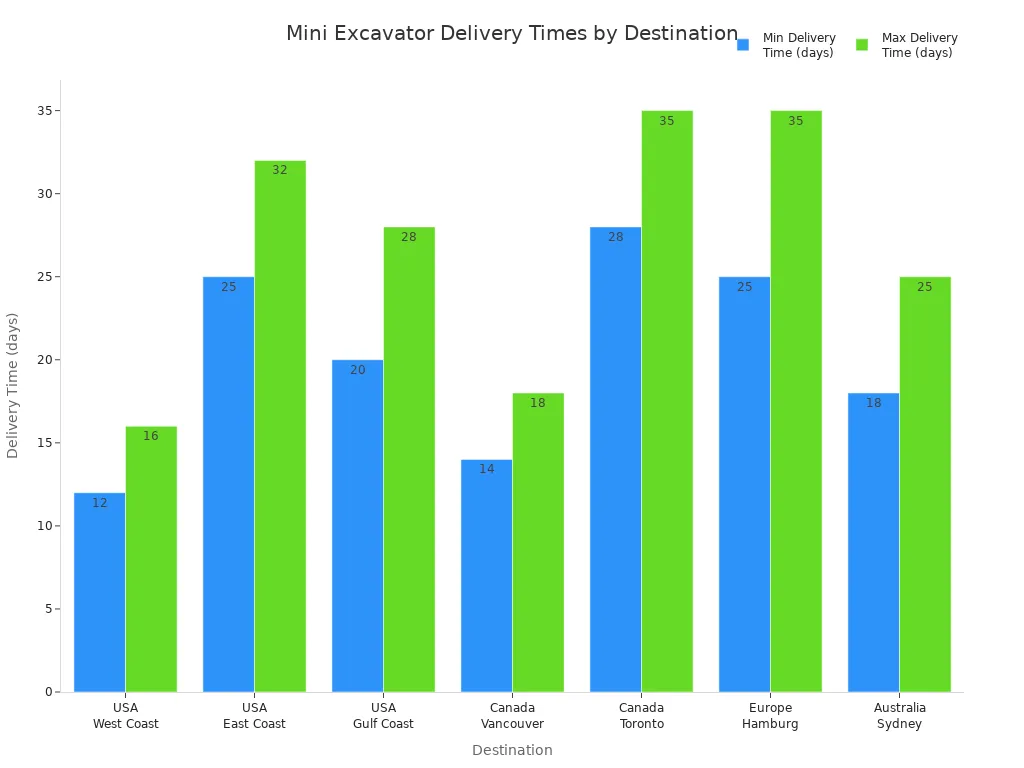
Here is a table showing average delivery times for different destinations:
| Marudio | Average Delivery Time (Sea Freight) |
|---|---|
| USA (West Coast) | 12-16 days |
| USA (East Coast) | 25-32 days |
| USA (Gulf Coast) | 20-28 days |
| Canada (Vancouver) | 14-18 days |
| Canada (Toronto) | 28-35 days |
| Europe (Hamburg) | Siku 25-35 |
| Australia (Sydney) | 18-25 days |
Add 3-7 days for customs clearance and inland delivery.
You should also ask about shipping costs and options. Some suppliers offer free shipping for certain models or regions. Others run promotions or limit free shipping to direct sales. Check the table below for examples:
| Mfano | Uzito wa Uendeshaji | Chimba Kina | Injini HP | Free Shipping Availability |
|---|---|---|---|---|
| Model X | 3,748 lbs | 10 ft | 14.8 HP | Yes (select dealers) |
| Model Y | 8,850 lbs | 13.5 ft | 24.8 HP | Occasional promotions |
| Model Z | 9,724 lbs | 13.8 ft | 17.4 HP | Limited regions |
| Model W | 3,307 lbs | 9.2 ft | 14.5 HP | Frequent (direct sales) |
Kidokezo: Ask your mini Excavator supplier if they offer free shipping or special delivery deals. This can save you money and speed up your project.
By checking warranty, reputation, and delivery, you make a smarter choice. You protect your investment and avoid delays.
Wasambazaji wa Utafiti
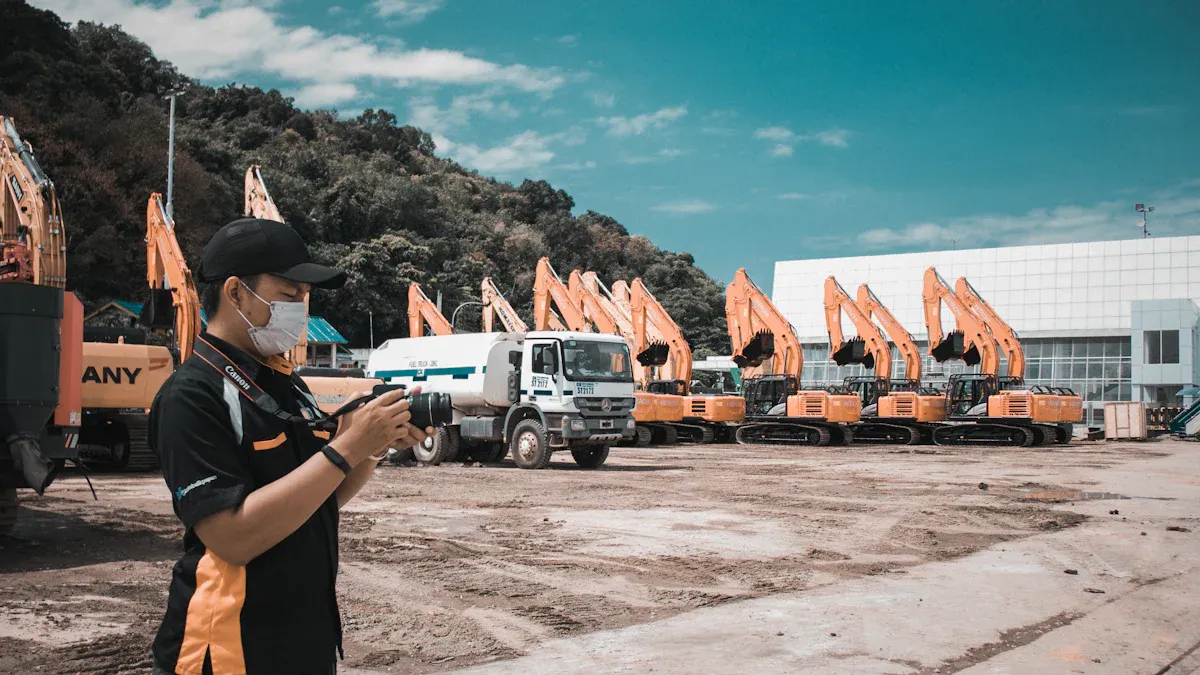
Ukaguzi wa Mtandaoni
You can learn a lot about mini excavator suppliers by reading online reviews. These reviews help you see how suppliers perform in real-world situations. Reliable review platforms give you honest feedback from other buyers. Here are some trusted places to start your research:
- MachineryTrader.com: This site offers verified listings and reviews from a wide network of dealers. You can check seller ratings and see how they handle customer service.
- EquipmentTrader.com: Use this platform to find equipment near your location. It provides detailed seller profiles and local search tools, making it easier to compare options.
- MyLittleSalesman.com: This all-in-one site lets you filter results by machine type, price, and features. You can read detailed specifications and see what other buyers say about their experiences.
You can also check social media platforms like LinkedIn na Facebook Marketplace for additional reviews and discussions. These platforms often feature real user stories and photos, which help you spot trends and avoid unreliable suppliers.
Kidokezo: Look for patterns in reviews. If many buyers mention fast delivery or good after-sales support, you can expect similar service.
Supplier Websites
Supplier websites give you direct access to product specifications and company information. Always visit the official website of each supplier before making a decision. You can verify machine specs, compare models, and check for up-to-date certifications. Many suppliers post downloadable manuals and quality certificates on their sites.
Supplier audits add another layer of trust. Third-party inspection companies often review legal documents, company ownership, and export capabilities. These audits confirm that the supplier is legitimate and not a scam. Inspectors also check that manuals and certificates meet language and safety standards.
You can use industry directories like Yellow Pages or Thomasnet to cross-check company details. These directories list verified businesses and help you avoid fraudulent sellers.
Always check for a physical address, business license, and clear contact information on the supplier’s website.
Ushuhuda
Customer testimonials give you a real sense of what to expect from a supplier. Many buyers share their experiences with delivery, machine quality, and customer service. These stories help you judge reliability and performance.
- 70% of users in the Asia-Pacific region reported better efficiency after switching to certain mini excavators.
- 85% of surveyed buyers felt satisfied with the fuel efficiency and productivity of their machines.
- One contractor saved about 20% in project costs by choosing a new supplier.
“I am extremely satisfied with the excavator delivery service. The entire process, from ordering to delivery, went smoothly without any issues… Communication with the company agent was excellent.”
“The excavator arrived on time, exactly as scheduled. The condition of the equipment was excellent—clean, fully functional, and ready for immediate use.”
You can find testimonials on supplier websites, review platforms, and even on YouTube where users post video reviews. Always look for detailed feedback and specific examples to guide your decision.
Kuhakikishiwa
When you compare mini excavator suppliers, you should always check for certifications. Certifications show that a supplier meets important safety, quality, and environmental standards. These documents help you avoid unreliable suppliers and protect your investment.
Start by asking each supplier for copies of their certifications. You can also look for certification logos on their websites or product manuals. If you do not see clear proof, request it before you make any decisions.
Here is a table that explains the most important certifications you should look for:
| Vyeti | Umuhimu |
|---|---|
| CE | Compliance with European safety standards |
| ISO 9001 | Indicates adherence to quality management systems |
| EPA Tier 4 | Ensures compliance with environmental regulations |
- CE Certification: This mark means the mini excavator meets strict European safety rules. You can trust that the machine has passed tests for safe operation and construction. If you plan to use the equipment in Europe or want high safety standards, this certification is essential.
- ISO 9001: This certification shows the supplier follows a recognized quality management system. Suppliers with ISO 9001 focus on process control and continuous improvement. You can expect better consistency and fewer defects in their products.
- EPA Tier 4: This standard relates to environmental protection. Machines with EPA Tier 4 certification produce fewer emissions. If you care about air quality or need to meet local regulations, this certification is important.
Kidokezo: Always ask for up-to-date certificates. Expired or outdated documents may not meet current standards.
You can use certifications as a filter when you research suppliers. For example, if a supplier cannot provide CE or ISO 9001 certificates, you should consider other options. Some suppliers may also have additional certifications, such as local safety marks or environmental awards. These extras can add value but should not replace the main certifications listed above.
When you review supplier websites, look for downloadable certificates or clear photos of the documents. If you find technical terms or codes, ask the supplier to explain them. Reliable suppliers will answer your questions and provide proof without hesitation.
By checking certifications, you make sure you choose a supplier who values safety, quality, and the environment. This step helps you avoid risks and ensures your mini excavator meets your project needs.
Comparison Checklist
Wakati wewe compare mini excavator suppliers, you need a clear and organized way to track your findings. A structured checklist helps you stay focused and ensures you do not miss any important details. This section gives you practical tools to compare suppliers side by side.
Checklist Format
Start by creating a checklist that covers all the key criteria you have learned about. Use this checklist when you research each supplier. You can print it out or use a digital version. Here is an example of what your checklist might look like:
- Product quality (meets safety and reliability standards)
- Machine features (attachments, controls, eco-friendly options)
- Pricing (upfront cost, financing, hidden fees)
- Service and support (maintenance, training, spare parts)
- Warranty (length and coverage)
- Reputation (years in business, customer reviews)
- Delivery (shipping time, free shipping, delivery options)
- Certifications (CE, ISO 9001, EPA Tier 4)
Kidokezo: Check off each item as you gather information. This method keeps your research organized and helps you compare suppliers quickly.
Evaluation Table
An evaluation table lets you see how each supplier measures up against your checklist. Fill in the table as you collect data. Use simple ratings like “Yes,” “No,” or a score from 1 to 5 for each criterion. Here is a sample table you can use:
| Vigezo | Msambazaji 1 | Msambazaji 2 | Msambazaji 3 |
|---|---|---|---|
| Ubora wa Bidhaa | 5 | 4 | 3 |
| Makala | 4 | 5 | 3 |
| Bei | 3 | 4 | 5 |
| Huduma na Usaidizi | 5 | 3 | 4 |
| Dhamana | 4 | 5 | 3 |
| Sifa | 5 | 4 | 3 |
| Utoaji | 4 | 3 | 5 |
| Kuhakikishiwa | 5 | 4 | 3 |
You can adjust the criteria or add more columns if you compare more suppliers.
Scoring System
A scoring system helps you make an objective decision. Assign a score to each criterion for every supplier. Use a scale from 1 (poor) to 5 (excellent). Add up the scores for each supplier. The supplier with the highest total score best matches your needs.
For example:
- If Supplier 1 scores 36 points, Supplier 2 scores 32, and Supplier 3 scores 29, Supplier 1 is your top choice.
- If two suppliers have similar scores, review the most important criteria for your project and use those as tie-breakers.
Kumbuka: Always double-check your scores and update them if you find new information. This process ensures you make a confident and informed choice.
By using a checklist, evaluation table, and scoring system, you can compare mini excavator suppliers easily and choose the best option for your needs.
Contact Mini Excavator Suppliers
Reaching out to mini excavator suppliers is a key step in your comparison process. You want to gather clear information, test their communication, and judge their industry knowledge. This section shows you how to make the most of your first contact.
Maswali ya Kuuliza
Prepare a list of questions before you call or email suppliers. This helps you collect the same information from each one and makes your comparison easier. Focus on topics that affect your ownership experience, such as support, financing, and warranty.
Here is a table of important questions to ask:
| Kipengele | Maelezo |
|---|---|
| Bilingual support | Do you offer support in my preferred language? |
| Relationship focus | How do you build long-term relationships with customers? |
| Model selection assistance | Can you help me choose the right model for my jobs? |
| Chaguzi za ufadhili | What financing options do you offer for small businesses? |
| Chanjo ya udhamini | What does your warranty cover, and how long does it last? |
| Upatikanaji wa sehemu | How quickly can I get genuine replacement parts? |
| Service support | Do you provide both shop and field service support? |
You should also ask about warranty details. Use this checklist:
- Inquire about the powertrain warranty and its duration.
- Ask if the frame and structure have separate coverage.
- Consider the benefits of a lifetime warranty on critical components.
Kidokezo: Write down the answers for each supplier. This makes it easier to compare later.
Mwitikio
A supplier’s responsiveness tells you a lot about their service quality. Notice how quickly they reply to your emails or calls. Fast, clear communication shows they value your business and will support you after the sale.
You can test responsiveness by:
- Sending a simple question and timing their reply.
- Asking for a detailed quote and seeing how complete their answer is.
- Requesting extra information, such as manuals or certificates.
If a supplier takes days to respond or gives vague answers, you may face delays in the future. Choose suppliers who answer promptly and provide clear, helpful information.
Expertise
You want to work with suppliers who understand mini excavators and your industry. Supplier expertise ensures you get the right machine, proper support, and reliable advice. Look for these indicators of expertise:
| Kiashiria | Maelezo |
|---|---|
| Technical consultation | Offers advice for your specific job conditions |
| Logistics and on-site support | Provides installation and operator orientation |
| Operational flexibility | Supplies various models and financing options |
| Credentials and experience | Shows years in business and industry certifications |
| Maoni ya wateja | Shares feedback and case studies |
| Contractual transparency | Gives clear contracts with no hidden clauses |
| Price transparency | Breaks down all costs, including delivery and service fees |
| Total cost of ownership | Explains efficiency and resale value |
| Payment terms | Offers reasonable down payments and flexible plans |
| Training and safety programs | Provides training to improve safety and efficiency |
| Supply chain stability | Ensures quick access to spare parts |
| Future-proofing | Adopts new trends like electric models or GPS systems |
Ask suppliers to explain how they support you before and after the sale. For example, you might ask, “Can you provide operator training?” or “How do you handle urgent parts requests?” Their answers will show their real expertise.
Kumbuka: Suppliers who give detailed, practical answers usually have strong industry experience.
By asking the right questions, checking responsiveness, and judging expertise, you can choose a supplier who will support your business for years.
Make Your Choice
Weigh Results
You have collected information and scored each supplier. Now, you need to weigh your results carefully. Start by reviewing your evaluation table. Focus on the criteria that matter most for your projects. Use the following checklist to guide your final comparison:
- Mini Excavator Weight: Compare the actual machine weight, not just the operating weight. This affects stability and transport.
- Performance Characteristics: Look at the maximum digging distance, depth, height, and dumping height. These numbers show what the machine can handle on your job sites.
- Aina ya Injini: Diesel engines often give you better efficiency and lower long-term costs.
- Hydraulic Pump Type: Decide if you need a hydraulic gear pump or a piston pump. Piston pumps usually offer higher performance.
- Final Drives / Travel Motors: Double speed travel motors can boost efficiency and power, especially if you work on varied terrain.
- Boom Swing: A swing boom adds versatility for digging around obstacles.
- Expendable or Retractable Tracks: These tracks help you maneuver in tight spaces.
- Boom Hydraulic Cylinder Location: Different placements can affect maintenance and protection.
Kidokezo: Give extra weight to features that match your main tasks. For example, if you work in urban areas, prioritize compact size and maneuverability.
Hatua za Mwisho
Before you make your final decision, take a few important steps:
- Visit the service departments of your top suppliers. See how they handle maintenance and repairs.
- Ask about parts availability for your chosen model. Quick access to parts reduces downtime.
- Inquire about emergency service response times. Fast support keeps your projects on track.
- Read online reviews from other contractors. Look for feedback about long-term reliability and support.
- Check if certified technicians are available. Skilled technicians ensure quality repairs.
You should also think about your exit strategy. Machines from high-reputation suppliers often keep their value 15-25% better than others. Common configurations sell faster when you upgrade or change equipment. Well-documented maintenance history can help you get a higher resale price. If you plan to sell after a few years, machines with less than 2,000 hours usually bring the best return.
Confirm Terms
Once you have chosen your supplier, confirm all terms before you sign any agreement. Review the contract for clear details on:
- Warranty coverage and duration
- Service and maintenance commitments
- Delivery schedule and shipping costs
- Payment terms and financing details
Ask for everything in writing. Make sure you understand each part of the agreement. If you see unclear terms, request clarification. This step protects your investment and ensures you get the support you need.
Kumbuka: Careful review now prevents misunderstandings later. You set yourself up for a smooth ownership experience.
Unaweza compare mini excavator suppliers with confidence by following a clear process. Start by listing your needs. Use a checklist to track supplier features, prices, and support. Fill out an evaluation table as you research. Score each supplier based on your priorities. Review your results and confirm all terms before you decide. This approach helps you make a smart choice and avoid costly mistakes.
FAQ
What should you look for in a mini excavator supplier?
You should check product quality, warranty, service support, and delivery options. Ask about certifications and customer reviews. For example, request proof of safety standards and ask how quickly they deliver spare parts.
How do you compare prices between suppliers?
Request detailed quotes from each supplier. Make sure the quote lists all costs, including shipping and attachments. Use a table to compare prices side by side. This helps you spot hidden fees and choose the best value.
Why does after-sales support matter?
After-sales support keeps your machine running. You may need help with repairs or spare parts. Good suppliers offer quick responses and clear instructions. For example, ask if they provide 24/7 technical support or on-site maintenance.
How can you verify a supplier’s reputation?
Read online reviews and ask for customer references. Check for industry certifications. You can also join forums or groups where users share their experiences. Look for patterns in feedback to judge reliability.
What questions should you ask before buying?
Ask about warranty coverage, training options, and parts availability. For example, “How long does your warranty last?” or “Do you offer operator training?” Write down answers to compare suppliers easily.
How important are certifications?
Certifications prove that the supplier meets safety and quality standards. Always ask for up-to-date certificates, such as CE or ISO 9001. These documents protect your investment and ensure the machine meets regulations.
What if you need a custom attachment?
Tell the supplier about your specific needs. Ask if they can provide custom attachments or modify existing ones. For example, request a special bucket size or a quick-change system for faster swaps.
How do you handle delivery delays?
Ask the supplier for a clear delivery schedule. Request updates if delays happen. For example, ask, “How will you notify me if shipping takes longer?” Reliable suppliers communicate quickly and offer solutions.