Benvinguts a Shandong Qilu Industrial Co., Ltd

 Catalan
 English
 Arabic
 Bulgarian
 Bengali
 Czech
Czech
 Danish
 German
 Greek
Greek
 Spanish
 Finnish
 French
 Hindi
Hindi
 Croatian
 Hungarian
 Indonesian
 Italian
 Japanese
 Korean
 Lithuanian
 Dutch
Dutch
 Norwegian
 Polish
 Portuguese
 Romanian
 Russian
 Slovak
 Slovenian
 Swedish
 Thai
Thai
 Turkish
 Ukrainian
 Vietnamese
 Tagalog
 Malay
Malay
 Estonian
 Latvian
 Urdu
Urdu
 Serbian
 Persian
 Swahili
 Albanian
 Armenian
 Icelandic
 Bosnian
 Luxembourgish
 Afrikaans
Catalan English
Arabic
Bulgarian
Bengali
Czech
Danish
German
Greek
Spanish
Finnish
French
Hindi
Croatian
Hungarian
Indonesian
Italian
Japanese
Korean
Lithuanian
Dutch
Norwegian
Polish
Portuguese
Romanian
Russian
Slovak
Slovenian
Swedish
Thai
Turkish
Ukrainian
Vietnamese
Tagalog
Malay
Estonian
Latvian
Urdu
Serbian
Persian
Swahili
Albanian
Armenian
Icelandic
Bosnian
Luxembourgish
Afrikaans
Afrikaans
Catalan English
Arabic
Bulgarian
Bengali
Czech
Danish
German
Greek
Spanish
Finnish
French
Hindi
Croatian
Hungarian
Indonesian
Italian
Japanese
Korean
Lithuanian
Dutch
Norwegian
Polish
Portuguese
Romanian
Russian
Slovak
Slovenian
Swedish
Thai
Turkish
Ukrainian
Vietnamese
Tagalog
Malay
Estonian
Latvian
Urdu
Serbian
Persian
Swahili
Albanian
Armenian
Icelandic
Bosnian
Luxembourgish
Afrikaans
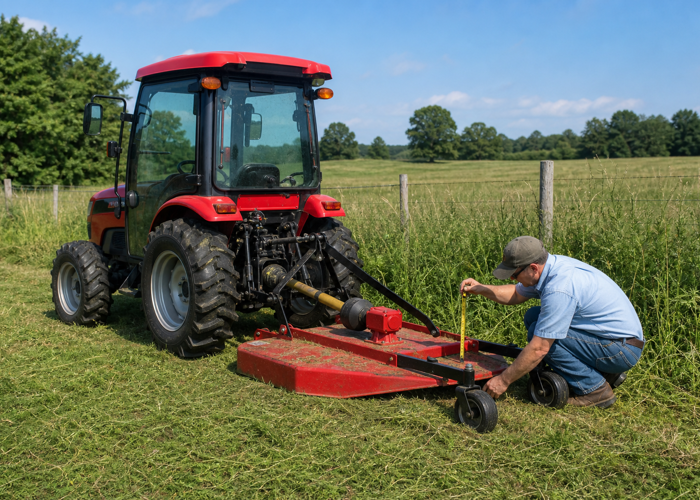
Configuració compacta del tallador rotatiu del tractor per a pastura coberta: alçada de coberta, velocitat de presa i planificació de pendent
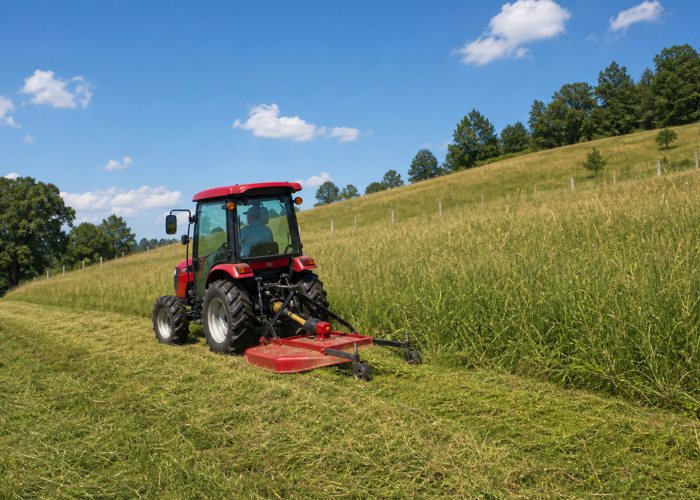
Una guia pràctica per configurar un tractor compacte i un tallador rotatiu per a pastures cobertes de vegetació, que cobreix l'alçada de la coberta, la velocitat de la presa de força, la planificació de rutes i la seguretat del pendent.
Compact Tractor Rotary Cutter Setup for Overgrown Pasture: Deck Height, PTO Speed, and Slope Planning matters because this kind of job exposes small setup mistakes quickly. A compact tractor can look capable in the yard and still work poorly once heavy grass, hidden bumps, and fence-line turns starts. Operators who browse the gamma de tractors de granja often compare horsepower first, but this job usually depends more on deck height, travel pace, and slope route and the order in which the operator sets the machine up.
The right choice is rarely a single spec-sheet number. A clean first cut without scalping or sudden load spikes depends on ballast, tire grip, PTO behavior, ground condition, and whether the operator can maintain a repeatable working rhythm. The machine selection ideas on the pàgina de solucions d'aplicacions tractor són útils perquè emmarquen el tractor com un sistema de treball en lloc d'una llista solta de funcions.
És per això que els compradors comparen un model d'utilitat com el Tractor QL-904B amb altres màquines de la línia de productes QiLu Machinery hauria de pensar en la tasca completa: com comença l'instrument, com gira el tractor, on s'han de fer transferències de pes durant el treball i quines comprovacions s'han de produir abans de la primera passada. Aquests detalls són els que separen una jornada laboral suau des d'un temps d'inactivitat evitable o una improvisació insegura.
Per què aquesta feina castiga una configuració casual
The task becomes difficult when the operator assumes the tractor can simply pull or spin its way through it. A mower deck set too low or a route that forces awkward uphill turns can overload the tractor long before the operator notices the finish deteriorating. That is why the OSHA guidance on operació de tractors agrícoles i de Penn State Extension visió general de la seguretat del tractor tots dos es mantenen centrats en l'estabilitat, el blindatge, l'atenció de l'operador i el terreny en lloc de tractar la feina com una qüestió de poder pur.
La mateixa lliçó apareix a la Universitat de Minnesota guia de seguretat del tractor i els CDC recursos de lesions agrícoles: una vegada que un operador treballa en un terreny irregular, gairebé equip giratori, o al voltant de passos repetits de transport i connexió, la disciplina importa més que la confiança. Un tractor que és tècnicament prou gran encara pot ser una coincidència deficient si els pneumàtics, el rang de velocitat, l'angle d'implementació o el camí de viatge són incorrectes.
Coincideix amb el tractor amb el ritme de treball real
Start by deciding how slowly or steadily the tractor must work, not how fast it could work. In tall pasture, the correct pace is the one that keeps PTO speed stable while the tractor holds its line and the deck clears material evenly. When the job has a clear target pace, the operator can choose the gear, engine speed, ballast level, and turning pattern that keep the machine composed rather than constantly correcting.
Construeix l'estat i l'autorització del dia al voltant del sòl
Ground condition often decides the setup before the implement even begins. Pasture edges often hide wet pockets, old ruts, wire, and abrupt side-slope changes, so the operator should mark obstacles and decide which passes should be uphill, downhill, or avoided entirely. If the approach path is soft, rough, or narrow, that path should influence tire choice, ballast, and route planning before the implement enters the work zone.
Comprovacions per fer abans del primer pas
Before starting, confirm the site, the route, and the support plan. Walk the fence line, identify rocks or debris, and decide where clippings can discharge safely without throwing material toward roads, buildings, or animals If the job could expose buried utilities or hidden edges, start with Localització d'utilitat 811 i el marcatge visible en lloc d'assumir que l'àrea de treball és clara.
Then confirm operator protection and implement condition. Check blade condition, driveline shielding, top-link angle, tailwheel behavior, and whether the PTO range lets the tractor hold steady engine speed without forcing an uncomfortable travel speed That is the practical value of revisiting the OSHA and extension references before a seasonal task resumes: they force the operator to ask whether the setup is truly ready or merely familiar.
Finally, decide what a clean first hour looks like. The opening passes should tell you whether the deck is leaving a level finish, whether clippings are clearing, and whether the tractor remains stable through the first slope transitions A tractor setup should be judged by repeatability: can the machine keep the same line, the same PTO rhythm, and the same operator visibility without extra strain?
Once the first pass begins, the operator should stay disciplined about pace. If grass volume increases, the operator should widen the overlap or reduce ground speed before the deck begins windrowing heavily This is where many tractors perform well on paper but poorly in practice, because the operator keeps adjusting rather than following a stable plan.
Load transfer also needs attention during the working run. On sloped ground, one correction to route direction or cutter height is safer than repeatedly forcing the tractor through a line that already feels uncomfortable Small corrections made early are cheaper than one large correction made after the implement or trailer is already out of line.
Si la configuració és correcta, la feina comença a semblar tranquil·la. El tractor fa un seguiment net, l'instrument es manté previsible i l'operador és lliure de veure el treball en lloc de lluitar contra la màquina. Aquest sol ser el signe més clar que l'elecció de la màquina i l'ordre de configuració eren correctes.
Un flux de treball pràctic per a la feina
| Fase de treball | Què ha de fer el tractor | Què verificar abans de seguir endavant |
|---|---|---|
| Walk the field edge | Mark obstacles, fence hardware, wet spots, and discharge risks | The operator knows where to start and which line not to take |
| Set deck and PTO | Choose cutter height, overlap, and engine speed for steady blade tip speed | The deck clears material without repeated bogging |
| Open the first lanes | Take controlled passes that reveal slope and grass density changes | The tractor stays composed and the cut looks even |
| Finish boundary cleanup | Trim along fence lines and awkward corners with deliberate turns | The job ends cleanly without rushed last-minute turns |
Aquesta seqüència és útil perquè evita que l'operador salti cap endavant. Un tractor que s'endinsa a la tasca principal sense aquests punts de control sovint crea els mateixos retards que se suposava que havia d'evitar.
How To Set Deck Height And Overlap For The First Hour
The first hour usually decides whether the mowing plan is realistic. In mixed-height pasture, start high enough that the cutter is trimming and clearing material instead of trying to pulverize the whole stand in one pass. Extension guidance from University of Missouri and forage management references from Oklahoma State Extension are useful here because they reinforce the idea that cut height and residue handling change regrowth, visibility, and deck load together.
A practical method is to open a short lane with conservative overlap, then stop and look behind the machine. If stems are folding over instead of cutting, if clumps are building under the deck, or if the tractor has to hunt between gears to stay on top of the load, the first correction should be deck height or travel speed rather than a more aggressive line. Buyers reviewing machines like the QL-504D tractor or similar units on the tractor category page should keep that in mind because a stable operating window is more valuable than a faster but narrower one.
Overlap should also reflect what the pasture is hiding. Near fence rows, brushy corners, and old wheel tracks, a smaller bite often protects both the driveline and the finish. Once the operator finds a repeatable pattern, the route can widen gradually, but the machine should earn that wider pass by holding PTO speed and leaving the same finish quality two or three strips in a row.
Support Equipment That Makes Rotary Cutting Safer And Cleaner
Rotary cutting jobs often go better when the tractor is not working alone. A chain saw for downed limbs, a marking flag bundle, a shovel, and a simple grease kit can save a surprising amount of downtime because they let the operator fix the real obstruction instead of forcing the cutter into it. The buyer guidance on the Bloc de maquinària QiLu and the implement context on the product overview page are most useful when they are read as part of that support system, not as isolated equipment pages.
It also helps to plan how clippings and debris will be handled after the main cut. If the customer needs a clean entrance lane, an animal path, or a fence corner that will stay visible for future maintenance, the operator may need a second cleanup pass or a lighter finishing tool. Thinking that through before the tractor enters the field keeps the second half of the job from becoming rushed and is consistent with the terrain-first safety emphasis in the CDC agricultural injury resources.
That extra planning is often what turns a compact tractor rotary cutter setup from acceptable to professional. The machine finishes with fewer missed strips, fewer abrupt turns, and less improvised cleanup, which is exactly what owners want when one tractor has to cover mowing, loader work, transport, and fence-line maintenance during the same season.
Com canvien les condicions el migdia de configuració
El temps i la superfície canvien la matèria fins i tot després que la màquina ja està funcionant. Un carril sec es pot suavitzar després del reg, una vora de pastura pot amagar més humitat que el centre i una rampa de transport que se sentia segura al matí pot tornar-se llisca a la tarda. Per tant, els operadors haurien de tractar el primer pas amb èxit com una línia de base, no com una garantia que els mateixos entorns encara seran més tard al dia.
També és per això que ajuda a fer una pausa després del primer terç de la feina i preguntar-se si el tractor encara està equilibrat, si l'adherència dels pneumàtics encara se sent igual i si l'instrument encara està deixant el resultat previst. Si aquestes respostes canvien, la reacció correcta és ajustar el pla deliberadament en lloc d'impulsar perquè la màquina ja ha començat.
Saber quan una eina diferent és millor
Un operador disciplinat també sap quan el tractor no ha de resoldre tot el problema sol. Alguns treballs necessiten un accessori diferent, més ajuda per a la posada en escena, un terreny més sec o una altra màquina per a la secció més ajustada o pronunciada. Canviar l'eina o retardar la tasca no es perd temps si evita danys, funcionament insegur o una neteja cara més tard.
Què gravar per a la propera feina
Un dels hàbits de propietat més útils és escriure quina va ser realment la configuració reeixida. Alçada de la coberta, diàmetre de la barrena, ordre d'enllaç, quantitat de llast i la velocitat de viatge que es va sentir estable són tots els detalls que val la pena estalviar. Aquestes notes converteixen un bon dia en un estàndard operatiu repetible en lloc d'obligar el següent operador a tornar a aprendre la feina de memòria.
Aquest registre també hauria d'incloure què va canviar el pla. Si una espatlla suau forçava una ruta nova, si l'herba més alta exigia una superposició addicional, o si un remolc necessitava una posició de càrrega diferent de l'esperada, escriu-ho també. Aquestes són les lliçons que milloren la selecció futura de màquines i ajuden els compradors a comparar si un tractor o un accessori diferents facilitaria el treball.
Amb el temps, aquest tipus de registre pràctic es fa més valuós que el llenguatge de màrqueting perquè connecta el tractor directament amb els llocs de treball que realment realitza el propietari. També és la manera més clara de decidir si la màquina actual encara s'adapta a la càrrega de treball o si un altre model de la mateixa família de productes reduiria els compromisos de tensió, temps d'inactivitat o seguretat.
Una llista de verificació del comprador abans d'escollir el tractor
Abans de comprar o assignar un tractor a aquesta feina, feu unes quantes preguntes contundents. Pot la màquina mantenir la velocitat de treball correcta sense obligar l'operador a precipitar-se? Pot els pneumàtics, el llast i la geometria de l'enganxament suportar la condició real del sòl? L'operador pot veure la part crítica de la tasca amb prou claredat per funcionar amb calma? Aquestes preguntes tendeixen a revelar l'ajust molt més ràpid que una altra comparació de cavalls de potència.
També ajuda a comparar el tractor amb el patró de propietat que l'envolta. Si la mateixa màquina ha de gestionar la sega, el treball de tanca, el transport, les tasques de càrrega i el suport estacional, aleshores la flexibilitat de configuració importa tant com la força bruta. És per això que el temps de canvi d'adjunt, l'espai d'emmagatzematge i la familiaritat de l'operador també mereixen un lloc en la decisió de compra.
Els operadors que utilitzen aquesta llista de verificació solen prendre decisions més duradores perquè estan comparant el tractor amb feines recurrents en lloc de llenguatge publicitari. Una màquina que se sent una mica menys impressionant en paper encara pot ser la compra més valuosa quan realitza la ruta real, l'adjunt i la seqüència del terreny amb menys compromisos.
On els propietaris solen equivocar-se
Talla el tractor al voltant del número de màrqueting
They buy around horsepower alone and ignore whether the chassis, tire setup, and operating range suit repeated pasture work on rough ground That is why the solucions d'aplicació de productes les pàgines són més útils que el llenguatge publicitari ampli: empenyen els compradors cap a l'ajust de la feina, el terreny i el comportament d'afecció.
Tracten el Pla de Suport com a Opcional
They treat route marking and cleanup tools as afterthoughts, then stop the mowing run repeatedly to move hazards or clear wrapped material Support items such as markers, chains, extra pins, tie-down gear, or cleanup tools should be loaded deliberately rather than borrowed from memory once the tractor is already in position.
Un altre error freqüent és ignorar la segona meitat de la feina. Els operadors sovint pensen en el moviment inicial i s'obliden dels girs, recàrregues, neteja o passos de transport que succeeixen més tard. No obstant això, aquests passos posteriors són on la fatiga, les decisions precipitades i la mala visibilitat comencen a importar més.
També ajuda a registrar la configuració que va funcionar. La pressió dels pneumàtics, la quantitat de llast, la configuració de l'enganxament, la velocitat de viatge i una nota sobre l'estat del sòl fan que el següent treball sigui més ràpid de preparar. Aquest registre pràctic és més valuós que la memòria vaga, especialment quan el tractor gira entre diversos operadors o tasques estacionals.
Els compradors que vulguin un tractor que es mantingui útil en diversos patrons de treball haurien de seguir comparant la màquina amb aplicacions reals en lloc de només amb altres fulls d'especificacions. Bloc de maquinària QiLu és el lloc adequat per mantenir aquest tipus de marc de decisió pràctica perquè lliga la màquina a la propietat diària en lloc de reclamacions de publicitat abstracta.
FAQ
What matters most in a compact tractor rotary cutter setup?
Deck height, PTO stability, route planning, and traction matter more than chasing the fastest ground speed. The tractor should hold a calm working rhythm and leave a level cut without frequent corrections.
Should the first pass through overgrown pasture be full width?
Usually no. In heavy material, a partial-width first pass often keeps the PTO load steadier and gives the operator a cleaner view of hidden obstacles and slope changes.
How do slope conditions change mowing setup?
They affect route direction, travel speed, deck height, and whether the job should wait for drier ground. If the tractor feels unstable or the tires start losing composure, the route or schedule needs to change.
What is the most common pasture mowing mistake?
Starting with the deck too low and the route undefined. That combination encourages scalping, overload, and rushed steering adjustments in the same first hour.