Welcome to Shandong Qilu Industrial Co., Ltd

 English
 Arabic
 Bulgarian
 Bengali
 Czech
Czech
 Danish
 German
 Greek
Greek
 Spanish
 Finnish
 French
 Hindi
Hindi
 Croatian
 Hungarian
 Indonesian
 Italian
 Japanese
 Korean
 Lithuanian
 Dutch
Dutch
 Norwegian
 Polish
 Portuguese
 Romanian
 Russian
 Slovak
 Slovenian
 Swedish
 Thai
Thai
 Turkish
 Ukrainian
 Vietnamese
 Tagalog
 Malay
Malay
 Estonian
 Catalan
 Latvian
 Urdu
Urdu
 Serbian
 Persian
 Swahili
 Albanian
 Armenian
 Icelandic
 Bosnian
 Luxembourgish
 Afrikaans
English Arabic
Bulgarian
Bengali
Czech
Danish
German
Greek
Spanish
Finnish
French
Hindi
Croatian
Hungarian
Indonesian
Italian
Japanese
Korean
Lithuanian
Dutch
Norwegian
Polish
Portuguese
Romanian
Russian
Slovak
Slovenian
Swedish
Thai
Turkish
Ukrainian
Vietnamese
Tagalog
Malay
Estonian
Catalan
Latvian
Urdu
Serbian
Persian
Swahili
Albanian
Armenian
Icelandic
Bosnian
Luxembourgish
Afrikaans
Afrikaans
English Arabic
Bulgarian
Bengali
Czech
Danish
German
Greek
Spanish
Finnish
French
Hindi
Croatian
Hungarian
Indonesian
Italian
Japanese
Korean
Lithuanian
Dutch
Norwegian
Polish
Portuguese
Romanian
Russian
Slovak
Slovenian
Swedish
Thai
Turkish
Ukrainian
Vietnamese
Tagalog
Malay
Estonian
Catalan
Latvian
Urdu
Serbian
Persian
Swahili
Albanian
Armenian
Icelandic
Bosnian
Luxembourgish
Afrikaans
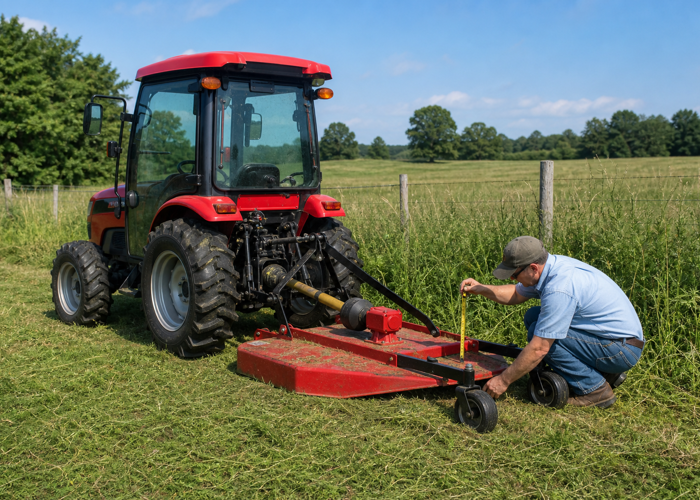
Compact Tractor Rotary Cutter Setup for Overgrown Pasture: Deck Height, PTO Speed, and Slope Planning
A practical guide to setting up a compact tractor and rotary cutter for overgrown pasture, covering deck height, PTO speed, route planning, and slope safety.
Compact Tractor Rotary Cutter Setup for Overgrown Pasture: Deck Height, PTO Speed, and Slope Planning matters because this kind of job exposes small setup mistakes quickly. A compact tractor can look capable in the yard and still work poorly once heavy grass, hidden bumps, and fence-line turns starts. Operators who browse the farm tractor range often compare horsepower first, but this job usually depends more on deck height, travel pace, and slope route and the order in which the operator sets the machine up.
The right choice is rarely a single spec-sheet number. A clean first cut without scalping or sudden load spikes depends on ballast, tire grip, PTO behavior, ground condition, and whether the operator can maintain a repeatable working rhythm. The machine selection ideas on the tractor application solutions page are useful because they frame the tractor as a work system instead of a loose list of features.
That is also why buyers comparing a utility model like the QL-904B tractor with other machines in the QiLu Machinery product lineup should think about the full task: how the implement starts, how the tractor turns, where weight transfers during the job, and which checks need to happen before the first pass. Those details are what separate a smooth workday from avoidable downtime or unsafe improvisation.
Why This Job Punishes a Casual Setup
The task becomes difficult when the operator assumes the tractor can simply pull or spin its way through it. A mower deck set too low or a route that forces awkward uphill turns can overload the tractor long before the operator notices the finish deteriorating. That is why the OSHA guidance on agricultural tractor operation and Penn State Extension’s tractor safety overview both stay focused on stability, shielding, operator attention, and terrain instead of treating the job as a pure power question.
The same lesson appears in the University of Minnesota’s tractor safety guidance and the CDC’s agricultural injury resources: once an operator works on uneven ground, near rotating equipment, or around repeated transport and hookup steps, discipline matters more than confidence. A tractor that is technically big enough can still be a poor match if the tires, speed range, implement angle, or travel path are wrong.
Match The Tractor To The Actual Working Pace
Start by deciding how slowly or steadily the tractor must work, not how fast it could work. In tall pasture, the correct pace is the one that keeps PTO speed stable while the tractor holds its line and the deck clears material evenly. When the job has a clear target pace, the operator can choose the gear, engine speed, ballast level, and turning pattern that keep the machine composed rather than constantly correcting.
Build The Day Around Ground Condition And Clearance
Ground condition often decides the setup before the implement even begins. Pasture edges often hide wet pockets, old ruts, wire, and abrupt side-slope changes, so the operator should mark obstacles and decide which passes should be uphill, downhill, or avoided entirely. If the approach path is soft, rough, or narrow, that path should influence tire choice, ballast, and route planning before the implement enters the work zone.
Checks To Make Before The First Pass
Before starting, confirm the site, the route, and the support plan. Walk the fence line, identify rocks or debris, and decide where clippings can discharge safely without throwing material toward roads, buildings, or animals If the job could expose buried utilities or hidden edges, start with 811 utility locating and visible marking rather than assuming the work area is clear.
Then confirm operator protection and implement condition. Check blade condition, driveline shielding, top-link angle, tailwheel behavior, and whether the PTO range lets the tractor hold steady engine speed without forcing an uncomfortable travel speed That is the practical value of revisiting the OSHA and extension references before a seasonal task resumes: they force the operator to ask whether the setup is truly ready or merely familiar.
Finally, decide what a clean first hour looks like. The opening passes should tell you whether the deck is leaving a level finish, whether clippings are clearing, and whether the tractor remains stable through the first slope transitions A tractor setup should be judged by repeatability: can the machine keep the same line, the same PTO rhythm, and the same operator visibility without extra strain?
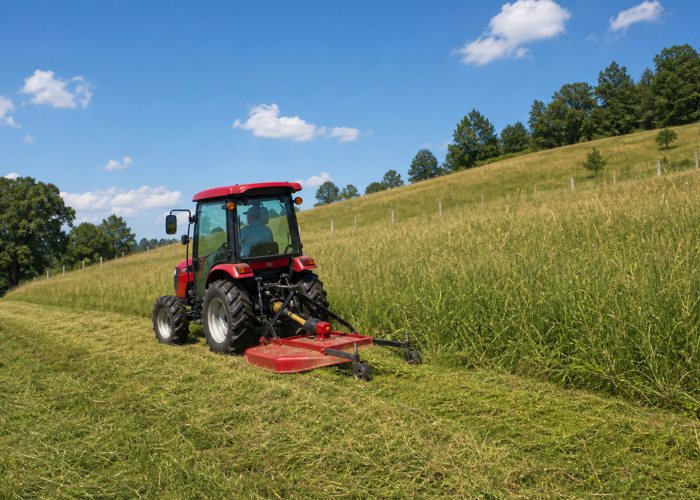
Once the first pass begins, the operator should stay disciplined about pace. If grass volume increases, the operator should widen the overlap or reduce ground speed before the deck begins windrowing heavily This is where many tractors perform well on paper but poorly in practice, because the operator keeps adjusting rather than following a stable plan.
Load transfer also needs attention during the working run. On sloped ground, one correction to route direction or cutter height is safer than repeatedly forcing the tractor through a line that already feels uncomfortable Small corrections made early are cheaper than one large correction made after the implement or trailer is already out of line.
If the setup is right, the job starts to look uneventful. The tractor tracks cleanly, the implement stays predictable, and the operator is free to watch the work rather than fight the machine. That is usually the clearest sign that the machine choice and setup order were correct.
A Practical Workflow For The Job
| Work stage | What the tractor must do | What to verify before moving on |
|---|---|---|
| Walk the field edge | Mark obstacles, fence hardware, wet spots, and discharge risks | The operator knows where to start and which line not to take |
| Set deck and PTO | Choose cutter height, overlap, and engine speed for steady blade tip speed | The deck clears material without repeated bogging |
| Open the first lanes | Take controlled passes that reveal slope and grass density changes | The tractor stays composed and the cut looks even |
| Finish boundary cleanup | Trim along fence lines and awkward corners with deliberate turns | The job ends cleanly without rushed last-minute turns |
This sequence is useful because it keeps the operator from skipping ahead. A tractor that is rushed into the main task without those checkpoints often creates the very delays it was supposed to prevent.
How To Set Deck Height And Overlap For The First Hour
The first hour usually decides whether the mowing plan is realistic. In mixed-height pasture, start high enough that the cutter is trimming and clearing material instead of trying to pulverize the whole stand in one pass. Extension guidance from University of Missouri and forage management references from Oklahoma State Extension are useful here because they reinforce the idea that cut height and residue handling change regrowth, visibility, and deck load together.
A practical method is to open a short lane with conservative overlap, then stop and look behind the machine. If stems are folding over instead of cutting, if clumps are building under the deck, or if the tractor has to hunt between gears to stay on top of the load, the first correction should be deck height or travel speed rather than a more aggressive line. Buyers reviewing machines like the QL-504D tractor or similar units on the tractor category page should keep that in mind because a stable operating window is more valuable than a faster but narrower one.
Overlap should also reflect what the pasture is hiding. Near fence rows, brushy corners, and old wheel tracks, a smaller bite often protects both the driveline and the finish. Once the operator finds a repeatable pattern, the route can widen gradually, but the machine should earn that wider pass by holding PTO speed and leaving the same finish quality two or three strips in a row.
Support Equipment That Makes Rotary Cutting Safer And Cleaner
Rotary cutting jobs often go better when the tractor is not working alone. A chain saw for downed limbs, a marking flag bundle, a shovel, and a simple grease kit can save a surprising amount of downtime because they let the operator fix the real obstruction instead of forcing the cutter into it. The buyer guidance on the QiLu Machinery blog and the implement context on the product overview page are most useful when they are read as part of that support system, not as isolated equipment pages.
It also helps to plan how clippings and debris will be handled after the main cut. If the customer needs a clean entrance lane, an animal path, or a fence corner that will stay visible for future maintenance, the operator may need a second cleanup pass or a lighter finishing tool. Thinking that through before the tractor enters the field keeps the second half of the job from becoming rushed and is consistent with the terrain-first safety emphasis in the CDC agricultural injury resources.
That extra planning is often what turns a compact tractor rotary cutter setup from acceptable to professional. The machine finishes with fewer missed strips, fewer abrupt turns, and less improvised cleanup, which is exactly what owners want when one tractor has to cover mowing, loader work, transport, and fence-line maintenance during the same season.
How Conditions Change The Setup Midday
Weather and surface change matter even after the machine is already working. A dry lane can soften after irrigation, a pasture edge can hide more moisture than the center, and a transport ramp that felt secure in the morning can become slick in the afternoon. Operators should therefore treat the first successful pass as a baseline, not as a guarantee that the same settings will still be right later in the day.
That is also why it helps to pause after the first third of the job and ask whether the tractor is still balanced, whether tire grip still feels the same, and whether the implement is still leaving the intended result. If those answers change, the right reaction is to adjust the plan deliberately instead of pushing through because the machine has already started.
Know When A Different Tool Is Better
A disciplined operator also knows when the tractor should not solve the whole problem alone. Some jobs need a different attachment, more staging help, drier ground, or another machine for the tightest or steepest section. Changing the tool or delaying the task is not lost time if it prevents damage, unsafe operation, or an expensive cleanup later.
What To Record For The Next Job
One of the most useful ownership habits is writing down what the successful setup actually was. Deck height, auger diameter, tie-down order, ballast amount, and the travel speed that felt stable are all details worth saving. Those notes turn one good day into a repeatable operating standard instead of forcing the next operator to relearn the job from memory.
That record should also include what changed the plan. If a soft shoulder forced a new route, if taller grass demanded extra overlap, or if a trailer needed a different load position than expected, write that down too. Those are the lessons that improve future machine selection and help buyers compare whether a different tractor or attachment would make the work easier.
Over time, that kind of practical record becomes more valuable than marketing language because it connects the tractor directly to jobs the owner really performs. It is also the clearest way to decide whether the current machine still fits the workload or whether another model in the same product family would reduce strain, downtime, or safety compromises.
A Buyer Checklist Before Choosing The Tractor
Before buying or assigning a tractor to this job, ask a few blunt questions. Can the machine hold the correct working speed without forcing the operator to rush? Can the tires, ballast, and hitch geometry support the actual ground condition? Can the operator see the critical part of the task clearly enough to work calmly? Those questions tend to reveal fit much faster than another horsepower comparison.
It also helps to compare the tractor against the ownership pattern around it. If the same machine must handle mowing, fence work, transport, loader chores, and seasonal support, then setup flexibility matters as much as raw strength. That is why attachment changeover time, storage space, and operator familiarity deserve a place in the buying decision too.
Operators who use that checklist usually make more durable choices because they are comparing the tractor to recurring jobs instead of to advertising language. A machine that feels slightly less impressive on paper can still be the more valuable purchase when it performs the actual route, attachment, and terrain sequence with fewer compromises.
Where Owners Commonly Go Wrong
They Size The Tractor Around The Marketing Number
They buy around horsepower alone and ignore whether the chassis, tire setup, and operating range suit repeated pasture work on rough ground That is why the product application solutions pages are more useful than broad advertising language: they push buyers back toward job fit, terrain, and attachment behavior.
They Treat The Support Plan As Optional
They treat route marking and cleanup tools as afterthoughts, then stop the mowing run repeatedly to move hazards or clear wrapped material Support items such as markers, chains, extra pins, tie-down gear, or cleanup tools should be loaded deliberately rather than borrowed from memory once the tractor is already in position.
Another frequent mistake is ignoring the second half of the job. Operators often think about the opening move and forget about the turns, reloads, cleanup, or transport steps that happen later. Yet those later steps are where fatigue, rushed decisions, and poor visibility start to matter most.
It also helps to record the setup that worked. Tire pressure, ballast amount, hitch setting, travel speed, and a note about ground condition make the next job faster to prepare. That practical record is more valuable than vague memory, especially when the tractor rotates among several operators or seasonal tasks.
Buyers who want a tractor that stays useful across several work patterns should keep comparing the machine against real applications rather than just against other spec sheets. The QiLu Machinery blog is the right place to keep that kind of practical decision framework because it ties the machine back to daily ownership instead of abstract advertising claims.
FAQ
What matters most in a compact tractor rotary cutter setup?
Deck height, PTO stability, route planning, and traction matter more than chasing the fastest ground speed. The tractor should hold a calm working rhythm and leave a level cut without frequent corrections.
Should the first pass through overgrown pasture be full width?
Usually no. In heavy material, a partial-width first pass often keeps the PTO load steadier and gives the operator a cleaner view of hidden obstacles and slope changes.
How do slope conditions change mowing setup?
They affect route direction, travel speed, deck height, and whether the job should wait for drier ground. If the tractor feels unstable or the tires start losing composure, the route or schedule needs to change.
What is the most common pasture mowing mistake?
Starting with the deck too low and the route undefined. That combination encourages scalping, overload, and rushed steering adjustments in the same first hour.