Correo electrónico: [email protected] WhatsApp: +8618266768780

Correo electrónico: [email protected] WhatsApp: +8618266768780


Engine displacement measures the total volume of air and fuel your engine can draw in during one complete cycle, directly impacting how much power and torque your vehicle produces. CC ratings simply show this volume in cubic centimeters, so understanding them helps you choose the right balance between performance and efficiency for your driving needs.
Engine displacement describes the total volume of air and fuel your engine can draw in during one complete cycle. Automotive engineering standards define this as the combined volume swept by all the pistons inside the cylinders from the top dead center to the bottom dead center. You calculate this value by multiplying the stroke length (how far the piston travels), the area of the cylinder (determined by the bore diameter), and the number of cylinders. This measurement gives you a clear idea of the engine’s capacity to generate power.
For example, if you drive a vehicle with four cylinders, each with a bore of 70 mm and a stroke of 80 mm, you can use the formula:
Displacement = stroke length × π × (bore/2)² × number of cylinders
This calculation helps you understand how much air and fuel your engine can process, which directly affects performance.
Manufacturers often express engine displacement in cubic centimeters (CC). One CC equals one milliliter, so a 1,500 CC engine has a total swept volume of 1,500 milliliters. This unit provides a precise measurement, especially for smaller engines like those found in motorcycles or compact cars.
Larger engines usually use liters as the standard unit. One liter equals 1,000 CC. For example, a 2.0-liter engine has a displacement of 2,000 CC. The table below shows how you can convert between these units:
| Displacement (CC) | Displacement (Liters) |
|---|---|
| 998 | 1.0 |
| 1,498 | 1.5 |
| 1,997 | 2.0 |
| 2,998 | 3.0 |
You can use these conversions to compare different vehicles and understand their engine sizes more easily.
Engine displacement directly relates to the physical size of the engine block. A higher displacement means the engine has larger or more cylinders, which increases the total volume available for combustion. This often results in a physically larger engine. However, modern technology such as turbocharging allows smaller engines to produce power similar to larger ones. You no longer need to assume that a bigger engine always means better performance.
When you compare vehicles, you should look at both the engine displacement and the technology used. For instance, a 1.5-liter turbocharged engine can deliver similar performance to a naturally aspirated 2.0-liter engine. This shift in technology means you can choose a vehicle that balances size, efficiency, and power for your needs.
Tip: Always check the engine displacement and the type of technology used before making a decision. This approach ensures you select a vehicle that matches your driving style and performance expectations.
Engine displacement plays a crucial role in determining how much horsepower an engine can produce. When you increase the size of the engine, you allow it to burn more air and fuel with each cycle. This larger volume leads to a higher potential for generating horsepower. However, the relationship between displacement and horsepower can vary depending on the type of engine you choose. For example, gasoline engines typically deliver more horsepower per unit of displacement than diesel engines. The table below highlights this difference:
| Tipo de motor | Horsepower Output (at same displacement) |
|---|---|
| Gasolina | 100% |
| Diesel | ~66% |
If you compare two engines with the same displacement, the gasoline engine will usually produce more horsepower. This difference comes from the way each engine type combusts fuel and manages air intake. When you select a vehicle, you should consider how the engine type and displacement work together to meet your performance expectations.
Engine displacement also has a direct impact on torque production. As you increase the size of the engine, the volume of the cylinders grows much faster than the area of the valves. This means that larger engines often have a lower valve area to displacement ratio, which can limit how efficiently the engine breathes at higher speeds. As a result, bigger engines tend to reach their peak torque at lower RPMs. You will notice that vehicles with larger displacement engines often feel stronger and more responsive at low speeds, making them ideal for towing or carrying heavy loads. On the other hand, smaller engines can achieve higher volumetric efficiency and reach their torque peak at higher RPMs, which suits sporty driving styles.
Note: When you choose an engine, think about how you plan to use your vehicle. If you need strong low-end power for hauling or off-road driving, a larger displacement engine may serve you better. For quick acceleration and high-revving performance, a smaller engine with advanced technology could be the right fit.
You can see the real-world impact of engine displacement by comparing engines with similar sizes but different designs and purposes. The table below shows two 2.0-liter engines with very different power outputs:
| Modelo de motor | Desplazamiento | Potencia de salida | Design Purpose |
|---|---|---|---|
| Honda S2000 F20C | 2.0L | 250 hp | Sports car |
| Toyota Hilux 1RZ-E | 2.0L | 110 hp | Utility vehicle |
Both engines have the same displacement, but the sports car engine produces much more horsepower. This difference comes from the way each engine is tuned and built. The sports car engine uses higher-revving components and advanced engineering to maximize power, while the utility vehicle engine focuses on durability and low-end torque. When you look at engine displacement, always consider the intended use and design of the engine. This approach helps you find the right balance between power, efficiency, and reliability for your needs.
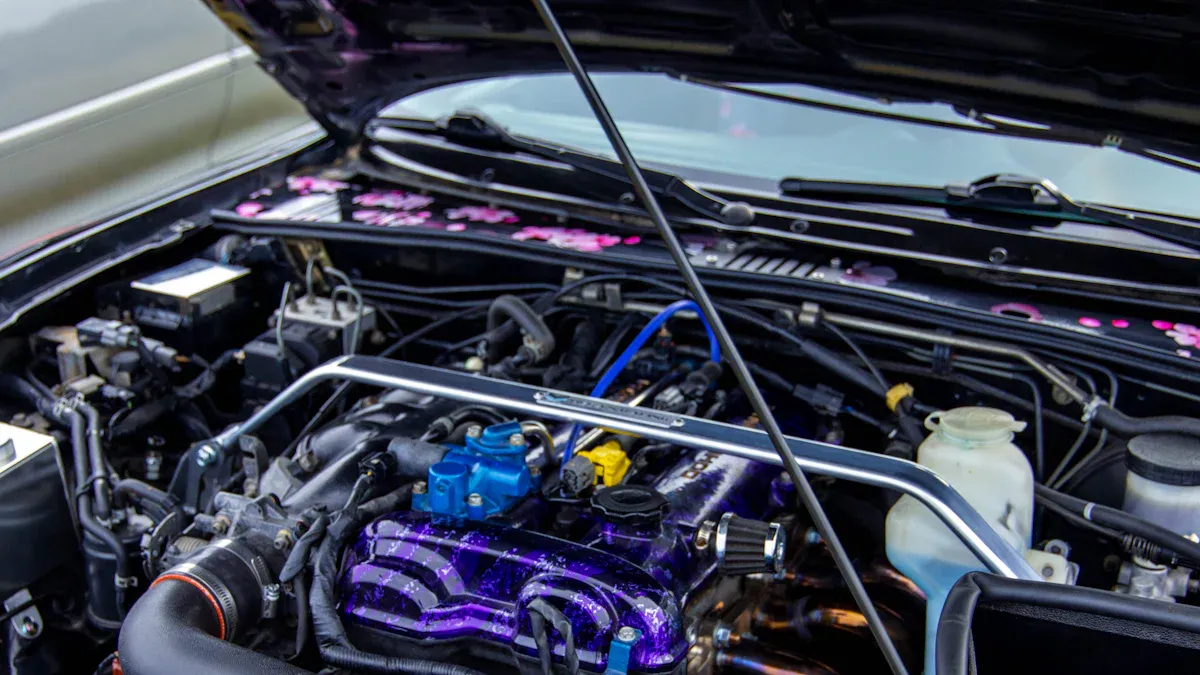
When you drive a vehicle with a larger engine, you notice higher fuel consumption. Bigger engines draw in more air and fuel with each cycle. This process increases the energy output, but it also means the engine burns more fuel every time you accelerate or maintain speed. If you compare a compact car with a small engine to a full-size vehicle with a large engine, you see a clear difference in miles per gallon (MPG).
Here is a comparison of typical fuel consumption for different engine sizes:
| Engine Size (Liters) | Average City MPG | Average Highway MPG |
|---|---|---|
| 1.2 | 32 | 41 |
| 1.8 | 28 | 36 |
| 2.5 | 24 | 32 |
| 3.5 | 20 | 27 |
You can see that as engine size increases, fuel efficiency drops. Larger engines provide more power, but you pay for it at the pump.
You do not have to sacrifice all power for better fuel economy. Modern vehicle design focuses on balancing these two factors. Manufacturers use several strategies to help you get the most out of every gallon of fuel:
You benefit from these technologies because they let you enjoy strong acceleration and smooth driving while keeping fuel costs under control. Downsized engines with turbochargers also give you the power of a larger engine with the efficiency of a smaller one. Hybrid systems combine electric motors with gasoline engines, offering even better fuel savings in city driving.
Tip: When you choose a vehicle, look for models that use advanced engine technologies. These features help you balance your need for power with your desire for lower fuel bills.
Automotive engineers have developed several technologies to improve fuel economy, especially in vehicles with higher engine displacement. The table below highlights some of the most effective solutions:
| Tecnología | Descripción |
|---|---|
| Gasoline Direct Injection (GDI) | Improves fuel economy and emissions by allowing for better control of the air/fuel mixture. |
| Power On Demand (POD) | Adjusts engine output to match demand, improving efficiency by disabling unused cylinders. |
| Turboalimentación | Increases power output by forcing more air and fuel into the cylinders, compensating for efficiency losses. |
| Homogeneous Charge Compression Ignition (HCCI) | Aims to reduce emissions by using compression ignition similar to diesel engines. |
| Hybrid Systems | Combines gasoline engines with electric motors to optimize efficiency and reduce emissions. |
You see these technologies in many modern vehicles. They help you enjoy the benefits of strong performance without the penalty of high fuel consumption. If you want to learn more about how these systems work, you can visit trusted industry resources like SAE International or follow automotive experts on LinkedIn.
Engine Displacement remains a key factor in fuel efficiency, but smart engineering and new technologies give you more options than ever before.
When you press the accelerator, the engine’s ability to deliver power quickly determines how fast your vehicle responds. Engine displacement plays a major role in this process. Larger engines can burn more air and fuel with each cycle, which means they generate more torque at lower RPMs. This extra torque helps you achieve faster acceleration, especially when starting from a stop or overtaking on the highway.
Consider the following table, which compares typical 0-60 mph times for vehicles with different engine displacements:
| Engine Displacement (Liters) | Typical 0-60 mph Time (Seconds) |
|---|---|
| 1.2 | 11.5 |
| 1.6 | 9.8 |
| 2.0 | 8.2 |
| 3.0 | 6.5 |
You can see that as engine displacement increases, acceleration times improve. However, modern technologies such as turbocharging and advanced engine management systems allow smaller engines to deliver impressive acceleration as well. If you want to learn more about how engine size affects acceleration, you can visit Car and Driver for detailed performance reviews.
Tip: If you need strong acceleration for merging onto highways or carrying heavy loads, choose a vehicle with higher engine displacement or advanced forced induction technology.
Engine displacement directly impacts the maximum speed your vehicle can reach. Larger engines produce more power, which is essential for achieving higher top speeds. The volume of air-fuel mixture the engine can utilize determines how much energy it can generate. However, top speed depends on more than just engine size.
Aerodynamics play a significant role. Vehicles with streamlined shapes face less air resistance, allowing them to reach higher speeds with less effort. Heavier and bulkier cars experience more drag, which limits their top speed compared to lighter, more aerodynamic models. Weight also affects how quickly a vehicle can accelerate to its top speed.
For a deeper understanding of how aerodynamics and weight influence top speed, you can explore resources from SAE International.
You should consider several additional factors that affect overall vehicle performance beyond engine displacement:
Nota: Aerodynamics plays a huge role in vehicle development, affecting drag and efficiency. Forced induction boosts power, while high-quality fuel improves efficiency. You can find more technical insights on LinkedIn from automotive engineers and industry experts.
When you evaluate a vehicle’s performance, look at the whole package. Engine displacement sets the foundation for power and speed, but technology, design, and maintenance all contribute to the driving experience.
You often see CC listed in engine specifications. CC stands for cubic centimeters. This measurement tells you the total volume of all the pistons in an engine. Manufacturers use CC to describe how much air and fuel the engine can draw in during one complete cycle. When you look at CC, you get a clear sense of the engine’s capacity and its potential for performance. A higher CC rating usually means the engine can handle more fuel and air, which can translate to more power. You can find more details about engine specifications on Edmunds.
Tip: When comparing vehicles, always check the CC rating to understand the engine’s size and what kind of performance you can expect.
Puede calculate engine displacement in cubic centimeters by following a standard method. This process helps you understand exactly how manufacturers arrive at the CC number you see in brochures or online listings.
Here’s a practical example:
| Bore (mm) | Stroke (mm) | Cylinders | Displacement (CC) |
|---|---|---|---|
| 70 | 80 | 4 | 1,231 |
You can use the formula:Displacement = π × (bore/2)² × stroke × number of cylinders
For this example:Displacement = 3.14 × (35)² × 80 × 4 ≈ 1,231 CC
If you want to try your own calculations, you can use online calculators from trusted sources like Engineering Toolbox.
CC ratings have a direct impact on how your vehicle performs. When you choose an engine with a higher CC rating, you usually get more power. This extra power helps you accelerate faster and handle demanding tasks with ease. You also notice that engines with higher CC ratings can deliver smoother and quicker performance, especially when you need to overtake or drive uphill.
Note: Always consider how you plan to use your vehicle. If you need strong performance for towing or frequent highway driving, a higher CC engine may serve you well. For daily commuting, a lower CC engine with modern efficiency features could be the smarter choice.
You can learn more about how CC affects performance by visiting SAE International or following automotive experts on LinkedIn.
You should start by evaluating your daily driving habits and the primary purpose of your vehicle. If you drive mostly in the city, a smaller engine will help you save on fuel and reduce emissions. For frequent highway commuting, you may want an engine that balances efficiency with enough power for smooth acceleration. If you plan to tow heavy loads or seek high-performance driving, a larger engine will deliver the torque and horsepower you need.
Tip: Consider how often you drive in stop-and-go traffic, travel long distances, or carry heavy cargo. Your routine will guide you toward the right engine size.
Engine Displacement directly affects how well your vehicle meets specific driving goals. The following table summarizes recommended engine sizes for common driving scenarios:
| Driving Goal | Engine Size Range | Beneficios |
|---|---|---|
| City Driving | 1.0L–1.8L | Better fuel economy, lower emissions, affordable to run |
| Highway Commuting | 2.0L–3.0L | Good balance of efficiency and power |
| Performance Driving/Towing | 3.5L or more | Extra torque and horsepower for heavy loads |
For example, if you commute daily and occasionally tow a small trailer, you might choose an engine around 2.5L. If you need to haul a boat or camper, a larger engine above 3.5L will provide the necessary strength.
You can find more guidance on matching engine size to your needs from resources like Edmunds y SAE International.
When you compare CC ratings, look beyond just the numbers. Higher CC often means more power, but it also brings higher fuel consumption and increased maintenance costs. According to industry studies, vehicles with larger engines tend to require more expensive upkeep. You should factor in not only the purchase price but also long-term expenses such as repairs, parts, and fuel.
Nota: Maintenance costs rise with engine size. If you want to keep expenses low, consider a smaller engine with modern efficiency technologies.
To make an informed decision, follow these steps:
A practical case: If you drive mostly in urban areas and value low running costs, a 1.5L engine will serve you well. If you need versatility for both city and highway driving, a 2.0L engine offers a balanced solution. For heavy-duty tasks, select a higher CC engine, but prepare for increased maintenance and fuel expenses.
Tip: Always match your engine choice to your lifestyle and budget. Use online calculators and expert reviews to compare options before making a final decision.
Many drivers believe that a larger engine always means better performance. This idea does not always hold true in today’s automotive world. You may notice that bigger engines can deliver impressive power and acceleration. However, they often come with trade-offs.
Note: You should focus on your actual driving needs rather than engine size alone. For most city and highway driving, a smaller engine with advanced features provides all the power you need while saving fuel.
You might wonder how small engines can deliver high power. The answer lies in advanced engineering. Manufacturers use several technologies to boost the output of compact engines. These innovations help you enjoy strong performance without the drawbacks of a large engine.
| Tecnología | Beneficio |
|---|---|
| Turboalimentación | Increases power at higher speeds while reducing friction and pumping losses. |
| High Compression Ratios | Improves thermal efficiency, letting small engines rival larger ones in power. |
| Variable Geometry Turbochargers | Reduces turbo-lag and optimizes performance across different speeds. |
| Two-stage Turbocharging | Combines small and large turbos for better response and power delivery. |
| Electric Turbocharging | Uses an electric motor to enhance performance and reduce lag. |
You benefit from these technologies in several ways:
If you want to see how these technologies work in real vehicles, you can explore technical articles on SAE International or follow discussions on LinkedIn.
Modern engineering has changed the way you should think about engine displacement. In the past, only large engines could deliver high horsepower. Today, you see smaller engines outperforming much larger ones, thanks to advanced technology.
Consider this comparison:
| Tipo de motor | Potencia de salida | Eficiencia de combustible |
|---|---|---|
| 2.0-liter four-cylinder | 469 hp | More fuel-efficient than V8s |
| 8.0-liter V10 | 400 hp | Less fuel-efficient than smaller engines |
A modern 2.0-liter engine can produce more horsepower than an older, much larger engine, while using less fuel. This shift means you can choose a vehicle that offers both performance and efficiency.
Tip: When you compare vehicles, look at the combination of engine displacement and technology. Do not rely on size alone. Review expert opinions on Car and Driver o conéctese con profesionales de la industria en LinkedIn for up-to-date insights.
You can make smarter decisions by understanding how technology offsets the traditional advantages of high displacement. This approach ensures you get the best value and performance for your needs.
You now understand that engine displacement y CC ratings directly shape vehicle power and efficiency.
Engine displacement measures the total volume your engine’s cylinders sweep as the pistons move from top to bottom. This value, usually in cubic centimeters (CC) or liters, indicates how much air and fuel the engine can process in one cycle.
A higher CC often means more potential power, but not always. Modern technologies like turbocharging and direct injection let smaller engines match or exceed the performance of larger ones. Always check the engine’s technology and tuning.
Larger engines burn more fuel per cycle, which usually lowers fuel economy. Smaller engines, especially those with advanced efficiency features, help you save on gas. For more details, see EPA Fuel Economy.
Yes, many small engines deliver strong highway performance, especially with turbocharging or hybrid systems. You can expect smooth acceleration and steady cruising speeds from a well-designed small engine.
Engine displacement refers to the swept volume inside the cylinders, not the physical size of the engine block. Two engines with the same displacement can differ in actual size and weight due to design differences.
You can use this formula:
Displacement = π × (bore/2)² × stroke × number of cylinders
Measure bore and stroke in centimeters or millimeters, then multiply by the number of cylinders for total CC.
Larger engines often require more oil, bigger parts, and sometimes more frequent servicing. You may face higher maintenance costs over time. Always review maintenance schedules before choosing an engine.
For city driving, engines between 1.0L and 1.8L (1,000–1,800 CC) offer excellent fuel efficiency and easy maneuverability. You get lower running costs and enough power for daily commutes.







-1.png)