Correo electrónico: [email protected] WhatsApp: +8618266768780
Correo electrónico: [email protected] WhatsApp: +8618266768780


Adaptar la potencia del tractor a las necesidades de su granja impulsa la eficiencia y reduce los costos. Quiere un tractor que se ajuste a su tierra y a sus tareas sin desperdiciar combustible ni dinero. Muchos agricultores se enfrentan a la decisión entre un tractor de 60 CV y uno de 90 CV, lo que puede influir en la productividad y los gastos a largo plazo. Por ejemplo:
Para elegir la potencia adecuada, considere su superficie, los tipos de trabajos que aborda, las condiciones del suelo y sus planes para el crecimiento futuro.
Seleccionar la potencia adecuada para su tractor impacta directamente en la productividad y eficiencia de su granja. Confía en su tractor para completar una amplia gama de tareas, desde tareas ligeras hasta trabajos de campo exigentes. La potencia que elija determina la rapidez y eficacia con la que puede terminar estos trabajos.
Cuando adapta la potencia del tractor a las necesidades de su granja, maximiza la producción y minimiza el esfuerzo desperdiciado.
Considere el principales factores que hacen que la selección de caballos de fuerza atât de important:
La potencia del tractor también influye en la eficiencia del combustible y los costos operativos. Los modelos de mayor potencia suelen consumir más combustible, pero cuando se combina la potencia adecuada con los implementos adecuados, se logra una mayor eficiencia operativa. Gestionar la velocidad y la carga del motor puede mejorar aún más la economía de combustible y reducir los gastos con el tiempo.
Necesitas mayor potencia para tareas ca:
Elegir la potencia adecuada garantiza que su tractor pueda realizar estos trabajos sin esfuerzo, manteniendo su granja funcionando sin problemas durante todo el año.
Usar un tractor con demasiada o muy poca potencia puede crear desafíos importantes. Si seleccionas un modelo con potencia excesiva, puedes enfrentarte mayores costos debido al aumento de la depreciación e interés. Por otro lado, una potencia insuficiente puede provocar un desgaste más rápido del motor y una eficiencia reducida. Este desajuste puede ralentizar su trabajo, aumentar el consumo de combustible y aumentar los gastos de mantenimiento.
Adaptar la potencia del tractor al tamaño y las tareas de su granja protege su inversión y respalda la productividad a largo plazo.
Evita costos y tiempos de inactividad innecesarios cuando elige la potencia adecuada. Esta cuidadosa selección le ayuda a aprovechar al máximo su equipo, garantizando que cada tarea se complete de manera eficiente y confiable.
A menudo se escucha el término “caballos de fuerza” al comparar tractores, pero ¿qué significa realmente para su granja? Los caballos de fuerza miden la tarifa en el que su tractor puede trabajar. En agricultura, este valor le indica cuánta potencia puede entregar su máquina para completar tareas como arar, labrar o transportar. Comprender los diferentes tipos de caballos de fuerza le ayuda a tomar decisiones informadas sobre qué tractor se adapta mejor a sus necesidades.
Los caballos de fuerza no son sólo un número: son un indicador directo de la capacidad de su tractor para realizar trabajos específicos de manera eficiente.
Existen varios estándares y mediciones en la industria. La siguiente tabla describe los principales tipos de caballos de fuerza și definiții lor:
| Tipo de caballos de fuerza | Estándar de definición y medición |
|---|---|
| Caballos mecánicos | Calculado utilizando par y RPM del motor, dividido por 5252. Los protocolos de prueba pueden afectar los resultados. |
| Caballos de fuerza de la toma de fuerza | Medido en la toma de fuerza (PTO) del tractor, calculado por el par y la velocidad a una velocidad constante de la PTO. |
| Caballos de fuerza de la barra de tiro | Se determina tirando de una carga ponderada con un extensímetro, midiendo la capacidad del tractor para tirar de los implementos. |
| Normas SAE | Las clasificaciones de caballos de fuerza en América del Norte siguen los estándares SAE, que incluyen factores de corrección para condiciones ambientales como presión barométrica y humedad. |
| Caballos de fuerza brutos versus netos | La potencia bruta es la producción total sin pérdidas. La potencia neta representa todos los componentes instalados y los factores ambientales. |
Debes prestar atención a estas distinciones. Por ejemplo, los caballos de fuerza de la toma de fuerza le indican cuánta potencia hay disponible para los implementos, mientras que los caballos de fuerza de la barra de tiro reflejan la fuerza de tracción del tractor en el campo.
¿Por qué los caballos de fuerza importan tanto en la agricultura del mundo real? La respuesta radica en cómo la producción de energía se traduce en rendimiento. La potencia adecuada garantiza que su tractor pueda tirar de implementos pesados, mantener velocidades constantes y operar de manera eficiente en diferentes terrenos.
Cuando selecciona un tractor, desea saber cómo la potencia afecta la capacidad de tracción y la velocidad. La siguiente tabla resume métricas clave de rendimiento:
| Parámetro | Efecto sobre las métricas de rendimiento |
|---|---|
| Altura de la barra de tiro | Impacto significativo en la fuerza de tracción y el consumo de combustible |
| Velocidad del tractor | Impacto significativo en la fuerza de tracción y la eficiencia general |
| Eficiencia general | Sólo la velocidad del tractor tuvo un impacto significativo |
| Valor R² para el modelo de fuerza de tracción | 0,98 (mejor rendimiento) |
| Métricas de error | Mejor rendimiento mostrado por el modelo general de eficiencia del tractor |
Puede ver que tanto la altura de la barra de tiro como la velocidad del tractor desempeñan un papel importante en la eficacia con la que su tractor utiliza sus caballos de fuerza. Una altura de barra de tiro más alta o una velocidad inadecuada pueden reducir la fuerza de tracción y aumentar el uso de combustible. Cuando adapta la potencia de su tractor a las necesidades de su granja, maximiza la eficiencia y minimiza el desperdicio.
Elección de la caballos de fuerza correctos no se trata sólo de energía bruta. Se trata de garantizar que cada gota de combustible y cada hora de trabajo brinde los mejores resultados posibles para su operación.
Comprender estos detalles técnicos le permite seleccionar un tractor que funcionará de manera confiable, ahorrará costos operativos y respaldará la productividad de su granja en los años venideros.
Cuando evalúa su granja, el tamaño y la superficie cultivada desempeñan un papel fundamental a la hora de determinar la potencia óptima del tractor. Las granjas más grandes exigen tractores más potentes para cubrir extensos campos de manera eficiente. Las propiedades más pequeñas a menudo se benefician de modelos compactos que ofrecen maniobrabilidad y menores costos operativos. Debes elegir la potencia adecuada para que coincida con la escala de tu operación.
Las pautas de la industria sugieren que a medida que aumenta su superficie cultivada, también aumenta la necesidad de mayor potencia. Este enfoque le ayuda a evitar equipos con poca potencia que ralentizan la productividad o máquinas con potencia excesiva que desperdician recursos.
Los tipos de tareas que realiza y los implementos que utiliza influyen directamente en sus necesidades de potencia. Debes evaluar tus operaciones diarias, desde arar y plantar hasta transportar y cosechar. Cada implemento requiere una cantidad específica de energía para funcionar de manera eficiente.
Consejo: Hacer coincidir la potencia de su tractor con la de sus implementos evita la tensión del motor y maximiza la eficiencia.
Considere el siguiente tabla, que destaca cómo el tipo de suelo y los implementos requeridos afectan los requisitos de caballos de fuerza:
| Tipo de suelo | Implementos requeridos | Requisito de caballos de fuerza |
|---|---|---|
| Pesado o Arcilla | Arados de vertedera, arados de cincel | Se necesitan tractores más potentes para la compactación |
| Luz o arena | Gradas de discos, arados ligeros | Se recomienda equipo de iluminación para evitar la erosión |
| Franco y limoso | Cultivadores de púas y discos | Opciones flexibles basadas en tareas específicas |
Debe elegir la potencia adecuada para asegurarse de que su tractor pueda manejar los implementos necesarios para sus cultivos y las condiciones del suelo. Para tareas pesadas como arar profundamente o trabajar con implementos anchos, se necesitan mayores caballos de fuerza. Si utiliza equipos más livianos o se concentra en trabajos menos intensivos, un tractor de menor potencia puede ser suficiente.
Las condiciones del terreno y del suelo tienen un impacto significativo en su selección de caballos de fuerza. Los paisajes montañosos requieren tractores con más potencia para la tracción y la maniobrabilidad. Los campos planos permiten una mayor flexibilidad, pero el tipo de suelo aún importa.
La siguiente tabla resume cómo el terreno y el suelo afectan su decisión:
| Factor | Impacto en la selección de caballos de fuerza |
|---|---|
| Tipo de suelo | Los suelos arcillosos pesados requieren más caballos de fuerza que los suelos arenosos. |
| Terreno | El terreno montañoso aumenta las necesidades de caballos de fuerza para la tracción y la maniobrabilidad. |
Debes elegir la potencia adecuada para superar los desafíos que plantea tu tierra. Si su granja cuenta con pendientes pronunciadas o arcilla compactada, un tractor más potente le ayudará a mantener la productividad y la seguridad. En suelos más ligeros o terrenos llanos, puede optimizar la eficiencia con un modelo que se adapte a sus necesidades específicas.
Nota: Evalúe siempre las características únicas de su terreno antes de tomar una decisión final. Este paso le garantiza seleccionar un tractor que ofrezca un rendimiento confiable durante todo el año.
Al considerar el tamaño de la granja, los requisitos de las tareas y el terreno, toma decisiones informadas que respaldan la eficiencia a largo plazo. Cuando elige la potencia adecuada, invierte en equipos que satisfagan sus necesidades actuales y se adapten a desafíos futuros.
Quiere que su granja prospere no sólo hoy, sino en los años venideros. Cuando elige la potencia adecuada para su tractor, sienta las bases para la eficiencia y adaptabilidad a largo plazo. Muchos agricultores se centran únicamente en sus necesidades actuales. Sin embargo, pasar por alto una futura expansión puede generar costosas mejoras o reemplazos en el futuro.
Planificar el crecimiento significa pensar en el futuro sobre cómo podría cambiar su granja. Puede agregar más superficie, diversificar sus cultivos o invertir en nuevos implementos. Cada uno de estos cambios puede aumentar sus necesidades de energía.
Considere estas razones clave por las que debería hacerlo factor crecimiento futuro în decizia ta:
Cuando eliges la potencia adecuada, te das flexibilidad. Un tractor con suficiente potencia puede soportar tanto su carga de trabajo actual como las demandas de una operación en crecimiento. Este enfoque le ayuda a maximizar su inversión y evitar interrupciones innecesarias.
También debes considerar la compatibilidad de tu tractor con futuros implementos. A medida que avanza la tecnología, los nuevos accesorios pueden requerir más potencia. Al planificar con anticipación, se asegura de que su equipo siga siendo útil y eficiente a medida que evoluciona su granja.
Consejo: consulte con especialistas en equipos que puedan ayudarle a evaluar sus necesidades a largo plazo. Su experiencia puede guiarlo hacia un tractor que respalde sus objetivos presentes y futuros.
Elija la potencia adecuada no sólo para hoy, sino también para la granja que imagina mañana. Esta estrategia con visión de futuro protege su inversión y mantiene su operación funcionando sin problemas a medida que crece.
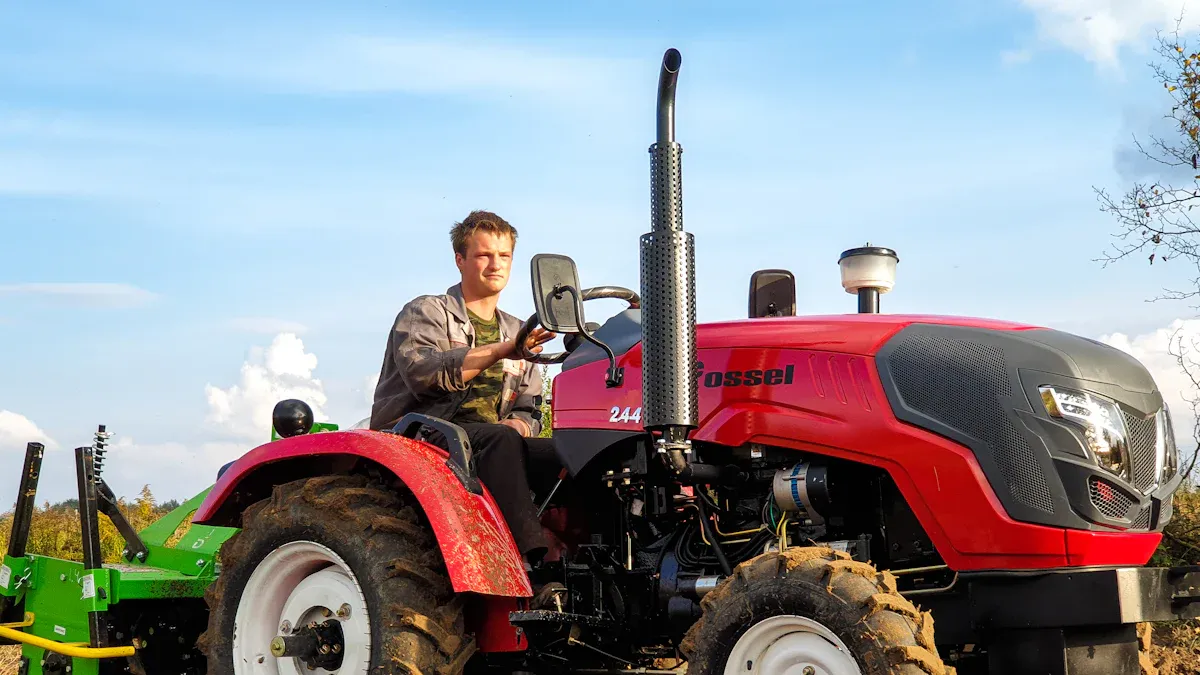
Encontrará tractores de 60 CV adecuados para pequeñas y medianas explotaciones, especialmente aquellas de hasta 100 acres. Estas máquinas ofrecen un rendimiento confiable para tareas diarias como cortar el césped, labranza ligera y empacar heno a pequeña escala. La tecnología moderna de estos tractores aumenta la eficiencia y respalda la confiabilidad a largo plazo. Usted se beneficia de un menor consumo de combustible, lo que le ayuda a gestionar los costos operativos y el impacto ambiental.
Cuando se aborda tareas agrícolas pesadas, es posible que un tractor de 60 HP no proporcione suficiente potencia. Es posible que note una capacidad de tracción reducida y un rendimiento más lento cuando trabaja con implementos grandes o maneja una gran superficie. Estos tractores pueden tener dificultades con aplicaciones exigentes, lo que los hace menos efectivos para operaciones a gran escala. Debe considerar su carga de trabajo y sus necesidades futuras antes de confiar en un modelo de 60 HP para tareas intensivas.
A tractor de 90 cv te da la capacidad de remolque cargas más grandes y pesadas, lo que aumenta la eficiencia del transporte en su granja. Puede colocar implementos como arados de cincel, gradas de discos, jardineras, pulverizadores, rastrillos para heno, empacadoras y cargadores frontales. Esta versatilidad le permite cubrir más terreno en menos tiempo, mejorando su productividad general.
Debe sopesar los costos operativos con las ganancias de eficiencia. La siguiente tabla compara métricas clave tractores de entre 60HP y 90HP:
| Tipo de tractor | Costos operativos | Métricas de eficiencia |
|---|---|---|
| 90 CV | Mayor debido al consumo de combustible para tareas exigentes | Mayor eficiencia para completar tareas rápidamente |
| 60HP | Más bajo, más económico para tareas ligeras | Más eficiente en combustible, adecuado para operaciones más pequeñas |
Verá que, si bien los tractores de 90 HP requieren más combustible, terminan trabajos grandes más rápido. Para granjas más pequeñas, un tractor de 60 HP ofrece una mejor economía de combustible y menores gastos generales.
Considere dos granjas con necesidades diferentes. En una propiedad de 75 acres, utiliza un tractor de 60 HP para cortar el césped, labrar liviano y transportar cargas pequeñas. Experimenta un rendimiento confiable y costos manejables. En una granja de 200 acres, opera un tractor de 90 HP con macetas anchas y rociadores pesados. Completas la siembra y fertilización en menos pases, ahorrando tiempo y mano de obra.
La Dra. Emily Carter, científica de suelos de la Universidad de California, Davis, afirma: “El aumento de la presión de la maquinaria pesada puede reducir significativamente la porosidad del suelo y el espacio aéreo”
Puede mitigar el impacto en el suelo eligiendo neumáticos más anchos y utilizando herramientas de agricultura de precisión. Las prácticas de labranza sostenible también ayudan a mantener la salud del suelo. El monitoreo y la adaptación continuos garantizan que su granja siga siendo productiva y rentable durante años.
Consejo: Haga coincidir la potencia de su tractor con su superficie, tareas e implementos. Este enfoque maximiza la eficiencia y protege su inversión.
Seleccionando el caballos de fuerza del tractor derecho comienza con una comprensión clara de los requisitos únicos de su granja. Debe observar tanto su carga de trabajo actual como lo que espera en el futuro. Comience enumerando las principales tareas que necesita que realice su tractor. Estos pueden incluir labrar, transportar, cortar o plantar. Para propiedades con diez acres o más o terreno accidentado, tractores utilitarios en el Rango de 45-85 caballos de fuerza a menudo proporcionan el mejor equilibrio entre potencia y eficiencia. Las operaciones más grandes pueden requerir tractores con 85 caballos de fuerza o más para manejar implementos exigentes y una gran superficie.
Consejo: elija un tractor con un poco más de caballos de fuerza que su requisito mínimo. Este enfoque le ayuda a evitar la tensión del motor y reparaciones inesperadas a medida que crece su carga de trabajo.
También debe considerar los tipos de implementos que planea utilizar y si prevé ampliar su granja o diversificar sus cultivos. Adaptar la potencia a su carga de trabajo prevista le garantiza mantener la eficiencia y evitar costosas actualizaciones.
Lista de verificación para evaluar las necesidades:
Muchos agricultores cometen errores similares al elegir los caballos de fuerza de los tractores. Puede evitar estos obstáculos adoptando un enfoque reflexivo:
Nota: Adapte siempre las capacidades de su tractor a su terreno y carga de trabajo. Esta práctica ahorra tiempo, dinero y frustración.
Por ejemplo, si opera en terrenos montañosos o suelos arcillosos pesados, necesita más caballos de fuerza para la tracción y el uso eficaz de implementos. Si solo considera las necesidades actuales, es posible que su tractor se quede pequeño rápidamente a medida que su granja se expande.
El soporte confiable y las funciones de seguridad avanzadas desempeñan un papel crucial en su satisfacción y seguridad a largo plazo como propietario de un tractor. Usted se beneficia de un fabricante que ofrece piezas de alta calidad y un servicio constante. Este soporte garantiza que su tractor siga siendo eficiente y seguro durante toda su vida útil.
| Característica | Descripción |
|---|---|
| Diseño ergonómico de la cabina | Asientos ajustables, interiores espaciosos y controles intuitivos para la comodidad del operador. |
| Sistemas de control climático | Aire acondicionado, calefacción y ventilación para un ambiente de trabajo confortable. |
| Estructura de protección contra vuelcos | Protege al operador en caso de vuelco, manteniendo la integridad de la cabina. |
| Visibilidad mejorada | Grandes ventanas, espejos y, a veces, cámaras o sensores para mejorar la seguridad. |
| Sistemas de detección de colisiones | Alerta a los operadores sobre obstáculos, ayudando a prevenir accidentes. |
| Sistemas de frenado automático | Detecta colisiones inminentes y aplica los frenos automáticamente. |
También obtiene la tranquilidad de saber que el servicio regular y el acceso a piezas de equipo original extienden la vida útil de su tractor y reducen el tiempo de inactividad. Las piezas y el mantenimiento de alta calidad protegen tanto su inversión como su seguridad.
Recuerde: la confianza en su equipo y red de soporte conduce a una mayor eficiencia, ahorro de costos y un entorno agrícola más seguro.
Al evaluar cuidadosamente sus necesidades, evitar errores comunes y confiar en sólidas características de soporte y seguridad, toma la mejor decisión para el futuro de su granja.
Elegir la potencia adecuada del tractor impulsa la eficiencia y la rentabilidad de su granja. Tanto los tractores con poca potencia como los con potencia excesiva pueden perjudicar su productividad y sus finanzas:
Debe evaluar su superficie, intensidad de tarea y crecimiento futuro. Consulte con expertos y explore una amplia gama de opciones confiables para garantizar que su equipo se ajuste a sus necesidades hoy y mañana.
Debe calcular la superficie total en la que trabaja y enumerar sus tareas principales. Para las pequeñas explotaciones, 40-60HP suele funcionar bien. Es posible que se necesiten operaciones más grandes 80HP sau mai mult. Considere siempre sus futuros planes de expansión.
Puede gastar más en combustible y mantenimiento de lo necesario. Los tractores de gran tamaño también pueden provocar la compactación del suelo. Seleccione caballos de fuerza que coincidan con su carga de trabajo diaria para obtener la mejor eficiencia y ahorro de costos.
Sí, puede utilizar un tractor para varios implementos si la potencia coincide con los requisitos del implemento más pesado. Siempre verifique la compatibilidad antes de conectar equipos nuevos.
Sí. El terreno montañoso o irregular requiere más caballos de fuerza para la tracción y la estabilidad. Los campos planos le permiten utilizar modelos de menor potencia de manera más eficiente.
Los suelos arcillosos pesados o compactados necesitan más potencia para tirar de los implementos. Los suelos arenosos o arcillosos requieren menos caballos de fuerza. Pruebe su suelo y adapte la potencia de su tractor a las condiciones más duras que enfrente.
Planifique el crecimiento futuro. Elija un tractor con suficiente potencia para realizar tanto sus tareas actuales como cualquier expansión que espere. Este enfoque le evita actualizar antes de lo necesario.
Busque protección contra vuelcos, controles ergonómicos y buena visibilidad. Los tractores modernos suelen incluir alertas al operador y sistemas de frenado automático. Estas características le ayudan a mantenerse seguro durante las operaciones diarias.
-1.png)