E-mail: [email protected] WhatsApp: +8618266768780

E-mail: [email protected] WhatsApp: +8618266768780


A Skid Steer Loader is the small farm’s multitool: compact, quick to turn in tight aisles, and capable of switching attachments in minutes. After a month of field evaluation on mixed‑use small farms (5–50 acres), I documented where a Skid Steer Loader truly shines: weaving between stalls, handling pallets of feed, fencing prep, brush and edge maintenance, and winter access—while keeping soil impact and ownership cost in check. If you’re weighing a Skid Steer Loader against a compact tractor or a mini skid, this deep‑dive explains the trade‑offs with practical, step‑by‑step workflows.
Before we go on, if you’re new to the category, you can browse representative models on Qilu’s site under chargeuses compactes. This guide remains brand‑neutral and focuses on the engineering principles that govern safe, efficient work on small farms.
Tight alleys, low headers, narrow gates—this is everyday reality on small farms. A Skid Steer Loader uses a short wheelbase and skid steering to pivot nearly in place, letting operators reposition without multi‑point turns. The compact footprint pays off in three ways: fewer stops/starts, fewer aisle blockages, and safer control when the bucket or forks must stay low.
Safety practices are non‑negotiable. University extension guidance emphasizes fundamentals such as keeping loads low, operating up and down slopes, and using restraints and rollover protection systems. See the practical rules summarized by a university extension safety guide for skid steers and this operator training overview aligned with OSHA concepts.
Task: remove mixed bedding and debris from five stalls after a wet week.
Table — Small‑farm size guidance for a Skid Steer Loader
| Farm need | Rated operating capacity (ROC) | Puissance du moteur | Rationale |
|---|---|---|---|
| Tight barns/alleys; light to moderate chores | ≈1,300–1,750 lb | ≈49–67 hp | Matches small‑frame class for maneuverability with adequate lift capacity; aligns with multiple buyer‑education sources. |
Supporting references for size selection include a range of buyer and dealer education resources that discuss small‑frame ROC and power targeting for constrained workspaces (see examples such as a dealer education article on choosing skid steers et a general buyer’s guide PDF from an equipment dealer).
A Skid Steer Loader earns its keep through attachments. On small farms, standard‑flow hydraulics (often in the high‑teens to mid‑20s GPM class) power most day‑to‑day tools: grapples, bucket tilt, augers sized for farm fencing, many brush cutters, and power rakes designed for standard or mini‑flow ranges. Quick‑attach couplers make changeovers fast—provided you keep couplers clean, relieve hydraulic pressure before disconnecting, and confirm the latch is fully engaged with the machine off.
For an operator‑level overview of common tools, see this neutral attachment education resource. For flow matching on specific implements like augers, brush cutters, and power rakes, consult neutral attachment education pages such as these summaries on mini/standard‑flow attachments and augers et auger compatibility.
Internal optimization tip: If you run a mini skid or smaller frame, streamline your changeovers and daily checks using routines like those in Qilu’s article on how to maximize efficiency with your mini skid steer.
Task: move three pallets of feed (≈1,000 lb each) from a shed into a barn with a 7‑ft doorway and wet thresholds.
Table — Attachment compatibility and flow notes for a Skid Steer Loader
| Tâche | Pièce jointe | Flow notes | Source |
|---|---|---|---|
| Feed handling | Fourches à palettes | No auxiliary hydraulics required | Neutral attachment education resource |
| Barn cleanup/debris | Grapple bucket | Standard‑flow suitable; verify quick‑attach lock | Neutral attachment education resource |
| Fencing | Tarière | Match drive to standard‑flow system; verify pressure | Neutral attachment education and auger pages |
| Field edges | Brush cutter | Mini/standard‑flow cutters exist; match GPM | Neutral mini‑attachment pages |
| Soil prep | Power rake | Mini power rakes work at ~mini/standard‑flow ranges | Neutral mini‑attachment pages |
Visual reference:
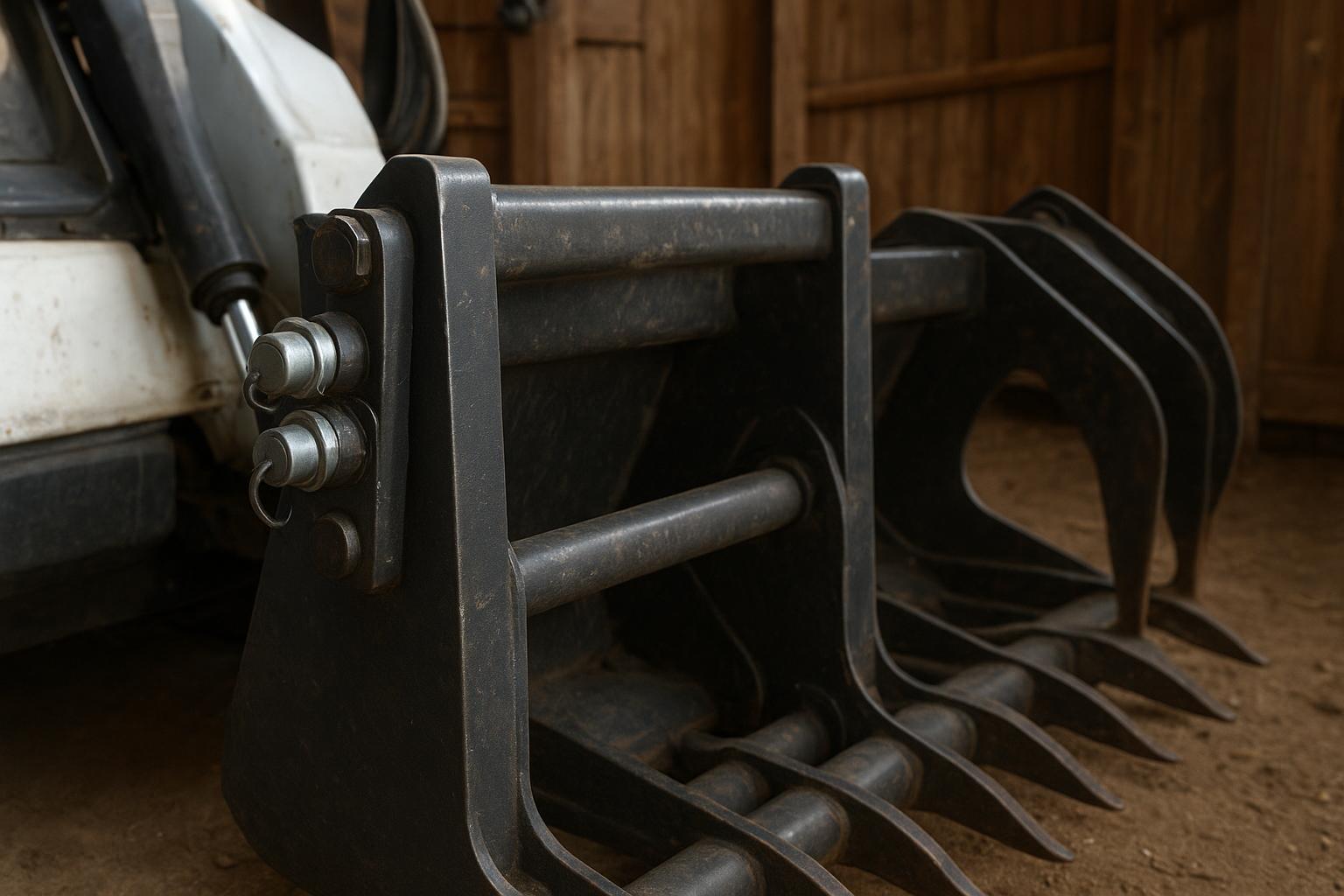
Caption: Quick‑attach safety starts with pressure relief, clean couplers, and a positive latch before you power up the Skid Steer Loader.
Small farms deal with soft ground after rain, uneven paddocks, and steep driveways. A Skid Steer Loader on tracks spreads weight across a larger contact patch and typically exerts lower ground pressure than wheels—helpful for traction on soft soils and minimizing turf damage. Education pages from multiple OEMs describe compact track loader ground pressures in the ≈4–6 PSI range, while wheeled units vary widely with tire size and inflation and are qualitatively higher. Rather than chase uncited numbers, the practical advice is simple: choose tracks (or low‑pressure tire options) when soil protection or flotation is a priority.
For slope and load practices, study extension and operator‑training guidance. Keep loads low and centered; travel up and down slopes; slow down when surfaces are wet or rutted; use ROPS and restraints; and add counterweights only as recommended. See a university extension safety overview and this operator training summary.
Table — Ground pressure summary for a Skid Steer Loader setup
| Loader type | Representative ground pressure (PSI) | Evidence notes |
|---|---|---|
| Compact track loader (mini to mid) | ≈4.2–5.9 PSI | Summarized from multiple OEM education pages describing track loader ranges. |
| Wheeled skid steer | Higher than tracks; varies by tire size/pressure | Treat as qualitative; choose low‑pressure options when needed. |
Task: cut brush along a field edge after rain using a brush cutter.
Video resource (embedded):
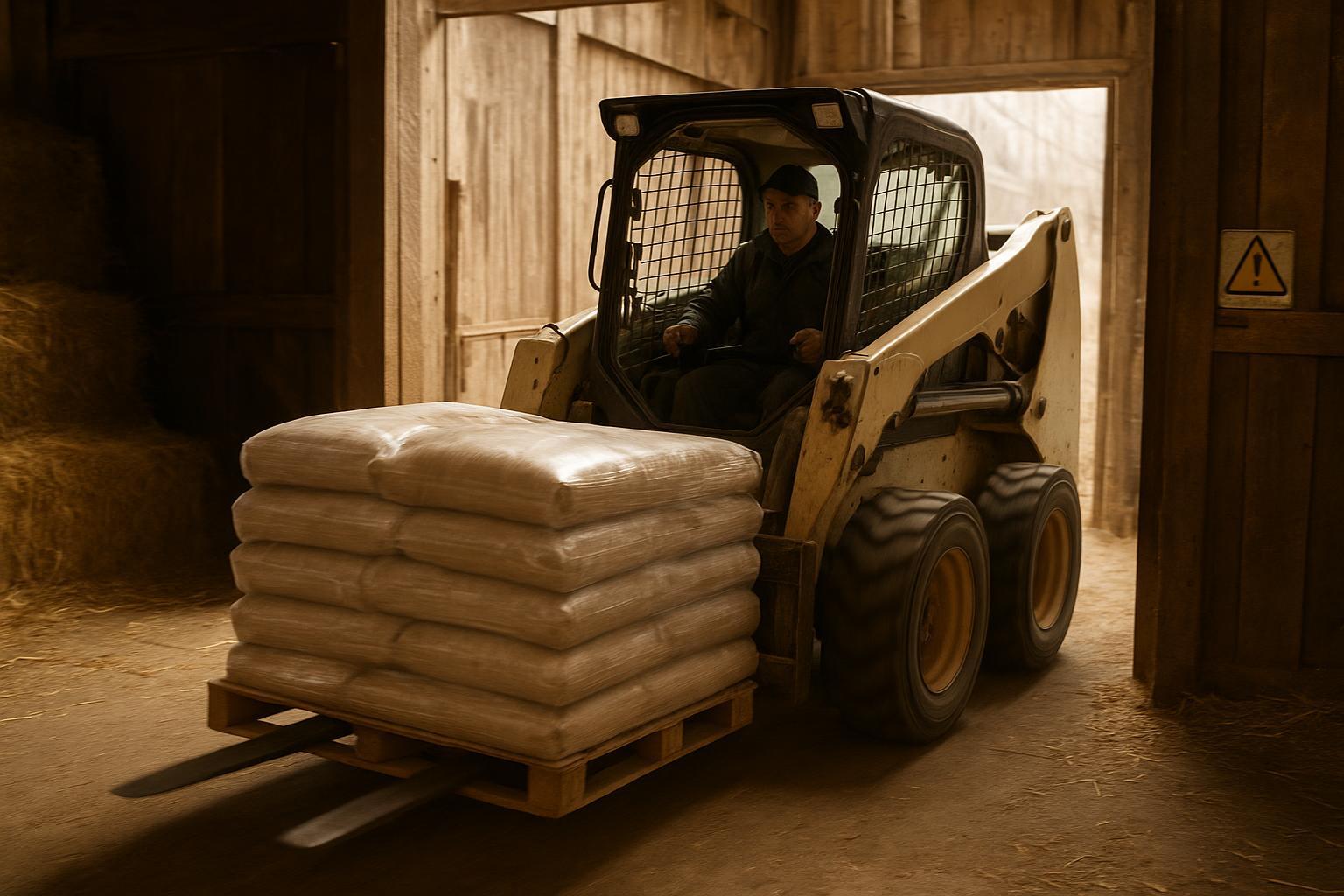
Caption: Keep the Skid Steer Loader load low and your path clear; tight turns beat multi‑point maneuvers in narrow barns.
Disclosure: Qilu is our product. The following example is provided neutrally to illustrate a fit‑for‑purpose setup; please review specifications directly on the product page.
In a 7‑ to 9‑ft aisle barn, I tested a compact Skid Steer Loader configuration with forks and a grapple, standard‑flow hydraulics, and a narrow overall width to clear door frames with margin. For a representative compact form factor, see the Qilu model referenced here: QL‑390W mini Skid Steer Loader. In practice, the selection logic is what matters:
This configuration allowed one‑operator chores without multi‑point turns, reduced door‑frame scuffs, and kept cycle times low. Always confirm exact specs and dimensions against your site constraints before purchasing a Skid Steer Loader.
A Skid Steer Loader’s total cost of ownership (TCO) includes owning (depreciation, financing, insurance) and operating (fuel, maintenance, tires/tracks, attachments). New machines tend to experience higher first‑year depreciation; many small farms consider used units to smooth the cost curve. Telematics or simple fuel logs help you estimate fuel per hour for your specific duty cycle—more reliable than generic numbers.
Preventative maintenance pays dividends: daily visual checks, greasing per schedule, quick‑attach inspection, hydraulic hose abrasion checks, and seasonal storage routines. Education pages that discuss cost structure and ownership planning emphasize including insurance, attachment budgets, and lifecycle maintenance in your analysis; see general perspectives such as a used‑equipment benefit overview from a rental industry source and high‑level owning‑vs‑operating cost guidance.
Table — TCO framework for a Skid Steer Loader (qualitative)
| Composant | Remarques |
|---|---|
| Dépréciation | Highest in year one for new; used purchases can mitigate early depreciation. |
| Carburant | Track via onboard monitors or logs; varies widely with duty cycle and attachment load. |
| Entretien | Preventative schedules reduce failures; check pins, couplers, hoses, filters, and fluids. |
| Tires/tracks | Replacement intervals vary by surface and duty; low‑pressure and premium options may last longer but cost more. |
| Insurance/financing | Include in owning cost; verify coverage for off‑road farm operations. |
| Pièces jointes | Budget for core tools first (forks, grapple, auger, cutter); rent specialty tools seasonally. |
Task: drill 25 post holes along a pasture boundary in mixed clay and loam.
Additional internal resource: For task planning across chores, see Qilu’s skid steer loader application solutions.
If you’re convinced a Skid Steer Loader fits your farm, walk your site with a tape and notebook:
You can review representative options on Qilu’s chargeuses compactes and revisit the neutral example of a compact configuration at QL‑390W mini Skid Steer Loader. Choose based on your measured constraints and chore mix—not on brochure superlatives.
Q1: Is a Skid Steer Loader better than a compact tractor for small farms? A: It depends on tasks. A Skid Steer Loader turns in tighter spaces and swaps attachments quickly; compact tractors may tow and travel farther between fields. For barn‑centric chores and winter access, many owners prefer the loader.
Q2: Tracks or wheels for my soil and climate? A: If soft ground and turf protection are priorities, tracks usually provide better flotation and lower ground pressure. Wheels can be fine on firm surfaces; consider low‑pressure tire options on your Skid Steer Loader.
Q3: What ROC should I target for a Skid Steer Loader? A: Exceed your heaviest routine pallet or load by 20–30% to maintain stability margins. Many small farms find ≈1,300–1,750 lb ROC suitable, depending on chores and aisle widths.
Q4: How often should I service the quick‑attach and couplers on a Skid Steer Loader? A: Inspect daily in heavy use. Clean couplers before connecting, relieve pressure before disconnecting, and verify a positive latch with the machine off.
Q5: Will a Skid Steer Loader compact my soils? A: Any machine can compact soil under the right conditions. Tracks and low‑pressure tires help lower ground pressure; avoid working saturated fields and limit repeated passes with your Skid Steer Loader.
Q6: What’s the safest way to operate a Skid Steer Loader on slopes? A: Keep loads low, travel up and down (not across), slow your speed, and keep the heavy end uphill. Use ROPS and restraints and follow operator‑training guidance.
Q7: Can one Skid Steer Loader cover snow, feeding, and fencing? A: Yes, a Skid Steer Loader can handle all three with the right attachments—forks, grapples, augers, and snow tools—provided hydraulic flow matches the implements.
Q8: How do I learn attachment changeovers quickly on a Skid Steer Loader? A: Practice with the engine off first. A short video primer helps—see the embedded safety video above—and follow your operator manual’s sequence.
Assumptions and citation notes


-1.png)