E-mail: [email protected] WhatsApp: +8618266768780

E-mail: [email protected] WhatsApp: +8618266768780


Something significant is happening in the fields — and the data proves it. Search volume for “agricultural machinery” hit 49,500 monthly searches in 2026, representing a staggering 4,850% five-year increase, according to Rising Trends. Farmers, investors, and operators aren’t just curious — they’re actively rethinking how agriculture farming machinery fits into their bottom line.
The global agricultural machinery market is projected to reach $235.47 billion by 2030 — a figure that signals far more than cyclical demand. (Fortune Business Insights)
The old playbook — buy bigger, go wider, push more horsepower — is losing ground fast. High-horsepower tractors haven’t disappeared, but the conversation around them has fundamentally changed. Raw power is now just the entry fee. What operators increasingly demand is precision, connectivity, and measurable output per dollar spent — a shift industry insiders are calling “Smart Power.”
Labor shortages are accelerating this transition. With fewer skilled operators available each season, automation is no longer a luxury; it’s a survival strategy. Modern tractor innovations reflect exactly this pressure — sensors, telematics, and data-driven controls replacing tasks that once required constant human input.
The question isn’t whether smart machinery matters in 2026. It’s whether you’re keeping pace — and what’s driving the technology forward next.
The conversation has shifted. AI in farming is no longer a trade-show talking point — it’s becoming standard hardware on mid-range tractors in the 60HP–90HP class. What was once reserved for large-scale operations with deep capital budgets is now filtering into everyday field work, and the ROI case is getting harder to ignore.
AI-powered systems can reduce chemical usage by up to 50% through targeted spraying, according to reporting via Google AI/SmartBrief — a figure that reframes how operators should calculate the true cost of any new machine purchase. That’s not a marginal efficiency gain. That’s a structural change in input economics.
“The shift toward smaller, more efficient machinery allows farmers to reduce soil compaction and lower operational costs.” — Association of Equipment Manufacturers (AEM)
This connects directly to how precision agriculture is evolving on the ground. Machine vision and LiDAR sensors now give compact tractors real-time situational awareness — detecting obstacles, mapping terrain irregularities, and flagging safety risks without operator input. The “Human-in-the-Loop” model that’s emerging is practical: full autonomy handles repetitive field passes, while operators supervise remotely and intervene for complex decisions. It’s less sci-fi, more logistics management.
| Technologie | Fonction | ROI Impact |
|---|---|---|
| Machine Vision | Obstacle detection & row guidance | Reduces crop damage, lowers accident costs |
| LiDAR Sensors | Terrain mapping & safety monitoring | Cuts rework rates, improves field coverage |
| AI Spray Systems | Targeted chemical application | Up to 50% reduction in input costs |
Selon ICL Group’s 2026 agriculture outlook, the industry is firmly in the transition from AI hype to measurable ROI — and the equipment sourcing decisions made now will determine who captures that advantage first. Understanding which technologies integrate cleanly with your operation is the next critical question — and that’s exactly where precision agriculture decisions get granular.
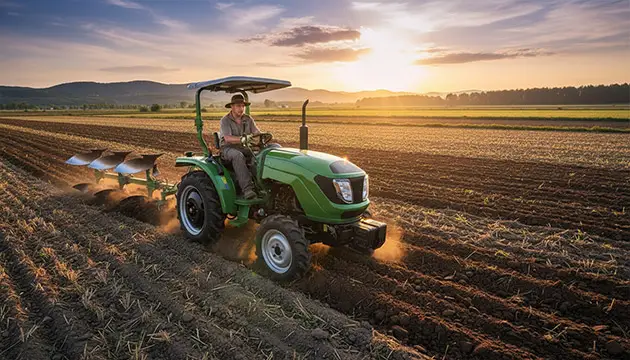
Smart technology only delivers returns when it’s matched to the right machine — and the right sourcing strategy. As the previous section explored, AI and robotics are reshaping field operations, but the real financial story sits one level deeper: how precision agriculture tools eliminate waste before it ever hits the bottom line.
Variable-rate technology (VRT) is one of the clearest examples. By adjusting seed, fertilizer, and chemical inputs zone by zone across a field, VRT eliminates the blanket-application waste that has quietly drained farm budgets for decades. The USDA reports that precision agriculture adoption can reduce fuel consumption by an average of 10% to 15% — a meaningful number when diesel costs remain volatile.
Key ROI drivers in precision ag include:
Factory-direct sourcing amplifies every one of these advantages. When equipment is configured at the manufacturer level — rather than retrofitted after purchase — GPS receivers, telematics modules, and soil sensors integrate cleanly into the machine’s existing architecture. The result is fewer compatibility issues, lower installation costs, and better data accuracy from day one.
The growing “Ag-as-a-Service” model reinforces this logic. Modular equipment designs let operators add or swap technology components as operations scale, avoiding the full capital outlay of a replacement purchase. For dealers, offering customization at the spec stage — rather than off-the-lot — is becoming a genuine competitive differentiator.
Precision agriculture’s true power isn’t just sensing data — it’s converting that data into decisions that reduce every measurable input cost.
That granular control over inputs and outputs translates directly into the compact-equipment category too — where even smaller machines are being configured for specific terrain, soil type, and task demands.
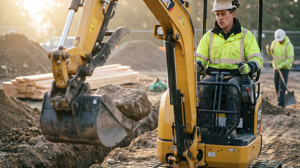
Among the most practical expressions of smart farming trends 2026, the compact mini excavator — ranging from 0.8T to 3.5T — has emerged as an unexpectedly powerful tool for both landscapers and small-scale farmers. According to EquipmentWorld, compact and mini excavators are increasingly replacing manual labor, driven by their compatibility with versatile attachments that expand their utility far beyond simple digging.
In tight-access residential and commercial landscaping, full-size machinery simply doesn’t fit. Mini excavators navigate narrow gates, sloped terrain, and sensitive ornamental areas without the footprint penalties that come with heavier equipment. Reduced soil compaction is a measurable advantage here — lighter operating weight preserves root systems and surface finishes that a traditional machine would destroy.
What makes them genuinely smart tools is attachment flexibility. Operators can swap between augers, trenchers, hydraulic thumbs, and grading buckets within minutes, effectively turning one machine into five. Check out this breakdown of practical attachment options for a closer look at what’s possible in 2026.
For diversified small farms, the value proposition is equally compelling:
A machine that fits where tractors can’t is no longer a compromise — it’s a competitive advantage. However, operators should match hydraulic flow specs carefully to attachment requirements; mismatches reduce efficiency and accelerate wear.
Choosing the right mini excavator ultimately comes down to more than specs — it comes down to how and where you source it. That’s a challenge growing in complexity heading into 2026.
The smart power revolution only delivers ROI if operators can actually afford to enter it. Right now, that’s a real challenge. Farm machinery sales have faced significant slumps driven by tariffs and weakening farm income, making every sourcing decision a high-stakes calculation. Value-driven procurement isn’t optional in 2026 — it’s survival strategy.
This is exactly where factory-direct heavy machinery purchasing reshapes the equation. Bypassing multi-tier distribution networks eliminates the “legacy brand tax” — the inflated markup that comes from paying for a logo rather than engineering quality. In practice, B2B buyers sourcing directly from manufacturers can redirect those savings toward technology upgrades that actually move the performance needle.
Three sourcing priorities that define smart procurement in 2026:
On the other hand, factory-direct purchasing does require due diligence — vetting manufacturer credentials, warranty terms, and compatible attachment ecosystems before committing. The lowest price without verified support infrastructure is simply a deferred loss.
The questions surrounding support, connectivity, and long-term operating costs are ones every operator is wrestling with — and they deserve direct answers.
As AI in agriculture moves from pilot programs to mainstream adoption, operators and farm managers are asking sharper questions about what this shift actually means day-to-day. Here are the answers that matter most.
Can AI completely replace human operators?
Not even close — and that’s by design. Autonomous systems handle repetitive, data-heavy tasks exceptionally well, but nuanced field judgment, equipment troubleshooting, and adaptive decision-making still require a skilled human in the loop. As TechRadar notes, “The farmer isn’t disappearing — they’re moving up the stack.” Think of AI as a force multiplier, not a replacement.
Is leasing or factory-direct purchase better for mid-sized farms?
It depends on cash flow and technology cycle expectations. Leasing preserves capital and allows upgrades as software evolves rapidly. Factory-direct purchasing typically offers lower long-term cost if you plan to hold equipment for 7+ years. In practice, farms with variable revenue often benefit from lease structures with technology refresh clauses built in.
How does precision tech handle poor rural connectivity?
Modern smart machinery stores operational data onboard and syncs when connectivity is restored. Edge-computing modules process critical functions locally, so a dropped signal doesn’t halt planting runs or compromise variable-rate application mid-field.
What maintenance do smart tractors actually require?
Beyond standard mechanical upkeep, operators need to budget for software subscription fees, sensor calibration (typically annually), and occasional firmware updates. If you’re also running compact equipment on mixed-use operations, understanding how attachments interact with your machine’s hydraulic specs becomes part of the same smart-maintenance mindset.
The bottom line: Smart power isn’t a future concept — it’s the current competitive standard. Farms that engage with these technologies strategically, rather than reactively, are best positioned to protect margins and scale intelligently through 2026 and beyond.




-1.png)