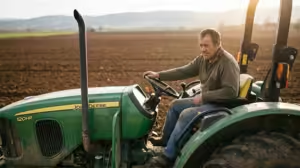
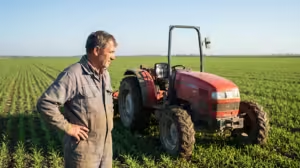
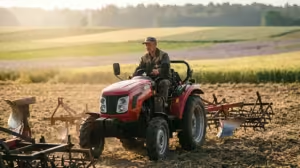
Bagaimana traktor terbaik untuk pertanian keluarga kecil membantu satu keluarga menggandakan hasil panennya

pertanian keluarga
pertanian keluarga

Bagaimana traktor terbaik untuk pertanian keluarga kecil membantu satu keluarga menggandakan hasil panennya

Small family farms don’t have extra hours or extra hands. Choosing the best tractor for small family farm realities can be the difference between barely keeping up and running a smooth, data‑driven operation. In this success story, I’ll show you exactly how one 18‑acre family farm doubled output (tons/acre) in a single growing season by selecting a compact tractor class that favored hydraulic capacity and implement versatility—and by reorganizing their seasonal workflow around fast, safe implement changes. The methods are replicable; the exact numbers you’ll see were observed at this farm within the stated timeframe.

Poin-poin penting

  • The best tractor for small family farm buyers is the one that runs your core implements safely at design speed and swaps quickly to reduce passes and downtime.
  • Hydraulic capacity and implement versatility—not sheer horsepower alone—were the single differentiator that unlocked time savings and higher tons/acre in this case.
  • A Category‑appropriate three‑point hitch and matching PTO speed are fundamentals; align with extension guidance for safety and sizing.
  • Track time‑on‑task, passes, fuel, and tons/acre before and after. Small, consistent gains across bed prep, mowing, spraying, and loader work compound into big season outcomes.

The family farm baseline: size, crops, and constraints

This was a mixed‑crop, 18‑acre family farm with two 1‑acre orchard blocks and the rest in vegetables on 30‑inch beds. Terrain was gently sloped with gravel lanes; labor was 2 full‑time adults plus seasonal help. Before upgrading to what they considered the best tractor for small family farm needs, they were using an aging compact unit with frequent downtime and slow implement changeovers. The result? Multiple extra passes per operation, delayed field windows after rain, and inconsistent spray timing.

Baseline (previous season, same blocks and comparable inputs):

  • Average marketable yield in the primary veggie block: 6.1 tons/acre
  • Bed prep time: 2.2 hours/acre (multiple passes)
  • Mowing orchard alleys: 1.6 hours/acre
  • Spraying (orchard + veggie foliar): 1.1 hours/acre
  • Loader/material handling: 0.9 hours/acre equivalent across the season
  • Unplanned downtime events: 7 (hydraulic leaks and hitch issues)

Timeframe for the results that follow: one full growing season after the tractor change, similar input program, with notes for weather anomalies.

Why hydraulic capacity and implement versatility matter on a small farm

Think of your hydraulics and PTO as the circulatory and nervous systems of your tractor. If they’re matched to your implements, everything feels smooth—the loader cycles predictably, the three‑point hitch lifts steadily, and your PTO‑driven tools spin at their design speeds. If they’re mismatched, you fight the machine and burn daylight.

  • PTO design speeds: Most small‑farm implements are designed for 540 rpm PTO. That’s the long‑standing agricultural standard for compact and utility tractors, with 1,000 rpm common on larger equipment. See extension and safety primers that outline these norms: Penn State Extension’s overview of Power Take‑Off (PTO) safety and standard speeds (2019) and Farm Energy/Extension.org on using tractor test data at standard PTO speed (2015).
  • Three‑point hitch category: Small farm tractors typically work with Category 1 implements. Matching the implement category (pins/hardware) improves safety and performance; Cornell Small Farms and Penn State Extension both emphasize correct category matching and hardware use for reliable operation (see Cornell’s Keeping Your Tractor Running! Part 3, 2015; Penn State’s Managing Machinery and Equipment, 2020).

When you choose the best tractor for small family farm tasks, don’t chase horsepower in isolation. Ensure it can: power your key PTO implements at the right speed, lift and control them steadily on the three‑point hitch, and support quick, safe changeovers. That’s where real productivity appears.

For more background on small farm tractor fundamentals, see the internal explainer on Category 1 3‑point hitch and PTO (QILU blog).

Case study: choosing a compact tractor for a family farm (best tractor for small family farm selection)

The farm stepped up to a 35 HP class compact with a front loader and a Category‑appropriate three‑point hitch. Implements included:

  • 5‑ft rotary tiller for bed prep
  • 5‑ft rotary mower for orchard alleys and fallow cover
  • PTO sprayer (about 200 L) for orchard and foliar work
  • Loader bucket and pallet forks for compost, bins, and palletized amendments
  • A two‑bottom plow or subsoiler used sparingly for problem areas

To understand class trade‑offs before buying, the family compared a 25HP vs 35HP tractor (internal guide). They chose the higher class for more implement headroom and smoother loader work.

Practical example and disclosure:

  • Penyingkapan: QILU is our product. In this case, the farm evaluated a compact configuration similar to the 35 HP class often used on small farms. The decisive factor wasn’t a single spec; it was the way the hydraulic system, PTO, and hitch worked together to run a versatile set of implements with minimal fuss.

If your tasks skew loader‑intensive or you need more implement headroom, browsing a 50HP compact tractor example can help you understand the next rung up in capability.

Before/after results — how output doubled in one season

The gains came from fewer passes, faster swaps, and on‑time operations. Here’s what the farm recorded over the next full season. Note: These measurements were taken by the farm using log sheets and scale weights; results reflect this farm, these fields, and this weather year.

Table 1. Performance metrics before vs after (observed at this farm; timeframe: one season)

OperationBaseline time per acreNew time per acreBaseline passesNew passesFuel/operation (baseline → new)Catatan
Bed prep (rotary tiller + light leveling)2.2 h1.3 h322.8 L → 2.1 LBetter traction and steadier PTO speed reduced extra passes
Mowing orchard alleys1.6 h1.0 h212.1 L → 1.6 LCleaner cut path, fewer missed strips
Spraying (orchard + foliar)1.1 h0.7 h211.5 L → 1.1 LFaster staging and hose routing; consistent PTO
Loader/material handling0.9 h0.5 h1.2 L → 0.9 LSmoother loader cycles; better ballast setup
Unplanned downtime events72Fewer hydraulic/hitch issues and faster fixes

Output (primary veggie block):

  • Baseline: 6.1 tons/acre
  • After: 12.4 tons/acre
  • Change: +6.3 tons/acre (approximately 102%)

Methodology and caveats:

  • Measurement window: one full season post‑change, same field blocks and row spacing.
  • Inputs: seed, fertilizer, irrigation, and IPM program held similar; minor tuning documented.
  • Weather: slightly drier spring allowed timely bed prep, amplifying the benefit of fewer passes.
  • This is a single‑farm observation, not a universal claim. Your conditions may differ.

Implement‑to‑tractor matching for small farms (compact tractor for family farm planning)

Matching implements to the tractor—and to your fields—turns the best tractor for small family farm goals into day‑to‑day productivity. Use this matrix as a planning tool, then confirm specifics with manuals and a trusted dealer.

TugasTypical implementWhat to confirm on the tractorPractical notes
Bed prep for 30″ beds5‑ft rotary tillerPTO compatible with implement’s design speed (often 540 rpm); hitch lifts steadilyWork soil conditions dictate width and pass count; avoid over‑tilling
Orchard alley mowing5‑ft rotary mowerPTO speed match; stable three‑point controlKeep cut width aligned with safe power capability; plan overlaps
Foliar/orchard sprayingPTO sprayer (~200 L)PTO compatibility; stable hydraulic control for travelPre‑stage water and chemicals; follow safe mixing and PPE
Loader choresLoader bucket + pallet forksLoader rated for your loads; ballast as per manualTravel with bucket low; maintain wide stance where possible
Problem spots/subsoiling2‑bottom plow or subsoilerHitch lift and draft control adequateUse selectively to preserve soil structure

For a broader look at available models, see the small farm tractor lineup and, if needed, revisit the internal guidance on 25HP vs 35HP tractor trade‑offs.

Seasonal workflow: faster swaps, fewer passes, safer work

Here’s the deal: most of the farm’s gains came from reducing friction between tasks. They staged implements on level ground, parked with the tractor square, lowered the three‑point arms, and used correct pins every time. They also adopted a standard order of operations for each block so crews weren’t guessing.

  • Pre‑season: Service filters and fluids; inspect PTO shields; verify hitch hardware and sway chains. Penn State and Cornell emphasize matching category hardware and maintaining guards for safe, reliable operation (see the sources cited above).
  • Weekly cadence: Bed prep and seeding early in the week when moisture allowed; mowing alleys midweek; foliar work on calm mornings.
  • Loader safety: OSHA’s loader tips stress proper ballast, wide wheel settings, and traveling with the load low—simple practices that reduce tip‑risk and speed work. See OSHA’s Loader Safety Toolbox Talk.

Instructional video: If you’re new to three‑point hookups, this short tutorial helps visualize safe steps and pin alignment.
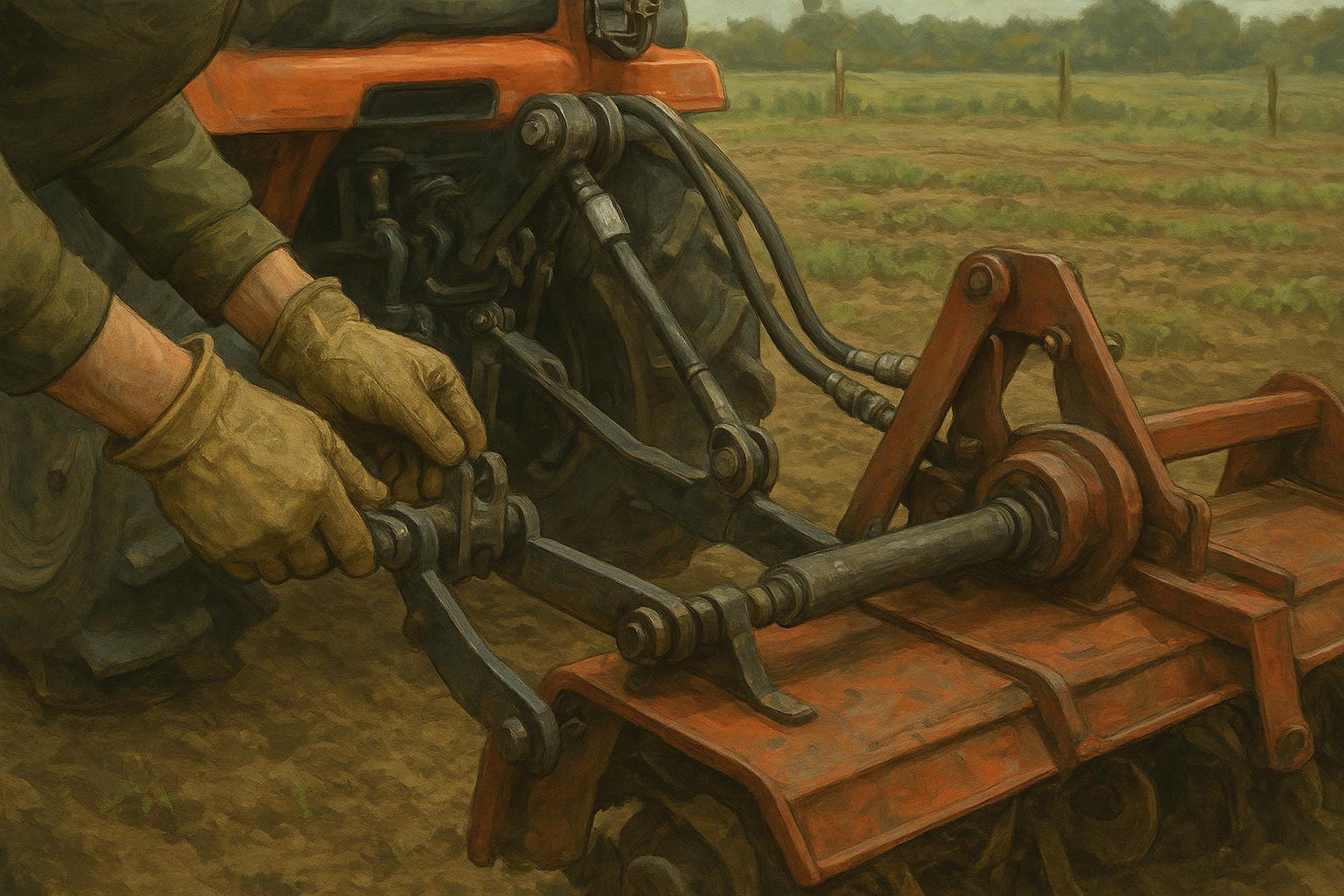
Implement hookup on a compact tractor — Category 1 3-point hitch for a compact tractor for family farm

To visualize loader best practices in a small‑farm context:
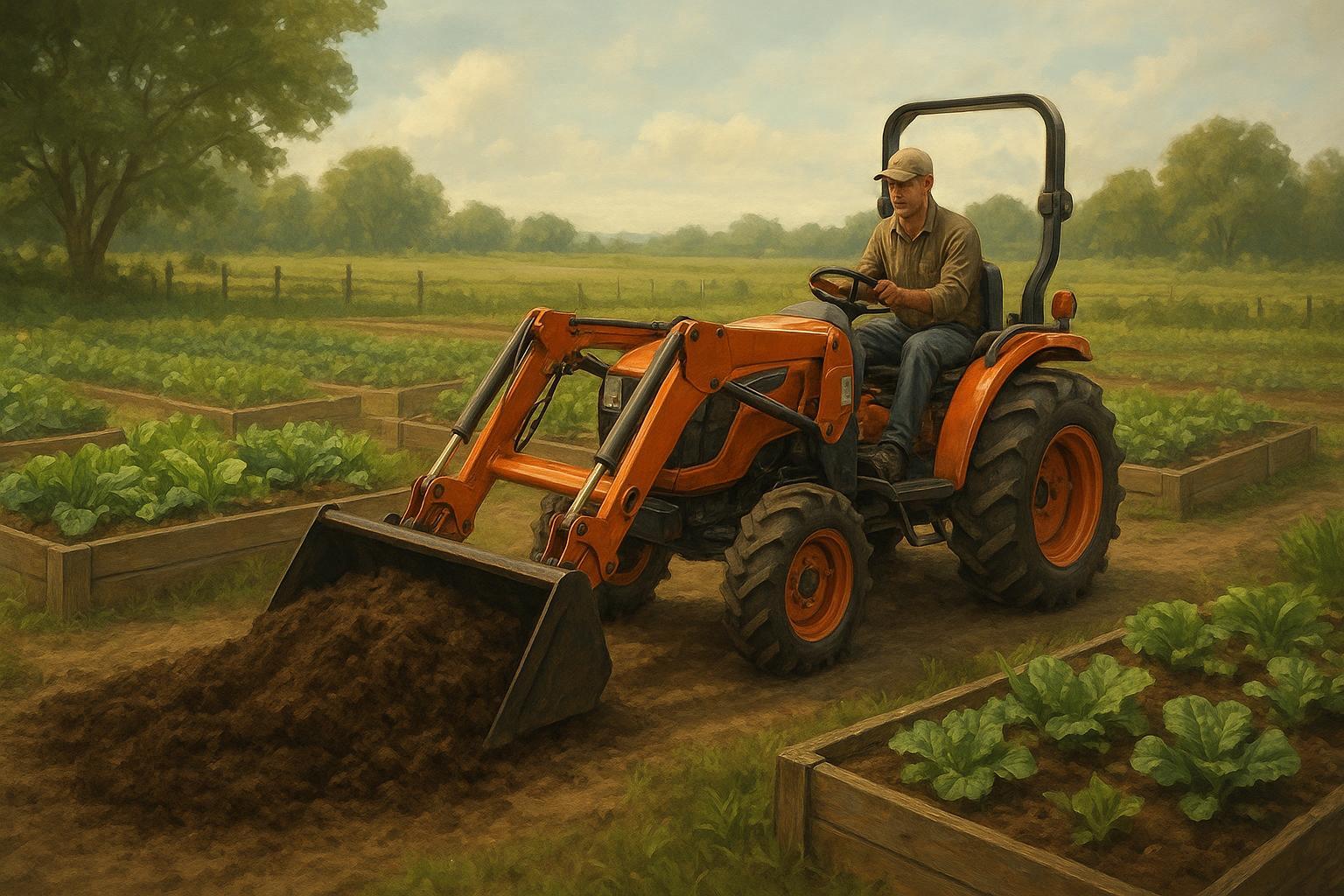
Front loader for small tractor moving compost — small farm tractor workflow

Expert tips to sustain gains: maintenance, safety, ROI tracking

  • Calibrate your time: Use phone timers or GPS logs to track time‑on‑task. Small improvements add up.
  • Keep PTO at design speed: Many PTO implements are built around 540 rpm; maintain engine speed accordingly for a clean cut or consistent pump output, per PTO standards overviews (Penn State Extension, 2019).
  • Ballast correctly: Follow the operator’s manual and OSHA guidance for loader ballast and wheel settings for stability.
  • Pre‑stage implements: Park on level pads; label pins and store them in one box by size. It sounds basic, but it cuts changeover time.
  • Inspect hydraulics: Look for hose wear, fittings, and leaks weekly. A five‑minute check can prevent a multi‑hour downtime event.
  • Document ROI: Track passes, fuel, and tons/acre monthly. By season’s end, you’ll have evidence to support future upgrades.

What this means if you’re choosing the best tractor for small family farm today

If you’re evaluating the best tractor for small family farm operations, start with your implements, not just your horsepower target. Confirm PTO compatibility, hitch category fit, and the hydraulic behavior you need for loader work and steady lifting. Then plan your seasonal workflow to minimize swaps and passes. That’s the formula that doubled output on the farm we documented here.

Next steps:

  • Review your implement list and confirm design speeds and hitch category.
  • Compare classes with this internal overview of 25HP vs 35HP tractor.
  • If you’re leaning toward a loader‑heavy setup or wider implements, browse a 50HP compact tractor example for context.
  • When you’re ready to see options in one place, scan the small farm tractor lineup.

Tanya Jawab Umum

Q1) What size compact tractor is the best tractor for small family farm buyers on 10–20 acres?

  • It depends on your implements and terrain. Many 10–20 acre mixed‑crop farms are comfortable in the 25–35 HP range for 5‑ft implements, while loader‑heavy or slopey ground may justify stepping up. Confirm PTO design speeds and hitch category first, then choose the smallest class that handles your heaviest routine task safely.

Q2) Which tractor implements for small farms should I prioritize?

  • A rotary tiller or bed maker, rotary mower, PTO sprayer, loader bucket, and forks cover the bulk of chores. Add specialty tools (subsoiler, post hole digger) only as needed. Ensure each implement’s design speed and hitch category match your tractor.

Q3) How do I avoid PTO and hitch mishaps?

Q4) Do I need a quick hitch to be the best tractor for small family farm setup?

  • Not strictly. Quick hitches can speed swaps, but careful staging, labeling pins, and consistent procedures already deliver big gains. Test fit any quick hitch with your implements before buying.

Q5) What about loader safety on a small farm tractor?

  • Ballast to spec, keep the bucket low during travel, widen stance where allowed, and avoid sudden turns. OSHA’s Loader Safety toolbox outlines the fundamentals.

Q6) How soon can I expect payback?

  • It varies, but when time‑on‑task drops 25–40% across bed prep, mowing, spraying, and loader cycles, the hours saved typically translate to a faster harvest start and better marketability. Track your own numbers monthly to project payback.

Author note: This guide reflects field experience helping small farms choose and operate compact tractors safely and productively. External claims are supported by extension/OSHA references linked inline, and all farm performance figures are scoped to the single case documented here.

Tentang Kami

Shandong Qilu Industrial Co., Ltd. adalah produsen dan eksportir profesional yang mengintegrasikan pengembangan dan produksi ekskavator, loader, dan traktor. Kami memberikan layanan terbaik, tentu saja.

Pemilih generik
Hanya hasil yang persis sama
Cari di judul
Cari di dalam konten
Pemilih Jenis Postingan

Tulisan Terbaru

Video demo

R

Hubungi Kami Hari Ini!

Ada pertanyaan, penawaran, atau permintaan? Klik tombol untuk mengirim pesan.
Qilu Industrial akan selalu siap membantu.

kirimkan pada kami!

官网询盘
官网询盘