Email: [email protected] Whatsapp: +8618266768780
Email: [email protected] Whatsapp: +8618266768780


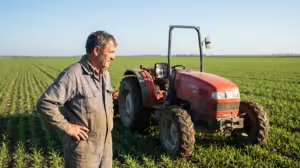
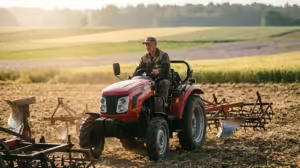
Small family farms don’t have extra hours or extra hands. Choosing the best tractor for small family farm realities can be the difference between barely keeping up and running a smooth, data‑driven operation. In this success story, I’ll show you exactly how one 18‑acre family farm doubled output (tons/acre) in a single growing season by selecting a compact tractor class that favored hydraulic capacity and implement versatility—and by reorganizing their seasonal workflow around fast, safe implement changes. The methods are replicable; the exact numbers you’ll see were observed at this farm within the stated timeframe.
This was a mixed‑crop, 18‑acre family farm with two 1‑acre orchard blocks and the rest in vegetables on 30‑inch beds. Terrain was gently sloped with gravel lanes; labor was 2 full‑time adults plus seasonal help. Before upgrading to what they considered the best tractor for small family farm needs, they were using an aging compact unit with frequent downtime and slow implement changeovers. The result? Multiple extra passes per operation, delayed field windows after rain, and inconsistent spray timing.
Baseline (previous season, same blocks and comparable inputs):
Timeframe for the results that follow: one full growing season after the tractor change, similar input program, with notes for weather anomalies.
Think of your hydraulics and PTO as the circulatory and nervous systems of your tractor. If they’re matched to your implements, everything feels smooth—the loader cycles predictably, the three‑point hitch lifts steadily, and your PTO‑driven tools spin at their design speeds. If they’re mismatched, you fight the machine and burn daylight.
When you choose the best tractor for small family farm tasks, don’t chase horsepower in isolation. Ensure it can: power your key PTO implements at the right speed, lift and control them steadily on the three‑point hitch, and support quick, safe changeovers. That’s where real productivity appears.
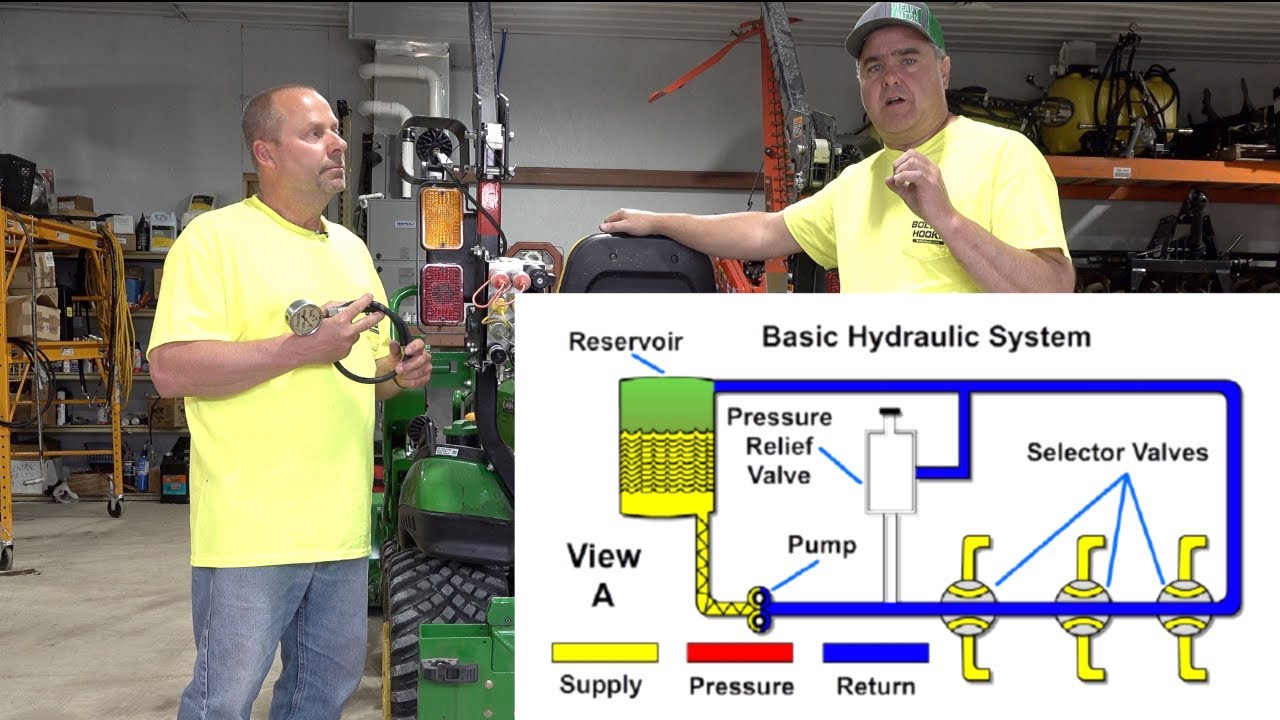
For more background on small farm tractor fundamentals, see the internal explainer on Category 1 3‑point hitch and PTO (QILU blog).
The farm stepped up to a 35 HP class compact with a front loader and a Category‑appropriate three‑point hitch. Implements included:
To understand class trade‑offs before buying, the family compared a 25HP vs 35HP tractor (internal guide). They chose the higher class for more implement headroom and smoother loader work.
Practical example and disclosure:
If your tasks skew loader‑intensive or you need more implement headroom, browsing a 50HP compact tractor example can help you understand the next rung up in capability.
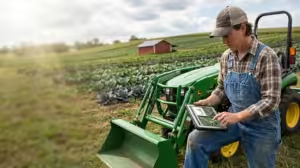
The gains came from fewer passes, faster swaps, and on‑time operations. Here’s what the farm recorded over the next full season. Note: These measurements were taken by the farm using log sheets and scale weights; results reflect this farm, these fields, and this weather year.
Table 1. Performance metrics before vs after (observed at this farm; timeframe: one season)
| Operation | Baseline time per acre | New time per acre | Baseline passes | New passes | Fuel/operation (baseline → new) | Notes |
|---|---|---|---|---|---|---|
| Bed prep (rotary tiller + light leveling) | 2.2 h | 1.3 h | 3 | 2 | 2.8 L → 2.1 L | Better traction and steadier PTO speed reduced extra passes |
| Mowing orchard alleys | 1.6 h | 1.0 h | 2 | 1 | 2.1 L → 1.6 L | Cleaner cut path, fewer missed strips |
| Spraying (orchard + foliar) | 1.1 h | 0.7 h | 2 | 1 | 1.5 L → 1.1 L | Faster staging and hose routing; consistent PTO |
| Loader/material handling | 0.9 h | 0.5 h | — | — | 1.2 L → 0.9 L | Smoother loader cycles; better ballast setup |
| Unplanned downtime events | 7 | 2 | — | — | — | Fewer hydraulic/hitch issues and faster fixes |
Output (primary veggie block):
Methodology and caveats:
Matching implements to the tractor—and to your fields—turns the best tractor for small family farm goals into day‑to‑day productivity. Use this matrix as a planning tool, then confirm specifics with manuals and a trusted dealer.
| Task | Typical implement | What to confirm on the tractor | Practical notes |
|---|---|---|---|
| Bed prep for 30″ beds | 5‑ft rotary tiller | PTO compatible with implement’s design speed (often 540 rpm); hitch lifts steadily | Work soil conditions dictate width and pass count; avoid over‑tilling |
| Orchard alley mowing | 5‑ft rotary mower | PTO speed match; stable three‑point control | Keep cut width aligned with safe power capability; plan overlaps |
| Foliar/orchard spraying | PTO sprayer (~200 L) | PTO compatibility; stable hydraulic control for travel | Pre‑stage water and chemicals; follow safe mixing and PPE |
| Loader chores | Loader bucket + pallet forks | Loader rated for your loads; ballast as per manual | Travel with bucket low; maintain wide stance where possible |
| Problem spots/subsoiling | 2‑bottom plow or subsoiler | Hitch lift and draft control adequate | Use selectively to preserve soil structure |
For a broader look at available models, see the small farm tractor lineup and, if needed, revisit the internal guidance on 25HP vs 35HP tractor trade‑offs.
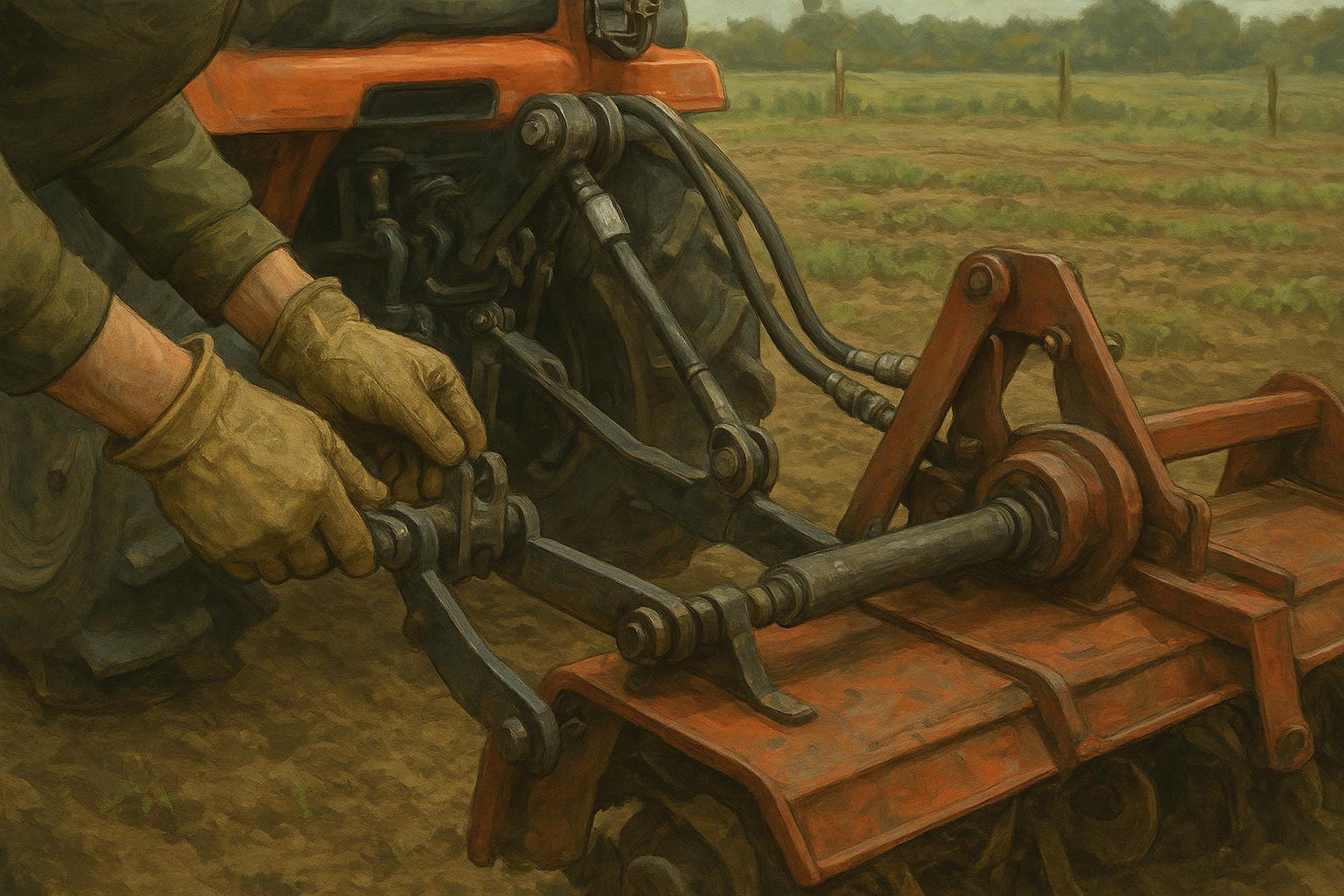
Here’s the deal: most of the farm’s gains came from reducing friction between tasks. They staged implements on level ground, parked with the tractor square, lowered the three‑point arms, and used correct pins every time. They also adopted a standard order of operations for each block so crews weren’t guessing.
Instructional video: If you’re new to three‑point hookups, this short tutorial helps visualize safe steps and pin alignment.
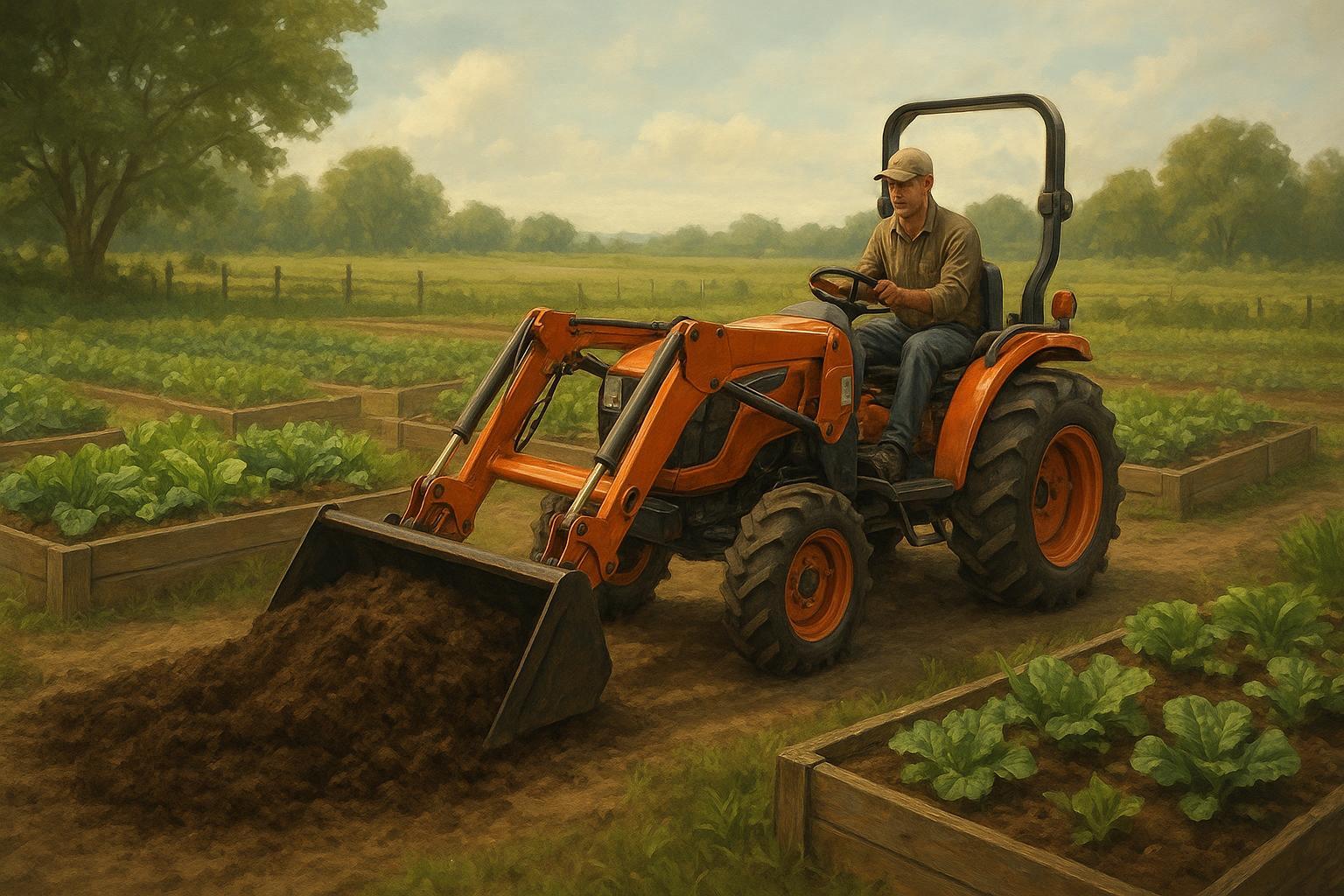
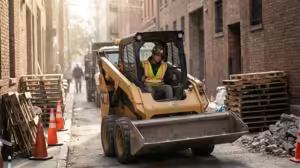
To visualize loader best practices in a small‑farm context:
If you’re evaluating the best tractor for small family farm operations, start with your implements, not just your horsepower target. Confirm PTO compatibility, hitch category fit, and the hydraulic behavior you need for loader work and steady lifting. Then plan your seasonal workflow to minimize swaps and passes. That’s the formula that doubled output on the farm we documented here.
Next steps:
Q1) What size compact tractor is the best tractor for small family farm buyers on 10–20 acres?
Q2) Which tractor implements for small farms should I prioritize?
Q3) How do I avoid PTO and hitch mishaps?
Q4) Do I need a quick hitch to be the best tractor for small family farm setup?
Q5) What about loader safety on a small farm tractor?
Q6) How soon can I expect payback?
Author note: This guide reflects field experience helping small farms choose and operate compact tractors safely and productively. External claims are supported by extension/OSHA references linked inline, and all farm performance figures are scoped to the single case documented here.



-1.png)