If you’re buying your first diesel farm tractor for a 1–10 acre operation, the choices can feel overwhelming. The right match comes down to a handful of practical decisions: the work you’ll do, the horsepower you actually need, 2WD vs 4WD, PTO and hydraulics for your implements, maintenance you can keep up with, and total cost of ownership. This guide walks you through a clear, step-by-step approach, plus a realistic, smallholder-sized example you can copy.
Define tasks first, then size your diesel farm tractor by PTO horsepower and implement needs—not by brochure engine horsepower.
For most small farms, 25–50 HP compact diesel tractors with Category I hitches and 540 rpm PTO cover mowing, tilling, loader work, and hauling.
4WD often pays off on slopes, soft soils, and loader work thanks to traction and stability benefits.
Plan maintenance before you buy: daily checks, hour-based services, and seasonal storage will protect your investment.
Track hours, fuel, and costs from day one to refine your total cost of ownership and avoid overspending on capacity you won’t use.
What a diesel farm tractor can do on 1–10 acres
A diesel farm tractor in the compact to compact-utility range can power rotary tillers, finish mowers, brush cutters, post-hole augers, and small loaders. Diesel engines deliver steady torque at low rpm, which is ideal for PTO-driven field work. When comparing specs, remember you’ll see three power figures discussed in farm circles: engine horsepower (the largest number in ads), PTO horsepower (what actually drives implements), and drawbar horsepower (what pulls). University extensions note PTO horsepower is typically lower than engine horsepower due to drivetrain losses; check the PTO rating to size implements correctly and confirm it against your needs. For foundational context on how power is measured and used on farm machinery, see the overview from Penn State Extension on managing machinery.
7 steps to choose the right diesel farm tractor
List tasks and peak demands
Write down your top jobs by frequency and difficulty: mowing, tilling, loader scoops, moving pallets, post-hole digging, snow removal, orchard work between rows, etc.
Note your terrain (flat, hilly, terraced), soil (sandy, loam, clay), and moisture (often wet vs mostly dry). These factors drive traction and ballast decisions.
Size horsepower (engine vs PTO)
Identify your most demanding implement and look up its PTO horsepower requirement. Rotary tillers and brush cutters often state a PTO HP range; aim to be comfortably within it.
As a rule of thumb, PTO horsepower is commonly 15–25% lower than engine horsepower depending on drivetrain. Focus your shopping on PTO HP that meets your implement’s needs.
If you’re between sizes, choose the smaller option if your fields are small and implements are modest; choose the larger if you plan to add heavier attachments soon.
Choose 2WD or 4WD
4WD increases traction and front-axle loading, which helps with loader work, slopes, and soft ground. It can improve stability characteristics by shifting weight forward and delivering torque to both axles, which many smallholders value for safety and productivity on mixed terrain. For stability principles relevant to loader work, see Penn State’s tractor stability guidance.
2WD can be adequate on flat, dry fields with light implements—and it’s typically less expensive. If loader work and hills are common, 4WD is often the better long-term choice.
PTO, hydraulics, and hitch category
PTO: Most smallholder implements use a 540 rpm PTO with a 1-3/8 inch, 6-spline shaft. Some tractors offer a 540E (economy) mode for light loads at lower engine rpm to save fuel.
Hydraulics: Loader work benefits from higher hydraulic flow; check your tractor’s liters/minute or gallons/minute and match to your loader and any hydraulic implements.
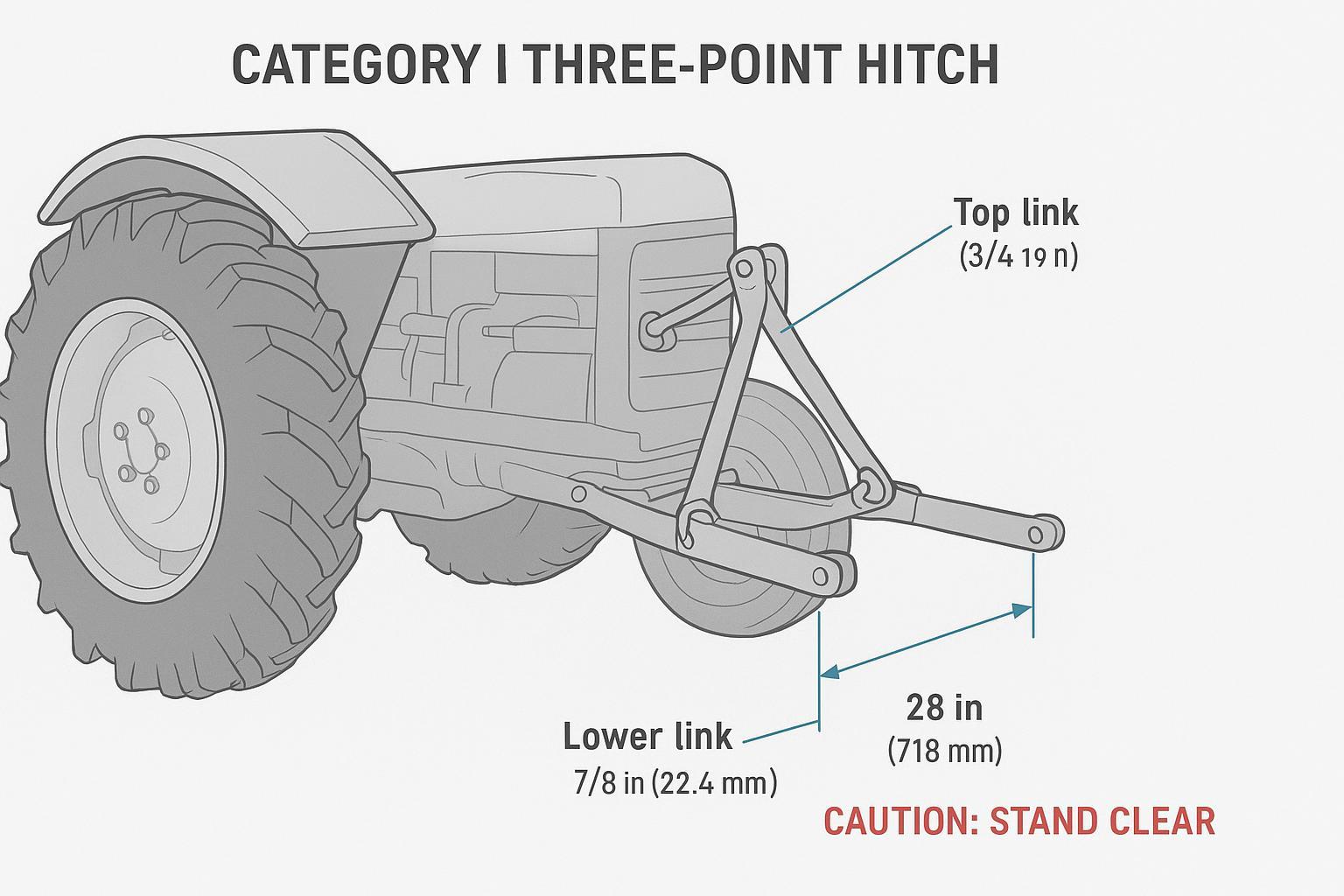
Hitch: Category I three-point hitch is standard for compact tractors and small-farm implements. Make sure your implements match Category I dimensions and pin sizes, and consider a quick-hitch if you’ll change implements often.
Implement matching basics
Size implement width to your tractor’s PTO horsepower and tractor width. For example, a finish mower should typically cover your tire tracks, while a tiller should not overload the PTO.
Check gearbox ratings, driveline length, and any shear bolt or slip clutch requirements to avoid damage.
Plan ballast for loader work (rear ballast box or implement plus wheel ballast) to maintain steering and stability.
Inspect and test-drive checklist
Cold start: Does it start cleanly and idle smoothly? Check smoke and warning lamps.
Safety: Confirm ROPS is installed and locks properly; confirm seatbelt condition and PTO guards.
Leaks and wear: Look under the machine for drips, inspect hoses, pins, and tires. Drive over uneven ground to listen for unusual noises.
Plan service, support, and TCO
Identify where you’ll get filters, fluids, and service. Ask about parts availability and lead times.
Build a simple total cost of ownership (TCO) plan with purchase cost, fuel, routine service, repair reserve, implements, and shelter/insurance. Start logging hours and fuel from day one to replace estimates with real numbers.
Power bands and tasks for a diesel farm tractor
HP band
Typical tasks
Common implements
Catatan
25–30 HP
Mowing lawns and orchards, light tilling, hauling small trailers
4–5 ft finish mower, 4 ft tiller, light loader bucket
Compact size fits tight spaces; consider 4WD for slopes/loader work
5–6 ft rotary cutter, 5–6 ft tiller, auger, pallet forks
Versatile for market gardens and mixed tasks; still Category I on many models
60+ HP
Larger cutters/tillers, heavier loaders, field prep for larger acreage
6–7 ft implements, heavier loaders, small balers
Consider if expanding beyond ~10–20 acres; may move into Cat II on some models
Note: These bands are illustrative; always confirm specific implement requirements against PTO horsepower and hitch category in the operator’s manuals.
Practical example: putting a diesel farm tractor to work
Disclosure: Qilu Machinery is our product partner.
Scenario: A 5-acre market garden needs soil prep, mowing, and regular loader work for compost and pallets. The owner considers a 40–50 HP diesel farm tractor with 4WD, 540 rpm PTO, Category I hitch, and a front loader.
Selection logic you can copy:
Tasks: Rotary tilling 4–6 times per season, weekly mowing, weekly loader work, occasional post holes.
PTO sizing: A 5–6 ft tiller typically calls for mid-30s to low-40s PTO HP, which points toward a 40–50 HP engine rating in many models.
Drive: 4WD chosen for traction on slopes and safer loader handling.
Hydraulics: Loader spec checked for lift capacity and hydraulic flow to meet pallet handling needs.
Method for tracking outcomes (illustrative, not a universal claim):
Fuel use: Record gallons per hour from the hour meter and fuel receipts before/after each task.
Field prep time: Log start/stop times for tillage passes and mowing acres/hour.
Breakdowns: Count unscheduled stoppages per month and log causes.
Illustrative results from one growing season using this method:
Fuel use: -18%
Field prep time: -32%
Breakdowns/month: -50%
These numbers are an example to show how a smallholder can measure improvements; your results will vary based on implements, soil, terrain, and maintenance. For an overview of diesel tractor buying considerations with specs to review, see the diesel tractor guide on Mesin Qilu.
Day-one setup and safe operation
Before your first full day, set yourself up for success with a short, repeatable routine.
Fluids and filters (10–15 min)
Check engine oil, coolant, hydraulic/transmission fluid, and fuel level. Top up to spec.
Inspect air filter; tap out dust if your manual allows or replace when restricted.
Tires and ballast (5–10 min)
Set tire pressures to the operator’s manual. Add wheel ballast if recommended for loader work.
Mount a rear ballast box or a heavy implement when using the front loader.
ROPS, seatbelt, and guards (2–3 min)
Lock the ROPS in the upright position. Wear the seatbelt whenever ROPS is up.
Confirm the PTO guard and shields are in place.
Controls familiarization (5–10 min)
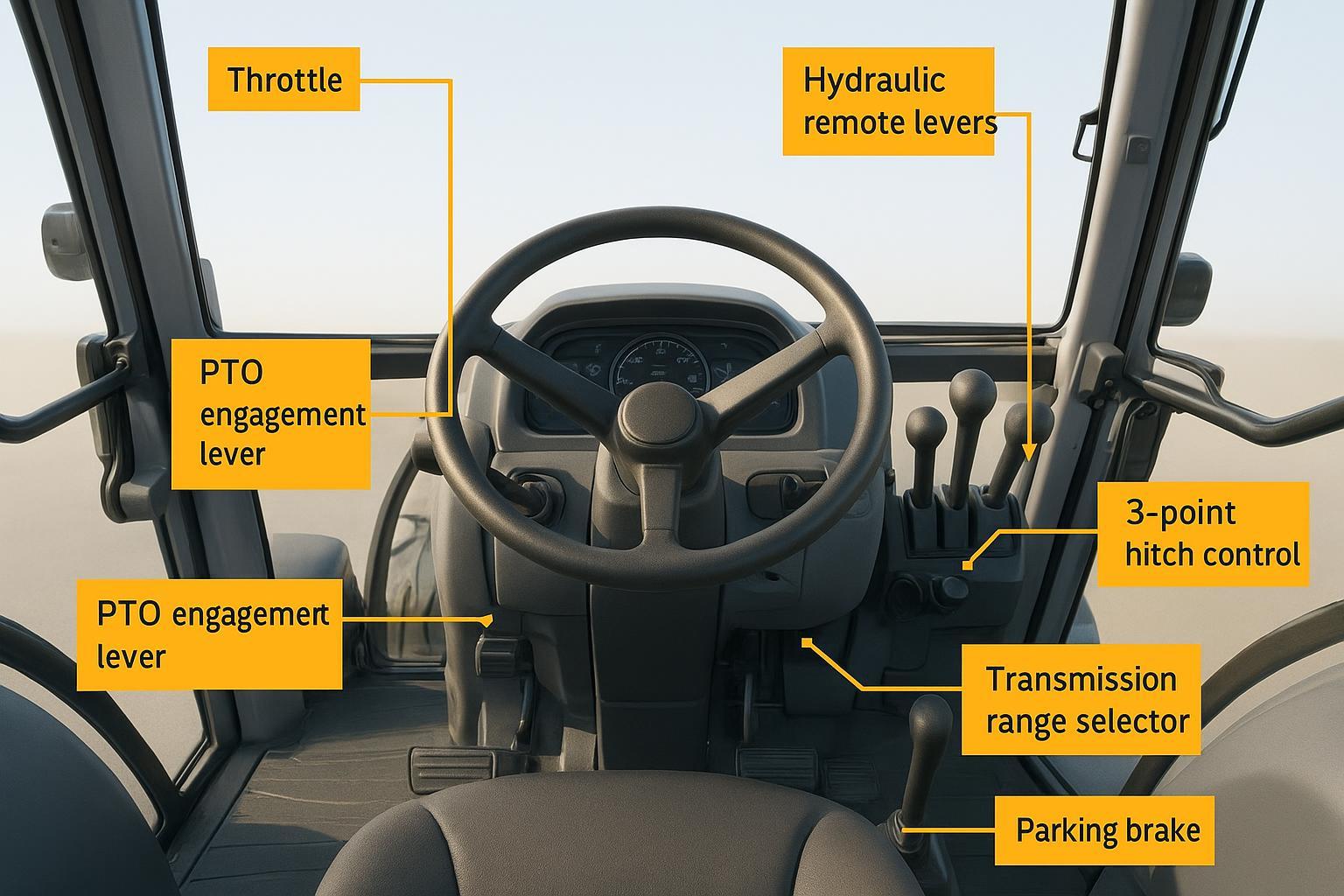
Practice PTO engagement at idle, adjust the 3-point hitch, and run through the transmission ranges.
Warm up the engine before loading; avoid high rpm until temperatures stabilize.
Troubleshooting and routine maintenance
When something feels off, pause and work through simple, safe checks first—then consult the manual or a dealer.
Common issues and first checks:
Hard cold starts: Verify battery health and glow plug operation; use winter-grade diesel in cold climates.
Low PTO power: Check air and fuel filters for restriction; confirm PTO lever is fully engaged; avoid overloading implements.
Excess smoke: Inspect air intake and fuel quality; white smoke on cold start can be normal, but persistent smoke needs diagnosis.
Hydraulic sluggishness: Check fluid level and viscosity; clean or replace filters; warm the system before heavy work in cold weather.
Overheating: Clear radiator fins and screens; ensure coolant concentration is correct; clean debris from the front grille frequently when mowing.
Unusual vibrations: Stop the PTO immediately and inspect driveline alignment and safety shields before restarting.
Maintenance template (follow your operator’s manual first):
50 hours (new machine early service): Engine oil and filter; general bolt/fastener retorque checks.
200–250 hours: Engine oil and filter; fuel filter(s) per manual; hydraulic/transmission filter per interval; air filter service as indicated.
Seasonal storage: Clean thoroughly, stabilize fuel if stored, charge or disconnect battery, and shelter the tractor from weather.
Cost of ownership: a simple example
Use this table to sketch your budget. Replace numbers with your local prices and actual hour logs as the season progresses.
TCO item
Assumption
Annual estimate
Purchase depreciation
$28,000 tractor over 10 years
$2,800
Bahan bakar
1.1 gal/hr × 150 hrs × $4.25/gal
$701
Routine service
Filters, oil, coolant, grease
$350
Repairs reserve
Small parts, hoses, tires (set aside)
$400
Menerapkan
Amortized tiller + mower + forks
$900
Insurance/shelter
Barn space or lean-to + policy
$300
Estimated total per year
$5,451
Tip: Track hours and fuel from day one. After your first season, swap these estimates for your actuals to improve accuracy. Some smallholders also compare this to custom hire for peak jobs to see which mix saves more.
Loader work and implement changes during the season
Safe loader operation hinges on ballast, smooth controls, and terrain awareness. Keep loads low while traveling, avoid side slopes, and never exceed rated lift. When changing implements frequently, a quick-hitch can save time—but always verify compatibility and pin sizes.
If you plan lots of loader-plus-implement workdays, pairing guidance like the tractor and loader overview on Qilu’s site can help you think through hydraulic flow, counterweighting, and attachment choices without sales hype: see this resource on tractor and loader pairing.
What hp diesel farm tractor do I need for 5 acres? For mixed mowing, tilling, and loader chores, many smallholders land in the 25–40 HP range. If your implements require higher PTO HP (e.g., a 6 ft tiller), a 40–50 HP tractor may be more comfortable. Always check the implement’s PTO requirement first.
Is 4WD worth it on a compact diesel farm tractor? Often, yes—especially for loader work, slopes, and soft soils. 4WD improves traction and helps keep steering when the loader is loaded. If your terrain is flat and dry and loader work is rare, 2WD may be sufficient.
What’s the difference between engine hp and PTO hp? Engine (gross) hp is measured at the engine; PTO hp reflects power available at the PTO shaft after drivetrain losses. PTO hp is what matters for matching implements.
How often should I service a diesel farm tractor? Follow the operator’s manual. A common pattern is daily checks, an early 50-hour service on new machines, then 200–250-hour intervals for oil/filters, with air and fuel filters serviced as indicated.
What is a Category I hitch and why does it matter? Category I is the standard three-point hitch size for compact tractors and small-farm implements. Matching the category ensures pins and spacing fit and that lift capacity aligns with your implements.
What emissions standards should I look for? In many markets, look for engines meeting US EPA Tier 4 Final or the EU’s Stage V standards. These typically use aftertreatment like diesel particulate filters. For background on nonroad diesel standards and their effect on PM/NOx, see DieselNet’s Tier 4 overview.
Safety and compliance notes
ROPS and seatbelt use save lives. When ROPS is up, wear the belt. For agricultural tractor safety fundamentals and hazard controls, consult OSHA’s agricultural safety guidance.
Power and stability principles for loader work and slopes are well summarized by Penn State Extension; review their guidance linked earlier in this article before operating on uneven terrain.
If you want a deeper dive into diesel tractor selection checklists and model considerations, Qilu’s knowledge base article on diesel tractors is a good, neutral starting point linked above. Save this guide, print the checklists, and start logging hours and fuel—you’ll make faster, safer, and more economical decisions with each season.
Shandong Qilu Industrial Co., Ltd. adalah produsen dan eksportir profesional yang mengintegrasikan pengembangan dan produksi ekskavator, loader, dan traktor. Kami memberikan layanan terbaik, tentu saja.






-1.png)