E-mail: [email protected] WhatsApp: +8618266768780

E-mail: [email protected] WhatsApp: +8618266768780


Mulai setiap sesi pemecahan masalah dengan memeriksa tingkat cairan hidrolik dan memastikan traktor aman. Banyak kerusakan traktor berasal dari masalah sistem hidrolik —ini account ini untuk hampir satu dari lima kegagalan di lapangan. Anda harus memeriksa tingkat cairan setiap 50 jam operasi untuk menghindari perbaikan yang mahal. Tindakan cepat membantu Anda mencegah masalah kecil menjadi kemunduran besar. Gunakan daftar periksa dan tips dalam Sistem Hidraulik ini Dijelaskan: Daya dan Kontrol dalam panduan Traktor Anda untuk perawatan traktor yang sedang berlangsung.
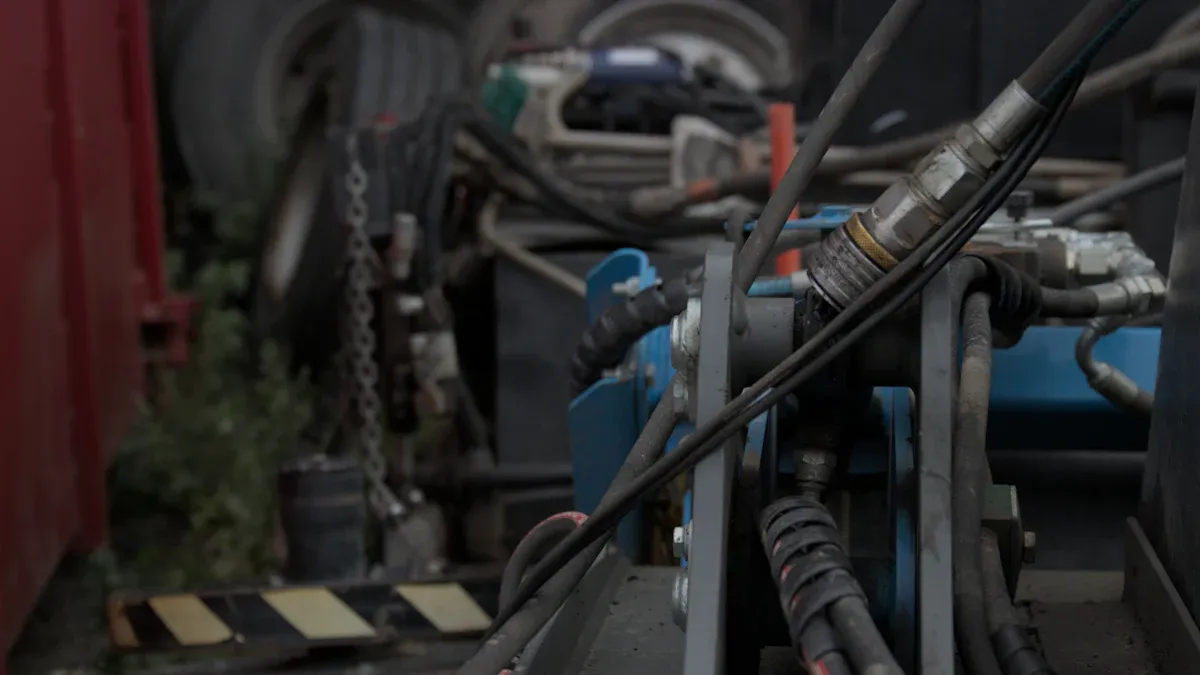
Memahami cara kerja sistem hidrolik traktor Anda memberi Anda kepercayaan diri untuk memecahkan masalah dengan cepat. Anda mengandalkan sistem ini untuk mengangkat, mengarahkan, dan memberi daya pada peralatan. Ketika Anda mengetahui bagian utama dan perannya, Anda dapat menemukan masalah sebelum menjadi serius.
Sistem hidrolik traktor Anda mencakup beberapa bagian penting. Masing-masing memainkan peran khusus dalam memberikan daya dan kontrol. Berikut adalah ringkasan komponen utama dan fungsinya:
| Komponen | Fungsi |
|---|---|
| Pompa Hidrolik | Menekan cairan hidrolik, mengubah tenaga mesin menjadi energi hidrolik |
| Cairan Hidrolik (Minyak) | Memindahkan energi, melumasi, dan mendinginkan sistem |
| Silinder Hidrolik | Mengubah tekanan hidrolik menjadi gerakan linier |
| Katup Kontrol | Mengarahkan, mengatur, dan mengontrol aliran fluida |
| Waduk Hidrolik | Menyimpan cairan dan membantu menghilangkan panas |
| Filter Hidraulik | Menghilangkan kontaminan dari cairan |
| Selang dan Saluran Hidrolik | Membawa cairan bertekanan antar komponen |
| Coupler Hidrolik | Memungkinkan koneksi/pemutusan peralatan dengan cepat |
| Pressure Relief Valve | Mencegah kerusakan sistem dari tekanan berlebih |
Tip: Periksa selang dan alat kelengkapan secara teratur untuk kebocoran atau keausan. Deteksi dini mencegah masalah yang lebih besar.
Sistem Hidraulik Dijelaskan: Tenaga dan Kontrol di Traktor Anda dimulai dengan mesin. Pompa hidrolik menggunakan tenaga mesin untuk memberi tekanan pada fluida. Cairan bertekanan ini berjalan melalui selang dan katup kontrol. Anda menggunakan tuas atau sakelar untuk mengarahkan cairan ke silinder atau motor hidrolik. Aktuator ini mengubah energi hidrolik kembali menjadi kekuatan mekanik, memungkinkan Anda untuk mengangkat beban berat atau mengoperasikan lampiran. Fleksibilitas sistem memungkinkan Anda menangani berbagai tugas dengan presisi.
Jika Anda ingin mempelajari lebih lanjut tentang cara kerja sistem hidrolik, lihat panduan terperinci ini dari University of Nebraska-Lincoln atau ikhtisar ini dari Fluid Power Society.
Sistem Hidraulik Dijelaskan: Daya dan Kontrol di Traktor Anda menyoroti pentingnya perawatan rutin. Masalah umum termasuk tekanan rendah, respons lambat, panas berlebih, kegagalan pompa, dan kebocoran. Masalah-masalah ini sering diakibatkan oleh cairan kotor, segel yang aus, atau selang yang rusak. Anda dapat mencegah sebagian besar kegagalan dengan memeriksa tingkat cairan, membersihkan filter, dan memeriksa komponen.
Studi Kasus:
Seorang petani memperhatikan loadernya bergerak lambat dan mengeluarkan suara yang tidak biasa. Dia memeriksa Sistem Hidraulik Dijelaskan: Daya dan Kontrol dalam daftar periksa Traktor Anda dan menemukan filter tersumbat dan tingkat cairan rendah. Setelah mengganti filter dan mengisi cairan, loader kembali ke operasi normal. Pemecahan masalah sederhana ini menghemat waktu dan mencegah perbaikan yang mahal.
Catatan: Selalu ikuti jadwal perawatan pabrikan. Perawatan yang konsisten membuat sistem hidrolik Anda dapat diandalkan dan aman.
Sebelum Anda mulai mengerjakan traktor Anda sistem hidrolik, Anda harus mengutamakan keselamatan. Anda melindungi diri sendiri dan orang lain dengan mengikuti langkah-langkah berikut:
Tip: Pelatihan pada sistem hidrolik membantu Anda mengenali bahaya dan merespons dengan cepat. Anda dapat menemukan standar keselamatan di Halaman keamanan pertanian OSHA dan bergabunglah dalam diskusi tentang keselamatan traktor di forum seperti Traktor/r Reddit.
Studi Kasus:
Seorang teknisi bersiap untuk memeriksa hidrolika pemuat. Dia mengenakan sarung tangan dan kacamata, memeriksa kebocoran, dan mengunci kunci kontak. Selama pemeriksaan, dia menemukan selang yang rusak. Dia menggantinya sebelum menyalakan traktor, mencegah kecelakaan cairan bertekanan tinggi.
Memeriksa cairan hidrolik adalah langkah sederhana namun krusial. Anda memastikan sistem berjalan lancar dan menghindari kerusakan dengan mengikuti tindakan ini:
Catatan: Cairan kotor atau rendah dapat menyebabkan respons lambat, panas berlebih, dan kegagalan pompa. Sistem Hidraulik Dijelaskan: Daya dan Kontrol di Traktor Anda menekankan pemeriksaan cairan secara teratur untuk mencegah masalah ini.
Studi Kasus:
Seorang petani memperhatikan kemudi yang lamban. Dia memeriksa cairan hidrolik dan menemukannya gelap dan di bawah tanda minimum. Setelah mengganti cairan, kemudi kembali normal, dan traktor berjalan lancar.
Anda dapat melihat banyak masalah hidrolik dengan tampilan yang cermat. Gunakan daftar periksa ini untuk memandu pemeriksaan Anda:
| Melangkah | Apa yang Harus Diperhatikan |
|---|---|
| Koneksi Selang | Kebocoran cairan, menggembung, melepuh |
| Under Traktor | Cairan yang terkumpul, bintik-bintik basah |
| Operasi Hidrolik | Pergerakan lamban, performa berkurang |
| Selang | Retak, bengkak, alat kelengkapan longgar |
| Kebisingan Sistem | Mendesis, mengetuk, atau suara yang tidak biasa |
Studi Kasus:
Seorang operator traktor melihat cairan di bawah poros belakang dan melihat suara mendesis selama pengangkatan. Dia menemukan fitting longgar dan selang melepuh. Setelah mengencangkan fitting dan mengganti selang, sistem hidrolik bekerja tanpa kebocoran atau kebisingan.
Tip: Pemeriksaan visual secara teratur membantu Anda menangkap masalah lebih awal. Anda dapat berbagi tips inspeksi dan belajar dari orang lain dalam kelompok pemeliharaan traktor online.
Anda dapat mendeteksi banyak masalah hidrolik dengan menggunakan indra Anda. Mendengarkan dan merasakan perubahan membantu Anda menangkap masalah yang mungkin terlewatkan oleh pemeriksaan visual. Saat Anda mengoperasikan traktor Anda, perhatikan baik-baik suara dan getaran. Petunjuk ini sering menunjukkan masalah sebelum menjadi serius.
Mulai pemeriksaan Anda dengan menjalankan sistem hidrolik melalui fungsi normalnya. Dengarkan suara-suara yang tidak biasa. Hidrolik yang sehat menghasilkan dengungan yang stabil atau desingan lembut. Jika Anda mendengar ketukan, rengekan, atau desisan, Anda harus menyelidiki lebih lanjut. Suara ketukan mungkin menandakan udara dalam sistem atau komponen pompa yang aus. Merengek sering berarti cairan rendah atau filter tersumbat. Mendesis dapat menunjukkan kebocoran atau pelarian tekanan tinggi.
Tip: Selalu bandingkan suara yang Anda dengar dengan apa yang Anda harapkan dari operasi normal. Perubahan nada atau volume menunjukkan masalah.
Selanjutnya, gunakan tangan Anda untuk merasakan getaran atau panas yang tidak normal. Letakkan tangan Anda di dekat (tetapi tidak pada) selang, katup, dan silinder. Anda harus merasakan getaran yang halus dan stabil. Guncangan atau denyut yang berlebihan mengarah ke keausan internal atau udara di garis. Jika komponen terasa jauh lebih panas daripada yang lain, Anda mungkin memiliki pembatasan atau bagian yang gagal.
Berikut adalah daftar periksa cepat untuk memandu pemeriksaan sensorik Anda:
| Gejala | Kemungkinan Penyebab | Apa yang Harus Anda Lakukan |
|---|---|---|
| Suara Ketukan | Udara dalam sistem, pompa aus | Udara berdarah, periksa pompa |
| Whining Noise | Cairan rendah, filter tersumbat | Periksa cairan, ganti filter |
| Mendesis Kebisingan | Kebocoran, pelarian tekanan tinggi | Periksa selang, periksa katup pelepas |
| Getaran Berlebih | Keausan internal, udara dalam antrean | Periksa komponen, sistem pembuangan |
| Komponen Panas | Pembatasan, bagian yang gagal | Periksa penyumbatan, ganti bagian |
Studi Kasus:
Seorang operator traktor memperhatikan suara rengekan dan merasakan getaran kuat pada kontrol loader. Dia menghentikan traktor dan memeriksa cairan hidrolik. Levelnya rendah, dan filter menunjukkan tanda-tanda penyumbatan. Setelah mengisi cairan dan mengganti filter, kebisingan dan getaran menghilang. Loader kembali ke operasi yang lancar, dan operator menghindari kerusakan yang mahal.
Catatan: Percayai indra Anda. Anda tahu traktor Anda yang terbaik. Jika sesuatu terasa atau terdengar tidak aktif, segera selidiki. Deteksi dini menghemat waktu dan uang.
Mendengarkan dan merasakan masalah memberi Anda keunggulan dalam pemecahan masalah hidrolik. Anda menangkap masalah lebih awal, mencegah kerusakan, dan menjaga traktor Anda berjalan dengan aman. Jadikan pemeriksaan sensorik sebagai bagian dari rutinitas pemeriksaan rutin Anda.
Masalah hidraulik dapat mengganggu kinerja traktor Anda dan menyebabkan perbaikan yang mahal. Anda dapat mencegah kerusakan besar dengan mengenali gejala lebih awal dan mengikuti pendekatan pemecahan masalah yang sistematis. Bagian berikut memandu Anda melalui yang paling banyak masalah hidrolik umum: kebocoran, tekanan rendah, dan respons lambat.
Kebocoran hidraulik sering kali menampakkan diri melalui tanda-tanda yang terlihat dan perubahan perilaku sistem. Anda mungkin memperhatikan:
Kebocoran dapat menyebabkan penurunan kinerja dan dapat meningkat dengan cepat jika tidak dikendalikan.
Kebocoran pada sistem hidrolik biasanya hasil dari:
Tabel berikut merangkum sumber kebocoran yang khas dan dampaknya:
| Sumber | Keterangan |
|---|---|
| Segel statis | Segel pada sambungan dan sambungan yang menurun seiring waktu |
| Segel minyak | Segel di sekitar bagian yang bergerak, seperti poros pompa, rentan aus |
| Masalah instalasi | Perakitan yang salah atau komponen yang tidak kompatibel menyebabkan kebocoran |
Anda dapat mendeteksi dan mengatasi kebocoran menggunakan langkah-langkah ini:
Tip: Inspeksi rutin membantu Anda menangkap kebocoran sebelum menyebabkan kerusakan yang signifikan.
Studi Kasus:
Anda melihat genangan cairan hidrolik di bawah traktor Anda setelah memarkirnya semalaman. Setelah diperiksa, Anda menemukan tempat basah di sekitar pemasangan selang. Anda membersihkan area tersebut, menambahkan pewarna fluoresen ke cairan, dan menggunakan senter UV untuk memastikan sumber kebocoran. Setelah mengencangkan fitting dan mengganti segel yang aus, kebocoran berhenti. Sistem mendapatkan kembali tekanan normal, dan Anda menghindari kerusakan lebih lanjut.
Tekanan hidrolik rendah mempengaruhi kemampuan traktor Anda untuk mengangkat, mengarahkan, atau mengoperasikan attachment. Anda mungkin mengalami:
Beberapa faktor dapat menyebabkan tekanan rendah dalam sistem hidrolik:
Ikuti langkah-langkah berikut untuk mendiagnosis dan mengatasi tekanan rendah:
| Langkah Pemecahan Masalah | Hasil yang Diharapkan |
|---|---|
| Pemeriksaan cairan | Mengembalikan tekanan jika rendah atau terkontaminasi |
| Inspeksi filter | Meningkatkan aliran dan tekanan |
| Perbaikan kebocoran | Mencegah kehilangan tekanan lebih lanjut |
| Tes katup bantuan | Memastikan sistem mempertahankan tekanan yang benar |
| Pengukuran tekanan | Mengkonfirmasi kinerja pompa dan katup |
Studi Kasus:
Anda melihat traktor Anda berjuang untuk mengangkat ember yang dimuat. Anda memeriksa tingkat cairan dan menemukannya rendah. Setelah topping off, masalahnya tetap ada. Anda memeriksa filter dan menemukan itu tersumbat. Mengganti filter mengembalikan tekanan normal, dan ember terangkat dengan lancar. Anda juga menguji katup pelepas tekanan dan memastikannya beroperasi sesuai spesifikasi.
Respons hidrolik yang lambat dapat membuat traktor Anda sulit dioperasikan. Tanda-tanda umum meliputi:
Respon lambat sering dihasilkan dari:
Anda dapat mengembalikan respons normal dengan mengikuti langkah-langkah berikut:
Catatan: Mengabaikan respon lambat dapat menyebabkan kegagalan sistem yang lebih besar. Mengatasi masalah segera untuk menjaga operasi yang aman.
Studi Kasus:
Anda melihat kemudi traktor Anda terasa berat dan lambat. Anda memeriksa cairan hidrolik dan menemukannya pada tanda minimum. Setelah topping off, kemudi sedikit membaik. Anda kemudian memeriksa filter dan layar pickup, menemukan keduanya tersumbat oleh puing-puing. Membersihkan dan mengganti komponen-komponen ini mengembalikan kemudi yang cepat dan halus dan mencegah masalah di masa depan.
| Perbandingan Frekuensi Masalah | Kebocoran | Tekanan Rendah | Lambat Respon |
|---|---|---|---|
| Persentase Kasus yang Dilaporkan | 40% | 30% | 20% |
Sistem Hidraulik Dijelaskan: Daya dan Kontrol di Traktor Anda menekankan pentingnya pemeriksaan dan pemeliharaan rutin. Anda dapat mencegah sebagian besar masalah hidraulik dengan mengikuti langkah-langkah pemecahan masalah ini dan menjadikan inspeksi sebagai bagian dari rutinitas Anda.
Anda dapat melihat panas berlebih di sistem hidrolik traktor Anda dengan memperhatikan tanda-tanda ini:
Tip: Jika Anda melihat uap atau asap di dekat komponen hidrolik, segera matikan traktor. Panas berlebih dapat menyebabkan kerusakan serius atau bahkan kebakaran.
Beberapa faktor dapat membuat sistem hidrolik Anda terlalu panas. Anda harus mencari penyebab umum ini:
| Menyebabkan | Keterangan |
|---|---|
| Tingkat Cairan Rendah | Tidak cukup cairan mengurangi pendinginan dan meningkatkan gesekan |
| Cairan Kotor atau Salah | Cairan yang terkontaminasi atau salah kehilangan kemampuan pendinginannya |
| Filter atau Layar Tersumbat | Filter yang diblokir membatasi aliran dan memerangkap panas |
| Sistem Overloaded | Menggunakan alat berat atau berlari dengan tekanan tinggi terlalu lama |
| Katup Relief yang Salah | Katup yang macet menyebabkan cairan melewati dan memanas |
| Ventilasi Buruk | Kotoran atau puing-puing menghalangi aliran udara di sekitar reservoir atau saluran |
Anda harus memeriksa masing-masing area ini ketika Anda mencurigai overheating.
Anda dapat memperbaiki overheating dengan mengikuti proses yang cermat. Mulailah dengan dasar-dasar dan pindah ke pemeriksaan yang lebih maju:
Studi Kasus:
Seorang operator traktor memperhatikan loader melambat setelah 30 menit digunakan. Reservoir hidrolik terasa panas, dan cairan berbau terbakar. Dia memeriksa cairan dan menemukannya rendah dan gelap. Setelah mengganti cairan dan membersihkan filter, panas berlebih berhenti. Dia juga membersihkan kliping rumput dari sekitar reservoir untuk meningkatkan pendinginan. Loader bekerja normal selama sisa musim.
Kegagalan pompa dapat menghentikan sistem hidrolik traktor Anda bekerja. Anda mungkin memperhatikan:
Catatan: Jika Anda mendengar suara keras atau tidak biasa dari pompa, hentikan traktor segera. Menjalankan pompa yang rusak dapat menghancurkan komponen lainnya.
Kegagalan pompa sering hasil dari kombinasi keausan, kontaminasi, dan pemeliharaan yang buruk. Perhatikan penyebab ini:
| Menyebabkan | Keterangan |
|---|---|
| Berjalan dengan Cairan Rendah | Pompa menjadi kering dan terlalu panas, menyebabkan kerusakan internal |
| Cairan Kotor atau Terkontaminasi | Kotoran dan puing-puing memakai bagian pompa dengan cepat |
| Udara dalam Sistem | Gelembung udara menyebabkan kavitasi dan merusak permukaan pompa |
| Segel atau Bantalan yang Dikenakan | Segel tua membiarkan kebocoran cairan dan bantalan gagal, mengurangi efisiensi pompa |
| Kelebihan beban | Menggunakan peralatan yang membutuhkan lebih banyak aliran atau tekanan daripada yang dapat ditangani oleh pompa |
Anda dapat mendiagnosis dan mengatasi kegagalan pompa dengan langkah-langkah berikut:
Studi Kasus:
Seorang petani memperhatikan loader traktornya tidak mau terangkat, dan pompa mengeluarkan suara rengekan yang keras. Dia memeriksa cairan dan menemukannya berbusa dengan serpihan logam. Setelah mengeluarkan darah sistem dan mengganti cairan, kebisingan berlanjut. Dia menguji tekanan dan menemukannya jauh di bawah normal. Dia mengganti pompa dan menyiram sistem. Loader kembali ke daya penuh, dan pompa baru berjalan dengan tenang.
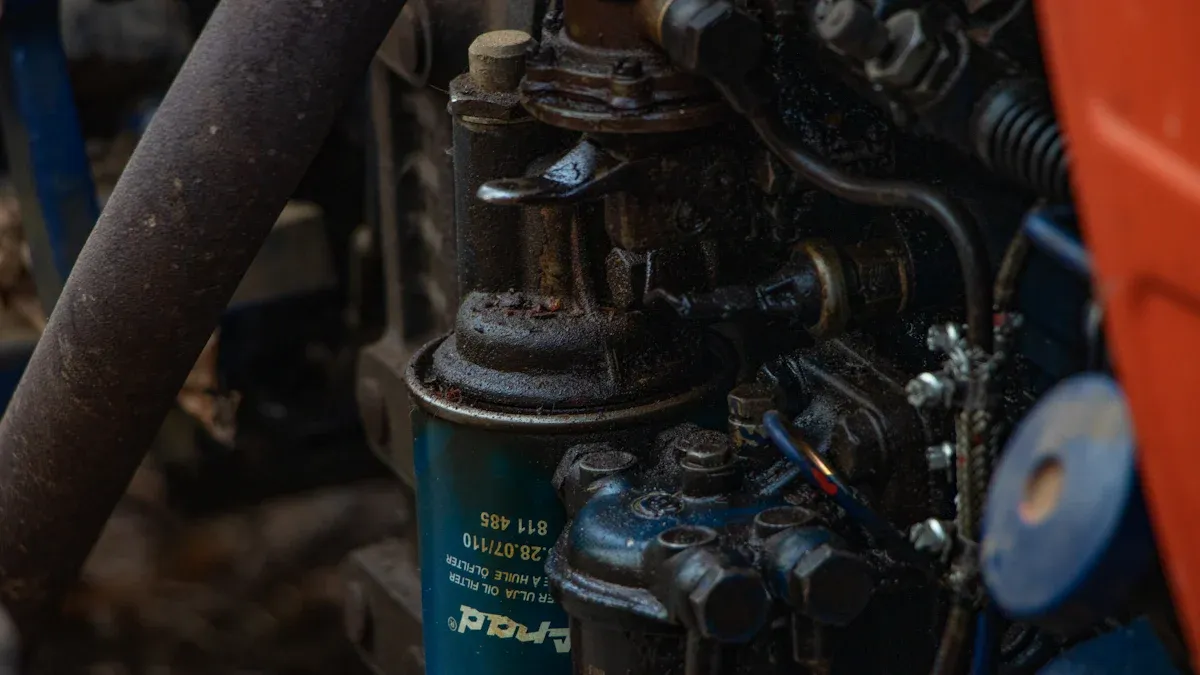
Rutinitas pemeriksaan menyeluruh membantu Anda menangkap masalah hidrolik sebelum menjadi perbaikan mahal. Gunakan daftar periksa ini untuk memandu pemeriksaan Anda yang paling penting komponen hidrolik. Anda dapat mengikuti urutan ini setiap kali Anda memeriksa traktor Anda.
| Melangkah | Komponen | Apa yang Harus Diperhatikan |
|---|---|---|
| 1 | Selang dan Fitting | Retak, kebocoran, tonjolan, alat kelengkapan longgar |
| 2 | Filter dan Layar | Kotoran, penyumbatan, kerusakan |
| 3 | Kondisi Cairan | Warna, kejernihan, bau, kontaminasi |
| 4 | Katup dan Silinder | Kebocoran, lengket, gerakan tidak rata |
| 5 | Koneksi Sistem | Pemasangan aman, korosi, aus |
Tip: Unduh daftar periksa inspeksi yang dapat dicetak dari Keselamatan Traktor atau melihat rutinitas sehari-hari dibagikan pada Instagram #tractormaintenance.
Mulai pemeriksaan Anda dengan selang dan alat kelengkapan. Anda harus mencari retakan, tonjolan, atau bintik-bintik usang di sepanjang setiap selang. Jalankan tangan Anda (mengenakan sarung tangan) di sepanjang untuk merasakan bintik-bintik lembut atau lecet. Periksa setiap fitting untuk kebocoran atau tanda-tanda cairan hidrolik. Kencangkan koneksi longgar dengan alat yang benar. Ganti selang apa pun yang menunjukkan kerusakan atau keausan berlebihan. Bahkan kebocoran kecil dapat menyebabkan kegagalan mendadak di bawah tekanan.
Peringatan: Jangan pernah memeriksa kebocoran dengan tangan kosong saat sistem bertekanan. Cairan bertekanan tinggi dapat menyebabkan cedera serius.
Selanjutnya, pindah ke filter dan layar. Lepaskan filter hidrolik dan periksa apakah ada kotoran atau partikel logam. Filter yang tersumbat membatasi aliran cairan dan dapat menyebabkan kepanasan atau respons lambat. Bersihkan atau ganti filter jika Anda melihat penumpukan apa pun. Periksa layar pickup di dalam reservoir untuk puing-puing atau lumpur. Bersihkan layar secara menyeluruh sebelum memasangnya kembali. Menjaga filter dan layar tetap bersih memastikan kelancaran operasi dan memperpanjang umur sistem hidrolik Anda.
Periksa cairan hidrolik dengan melepas dipstick atau membuka kaca penglihatan. Cairan harus terlihat jernih dan sesuai dengan warna yang direkomendasikan oleh manual traktor Anda. Jika Anda melihat penampilan seperti susu, ini berarti kontaminasi air. Cairan yang gelap atau berbau terbakar menandakan panas berlebih atau minyak tua. Lap dipstick dengan kain bersih dan periksa serutan atau pasir logam. Jika Anda menemukan kontaminasi, tiriskan dan ganti cairan segera.
Catatan: Selalu gunakan jenis cairan hidrolik yang benar. Mencampur cairan dapat menyebabkan kegagalan segel dan kinerja yang buruk.
Studi Kasus:
Seorang pemilik traktor mengikuti daftar periksa inspeksi ini sebelum penanaman musim semi. Dia menemukan retakan kecil di selang dan filter tersumbat. Dengan mengganti selang dan membersihkan filter, dia menghindari kerusakan besar selama musim sibuk. Traktornya berjalan lancar, dan dia menyelesaikan pekerjaannya tepat waktu.
Anda dapat menemukan lebih banyak tips dan rutinitas inspeksi dari operator berpengalaman di Twitter #traktorinspection dan di checklist industri. Jadikan pemeriksaan ini kebiasaan rutin untuk menjaga traktor Anda dapat diandalkan dan aman.
Katup dan silinder memainkan peran sentral dalam sistem hidrolik traktor Anda. Anda mengontrol arah dan aliran cairan hidrolik dengan katup. Silinder mengubah tenaga fluida ini menjadi gerakan. Jika Anda ingin traktor Anda bekerja dengan lancar, Anda harus memeriksa bagian-bagian ini secara teratur.
Mulailah dengan memeriksa semua permukaan silinder hidrolik yang terlihat. Cari kebocoran oli di sekitar segel silinder dan ujung batang. Bahkan tetesan kecil dapat menandakan segel yang aus atau batang yang rusak. Lap silinder bersih dengan lap sebelum Anda memeriksanya. Ini membantu Anda melihat kebocoran segar selama operasi.
Selanjutnya, perpanjang dan tarik kembali setiap silinder sepenuhnya. Perhatikan gerakan tersentak atau tidak rata. Operasi yang lancar berarti silinder bekerja dengan baik. Jika Anda melihat keraguan atau mendengar suara yang tidak biasa, Anda mungkin memiliki udara di sistem atau keausan internal.
Periksa batang untuk goresan, penyok, atau karat. Batang yang rusak dapat merobek segel dan menyebabkan kebocoran. Gunakan senter untuk memeriksa pitting atau korosi. Jika Anda menemukan kerusakan, ganti batang atau seluruh silinder.
Pindah ke katup kontrol. Periksa kebocoran di sekitar badan katup dan alat kelengkapannya. Operasikan setiap katup dan dengarkan suara mendesis atau mengklik. Suara-suara ini dapat menunjukkan kebocoran internal atau gulungan yang menempel. Jika katup terasa kaku atau tidak kembali ke posisi netral, Anda mungkin perlu membersihkan atau membangunnya kembali.
Tip: Simpan log dari setiap kebocoran atau masalah kinerja yang Anda temukan. Catatan ini membantu Anda melacak masalah berulang dan merencanakan perbaikan.
Studi Kasus:
Seorang pemilik traktor memperhatikan ember pemuat tidak akan tetap terangkat. Dia memeriksa silinder lift dan menemukan minyak merembes dari segel batang. Setelah mengganti segel dan membersihkan batang, ember menahan posisinya tanpa melayang. Perbaikan sederhana ini mencegah kehilangan cairan lebih lanjut dan mengembalikan fungsi penuh.
Sambungan sistem mencakup semua titik di mana selang, pipa, dan komponen bergabung bersama. Sambungan ini harus tetap kencang dan bebas dari korosi untuk mencegah kebocoran dan mempertahankan tekanan.
Mulailah pemeriksaan Anda di pompa hidrolik dan ikuti setiap jalur ke titik sambungannya. Periksa mur yang longgar, klem yang hilang, atau tanda-tanda rembesan cairan. Gunakan kunci pas untuk mengencangkan dengan lembut setiap alat kelengkapan yang longgar. Jangan terlalu kencangkan, karena ini dapat merusak benang atau menghancurkan segel.
Carilah karat atau korosi di sekitar sambungan logam. Korosi melemahkan fitting dan dapat menyebabkan kebocoran. Bersihkan setiap area yang terkena dengan sikat kawat dan oleskan lapisan ringan pelumas yang aman untuk hidrolik untuk melindungi dari karat di masa depan.
Periksa coupler cepat untuk kotoran atau puing-puing. Coupler kotor dapat memasukkan kontaminan ke dalam sistem. Lap bersih sebelum menghubungkan atau melepaskan peralatan. Pastikan setiap coupler terkunci dengan aman di tempatnya.
Catatan: Selalu depressurize sistem sebelum memutuskan setiap garis atau fitting. Cairan bertekanan dapat menyebabkan cedera.
Studi Kasus:
Seorang petani mengalami kehilangan tenaga hidrolik secara tiba-tiba saat menggunakan attachment belakang. Dia menelusuri masalah ke coupler cepat yang belum terkunci di tempatnya. Setelah membersihkan dan memasang kembali coupler, tenaga hidrolik kembali. Perbaikan cepat ini menghemat waktu dan mencegah kerusakan yang lebih besar.
Dengan memeriksa katup, silinder, dan koneksi sistem, Anda memastikan sistem hidrolik traktor Anda tetap andal dan aman. Jadikan pemeriksaan ini bagian dari rutinitas perawatan rutin Anda untuk pengoperasian yang bebas masalah.
Anda melindungi sistem hidrolik traktor Anda dengan sering memeriksa level cairan. Cairan hidrolik bersih menjaga sistem Anda berjalan lancar dan mencegah keausan. Anda harus memeriksa cairan hidrolik setiap 50 jam dari operasi. Ubah cairan berdasarkan jam penggunaan atau pada interval musiman. Cairan kotor atau rendah dapat menyebabkan respons lambat, panas berlebih, dan kegagalan pompa. Selalu gunakan jenis cairan yang direkomendasikan dalam manual traktor Anda. Saat Anda memeriksa cairan, cari perubahan warna, kejernihan, atau bau. Ganti cairan jika tampak gelap, susu, atau berbau terbakar.
Pemeliharaan dan pemeriksaan kualitas cairan hidrolik secara teratur sangat penting untuk kinerja traktor yang optimal. Cairan hidrolik yang bersih sangat penting untuk menjaga sistem yang sehat, karena cairan yang terkontaminasi atau terdegradasi dapat mengganggu kinerja dan mempercepat keausan pada komponen.
Studi Kasus:
Seorang pemilik traktor memeriksa cairan hidrolik sebelum setiap pekerjaan utama. Satu musim semi, ia menemukan tingkat cairan rendah dan warnanya gelap. Dia mengganti cairan dan menghindari kerusakan selama musim tanam. Traktornya berkinerja lebih baik dan menggunakan lebih sedikit bahan bakar.
Anda dapat menemukan jadwal pemeliharaan di Panduan pemeliharaan traktor Iowa State Extension dan bergabung diskusi di Grup Pemeliharaan Traktor Facebook.
Anda mempertahankan kinerja hidrolik dengan membersihkan atau mengganti filter dan layar. Filter menjebak kotoran dan puing-puing, menjaga cairan tetap bersih. Layar mencegah partikel yang lebih besar memasuki sistem. Anda harus mengganti filter pada interval yang disarankan atau setiap lima tahun, mana saja yang lebih dulu. Periksa layar untuk penumpukan dan bersihkan sebelum menginstal ulang. Jika Anda menunggu terlalu lama, filter yang tersumbat dapat membatasi aliran dan menyebabkan panas berlebih.
Idealnya, filter harus diubah ketika kapasitas menahan kotoran dari filter sekitar 80% penuh, sebelum filter telah pergi pada bypass.
Tip:
Tuliskan tanggal dan jam ketika Anda mengganti filter. Catatan ini membantu Anda merencanakan perawatan di masa mendatang.
Anda mencegah kegagalan hidrolik dengan memeriksa selang, segel, dan alat kelengkapan untuk dipakai. Carilah retakan, tonjolan, kebocoran, atau sambungan longgar. Ganti bagian mana pun yang menunjukkan kerusakan. Bahkan kebocoran kecil dapat menyebabkan masalah besar jika diabaikan. Periksa silinder dan katup untuk gerakan halus dan tanda-tanda rembesan minyak. Segel atau batang yang aus dapat menyebabkan hilangnya tekanan dan kinerja yang buruk.
| Praktek Pemeliharaan | Keterangan |
|---|---|
| Inspeksi Reguler | Membantu mengidentifikasi potensi masalah sejak dini. |
| Manajemen Cairan yang Tepat | Secara teratur periksa dan ganti filter untuk menjaga cairan tetap bersih. |
| Periksa Kebocoran | Bahkan kebocoran kecil dapat menyebabkan masalah yang signifikan. |
| Rutinitas Pemeliharaan Sistematis | Tetapkan rutinitas untuk menangkap masalah sebelum meningkat. |
Studi Kasus:
Seorang petani melihat kebocoran kecil pada pemasangan selang selama pemeriksaan rutin. Dia mengganti selang sebelum gagal. Tindakan cepat ini menyelamatkannya dari perbaikan yang mahal dan membuat traktornya tetap berjalan melalui panen.
Anda memperpanjang umur traktor dan meningkatkan keselamatan dengan mengikuti rutinitas perawatan sistematis.
Anda dapat berbagi tips inspeksi dan belajar dari orang lain di Instagram #tractormaintenance Dan Twitter #traktorinspection.
Anda perlu menyesuaikan rutinitas perawatan hidrolik Anda berdasarkan lingkungan dan beban kerja. Ladang berdebu, medan berlumpur, dan suhu ekstrem dapat menekan traktor Anda sistem hidrolik. Jika Anda bekerja dalam kondisi kering dan berdebu, periksa dan bersihkan filter lebih sering. Debu dapat menyumbat layar dan mengurangi aliran cairan. Di daerah basah atau berlumpur, periksa selang dan alat kelengkapan untuk penumpukan kotoran. Lumpur dapat menyembunyikan kebocoran dan mempercepat keausan.
Cuaca dingin mempengaruhi cairan hidrolik. Suhu rendah membuat cairan lebih tebal, memperlambat respons sistem. Anda harus memanaskan traktor Anda sebelum penggunaan berat. Jalankan hidrolika dengan kecepatan rendah selama beberapa menit. Ini membantu sirkulasi cairan dan mencapai suhu operasi. Di iklim panas, pantau suhu cairan dengan cermat. Overheating dapat merusak segel dan mengurangi masa pakai sistem.
Tip: Sesuaikan jadwal pemeriksaan Anda selama musim panen atau tanam. Beban kerja yang berat meningkatkan risiko masalah hidrolik.
Studi Kasus:
Seorang petani bekerja berjam-jam selama musim panas yang kering. Debu terkumpul di sekitar reservoir hidrolik dan menyumbat filter. Dia memperhatikan gerakan loader yang lambat dan membersihkan filter dua kali lebih sering. Penyesuaian sederhana ini membuat traktornya berjalan lancar dan mencegah downtime.
Anda menjaga sistem hidrolik Anda tetap sehat dengan sering menggunakannya. Operasi reguler mencegah segel mengering dan menjaga cairan bergerak melalui semua komponen. Jika traktor Anda diam selama berminggu-minggu, jalankan hidrolika setidaknya sekali seminggu. Siklus setiap fungsi —lift, menurunkan, memiringkan, dan mengarahkan. Ini mendistribusikan cairan, melumasi bagian yang bergerak, dan membantu Anda menemukan masalah lebih awal.
Sistem menganggur dapat mengembangkan kebocoran atau kehilangan tekanan. Anda menghindari masalah ini dengan mengoperasikan sistem secara teratur. Dengarkan suara-suara yang tidak biasa dan rasakan perubahan dalam respons. Deteksi dini memungkinkan Anda memperbaiki masalah kecil sebelum mereka tumbuh.
Daftar Periksa untuk Operasi Reguler:
Studi Kasus:
Seorang pemilik traktor memarkir mesinnya untuk musim dingin. Dia menyalakan mesin dan menjalankan hidrolika setiap dua minggu. Selama satu pemeriksaan, dia menemukan kebocoran kecil pada segel silinder. Dia memperbaikinya sebelum musim semi, menghindari perbaikan besar dan menjaga traktornya siap untuk ditanam.
Anda melindungi investasi Anda dengan mengikuti jadwal pemeliharaan di Anda manual traktor. Produsen merancang jadwal ini agar sesuai dengan kebutuhan sistem dan kondisi operasi. Jadwal memberi tahu Anda kapan harus mengganti cairan, mengganti filter, dan memeriksa komponen utama. Anda harus mencatat setiap tugas pemeliharaan dan menyimpan catatan jam dan tanggal.
Catatan: Melewatkan pemeliharaan terjadwal meningkatkan risiko kerusakan dan memperpendek umur sistem.
Tabel: Contoh Jadwal Pemeliharaan
| Tugas | Interval yang Disarankan |
|---|---|
| Pemeriksaan Tingkat Cairan | Setiap 50 jam |
| Penggantian Filter | Setiap 250 jam atau tahunan |
| Pemeriksaan Selang | Setiap 100 jam |
| Tinjauan Sistem Lengkap | Setiap 500 jam |
Studi Kasus:
Seorang petani mengikuti jadwal pabrikan untuk traktornya. Dia mengganti cairan hidrolik dan filter pada interval yang disarankan. Selama pemeriksaan yang dijadwalkan, dia menemukan selang yang aus dan menggantinya. Traktornya berjalan tanpa masalah hidrolik sepanjang musim, menghemat waktu dan uang.
Anda memastikan kinerja yang andal dan menghindari perbaikan yang mahal dengan menyesuaikan perawatan untuk kondisi, mengoperasikan sistem secara teratur, dan mengikuti jadwal pabrikan.
Anda menjaga traktor Anda berjalan lancar ketika Anda mengikuti rutin inspeksi dan pemeliharaan rutin. Periksa tingkat cairan, periksa selang, dan bersihkan filter sering. Alamat kebocoran dan tekanan rendah segera setelah Anda melihat mereka. Gunakan daftar periksa untuk menangkap masalah kecil sebelum mereka menjadi kegagalan besar.
Pertama, matikan mesin dan periksa tingkat cairan. Periksa selang dan alat kelengkapan untuk kebocoran atau kerusakan. Jika Anda tidak menemukan masalah yang jelas, konsultasikan manual Anda atau hubungi profesional.
Untuk tips pemecahan masalah lainnya, kunjungi FAQ Hidraulik TractorByNet.
Anda harus mengganti cairan hidrolik setiap 250 jam atau setidaknya setahun sekali. Periksa manual Anda untuk interval tertentu. Perubahan rutin mencegah kontaminasi dan menjaga sistem Anda berjalan lancar.
.️ Tip: Catat setiap perubahan cairan dalam log pemeliharaan.
Suara rengekan sering berarti cairan rendah, filter tersumbat, atau udara dalam sistem. Periksa tingkat cairan dan kondisi filter. Udara berdarah dari garis jika diperlukan.
Lihat solusi dunia nyata di Tanya Jawab Traktor Reddit.
Jangan pernah menggunakan oli otomotif dalam sistem hidrolik. Selalu gunakan jenis cairan yang direkomendasikan dalam manual traktor Anda. Cairan yang salah dapat merusak segel dan mengurangi kinerja.
. Menggunakan cairan yang salah dapat membatalkan garansi Anda.
Gunakan pewarna fluorescent dalam cairan hidrolik dan periksa dengan senter UV. Carilah titik basah, suara mendesis, atau penurunan tekanan.
Untuk deteksi kebocoran langkah demi langkah, periksa Benang Kebocoran Hidraulik FarmChat.
Suhu dingin menebalkan cairan hidrolik, memperlambat respons sistem. Hangatkan traktor Anda sebelum penggunaan berat. Siklus semua fungsi hidrolik untuk mengalirkan cairan.
.️ Studi Kasus: Seorang petani meningkatkan kecepatan loader dengan membiarkan traktor menganggur selama sepuluh menit pada pagi hari yang dingin.
Periksa selang, cairan, dan filter sebelum periode kerja puncak. Bersihkan puing-puing dari sekitar reservoir. Operasikan semua fungsi hidrolik setiap minggu, bahkan jika traktor duduk menganggur.
Untuk daftar periksa pemeliharaan musiman, kunjungi Forum Pemeliharaan Traktor AgTalk.
Anda dapat bergabung dalam diskusi dan mengajukan pertanyaan Traktor/r Reddit, TraktorOlehNet, Dan Grup Pemeliharaan Traktor Facebook.
.️ Berbagi pengalaman membantu orang lain memecahkan masalah serupa.





-1.png)