E-mail: [email protected] WhatsApp: +8618266768780

E-mail: [email protected] WhatsApp: +8618266768780


Urban backyards are shrinking. Gate widths are tighter. And contractors who show up with a 5-ton machine to dig a drainage trench are quickly finding themselves priced out — or simply stuck at the curb.
The construction landscape is shifting fast. Residential redevelopment, utility work, and precision landscaping projects are increasingly happening in confined spaces where full-size equipment simply cannot operate. The global mini excavator markhttps://varyonmachinery.com/products/et reflects this reality: projected to grow from $7.44 billion in 2023 to $10.54 billion by 2030, according to Fortune Business Insights, demand for compact digging solutions is accelerating at every level of the industry.
The 2.0-ton class hits a precise balance point — enough lifting capacity and digging force for serious groundwork, yet light enough to transport on a standard trailer without triggering heavy-haul permit requirements. That distinction alone can save hundreds of dollars per job. As Majalah Peralatan Kompak notes, “the shift toward smaller, more efficient machines is not just about size; it’s about reducing the total cost of ownership through lower fuel consumption.”
Anyone still asking whether a Chinese mini excavator [is] worth it or evaluating a mini excavator for landscaping should understand: the compact equipment revolution is no longer a trend — it’s an industry reset. The QL-20Eco was engineered specifically to meet these pressures. But before exploring what it delivers, it’s worth understanding exactly what happens when contractors choose too much machine for the job.
Choosing the wrong equipment size doesn’t just create inconvenience — it creates measurable financial damage. When contractors deploy a 3.5-ton or larger mini excavator for construction work in residential settings, the consequences compound quickly.
Property damage tops the list. Heavier machines exert significantly more ground pressure, leaving ruts in lawns, cracking decorative pavers, and occasionally damaging underground irrigation lines. A single repair bill for a fractured driveway can erase the profit margin on an entire small job.
The Hidden Costs of Oversized Gear
- Transport expenses: Larger machines require low-boy trailers and specialized permits, adding $200–$600 per mobilization
- Fuel burn: A 3.5-ton machine can consume 30–40% more fuel per hour than a properly sized 2.0-ton unit
- Site liability: Ground pressure damage in residential yards frequently results in disputed invoices or costly remediation
- Wasted hours: Tight alleys, indoor utility corridors, and gated backyards become impassable — crews sit idle
As EquipmentWorld notes, zero-tail swing and compact footprints are the primary technical requirements for micro-excavation in residential landscaping. Without them, access simply fails.
In practice, contractors frequently discover that the right attachment strategy matters as much as machine size — oversized equipment limits which tools can even fit the workspace. The QL-20Eco’s compact footprint directly eliminates these overhead costs, and its precision engineering takes that advantage considerably further.

Where the previous section mapped out the financial damage caused by oversized equipment, the QL-20Eco directly answers those problems — feature by feature.
The defining advantage of this machine as a mini excavator for tight spaces is its high-precision hydraulic control system. Proportional joystick response gives operators fine-grained command over bucket movement, making it practical for delicate utility work near existing conduit, irrigation lines, or tree roots — exactly the situations where brute force becomes a liability. In practice, smoother hydraulic modulation reduces rework incidents and protects underground infrastructure that a less calibrated system would risk damaging.
Fuel overhead is a silent budget killer on extended landscaping projects. The QL-20Eco’s optimized engine load management keeps consumption lean during low-demand phases without sacrificing power when depth or material resistance increases. According to Panduan Peralatan Konstruksi, maintenance costs for mini excavators run 20–30% lower than full-sized counterparts — and an efficiency-focused design compounds those savings over a full rental season.
Attachment compatibility is where the QL-20Eco earns its breadth. The machine supports specialized tooling including rubber tree planting and harvesting attachments, making it a genuine crossover between agricultural and landscaping applications. Contractors looking to expand their service range can explore what’s possible with hydraulic attachments across both environments.
Ground-level maintenance access panels keep service intervals short and unscheduled downtime rare — a design choice that rental fleet operators will immediately recognize as revenue protection.
That combination of thoughtful engineering raises a natural question: does the machine’s origin affect its real-world reliability? The next section addresses exactly that.
The viral trend is real. Mini excavators are seeing a popularity surge across North America, and with that wave has come a flood of imported units at eye-catching price points. Social media feeds are full of contractors unboxing direct imports — and the skepticism that follows is legitimate.
So here’s an honest assessment.
Build quality varies enormously across Chinese manufacturers, and that’s the critical caveat buyers can’t ignore. Choosing a reputable supplier fundamentally changes the equation. Qilu Machinery sits in a different category from anonymous import brokers: verifiable factory standards, documented specs, and accountability that disappears with no-name alternatives.
On the practical question of parts availability — a common dealbreaker for imported equipment — the QL-20Eco is engineered with this exact problem in mind. According to Qilu Machinery and the Panduan Peralatan Konstruksi, the machine uses simplified hydraulic systems and accessible engine bays specifically to ensure easier maintenance for independent contractors. That’s a strategic design decision, not an accident.
Simplified systems mean a competent mechanic — not a factory technician — can keep your machine running.
For rental fleet operators, this logic becomes a financial argument. A mini digger 2 ton class machine with low maintenance complexity, reduced downtime risk, and broad operator accessibility generates better utilization rates than a technically sophisticated unit that sits waiting for specialist service.

The ‘Eco’ designation reflects exactly this philosophy — and it’s what makes the QL-20Eco worth serious consideration beyond the hype. That versatility extends further still, across job types and attachment configurations you may not have considered yet.
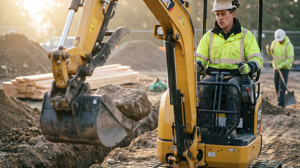
As previous sections established, the QL-20Eco earns its credibility through precision engineering — but real-world utility is where that engineering gets proven. According to EquipmentWorld, the 2.0-ton class is widely considered the sweet spot for balancing lifting capacity with extreme maneuverability. Here’s how that plays out across four distinct job types.
Still have specific questions about transport, fuel efficiency, or gradeability? The next section addresses the most common queries directly.
Can the QL-20Eco be transported on a standard utility trailer?
Yes. At 2.0 tons, the QL-20Eco falls well within the payload capacity of most single-axle utility trailers rated at 5,000–7,000 lbs. No commercial driver’s license or specialized hauling permits are typically required, making job-site mobilization straightforward for independent contractors.
What attachments are compatible with this 2-ton model?
The QL-20Eco supports a 30mm pin system, opening compatibility with rock hammers, auger drives, grading buckets, mechanical thumbs, and brush rakes. For a broader look at compatible attachment categories, comparing configurations across the Qilu lineup is a practical starting point.
How does fuel consumption compare to 1-ton or 3-ton models?
In practice, the QL-20Eco consumes roughly 10–20% more fuel than a 1-ton machine but delivers significantly greater output per gallon — making cost-per-cubic-yard of material moved considerably more efficient at this weight class.
What is the gradeability for hilly landscaping projects?
Gradeability reaches 45°, meeting the benchmark recommended for this machine class. That rating means the QL-20Eco handles steep residential slopes and uneven terrain with confidence — a genuine advantage on challenging landscaping sites where stability directly affects operator safety and project timelines.



-1.png)