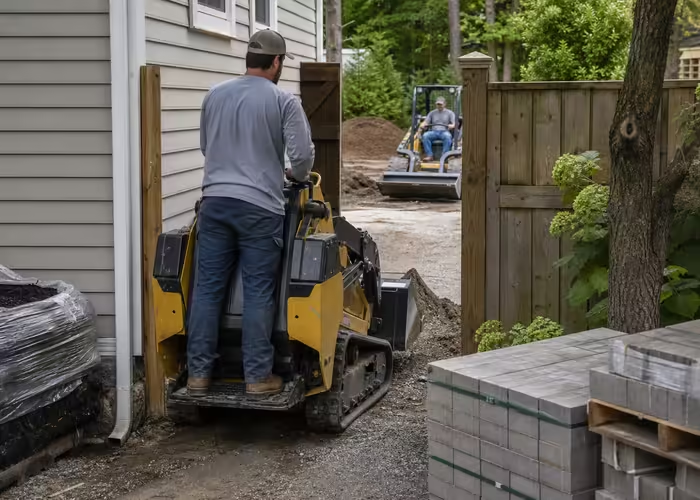
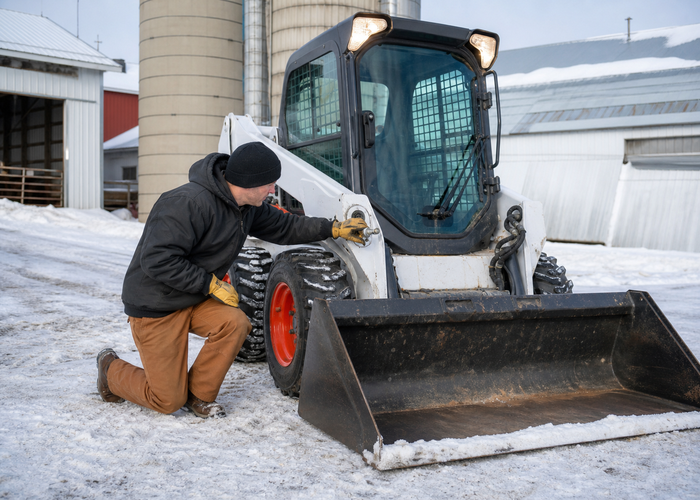
Benvenuti in Shandong Qilu Industrial Co., Ltd

 Italian
 English
 Arabic
 Bulgarian
 Bengali
 Czech
Czech
 Danish
 German
 Greek
Greek
 Spanish
 Finnish
 French
 Hindi
Hindi
 Croatian
 Hungarian
 Indonesian
 Japanese
 Korean
 Lithuanian
 Dutch
Dutch
 Norwegian
 Polish
 Portuguese
 Romanian
 Russian
 Slovak
 Slovenian
 Swedish
 Thai
Thai
 Turkish
 Ukrainian
 Vietnamese
 Tagalog
 Malay
Malay
 Estonian
 Catalan
 Latvian
 Urdu
Urdu
 Serbian
 Persian
 Swahili
 Albanian
 Armenian
 Icelandic
 Bosnian
 Luxembourgish
 Afrikaans
Italian English
Arabic
Bulgarian
Bengali
Czech
Danish
German
Greek
Spanish
Finnish
French
Hindi
Croatian
Hungarian
Indonesian
Japanese
Korean
Lithuanian
Dutch
Norwegian
Polish
Portuguese
Romanian
Russian
Slovak
Slovenian
Swedish
Thai
Turkish
Ukrainian
Vietnamese
Tagalog
Malay
Estonian
Catalan
Latvian
Urdu
Serbian
Persian
Swahili
Albanian
Armenian
Icelandic
Bosnian
Luxembourgish
Afrikaans
Afrikaans
Italian English
Arabic
Bulgarian
Bengali
Czech
Danish
German
Greek
Spanish
Finnish
French
Hindi
Croatian
Hungarian
Indonesian
Japanese
Korean
Lithuanian
Dutch
Norwegian
Polish
Portuguese
Romanian
Russian
Slovak
Slovenian
Swedish
Thai
Turkish
Ukrainian
Vietnamese
Tagalog
Malay
Estonian
Catalan
Latvian
Urdu
Serbian
Persian
Swahili
Albanian
Armenian
Icelandic
Bosnian
Luxembourgish
Afrikaans

Punte per caricatore di sterzatura per un paesaggio facile
You can transform landscaping projects with a skid steer loader. Imagine clearing thick vegetation, leveling uneven ground, and moving heavy rocks in a single afternoon—tasks that would take days by hand. The table below highlights how this machine boosts efficiency:
| Beneficio | Caricatori Skid Steer | Lavoro manuale |
|---|---|---|
| Velocità | Faster completion | Slower completion |
| Precisione | High precision | Variable precision |
| Versatilità | Attacchi multipli | Limited tools |
| Labor Requirement | Reduced labor | High labor |
This adaptability empowers you to tackle diverse landscaping jobs confidently.
Takeaway chiave
- Skid steer loaders significantly speed up landscaping tasks, allowing you to complete jobs in hours instead of days.
- Scegli il right skid steer loader size based on your project type; compact models work for small jobs, while larger models suit bigger tasks.
- Select between wheeled and tracked models based on terrain; wheeled loaders excel on hard surfaces, while tracked loaders perform better on soft or uneven ground.
- Utilize essential attachments like buckets, augers, and grapples to enhance your skid steer loader’s versatility for various landscaping tasks.
- Conduct daily safety checks before operating your skid steer loader to prevent accidents and ensure smooth operation.
- Plan your workflow and organize your job site to maximize efficiency and reduce unnecessary travel time with your skid steer loader.
- Invest in proper operator training to improve safety and efficiency, reducing the risk of accidents and enhancing productivity.
- Regular maintenance is crucial; perform daily inspections and follow a service schedule to extend the life of your skid steer loader.
Choosing a Skid Steer Loader
Assessing Your Project
Before you select a skid steer loader, you need to evaluate your landscaping project thoroughly. Consider the type of work you plan to complete, the environment, and how often you will use the machine. For example, if you plan to clear brush and move soil on a residential property, a modello compatto may suit your needs. If you are preparing a large commercial site, you may require a larger, more powerful loader.
| Fattore | Descrizione |
|---|---|
| Tipo Progetto | Larger projects need bigger loaders; smaller landscaping jobs benefit from compact models. |
| Ambiente Lavoro | Soft terrain calls for track loaders; hard surfaces suit wheeled models. |
| Frequenza di Utilizzo | Occasional use may justify renting; frequent use suggests buying new or used. |
You should also consider terrain and weather. Soft ground, steep slopes, or frequent rain can affect machine performance. For instance, if your property has muddy areas or uneven slopes, a tracked loader will provide better traction and stability. If you work on flat, paved surfaces, a wheeled loader will move faster and cost less to maintain.
Suggerimento: Renting a skid steer loader is a flexible option for short-term or seasonal projects. Many rental companies offer a range of models and attachments. You can find more information about equipment rental options on The Home Depot Rental.
Size and Power Options
Choosing the right size and power for your skid steer loader depends on the tasks you plan to tackle. Smaller models work well in tight spaces and for light-duty jobs. Medium-frame loaders handle most residential and commercial landscaping tasks. Large-frame loaders are designed for heavy-duty work, such as moving large rocks or grading extensive areas.
| Model Frame | Capacità operativa nominale (ROC) | Horsepower Rating |
|---|---|---|
| Small-frame | Under 1,750 lbs | Less than 50 hp |
| Medium-frame | 1,750 – 2,200 lbs | 50 – 70 hp |
| Large-frame | Over 2,200 lbs | Exceeds 70 hp |
Common landscaping tasks and recommended loader sizes:
- Digging: Small-frame loaders are ideal for planting trees or shrubs in confined spaces.
- Loading: Medium-frame loaders efficiently move dirt and debris after excavation.
- Trasporto: Large-frame loaders transport heavy materials across job sites.
- Classificazione: Medium or large-frame loaders level ground for patios or driveways.
Esempio di caso:
You want to install a new garden bed on a sloped backyard. A medium-frame skid steer loader with 60 hp provides enough power for digging and grading, while remaining maneuverable in residential spaces.
Nota: Always check the rated operating capacity and horsepower before renting or purchasing. Overloading a machine can lead to safety hazards and equipment damage. For more technical specifications, visit Equipment World.
Wheeled vs. Tracked Models
Selecting between wheeled and tracked skid steer loaders depends on your work environment and project needs. Wheeled models excel on hard, flat surfaces like asphalt or concrete. They move quickly and cost less to maintain. However, they can struggle in muddy or uneven terrain, where tires may sink or burst.
Tracked loaders offer superior traction and stability on soft, wet, or uneven ground. Their design distributes weight evenly, reducing ground pressure and minimizing the risk of getting stuck. Tracked models perform well in snowy or icy conditions, making them ideal for challenging environments.
| Tipo | Vantaggi | Svantaggi |
|---|---|---|
| Track Loaders | Strong grip on soft terrain, less ground compaction, stable on slopes | More expensive, slower, limited in open spaces |
| Wheeled Loaders | Faster on flat surfaces, cheaper to maintain, better for landscape surfaces | Can sink in muddy terrain, tires wear out faster, can burst on sharp surfaces |
Esempio del mondo reale:
A landscaping contractor in Minnesota uses tracked skid steer loaders during winter to clear snow and grade icy driveways. The tracks prevent the machine from getting stuck and provide stability on slippery slopes. In contrast, a contractor working on a city park with paved paths prefers wheeled loaders for speed and lower maintenance costs.
Suggerimento: If your project involves both paved and muddy areas, consider renting both types or choosing a model with interchangeable undercarriages. For more user experiences and advice, check out discussions on La comunità paesaggistica di Reddit.
Allegati Essenziali
Selecting the right attachments transforms your skid steer loader into a multi-purpose landscaping tool. You can handle digging, grading, clearing, and material handling with ease. Below, you will find the most essential attachments for landscaping projects, along with practical examples and tips for maximizing their value.
Secchi
Buckets remain the most versatile attachment for any landscaping job. You use them for digging, scooping, grading, and transporting materials such as soil, gravel, mulch, or debris. A general-purpose bucket works well for most tasks, but specialty buckets—like rock buckets or high-capacity buckets—offer advantages for specific jobs.
Esempio di caso:
You need to remove old sod and spread new topsoil across a backyard. A general-purpose bucket allows you to scoop and dump material efficiently. For rocky terrain, a rock bucket helps sift out stones while retaining soil.
Suggerimento: When grading, tilt the bucket slightly forward to achieve a smooth finish. For more grading techniques, visit Landscaping Network.
Coclee
Augers make digging holes for fence posts, trees, or shrubs fast and precise. You attach the auger to your skid steer loader and drill holes of varying diameters and depths. Augers save time compared to manual digging and reduce physical strain.
Esempio di caso:
You plan to install a row of privacy trees along a property line. Using an auger, you drill uniform holes quickly, ensuring consistent spacing and depth. This method improves planting efficiency and root establishment.
Nota: Augers come in different sizes. Select the diameter based on the plant or post size. For planting tips, check out Reddit’s Gardening Community.
Eterozoo
Grapples excel at grabbing, lifting, and moving bulky or irregular materials. You use grapples for clearing brush, handling logs, rocks, or demolition debris. Forestry grapples and rock grapples offer specialized designs for heavy-duty tasks.
Esempio di caso:
After a storm, you need to clear fallen branches and brush from your property. A brush grapple attachment lets you pick up large piles and transport them to a disposal area without manual lifting.
Suggerimento: Grapples also help with loading and unloading materials onto trailers. For more advice on grapple use, visit Contractor Talk Forums.
Rastrelli
Landscape rakes help you gather debris, spread soil, and create a clean, finished look. You use rakes for site cleanup, seedbed preparation, and removing rocks or roots from the soil. Soil conditioners and utility spades offer additional options for fine grading and soil improvement.
Esempio di caso:
You want to prepare a lawn for seeding. A landscape rake attachment collects rocks and roots, leaving a smooth surface for planting. This process improves seed-to-soil contact and promotes healthy grass growth.
Suggerimento: For larger properties, consider a soil conditioner attachment to break up clumps and level uneven areas. For more landscaping tips, visit Houzz Landscaping Discussions.
Other Common Attachments for Landscaping:
- Brush mowers
- Tree pullers
- Forestry grapples
- Sostitutiva
- Pallet fork grapples
- Tree shears
- Rotary cutters
- Macinaceppi
- Mulching heads
These attachments expand your capabilities, allowing you to tackle brush clearing, stump removal, and soil conditioning with one machine.
Attachment Cost Comparison
| Aspetto | Affittare | Acquistando |
|---|---|---|
| Costi anticipati | Costi iniziali inferiori | Investimento iniziale più elevato |
| Maintenance Responsibilities | None (handled by rental company) | Titolare responsabile della manutenzione |
| Costi a lungo termine | Can become costly over time | More cost-effective for frequent use |
| Flessibilità | Allows trying different attachments | Limited to owned attachments |
| Esigenze di stoccaggio | Reduced storage requirements | Requires storage space |
Renting attachments gives you flexibility for short-term or seasonal projects. You avoid maintenance and storage concerns. Buying attachments pays off if you use them often and want immediate access. For more insights on equipment rental, visit The Home Depot Rental.
Quick Reference: When to Use Each Attachment
- Secchi: Moving soil, grading, loading debris
- Coclee: Planting trees, installing posts
- Rampini: Clearing brush, handling logs and rocks
- Rakes: Site cleanup, seedbed preparation
You can customize your landscaping workflow by selecting the right attachments for each task. This approach increases efficiency and reduces manual labor.
Sicurezza del caricatore del pattino
Operating a skid steer loader safely requires diligence and attention to detail. You must prioritize daily inspections, follow safe entry and exit procedures, and stay alert to common hazards on every job site.
Controlli pre-operativi
Before you start your machine, perform a thorough inspection. This routine helps you catch issues early and prevents accidents. Use the following checklist to guide your daily safety routine:
- Ispezionare vetri e finestre per individuare eventuali crepe o danni.
- Check the rollover protection structure and cage for integrity.
- Examine hydraulic cylinders for leaks or wear.
- Verify hoses and lines are clean, dry, and securely connected.
- Assess grease points, bolts, and pins for dryness or looseness.
- Evaluate the drive system, including tire wear or track tension.
- Inspect the cab for new damage.
- Check the exhaust system and radiator fans for signs of trouble.
- Review the bucket or attachment for wear on the cutting edge.
- Remove dirt, rocks, or debris from all areas.
- Inspect hydraulic fluid and engine compartments for proper levels and leaks.
- From the operator’s seat, check for warning lights and listen for unusual engine sounds.
Suggerimento: Consistent pre-operation checks reduce the risk of mechanical failure and keep your equipment running smoothly. For more detailed safety checklists, visit OSHA’s Construction Safety Resources.
Pratiche operative sicure
You must follow strict protocolli sicurezza every time you operate a caricatore skid steer. Operator error remains the leading cause of accidents, so proper training and adherence to guidelines are essential.
- Always turn off the machine and exit before changing attachments.
- Secure locking levers to prevent attachments from coming loose.
- Never allow riders; the cab is designed for one person only.
- Follow the manufacturer’s manual for all procedures.
- Do not bypass or modify safety devices.
- Keep all body parts inside the cab during operation.
- Use the three-point method when entering or exiting the loader.
- Provide safety training for all operators.
Caso di studio:
A landscaping crew in Ohio avoided a serious injury when a new operator followed the three-point entry method and noticed a loose hydraulic hose during the pre-operation check. The team addressed the issue before starting work, preventing a potential leak and equipment failure.
Nota: You can find operator training resources and real-world safety discussions on Le apparecchiature pesanti/R di Reddit.
Evitare Pericoli
Decappottatori
Rollovers pose a significant risk, especially on uneven terrain or slopes. You can minimize this hazard by:
- Avoiding operation on steep slopes or rough ground whenever possible.
- Using counterweights as recommended for balance.
- Keeping loads low and moving slowly over uneven surfaces.
- Never moving loads over people.
Scenario:
A contractor in Colorado used counterweights and kept the bucket close to the ground while grading a hillside. This approach maintained stability and prevented a rollover, even when the terrain shifted unexpectedly.
Blind Spots
Blind spots can lead to collisions or injuries. You must remain aware of your surroundings and use mirrors or cameras if available.
- Always check for people or obstacles before moving.
- Do not move loads over workers or bystanders.
- Communicate with your team using hand signals or radios.
Avviso: Blind spots are a common cause of accidents. Stay vigilant and use all available safety features. For more tips, review CDC’s Workplace Safety Guidelines.
Table: Leading Causes of Skid Steer Loader Accidents
| Causa | Strategia Prevenzione |
|---|---|
| Operator error | Training, adherence to protocols |
| Unsafe conditions | Site assessment, hazard awareness |
| Mechanical failure | Daily inspections, timely repairs |
By following these safety practices, you protect yourself and others while maximizing the efficiency of your landscaping projects.
Efficient Landscaping Tips
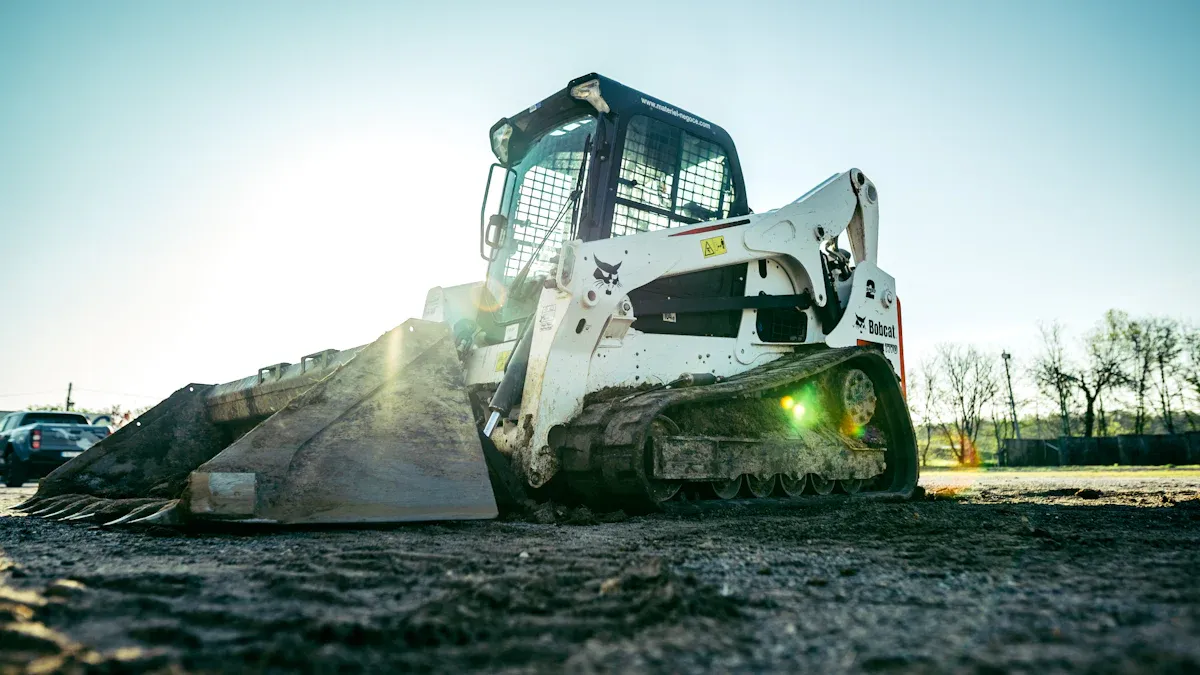
Classificazione e livellamento
You can achieve a smooth, professional finish on your landscape by mastering grading and leveling techniques. Start by selecting the right attachment for your caricatore skid steer, such as a 4-in-1 bucket. Keep the loader arms at a balanced height to maintain stability. Angle the bucket to match the slope you want to create, which helps with water runoff and prevents pooling.
Use steady, even strokes as you drive in reverse, letting the back of the bucket act as a blade. This method avoids ruts and ensures a consistent grade. Periodically exit the cab to check your progress with grade stakes or a laser level. Clearing debris and weeds before you begin will prevent uneven spots and equipment damage.
Suggerimento: Adjust the bucket tilt to create gentle slopes for drainage. For more grading advice, visit Landscaping Network.
Grading Checklist
| Passo | Azione |
|---|---|
| Attachment Choice | Utilizzare un 4-in-1 bucket for versatility |
| Loader Arm Height | Keep arms level for balance |
| Angolo del secchio | Match slope for runoff |
| Stroke Technique | Drive in reverse, use steady strokes |
| Progress Check | Use stakes or lasers for accuracy |
Caso di studio:
A homeowner wanted to level a backyard for a patio installation. By using grade stakes and driving the skid steer loader in reverse with the bucket angled, they created a smooth, even surface. The project finished in half the time compared to manual grading.
Scavo e scavo
You can dig and trench efficiently with a skid steer loader, saving hours of manual labor. Attach an auger or trenching bucket for the task. The machine’s compact size and maneuverability allow you to carve clean lines for fence posts, water lines, or drainage channels, even in tight spaces.
Switching between attachments is quick, which boosts productivity. You can dig post holes for planting, create irrigation trenches, or cut through rocky soil with precision. The speed and accuracy of the loader reduce fatigue and improve results.
- Fast digging for fence posts and seedling planting
- Effective trenching for irrigation and drainage
- Maneuverable in confined areas
Nota: For more trenching tips and community advice, check out La comunità paesaggistica di Reddit.
Esempio di caso:
A landscaping crew needed to install a row of trees and a drainage channel. Using an auger, they drilled uniform holes for each tree. Then, they switched to a trenching bucket to cut a drainage line through rocky soil. The job finished in one afternoon, with clean, accurate results.
Materiali in movimento
You can move soil, gravel, mulch, and debris quickly with a skid steer loader. Attach a general-purpose bucket or grapple for the task. Load materials from piles and transport them across the site with minimal effort.
Organize your workflow by staging materials near the work area. This reduces travel time and increases efficiency. Use the loader to dump materials exactly where needed, which minimizes manual shoveling.
Material Movement Table
| Materiale | Allegato Consigliato | Beneficio di efficienza |
|---|---|---|
| Soil/Gravel | General-purpose bucket | Fast loading and dumping |
| Mulch | Bucket or grapple | Easy transport |
| Detriti | Eterozoo | Safe, hands-free removal |
Caso di studio:
A property manager needed to spread mulch over a large garden bed. By staging mulch piles and using a bucket attachment, they completed the task in under two hours. Manual labor would have taken all day.
Suggerimento: Plan your material movement routes to avoid obstacles and save time. For workflow strategies, visit Houzz Landscaping Discussions.
Pulizia del sito
You can achieve a professional finish on any landscaping project by mastering efficient site cleanup with your skid steer loader. A clean site not only improves safety but also leaves a lasting impression on clients or property owners. Start by examining the environment and identifying any hazards. Mark obstacles such as rocks, stumps, or utility lines before you begin. This step prevents accidents and equipment damage.
Suggerimento: Always wear protective gear and use an enclosed cab if available. These precautions shield you from flying debris and dust.
For best results, follow a systematic approach to site cleanup:
- Plan your cleanup by dividing the area into manageable sections.
- Work in parallel paths to cover the ground efficiently.
- Adjust your speed based on the density of debris or vegetation.
- Use a brush cutter attachment for thick grass and saplings.
- Switch to a mulcher for heavy brush or small trees.
- Employ a tree puller for stubborn roots or large debris.
- Rake and collect debris into piles for easy disposal.
- Smooth out skid paths after removing debris to restore the landscape.
You can further enhance efficiency by maintaining parallel positioning of your skid steer loader. This technique improves maneuverability and reduces missed spots. Rubber pads on the loader help absorb shocks when working over rough terrain. Lowering the ground clearance and increasing the machine’s weight can speed up the clearing process, especially in dense areas.
Common Attachments for Site Cleanup
| Attacco | Caso di miglior utilizzo |
|---|---|
| Taglierina Spazzola | Thick grass, saplings |
| Mulcher | Heavy brush, small trees |
| Tree Puller | Stubborn roots, large debris |
| Rastrella | Collecting and piling debris |
Avviso: Exercise caution around debris piles. Hidden objects can damage equipment or cause injury.
Caso di studio:
A landscaping team faced a post-storm cleanup with fallen branches, thick brush, and scattered debris. They marked hazards, used a mulcher to clear heavy brush, and switched to a rake attachment for final cleanup. By working in systematic paths and adjusting speed for dense areas, they completed the job in half the expected time. The property owner praised the clean, safe result.
For more real-world cleanup strategies and operator tips, visit La comunità paesaggistica di Reddit.
By following these steps, you ensure a thorough, efficient site cleanup that sets the stage for the next phase of your landscaping project.
Manutenzione del caricatore della guida di slittamento
Proper maintenance ensures your caricatore skid steer operates safely and efficiently throughout every landscaping project. You can prevent costly repairs and downtime by following a consistent routine for daily checks, cleaning, and scheduled service.
Controlli giornalieri
You should inspect your machine before each use. This habit helps you catch issues early and maintain safe operation. Use the following table to guide your daily inspection:
| Maintenance Area | Essential Checks |
|---|---|
| Tracce | Inspect for proper tension and alignment; check for wear or damage. |
| Wheels | Ensure tires are properly inflated; check for cuts, punctures, or excessive wear. |
| Sottocarro | Inspect for damage or wear; check rollers, idlers, sprockets, and bolts. |
| Engine Start | Listen for unusual noises; monitor gauges for proper readings. |
| Operational Check | Test movement functions; check boom and bucket operation; verify brake performance. |
| Pulizia | Clean exterior, radiator, engine compartment, and cab interior. |
| Final Inspection | Conduct a walk-around inspection for new issues; document maintenance performed. |
| Log Maintenance | Record all checks and issues in a maintenance logbook for future reference. |
You should verify all fluid levels with the engine off and the machine on level ground. Start the engine and test all controls, safety features, and hydraulics at low speed. Log inspection completion and report any issues for handover to the next shift.
Suggerimento: Consistent daily checks reduce the risk of breakdowns and accidents. For more maintenance checklists, visit OSHA’s Construction Safety Resources.
Caso di studio:
A landscaping crew noticed low hydraulic fluid during a morning inspection. They topped off the fluid and avoided a potential system failure during a busy workday.
Pulizia dopo l'uso
You should clean your skid steer loader after every use. Dirt and debris can cause mechanical problems and reduce the lifespan of your equipment. Regular cleaning also improves safety and visibility.
- Wash the machine at the end of each workday to prevent dirt buildup.
- Clean the radiator, engine compartment, and cab interior.
- Remove mud and debris from tracks, wheels, and undercarriage.
- Inspect attachments for stuck material or damage.
Avviso: Neglecting cleaning can lead to overheating and premature wear. For cleaning tips and user experiences, check out Le apparecchiature pesanti/R di Reddit.
Esempio:
A property manager cleaned the loader after clearing brush. They removed mud from the undercarriage and washed the cab windows. The next morning, the machine started without issues, and visibility remained clear for safe operation.
Servizio programmato
You should follow a regular service schedule based on operating hours. Major manufacturers recommend the following intervals:
| Intervallo di servizio | Compiti di manutenzione |
|---|---|
| 100-Hour Service | Routine checks and minor maintenance |
| Servizio 250 ore su 25 | Intermediate checks and fluid changes |
| Servizio 500 ore | Major service including fluid changes, filter replacements, and deep inspections |
| 1000-Hour Service | Next major service with similar comprehensive tasks |
Schedule service with a qualified technician for deep inspections and repairs. Keep a maintenance log to track completed tasks and upcoming service dates.
Nota: Sticking to a service schedule extends equipment life and reduces unexpected downtime. For more advice on service intervals, visit Equipment World Forums.
Esempio di caso:
A landscaping business scheduled 500-hour service for their loader. The technician replaced filters, checked hydraulic lines, and inspected the undercarriage. The machine ran smoothly for the next season, with no major repairs needed.
By maintaining your skid steer loader with daily checks, thorough cleaning, and scheduled service, you ensure reliable performance and safety on every landscaping job.
Errori comuni da evitare
Sovraccarico
Overloading your caricatore skid steer is a common mistake that can have serious consequences. When you exceed the rated operating capacity, you put yourself and your equipment at risk. Overloading leads to tipping accidents and instability, especially when working on uneven ground. The machine can become unbalanced, increasing the chance of a rollover. This type of accident often results in severe injuries and can lead to costly insurance claims.
- Incidenti ribaltabili
- Instabilità della macchina
- Gravi lesioni agli operatori
- Pretese assicurative costose
Operators sometimes try to control the loader from outside its protective frame, especially when dealing with heavy loads. This practice exposes you to entrapment hazards and potential crushing injuries. Always stay within the cab and respect the weight limits set by the manufacturer.
Caso di studio:
A landscaping crew attempted to move a large boulder by overloading their skid steer loader. The machine tipped forward, nearly causing a rollover. The operator avoided injury by staying inside the cab, but the incident resulted in downtime and expensive repairs.
Suggerimento: Always check your loader’s rated operating capacity before lifting heavy materials. For more safety guidelines, visit OSHA’s Skid Steer Loader Safety.
Utilizzo dell'allegato errato
Using the wrong attachment for the job can slow down your project and damage your equipment. Attachments are designed for specific tasks, and pushing them beyond their limits puts your crew and your investment at risk.
Just because it fits doesn’t mean it’s the right tool. Trying to use a light-duty auger on rocky soil is a fast track to failure. Attachments are built with specific tasks in mind. Pushing them past their limits doesn’t just break the equipment — it slows you down, puts your crew at risk, and costs you in the long run.
Esempio del mondo reale:
A property manager used a grading bucket to try and break up compacted clay. The attachment bent under pressure, causing delays and requiring a costly replacement. Choosing the correct attachment would have saved time and money.
| Attachment Error | Conseguenza |
|---|---|
| Light-duty auger on rocks | Equipment failure, delays |
| Grading bucket for digging | Attachment damage, inefficiency |
For more advice on attachment selection, check out discussions on Reddit's r/paesaggistica.
Skipping Safety Steps
Skipping safety steps is a shortcut that can lead to serious injuries and regulatory trouble. Skid steer loaders require proper training for safe operation. If you ignore safety procedures, you increase the risk of accidents and financial liabilities.
- Skid steer loaders require proper training to operate safely.
- Improper operation can lead to serious injuries.
- Safety procedures must be followed to avoid regulatory penalties and financial liabilities.
- Operators should inspect the machine for wear and tear before use.
- It is crucial to maintain three points of contact when entering or exiting the cab.
Caso di studio:
An inexperienced operator skipped the pre-operation inspection and failed to notice a worn hydraulic hose. The hose burst during use, causing a sudden loss of control. The incident resulted in minor injuries and a temporary shutdown of the project.
Avviso: Never skip your daily inspection or safety checks. For more operator safety tips, visit CDC’s Workplace Safety Guidelines.
By avoiding these common mistakes, you protect yourself, your team, and your investment. Always follow best practices to ensure a safe and productive landscaping project.
Neglecting Maintenance
You cannot afford to overlook maintenance when operating a skid steer loader. Routine care forms the backbone of reliable performance and long-term value. When you skip scheduled checks or ignore warning signs, you set yourself up for costly breakdowns and unexpected downtime. These setbacks can derail your landscaping projects and strain your budget.
A well-maintained skid steer loader delivers consistent power and efficiency. You extend the service life of your machine by following the manufacturer’s maintenance schedule. Many machines reach 5,000 to 10,000 hours or more with proper care. If you neglect maintenance, you risk expensive repairs or even early replacement.
Consider the following impacts of poor maintenance:
- Reduced equipment lifespan
- Increased risk of sudden breakdowns
- Higher repair and replacement costs
- Valore di rivendita inferiore
- Unplanned project delays
Suggerimento: Routine checks help you spot small issues before they become major problems. Addressing minor leaks, worn hoses, or loose bolts early can save you thousands of dollars over the life of your loader.
The table below highlights the difference between regular maintenance and neglect:
| Maintenance Approach | Average Service Life (Hours) | Likelihood of Major Repairs | Project Downtime Risk |
|---|---|---|---|
| Manutenzione regolare | 7,500 – 10,000 | Basso | Minimale |
| Neglected Maintenance | Under 5,000 | Alto | Frequente |
Caso di studio:
A landscaping contractor ignored routine hydraulic fluid checks on their skid steer loader. After several weeks, the machine suffered a major hydraulic failure during a busy season. The repair cost exceeded $4,000, and the project halted for three days. The contractor later admitted that a simple daily inspection would have prevented the breakdown. This experience underscores the importance of consistent maintenance for both safety and productivity.
You can find more real-world stories and maintenance tips from operators on Le apparecchiature pesanti/R di Reddit. Engaging with these communities helps you learn from others’ experiences and avoid common pitfalls.
Remember, regular maintenance is not just a recommendation—it is essential for protecting your investment and ensuring smooth, uninterrupted landscaping operations.
Aumentare la produttività
Planning Workflow
You can maximize productivity by planning your workflow before starting any landscaping project. Begin by mapping out the job site and identifying the most efficient paths for your caricatore skid steer. This approach reduces unnecessary travel and wear on your machine.
- Choose the Right Attachment: Select the attachment that matches your task. For example, use a grapple for clearing brush and a bucket for moving soil.
- Plan Your Workflow: Sketch the site layout and mark material staging areas. Arrange your work so you move materials in one direction, minimizing backtracking.
- Practice Safe Operation: Familiarize yourself with the controls and check that the area is clear before you begin.
- Manutenzione regolare: Check fluid levels and attachment condition each morning to prevent unexpected downtime.
- Train Your Team: Ensure every operator understands the plan and their responsibilities.
Suggerimento: A well-organized workflow can cut project time by up to 30%. For more workflow planning ideas, visit Reddit's r/Paesaggistica.
Esempio di caso:
A crew needed to install a new lawn and garden beds. They staged topsoil and mulch near the work zone, assigned clear roles, and used the right attachments for each phase. The project finished ahead of schedule, with less machine wear and operator fatigue.
Formazione Operatori
Proper training boosts both safety and efficiency. You should invest in comprehensive operator education that covers machine controls, safety protocols, and maintenance routines. Many online and in-person programs offer hands-on experience and certification.
| Training Program | Caratteristiche principali |
|---|---|
| Skid Steer Loader Training | OSHA-compliant, hands-on loading, excavation, safety, and maintenance |
| Skid Loader (Skid-Steer) Course | Online modules, operation, troubleshooting, and practical exercises |
| OSHA Operator Training | Focus on operational safety, risk assessment, and maintenance procedures |
| Online Certification Training | Short courses on hazards, features, and safe operation |
You can find reputable training resources through industry forums and LinkedIn Learning.
Esempio attuabile:
A landscaping company enrolled all operators in an OSHA-compliant course. After training, the team reduced accidents and completed tasks more quickly. Operators reported higher confidence and better communication on site.
Time-Saving Strategies
You can save significant time by adopting a few key strategies:
- Manutenzione ordinaria: Inspect your loader daily to avoid breakdowns during critical phases.
- Formazione Operatori: Well-trained operators complete tasks faster and with fewer errors.
- Utilize Versatility: Use your skid steer loader for multiple tasks, such as grading, trenching, and even snow removal in winter.
- Optimize Speed and RPM: Adjust machine settings for each task to balance speed and control.
- Maintain a Clean Work Area: Clear debris regularly to prevent slowdowns.
Nota: Consistent maintenance and training can reduce project delays by up to 25%. For more time-saving tips, check out Contractor Talk Forums.
Caso di studio:
A property manager used a skid steer loader for both material movement and site cleanup. By switching attachments efficiently and keeping the work area organized, they completed a week-long project in just four days.
By planning your workflow, investing in operator training, and applying time-saving strategies, you can boost productivity and achieve professional results on every landscaping project.
You can achieve smoother landscaping projects by following these essential tips:
- Define your needs and select attachments that match your regular tasks.
- Check compatibility and prioritize quality over quantity when choosing equipment.
- Inspect attachments for damage before each use and maintain them regularly.
- Schedule routine maintenance to prevent breakdowns and extend machine life.
- Train yourself and your team to operate the skid steer loader safely.
Consistent maintenance and proper operation optimize performance, minimize costly repairs, and ensure long-term success. Apply these strategies with confidence and transform your landscaping results.
FAQ
What size skid steer loader works best for residential landscaping?
Dovresti scegliere un small or medium-frame skid steer loader for most residential landscaping. These models offer enough power for digging, grading, and moving materials, while fitting into tight spaces. Refer to the table below for typical specs:
| Loader Size | Capacità nominale | Cavallo di potenza |
|---|---|---|
| Small-frame | <1,750 lbs | <50 hp |
| Medium-frame | 1,750–2,200 lbs | 50–70 hp |
How do you safely operate a skid steer loader on slopes?
Keep the load low and move slowly. Always travel straight up or down slopes, never sideways. Use counterweights if needed. Avoid sudden turns. You can find more safety tips from OSHA’s Construction Safety Resources.
Which attachment should you use for clearing brush?
Use a brush cutter or grapple attachment for clearing brush. A brush cutter handles thick grass and saplings. A grapple moves large piles of debris. For heavy brush, a mulcher works best. Always inspect the area for hidden obstacles before starting.
Con quale frequenza si devono eseguire i controlli di manutenzione?
You should inspect your skid steer loader daily before use. Schedule more thorough service every 100, 250, or 500 operating hours. Regular checks prevent breakdowns and extend equipment life. For detailed schedules, visit Equipment World Forums.
Can you rent attachments instead of buying them?
Yes, you can rent attachments for short-term or seasonal projects. Renting saves storage space and reduces upfront costs. This approach lets you try different tools before committing to a purchase. Many rental centers offer a wide selection of attachments.
What is the most common cause of skid steer loader accidents?
Operator error causes most accidents. Skipping safety checks, overloading, or ignoring blind spots increases risk. Proper training and daily inspections reduce incidents. Review real-world safety discussions at Le apparecchiature pesanti/R di Reddit.
How do you transport a skid steer loader safely?
Use a trailer rated for your loader’s weight. Secure the machine with heavy-duty chains or straps. Lower the bucket or attachment to the trailer deck. Double-check all tie-downs before transport. Always follow local regulations for hauling equipment.
What should you do if your skid steer loader gets stuck?
Stop and assess the situation. Avoid spinning the wheels or tracks, which can worsen the problem. Use boards or mats for traction. If needed, use another machine to pull it out. Stay inside the cab until help arrives for safety.