E-mail: [email protected] WhatsApp: +8618266768780
E-mail: [email protected] WhatsApp: +8618266768780

Benvenuti nel mio blog!
Prima di addentrarci nei contenuti, mi piacerebbe che vi uniste a me sui miei social media, dove condivido ulteriori approfondimenti, interagisco con la community e pubblico aggiornamenti. Ecco come potete contattarmi:
Facebook: https://www.facebook.com/profile.php?id=100072217509763
LinkedIn: https://www.linkedin.com/company/74949059/admin/dashboard/
YouTube:https://www.youtube.com/@tractormanufacturer-lc5qz
TikTok: https://www.tiktok.com/@tractormanufacturer
Ora, iniziamo il nostro viaggio insieme. Spero che troviate i contenuti qui presenti interessanti, coinvolgenti e preziosi.
Whether you’re managing a large agricultural field, operating in a construction zone, or navigating uneven terrain, the performance of your tractor largely depends on one key factor: the treads. Tractor treads are more than just patterns on rubber—they determine traction, soil impact, fuel efficiency, and machine longevity.
In this guide, we’ll explore the different types of tractor treads available today, what each is best suited for, and how to decide which one matches your working environment. If you’ve ever wondered why your tractor feels unstable or struggles in the field, the answer could lie right under your wheels.

Tractor treads refer to the patterned designs on a tractor’s tires. These patterns help grip various surfaces, transfer engine power to movement, and ensure stability during heavy-duty tasks. The right tread pattern can make all the difference when it comes to productivity and safety.
The primary function of tractor treads includes:
Choosing the wrong type of tread can not only affect performance but also increase fuel consumption and cause unnecessary strain on your machinery.
Not all treads are created equal. Depending on the terrain and the nature of your work, different tread types serve different purposes. Here are the most commonly used types:
Ideale per: Dry fields, general farming
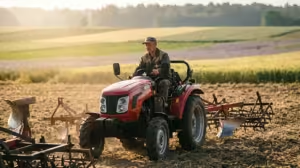
R-1 tires are the standard tread type for agricultural use. These deep, aggressive lugs are designed for maximum traction in loose or tilled soil. They work well in dry fields and provide excellent grip during plowing, planting, or harvesting.
Ideale per: Wet, muddy soil
These treads are similar to R-1 but feature deeper and wider lugs. If you often work in moist fields or heavy clay soil, R-1W tires give you the added traction you need to avoid getting bogged down.
Ideale per: Extremely wet or flooded fields
With nearly double the lug depth of R-1 tires, R-2 treads are specifically made for maximum grip in wet or flooded environments. They’re ideal for applications like rice farming where water resistance is critical.
Ideale per: Lawns, golf courses, sensitive terrain
If your main concern is preventing soil damage, turf treads offer a gentle solution. These tires have a smoother pattern that spreads the tractor’s weight to avoid leaving deep marks on grassy areas. However, they offer limited traction in muddy conditions.
Ideale per: Construction sites, hard-packed surfaces
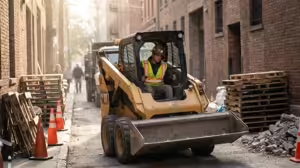
R-4 tires strike a balance between traction and durability. They have shallower lugs than R-1 types and are made from harder rubber, making them perfect for mixed-use scenarios like landscaping or light construction.

| Tread Type | Ideale per | Traction Level | Soil Protection | Durata | Versatilità |
|---|---|---|---|---|---|
| R-1 | Dry fields, tillage | Alto | Medio | Medio | Moderare |
| R-1W | Wet, heavy soil | Molto alto | Medio | Medio | Moderare |
| R-2 | Flooded or muddy fields | Maximum | Basso | Basso | Limitato |
| R-3 | Grass, turf | Basso | Molto alto | Medio | Basso |
| R-4 | Construction, mixed terrain | Moderare | Medio | Alto | Alto |
Selecting the right type of tractor treads is all about finding the balance between grip, ground protection, and longevity. Your terrain type and tasks will determine which pattern is most suitable.

Now that you understand the main categories, let’s talk about how to make the best decision for your specific needs. Ask yourself the following:
1. What type of ground are you working on?
Is it soft, dry, wet, rocky, or grassy? For wet, slippery surfaces, you’ll want deeper lugs like R-1W or R-2. For sensitive terrain, turf-friendly R-3 treads work best.
2. What tasks do you perform regularly?
If your work is mostly agricultural, stick with R-1 or R-1W. For hauling on pavement or site work, consider the more durable R-4.
3. How much do you care about soil compaction?
High-traction treads can damage topsoil. If preserving your field’s integrity is key, you might opt for lighter treads or dual tires for weight distribution.
4. Are you using the tractor year-round?
Climate plays a role too. If your region sees a lot of rainfall, you’ll want treads that won’t clog with mud. For colder climates, consider seasonal tire options with adaptable rubber compounds.
Your tractor is only as effective as the treads it runs on. The right tractor treads can boost performance, reduce wear on your equipment, and save fuel—all while protecting the ground you work on.
Understanding the differences between R-1, R-1W, R-2, R-3, and R-4 treads gives you the power to choose with confidence. Whether you’re working fields, maintaining turf, or operating heavy machinery, there’s a tread pattern that matches your needs.
If you’re unsure or need help evaluating your terrain and equipment, don’t hesitate to reach out. The right advice at the right time can make all the difference in getting the best return on your equipment investment.
Tractor treads are the patterns on your tires that determine grip, traction, and soil impact. The right tread improves performance and safety.
R-1W and R-2 treads are ideal for wet or muddy conditions due to their deep lug design and superior traction.
Yes, but they’re better suited for mixed terrain and light-duty farm tasks rather than deep field work.
No. Turf treads are designed for soft ground and prioritize minimal soil damage. They are not suitable for high-traction tasks like plowing.
It depends on usage, but generally every 4–6 years or when tread depth wears below safe limits.

-1.png)