E-mail: [email protected] WhatsApp: +8618266768780

E-mail: [email protected] WhatsApp: +8618266768780


Tractors play a crucial role in modern organic farming. The role of tractors is evident as they assist in preparing the soil, planting seeds, applying fertilizers, and harvesting crops much more quickly than manual methods. With a tractor, you can plough fields approximately six times faster than using animals. This increased speed allows you to conserve time and energy on labor-intensive tasks, enabling you to manage your farm more effectively. Additionally, tractors contribute to eco-friendly farming practices. When used responsibly, the role of tractors can help maintain soil health and simplify work, ensuring that your farm operates efficiently while being environmentally sustainable.
You need good soil to grow healthy organic crops. Tractors are very important for getting the soil ready. They break up hard dirt, help control weeds, and shape the land for planting. You can use different ways to till the soil. Here is a table that shows some common tillage methods and why they are used:
| Tillage Technique | Scopo |
|---|---|
| Primary Tillage | First step to fight weeds and improve soil for crops. |
| Summer Plowing | Controls weeds by reducing weed seeds and prepares a clean field. |
| Conservation Tillage | Keeps crop residue on top to stop erosion and build soil health. |
| Mechanical Cultivation | Removes weeds and crop leftovers using machines. |
| Land Shaping | Makes beds or ridges for vegetables. |
| Tools for Surface Residue | Uses roller-crimpers and mowers to handle cover crops and plant remains. |
Puoi usare powered harrows, cultivators, and ridge builders with your tractor. These tools help you get seed beds ready, control weeds, and shape the land. Conservation tillage tools let you keep plant pieces on top of the soil. This helps protect the soil from washing away. Special tillage tools on tractors do not disturb the soil as much. This keeps the soil strong, helps good microbes, and lets water move better. You will see better soil and less erosion when you use these ways.
Tractors are also helpful when you plant seeds. You can put planters, seed drills, or broadcast seeders on your tractor. These tools help you plant seeds at the right depth and space. Here is a table that explains some common seeders:
| Type of Seeder | Descrizione |
|---|---|
| Drill seeders | Pulled behind tractors, good for garden crops. |
| Air seeders | Use air to plant small, round seeds; best for one seed type at a time. |
| Planters | Place seeds very accurately, cut the ground, plant, and cover seeds. |
| Broadcast seeders | Spread seeds over a wide area, best for grasses and cover crops. |
You might use row crop planters for cover crops or box drills after harvest. Box drills are easy to use and work for many seed sizes. If you use a tractor with new technology, you can plant seeds even better.
Tests show that tractors with real-time soil sensors help you plant seeds more accurately. This makes your crops grow evenly and gives you a better harvest.
Your crops need nutrients that follow organic rules. Tractors help spread organic fertilizers like bone meal, green manure, and compost. You can use tractor tools to put these materials down fast and evenly. Here are some common tools:
These tools help you use fertilizers wisely and not waste them. You can make the soil better and keep your crops healthy while following organic standards.
Tractors are very useful when it is time to harvest. You can use tractors to pull harvesters, wagons, or trailers. This helps you pick crops quickly and move them safely. Tractors can carry heavy loads and drive over rough fields. This keeps your crops from getting hurt.
You can take your crops from the field to storage or market with less spoilage. This keeps your organic crops fresh and high quality. Tractors save you time and work, so your harvest is easier and faster.
Tractors can help keep your soil safe. Many organic farmers use less tillage to protect the soil. These ways keep the soil strong and stop it from washing away. With new tractor tools, you can plant seeds without flipping all the dirt. Planters let you put seeds in the ground with little soil movement. Some farms in the Midwest changed from deep plowing to conservation tillage. They saw less soil loss and their fields held water better.
Tip: Try a roller-crimper with your tractor for cover crops. This tool helps keep soil covered and stops weeds from growing.
You can use fewer chemicals by picking the right tractor tools. Many organic farmers use chisel plows or ridge-tillage instead of moldboard plows. These tools leave plant pieces on top, which helps stop weeds and keeps soil in place. Tractors with special parts make this job easier:
| Caratteristiche Trattore | Descrizione |
|---|---|
| No-till drills | Needed for conservation farming |
| Sistemi idraulici | Help you plant seeds exactly where you want them |
| Weight distribution | Stops tractors from pressing too hard on the soil |
A vegetable farmer in California switched to ridge-tillage. They had fewer weeds and used less fuel. You can also use tractors to spread compost or mulch. This feeds your crops without using chemicals.
You help the earth when you use tractors the right way. Tractors let you skip synthetic pesticides, which is important for organic farming. Using cover crops and no-till methods makes soil better and saves water. Some farms want to stop using over 1,000 tons of synthetic pesticides by 2033. Tractors also help you use less energy because you can move products faster and waste less food.
Note: New tractor technology helps you sell more and take care of your land at the same time.
Tractors help you save time and energy on your organic farm. They let you finish jobs faster and with less hard work. Here are some ways tractors make your work easier:
Tip: Many farmers use tractors for jobs that take a long time by hand, like spreading compost or getting beds ready. This gives you more time for other important work.
Tractors with special technology help you grow more crops. These tools help you plant seeds, add fertilizer, and care for your fields more exactly. The table below shows how farmers use data and technology to get better results:
| Tipo di prova | Ritrovamenti |
|---|---|
| Yield Monitor Usage | About 75% of farmers collect yield monitor data. |
| Soil Sample Collection | Around 85% of farmers collect soil sample data. |
| Imagery Data Collection | Nearly 90% of farmers use imagery data. |
| Positive Yield Impact | 72% see better yields from data-driven seeding rate decisions. |
| Fertilizer Decisions | 81% see better yields from fertilizer decisions. |
| Drainage Decisions | 85% see better yields from drainage decisions. |
| Data Collection Impact | Collecting data from many sources increases satisfaction with results. |
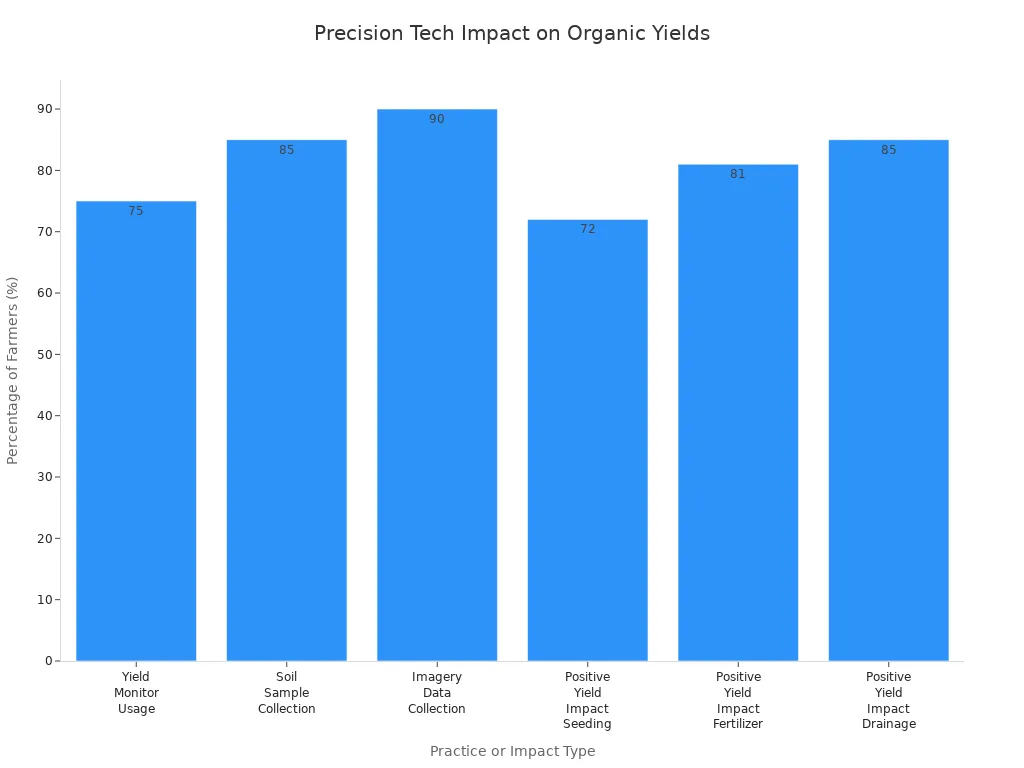
Precision farming lets you check the soil and weather. You can use this information to make smart choices about planting and adding fertilizer. This helps you grow more crops and make more money.
Tractors help you grow your farm, no matter the size. You can use tractors to work faster and reach more buyers. The table below explains how tractors help you grow your farm:
| Beneficio | Descrizione |
|---|---|
| Aumento della produttività | Tractors let you farm bigger areas in less time, so you can pick more crops. |
| Improved Profitability | Working faster means bigger harvests and more money. |
| Conservation Practices | Tractors help you control pests and use resources wisely, which protects the environment. |
Tractors also help people in the community. Women who use tractors can earn more and become more independent. When you make more money, you can buy new crops or tools. This helps women and men have more equal chances in farming.
Nota: Some tractors can drive themselves all day and night. One person can watch many machines at once, so your farm gets even more work done.
Tractors are becoming more important in organic farming as technology gets better. You can use tractors to save time, grow more crops, and make your farm bigger while taking care of the land.
Using tractors on organic fields can be tough. When tractors drive over the soil, they can press it down and make it hard. This is called soil compaction. Compacted soil makes it hard for roots to grow. Water cannot get into the ground easily. Crops do not get all the nutrients they need. Here is what happens step by step:
How much a soil compacts depends on its texture, how much water it holds, and how heavy the load is. Soils with small particles, lots of spaces, not much organic matter, and weak structure can get compacted more easily.
You can help stop compaction by using bigger tires or four-wheel-drive tractors. These changes spread out the weight and lower pressure on the soil. Many farmers also use controlled traffic systems. This means tractors always drive on the same tracks, so only a small part of the field gets compacted. You can also break up hard soil with tillage or add organic matter to keep soil healthy.
Common Strategies to Reduce Compaction:
You need to think about fuel and pollution when you use tractors. Most tractors use diesel fuel, which makes greenhouse gases. These gases can hurt the environment and do not fit organic farming goals. If you use tractors a lot, you will spend more on fuel and make more pollution.
Some organic farmers try to use tractors less or pick smaller machines. Others look for electric or hybrid tractors. These choices can cut down on pollution and save money over time. You can also plan your work to use less fuel. For example, you can do more than one job at a time or stay off wet fields, so tractors do not have to work as hard.
Tip: Check USDA’s Sustainable Agriculture Research & Education (SARE) for more ways to use less fuel and make less pollution.
Hai bisogno di pick the right tools to follow organic rules. Not every tractor tool works for organic farming. For example, you cannot use sprayers for synthetic chemicals. You need to pick tools that help control weeds, plant cover crops, and spread compost.
Here is a table that shows some common equipment and how they fit organic farming:
| Tipo di apparecchiatura | Organic Use Example | Note |
|---|---|---|
| Mechanical Weeder | Controls weeds without chemicals | Good for row crops |
| Roller-Crimper | Terminates cover crops | Helps with no-till planting |
| Compost Spreader | Applies organic fertilizers | Must clean after use to avoid residue |
| No-Till Planter | Plants seeds with little soil disturbance | Supports soil health |
You can find more about approved tools at Rodale Institute’s Organic Resources. By picking the right equipment, you keep your farm working well and follow organic principles.
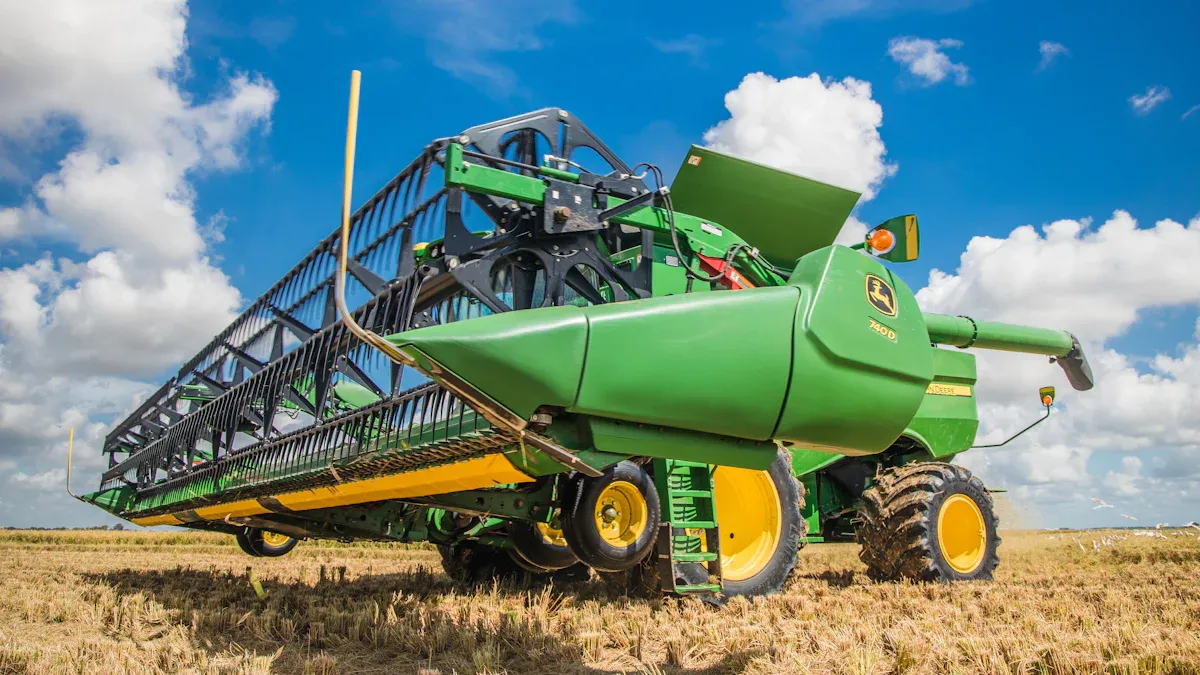
Electric tractors are now used on organic farms. They can work for 8 to 12 hours after one charge. This is enough for a full day of work. Electric tractors have strong torque, sometimes even more than diesel ones. You use battery motors and digital controls to put compost or fertilizer in the right spot. Electric composters turn farm waste into organic fertilizer. This helps cut down pollution and saves money.
| Development Type | Descrizione |
|---|---|
| Trattori elettrici | Work 8–12 hours per charge, good for daily farm jobs. |
| Torque Comparison | Give the same or better torque than diesel tractors. |
| Precision Application | Use battery motors and digital controls for exact jobs. |
| Electric Composters | Change farm waste into organic fertilizer, lower pollution. |
| Sustainability Benefits | Cut pollution by up to 90%, work better, and cost less. |
Choosing electric tractors helps the environment. These tractors do not make exhaust, so the air stays clean. This is good for crops and people. Diesel tractors make dirty air, but electric ones help the soil and bring back more plants and animals.
Smart tractors use GPS and sensors to drive themselves. You can use these tractors to cover big fields quickly and use less fuel. AI helps plant, seed, and harvest with less waste. Drones with sensors check crops and find problems fast.
| Caratteristica | Descrizione | Impatto |
|---|---|---|
| Trattori autonomi | GPS-guided, self-driving tractors | Let you do no-till farming, cover 100 acres an hour, save fuel |
| Integrazione AI | Automates planting and harvesting | Uses resources better, makes less waste |
| Drones with Sensors | AI-powered crop checking | Scan 500 acres in 30 minutes, find problems with 95% accuracy |
You can watch your fields from your phone or computer. This helps you decide when to plant or add fertilizer.
Smart tractors help you follow organic rules. Controlled traffic farming keeps soil healthy by making tractors drive on set paths. No-till and reduced-till ways protect soil and store more carbon. Smart tractors use less fuel and put fertilizer only where it is needed.
| Pratica | Beneficio |
|---|---|
| Traffico agricolo controllato (CTF) | Lowers soil compaction, makes soil better |
| No-Till and Reduced-Till Methods | Protects soil, keeps more carbon in the ground |
| Lower Fuel Usage and Emissions | Makes less pollution, meets rules |
| Efficient Application of Inputs | Wastes less, stops runoff |
Experts think AI and robots will make organic farming better and greener. You will see more electric tractors that can drive themselves soon. These changes help you make less pollution and keep your farm working well. Farmers share stories about these new tools on social media and farm forums.
You use tractors because they help your organic farm work better. Tractors let you do jobs quickly and save resources. They also help keep your soil healthy.
Tractors let you use tools that spread compost, plant cover crops, and control weeds without chemicals. You can choose equipment that fits organic standards and helps you care for your soil.
You need a compact or mid-size tractor for small farms. These tractors fit tight spaces and do not compact the soil as much. You save fuel and work more efficiently.
Yes, you can use electric tractors. They run quietly and do not produce exhaust. You help the environment and lower your fuel costs. Electric tractors work well for daily tasks on organic farms.
You can use wide tires, lower tire pressure, or controlled traffic patterns. These methods spread the tractor’s weight and protect your soil. Adding organic matter also helps keep soil loose.
You can use mechanical weeders, cultivators, and roller-crimpers. These tools remove weeds without chemicals. You keep your crops healthy and follow organic farming principles.



-1.png)