E-mail: [email protected] Whatsapp: +8618266768780

E-mail: [email protected] Whatsapp: +8618266768780


Um Tune-Up de cortador de grama de primavera transforma sua experiência de corte Você percebe começos mais rápidos, cortes mais suaves e um gramado mais saudável quase imediatamente Quando você troca uma lâmina opaca por uma afiada, você minimiza o rasgo de grama e aumenta o apelo visual do gramado Muitos especialistas em paisagismo nas mídias sociais sugerem cortar não mais do que um terço da altura da grama para obter melhores resultados Você também vê grama mais espessa e verde quando mantém o altura de corte mais alta ou incentive a densidade com cortes mais baixos Reserve algumas horas, reúna seus suprimentos e prepare-se para desfrutar de um gramado vibrante nesta temporada.
Antes de iniciar o ajuste do cortador de grama, você precisa reunir as ferramentas, peças de reposição e equipamentos de segurança certos. Preparar tudo com antecedência ajuda você a trabalhar com eficiência e evitar interrupções. Você também deve configurar um espaço de trabalho limpo, como garagem ou entrada de automóveis, e garantir que você tenha tempo suficiente. Os iniciantes geralmente precisam de cerca de uma hora para completar um ajuste.
Precisas de vários ferramentas básicas para realizar um ajuste completo Cada ferramenta serve a um propósito específico, desde afrouxar parafusos até limpar o deck do cortador Aqui está uma lista de verificação para ajudá-lo a começar:
Você pode encontrar guias passo a passo e demonstrações de ferramentas em fóruns populares de paisagismo e canais de mídia social Esses recursos mostram como usar cada ferramenta com segurança e eficácia.
Os ajustes geralmente exigem novas peças para restaurar o desempenho do seu cortador Você deve verificar o manual do seu proprietário para números de peça e especificações Aqui estão os itens de substituição mais comuns:
Inspecione cada peça antes de começar Se você notar desgaste, ferrugem ou danos, substitua a peça imediatamente Muitos guias de reparo on-line oferecem exemplos visuais de componentes desgastados.
A segurança deve sempre vir em primeiro lugar Você precisa de roupas e equipamentos de proteção para reduzir o risco de lesões A tabela a seguir resume os equipamentos de segurança recomendados e sua finalidade:
| Equipamento de segurança | Descrição |
|---|---|
| Roupas justas | Menos probabilidade de ser pego em partes móveis. |
| Calças compridas | Protege contra detritos e projéteis. |
| Sapatos de couro resistentes | Protege os pés e proporciona boa tração. |
| Proteção auditiva | Reduz a exposição ao ruído e previne a perda auditiva. |
| Óculos/óculos de segurança | Protege os olhos da poeira e detritos voadores. |
| Luvas | Evita cortes e escoriações. |
| Protetor solar | Protege a pele da exposição solar. |
| Chapéu de abas largas | Oferece proteção extra do sol. |
| Proteção respiratória | Protege os pulmões em ambientes empoeirados. |
| Colete reflexivo | Aumenta a visibilidade em condições de pouca luz. |
Dica: Sempre use equipamentos de segurança antes de começar a trabalhar Remova joias e amarre os cabelos longos para evitar acidentes.
Reserve pelo menos uma hora para o seu ajuste se você for novo no processo Usuários experientes podem terminar mais rápido Um espaço de trabalho limpo e organizado ajuda você a manter o foco e a segurança Reúna todos os seus suprimentos antes de começar e verifique cada item da sua lista à medida que avança.
Um Tune-Up de Cortador de Gramado bem-sucedido começa com algumas tarefas essenciais de manutenção Você pode seguir essas etapas para restaurar o desempenho do cortador e prolongar sua vida útil.
Um filtro de ar limpo ajuda o seu motor a respirar e a funcionar de forma eficiente Deve substituir o filtro de ar no início de cada época de corte ou mais frequentemente se cortar a relva em condições de poeira Siga estes passos:
Dica: Sempre verifique o manual do seu cortador para o tipo de filtro correto e instruções de instalação.
Substituir a vela de ignição é uma parte fundamental de qualquer Ajuste do Cortador de Gramado Uma vela de ignição fresca garante partidas confiáveis e operação suave do motor Veja como você pode fazer isso:
Uma nova vela de ignição melhora combustão, reduz falhas de ignição, e ajuda seu cortador a usar o combustível de forma mais eficiente Você notará partidas mais fáceis e desempenho do motor mais estável.
A troca do óleo mantém o motor lubrificado e evita o desgaste prematuro O óleo antigo pode conter sujeira e partículas de metal que danificam as peças do motor Siga estas etapas para uma troca adequada de óleo:
Observação: Troque o óleo do seu cortador pelo menos uma vez por temporada ou após cada 25 horas de uso.
Seguindo essas etapas, você define uma base sólida para o seu Lawn Mower Tune-Up Você verá partidas mais rápidas, operação mais suave e um gramado mais saudável.
Uma lâmina afiada corta a grama de forma limpa e ajuda seu gramado a parecer saudável Você deve afiar sua lâmina de cortador pelo menos uma vez por temporada ou após cada 20 horas de corte Lâminas maçantes rasgam a grama, o que pode levar a pontas marrons e doenças Você pode seguir estes passos para afiar sua lâmina com segurança:
Dica: Use luvas e óculos de segurança durante a afiação Uma lâmina equilibrada reduz a vibração e protege o motor do seu cortador.
Um deck de cortador limpo evita o acúmulo de grama e melhora o fluxo de ar Isso ajuda seu cortador a cortar uniformemente e reduz a tensão no motor Você deve limpar o deck após cada poucos usos, especialmente se você cortar grama molhada Aqui está um processo simples:
| Ferramenta Limpeza | Propósito |
|---|---|
| Faca de massa | Raspa a grama presa |
| Escova rígida | Remove sujeira e detritos |
| Mangueira jardim | Enxagua o material solto |
| Solução suave de sabão | Limpa o acúmulo teimoso |
Nota: A limpeza regular evita a ferrugem e mantém o seu cortador a funcionar de forma eficiente.
A lubrificação reduz o atrito e prolonga a vida útil do seu cortador Você deve lubrificar as peças móveis no início de cada estação e após cada ajuste do cortador de grama. Concentre-se nas rodas, nos ajustadores de altura e nos cabos de controle. Siga estas etapas:
Dica: lubrifique as peças regularmente para evitar guinchos e garantir um desempenho suave.
Ao afiar a lâmina, limpar o deck do cortador e lubrificar as peças móveis, você ajuda o cortador a funcionar com eficiência e mantém seu gramado com a melhor aparência. Essas etapas tornam o ajuste do cortador de grama completo e preparam você para uma temporada de corte bem-sucedida.
O combustível fresco alimenta seu cortador de grama com eficiência e ajuda você a ver resultados rápidos após um ajuste do cortador de grama A gasolina velha pode causar partidas difíceis, funcionamento difícil e danos ao motor Você deve sempre verificar e substituir o combustível no início de cada estação de corte.
A gasolina perde a eficácia após alguns meses O combustível antigo pode obstrua seu carburador e prejudicar o meio ambiente Você deve lidar com isso com cuidado para proteger sua saúde e ecossistema local A gasolina é altamente inflamável e tóxico, assim a eliminação imprópria pode contaminar a água subterrânea e poluir o ar Siga estes passos para a eliminação segura:
Dica: Muitos governos locais publicam cronogramas de coleta de resíduos perigosos em seus sites oficiais ou páginas de mídia social Você pode encontrar guias de descarte passo a passo de agências ambientais on-line.
Gasolina fresca ajuda o seu cortador a começar rapidamente e a funcionar sem problemas Deve utilizar combustível com a classificação de octanas correta, normalmente sem chumbo regular Encha a sua lata de gasolina numa estação movimentada para garantir que o combustível está fresco Despeje o combustível novo no tanque do seu cortador lentamente para evitar derrames Limpe imediatamente quaisquer gotejamentos Se cortar frequentemente, reabasteça o tanque após cada utilização para manter o motor pronto para a ação.
Nota: Armazene a gasolina em um local fresco e seco, longe da luz solar direta. Use recipientes com tampas à prova de crianças para maior segurança.
Um estabilizador de combustível mantém a gasolina fresca por períodos mais longos Ele evita a degradação do combustível, reduz a corrosão e mantém a combustão adequada Você deve adicionar estabilizador à sua lata de gás antes de encher o tanque do seu cortador, especialmente se você planeja armazenar o cortador por mais de um mês A tabela a seguir mostra os principais benefícios do uso de um estabilizador:
| Beneficiar | Descrição |
|---|---|
| Impede a Degradação do Combustível | Retarda a quebra do combustível, reduzindo os riscos de problemas no motor. |
| Reduz a Corrosão | Minimiza a atração de umidade, protegendo os componentes do sistema de combustível. |
| Mantém a Combustão | Preserva elementos de combustível mais leves para partidas confiáveis do motor. |
Dica: Você pode encontrar demonstrações de vídeo em plataformas de mídia social que mostram como medir e misturar o estabilizador de combustível corretamenteSiga sempre as instruções no pacote do estabilizador para obter melhores resultados.
Substituir o combustível antigo e usar um estabilizador ajuda seu cortador a funcionar com desempenho máximo Essas etapas tornam o ajuste do cortador de grama mais eficaz e protegem seu equipamento a longo prazo.
A inspeção e o ajuste regulares dos componentes do seu cortador de grama ajudam você a manter uma operação segura e a conseguir um corte limpo Você pode evitar avarias e prolongar a vida útil do seu equipamento verificando parafusos, rodas, cabos e correias Muitos profissionais de paisagismo compartilham guias de inspeção passo a passo nas mídias sociais e nos sites da indústria, o que pode ajudá-lo a visualizar cada processo.
Parafusos soltos ou rodas desgastadas podem afetar a segurança e o desempenho do seu cortador Você deve inspecionar essas peças antes de cada sessão de corte O hardware apertado mantém o cortador estável e evita acidentes As rodas desgastadas podem causar cortes irregulares ou dificuldade em empurrar o cortador.
| Diretrizes de segurança para cortadores de grama |
|---|
| Inspecione a máquina antes de operar Certifique-se de que o hardware esteja apertado Repare ou substitua peças danificadas, mal desgastadas ou ausentes Certifique-se de que os protetores e escudos estejam em boas condições e presos no lugar Faça os ajustes necessários antes de operar. |
| Recomendações Segurança |
|---|
| Mantenha todas as porcas e parafusos apertados, especialmente os parafusos de fixação da lâmina, para ter certeza de que o equipamento está em condições de trabalho seguras. |
Você pode seguir estes passos:
Dica: Muitos especialistas em segurança recomendam verificar parafusos e rodas antes de cada uso Você pode encontrar demonstrações de vídeo em canais de paisagismo populares.
Cabos e correias controlam o engate da lâmina e o movimento da unidade Você deve inspecionar essas peças quanto a desgaste, alongamento ou desalinhamento Cabos ou correias danificados podem causar hesitação, deslizamento ou perda do controle da lâmina.
Problemas comuns de cabos e correias incluem:
Você pode ajustar os cabos usando o parafuso de tensão ou porca, seguindo o manual do seu proprietário Substitua as correias que mostram rachaduras ou desgastados Remova os recortes de grama das polias e dos protetores de correia.
Nota: Muitas autoridades do setor recomendam a inspeção de cabos e correias no início de cada temporada Você pode assistir a tutoriais nas mídias sociais para orientação visual.
Você pode resolver pequenos problemas mecânicos durante o seu ajuste com correções simples Essas ações rápidas ajudam a evitar problemas maiores e manter o cortador funcionando sem problemas.
.️ Correções rápidas economizam tempo e evitam reparos caros Você pode encontrar guias passo a passo de usuários experientes em fóruns do setor e mídias sociais.
Inspeção regular e ajuste dos componentes do cortador ajudam você a alcançar resultados rápidos e confiáveis Você protege seu equipamento e garante uma experiência de corte segura.
Depois de terminar o ajuste do cortador de grama, você deve realizar um teste para verificar as melhorias. Comece o cortador em uma superfície plana e ouça os sons suaves do motor. Observe para facilitar a ignição e a operação constante. Você pode observar várias atualizações de desempenho:
Você deve cortar um pequeno pedaço de grama e verificar a qualidade do corte Se você ver grama irregular ou ouvir ruídos estranhos, pare e inspecione o cortador Muitos especialistas em cuidados com o gramado compartilham vídeos de teste em plataformas de mídia social, o que pode ajudá-lo a comparar os resultados.
O cuidado regular mantém seu cortador em sua forma superior e prolonga sua vida útil Você pode seguir estas dicas para manter seu equipamento após um ajuste:
Dica: Você pode encontrar guias de manutenção passo a passo e dicas de solução de problemas em fóruns populares de cuidados com gramados e canais de vídeo.
A tabela a seguir resume as principais ações de manutenção e seus benefícios:
| Ação Manutenção | Beneficiar |
|---|---|
| Filtro de ar limpo | Melhora a eficiência do motor |
| Afiar lâmina | Promove o crescimento saudável da grama |
| Balanço rodas | Garante até mesmo o corte |
| Mudar óleo | Evita danos no motor |
| Armazenar corretamente | Reduz a ferrugem e o desgaste |
Você deveria seguir um horário sazonal para manter o cortador funcionando bem durante todo o ano Essa rotina ajuda você a evitar avarias e mantém seu gramado com a melhor aparência.
Nota: Muitos profissionais de cuidados com o gramado recomendam a configuração de lembretes para cada tarefa sazonal Você pode usar um aplicativo de calendário ou lista de verificação imprimível para se manter organizado.
Um horário regular e etapas simples de manutenção ajudam você a aproveitar ao máximo seu cortador Você verá resultados rápidos e desfrutará de um gramado verde e saudável durante todo o ano.

Após um ajuste, você ainda pode enfrentar alguns problemas comuns de cortador de grama A solução rápida de problemas ajuda você a corrigir esses problemas e voltar a cortar com confiança Aqui estão os problemas mais frequentes e como você pode resolvê-los.
Se o seu cortador se recusar a iniciar após um ajuste, verifique primeiro estas áreas:
Dica: muitos especialistas em cuidados com o gramado compartilham vídeos passo a passo de solução de problemas nas mídias sociais Assistir a eles pode ajudá-lo a detectar e corrigir problemas rapidamente.
O corte desigual resulta em um gramado irregular e pode frustrar até mesmo usuários experientes. Você pode corrigir isso verificando algumas áreas-chave:
Aqui está uma tabela de referência rápida para solucionar problemas de cortes irregulares:
| Área Problema | O que verificar | Solução |
|---|---|---|
| Lâmina | Chato, dobrado ou danificado | Afie ou substitua a lâmina |
| Deck de cortador de grama | Não nivelado | Ajustar a altura do convés |
| Pneus | Banda de rodagem de baixa pressão ou desgastada | Inflar ou substituir pneus |
| Convés inferior | Acúmulo de grama | Limpar após cada uso |
Nota: Você pode encontrar guias visuais para nivelamento de deck e afiação de lâminas em fóruns populares de cuidados com gramados e canais de vídeo.
Sons ou fumaça incomuns geralmente sinalizam problemas mecânicos. Aborde-os rapidamente para evitar danos.
Se você ouvir ruídos persistentes ou ver fumaça, pare o cortador e inspecione-o antes de continuar Muitos guias de solução de problemas e discussões da comunidade on-line podem ajudá-lo a diagnosticar esses sintomas.
Seguindo estes passos, você pode resolver a maioria dos problemas pós-ajuste rapidamente Verificações regulares e correções imediatas mantêm seu cortador funcionando sem problemas e seu gramado parecendo o seu melhor.
Um Lawn Mower Tune-Up dá-lhe um gramado mais saudável e mais bonito e ajuda o seu cortador a durar mais tempo Paradas regulares de manutenção pequenos problemas como filtros sujos e baixo teor de óleo de se transformar em reparos caros Você também recebe um corte limpo, que mantém sua grama forte e verde Muitos proprietários se sentem motivados pelo prazer pessoal, apelo de meio-fio e necessidades familiares.
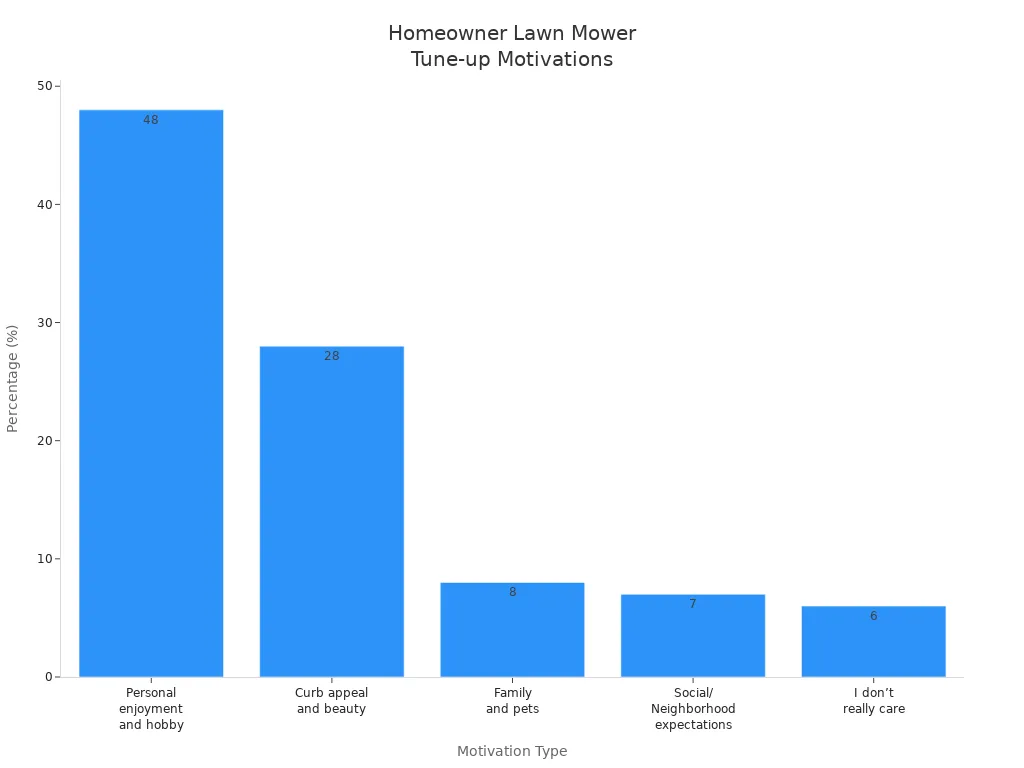
Mantenha-se consistente com seus ajustes Você verá resultados rápidos e aproveitará a temporada de corte com confiança.
Você deve completar um ajuste pelo menos uma vez a cada primavera Se você cortar a grama com frequência ou notar problemas de desempenho, considere ajustar a cada 25 horas de uso A manutenção regular mantém seu cortador funcionando sem problemas e prolonga sua vida útil.
Procure partidas difíceis, cortes irregulares, excesso de vibração ou ruídos estranhos Se o seu cortador deixar para trás grama não cortada ou se esforçar para correr, um ajuste pode restaurar seu desempenho Inspecione seu cortador antes de cada estação em busca desses sinais.
Você pode afiar a lâmina enquanto ela permanece presa, mas removê-la garante um trabalho mais seguro e completo O desprendimento da lâmina permite verificar se há danos e equilibrá-la adequadamente, o que melhora a qualidade do corte e protege o cortador.
Verifique o manual do seu proprietário para o tipo de óleo recomendado A maioria dos cortadores de grama walk-behind usa SAE 30 ou SAE 10 W-30 O Synthetic 5 W-30 funciona bem em temperaturas variadas Sempre use óleo fresco e meça a quantidade correta para o seu cortador.
A gasolina velha pode causar problemas no motor e partidas duras Você deve sempre usar combustível fresco no início de cada estação Elimine o gás velho em locais aprovados de resíduos perigosos para proteger sua saúde e o meio ambiente.
Se o seu cortador começar devagar, falhar ou usar mais combustível, verifique a vela de ignição Remova-a e inspecione se há depósitos ou desgaste Substitua a vela de ignição se observar corrosão, rachaduras ou um eletrodo desgastado.
Use roupas justas, sapatos resistentes, luvas e óculos de segurança Use proteção auditiva se o cortador estiver alto Protetor solar e chapéu protegem você ao ar livre Sempre remova as joias e amarre os cabelos longos antes de começar a trabalhar.
Você pode seguir muitas dessas etapas para cortadores elétricos, como limpar o convés, afiar a lâmina e inspecionar as rodas Os modelos elétricos não precisam de trocas de óleo ou substituições de velas de ignição Sempre desconecte o cortador antes da manutenção.




-1.png)