Email: [email protected] Whatsapp: +8618266768780

Email: [email protected] Whatsapp: +8618266768780


Sie können den Erfolg Ihres Projekts maximieren, indem Sie die Leistung des Baggers und die Grabtiefe an Ihre spezifischen Standortanforderungen anpassen. Wenn Sie diese Faktoren verstehen, können Sie Übergrabungen vermeiden, Kraftstoffverbrauch reduzieren, ‘und begrenzen Sie den Maschinenverschleiß Wenn Sie die richtige Maschine auswählen, verhindern Sie das Extra-Material-Schleppen und reduzieren die Wartungskosten Moderne Systeme liefern jetzt präzise Messungen, so dass Sie genau graben können und kostspielige Nacharbeiten vermeiden Berücksichtigen Sie immer sowohl technische Spezifikationen als auch die wirklichen Herausforderungen, die Ihr Projekt mit sich bringt.
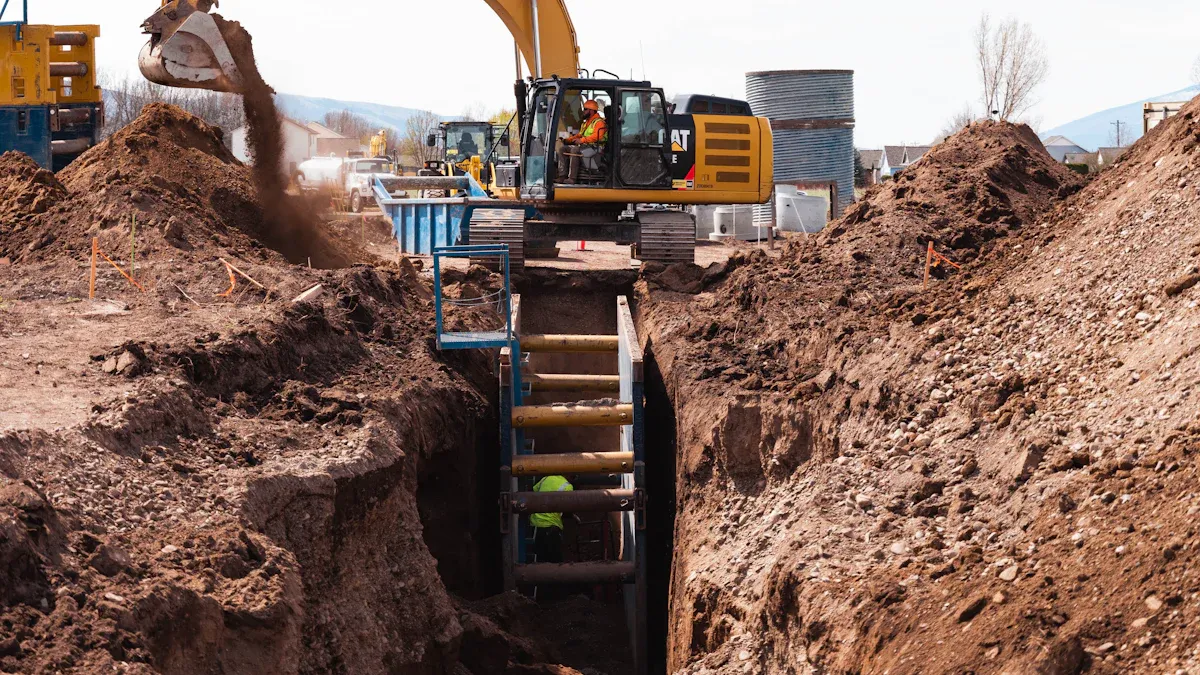
Wenn Sie ein Ausgrabungsprojekt starten, müssen Sie sowohl überlegen, wie tief Sie graben müssen, als auch wie viel Kraft Ihre Maschine liefern kann Diese beiden Faktoren prägen Ihren gesamten Arbeitsablauf Wenn Sie eine Maschine mit dem richtigen Grabtiefe, Sie erfüllen die Projektspezifikationen und vermeiden Verzögerungen. Die Kraft, die Ihr Bagger ausübt, bestimmt, wie leicht Sie zähen Boden oder Gestein durchbrechen.
Stellen Sie sich vor, Sie müssen eine Kanalleitung sechs Fuß unter der Erde installieren, wenn Ihr Bagger diese Tiefe nicht erreichen kann, riskieren Sie zusätzliche Arbeits - und Mietkosten Wenn der Boden steinig ist und Ihrer Maschine die Kraft fehlt, kann es zu Verzögerungen oder sogar zu Beschädigungen der Ausrüstung kommen. Passende Baggerleistung Ihrem Projekt hilft, diese Probleme zu vermeiden.
Viele Projekte geraten in Schwierigkeiten, wenn der gewählte Bagger die Standortbedingungen nicht bewältigen kann. Sie könnten diese Probleme sehen:
Sie können diesen Problemen vorbeugen, indem Sie den Bodentyp Ihrer Website überprüfen, die erforderliche Tiefe messen und die Spezifikationen Ihrer Maschine vor Beginn der Arbeiten überprüfen. Planen Sie immer die härtesten Bedingungen ein, denen Sie ausgesetzt sein könnten.
Die richtige Grabtiefe und -kraft sorgen dafür, dass Ihr Projekt auf Track läuft. Halten Sie Ihre Crew besser. Die richtige Maschine verringert das Risiko eines Einsturzes und anderer Unfälle. Sie sollten immer folgen. Sicherheitsprotokolle und Schutzsysteme verwenden, insbesondere für Gräben, die tiefer als fünf Fuß sind.
| Aspekt | Erläuterung |
|---|---|
| Richtige Grabtiefe | Sorgt für die Sicherheit des Aushubs und verringert die Gefahr des Bodeneinsturzes, der zu Unfällen führen kann. |
| Schutzsysteme | Erforderlich für Gräben, die tiefer als fünf Fuß sind, aber zur Erhöhung der Sicherheit für alle Tiefen empfohlen. |
| Tägliche Inspektionen | Um sich an veränderte Bodenbedingungen anzupassen und eine kontinuierliche Sicherheit zu gewährleisten, sind laufende Kontrollen erforderlich. |
| Zugang und Ausstiegspunkte | Sollte sich im Umkreis von 25 Fuß um die Arbeiter befinden, um im Notfall eine schnelle Flucht zu ermöglichen. |
Sie können die Effizienz steigern, indem Sie eine Technologie verwenden, die Tiefe und Kraft in Echtzeit misst. Dies hilft Ihnen, genau zu graben und Nacharbeiten zu vermeiden. Die Anpassung der Baggerleistung an Ihre Bedürfnisse bedeutet auch einen geringeren Kraftstoffverbrauch und geringere Wartungskosten. Wenn Sie im Voraus planen, schützen Sie Ihr Team und Ihr Budget.
Sie müssen verstehen, wie Motorleistung und hydraulischer Durchfluss Leistung Ihres Baggers beeinflussen Motorleistung, gemessen in PS oder Kilowatt, bestimmt, wie viel Arbeit Ihre Maschine bewältigen kann Hydraulikfluss, gemessen in Gallonen oder Litern pro Minute, steuert, wie schnell sich Ausleger, Arm, und Eimer bewegen Hohe Motorleistung lässt Sie schwere Arbeitsbelastungen bewältigen, während starker hydraulischer Fluss schnellere Zyklen und effizienteres Graben bedeutet.
Tipp: Überprüfen Sie sowohl die PS des Motors als auch die Durchflussmenge des Hydrauliksystems, bevor Sie sich für eine Maschine entscheiden Mehr Leistung und höhere Durchflussraten helfen Ihnen, zähe Materialien zu durchbrechen und Aufgaben schneller zu erledigen.
Druck im Hydrauliksystem steuert die Kraft Ihr Bagger kann ausüben Höherer Druck bedeutet mehr Grabkraft, die für das Brechen von hartem Boden oder das Heben schwerer Lasten unerlässlich ist Durchfluss steuert Geschwindigkeit, so dass höhere Durchflussraten Sie Aufträge schneller beenden lassen.
| Spezifikation | Was es für Sie bedeutet |
|---|---|
| Motorleistung | Bewältigt hohe Arbeitsbelastungen und robuste Materialien |
| Hydraulikdurchflussrate | Bietet schnellere Ausleger-, Arm- und Eimerbewegungen |
| Betriebsdruck | Erhöht die Grabkraft und die Hebefähigkeit |
| Eimerkapazität | Bewegt mehr Material pro Zyklus und steigert so die Effizienz |
| Tragfähigkeit | Gewährleistet den sicheren Umgang mit schweren Gegenständen |
Die Arm- und Auslegerkonfiguration prägt die Leistung Ihres Baggers bei der Arbeit. Kurze Arme geben Ihnen mehr Ausbruchskraft und bessere Kontrolle, was hilft, wenn man in verdichtetem Boden oder Gestein gräbt Lange Arme erweitern die Reichweite und Grabtiefe, so dass sie für breite Gräben oder tiefe Gruben nützlich sind Längere Arme können jedoch die Tragfähigkeit und Stabilität verringern, besonders unter herausfordernden Bedingungen.
Sie sollten das Arm - und Ausleger-Setup an die Bedürfnisse Ihres Projekts anpassen, wenn Sie auf engstem Raum arbeiten oder schwere Gegenstände heben müssen, wählen Sie einen kürzeren Arm Bei Projekten, die eine größere Reichweite erfordern, wie zum Beispiel das Reinigen von Gräben oder das Überarbeiten von Hindernissen, funktioniert ein längerer Arm besser.
Notiz: Mehr Reichweite kann weniger Kraft bedeuten Immer Reichweite und Kraft nach den Ansprüchen Ihrer Seite ausbalancieren.
Grabtiefe und Reichweite sind zwei der wichtigsten Spezifikationen, wenn Sie die Baggerleistung an Ihr Projekt anpassen. Die Grabtiefe zeigt Ihnen, wie weit Sie unter der Erde arbeiten können. Die Reichweite misst, wie weit der Eimer von der Maschine ausgehen kann. Diese Spezifikationen bestimmen, ob Sie Aufgaben wie Grabenbau, Fundamentarbeiten oder die Installation von Versorgungseinrichtungen erledigen können, ohne Ihren Bagger neu zu positionieren.
Sie sollten immer die erforderliche Tiefe und Reichweite für Ihr Projekt prüfen, bevor Sie eine Maschine auswählen z. B, Standard-20-Tonnen-Bagger graben in der Regel 6-Zoll-Meter tief. Langstreckenmodelle können 10 Meter überschreiten, was für Groß- oder Spezialarbeiten hilfreich ist.
| Baggerklasse | Typische Grabtiefe | Typische Reichweite |
|---|---|---|
| Mini | 2 – 4 Meter | 4 – 6 Meter |
| Standard (20 Tonnen) | 6 – 7 Meter | 8 10 Meter |
| Weitreichweite | 10+ Meter | 12+ Meter |
Umsetzbarer Tipp: Messen Sie den tiefsten Punkt und die weiteste Reichweite Ihrer Website, bevor Sie mieten oder kaufen. Dadurch stellen Sie sicher, dass Sie die richtige Maschine auswählen und kostspielige Verzögerungen vermeiden.
Passende Baggerleistung Zu Ihrem Projekt bedeutet, alle diese Specs zusammen zu betrachten Sie müssen Motorleistung, Hydraulikfluss, Armkonfiguration und Grabtiefe in Einklang bringen, um die besten Ergebnisse zu erhalten Wenn Sie diese Faktoren verstehen, treffen Sie intelligentere Entscheidungen und halten Ihr Projekt auf Kurs.
Sie müssen die Ausbruchskraft verstehen, wenn Sie einen Bagger für Ihr Projekt auswählen. Die Ausbruchskraft ist die Maximale Kraft Ihre Maschine kann zum Durchbrechen zäher Materialien wie verdichteter Erde, Ton oder Gestein eingesetzt werden. Diese Messung zeigt Ihnen, wie gut Ihr Bagger unter schwierigen Bedingungen Material graben, heben und bewegen kann. Maschinen mit höherer Ausbruchskraft erledigen Arbeiten schneller und bewältigen schwierige Aufgaben mit weniger Aufwand.
Mehrere Faktoren beeinflussen die Ausbruchskraft:
Sie messen die Ausbruchskraft, indem Sie die maximale Kraft an der Spitze des Eimers berechnen, wenn das Hydrauliksystem gegen den Widerstand drückt, diese Zahl geben die Hersteller in der Regel im Lastenheft der Maschine an, diesen Wert sollten Sie immer überprüfen, bevor Sie einen Bagger mieten oder kaufen.
Tipp: Wenn Sie erwarten, in felsigem oder verdichtetem Boden zu graben, wählen Sie eine Maschine mit höherer Ausbruchskraft Diese Wahl hilft Ihnen, Verzögerungen zu vermeiden und verringert das Risiko von Geräteschäden.
Ausbruchskraft wirkt sich direkt auf die Effizienz und Produktivität Ihrer Ausgrabungsarbeiten aus Wenn Sie eine Maschine mit genügend Kraft einsetzen, durchbrechen Sie schnell zähe Materialien, das bedeutet, dass Sie weniger Zeit für jede Aufgabe aufwenden und Ihre Betriebskosten senken, wenn Ihrem Bagger die Ausbruchskraft fehlt, können Sie Schwierigkeiten beim Graben haben, was zu längeren Projektzeiten und höheren Ausgaben führt.
Stellen Sie sich vor, Sie müssen einen Graben für eine Wasserlinie in einem Gebiet mit hartem Ton ausheben Sie wählen einen Bagger mit hoher Ausbruchskraft nach Prüfung der Specs Die Maschine durchschneidet den Ton, ohne abzuwürgen oder zu verlangsamen Sie beenden den Graben termingerecht und vermeiden zusätzliche Arbeitskosten, wenn Sie eine Maschine mit geringerer Ausbruchskraft gewählt hätten, hätten Sie möglicherweise auf Handwerkzeuge umsteigen oder einen größeren Bagger mieten müssen, was beides die Kosten erhöht und das Projekt verzögert.
Sie sollten immer Breakout-Kraft in Ihre Checkliste einfügen, wenn Sie Baggerleistung auf Ihr Projekt abstimmen Dieser Schritt stellt sicher, dass Sie eine Maschine auswählen, die die härtesten Teile Ihres Jobs bewältigen kann, und Ihr Projekt auf Kurs und innerhalb des Budgets halten.
Sie müssen jedes Ausgrabungsprojekt beginnen, indem Sie Verständnis des Bodens und der Materialart Bei Ihnen vor Ort Die Bodenverhältnisse können die Leistung Ihres Baggers verändern Sandiger Boden ermöglicht ein einfacheres Graben, während verdichteter Lehm oder felsiger Boden mehr Leistung und Spezialausrüstung erfordert Wenn Sie mit nassen Böden arbeiten, benötigen Sie möglicherweise Maschinen mit maßgeschneiderten Spezifikationen, um ein Verlaufen zu verhindern.
Führen Sie vor Beginn Bodentests durch, um mehr über Bodenfestigkeit, Stabilität und Entwässerung zu erfahren. Dieser Schritt hilft Ihnen, Überraschungen zu vermeiden und stellt sicher, dass Ihre Maschine mit der Arbeit übereinstimmt. Beispielsweise entdeckte ein Auftragnehmer, der in einer neuen Unterteilung arbeitete, eine Schicht harten Tons unter dem Oberboden Durch den Wechsel zu einem größeren Bagger mit höherer Ausbruchskraft beendete das Team die Grabenarbeiten termingerecht und vermied zusätzliche Kosten.
Tipp: Überprüfen Sie immer den Bodentyp, bevor Sie Ihren Bagger auswählen Dieser Schritt spart Zeit und verhindert Schäden an Geräten.
Sie müssen die genaue Tiefe bestimmen und erreichen Ihr Projekt erfordert Diese Messungen leiten Ihre Geräteauswahl und helfen Ihnen, Verzögerungen zu vermeiden Beginnen Sie mit einer geotechnischen Untersuchung zur Bewertung der Bodenstabilität Führen Sie als nächstes eine topografische Vermessung durch, um Landmerkmale zu kartieren Entwerfen Sie einen strukturellen Entwurf, der den Sicherheitsstandards und Bauvorschriften entspricht.
Überlegen Frosttiefe In kälteren Klimazonen Fundamente müssen unterhalb der Frostgrenze liegen, um Schäden durch Frost-Tau-Zyklen zu verhindern Schwerere Strukturen benötigen tiefere Fundamente, um Lasten auf stabile Bodenschichten zu übertragen Die Bodenverhältnisse geben die notwendige Tiefe für ein sicheres Fundament vor.
Eine Fallstudie von einer Schulbaustelle beleuchtet diesen ProzessDas Projekt erforderte Fundamentgräben unterhalb der Frostgrenze, das Team nutzte Bodentests, um die Tiefe zu bestätigen und wählte einen Bagger mit genügend Reichweite, um die Arbeiten in einem Aufbau abzuschließenDiese Vorgehensweise reduzierte die Neupositionierung und hielt das Projekt im Zeitplan.
Notiz: Genaue Messungen von Tiefe und Reichweite helfen Ihnen, den richtigen Bagger auszuwählen und kostspielige Nacharbeiten zu vermeiden.
Platz und Zugang spielen bei Ihrer Gerätewahl eine entscheidende Rolle, wenn Sie in einem engen Bereich arbeiten, können, Manövrierfähigkeit wird unabdingbar. Städtische Projekte oder Standorte in der Nähe bestehender Bauwerke erfordern häufig kompakte Bagger, die enge Räume befahren können, ohne die nahegelegene Infrastruktur zu beschädigen.
Stellen Sie sich ein Landschaftsbauprojekt in einem Stadtpark vor Die Crew musste Gräben für Bewässerungslinien zwischen altem Baumbestand und Spielgeräten ausheben, sie wählten einen Minibagger mit kurzer Heckschaukel für maximale Manövrierfähigkeit aus Diese Wahl ermöglichte es ihnen, effizient zu arbeiten, ohne die Merkmale des Parks zu stören.
Umsetzbare Ratschläge: Besichtigen Sie Ihren Standort auf Hindernisse und messen Sie den verfügbaren Platz, bevor Sie Ihren Bagger auswählen. Dieser Schritt gewährleistet einen sicheren Betrieb und verhindert Verzögerungen.
Baggerleistung auf Ihr Projekt abzustimmen bedeutet, Bodentyp, erforderliche Tiefe und Reichweite sowie Platzbeschränkungen zu bewerten Wenn Sie diese Faktoren beurteilen, treffen Sie fundierte Entscheidungen und richten Ihr Projekt auf Erfolg aus.
Das Aushubdesign bildet die Blaupause für Ihr gesamtes Projekt Sie müssen das Design verstehen, bevor Sie einen Bagger auswählen Das Design umreißt die Form, Größe und Tiefe des Bereichs, den Sie graben möchten. Es beschreibt auch die Neigung der Seiten, die Art des Materials, das Sie entfernen werden, und alle besonderen Anforderungen an die Website.
Sie sollten immer mit Ihrem Team das Grabungsdesign überprüfen Dieser Schritt hilft Ihnen, die richtige Maschine an die Arbeit anzupassen Wenn Sie die Details kennen, können Sie einen Bagger auswählen, der den Anforderungen des Projekts entspricht Hier sind einige Möglichkeiten, wie sich das Grabungsdesign auf Ihre Gerätewahl auswirkt:
Tipp: Immer Richten Sie die Spezifikationen Ihres Baggers aus Mit dem Grabungsentwurf Diese Vorgehensweise spart Zeit und verhindert kostspielige Fehler.
Drei wesentliche Vorgaben sollten Sie genau beachten:
| Spezifikation | Warum es im Design wichtig ist |
|---|---|
| Eimerkapazität | Passt zum Volumen des zu bewegenden Materials |
| Hydraulikfluss | Gewährleistet einen reibungslosen und effizienten Betrieb |
| Grabtiefe | Erreicht die erforderliche Projekttiefe |
Angenommen, Sie müssen ein Fundament für ein kleines Gebäude graben Die Konstruktion sieht einen Graben vor, der 1,5 Meter breit und 3 Meter tief ist Sie überprüfen die Specs und wählen einen Bagger mit einem Eimer, der zur Grabenbreite passt und einem Ausleger, der die erforderliche Tiefe erreicht, Sie bestätigen auch, dass die hydraulische Strömung das stetige Graben im lokalen Boden unterstützt Dieses sorgfältige Match hält Ihr Projekt im Zeitplan und vermeidet zusätzliche Arbeit.
Wenn Ihr Entwurf aus Sicherheitsgründen geneigte Seiten oder Bänke enthält, benötigen Sie möglicherweise einen Bagger mit kippbarem Eimer oder verstellbarem Ausleger. Bei Projekten in der Nähe bestehender Strukturen wählen Sie möglicherweise eine Maschine mit kurzem Heckschwung, um die Manövrierfähigkeit zu verbessern.
Sie sollten sich bei der Überprüfung des Entwurfs immer mit einem erfahrenen Bediener oder Projektmanager beraten. Sie können Ihnen helfen zu verstehen, wie sich jede Spezifikation auf die bevorstehenden Aufgaben bezieht. Diese Teamarbeit stellt sicher, dass Sie für jeden Teil des Auftrags die richtige Maschine auswählen.
Umsetzbare Ratschläge: Vergleichen Sie vor der Miete oder dem Kauf das Grabungsdesign mit den Spezifikationen der Maschine Erstellen Sie eine Checkliste mit Tiefe, Breite, Bodentyp und etwaigen Besonderheiten. Dieser Schritt hilft Ihnen, Verzögerungen zu vermeiden und sorgt dafür, dass Ihr Projekt reibungslos läuft.
Indem Sie sich auf die Grabungsgestaltung konzentrieren, legen Sie den Grundstein für ein erfolgreiches Projekt. Sie stellen sicher, dass Ihre Ausrüstung den tatsächlichen Anforderungen der Arbeit entspricht, was zu sichererer, schnellerer und kostengünstigerer Arbeit führt.
Minibagger Unter 6 Tonnen wiegen und liefern zwischen 10 und 70 PS. Sie können mit einer typischen Grabtiefe von 2 bis 4 Metern rechnen Diese Maschinen bieten eine begrenzte Ausbruchskraft, wodurch sie am besten in weichen oder mäßig verdichteten Böden funktionieren, Sie werden es vielleicht bemerken Stabilitätsfragen Wenn Sie sie auf unebenem Gelände betreiben oder versuchen, schwere Lasten zu heben.
Minibagger haben einen kleineren Kraftstofftank, sodass Sie bei langen Schichten häufiger tanken müssen.
Sie sollten sich für ein entscheiden Minibagger Für Projekte in engen Räumen oder Bereichen mit eingeschränktem Zugang Diese Maschinen zeichnen sich durch Aufgaben wie das Graben von Fundamenten für kleine Bauwerke, das Ausheben von Versorgungsgräben und die Landschaftsgestaltung aus. Sie können sie auch für leichte Abriss- oder Straßenarbeiten verwenden, beispielsweise für das Verlegen von Pipelines oder die Reparatur von Gehwegen.
Ein Landschaftsbauteam hat einmal mit einem Minibagger einen neuen Garten in einem Stadthof installiert, die Maschine passte durch ein schmales Tor und hat die Arbeiten ohne Beschädigung nahegelegener Strukturen abgeschlossen, Sie sollten vermeiden, Minibagger für Tiefgrabenbildung oder schweres Heben, da ihre Kraft und Reichweite begrenzt sind.
Mittelgroße Bagger sind von 8 bis 45 Tonnen und liefern 70 bis 300 PS. Sie können im Vergleich zu Mini-Modellen tiefer graben und härtere Materialien handhaben Typische Grabtiefen erreichen 6 bis 7 Meter, mit genügend Ausbruchskraft für verdichteten Boden und leichtes Gestein.
Mittelgroße Bagger gleichen Kraft und Manövrierfähigkeit aus und eignen sich daher für die meisten Baustellen.
Sie sollten einen mittelgroßen Bagger für mittelgroße Bauarbeiten, Nutzinstallationen oder Straßenarbeiten auswählen. Diese Maschinen kümmern sich um den Fundamentaushub für Gewerbegebäude, die Grabenbildung für Wasserleitungen und die Planierung für Straßenbetten.
Ein Auftragnehmer nutzte einen mittelgroßen Bagger, um Fundamentgräben für eine Schule auszuheben. Die Maschine erreichte in einem Aufbau die erforderliche Tiefe, wodurch die Neupositionierung reduziert und das Projekt im Zeitplan gehalten wurde.
Full-Size-Bagger wiegen über 50 Tonnen und liefern mehr als 300 PS. Sie können maximale Grabtiefen von 10 Metern oder mehr erreichen Diese Maschinen bieten die höchste Ausbruchskraft, die Sie hartes Gestein, dichten Ton und großflächige Erdbewegungen bewältigen lässt.
Bagger in Originalgröße erfordern qualifizierte Bediener und breite, stabile Arbeitsbereiche.
Für große Infrastrukturprojekte, Bergbau oder großflächigen Abriss sollten Sie einen Bagger in Originalgröße verwenden. Diese Maschinen transportieren Schüttgut effizient und bewältigen die härtesten Standortbedingungen.
Ein Bergbauprogramm setzte auf einen Bagger in Originalgröße, um Abraum zu entfernen und Mineralflöze freizulegen. Die Leistung und Reichweite der Maschine machten den Prozess effizient und sicher.
| Baggertyp | Beschreibung | Macht und Fähigkeiten |
|---|---|---|
| Mini | Kompakt, agil, für enge Räume | 10 –70 PS, 24 m Tiefe, begrenzte Kraft |
| Mittelgroß | Ausgewogene Größe und Leistung | 70 – 300 PS, 6 – 7 m Tiefe, mäßige Kraft |
| Vollgroß | Maximale Leistung für große Projekte | 300+ PS, 10+ m Tiefe, höchste Kraft |
Mit dieser Übersicht können Sie Ihre Entscheidungen zur passenden Baggerleistung für jedes Projekt leiten.
Vergleichen kann man Baggerklassen Schnell, indem Sie ihre typischen Grabtiefen und Ausbruchskräfte überprüfen Diese Tabelle hilft Ihnen zu sehen, wie jede Klasse abschneidet und was Sie auf Ihrer Baustelle erwarten können.
| Baggerklasse | Betriebsgewicht | Typische Grabtiefe | Ausbruchskraft | Hinweise zu Anhängen und Reichweite |
|---|---|---|---|---|
| Kleiner Mini (1 3 Tonnen) | 2.200 6.600 Pfund | 5 – 8 Fuß | Niedrig | Der verlängerte Arm fügt 1 2 ft hinzu; schmale Eimer fügen 6 –12 hinzu. |
| Mini mittlerer Größe (3 – 6 Tonnen) | 6.600 13.200 Pfund | 8 12 Fuß | Mäßig | Die große Reichweite fügt 2 –3 Fuß hinzu; Spezialeimer optimieren die Tiefe |
| Größerer Mini (6 10 Tonnen) | 13.200 2.000 Pfund | 12 15 Fuß | Höher | Super große Reichweite fügt 3 – ft; Schwere Anhänge können die Tiefe um 3 –6 Zoll verringern. |
| Mittelgroß (10 –45 Tonnen) | 22.000 9.000 Pfund | 15 23 Fuß | Hoch | Standard - und Langstreckenoptionen verfügbar |
| Vollwertige Größe (50+ Tonnen) | 100.000+ Pfund | 23+ Fuß | Maximal | Entwickelt für tiefe, schwere Ausgrabungen |
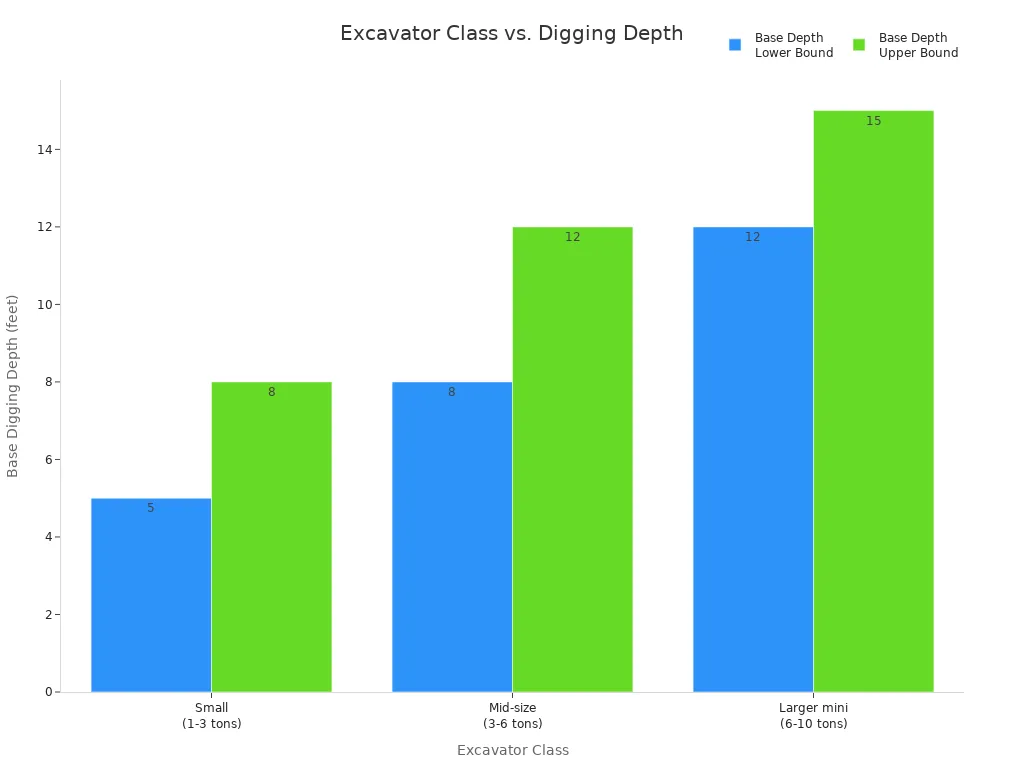
Tipp: Befestigungen und Auslegerkonfigurationen können die Reichweite und Kraft Ihrer Maschine verändern Überprüfen Sie immer die Spezifikationen für Ihr genaues Setup.
Sie können dieses Diagramm verwenden, um Passend zum richtigen Bagger Zu Ihrem Projekt Beginnen Sie mit der Identifizierung des tiefsten Punktes, den Sie graben müssen Als nächstes überprüfen Sie den Bodentyp und alle Hindernisse auf Ihrer Website Wenn Sie auf engstem Raum arbeiten, passt ein Minibagger mit einem schmalen Eimer möglicherweise am besten Für tiefere oder härtere Arbeiten benötigen Sie eine mittelgroße oder vollwertige Maschine.
Betrachten Sie diese Schritte:
Fallstudie: Ein Auftragnehmer musste Wasserleitungen unter einer Stadtstraße installieren Der Graben erforderte eine Tiefe von 10 Fuß in verdichtetem Boden. Das Team entschied sich für einen mittelgroßen Minibagger mit einem langreichweiten Arm und einem schmalen Eimer. Dieser Aufbau sorgte für genügend Tiefe und Kraft, ohne das nahegelegene Gehweg zu beschädigen.
Sie können sich auch mit Gerätehändlern oder Branchenforen beraten lassen. Viele Fachleute teilen ihre Erfahrungen auf Plattformen wie Leitfaden für Baumaschinen oder LinkedIn-Baugruppen.
Umsetzbare Ratschläge: Vergleichen Sie Ihre Projektspezifikationen immer mit dem Diagramm, bevor Sie mieten oder kaufen Dieser Schritt hilft Ihnen, Verzögerungen, zusätzliche Kosten und Sicherheitsrisiken zu vermeiden.
Mithilfe der Übersichtstabelle und nach diesen Schritten können Sie einen Bagger auswählen, der den Anforderungen Ihres Projekts entspricht und ein effizientes, sicheres und kostengünstiges Arbeiten gewährleistet.
Sie sollten immer einen Bagger inspizieren, bevor Sie sich auf ein Projekt festlegen Beginnen Sie mit der Überprüfung des Alters und der Betriebsstunden der Maschine Fragen Sie nach dem Jahr, der Marke, dem Modell und der Seriennummer Überprüfen Sie den Zustand des Baggers und vergleichen Sie ihn mit der Auflistung oder Mietbeschreibung Suchen Sie nach Gebrauchsspuren an Ausleger, Arm und Eimer Untersuchen Sie die Hydraulikleitungen auf Undichtigkeiten oder Schäden.
Tipp: Pflücken Sie zuerst Ihren Eimer. Identifizieren Sie die Materialdichte und wählen Sie die richtige Eimergröße, bevor Sie das Baggermodell auswählen Dieser Schritt stellt sicher, dass Sie die beste Leistung für Ihren Job erhalten.
Ein Auftragnehmer inspizierte einmal einen gebrauchten Bagger für ein Grabenbauprojekt, durch die Überprüfung der Wartungsaufzeichnungen und die Inspektion des Hydrauliksystems vermied das Team einen kostspieligen Ausfall während der Arbeit.
Du musst Grabtiefe und Reichweite ausgleichen Wenn man einen Bagger auswählt, sagt einem die Grabtiefe, wie weit man unter der Erde arbeiten kann Reach misst, wie weit der Eimer von der Maschine ausgehen kann Beide Specs sind wichtig für effizientes Arbeiten.
Einige Kompaktbagger bieten eine Langarmoption. Diese Funktion gibt Ihnen eine größere Reichweite und Grabtiefe, was bedeutet, dass Sie Aufgaben erledigen können, ohne die Maschine so oft zu bewegen Ein längerer Ausleger hilft bei spezialisierten Arbeiten, aber ein kürzerer Ausleger verbessert die Manövrierfähigkeit auf engem Raum.
Hinweis: Größe den Stick für die Arbeit Betrachten Sie den Kompromiss zwischen Sticklänge und Grableistung Wählen Sie ein Modell, das Reichweite und Kraft für Ihr Projekt ausgleicht.
Eine Landschaftsbaumannschaft musste einen langen, flachen Graben zur Bewässerung ausheben. Sie entschied sich für einen kompakten Bagger mit einer Langarmoption. Dieser Aufbau ermöglichte es ihnen, den Graben in einem Durchgang zu vervollständigen, was Zeit sparte und den Arbeitsaufwand reduzierte.
Im Gespräch mit Gerätehändlern sollten Sie die richtigen Fragen stellen, das hilft Ihnen, die Fähigkeiten des Baggers zu verifizieren und Überraschungen zu vermeiden.
Umsetzbare Ratschläge: Bringen Sie den Bagger zu Ihrem Standort, indem Sie Gefahren und zukünftige Anforderungen bewerten Überprüfen Sie die Art und Größe der Bagger, um die beste Passform für Ihr Projekt zu ermitteln.
Indem Sie diese praktischen Tipps befolgen, verbessern Sie Ihre Chancen auf Passende Baggerleistung Ihren Projektbedürfnissen eine sorgfältige Inspektion, die Ausbalancierung von Tiefe und Reichweite sowie das Stellen der richtigen Fragen helfen Ihnen, kostspielige Fehler zu vermeiden und Ihre Arbeit auf Kurs zu halten.
Sie können Erfolg haben, indem Sie einen klaren Prozess für die Abstimmung der Baggerleistung auf Ihr Projekt befolgen Beginnen Sie bei Beurteilung Ihres Projektumfangs, Bestimmen Sie dann die Grabtiefe und erreichen Sie, die Sie benötigen Bewerten Sie die Materialien und berücksichtigen Sie Standortbeschränkungen Überprüfen Sie sowohl technische Spezifikationen als auch Standortbedingungen, da diese Faktoren die Leistung und Sicherheit der Ausrüstung beeinflussen Wenn Sie sich unsicher fühlen, Experten konsultieren oder vertrauenswürdigen Händlern für eine maßgeschneiderte Beratung Diese Schritte unternehmen, um kostspielige Fehler zu vermeiden und einen reibungslosen Ablauf Ihres Ausgrabungsprojekts zu gewährleisten.
Möglicherweise benötigen Sie zusätzliche Handarbeit oder eine größere Maschine Dies kann Ihr Projekt verzögern und die Kosten erhöhen Messen Sie immer Ihre erforderliche Tiefe, bevor Sie Ausrüstung auswählen.
Überprüfen Sie Ihren Bodentyp und das härteste Material, das Sie erwarten Überprüfen Sie die Ausbruchskraft der Maschine in den Spezifikationen Wählen Sie ein Modell, das Ihre härteste Grabanforderung übertrifft.
Minibagger funktionieren am besten in weichem oder lockerem Boden Für felsigen oder verdichteten Boden benötigen Sie eine mittelgroße oder vollwertige Maschine mit höherer Ausbruchskraft.
Ein längerer Arm erhöht die Reichweite und die Grabtiefe, es kann die Hebekraft und Stabilität verringern Verwenden Sie einen kurzen Arm für schweres Heben oder zähen Boden Wählen Sie einen langen Arm für breite Gräben oder tiefe Gruben.
Überprüfen Sie den Ausleger, den Arm und den Eimer auf Verschleiß. Überprüfen Sie die Hydraulikleitungen auf Undichtigkeiten. Überprüfen Sie die Wartungsaufzeichnungen. Testen Sie alle Bedienelemente. Fragen Sie nach Garantie und Support.
Befestigungen wie weit reichende Arme oder schmale Eimer können die Tiefe oder Reichweite erhöhen Schwere Befestigungen können die Grableistung verringern Überprüfen Sie immer die Spezifikationen für Ihr Setup.
Konsultieren Sie einen Experten, wenn Sie ungewöhnlichem Boden, tiefen Aushub oder engem Zugang gegenüberstehen. Ein Experte kann Ihnen dabei helfen, Spezifikationen an Ihre Website anzupassen und kostspielige Fehler zu vermeiden.
Viele Menschen unterschätzen die Bodenhärte oder die erforderliche Tiefe. Dies führt zu Verzögerungen und zusätzlichen Kosten. Testen Sie immer den Boden und messen Sie Ihre Website, bevor Sie eine Entscheidung treffen.




-1.png)