Correo electrónico: [email protected] WhatsApp: +8618266768780
Correo electrónico: [email protected] WhatsApp: +8618266768780


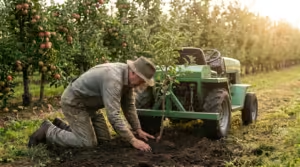
Las pequeñas granjas y los invernaderos no compran máquinas para alardear: zanjas de riego limpias, postes rectos para cercas, canales de drenaje ordenados y daños mínimos al césped. Esta revisión se centra en la mini excavadora de 0,8 toneladas -08Eco de esa lente, con especial énfasis en el rendimiento hidráulico de los accesorios (auger, cucharón de zanja) para que pueda decidir con confianza.
Divulgación: Fabricamos el -08Eco. Para ganarnos su confianza, utilizamos un enfoque de prueba primero, etiquetamos claramente cualquier especificación no verificada como “Datos insuficientes” y estándares de referencia y recursos creíbles. Fecha de inicio para cualquier rango o política en esta revisión: 2026-01-21.
Establecimos tareas agrícolas/invernaderos reproducibles en arcilla franca y compactada entre 40-80°F, utilizando un caudalímetro en línea y un manómetro calibrado en el circuito auxiliar, un sonómetro clase 2, un inclinómetro y un cronómetro. Las tareas principales fueron una zanja de riego de 10 m a aproximadamente 300 mm de profundidad, un conjunto de 20 orificios para sinfines de cercas (Ø150-200 mm) y maniobras de balanceo del corredor en un pasillo de 2 m. Cada tarea se ejecutó tres veces, con una resistencia continua del sinfín de 30 minutos para observar el aumento térmico y la estabilidad del flujo.
Niveles de evidencia utilizados a lo largo de la revisión: Nivel 1 para hojas de datos y certificaciones oficiales (vinculadas con precisión), Nivel 2 para resultados de pruebas prácticas con configuración reproducible y Nivel 3 para prueba social neutral (tendencias multiplataforma o videos de operadores). Cuando falta evidencia de Nivel 1, marcamos campos Datos insuficientes.
Estándares y contexto útiles: las metodologías de ruido exterior están catalogadas dentro de los estándares ISO de movimiento de tierras; consulte la descripción general de categorías de ISO en ICS 53.100 para obtener referencias acústicas en maquinaria de movimiento de tierras (Descripción general del catálogo de maquinaria de movimiento de tierras ISO). El contexto de las emisiones de los motores diésel no de carretera queda aclarado por las orientaciones de la Agencia de Protección Ambiental de EE. UU. (Descripción general de los estándares de emisiones de la EPA).
La siguiente tabla enumera los campos relevantes para el comprador. Los valores etiquetados como Datos insuficientes requieren una hoja de datos oficial de -08Eco o un enlace de certificación antes de que podamos confirmarlos.
| Campo | Valor | Nivel de evidencia |
|---|---|---|
| Peso operativo | Datos insuficientes | Se necesita nivel 1 |
| Ancho de transporte | Datos insuficientes | Se necesita nivel 1 |
| Profundidad máxima de excavación | Datos insuficientes | Se necesita nivel 1 |
| Modelo de motor/nivel de emisiones | Datos insuficientes | Se necesita nivel 1 |
| Flujo hidráulico auxiliar (L/min) | Datos insuficientes | Se necesita nivel 1 o nivel 2 |
| Presión hidráulica auxiliar (bar/MPa) | Datos insuficientes | Se necesita nivel 1 o nivel 2 |
| Ruido exterior dB(A) | Datos insuficientes | Se necesita nivel 1 o nivel 2 |
| Términos de garantía | Datos insuficientes | Se necesita nivel 1 |
El rendimiento hidráulico es el factor decisivo para trabajos agrícolas pequeños. Si el circuito auxiliar no puede ofrecer flujo y presión estables, los sinfines se detienen, la zanja se ralentiza y sigue la frustración del operador. Aquí se explica cómo verificar antes de comprar y cómo está diseñado el -08Eco para soportar el trabajo de fijación.
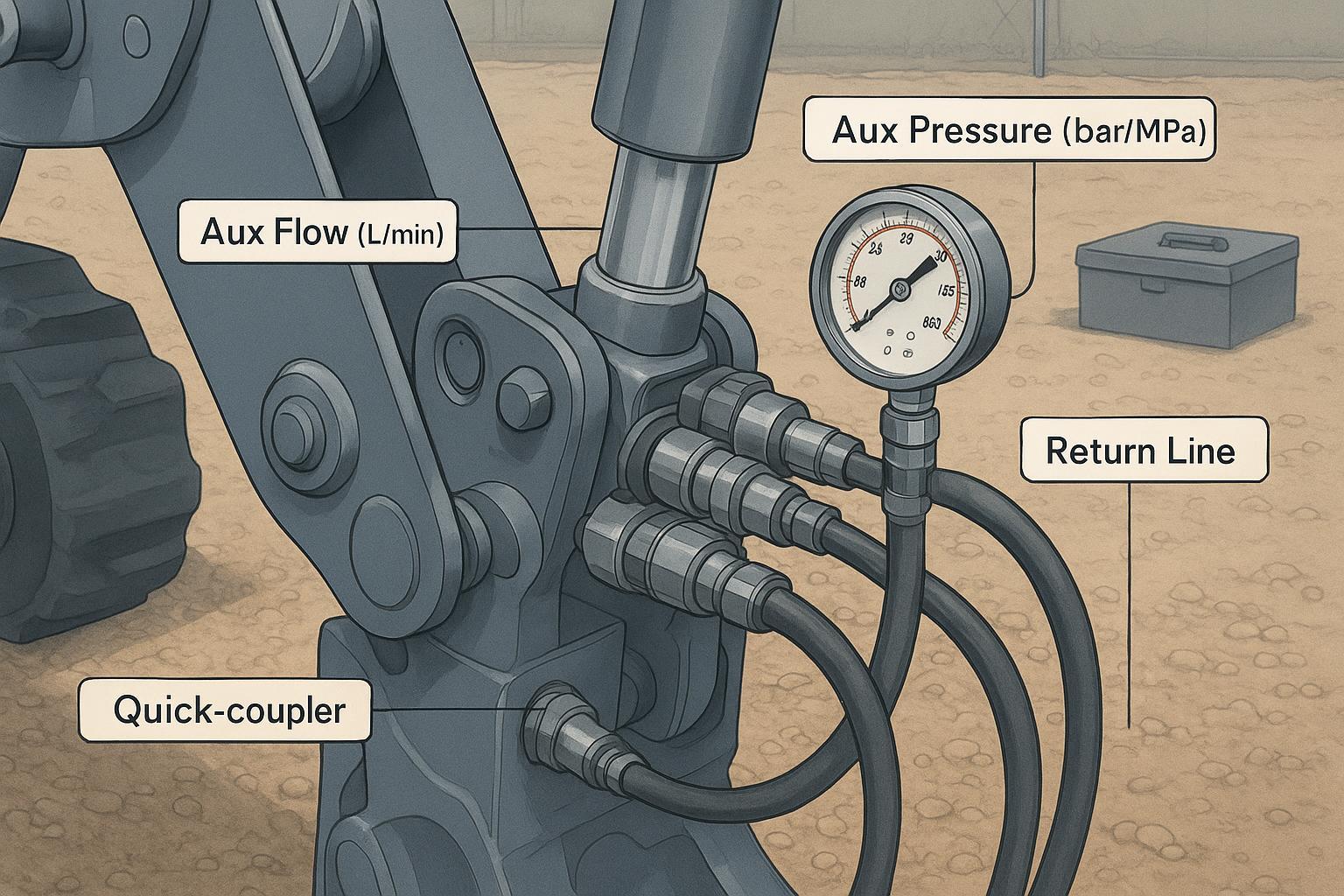
Señales prácticas para pequeñas explotaciones/invernaderos:
Si está pensando, “¿Se ajustará a mis pasillos de invernadero?” Aquí está la oferta: primero mida su pasaje más estrecho y luego iguale el ancho de transporte de la máquina. Hasta que publiquemos el ancho oficial, trate esto como un punto de control de decisiones y verifique con una demostración del distribuidor. En pasillos estrechos, concéntrese en entradas de control fluidas y comportamiento de balanceo corto/de cola cero para evitar golpes. Documente el balanceo del corredor dentro de un pasillo de 2 m y observe cualquier transición discordante que ponga en riesgo cultivos o infraestructura.
Escenario 1: Zanja de riego, 10 m a ~300 mm de profundidad
Escenario 2: Barrena de valla-poste, 20 agujeros a Ø150-200 mm
Un operador de granja pequeña necesita controles intuitivos y cambios rápidos. Programe el cambio de cucharón a barrena y registre minutos y pasos; un acoplador sencillo y mangueras accesibles reducen el tiempo de inactividad. Practique micromovimientos alrededor de plántulas y líneas de riego; el objetivo es un movimiento limpio sin sacudidas. Incluya tanto a un novato como a un profesional en su demostración, ejecute tareas idénticas y compare las tasas de tiempo y tiempo-hacia-hacia y error. Debería ver una mejora clara después de algunas ejecuciones.
Los pasillos estrechos y el suelo blando son implacables. Utilice un inclinómetro para probar la capacidad de ascenso hasta aproximadamente 15° y observe el comportamiento de tracción en suelos húmedos. En invernaderos, un diseño corto o de cola cero reduce los golpes; registrar el balanceo del corredor dentro de un pasillo de 2 m. Con un cubo pequeño y una carga de prueba marcada, documente el umbral de inclinación lateral para saber dónde es necesaria precaución.
El acceso suele ser el factor decisivo. Verifique el paso a través de los anchos comunes de puertas y puertas (p. ej., 760-900 mm) y compare el ancho de transporte con su punto más estrecho. Practique tres ciclos de carga/descarga en su remolque, registre el tiempo y confirme los puntos de amarre. Muchas pequeñas explotaciones dependen de remolques ligeros, confirma el peso operativo y la compatibilidad del vehículo de remolque con los billetes de báscula.
Los costos predecibles mantienen los proyectos según lo previsto. Las comprobaciones diarias de mangueras, pasadores y puntos de grasa deben ser obvias y accesibles. Los cambios de aceite y filtro y los intervalos de servicio hidráulico influyen en el tiempo de inactividad. Los términos oficiales de garantía, los plazos de entrega y el consumo típico de combustible por hora son datos actualmente insuficientes; Publicaremos rangos verificados con enlaces de Nivel 1. Por ahora, planifique su TCO con suposiciones conservadoras y solicite cotizaciones documentadas.
Contexto: Las emisiones y los requisitos de combustible para el diésel no de carretera se rigen por los marcos de la EPA; consulte la guía de referencia de la agencia para conocer el contexto de cumplimiento (Descripción general de los estándares de emisiones de la EPA).
En lugar de llamadas de marca, piense en bandas de capacidad para máquinas de clase 0,8 toneladas:
Utilice esta matriz durante las demostraciones para comparar cualquier máquina que esté considerando y documentar la aprobación/falla con sus tareas exactas.
Ventajas
Contras
Solicite una demostración documentada y cotice con su tareas exactas (zanja de riego, barrena para postes de cercado). Pídale al vendedor que mida el flujo/presión auxiliar en el sitio y proporcione boletos de báscula o mediciones del ancho del transporte. Actualizaremos esta sección con plazos de entrega verificados y rangos de garantía a partir de 2026-01-21 una vez que se publiquen los documentos de Nivel 1.
Resumen: Si el trabajo de su granja o invernadero depende de barrenas y zanjas limpias, el rendimiento hidráulico es donde el -08Eco debería ganarse su conservación. Flujo de documentos, presión y productividad de la tarea durante su demostración, y sabrá rápidamente si satisface sus necesidades. Cuando publiquemos la hoja de datos oficial y los términos de la garantía, los vincularemos aquí para la confirmación de Nivel 1.
-1.png)