E-mail: [email protected] WhatsApp: +8618266768780
E-mail: [email protected] WhatsApp: +8618266768780


Piccole fattorie e serre non comprano macchine per vantarsi diritti e comprare risultati: irrigazione pulita, pali recinti dritti piste di drenaggio ordinate, danni minimi del tappeto erboso Questa recensione si concentra sul Mini Escavatore da 0,8 Ton -08Eco da quella lente, con un'enfasi speciale sulle prestazioni idrauliche per gli attacchi (auger, benna da trincea) in modo da poter decidere con sicurezza.
Divulgazione: Produciamo il -08Eco Per guadagnare la vostra fiducia, usiamo un approccio test-first, etichettare chiaramente qualsiasi non verificato specs come “Insufficienti dati,” e standard di riferimento e risorse credibili Come data di riferimento per qualsiasi range o politiche in questa revisione: 2026 o 01 o 21.
Abbiamo impostato attività riproducibili di fattoria/serra in terriccio e argilla compattata tra 40 e 80 °F, utilizzando un misuratore di portata in linea e un manometro calibrato sul circuito ausiliario, un misuratore di livello sonoro di classe 2, un inclinometro e un cronometro. I compiti principali erano una trincea di irrigazione di 10 m a circa 300 mm di profondità, una serie di 2 fori di aumento del montante della recinzione (Ø150200 mm), manovre di oscillazione del corridoio in un corridoio di 2 m a Ogni attività è stata eseguita tre volte, con un'estremità continua della coclea di 30 minuti per osservare la risalita termica e la stabilità del flusso.
Livelli di prova utilizzati durante la revisione: Livello 1 per schede tecniche e certificazioni ufficiali (collegate con precisione), Livello 2 per risultati di test a mano libera con configurazione riproducibile e Livello 3 per prova sociale neutra (tendenze multipiattaforma o video dell'operatore) Quando mancano prove di livello 1, contrassegniamo i campi Dati insufficienti.
Standard e contesto utili: le metodologie relative al rumore esterno sono catalogate all'interno degli standard ISO sui movimenti di terra; vedere la panoramica delle categorie ISO sotto ICS 5 3.100 per i riferimenti acustici nelle macchine movimento terra (vedere la panoramica delle categorie ISO sotto ICS 5 3.100 per i riferimenti acustici nelle macchine movimento terra (macchine movimento terra)Panoramica del catalogo delle macchine mobili ISO terra). Il contesto delle emissioni per i motori diesel non stradali è chiarito dalle linee guida dell'Agenzia per la protezione ambientale degli Stati Uniti (Panoramica degli standard sulle emissioni EPA).
La tabella seguente elenca i campi rilevanti per l'acquirente I valori etichettati Dati insufficienti richiedono una scheda tecnica ufficiale -08Eco o un collegamento di certificazione prima di poterli confermare.
| Campo | Valore | Livello di prova |
|---|---|---|
| Peso operativo | Dati insufficienti | Serve il livello 1 |
| Larghezza di trasporto | Dati insufficienti | Serve il livello 1 |
| Profondità massima di scavo | Dati insufficienti | Serve il livello 1 |
| Modello motore/livello emissioni | Dati insufficienti | Serve il livello 1 |
| Flusso idraulico aux (L/min) | Dati insufficienti | È necessario il livello 1 o il livello 2 |
| Pressione idraulica aux (bar/MPa) | Dati insufficienti | È necessario il livello 1 o il livello 2 |
| Rumore esterno dB(A) | Dati insufficienti | È necessario il livello 1 o il livello 2 |
| Termini di garanzia | Dati insufficienti | Serve il livello 1 |
Le prestazioni idrauliche sono la rottura o la rottura per i piccoli lavori agricoli Se il circuito ausiliario non è in grado di fornire flusso e pressione stabili, seguono lo stallo delle coclee, i rallentamenti di scavo e la frustrazione dell'operatore Ecco come verificare prima di acquistare e come il -08Eco è progettato per supportare il lavoro di fissaggio.
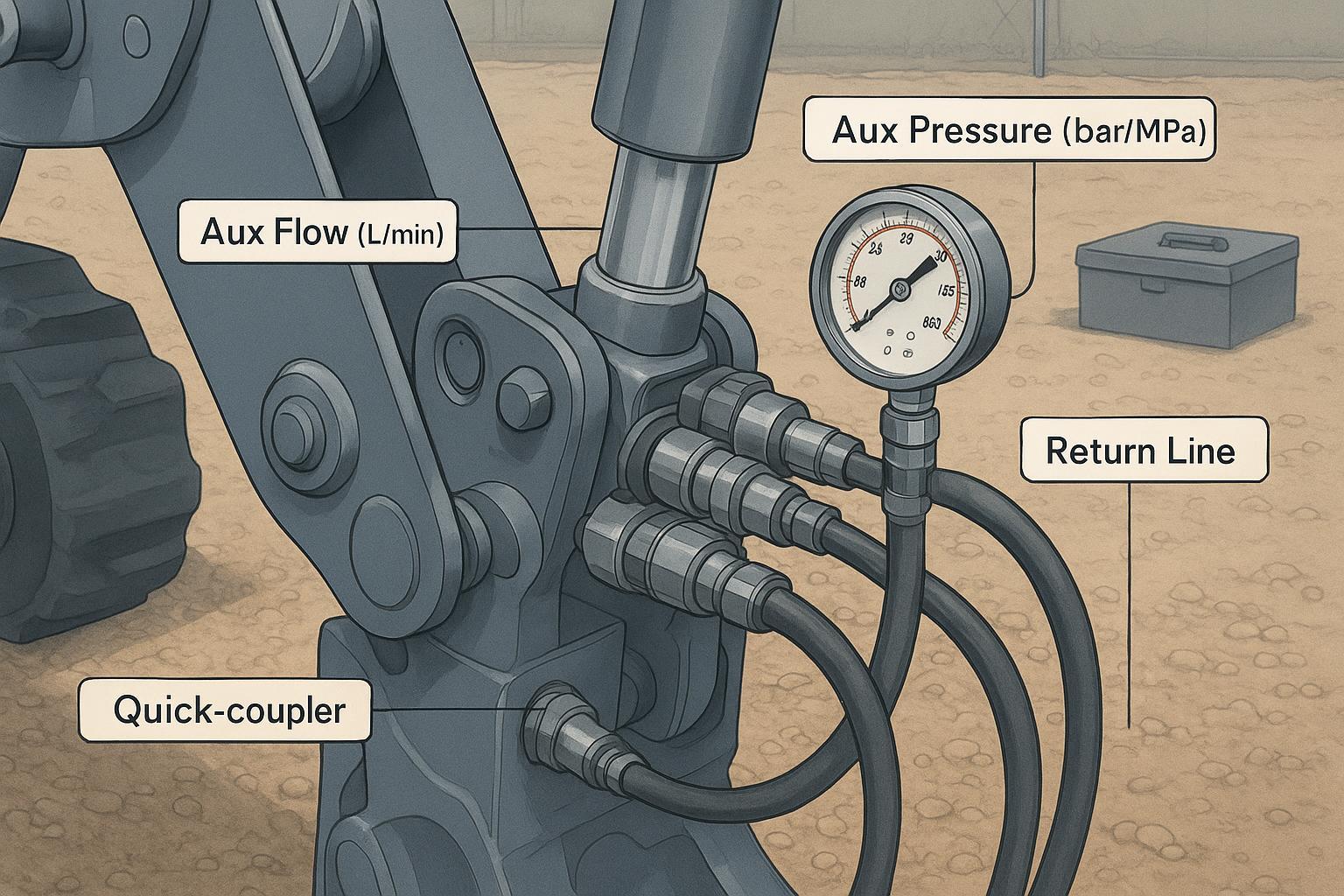
Indicazioni target pratiche per piccole aziende agricole/serre:
Se stai pensando, “Volerà adattarsi al mio aisles serra?” prima l'affare è misurare il tuo passaggio più stretto, poi abbinare la larghezza di trasporto della macchina Fino a quando non pubblichiamo la larghezza ufficiale, trattarlo come un punto di controllo decisionale e verificare con una demo del rivenditore Nei corridoi stretti, concentrarsi su input di controllo fluidi e breve/zero comportamento di oscillazione della coda per evitare scioperi Documentare oscillazione del corridoio all'interno di un corridoio di 2 m e notare eventuali transizioni stridenti che rischiano colture o infrastrutture.
Scenario 1: Fossa di irrigazione, 10 m a ~300 mm di profondità
Scenario 2: Recinzione o coclea, 20 fori a Ø150200 mm
Una piccola azienda agricola ha bisogno di controlli intuitivi e cambi rapidi Tempo lo scambio da secchio a trivella e registrare minuti e passaggi; un accoppiatore semplice e tubi flessibili accessibili riducono i tempi di inattività Praticare micro movimenti intorno piantine e linee di irrigazione; l'obiettivo è il movimento pulito senza scatti Includi sia un professionista principiante che un professionista nella tua demo, esegui attività identiche e confronta i tempi per chiedere e i tassi di errore dovresti vedere un netto miglioramento dopo poche corse.
Le corsie strette e il terreno soffice non perdonano Usa un inclinometro per testare la pendenza fino a circa 15° e notare il comportamento di trazione sul terreno umido Nelle serre, un design corto o a coda zero riduce gli scioperi; registra l'oscillazione del corridoio all'interno di un corridoio di 2 m. Con un piccolo secchio e un carico di prova marcato, documenta la soglia di ribaltamento laterale in modo da sapere dove è necessaria cautela.
L'accesso è spesso il fattore decisivo Verificare il passaggio della larghezza comune della porta e del cancello (e., 760 la corrispondenza di Many.900 mm) e la larghezza di trasporto rispetto al punto più stretto Praticare tre cicli di carico/scarico sul rimorchio, registrare il tempo e confermare i punti di ancoraggio I piccoli allevamenti si affidano a veicoli leggericonfirm peso operativo e compatibilità traino con biglietti in scala.
I costi prevedibili mantengono i progetti nei tempi previsti I controlli giornalieri del tubo, del perno e del punto di grasso dovrebbero essere ovvi e raggiungibili I cambiamenti di olio e filtro e gli intervalli di assistenza idraulica influenzano i tempi di inattività I termini ufficiali della garanzia, i tempi di consegna e la combustione tipica del carburante all'ora sono attualmente dati insufficienti; pubblicheremo intervalli verificati con collegamenti di livello 1. per ora pianifica il tuo TCO con ipotesi prudenti e richiedi preventivi documentati.
Contesto: le emissioni e i requisiti di carburante per il diesel non stradale sono regolati dai quadri EPA; consultare la guida di riferimento dell'agenzia per il contesto di conformità (Panoramica degli standard sulle emissioni EPA).
Piuttosto che chiamare il marchio outs, pensa alle bande di capacità per le macchine di classe 0,8 otton:
Utilizza questa matrice durante le demo per confrontare qualsiasi macchina che stai prendendo in considerazione e documentare il passaggio/fallimento rispetto alle tue attività esatte.
Professionisti
Contro
Richiedi una demo documentata e un preventivo con il tuo compiti esatti (trincea di irrigazione, recinzione o coclea) Chiedere al venditore di misurare il flusso aux/pressione sul sito o fornire biglietti in scala o misurazioni per la larghezza di trasporto Aggiorneremo questa sezione con intervalli di lead otime e garanzia verificati a partire da 2026 o 01 o 21 una volta pubblicati i documenti Tier 1.
Riepilogo: se il lavoro in fattoria o in serra dipende da coclee e scavo pulito, le prestazioni idrauliche sono il luogo in cui il -08Eco dovrebbe guadagnare la sua tenuta Documenta il flusso, la pressione e la produttività delle attività durante la tua demo e saprai rapidamente se soddisfa le tue esigenze Quando pubblicheremo la scheda tecnica ufficiale e i termini di garanzia, li collegheremo qui per la conferma di livello 1.
-1.png)