E-mail: [email protected] WhatsApp: +8618266768780
E-mail: [email protected] WhatsApp: +8618266768780


Le squadre paesaggistiche e di hardscape non acquistano escavatori per “specs.” Li acquisti per due tipi di giorni:
Se hai un budget limitato, la vera domanda non è “Quale macchina è più grande?” È:
Quale classe di peso offre ai lavori più finiti per dollaro senza che il trasporto e l'accesso al sito siano costantemente grattati?
| Fattore decisionale | QL-30Eco (classe da 3,0 tonnellate) | QL-35PRO (classe da 3,5 tonnellate) | Significato pratico sui lavori reali |
|---|---|---|---|
| Pressione di bilancio | In genere più facile da mantenere entro un budget massimo | Potrebbe richiedere una spesa anticipata maggiore | Se il budget è fisso, la spesa eccessiva può costringerti a saltare gli allegati che ti fanno effettivamente guadagnare |
| Campo di lavoro (profondità/raggio/altezza dello scavo)* | Busta di lavoro più piccola | Busta di lavoro più grande | Un inviluppo più grande può significare meno movimenti di riposizionamento su lunghe corse in trincea |
| Accesso e manovra | Spesso più facile in layout residenziali stretti | Leggermente più esigente | Cancelli, cortili laterali stretti e scavo vicino alla struttura puniscono le macchine sovradimensionate |
| Disturbi al suolo | Spesso più delicato su tappeti erbosi/paesaggi finiti | Può essere più alto a seconda della configurazione | Il peso e le tracce influenzano quanto strappi un'area finita |
| Semplicità trasporti | In genere più facile da rimorchiare | Potrebbe spingerti a un trasporto più pesante | La tua configurazione di trasporto può diventare silenziosamente la tua più grande “Nascondivisa cost” |
| Migliore vestibilità | Foratura da poco a moderata + classificazione delle finiture | Trench più lunghi + scavi più impegnativi | Scegli in base a ciò che ti rallenta oggi, non a ciò che sembra impressionante |
*Numeri dell'intervallo di lavoro a cui si fa riferimento più avanti in questo articolo.
Prima di confrontare qualsiasi escavatore compatto, chiarire due definizioni di base:
Ecco perché “3 ton vs 3,5 ton” non è solo un'etichetta di marketing La classe di peso cambia tre cose che colpiscono duramente gli equipaggi paesaggistici/del paesaggio:
Per la trincea di utilità, la “fe” di una macchina è bella, ma il lavoro è governato dalla geometria:
Sulla base dei dati pubblicati sulla gamma di lavoro nelle pagine dei prodotti Qilu, il QL-35PRO mostra valori più elevati in profondità di scavo, raggio e altezza di scarico rispetto al QL-30Eco.
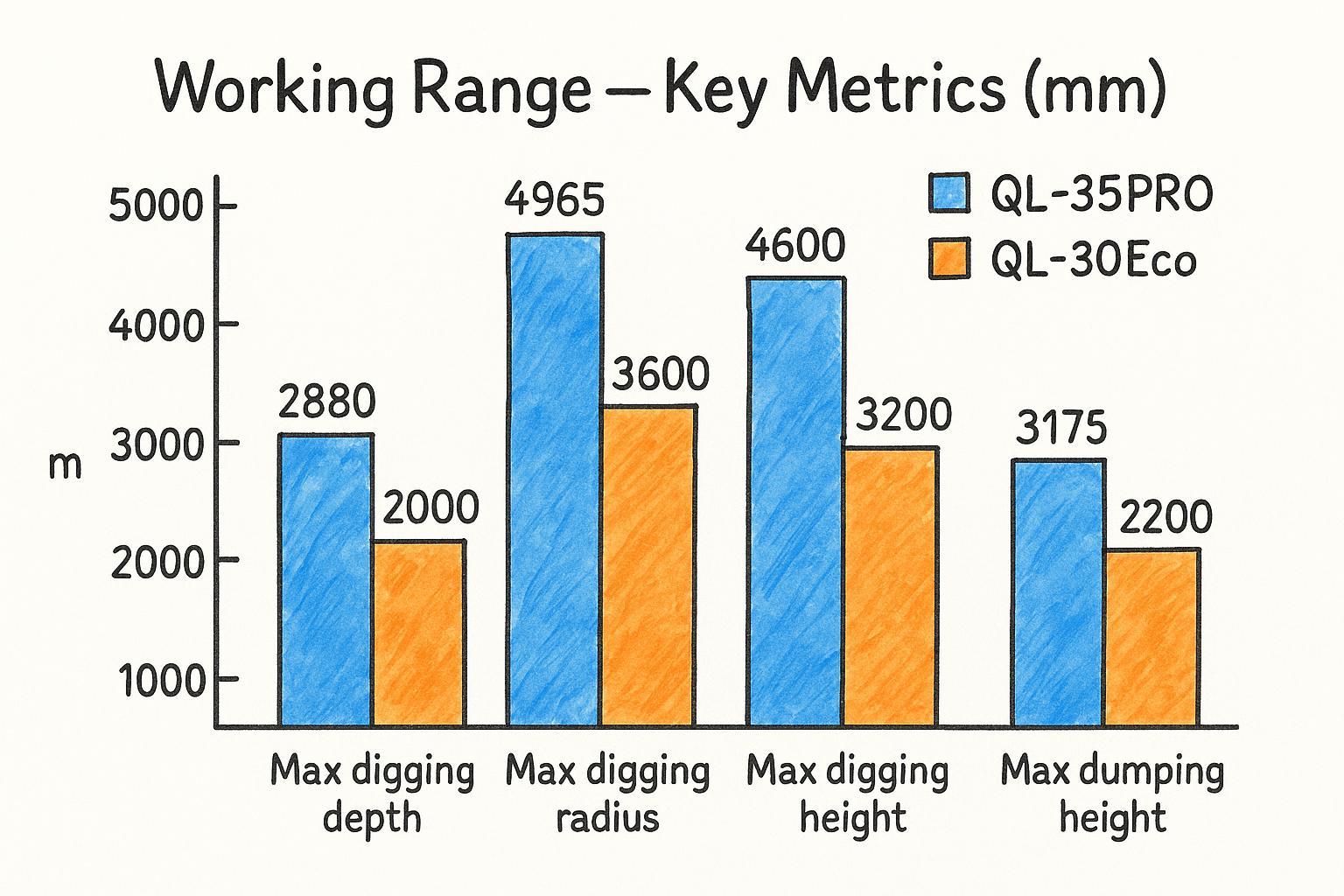
| Metrico (mm) | QL-35PRO | QL-30Eco |
|---|---|---|
| Profondità massima di scavo | 2880 | 2000 |
| Profondità massima di scavo verticale | 2305 | 2000 |
| Raggio di scavo massimo | 4965 | 3600 |
| Altezza massima di scavo | 4600 | 3200 |
| Altezza massima di scarico/scarico | 3175 | 2200 |
Se si desidera il foglio completo delle specifiche (opzioni bucket, idraulica ausiliaria, dimensioni e capacità di fissaggio), iniziare con le pagine ufficiali: QL-35PRO E QL-30Eco.
(Dalle cifre pubblicate sulla gamma di lavoro di quelle pagine:) QL-35PRO elenca l'altezza massima di scavo 4600 mm, l'altezza massima di scarico 3175 mm, la profondità massima di scavo 2880 mm, la profondità massima di scavo verticale 2305 mm e il raggio massimo di scavo 4965 mm; QL-30Eco elenca l'altezza massima di scavo 3200 mm, l'altezza massima di scarico 2200 mm, la profondità massima di scavo 2000 mm, la profondità massima di scavo verticale 2000 mm e il raggio massimo di scavo 3600 mm.
Perché questo è importante per il trench:
Lo scavo di servizi pubblici è il luogo in cui le squadre paesaggistiche possono accidentalmente correre rischi gravi. L'OSHA è schietto riguardo al rischio più grande: cave-in.
Utilizza le risorse di scavo dell'OSHA come base di riferimento, non come una bella idea da avere.“ Inizia con la panoramica di scavo e scavo dell'OSHA e il PDF ufficiale Pubblicazione OSHA: Sicurezza di scavo e scavo (OSHA 2226).
ning️ Avvertimento: L'OSHA richiede sistemi di protezione per molte condizioni di trincea ed enfatizza le ispezioni giornaliere da parte di una persona competente secondo le regole di scavo in 29 CFR 1926 Capo P. Se il flusso di lavoro non include la pianificazione della sicurezza della trincea, la scelta dell'escavatore non ti salverà.
Un tetto di bilancio non significa “acquistare il più economico.” Significa evita i costi che mangiano silenziosamente il profitto su ogni lavoro.
Ecco le leve di costo che contano di più per gli equipaggi di trincea + livellamento:
Le macchine più pesanti possono spingerti in:
Se stai cercando di rimanere sotto un budget massimo, il miglior escavatore è spesso quello che mantiene semplice la configurazione di trasporto.
Se ti stai costantemente muovendo in avanti per mantenere pulito il raggio d'azione e rovinare il posizionamento, stai pagando:
È qui che una busta da lavoro più grande può ripagare.
Le troupe del paesaggio e del paesaggio vivono e muoiono secondo lo sguardo finale.
La dimensione sbagliata può significare:
Scegli QL-30Eco quando i tuoi lavori sembrano:
Stai ottimizzando per: entrare facilmente in loco, rifinire in modo pulito e controllare i costi di proprietà.
Scegli QL-35PRO quando i tuoi lavori sembrano:
Stai ottimizzando per: raggio di lavoro, meno punti di ripresa e maggiore produttività di scavo.
Se hai un budget limitato, gli accessori spesso sono la leva ROI più alta, soprattutto per le squadre di scavo e di classificazione paesaggistica.
Per le categorie e le configurazioni comuni degli allegati, vedere la pagina panoramica di Qilu su mini attacchi escavatore (pollice, attacco rapido, coclea).
Suggerimento Pro: Se stai scambiando secchi o strumenti più volte al giorno, il tempo di cambio allegato diventa denaro reale Costruisci il tuo piano di acquisto attorno alle modifiche che effettivamente fai sul cantiere.
No. Una macchina di classe da 3,5 tonnellate può darti più autonomia e stabilità di lavoro, ma “better” dipende dall'accesso, dal trasporto e dalla frequenza con cui riposizionerai Se i tuoi lavori sono siti residenziali ad accesso stretto, la classe più piccola potrebbe finire più velocemente semplicemente perché è più facile da spostare e posizionare.
Dipende dalle vostre esigenze locali e dall'utilità specifica L'approccio pratico è quello di elencare le profondità di trincea più comuni e quindi scegliere una macchina che può colpire quelle profondità senza operare al suo limite tutto il giorno.
Max scavare in genere viene misurato ad angolo lungo il percorso del braccio/bastone La profondità massima di scavo verticale riflette ciò che puoi ottenere quando scavi direttamente. Sia la profondità che la profondità quando sei in trincea vicino agli ostacoli.
Sì. Le condizioni cambiano rapidamente con il tipo di terreno, l'umidità, le vibrazioni e il posizionamento del deterioramento. La guida e i requisiti dell'OSHA esistono perché i crolli possono verificarsi all'improvviso. Usa Le risorse di scavo e scavo dell'OSHA come linea di base.
Tratta il prezzo della macchina solo come parte della decisione La configurazione del trasporto, la pulizia del cantiere e le scelte di attaccamento possono far oscillare il tuo costo reale per lavoro Se la busta di lavoro più grande consente di risparmiare tempo di lavoro significativo sui lavori tipici della trincea, potrebbe giustificare un costo iniziale più elevato In caso contrario, mantieni la configurazione semplice e alloca il budget verso gli allegati che migliorano il throughput.
No. Le specifiche ti dicono cosa è possibile; non ti dicono cosa è redditizio sui tuoi siti specifici Usa le specifiche per eliminare i disallineamenti, quindi decidi in base ai lavori che esegui ogni settimana e ai costi che non puoi modificare (accesso e trasporto) Per il testo normativo completo, fai riferimento a OSHA 29 CFR 1926 Capo P (Scavi).



-1.png)