E-mail: [email protected] WhatsApp: +8618266768780

E-mail: [email protected] WhatsApp: +8618266768780


You can boost efficiency on your construction site by using a tractor for material handling. Tractors help you finish projects faster and handle a wide range of tasks. Many crews report the following benefits:
If you want to see these results, learning how to use your tractor for efficient material handling on site can make a big difference. Think about your current challenges and how the right equipment could solve them.
When you explore how to use your tractor for efficient material handling on site, you unlock several advantages that can transform your workflow. Tractors deliver enhanced operational efficiency, substantial cost savings, improved safety standards, and a competitive edge. The following table highlights these key benefits and provides real-world data:
| Beneficio | Descrizione | Data/Case Study |
|---|---|---|
| Enhanced Operational Efficiency | Tractors improve project timelines and workforce productivity. | A case study showed a 40% reduction in project completion time with high-tech tractors. |
| Substantial Cost Savings | Integration of tractors leads to lower labor costs and reduced project costs. | Businesses save, on average, 15% on project costs by using tractors. |
| Improved Safety Standards | Tractors reduce worker fatigue and accidents on site. | Statistics show a 25% decrease in reported injuries on sites using tractors. |
| Competitive Advantage | Companies using tractors can bid more competitively and enhance reputation. | One company saw a 30% increase in client retention after upgrading to high-efficiency tractors. |
Tip: Modern tractors include features like rollover protective structures (ROPS), seat belts, and improved visibility. These features help prevent injuries and accidents, making your site safer for everyone.
You can use tractors for a wide range of material handling tasks on construction sites. Understanding how to use your tractor for efficient material handling on site means knowing which jobs benefit most from tractor versatility. Here are the most common tasks:
| Compito | Descrizione |
|---|---|
| Movimento terra | Move large amounts of earth for construction projects. |
| Material hauling | Transport gravel, sand, cement, and other materials across the site. |
| Classificazione | Level and prepare land for building foundations and roads. |
| Excavation support | Assist in digging and removing soil or debris. |
| Land clearing | Clear vegetation and debris to prepare the site for building. |
For example, a construction crew used tractors to haul gravel and grade a new access road. The project finished two weeks ahead of schedule, and the team reported fewer injuries due to reduced manual labor. This case shows how to use your tractor for efficient material handling on site can lead to faster, safer results.
You may wonder how tractors compare to other material handling equipment. Tractors offer lower upfront costs than backhoe loaders, which have more complex designs and higher prices. You can customize tractors with attachments, such as forklift arms, to match your specific needs. The cost for a tractor with a forklift attachment ranges from $20,000 to $100,000, depending on design and capacity.
Safety also sets tractors apart. Features like ROPS, seat belts, and skid-resistant platforms reduce the risk of accidents. Improved hitch designs and better visibility help you handle materials safely, even in challenging conditions.
Note: When you choose tractors for material handling, you gain efficiency and safety. You also save money and improve your ability to meet project deadlines.
If you want to maximize productivity, learn how to use your tractor for efficient material handling on site. You will see the benefits in project speed, cost savings, and worker safety.
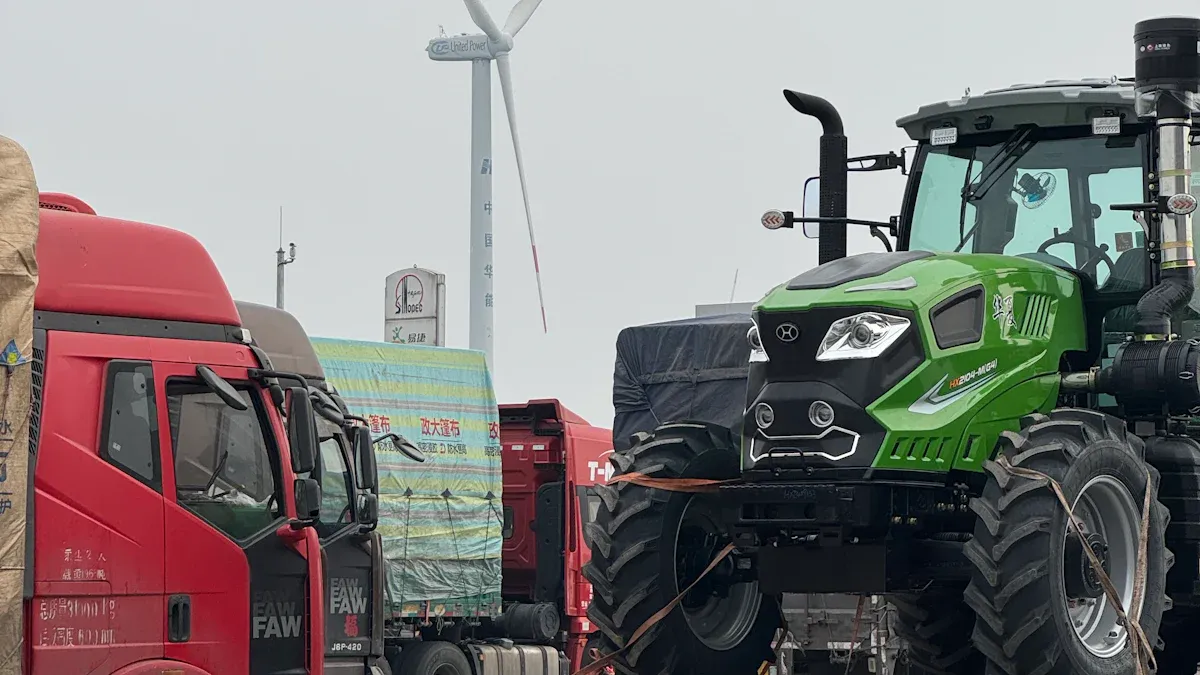
Before you select a tractor or any attachments, you need to evaluate your construction site’s unique requirements. Start by identifying the main tasks you want to accomplish, such as grading, hauling, digging, or site preparation. Consider these important factors:
You should also walk your site to check for narrow passageways and uneven surfaces. Choose fork lengths that allow safe navigation and support your typical loads. This careful assessment helps you avoid costly mistakes and ensures your equipment matches your daily needs.
You have several tractor options for construction material handling. Each type offers unique advantages:
When you compare these types, think about your site’s size, the variety of tasks, and the need for maneuverability. Industrial tractors suit large, open sites with heavy loads. Mini-track loaders work best in confined or complex areas.
Attachments transform your tractor into a multi-purpose tool. The right combination boosts your efficiency and helps you tackle a wide range of jobs. Here are the most essential attachments for construction material handling:
You can use front-end loaders for lifting, moving, digging, grading, and handling bulk materials. They offer versatility for many site tasks, from loading trucks to spreading gravel.
Box blades help you level, grade, and spread materials. They are perfect for preparing building pads, driveways, and access roads.
Grapple buckets allow you to grab and move debris, logs, or irregular materials. They make land clearing and site cleanup much faster and safer.
Trailers and flatbeds let you transport materials, tools, and equipment across your site. Choose the right size and weight capacity for your loads to maximize efficiency.
Backhoes add digging and trenching capabilities to your tractor. You can use them for excavation, utility installation, and removing large amounts of soil.
Selecting the right tractor and attachments depends on your site’s needs and the tasks you perform most often. When you understand how to use your tractor for efficient material handling on site, you can match equipment to your workflow and achieve better results.
Choosing the right attachment for each material handling task can make your work faster, safer, and more cost-effective. You need to match each attachment to the job you want to complete. This approach helps you get the best performance from your tractor and reduces wear on your equipment.
You can use the following table to see which attachments fit common construction tasks:
| Compito | Best Attachment(s) | Vantaggio chiave |
|---|---|---|
| Classificazione | Box Blade, Front-End Loader | Smooths and levels surfaces |
| Trasporto | Trailers, Flatbeds | Moves materials efficiently |
| Scavo | Backhoe, Trencher | Creates trenches, removes soil |
| Demolizione | Martello demolitore idraulico | Breaks concrete, rock, asphalt |
| Disboscamento | Benna con pinza | Removes debris and vegetation |
| Site Prep | Box Blade, Front-End Loader | Prepares ground for construction |
Tip: Skid-steer adapters let you use a wide range of skid-steer attachments on your tractor. This increases your flexibility and helps you handle more tasks with one machine.
You should always consider the material type, site conditions, and the size of the job. For example, use a grapple bucket for clearing brush and debris, but switch to a box blade when you need to level the ground. If you need to break up old concrete or asphalt, a hydraulic breaker will save you time and reduce manual labor. Trenchers help you dig narrow, deep channels for pipes or cables, making utility installation much easier.
Here is a real-world example:
A contractor needed to prepare a site for a new building. The crew used a grapple bucket to clear debris and trees. Next, they attached a box blade to level the ground. For utility lines, they switched to a trencher. This process cut project time by 30% and reduced labor costs by 20%. The team also reported fewer injuries because they used the right tools for each step.
You can follow a similar approach. Start by listing your main tasks. Then, select attachments that match each job. This method helps you avoid downtime and keeps your project on schedule.
Matching attachments to tasks gives you better results and improves safety. You will see higher productivity and lower costs when you use the right tool for every job.
Before you start moving materials on your construction site, you need to prepare your tractor and attachments. Careful preparation helps you avoid breakdowns, injuries, and costly delays. You can follow these steps to ensure your equipment is ready for safe and efficient operation.
You should always inspect your tractor before each shift. This routine helps you catch problems early and keeps your machine running smoothly. Use this checklist to guide your inspection:
Tip: You can find more detailed safety checklists at OSHA’s Tractor Safety Guidelines.
Caso di studio:
A construction team reduced downtime by 18% after introducing daily pre-operation checks. They found that regular brake and hydraulic inspections prevented unexpected failures during peak hours.
Proper setup of attachments ensures safe and efficient material handling. Follow these best practices:
Table: Common Attachment Setup Issues and Solutions
| Issue | Solution |
|---|---|
| Loose connections | Tighten all bolts and pins |
| Hydraulic leaks | Replace seals and hoses |
| Incompatible hitch | Use correct adapter or coupler |
Caso di studio:
A crew avoided a costly hydraulic spill by inspecting hoses before attaching a grapple bucket. This simple step saved hours of cleanup and kept the site safe.
You need to adjust your tractor settings based on the type and weight of the load. This practice improves stability and reduces wear on your equipment.
Table: Sample Axle Weight Splits for Material Handling
| Compito | Front Axle (%) | Rear Axle (%) |
|---|---|---|
| Classificazione | 35 | 65 |
| Trasporto | 40 | 60 |
| Scavo | 30 | 70 |
Note: Proper weight distribution helps prevent tipping and improves traction. For more information, see University Extension Tractor Ballasting Guide.
Caso di studio:
A contractor adjusted tire pressure and axle weights before hauling heavy pallets. The tractor handled the load without slipping, and the operator reported better control on uneven ground.
By preparing your tractor and attachments with these steps, you set the stage for efficient and safe material handling every day.
Efficient loading and unloading set the foundation for safe and productive material handling. You must master these techniques to prevent accidents and keep your project on schedule.
When you handle bulk materials like soil, gravel, or sand, focus on stability and safety. You should always inspect the loading area for level ground and remove any obstacles. Assess weather and ground conditions to avoid slipping or sinking. Use heavy-duty straps, chains, or load binders to secure loads. Even weight distribution helps prevent tipping and shifting during transport.
Best Practices for Bulk Material Loading:
Tip: Always use standardized hand signals or radio communication to guide operators during loading. Ground personnel should maintain a safe distance from machinery.
Case Study: Bulk Material Loading Efficiency
A construction team improved their gravel loading process by staging materials near the point of use. They trained operators to use front-end loaders for even distribution and checked tie-downs before transport. The result was a 25% reduction in rehandling time and zero reported load shifts during transit.
| Metrico | Before Process Change | After Process Change |
|---|---|---|
| Rehandling Time (hrs) | 8 | 6 |
| Load Shift Incidents | 3 | 0 |
| Crew Safety Incidents | 2 | 0 |
For more safety guidelines, visit OSHA’s Material Handling Safety.
Palletized materials require precision and secure handling. You should confirm that the loading area is clear and level. Inspect pallets for damage before lifting. Use forklift attachments or pallet forks to lift loads, keeping forks spaced evenly for stability.
Steps for Safe Palletized Load Handling:
Unloading Palletized Loads:
Nota: Implement training for all personnel involved in loading and unloading. Establish clear safety practices and conduct inspection procedures before each operation.
Case Study: Palletized Load Safety
A contractor introduced a written policy for palletized load handling. They trained employees to calculate material weights and inspect tie-downs. This led to a 40% decrease in unloading incidents and improved overall site safety.
| Metrico | Before Training | After Training |
|---|---|---|
| Unloading Incidents | 5 | 3 |
| Inspection Failures | 4 | 1 |
| Crew Safety Incidents | 3 | 1 |
You can maximize efficiency by following best practices for hauling and transporting materials. Always comply with regulations regarding weight, capacities, and dimensions. Stage materials near the point of use to minimize rehandling. Use proper load-rated devices for securing equipment and cover loads with tarps as required by law.
Hauling and Transporting Checklist:
Tip: Ensure employees understand safety guidelines for operating equipment. Use barriers and proper tie-downs to prevent shifting during transport.
Case Study: Efficient Hauling
A construction crew staged materials close to the work zone and used trailers with load-rated tie-downs. They trained employees to calculate weights and secure loads. This approach reduced hauling time by 30% and eliminated load shift incidents.
| Metrico | Before Process Change | After Process Change |
|---|---|---|
| Hauling Time (hrs) | 10 | 7 |
| Load Shift Incidents | 2 | 0 |
| Safety Violations | 3 | 0 |
For more information on safe hauling practices, see FMCSA Cargo Securement Rules.
Grading and leveling tasks require precision and the right equipment. You should conduct a thorough inspection of your tractor and attachments before starting. Begin with a test run in a small area to get accustomed to the equipment. Make gradual, overlapping passes to ensure even leveling without abrupt movements. Monitor progress and adjust as needed to achieve the desired level.
Recommended Grading Techniques:
Grading Equipment Options:
| Tipo di apparecchiatura | Miglior caso d'uso | Note |
|---|---|---|
| Box Blades | Small areas, lighter soils | Versatile, affordable |
| Scrapers | Progetti su larga scala | Requires powerful tractors |
| Land Planes | Fine-leveling applications | Demands expertise, investment |
Note: Before grading, assess the land for soil type, slope, drainage, and obstacles. This step helps you select the right equipment and technique, maximizing efficiency and minimizing risks.
Case Study: Grading and Leveling Success
A contractor used box blades for small areas and scrapers for larger sections. They conducted a land assessment and trained operators on gradual passes. The project finished 20% faster, and the team reported improved water drainage and fewer rework incidents.
| Metrico | Before Process Change | After Process Change |
|---|---|---|
| Project Duration (days) | 15 | 12 |
| Drainage Issues | 4 | 1 |
| Rework Incidents | 3 | 0 |
For more grading tips, visit Penn State Extension: Ballasting Tractors and Tire Inflation.
You can apply these techniques to learn how to use your tractor for efficient material handling on site. When you follow best practices for loading, hauling, and grading, you improve safety, reduce downtime, and achieve better project outcomes.
You play a crucial role in preparing and cleaning up your construction site. Tractors give you the power to handle these tasks efficiently. You can clear land, remove debris, and create a safe working environment. When you use the right attachments, your tractor becomes a versatile tool for every phase of site management.
Key Steps for Effective Site Preparation and Cleanup:
Tip: You should inspect the area before starting. Identify hazards like hidden stumps or loose debris. This step helps you avoid equipment damage and keeps your crew safe.
Tractors help you complete site preparation faster than manual labor. You can switch between attachments to match each task. For example, you might use a grapple bucket for clearing brush in the morning, then attach a box blade for grading in the afternoon. This flexibility saves you time and reduces the need for multiple machines.
| Compito | Recommended Attachment | Beneficio |
|---|---|---|
| Disboscamento | Benna con pinza | Removes brush and debris |
| Classificazione | Box Blade | Levels and smooths surfaces |
| Waste Transport | Trailer/Flatbed | Moves materials efficiently |
| Compattazione del suolo | Roller | Stabilizes ground |
| Sweeping | Broom/Sweeper | Keeps site clean |
You should always follow a cleanup routine at the end of each workday. Remove loose materials, sweep pathways, and check for leftover hazards. This habit improves safety and keeps your site organized.
Note: Regular site cleanup reduces accidents and helps you maintain a professional appearance. Clients and inspectors notice when your site stays tidy.
You can rely on your tractor for every step of site preparation and cleanup. Attachments expand your capabilities and let you adapt to changing conditions. When you follow these steps, you create a safer, more productive work environment.
You must receive thorough training before operating a tractor for material handling. Proper instruction helps you avoid accidents and improves efficiency. Training covers both formal classroom learning and hands-on practice. You need to understand the basics of safe operation, your responsibilities as an operator, and the environments where tractors work.
| Training Component | Descrizione |
|---|---|
| Complete Training Manual | Covers all aspects of tractor operation and safety. |
| O.S.H.A. requirements | Ensures compliance with safety regulations. |
| Fundamentals of Safe Operation | Teaches basic principles for safe use. |
| Operator Responsibility | Explains your duties and safety obligations. |
| Operating Environments | Prepares you for different site conditions. |
| Characteristics of Lift Trucks | Introduces various lift truck types and features. |
| Data Plates | Shows how to read safety and load information. |
| Load Centers | Explains stability and load placement. |
| Battery & Propane Safety | Covers handling of powered equipment. |
| Pre-Shift Inspection | Guides you through daily safety checks. |
You must complete a written knowledge test, a skills test, and a pre-operation inspection. Certification renews every three years or after an incident. Extension educators often offer courses that include agricultural safety and highway transportation. You should always evaluate your skills before operating any powered industrial truck.
Tip: Review the OSHA Powered Industrial Truck Standard for more details on operator training requirements.
You need to know your tractor’s lifting capacity and follow load limits. Overloading can damage equipment and cause accidents. Always check the data plate for maximum weight and load center information. Position loads close to the tractor’s center of gravity to maintain stability.
Safe Lifting Checklist:
Operators must receive formal and practical training in safe lifting. Evaluation is required before you operate a powered industrial truck. You should renew your certification every three years or after any incident.
Caso di studio:
A construction crew reduced lifting accidents by 30% after implementing a load limit policy and regular operator training. They checked data plates before each lift and used only approved attachments.
Note: Always follow manufacturer guidelines and site policies for lifting and load limits.
Tractor tipping is a serious hazard. You can prevent most incidents by following safe practices and understanding the causes. Side overturns often happen when you turn too quickly or corner sharply. Rear overturns can occur if you hitch loads incorrectly or drive on steep hills.
| Cause of Tipping | Prevention Strategy |
|---|---|
| Side overturns | Avoid fast turns, use ROPS, stabilize the tractor. |
| Rear overturns | Hitch loads properly, avoid steep slopes, stabilize tractor. |
You should avoid turning at excessive speeds and always use rollover protective structures (ROPS). Stabilize your tractor before lifting heavy loads. Workers over 65 account for half of tractor rollover incidents, so extra caution is needed for older operators.
Caso di studio:
A contractor trained all operators to slow down before turns and use ROPS. After six months, the site reported zero tipping incidents and improved overall safety.
Tip: Always inspect the terrain before operating. Avoid steep slopes and unstable ground to reduce the risk of tipping.
For more information on tractor safety, visit National Ag Safety Database.
You must stay alert when operating a tractor near other workers and equipment. Construction sites often have busy environments, so safety depends on your awareness and communication. You should always use the right tractor and implement for each job. Before starting, conduct pre-operation checks to confirm your equipment works properly.
Blind spots can hide people or obstacles. Preview your route and remove debris before moving the tractor. Operate the machine according to the manufacturer’s instructions. Hazards can appear quickly, so maintain constant awareness. Avoid distractions like cell phones while driving the tractor.
Keep people, especially children, away from the operating area. Use clear communication methods with ground workers. Hand signals, radios, or visual cues help everyone understand your intentions. Stop the tractor and shift it to neutral before allowing anyone near the implement.
Best Practices for Working Safely Around Others:
Tip: Establish a set of hand signals or radio codes for your team. Consistent communication reduces confusion and prevents accidents.
A safe worksite relies on teamwork and clear procedures. You protect yourself and others by following these steps every day.
Reliable tractors keep your project on schedule and reduce costly downtime. You must follow a regular maintenance routine to ensure your equipment performs well during material handling operations. Each system in your tractor needs attention.
Recommended Maintenance Routines:
| Attività di manutenzione | Frequenza | Beneficio |
|---|---|---|
| Oil Change | Every 100 hours | Prevents engine wear |
| Hydraulic Check | Settimanale | Ensures lifting performance |
| Tire Inspection | Monthly | Improves safety and traction |
| Battery Check | Monthly | Avoids electrical issues |
| Greasing | Settimanale | Reduces friction |
| Radiator Flush | Annually | Prevents overheating |
| Fuel Filter Replacement | Annually | Maintains fuel efficiency |
Note: Keep a maintenance log for each tractor. Recording service dates and repairs helps you track performance and plan future upkeep.
You extend the life of your tractor and attachments by following these routines. Reliable equipment means fewer delays and safer operations on your construction site.
You often face tough ground conditions on construction sites. Mud, sand, and uneven surfaces can slow down your work and put your tractor at risk. You need to use smart strategies to keep your equipment moving and your project on track. The table below shows practical methods for handling difficult terrain:
| Strategy | Descrizione |
|---|---|
| Assess the Situation Carefully | Evaluate how deep your tractor is stuck before you act. This helps you choose the safest solution. |
| Utilize Tow Straps Effectively | Use strong tow straps rated for your tractor’s weight. Secure them properly to avoid damage. |
| Explore Traction Enhancements | Add weight or use ballast to improve grip on slippery ground. This reduces wheel spin and slippage. |
| Use Technology to Your Advantage | Winches provide controlled pulling power. You can use them to free your tractor from tough spots. |
Tip: Always check the ground before you drive. If you see deep mud or loose sand, plan your route to avoid getting stuck.
You can also improve traction by lowering tire pressure slightly. This increases the contact area and helps your tractor grip the ground better. If you work on slopes, drive slowly and keep your load low to maintain stability.
Handling oversized loads requires careful planning and attention to safety. You must know your tractor’s limits and use the allegati giusti. Before you lift or move a large item, measure its weight and size. Make sure your tractor and attachment can handle the load. Secure the item with straps or chains to prevent shifting.
If you need to transport something wider than your tractor, check local regulations for moving oversized loads. You may need permits or escorts for safe passage.
Note: Never exceed your tractor’s rated capacity. Overloading can damage your equipment and cause accidents.
Weather can change quickly on a construction site. Rain, snow, and ice create hazards for tractors and workers. You need to adjust your practices to stay safe and productive. Follow these steps when you face adverse weather:
Tip: Check the weather forecast before you start work. If conditions look dangerous, postpone tasks that require heavy lifting or hauling.
You can keep your crew safe and your project moving by following these procedures. Proper preparation and smart adjustments help you overcome the challenges of difficult terrain, oversized loads, and changing weather.
You often face unexpected problems when handling materials with a tractor on a construction site. Quick fixes help you keep your project moving and avoid costly delays. You can solve many common issues with simple checks and routine maintenance.
You should start by inspecting your tractor before each shift. Look for signs of wear or damage. If you notice dull blades, sharpen them at least twice a year. Heavy use may require more frequent sharpening. Sharp blades improve cutting and grading performance, making your work faster and safer.
Fuel system problems can slow you down. If you experience low fuel pressure or a jammed fuel control lever, lubricate the lever and check for blockages. Clean fuel lines and filters regularly. These steps help your tractor run smoothly and prevent engine stalls.
Electrical issues often appear without warning. You need to check the battery charge and clean the posts and cables. Dirty or corroded connections can cause starting problems and reduce power. Regular cleaning keeps your electrical system reliable.
Engine performance depends on healthy spark plugs. Inspect spark plugs for damage or wear. Replace them if you see cracks, deposits, or signs of burning. Fresh spark plugs help your tractor start easily and run efficiently.
You can use the following quick fixes to address common tractor issues:
Tip: Keep a basic tool kit on site. Include wrenches, screwdrivers, a battery brush, and a spark plug socket. Quick access to tools helps you fix problems without waiting for a mechanic.
You should also train your crew to spot issues early. Encourage everyone to report strange noises, leaks, or changes in performance. Early detection allows you to fix problems before they become serious.
A simple maintenance log helps you track repairs and spot patterns. Record each fix and note the date. This habit helps you plan future maintenance and avoid repeated breakdowns.
You can solve most minor issues with quick fixes and regular checks. These steps keep your tractor reliable and your project on schedule. When you address problems early, you improve safety and reduce downtime.
Note: Quick fixes work best for minor issues. For major problems, contact a qualified technician. Never ignore warning signs or delay repairs.
You can boost productivity and safety by choosing the right tractor and attachments, setting up equipment carefully, and following safety practices. Review your current equipment and training to spot areas for improvement. The table below highlights key benefits:
| Benefit Type | Descrizione |
|---|---|
| Versatilità | Loader buckets handle earthmoving, material handling, and snow removal. |
| Maggiore sicurezza | Modern cabs and features reduce manual lifting risks and improve ergonomics. |
| Formazione degli operatori | Proper training maximizes productivity and minimizes accidents. |
Consider these factors for efficient material handling:
Apply these steps today and create a safer, more productive worksite. 🚜

You should assess the size of your site and the weight of materials you need to move. Select a tractor that fits your space and handles your heaviest loads safely.
You can use front-end loaders, box blades, grapple buckets, trailers, and backhoes. Each attachment helps you complete specific tasks like grading, hauling, or clearing debris.
You should inspect your tractor and attachments before every shift. Regular checks help you catch problems early and keep your equipment running smoothly.
You should look for rollover protective structures (ROPS), seat belts, and skid-resistant platforms. These features help prevent accidents and keep you safe on site.
You can operate a tractor on uneven or muddy terrain if you adjust tire pressure, add ballast, and drive slowly. Always check the ground conditions before you start work.
You should keep loads low, avoid sharp turns, and follow the recommended axle weight splits. Stabilize your tractor before lifting and use proper attachments for each job.
You should change the oil, check hydraulic fluid, inspect tires, clean battery terminals, and grease moving parts regularly. A maintenance log helps you track service and repairs.
You should provide formal instruction, hands-on practice, and regular evaluations. Training covers safe operation, load limits, and site awareness. Certification renews every three years.





-1.png)