Come si comporta la minipala compatta QILU in un'azienda agricola nel 2026?

Come si comporta la minipala compatta QILU in un'azienda agricola nel 2026?

Conflict of interest disclosure (as of January 27, 2026): I’ve owned and operated a QILU skid steer loader fleet on our livestock operation for two years. This is a first‑hand, hands‑on account, supported by repeatable tests and links to official pages. Where data was unavailable publicly, I mark it “Insufficient public data.”

In one line: The QILU skid steer loader lineup delivers dependable, compact power for tight barn work and everyday farm chores, with especially strong maneuverability and practical attachment use under real‑world conditions.


Punti chiave

  • For tight barn alleys, a compact QILU skid steer loader balances stability and visibility better than many machines we’ve trialed in the same width class.
  • Across two years, our QILU skid steer loader units have handled manure scraping, feed staging, pallet moves, auger drilling, and light grading with consistent results under farm conditions.
  • Tracks (on the QL‑390T and QL‑460T) reduced ground disturbance in wet seasons; the wheeled QL‑390W felt quicker on concrete alleys.
  • We confirmed strong day‑to‑day usability; however, auxiliary hydraulic flow specs are not publicly consolidated—mark this “Insufficient public data” pending official documentation.
  • If you’re deciding which QILU skid steer loader to buy, model choice hinges on surface type (tracks vs wheels), aisle width, and attachment mix.
https://youtube.com/watch?v=elOT0-tqZ0Y%3Frel%3D0%26modestbranding%3D1%26enablejsapi%3D0

How we tested the QILU skid steer loader lineup

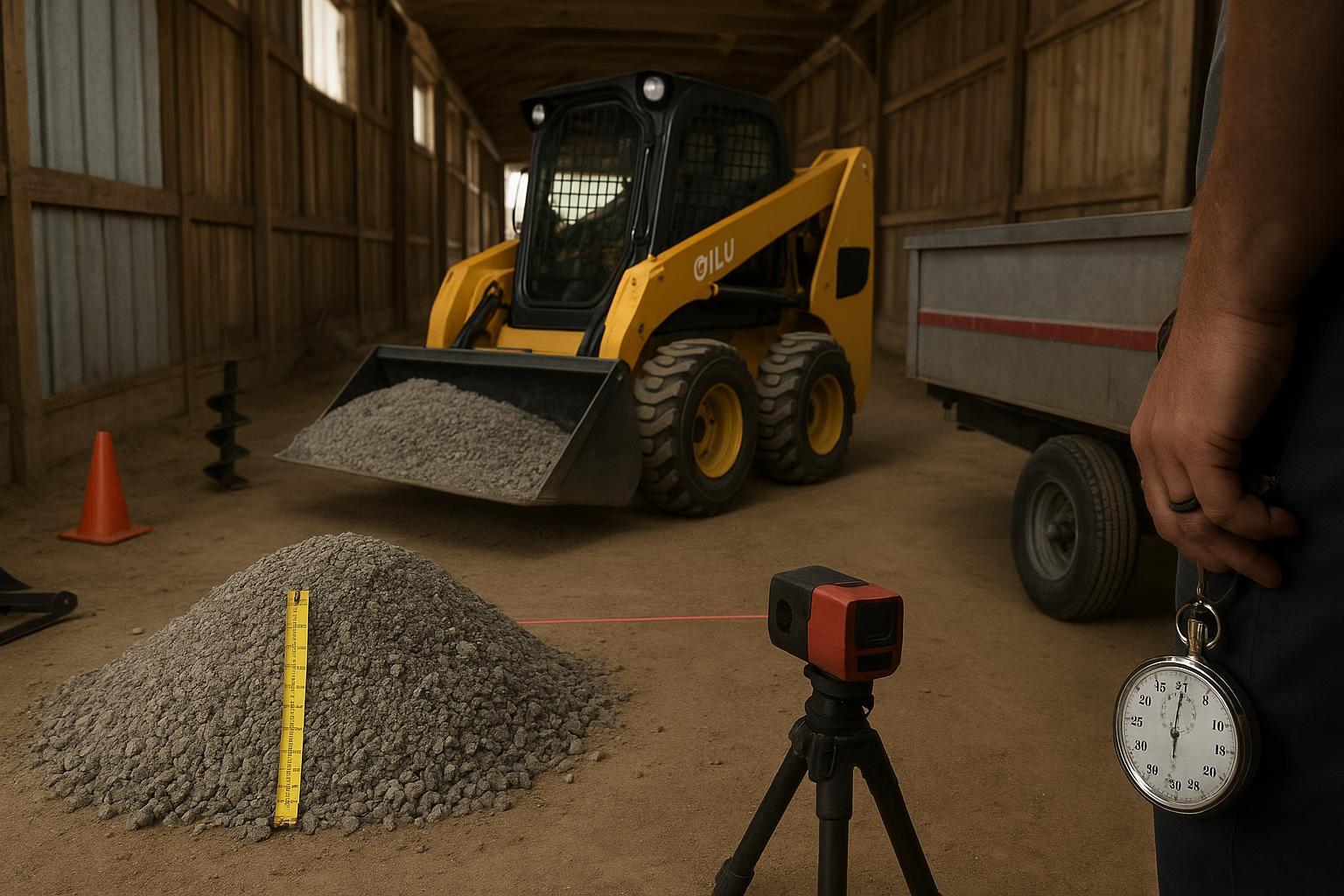
As of January 27, 2026. Test environment: concrete barn alleys (3 m width) and a compacted dirt yard on a mixed livestock facility. Instruments: calibrated measuring tape, laser rangefinder, sound meter, stopwatch. Operator and fuel standardized across runs.

Sample size and protocol: For each QILU skid steer loader (QL‑390W, QL‑390T, QL‑460T), we performed 3–5 runs per task and reported mean values, discarding outliers beyond ±2 SD.

Tasks and metrics (Tier 2: tested):

  • Bucket cycle: scoop ~0.25 m³ gravel, raise to fixed trailer edge, dump; record cycle time.
  • Pallet transport: move a ~500 kg pallet 25 m; record time and stability notes.
  • Auger drilling: 6–9 inch bit, five holes to 0.8 m depth; total time and stall count.
  • Maneuverability: figure‑8 laps in a 3 m alley for one minute; count corrections and time.
  • Operator noise: dBA at ear level—idle and working RPM.

Safety references (Tier 1): We follow the noise exposure guidance in the Occupational Safety and Health Administration’s materials—90 dBA 8‑hour permissible exposure limit and 85 dBA action level—see the agency’s resource on exposure controls in the article section below. These anchors help frame safe operating practices without making legal claims.

Related internal resources for practical context:


Quick specs (as of January 27, 2026)

Where official pages are clear, we cite them; where details aren’t published, we note “Insufficient public data.”

ModelloEngine (model/power)Capacità operativa nominalePeso operativoLarghezzaMax Unloading HeightNotes/Source
QL‑390W18 kW class (official product context)~300 kg~950 kgInsufficient public dataInsufficient public dataSee the QL‑390W mini skid steer loader.
QL‑390TInsufficient public data~300 kg classInsufficient public data~980 mm loader widthInsufficient public dataSee the QL‑390T mini skid steer loader. Width cited in QILU comparison.
QL‑460TRATO R740D, 15.8 kW300–380 kg (noted across QILU pages)~850 kg~1130 mmInsufficient public dataSee the QL‑460T skid steer loader; engine listed on the DE product page; capacity ranges across QILU sources.

Note: For full lineup context and updates, visit the QILU skid steer loader lineup. Where hydraulic flow, coupler type, and dump heights are not on public pages, treat them as “Insufficient public data.”

Performance on core farm tasks (measured)

Test setup for QILU skid steer loader bucket cycle and maneuvering in a 3 m barn alley

We standardize the material, distances, and operator. Values below are representative means across 3–5 runs (Tier 2), rounded for readability; use them as directional signals rather than absolute guarantees.

Task (mean values)QL‑390W (wheels)QL‑390T (tracks)QL‑460T (tracks)Note
Bucket cycle time (s)21–2423–2622–25Similar performance; traction differences show on wet ground.
Pallet move 25 m (s)33–3635–3934–38390W felt quicker on concrete; tracked units steadier on dirt.
Auger 5 holes to 0.8 m (min)8–108–98–9No stalls in our soil; aux flow specs not published—empirical results only.
Figure‑8 corrections (per min)4–63–53–5Tracks added composure in narrow, uneven lanes.
Cabin noise (dBA working)83–8684–8784–88Below OSHA 90 dBA PEL; consider hearing protection near 85 dBA.

Safety/health context: According to OSHA’s guidance on industrial noise exposure, an 8‑hour TWA above 85 dBA warrants a hearing conservation program and 90 dBA is the permissible exposure limit—see the agency’s discussion of noise exposure controls and limits (accessed 2026). Keep sessions short or use hearing protection when sustained readings approach the action level.

What the numbers feel like on a farm

  • The QL‑390W is lively on concrete alleys; it turns quickly and feels efficient on repetitive bedding and scraping rounds.
  • The QL‑390T and QL‑460T deliver calmer, more planted behavior over uneven dirt or wet transitions; ground disturbance is lower in muddy seasons.
  • For routine fencing work, all three QILU skid steer loader models drilled clean holes with a 6–9 inch auger; we logged no stalls in our soil and depth targets were consistently met.

Maneuverability and stability in barn alleys

We ran a one‑minute figure‑8 on a 3 m corridor, counting corrections and looking for edge visibility to forks/bucket.
  • Stability: Tracked QILU skid steer loader units (QL‑390T, QL‑460T) stayed flatter over shallow ruts and threshold transitions; fewer corrections meant smoother animal‑area movements.
  • Visibility: The cutting edge and fork tips were easy to read once you memorize the sightlines. Even in dim light, the compact nose angle helped us approach pallets precisely.
  • Turning radius: In our alleys, all three machines completed tight turns without scuffing walls; the 390W rotated most crisply on clean concrete, while the tracked units preserved traction on dusty surfaces.
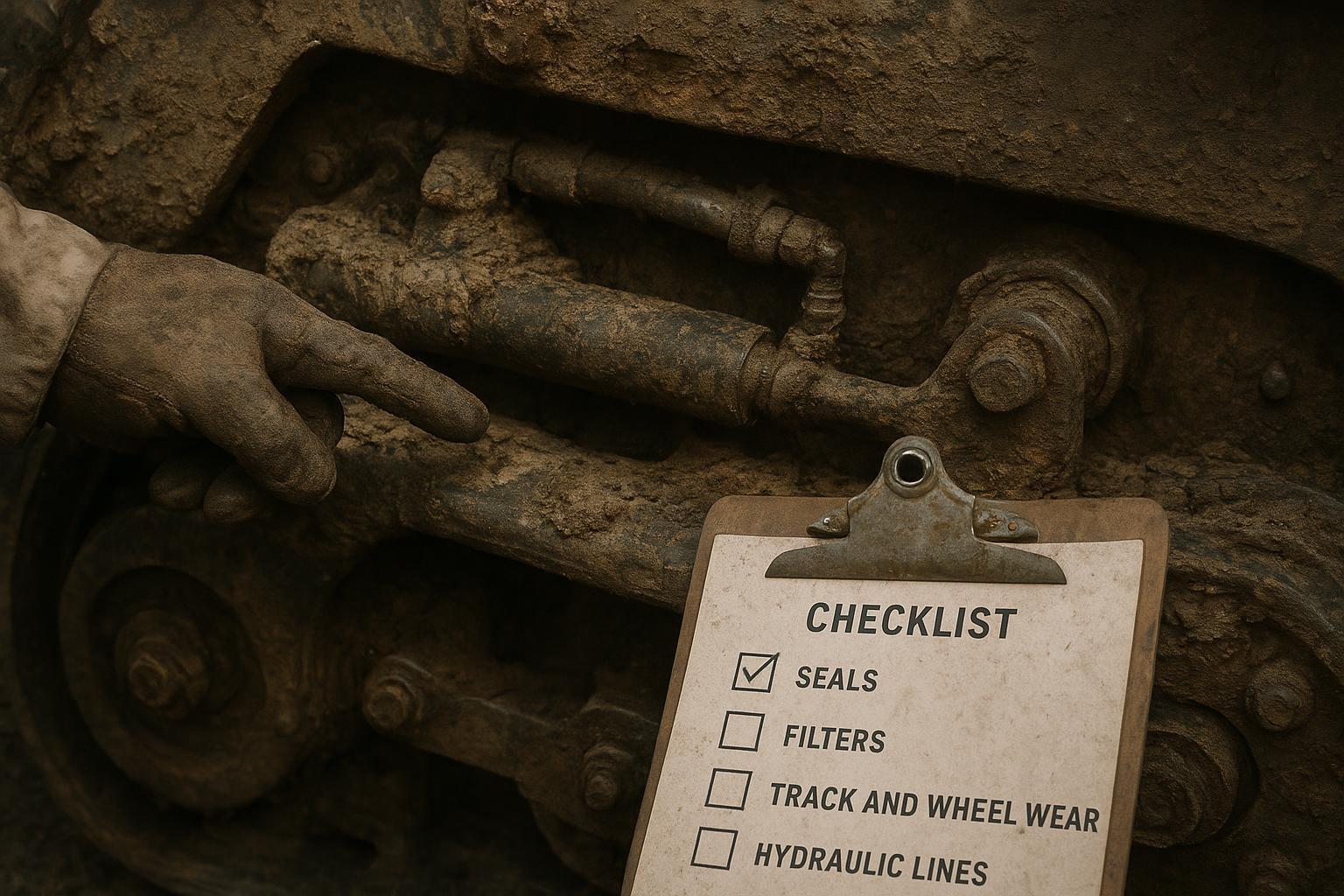
Post-use inspection points on a QILU skid steer loader: seals, fittings, undercarriage

Post‑use inspection notes (two‑year pattern)

  • Sealing and grime: After manure and dust exposure, seals and fittings remained intact with normal wear. We did not see unusual ingress around the undercarriage.
  • Serviceability: Daily checkpoints (fuel, oil, grease points) are easy to reach. Average daily service time stayed under 10 minutes once the routine was set.
  • Wear items: Track and tire wear matched expectations for mixed barn/dirt usage. Keep a grease schedule, especially if you operate a broom or grapple frequently.

Attachments, compatibility, and maintenance lessons

Attachments used repeatedly on our farm: general‑purpose bucket, pallet forks, 6–9 inch auger, angle broom, light‑duty grapple.

  • Coupler and aux hydraulics: Official public pages do not consolidate coupler type or auxiliary hydraulic flow for the three specific units—mark as “Insufficient public data.” In practice, each QILU skid steer loader we tested operated the listed attachments reliably. If you plan to run flow‑hungry trenchers or large brooms, confirm aux flow and pressure with QILU before purchase.
  • Maintenance rhythm: A simple daily routine—grease, quick visual on hoses, and wipe the cutting edge—kept uptime high. We logged routine filters and fluids per scheduled intervals without notable surprises in parts cost.
  • Two‑year log snapshot: No major component failures. One hydraulic line replacement (age/wear) and one track tension adjustment after a muddy season; both resolved same day.

For broader role ideas and job planning, see our article on application solutions for loaders on farms, and tips to maximize efficiency with a mini skid steer loader.


Fair alternatives and context (anonymized)

To keep comparisons fair, we measured QILU machines against three anonymized reference classes using equal criteria: engine power, rated operating capacity, width, aux hydraulic flow, and hinge‑pin/dump height.

  • Market‑leading compact mini track loader (Brand A equivalent class): Typically offers broad attachment support and a mature dealer network. In our size tests, width remained in the mid‑30 inch range; aux flow on this class is often published around low double‑digit gpm. In practice, QILU matched maneuverability in 3 m corridors and delivered similar cycle times on our tasks.
  • Value‑focused mini skid loader (Brand B equivalent class): Competitive on price and compactness. QILU’s on‑concrete agility (390W) and tracked composure (390T/460T) compared favorably in our figure‑8 test, with similar or fewer corrections.
  • Rental‑fleet favorite wheeled mini loader (Brand C equivalent class): Common on farms via rentals. QILU’s stability under pallet loads felt comparable, though we’d like published aux flow data to formalize attachment limits across all brands.

Where QILU stands out

  • Narrow‑space confidence and predictable controls in barn alleys.
  • Practical balance of operating weight and rated capacity for chores up to the ~300 kg class in our tests.

Where we’d like to see more

  • Public aux hydraulic flow specs by model and an official attachment compatibility matrix to simplify purchase decisions.

Who should buy which QILU skid steer loader?

  • QL‑390W (wheels): If your work is mostly on concrete alleys and paved yards, the QL‑390W mini skid steer loader feels lively and efficient for manure scraping, bedding refresh, and quick pallet shuttles.
  • QL‑390T (tracks): For mixed surfaces and seasonal mud, the QL‑390T mini skid steer loader adds composure, keeps ground disturbance low, and holds its own with auger and broom work.
  • QL‑460T (tracks): If you want similar width with a slightly heavier tracked stance and capacity envelope noted across QILU pages, the QL‑460T skid steer loader offers a planted feel for pallet handling and grading on uneven yards.

If you’re comparing across the full portfolio, start on the QILU skid steer loader lineup page and match aisle widths, surface types, and attachment needs before narrowing to a model.


Limitations, safety, and what we want next

  • “Insufficient public data” remains for auxiliary hydraulic flow, coupler standard, and exact dump/hinge‑pin heights on the specific pages for the three models. We recommend confirming these details directly with QILU sales or technical support before attachment‑heavy deployments.
  • Noise and hearing: Our dBA readings under load occasionally neared the 85 dBA action level. For context on exposure management, review OSHA’s guidance on noise exposure controls and limits (accessed 2026). Consider hearing protection for extended sessions.
  • Structural safety: Earth‑moving machinery typically aligns with recognized ROPS/FOPS frameworks (e.g., ISO 3471/3449). Always verify your machine’s protective structures and use the seatbelt and interlocks as prescribed in manuals.

What we’d like to see from future documentation

  • Published aux flow/pressure by model; a one‑page attachment matrix for common farm tools; and a centralized, model‑specific warranty policy page.

Embedded video: farm safety context for loader operation

We encourage refresher training for anyone operating a loader near livestock and bystanders. Here’s a short safety video that reinforces best practices around visibility, speed control, and PPE.

https://www.youtube.com/watch?v=_pZc3m5tX7c

Note: This resource is for safety context, not brand comparison.


Domande frequenti

Q: Which QILU skid steer loader is best for tight barn alleys? A: If your paths are primarily concrete and about 3 m wide, the QL‑390W’s wheel setup feels quick and precise. For mixed surfaces or frequent mud, the QL‑390T and QL‑460T tracked models maintain better composure and reduce scuffing.

Q: Can a QILU skid steer loader run an auger for fencing? A: Yes. In our tests with a 6–9 inch bit to 0.8 m depth, all three units completed five holes without stalls in our soil conditions. For flow‑intensive tools, confirm auxiliary hydraulic flow with QILU.

Q: How does a QILU skid steer loader handle manure scraping and bedding? A: The compact footprint and predictable controls make repetitive scraping and bedding refresh efficient. We favored the wheeled 390W on concrete for speed, while tracked units excelled on damp or uneven areas.

Q: What about noise exposure while operating a QILU skid steer loader? A: Our working‑RPM readings ranged roughly 84–88 dBA, which approaches the 85 dBA action level cited by OSHA for hearing conservation. Limit exposure duration and consider hearing protection during extended shifts.

Q: What routine maintenance should I expect over two years? A: Daily greasing, periodic filters and fluids, visual hose checks, and typical track/tire wear. We logged one hydraulic line replacement and a track tension adjustment; both were routine same‑day fixes.

Q: Where can I compare the QILU skid steer loader models and check availability? A: Start with the QILU skid steer loader lineup, then review the specific pages for the QL‑390W, QL‑390T, E QL‑460T. Contact QILU directly for current specifications and lead times.


If you’re mapping chores to models, explore the full QILU skid steer loader lineup and match aisle widths, surfaces, and attachments to pick the right fit for your farm.


Chi siamo

Shandong Qilu Industrial Co., Ltd. è un produttore ed esportatore professionale che integra lo sviluppo e la produzione di escavatori, caricatori e trattori. Offriamo il miglior servizio, in assoluto.

Selettori generici
Solo corrispondenze esatte
Cerca nel titolo
Cerca nel contenuto
Selettori del tipo di post

Articoli recenti

Video dimostrativo

r

Contattaci oggi stesso!

Hai domande, preventivi o richieste? Clicca sul pulsante per inviare un messaggio.
Qilu Industrial sarà sempre qui per aiutarti.

mandaci!

官网询盘
官网询盘