مرحبًا بك في Shandong Qilu Industrial Co., Ltd

 Arabic
 English
 Bulgarian
 Bengali
 Czech
Czech
 Danish
 German
 Greek
Greek
 Spanish
 Finnish
 French
 Hindi
Hindi
 Croatian
 Hungarian
 Indonesian
 Italian
 Japanese
 Korean
 Lithuanian
 Dutch
Dutch
 Norwegian
 Polish
 Portuguese
 Romanian
 Russian
 Slovak
 Slovenian
 Swedish
 Thai
Thai
 Turkish
 Ukrainian
 Vietnamese
 Tagalog
 Malay
Malay
 Estonian
 Catalan
 Latvian
 Urdu
Urdu
 Serbian
 Persian
 Swahili
 Albanian
 Armenian
 Icelandic
 Bosnian
 Luxembourgish
 Afrikaans
Arabic English
Bulgarian
Bengali
Czech
Danish
German
Greek
Spanish
Finnish
French
Hindi
Croatian
Hungarian
Indonesian
Italian
Japanese
Korean
Lithuanian
Dutch
Norwegian
Polish
Portuguese
Romanian
Russian
Slovak
Slovenian
Swedish
Thai
Turkish
Ukrainian
Vietnamese
Tagalog
Malay
Estonian
Catalan
Latvian
Urdu
Serbian
Persian
Swahili
Albanian
Armenian
Icelandic
Bosnian
Luxembourgish
Afrikaans
Afrikaans
Arabic English
Bulgarian
Bengali
Czech
Danish
German
Greek
Spanish
Finnish
French
Hindi
Croatian
Hungarian
Indonesian
Italian
Japanese
Korean
Lithuanian
Dutch
Norwegian
Polish
Portuguese
Romanian
Russian
Slovak
Slovenian
Swedish
Thai
Turkish
Ukrainian
Vietnamese
Tagalog
Malay
Estonian
Catalan
Latvian
Urdu
Serbian
Persian
Swahili
Albanian
Armenian
Icelandic
Bosnian
Luxembourgish
Afrikaans
أخطاء صابورة اللودر التي تجعل الجرار الزراعي غير آمن على المنحدرات
دليل عملي لسلامة صابورة محمل الجرار، والوعي بالمنحدر، واختيارات ثقل الموازنة الخلفي، والسفر المنخفض للدلو، وعلامات التحذير أثناء مناولة المواد الزراعية.
A useful tractor loader ballast safety is less about making a tractor look tidy and more about catching small faults before they become field delays. On a busy farm morning, ten quiet minutes around the machine can protect the operator, the implement, and the crop schedule. This guide is written for owners and operators who use a جرار زراعي لأعمال اللودر والقص والنقل والحراثة ووظائف المرافق اليومية.
غالبًا ما يقارن مشترو آلات QiLu القدرة الحصانية والملحقات أولاً، لكن تجربة الملكية الحقيقية تعتمد على عمليات فحص متكررة. إن الجرار الذي يبدأ، ويوجه، ويتوقف، ويرفع، ويبرد، ويتصل بشكل متوقع هو أسهل في الاستخدام من الآلة الأكبر التي تفاجئ المشغل. نفس العادة تساعد أيضًا عند مطابقة الآلة حلول تطبيقات الجرارات أو تحديد الأداة التي يجب استخدامها أولاً في يوم عمل طويل.
تركز الأقسام التالية على القرارات العملية بدلاً من مطالبات العلامة التجارية. فهي تجمع بين الإجراءات الميدانية وتذكيرات السلامة العامة من مصادر مثل إرشادات سلامة تشغيل الجرار OSHA, موارد السلامة الزراعية NIOSH, ، وتوجيهات الإرشاد الجامعي. استخدم الأفكار كإطار عمل واتبع دائمًا دليل المشغل المحدد للجرار وقم بالتنفيذ أمامك.
Why Loader Ballast Changes the Whole Tractor
Loader work changes the tractor from a pulling machine into a mobile lever. The bucket, load, loader arms, front axle, rear axle, tire contact patch, and ballast all interact. A light load can still become dangerous when the bucket is high, the ground is uneven, or the tractor turns downhill too quickly.
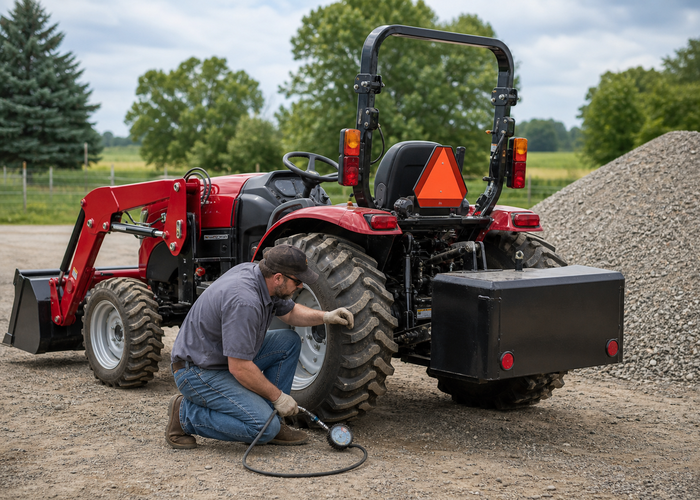
The first mistake is treating rear ballast as optional. A front-end loader transfers weight forward, reduces rear tire grip, and can make steering and braking unpredictable. Rear ballast, wheel weights, filled tires, or a heavy rear implement help restore balance, but they must be matched to the tractor and the loader rating.
The second mistake is driving with the bucket too high. A raised bucket lifts the center of gravity and makes a small obstacle feel larger than it is. Carry material low, travel slowly, avoid sudden turns, and lower the attachment before leaving the seat. These habits are simple because they need to work under pressure.
Rear Counterweight, Tire Pressure, and Load Size
Inspect the route before loading. Holes, ruts, wet grass, loose gravel, hidden curbs, and small slopes can change the tractor faster than the operator expects. If the job requires crossing a slope, reconsider the route or move less material per trip. Stability is cheaper than speed.
تستمر وكالات السلامة العامة في تكرار نفس الرسالة لأن الجرارات الزراعية تركز الوزن والطاقة والأعمدة الدوارة والمكونات الهيدروليكية والحكم البشري في آلة واحدة. إرشادات سلامة الجرارات في ولاية بنسلفانيا و مواد سلامة الجرارات الملحقة بجامعة مينيسوتا ويؤكد كلاهما على أن التشغيل الآمن يبدأ قبل بدء العمل. أفضل قائمة مرجعية ليست ملصقًا حائطيًا؛ إنه تسلسل يمكن للمشغل إكماله بالفعل بجانب الجرار.
بالنسبة لفريق الشراء، يعمل نفس التفكير أيضًا على تحسين خيارات المواصفات. مراجعة المشتري جميع منتجات الآلات يجب أن نسأل كيف سيتم فحص الجرار وصيانته وتوصيله وتخزينه. الآلة التي تناسب العمل ولكن لا يمكن فحصها بسهولة ستدعو إلى خطوات تم تخطيها. هذا هو المكان الذي يلتقي فيه اختيار المنتج والممارسة اليومية.
عندما تتضمن المهمة أدوات متعددة، قم بالسير في سلسلة العمل بأكملها. انظر إلى الجرار، والأداة، ومسار السفر، ونقطة التحميل، والمنحدر، وعرض البوابة، ومساحة الدوران. إذا كانت المهمة تعتمد على اللودر، أو PTO، أو قارنة التوصيل الهيدروليكية، فقم بتضمين هذا النظام في الفحص الأول بدلاً من الانتظار حتى يصبح الجرار في موضعه بالفعل.
Loader attachment choice also matters. A bucket full of wet soil, gravel, manure, snow, or mulch does not weigh the same. Pallet forks can move the center of gravity farther forward than a bucket. Grapples and bale spears create their own risks. The correct ballast for one task may be inadequate for another.
Route Planning for Slopes and Soft Ground
Before lifting, check the loader pins, quick-attach latch, hydraulic hoses, cylinders, cutting edge, and tire pressure. Look for hose rub, damaged fittings, bent brackets, and uneven tire inflation. A loader should raise, curl, dump, and lower smoothly before the tractor travels under load.
Use four-wheel drive according to the machine instructions, but do not let it create false confidence. Traction helps the tractor move; it does not cancel gravity or raise the rollover threshold. Brakes, steering, and load control still depend on ground contact and careful speed.
If another worker is nearby, agree on hand signals or stop points before the tractor moves. The safest spotter is not close to the bucket. They should stand outside the travel path and never between the tractor, a wall, a trailer, a gate, or a pile of material.
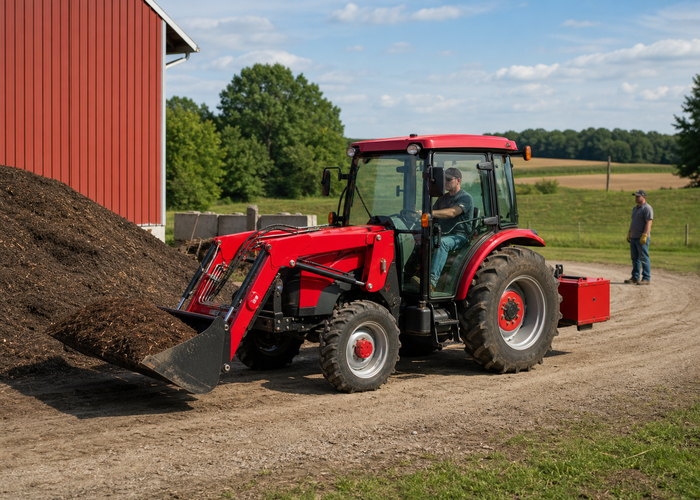
For buyers, loader work should influence tractor size, tire choice, hydraulic flow, wheelbase, rear ballast options, and implement package. A tractor that looks strong in a brochure may feel wrong if the rear end is too light for the jobs that happen every week.
For operators, the most useful rule is to stop when the tractor feels different. Rear wheels getting light, steering becoming vague, a tire slipping unexpectedly, or the bucket pulling the tractor sideways are not normal annoyances. They are warnings that the setup or route needs to change.
Keep the work area boring. Level staging, clear approaches, low travel height, smaller loads, and fewer bystanders rarely look dramatic, but they finish more jobs. Loader safety is built from ordinary choices repeated before they are needed.
When the workday ends, park with the loader and implement lowered, relieve hydraulic pressure as directed by the manual, clean packed material from the bucket, and inspect for new leaks or damage. Tomorrow?s safe start often depends on what the operator noticed at shutdown today.
How Operators Can Catch Instability Early
الإجراءات الجيدة بسيطة بما يكفي لتحمل الضغط. احتفظ بقائمة المراجعة بالقرب من المفتاح أو صندوق الأدوات أو نقطة الوقود أو حجرة الخدمة. احتفظ بدبابيس وصلة الجر الاحتياطية، ودبابيس الإعدام، والقفازات، ومناشف المتجر، وأدوات ضغط الإطارات حيث يتم استخدامها فعليًا. لتخطيط الأسطول الأكبر، يمكن لنفس السجلات دعم قرارات الخدمة حول جرار QL 60HP, ، ال جرار QL 904B, ، وغيرها من المعدات في ساحة مختلطة.
الاختبار النهائي هو ما إذا كان المشغل يمكنه شرح حالة التوقف. في حالة ظهور تسرب أو واقي تالف أو إطار منخفض أو دبوس مفكك أو ضوء تحذير أو صوت غير عادي أو حمل غير مستقر، فإن الإجابة الصحيحة هي إيقاف السبب وإصلاحه. إرشادات صيانة الآلات الزراعية بجامعة ميسوري وتضع المنشورات الإرشادية الأخرى الصيانة كعادة وقائية، وليس تمرينًا على الأوراق.
The safest loader setup is the one that makes the job feel uneventful. Correct rear ballast, low bucket travel, careful route choice, and realistic load size keep the tractor predictable. When a tractor starts to feel light, fast, or sideways, the right answer is not more confidence. It is a safer setup.
Rear ballast should be treated as part of the loader system, not as an accessory that happens to fit the three-point hitch. The loader capacity, front axle rating, tire type, wheelbase, terrain, and material density all influence the amount and kind of counterweight needed. A ballast box is compact and predictable. A rear implement may be useful, but its weight, length, and ground clearance can change how the tractor turns and stops. Filled tires add stability but do not replace all rear counterweight for every loader job.
Material weight is often underestimated. A bucket of dry mulch, wet clay, gravel, snow, manure, compost, firewood, or stone can vary dramatically even when the bucket looks equally full. Moisture is the hidden multiplier. The safest operator learns to take smaller bites, especially when working on soft ground or near slopes. A full bucket is not a goal if the tractor becomes hard to steer, brake, or hold level.
Slope work requires route planning before the bucket is loaded. Whenever possible, travel straight up or down gentle grades rather than turning across them. Avoid sudden stops, keep the bucket low, and never use loader lift height to compensate for poor positioning. If a task cannot be done without crossing an uncomfortable side slope, move the material to a flatter staging area with smaller loads or choose a different machine. The job should be adjusted before the tractor feels unstable.
Tire choice and pressure affect loader behavior more than many new owners expect. Agricultural tires, industrial tires, and turf tires grip and flex differently. Underinflated fronts can squat under loader weight; overinflated rears can reduce traction. If the tractor uses liquid ballast, confirm both rear tires are filled consistently. Uneven inflation or ballast can make the tractor lean or pull when the loader is loaded.
Shutdown, Parking, and Next-Day Inspection
Loader controls should be smooth, not abrupt. A sharp curl, dump, or lift movement can shift the load and surprise the operator. Practice on level ground with a modest load before working near a trailer, wall, ditch, or slope. Keep one hand ready for steering and one for controlled loader movement. If the loader drifts, chatters, or drops unexpectedly, stop and inspect hydraulics before continuing.
Parking discipline matters after loader work too. Lower the bucket flat to the ground, lower rear ballast or implements, relieve pressure as directed, and park away from children, livestock, or vehicle paths. A raised loader parked for convenience creates a stored-energy hazard. A lowered, clean, inspected loader makes the next job safer before it even starts.
ملاحظات الاستخدام الميداني
Loader work should also be reviewed after near misses. If the rear wheels became light, the tractor slid, a load spilled unexpectedly, or an operator felt uncomfortable on a route, write down the material, terrain, tire condition, ballast setup, and bucket height. That record helps the farm decide whether to change ballast, reduce load size, improve the travel path, train operators again, or choose another machine for that job.
بالنسبة للمديرين، السجل الأكثر فائدة ليس أرشيفًا مثاليًا ولكنه نمط يمكن التصرف بناءً عليه. إذا فقد نفس الإطار الضغط، أو تسربت نفس قارنة التوصيل، أو أبلغ نفس المشغل عن معالجة غير مستقرة، أو كان من الصعب إرفاق نفس الأداة، فقد وجدت المزرعة أولوية للتدريب أو الصيانة. قم بمراجعة الملاحظات أسبوعيًا، وحافظ على اللغة واضحة، وقم بتحويل الملاحظات المتكررة إلى إصلاحات، أو تغييرات في التخزين، أو تذكيرات للمشغل قبل موسم الازدحام مما يجعل إصلاح كل خطأ صغير أكثر صعوبة.
A good loader policy also defines where loads should not be carried. Avoid operating close to ditch edges, pond banks, soft shoulders, recently filled trenches, manure pits, or traffic lanes unless the site has been prepared and the operator has a clear escape path. The ground that supports an empty tractor may not support a loaded front axle. When the surface is questionable, reduce the load, improve the route, or use equipment better suited to the site.
For more context before specifying a loader tractor, review QiLu Machinery’s فئة الجرار, حلول تطبيقات الجرارات, و ال جرار QL 60HP page. Operators can also compare the safety logic with OSHA tractor guidance, University of Minnesota Extension tractor safety resources, ، و موارد الوقاية من الإصابات الزراعية NIOSH.
الأسئلة الشائعة العملية
كم مرة يجب استخدام قائمة مراجعة الجرار؟ استخدم جولة قصيرة قبل كل فترة عمل وفحصًا أكثر تفصيلاً عند تغيير المهمة، أو عند توصيل الأداة، أو بعد النقل، أو بعد تشغيل الجرار بواسطة شخص آخر. النقطة المهمة هي الاتساق، وليس حجم الأعمال الورقية.
Warning Signs That Mean Stop and Reconfigure
ما الذي يجب أن يوقف الوظيفة على الفور؟ توقف عن تسرب السوائل النشطة، أو مشاكل الفرامل، أو مشاكل التوجيه، أو الحراس التالفون، أو أدوات تثبيت وصلة الجر المفقودة، أو أضواء التحذير، أو الأحمال غير المستقرة، أو الاهتزاز غير المعتاد، أو الأنظمة المحمومة، أو الإطارات التالفة، أو أي حالة تجعل المشغل غير متأكد. الإصلاح المتأخر أرخص من الجرار التالف أو العامل المصاب.
هل يجب استخدام نفس القائمة المرجعية لكل تطبيق؟ احتفظ بقائمة مرجعية مشتركة للجرارات، ثم أضف قسمًا قصيرًا خاصًا بالأداة. تعرض أعمال التحميل، وأعمال PTO، والقص، والسفر على الطرق، والحراثة مخاطر مختلفة. تعد بعض الخطوط المركزة أكثر فائدة من نموذج عام واحد يحاول تغطية كل موقف محتمل.
ما هو السبب الأكثر شيوعًا لفشل قائمة المراجعة الجيدة؟ تفشل قائمة المراجعة عندما يتم تخزينها بعيدًا عن الجهاز، أو كتابتها بلغة لا يستخدمها المشغلون، أو يتم جعلها طويلة جدًا بالنسبة للروتين الصباحي. إبقائها مرئية وعملية ومتصلة بظروف التوقف الحقيقية.
لمزيد من المواضيع العملية للآلات، قم بمراجعة مدونة آلات تشيلو والأوسع حلول تطبيق المنتج صفحات. يكسب الجرار الزراعي حصانته عندما يتم اختياره للعمل الحقيقي، ويتم فحصه قبل العمل الحقيقي، ويتم تشغيله بانضباط كافٍ للعودة إلى المنزل جاهزًا للغد.