Bienvenido a Shandong Qilu Industrial Co., Ltd

 Spanish
 English
 Arabic
 Bulgarian
 Bengali
 Czech
Czech
 Danish
 German
 Greek
Greek
 Finnish
 French
 Hindi
Hindi
 Croatian
 Hungarian
 Indonesian
 Italian
 Japanese
 Korean
 Lithuanian
 Dutch
Dutch
 Norwegian
 Polish
 Portuguese
 Romanian
 Russian
 Slovak
 Slovenian
 Swedish
 Thai
Thai
 Turkish
 Ukrainian
 Vietnamese
 Tagalog
 Malay
Malay
 Estonian
 Catalan
 Latvian
 Urdu
Urdu
 Serbian
 Persian
 Swahili
 Albanian
 Armenian
 Icelandic
 Bosnian
 Luxembourgish
 Afrikaans
Spanish English
Arabic
Bulgarian
Bengali
Czech
Danish
German
Greek
Finnish
French
Hindi
Croatian
Hungarian
Indonesian
Italian
Japanese
Korean
Lithuanian
Dutch
Norwegian
Polish
Portuguese
Romanian
Russian
Slovak
Slovenian
Swedish
Thai
Turkish
Ukrainian
Vietnamese
Tagalog
Malay
Estonian
Catalan
Latvian
Urdu
Serbian
Persian
Swahili
Albanian
Armenian
Icelandic
Bosnian
Luxembourgish
Afrikaans
Afrikaans
Spanish English
Arabic
Bulgarian
Bengali
Czech
Danish
German
Greek
Finnish
French
Hindi
Croatian
Hungarian
Indonesian
Italian
Japanese
Korean
Lithuanian
Dutch
Norwegian
Polish
Portuguese
Romanian
Russian
Slovak
Slovenian
Swedish
Thai
Turkish
Ukrainian
Vietnamese
Tagalog
Malay
Estonian
Catalan
Latvian
Urdu
Serbian
Persian
Swahili
Albanian
Armenian
Icelandic
Bosnian
Luxembourgish
Afrikaans

Consejos esenciales para prolongar la vida útil de los neumáticos de sus tractores
Puede maximizar la vida útil de los neumáticos de su tractor siguiendo estrategias de mantenimiento comprobadas. Compruebe y mantenga periódicamente la presión correcta de los neumáticos; Los estudios muestran que esto puede aumentar la vida útil de los neumáticos para 20%. Evite el inflado insuficiente porque puede acortar la vida útil en 25%. Considere utilizar sistemas centrales de inflado de neumáticos para una durabilidad aún mayor. Si desea saber cómo prolongar la vida útil de los neumáticos de su tractor, comience con estos pasos prácticos y vea resultados reales en su trabajo de campo.
Conclusiones clave
- Compruebe periódicamente la presión de los neumáticos para evitar un desgaste prematuro. Un inflado adecuado puede prolongar la vida útil de los neumáticos hasta 20%.
- Evite sobrecargar su tractor. Mantenerse dentro de los límites de carga evita reventones de neumáticos y mejora el control del vehículo.
- Rote sus neumáticos cada 50 a 100 horas para garantizar un desgaste uniforme. Este sencillo paso puede prolongar significativamente la vida útil de los neumáticos.
- Supervise la profundidad de la banda de rodadura mensualmente. Reemplace los neumáticos cuando la banda de rodadura alcance 2/32 « o muestre signos de daño para mantener la seguridad.
- Guarde los neumáticos en interiores y lejos de la luz solar. El almacenamiento adecuado previene la degradación del caucho y prolonga la vida útil de los neumáticos.
- Limpie sus neumáticos después de cada uso para eliminar la suciedad y los productos químicos. La limpieza regular evita la corrosión y los daños.
- Elija los neumáticos adecuados para tus tareas específicas. Hacer coincidir los neumáticos con el terreno mejora el rendimiento y reduce el desgaste.
- Invierta en neumáticos de alta calidad. Los neumáticos de calidad pueden costar más por adelantado, pero ahorran dinero a largo plazo gracias a su durabilidad.
Cómo extender la vida útil de los neumáticos de su tractor
El cuidado regular de los neumáticos constituye la base de cualquier estrategia sobre cómo prolongar la vida útil de los neumáticos de su tractor. Puede lograr una vida útil más larga centrándose en algunos hábitos de mantenimiento esenciales. Estos incluyen mantener la presión adecuada de los neumáticos, evitar sobrecargas y rotar los neumáticos a intervalos recomendados. Cada uno de estos pasos afecta directamente el desgaste de los neumáticos, la seguridad y el rendimiento general del tractor.
Mantenga la presión adecuada de los neumáticos
Comprobación de la presión de los neumáticos
Debe verificar la presión de sus neumáticos antes de cada trabajo importante o al menos una vez a la semana. Utilice un medidor confiable y compare sus lecturas con los valores recomendados para su tipo de neumático específico. La siguiente tabla describe los rangos de presión típicos:
| Tipo de neumático | Presión recomendada (psi) |
|---|---|
| Neumáticos traseros | 12-18 |
| Neumáticos delanteros | 25-35 |
Hacer funcionar su tractor con la presión correcta de los neumáticos le ayuda a evitar el desgaste prematuro y la compactación del suelo. Los neumáticos demasiado inflados pueden provocar una compactación excesiva y reducir la tracción, mientras que los neumáticos desinflados pueden provocar daños en las paredes laterales y una mala calidad de marcha. Inspecciones periódicas asegúrese de detectar los problemas con anticipación y mantener sus neumáticos en óptimas condiciones.
Ajuste de tareas
Se requieren diferentes tareas diferentes presiones. Por ejemplo, el trabajo de campo a menudo se beneficia de presiones ligeramente más bajas para aumentar la huella de los neumáticos y mejorar la tracción. Al transportar cargas en la carretera, debe aumentar la presión dentro del rango recomendado para soportar velocidades más altas y pesos más pesados. Ajuste siempre la presión de los neumáticos según el trabajo en cuestión para maximizar tanto la seguridad como la longevidad de los neumáticos.
Consejo: Mantener una presión óptima de los neumáticos no sólo prolonga su vida útil sino que también mejora la eficiencia del combustible y el manejo.
Evite la sobrecarga
Conozca los límites de carga
Comprender los límites de carga de su tractor es fundamental para saber cómo prolongar la vida útil de los neumáticos de su tractor. Cada neumático tiene un índice de carga, generalmente un número de tres dígitos, que indica su capacidad máxima de carga. Puede encontrar esta información en las especificaciones de los neumáticos. Siempre haga coincidir el índice de carga de su neumático con el peso total de su tractor, incluido el combustible y cualquier accesorio.
Controlar el peso
Debe controlar periódicamente el peso que transporta su tractor. La sobrecarga puede provocar sobrecalentamiento de los frenos, reventones de neumáticos y un control deficiente del vehículo. La siguiente tabla destaca las consecuencias de exceder los límites de carga:
| Consecuencia | Descripción |
|---|---|
| Sobrecalentamiento de frenos | El exceso de peso hace que los frenos se sobrecalienten, lo que reduce la potencia de frenado |
| Reventones de neumáticos | El aumento de calor y presión puede provocar una falla repentina de los neumáticos |
| Problemas de control de vehículos | Los tractores sobrecargados se manejan mal, lo que aumenta el riesgo de accidentes |
Al mantenerse dentro de los límites de peso recomendados, protege sus neumáticos y garantiza un funcionamiento más seguro.
Rote los neumáticos con regularidad
Patrones de rotación
Rotar los neumáticos ayuda a distribuir el desgaste de manera uniforme. Debes seguir un patrón de rotación frontal a trasera o transversal, dependiendo de la configuración de tu tractor. Por ejemplo, si notas más desgaste en los neumáticos delanteros debido a la dirección frecuente, muévelos hacia atrás y viceversa.
Programación
Los expertos recomiendan rotar los neumáticos del tractor cada 50 a 100 horas de funcionamiento. Establezca un recordatorio o registre sus horas para mantenerse constante. La rotación regular es una forma sencilla pero eficaz de prolongar la vida útil de los neumáticos de su tractor y mantener un desgaste uniforme de la banda de rodadura.
La rotación constante de los neumáticos, el inflado adecuado y la gestión de la carga son las formas más efectivas de responder cómo prolongar la vida útil de los neumáticos de su tractor.
Monitorear la profundidad de la banda de rodadura
Signos de desgaste
Debe controlar la profundidad de la banda de rodadura de manera constante para mantener la seguridad y el rendimiento. La profundidad de la banda de rodadura afecta directamente la capacidad de su tractor para agarrarse a superficies, especialmente en condiciones húmedas o embarradas. Si nota desgaste desigual, grietas o puntos calvos, estas son señales claras de que es posible que sus neumáticos no funcionen como se esperaba. Utilice un medidor de profundidad de la banda de rodadura para medir la banda de rodadura restante. Muchos operadores verifican la profundidad de la banda de rodadura cada mes o después de completar un trabajo de campo importante.
Una simple inspección puede revelar si sus neumáticos se acercan al final de su vida útil. La siguiente tabla describe las mediciones críticas de la profundidad de la banda de rodadura y las recomendaciones para el reemplazo:
| Medición de la profundidad de la banda de rodadura | Recomendación |
|---|---|
| 2/32« | Reemplace los neumáticos por seguridad y cumplimiento legal |
| Por debajo de 25% de la profundidad original de la banda de rodadura | Empiece a considerar la sustitución para uso agrícola |
Si sus neumáticos miden estos umbrales o por debajo de ellos, debe planificar el reemplazo pronto. La banda de rodadura desgastada aumenta el riesgo de deslizamiento y reduce la eficiencia de frenado. Para obtener más detalles sobre los estándares de profundidad de la banda de rodadura, puede visitar Asociación de la Industria del Neumático.
Cuándo reemplazar
Saber cuándo reemplazar los neumáticos de su tractor es esencial para una operación segura. No debe esperar hasta que la banda de rodadura se haya agotado por completo. Los neumáticos con menos de 25% de la profundidad original de su banda de rodadura pierden tracción y pueden comprometer su capacidad para controlar el tractor. El reemplazo se vuelve necesario cuando observa cualquiera de los siguientes:
- La profundidad de la banda de rodadura alcanza 2/32 « o menos.
- Grandes secciones de la banda de rodadura parecen lisas o calvas.
- Se desarrollan grietas, cortes o protuberancias en la superficie del neumático.
- Experimenta pérdidas frecuentes de tracción o distancias de frenado más largas.
Monitorear la profundidad de la banda de rodadura juega un papel vital al responder cómo extender la vida útil de los neumáticos de su tractor. La siguiente tabla muestra cómo la profundidad de la banda de rodadura afecta la seguridad y el rendimiento:
| Aspecto | Impacto en la seguridad y el rendimiento |
|---|---|
| Tracción | Esencial para mantener el agarre en diversas superficies |
| Frenado | Afecta la distancia de frenado y el control |
| Eficiencia de combustible | La banda de rodadura desgastada puede provocar un mayor consumo de combustible |
| Cumplimiento | El cumplimiento de las normas garantiza un funcionamiento seguro |
Al reemplazar neumáticos en el momento adecuado, protege su equipo y reduce el riesgo de accidentes. Las comprobaciones periódicas de la banda de rodadura le ayudan a evitar tiempos de inactividad inesperados y reparaciones costosas. Si desea saber cómo prolongar la vida útil de los neumáticos de su tractor, haga que el monitoreo de la banda de rodadura sea una parte rutinaria de su programa de mantenimiento. Este hábito le garantiza aprovechar al máximo su inversión y mantiene su tractor funcionando de forma segura en cada temporada.
Consejo: Registre siempre las medidas de la banda de rodadura en su registro de mantenimiento. Esta práctica le ayuda a realizar un seguimiento de los patrones de desgaste y programar reemplazos antes de que surjan problemas.
Almacenamiento adecuado de neumáticos
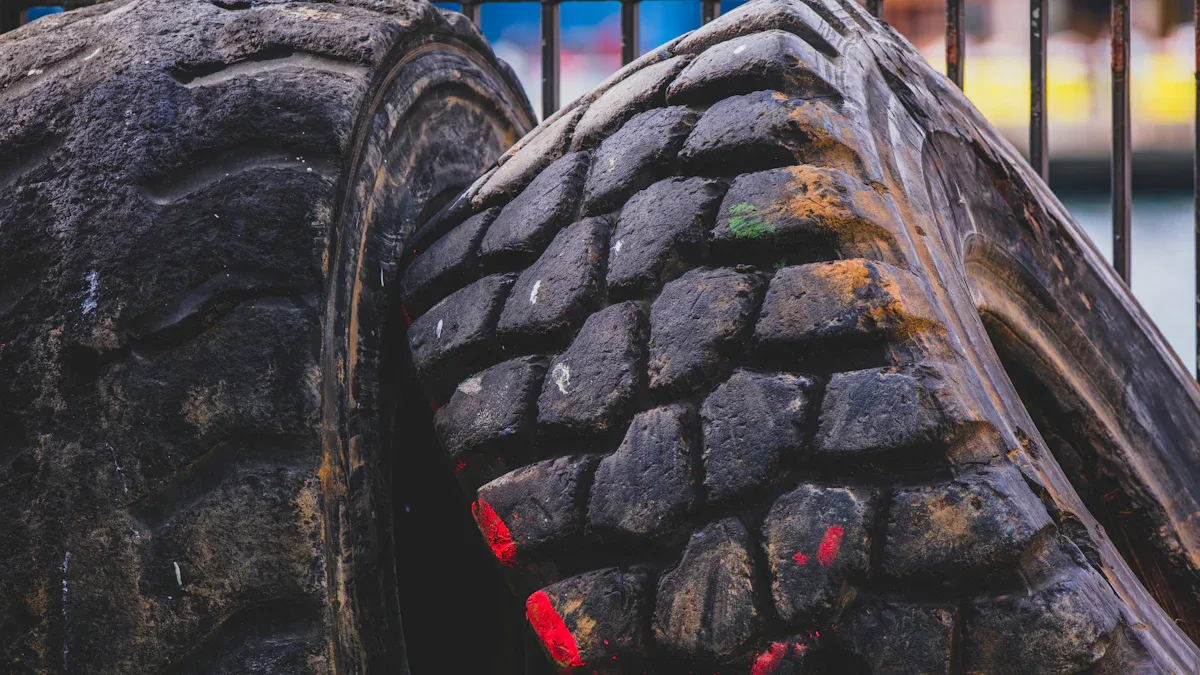
Almacenar correctamente los neumáticos de su tractor los protege del envejecimiento prematuro y daños estructurales. La luz solar, la lluvia y las temperaturas extremas aceleran la degradación del caucho, lo que lleva a reemplazos costosos y operaciones inseguras. Puede prevenir grietas por la intemperie, podredumbre seca y daños por ozono siguiendo las prácticas de almacenamiento recomendadas por la industria.
Preparándose para el almacenamiento
Limpieza de neumáticos
Antes de guardar sus neumáticos, elimine toda la suciedad, los residuos y los residuos químicos. Utilice agua y un jabón suave para limpiar la superficie. Evite los disolventes, aceites o líquidos a base de petróleo, ya que estas sustancias degradan el caucho y provocan grietas. Por ejemplo, un agricultor de Iowa notó grietas profundas en los neumáticos almacenados cerca de un bidón de aceite con fugas. Después de cambiar a una limpieza y almacenamiento adecuados, la vida útil de los neumáticos aumentó en dos años.
Consejo: Deje siempre que los neumáticos se sequen por completo antes de guardarlos para evitar moho y moho.
Inspeccionando en busca de daños
Inspeccione cada neumático en busca de cortes, protuberancias y grietas. Preste mucha atención a las áreas de alta tensión, como paredes laterales y bordes de la banda de rodadura. Las pequeñas grietas a menudo indican daños por ozono o clima. Si encuentra algún signo de desgaste, programe reparaciones o reemplazos antes de almacenarlos. Documente los resultados de su inspección en un registro de mantenimiento para referencia futura.
Condiciones de almacenamiento
Control de temperatura
Guarde los neumáticos en el interior, lejos de la luz solar directa y de las fuentes de calor. Las altas temperaturas aceleran la descomposición del caucho y provocan grietas superficiales. Mantenga los neumáticos alejados de motores o generadores eléctricos, que emiten ozono y contribuyen a fallas prematuras. Según las pautas de la industria, las caídas de temperatura pueden disminuir la presión de los neumáticos, así que verifique y ajuste la presión antes del almacenamiento.
| Estado de almacenamiento | Impacto en la longevidad de los neumáticos |
|---|---|
| Interior, fresco, seco | Conserva los compuestos de caucho |
| Cerca de fuentes de calor/ozono | Aumenta el riesgo de grietas |
| Al aire libre, expuesto | Acelera la pudrición seca y la erosión |
Posicionamiento de neumáticos
Coloque los neumáticos en posición vertical sobre superficies limpias y secas. Evite apilar los neumáticos horizontalmente, ya que esto puede provocar deformaciones. Si almacena neumáticos en el equipo, mueva el tractor mensualmente o colóquelo sobre gatos para evitar que se desinflen. Para neumáticos llenos de cloruro de calcio, mantenga los vástagos de las válvulas entre las posiciones de las 3 y las 9 en punto para evitar la congelación. Nunca permita que los neumáticos toquen productos derivados del petróleo o agua estancada.
Nota: Un almacenamiento inadecuado puede provocar grietas por clima/ozono, podredumbre seca y pérdida de integridad estructural. Puede leer más sobre las mejores prácticas de almacenamiento de neumáticos en Extensión de la Universidad de Nebraska.
Tabla de Mejores Prácticas
| Mejores prácticas | Recomendación |
|---|---|
| Limpie los neumáticos antes del almacenamiento | Utilice jabón suave, evite los productos químicos |
| Inspeccionar si hay daños | Compruebe si hay grietas, protuberancias o cortes |
| Almacenar en el interior, lejos de la luz solar | Previene la degradación del caucho |
| Evite las fuentes de ozono | Mantener alejado de motores/generadores |
| Ajustar la presión de los neumáticos | Compensar los cambios de temperatura |
| Coloque los neumáticos en posición vertical | Previene la deformación |
| Mueva el equipo o use gatos | Evita puntos planos |
Siguiendo estos pasos, protege su inversión y garantiza que los neumáticos de su tractor sigan siendo seguros y confiables para uso futuro.
Mantenga los neumáticos limpios e inspeccionados

Las rutinas periódicas de limpieza e inspección le ayudan a prevenir el deterioro prematuro de los neumáticos y el costoso tiempo de inactividad. Protege su inversión y mantiene un rendimiento óptimo siguiendo técnicas comprobadas y programando controles periódicos.
Técnicas de limpieza
Productos seguros
Deberías seleccionar productos de limpieza diseñados para caucho para evitar dañar los neumáticos de su tractor. Utilice un limpiador de neumáticos con pH equilibrado y evite productos químicos agresivos que puedan provocar grietas o decoloración. Reúna un balde de agua, una manguera o un limpiador a presión y un cepillo de cerdas duras para eliminar la suciedad. Para llantas, utilice un cepillo de ruedas o una esponja para llegar a espacios reducidos. Neumáticos secos con toallas de microfibra para evitar manchas de agua.
- Frote los neumáticos con un cepillo de cerdas duras o suaves para eliminar el barro y los residuos sin rayar la goma.
- Enjuague bien para eliminar todo el jabón y los agentes de limpieza.
- Aplique apósito o brillo para neumáticos para proteger contra el daño de los rayos UV y mejorar la apariencia. Elija opciones de silicona o a base de agua para obtener mejores resultados.
Consejo: Limpie siempre los neumáticos después de la exposición a productos químicos o materiales corrosivos para evitar daños a largo plazo.
Frecuencia de limpieza
Debe limpiar los neumáticos de su tractor después de cada uso, especialmente si opera en ambientes embarrados o cargados de químicos. La limpieza regular evita la corrosión, el agrietamiento y la acumulación que pueden acortar la vida útil de los neumáticos. Para tractores en uso intensivo, inspeccione y limpie los neumáticos mensualmente para detectar signos tempranos de deterioro.
| Frecuencia de limpieza | Acción recomendada |
|---|---|
| Después de cada uso | Retire el barro, los escombros y los productos químicos |
| Mensual (uso intensivo) | Inspección visual y limpieza profunda |
| Antes del almacenamiento | Limpiar profundamente y secar completamente |
Las rutinas de limpieza constantes le ayudan a evitar la corrosión y prolongar la vida útil de los neumáticos. Para más consejos, visite Guía de mantenimiento de neumáticos para tractores.
Inspeccionar si hay daños
Cuestiones comunes
Debe inspeccionar sus neumáticos en busca de daños cada mes o antes de un trabajo de campo importante. Busque estos problemas comunes:
- Los bultos en la pared lateral indican daños estructurales por impactos.
- Los cortes menores en la parte superior de las orejetas suelen ser aceptables, pero los cortes profundos requieren atención inmediata.
- Las grietas por sequedad pueden provocar la separación de la banda de rodadura y la pérdida de integridad.
- El desgaste desigual a menudo se debe a una presión de aire inadecuada y afecta la tracción.
- Los daños causados por los rastrojos de los restos de plantas pueden provocar pérdida de aire y erosión de la banda de rodadura.
| Tipo de problema | Descripción | Acción necesaria |
|---|---|---|
| Bulto | Hinchazón de las paredes laterales por impacto | Reemplace la llanta |
| Corte profundo | Daños graves en las orejetas | Reparar o reemplazar |
| Grieta | Sequedad o división relacionada con la edad | Monitorear o reemplazar |
| Desgaste desigual | Patrón irregular de la banda de rodadura | Ajustar la presión, girar |
| Daños por rastrojos | Cortes de residuos de cultivos | Inspeccionar, reparar |
🚜 Las inspecciones periódicas le ayudan a detectar problemas a tiempo y evitar averías inesperadas. Comparta sus consejos de inspección con otros operadores en Facebook.
Detección temprana
La detección temprana de daños en los neumáticos le ahorra dinero y evita tiempos de inactividad. Las inspecciones de rutina le permiten identificar problemas menores antes de que se agraven. Los sistemas de mantenimiento predictivo utilizan sensores y telemática para monitorear el estado de los neumáticos en tiempo real, alertándole sobre signos tempranos de desgaste o daño. Al actuar rápidamente, evita reparaciones costosas y mantiene su tractor funcionando de forma segura.
Deberías resultados de la inspección de documentos en un registro de mantenimiento. Este registro le ayuda a realizar un seguimiento de los patrones de desgaste y programar las reparaciones antes de que los problemas se agraven. El mantenimiento eficaz de los neumáticos mejora la seguridad y la eficiencia operativa de toda su flota.
Nota: El cuidado proactivo prolonga la vida útil de los neumáticos y reduce los costos generales. Para obtener más información sobre los protocolos de inspección, visite Asociación de la Industria del Neumático.
Utilice los neumáticos adecuados para el trabajo
Elegir los neumáticos adecuados porque su tractor afecta directamente el rendimiento, la seguridad y la longevidad de los neumáticos. Debe hacer coincidir las especificaciones de los neumáticos con sus requisitos de terreno, carga y velocidad. Este enfoque garantiza que aproveche al máximo su inversión y evite tiempos de inactividad innecesarios.
Combine neumáticos con terreno
Campo versus carretera
Encontrarás una variedad de superficies en las operaciones diarias. El trabajo de campo exige neumáticos que se adhieran al suelo suelto, mientras que el transporte por carretera requiere estabilidad y resistencia a la rodadura reducida. Seleccionar neumáticos diseñados para cada entorno mejora la tracción y la calidad de marcha. Por ejemplo, el uso de neumáticos de banda de rodadura profunda en campos embarrados evita el deslizamiento y la compactación del suelo. En carreteras pavimentadas, los neumáticos con bandas de rodadura menos profundas ofrecen una conducción más suave y una mejor eficiencia del combustible.
- Los neumáticos para aplicaciones específicas mejoran la tracción.
- Mejorar la calidad de marcha.
- Aumentar la eficiencia del combustible.
- Reducir el impacto sobre el suelo.
- Hacer coincidir la banda de rodadura de los neumáticos con el terreno aumenta la vida útil de los neumáticos.
Un agricultor que cambió de neumáticos de campo estándar a modelos optimizados para carreteras para viajes frecuentes por carretera informó un aumento de 15% en la vida útil de los neumáticos y una reducción de los costos de combustible. Debe evaluar su entorno operativo principal antes de hacer una selección.
Neumáticos especiales
Los neumáticos especiales abordan desafíos únicos. Si trabaja en zonas embarradas, los neumáticos R2 proporcionan orejetas profundas para una tracción agresiva. Para jardines o césped, los neumáticos R3 minimizan la alteración del suelo. Las tareas industriales a menudo requieren neumáticos R4, que equilibran la estabilidad y el agarre. La siguiente tabla compara los tipos de neumáticos comunes y sus usos recomendados:
| Tipo de neumático | Descripción |
|---|---|
| Neumáticos R2 | Lo mejor para condiciones de suelo fangoso o blando con pisadas profundas para mayor agarre. |
| Neumáticos R1 y R1W | Neumáticos direccionales estándar para uso agrícola general, con R1W con una banda de rodadura más profunda. |
| Neumáticos R4 | Versátil para uso agrícola e industrial, ofreciendo tracción y estabilidad. |
| Neumáticos R3 | Diseñado para minimizar la alteración del suelo, ideal para jardines o céspedes. |
| Neumáticos R-2 | Especializado en ambientes embarrados, orejetas profundas para tracción, menor estabilidad en superficies duras. |
Consejo: Consulte siempre el manual de su operador y los recursos de extensión locales, como Extensión de Penn State, para obtener orientación sobre la selección de neumáticos.
Elija carga y velocidad
Calificaciones de neumáticos
Las clasificaciones de carga y velocidad determinan cuánto peso pueden transportar sus neumáticos de forma segura y qué tan rápido puede operar. Debe verificar estas clasificaciones antes de comprar o instalar neumáticos nuevos. Seleccionar neumáticos con clasificaciones adecuadas evita fallas en los neumáticos y compactación del suelo, lo que puede afectar el rendimiento de los cultivos y la eficiencia operativa.
- Las clasificaciones de carga y velocidad garantizan que los neumáticos realicen tareas específicas.
- La selección adecuada evita fallas de los neumáticos y compactación del suelo.
- Las tecnologías IF (Aumento de flexión) y VF (Flexión muy alta) permiten que los neumáticos soporten más peso a presiones de aire más bajas, lo que reduce la compactación del suelo y mantiene el rendimiento.
Si utiliza neumáticos con clasificaciones incorrectas, corre el riesgo de un mayor deslizamiento, especialmente en condiciones húmedas. Puede producirse un desgaste prematuro debido a una distribución inadecuada de la carga. La tracción reducida puede dificultar su trabajo y una mayor resistencia a la rodadura conduce a un mayor consumo de combustible. Los riesgos de seguridad durante el frenado se vuelven más probables, ya que los neumáticos de tamaño insuficiente pueden causar distancias de frenado más largas e inestabilidad durante las maniobras de emergencia.
Siempre debe verificar las clasificaciones de los neumáticos según las especificaciones de su tractor y las demandas de su operación. Por ejemplo, si transporta cargas pesadas con frecuencia a velocidades más altas, seleccione neumáticos con clasificaciones de carga y velocidad más altas. Si opera en condiciones de suelo sensibles, considere neumáticos IF o VF para minimizar la compactación.
🚜 Una cuidadosa selección de neumáticos basada en el terreno, la carga y la velocidad mantiene su tractor funcionando de manera eficiente y segura. Para más información, visita Extensión de la Universidad de Nebraska.
Invierta en neumáticos y equipos de calidad
Beneficios de la calidad
Obtiene importantes ventajas a largo plazo cuando invierta en neumáticos para tractores de alta calidad. Aunque el precio de compra inicial puede parecer más alto, estos neumáticos ofrecen una mayor durabilidad y reducen la frecuencia de los reemplazos. Con el tiempo, gastará menos en reemplazos de neumáticos y minimizará el desperdicio, lo que beneficia directamente sus resultados. Por ejemplo, los agricultores que eligen neumáticos premium informan menos paradas de mantenimiento, lo que permite un trabajo de campo ininterrumpido y una mayor productividad.
Los neumáticos de alta calidad también presentan una baja resistencia a la rodadura, lo que significa que su tractor requiere menos energía para funcionar. Esto conduce a ahorros de combustible mensurables y menores costos operativos. Prácticas como el recauchutado pueden extender la vida útil de un neumático en 30-40%, mejorando aún más la eficiencia de costos. Considere el siguiente análisis de costo-beneficio:
| Tipo de neumático | Costo inicial | Vida útil media | Frecuencia de reemplazo (5 años) | Costo total estimado |
|---|---|---|---|---|
| Calidad estándar | $800 | 2 años | 2-3 de ori | $1.600-$2.400 |
| Alta calidad | $1,200 | 4 años | 1-2 veces | $1,200-$2,400 |
Consejo: Invertir en neumáticos de calidad reduce el tiempo de inactividad y aumenta la rentabilidad durante la vida útil de su equipo. Para obtener más información, visite Cuidado de neumáticos de extensión universitaria.
Marcas confiables
Debe buscar neumáticos que ofrezcan confiabilidad y durabilidad comprobadas en entornos agrícolas. Características como mayor profundidad de deslizamiento, diseño de orejetas de doble ángulo y estrechamientos de barras más pronunciados contribuyen a una vida útil más prolongada, una menor compactación del suelo y una tracción segura. La siguiente tabla destaca las características esenciales de los neumáticos que respaldan la longevidad y el rendimiento:
| Característica | Descripción |
|---|---|
| Desgaste duradero | La profundidad de deslizamiento aumenta la vida útil y proporciona una tracción versátil. |
| Reducción de la compactación del suelo | El diseño de orejetas de doble ángulo aumenta el área de contacto y reduce la alteración del suelo. |
| Tracción segura | Los conos de barra estabilizadora garantizan una tracción confiable durante toda la vida útil del neumático. |
Muchos agricultores prefieren neumáticos con estas características por su capacidad para manejar diversas condiciones del suelo y mantener el rendimiento con el tiempo. Por ejemplo, un productor de Nebraska cambió a neumáticos con orejetas de doble ángulo y notó una marcada reducción en la erosión del suelo y un mejor rendimiento de los cultivos.
🚜 Seleccione neumáticos con diseños avanzados de banda de rodadura y construcción robusta para maximizar su inversión. Consulte a su oficina de extensión local para obtener recomendaciones adaptadas a su región.
Mantener las herramientas de los neumáticos
Usted extiende la vida útil de los neumáticos de su tractor manteniendo las herramientas para neumáticos. Las inspecciones periódicas le ayudan a identificar problemas antes de que causen un desgaste significativo. Una gestión adecuada del inflado garantiza que sus neumáticos funcionen dentro de rangos de presión óptimos, evitando daños prematuros. Los ajustes basados en la carga y la velocidad son cruciales para mantener la salud y seguridad de los neumáticos.
- Inspeccione los medidores de neumáticos y el equipo de inflado mensualmente para garantizar la precisión.
- Calibre herramientas anualmente para mantener lecturas confiables.
- Guarde las herramientas en un ambiente limpio y seco para evitar la corrosión y el mal funcionamiento.
Un agricultor que implementó una rutina mensual de inspección de herramientas redujo el tiempo de inactividad relacionado con los neumáticos para 20%. Puede lograr resultados similares estableciendo un programa de mantenimiento para sus herramientas de neumáticos. Documente cada inspección y calibración en el registro de su equipo para obtener responsabilidad y referencias futuras.
Nota: Las herramientas para neumáticos bien mantenidas respaldan el cuidado constante de los neumáticos y le ayudan a evitar fallas inesperadas. Para obtener más información sobre el mantenimiento de herramientas, visite Asociación de la Industria del Neumático.
Proteja los neumáticos del calor
El calor es un factor importante en el desgaste y falla de los neumáticos de los tractores. Puede prolongar la vida útil de los neumáticos gestionando la velocidad y manteniendo un inflado adecuado. Estas estrategias le ayudan a evitar costosas averías y a mantener su equipo funcionando de manera eficiente.
Evite la velocidad excesiva
Conducir demasiado rápido genera más fricción entre el neumático y el suelo. Esta fricción aumenta la temperatura de los neumáticos, lo que puede dañar los componentes internos y provocar fallos prematuros. Siempre debes operar tu tractor dentro de los límites de velocidad recomendados para tus neumáticos. Exceder estos límites provoca sobrecalentamiento y puede derretir las piezas internas del neumático, aumentando el riesgo de reventones.
La siguiente tabla resume el impacto de la velocidad excesiva en los neumáticos de los tractores:
| Impacto de la velocidad excesiva | Descripción |
|---|---|
| Acumulación de calor | Las velocidades más altas dan como resultado un aumento de la temperatura de los neumáticos. |
| Fusión de componentes | El sobrecalentamiento puede derretir los componentes internos del neumático, con riesgo de fallar. |
| Fallo prematuro | Conducir más rápido que la clasificación del neumático provoca una falla temprana del neumático. |
| Desgaste rápido/independiente | Los índices de velocidad inadecuados provocan un desgaste rápido o desigual de la banda de rodadura. |
| Capacidad de carga reducida | Velocidades más altas y más bajas que los neumáticos de peso pueden soportar con seguridad. |
También debes considerar cómo la velocidad afecta el enfriamiento de los neumáticos. Las velocidades más lentas permiten que los neumáticos se enfríen entre ciclos de deflexión, lo que reduce el estrés por calor. Operar a velocidades moderadas permite que sus neumáticos soporten la misma carga a un PSI más bajo, lo que los protege aún más del daño por calor.
Consejo: Siempre verifique la clasificación de velocidad de su neumático antes de comenzar a trabajar. Si necesita viajar largas distancias, planifique su ruta para minimizar los viajes a alta velocidad.
Casos específicos muestran que conducir demasiado rápido aumenta la relación de deslizamiento, lo que conduce a más fricción y calor. La velocidad excesiva también provoca un mayor desgaste, acortando la vida útil de los neumáticos. Puede prevenir estos problemas siguiendo los límites de velocidad recomendados y ajustando sus hábitos de conducción según el terreno y la carga.
Mantener una inflación adecuada
El inflado adecuado es fundamental para controlar la temperatura de los neumáticos. Los neumáticos desinflados se flexionan más, generando calor adicional durante el funcionamiento. Los neumáticos demasiado inflados tienen menos contacto con el suelo, lo que también puede provocar acumulación de calor y desgaste desigual. Debe verificar la presión de los neumáticos antes de cada trabajo importante y ajustarla de acuerdo con las pautas del fabricante.
Considere estos pasos viables para mantener una inflación óptima:
- Utilice un manómetro calibrado para medir la presión con precisión.
- Ajuste la presión según los requisitos de carga y velocidad.
- Inspeccione los neumáticos en busca de signos de inflado excesivo o insuficiente, como desgaste desigual o protuberancias en las paredes laterales.
- Registre las lecturas de presión en su registro de mantenimiento para consultarlas en el futuro.
| Práctica de inflación | Beneficio |
|---|---|
| Controles de presión periódicos | Previene la flexión excesiva y la acumulación de calor |
| Ajuste por carga/velocidad | Reduce el riesgo de sobrecalentamiento |
| Utilice equipo confiable | Garantiza lecturas precisas y un funcionamiento seguro |
Un agricultor que controlaba la presión de los neumáticos semanalmente y reducía la velocidad durante el transporte pesado informó menos fallas en los neumáticos relacionadas con el calor. Puede lograr resultados similares haciendo que estas prácticas formen parte de su rutina.
🚜 Mantener un inflado adecuado y evitar una velocidad excesiva son dos de las formas más efectivas de proteger los neumáticos de su tractor del calor. Estos hábitos le ayudan a maximizar la vida útil de los neumáticos y mantener su equipo seguro en cada temporada.
Puedes prolongar la vida útil de los neumáticos de tu tractor siguiendo estos pasos esenciales:
- Verifique y ajuste la presión de los neumáticos periódicamente según las especificaciones del fabricante.
- Evite sobrecargas y conducción a alta velocidad para reducir el desgaste prematuro.
- Programe revisiones mecánicas para corregir problemas de alineación.
El cuidado adecuado de los neumáticos mejora la tracción y la eficiencia del combustible. El mantenimiento de rutina ahorra miles de dólares cada año, como se muestra a continuación:
| Aspecto | Estimación de ahorro |
|---|---|
| Ahorro de combustible (galones) | 500 «800 galones al año |
| Ahorro estimado en dólares | Miles de dólares |
Haga que el mantenimiento de los neumáticos forme parte del cuidado habitual de su equipo. Proteja su inversión y garantice un funcionamiento seguro y eficiente cada temporada.
Preguntas frecuentes
¿Con qué frecuencia se debe comprobar la presión de los neumáticos del tractor?
Deberías compruebe la presión de los neumáticos al menos una vez a la semana o antes de cada trabajo importante. Los controles frecuentes le ayudan a detectar fugas temprano y mantener un rendimiento óptimo. Utilice un medidor confiable y compare siempre las lecturas con los valores recomendados por el fabricante.
¿Cuál es la mejor manera de limpiar neumáticos de tractor?
Utilice agua, jabón suave y un cepillo de cerdas duras. Evite productos químicos agresivos o limpiadores a base de petróleo. Enjuague bien y seque con una toalla de microfibra. Limpie los neumáticos después de la exposición al barro, productos químicos o residuos de cultivos para evitar daños a largo plazo.
¿Cómo saber cuándo reemplazar los neumáticos del tractor?
Supervise la profundidad de la banda de rodadura mensualmente. Reemplace los neumáticos cuando la banda de rodadura alcance 2/32 « o menos, o si ve grietas, protuberancias o pérdida frecuente de aire. La pérdida de tracción o el desgaste desigual también indican la necesidad de reemplazarlos.
¿Se pueden guardar neumáticos de tractor afuera?
Debe evitar el almacenamiento al aire libre. La luz del sol, la lluvia y los cambios de temperatura aceleran el envejecimiento del caucho. Guarde los neumáticos en interiores, en posición vertical y lejos de las fuentes de ozono. Si el almacenamiento al aire libre es inevitable, cubra los neumáticos con lonas resistentes a los rayos UV y levántelos del suelo.
¿Qué causa el desgaste desigual de los neumáticos en los tractores?
El inflado inadecuado, la desalineación, la sobrecarga y la falta de rotación provocan un desgaste desigual. Revise periódicamente la presión, rote los neumáticos e inspeccione si hay problemas mecánicos. Aborde los problemas con anticipación para extender la vida útil de los neumáticos y mantener un funcionamiento seguro.
¿Cómo se pueden prevenir los daños por calor en los neumáticos de los tractores?
Opere dentro de los límites de velocidad recomendados y mantenga un inflado adecuado. Evite largos períodos de viaje a alta velocidad, especialmente con cargas pesadas. Deje que los neumáticos se enfríen durante el uso prolongado en climas cálidos.
¿Los neumáticos especiales realmente marcan la diferencia?
Sí. Los neumáticos especiales se adaptan a terrenos y tareas específicas, mejorando la tracción y reduciendo el desgaste. Por ejemplo, los neumáticos de tacos profundos funcionan mejor en campos embarrados, mientras que los neumáticos para césped protegen el césped. Elija neumáticos según su entorno operativo principal para obtener mejores resultados.
¿Debería rotar los neumáticos del tractor y con qué frecuencia?
Debe rotar los neumáticos del tractor cada 50 a 100 horas de funcionamiento. Siga un patrón de rotación transversal o de adelante hacia atrás, según la configuración de su tractor. La rotación regular garantiza un desgaste uniforme de la banda de rodadura y maximiza la vida útil de los neumáticos.