E-mail: [email protected] WhatsApp: +8618266768780

E-mail: [email protected] WhatsApp: +8618266768780


Les machines Mini Excavator offrent une puissance et une efficacité impressionnantes pour les travaux difficiles Vous pouvez encore rencontrer problèmes courants de creusement, [traduction], comme les conditions imprévisibles du sol, les complications de la nappe phréatique, les problèmes météorologiques ou les contraintes d'accès au site. Repérer ces défis vous permet rapidement de garder votre projet sur la bonne voie Que vous utilisiez une location ou que vous soyez propriétaire de votre équipement, des travaux pratiques de dépannage sur tous les modèles Les correctifs ciblés vous aident à maintenir des performances fiables et à minimiser les temps d'arrêt.
Vous comptez sur votre Mini Excavator pour fournir des résultats cohérents, mais même les meilleures machines peuvent montrer des signes de mauvaises performances Ces étapes de diagnostic s'appliquent à toutes les grandes marques et modèles de location, de sorte que vous pouvez les utiliser quel que soit l'équipement que vous utilisez. Un diagnostic rapide vous aide à maximiser la disponibilité et à maintenir votre projet en mouvement.
Reconnaître les signes avant-coureurs vous permet de résoudre les problèmes avant qu'ils ne deviennent coûteux Les symptômes courants comprennent notamment
Conseil : les déficiences de puissance peuvent réduisez la productivité de 30-40%. L'incapacité à effectuer plusieurs tâches peut réduire l'efficacité jusqu'à 45%. Les excavatrices sous-alimentées peuvent augmenter les coûts de carburant de 15 à 25%.
Si votre Mini Excavator creuse lentement, vérifiez les retards hydrauliques ou la perte de puissance du moteur Vous remarquerez peut-être que le seau hésite ou ne pénètre pas efficacement dans le sol.
Les mouvements saccadés ou inégaux pointent souvent vers des problèmes hydrauliques ou des problèmes d'étalonnage de contrôle Surveillez les arrêts brusques ou le mouvement erratique du godet.
Vous pouvez identifier les causes profondes en combinant des contrôles visuels et une écoute attentive Suivez ces étapes pour un dépannage efficace :
Les sons inhabituels, comme le grincement ou le sifflement, signalent souvent des problèmes mécaniques ou hydrauliques Écoutez pendant le fonctionnement et les périodes d'inactivité.
| Type de problème | Étapes de dépannage |
|---|---|
| Système hydraulique lent/inactif | 1. vérifier le niveau et la qualité de l'huile hydraulique. 2. mesurer la pression de sortie de la pompe. 3. inspecter et nettoyer la vanne hydraulique. 4. vérifier les fuites de conduites d'huile. |
Un entrepreneur a remarqué que sa Mini Excavator avait du mal à creuser et surchauffait pendant les tranchées de routine. Il a suivi ces étapes :
Après ces actions, la machine est revenue à des performances normales, les coûts de carburant ont chuté et les temps d'arrêt ont diminué.
Note: Un diagnostic rapide conduit à une maintenance prédictive, [TRADUCTION], réduction des défaillances inattendues et augmentation de la productivité Pour plus de conseils, visitez Le monde de l'équipement ou participez aux discussions sur Forum Équipement lourd de Reddit.
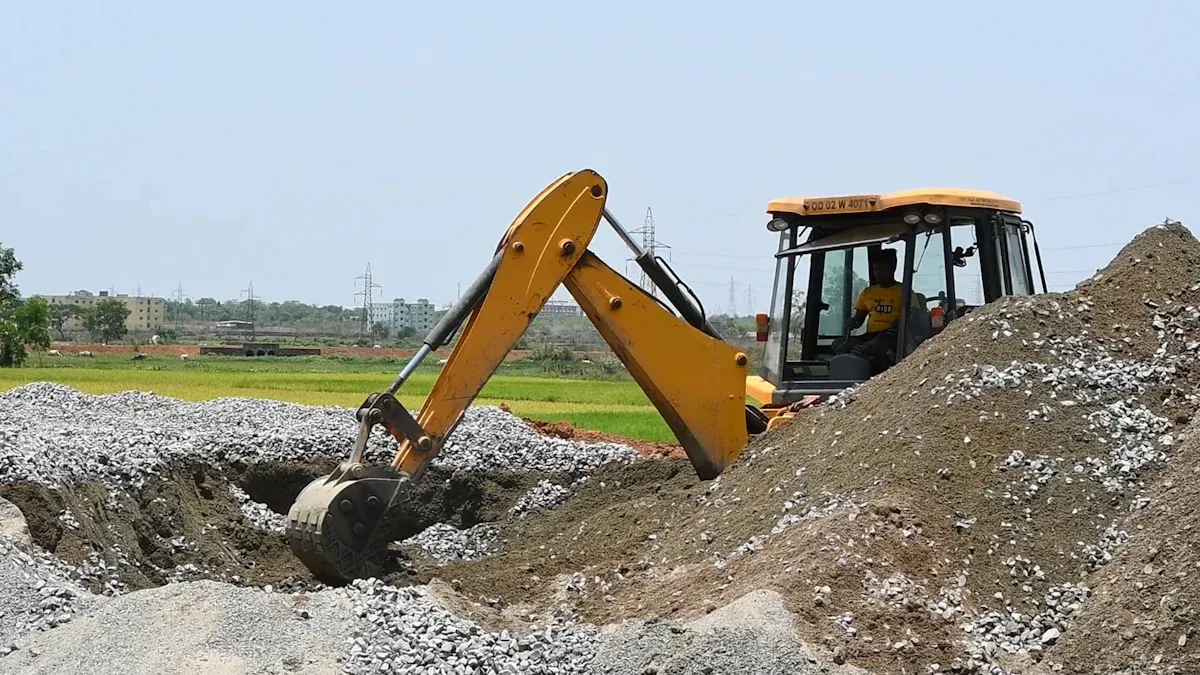
Creuser dans un sol dur ou rocheux présente des défis uniques Vous devez ajuster vos paramètres de Mini Excavator et choisir les bons accessoires pour maximiser l'efficacité Ces stratégies vous aident à affronter un sol difficile et à maintenir votre projet en mouvement.
Vous pouvez améliorer les performances de creusement en ajustant l'angle du godet Commencez avec un angle peu profond pour faire des pénétrations de lumière Cette technique vous permet de tester la stabilité du sol et de réduire la résistance Au fur et à mesure que vous progressez, augmentez l'angle pour soulever et briser le matériau compacté Les opérateurs trouvent souvent que changer la position du seau lors des différentes étapes de creusement permet de gérer la résistance Lorsque le godet atteint son point le plus profond, les pics de résistance Le réglage de l'angle à ce stade peut faire une différence significative.
Conseil : Gardez toujours les dents du seau bien aiguisées Les dents ternes augmentent la résistance et ralentissent votre travail.
Le passage à un mode de puissance plus élevée augmente la force hydraulique Vous devez utiliser ce réglage lorsque vous rencontrez un sol dense ou rocheux Commencez avec la puissance standard pour la pénétration initiale Si la Mini Excavatrice se débat, passez à la puissance maximale Ce réglage aide la machine à percer les couches difficiles Surveillez la température du moteur et la consommation de carburant pendant le fonctionnement à haute puissance La surutilisation de la puissance maximale peut entraîner une surchauffe ou une augmentation des coûts de carburant.
Sélectionner le bon seau est crucial pour un sol dur Les seaux dentés fonctionnent mieux pour un sol compacté et rocheux Leur conception leur permet de couper efficacement un matériau dense Les seaux de tranchée, qui sont longs et étroits avec des dents pointues, excellent dans le gravier et le sol compacté Les seaux rocheux offrent des performances robustes pour les matériaux abrasifs Ils manipulent de grosses roches et de la terre dense, ce qui les rend idéaux pour les travaux de carrière ou de démolition Les seaux standard conviennent aux sols plus tendres mais luttent dans des conditions difficiles.
| Type de pièce jointe | Meilleur cas d'utilisation | Performance dans les sols durs | Durabilité | Projets Typiques |
|---|---|---|---|---|
| Seau denté | Sol compacté et rocheux | Haut | Moyen | Excavation générale |
| Godet de tranchée | Gravier, sol compacté | Haut | Moyen | Tranchée utilitaire |
| Seau à roches | Grandes roches, sol abrasif | Exceptionnel | Haut | Carrière, démolition |
| Godet standard | Sol meuble | Faible | Faible | Aménagement paysager |
Remarque : l'expérience de l'opérateur joue un rôle majeur dans l'efficacité du creusement. Des opérateurs qualifiés ajustent la position et la technique du godet pour surmonter la résistance.
Attaches d'éventreur briser le sol compacté et les surfaces dures Vous devez utiliser un ripper avant de passer à un seau dans des conditions extrêmement difficiles Le ripper desserre le sol, ce qui facilite le creusement de la Mini Excavator Cette méthode réduit l'usure des seaux et améliore l'efficacité globale Les rippers sont particulièrement utiles dans l'argile, le terrain rocheux, ou lorsque vous avez besoin de briser le vieux béton.
Un gestionnaire de chantier a dû relever un défi avec de l'argile dure et des roches éparses lors d'un projet de tranchée utilitaire La Mini Excavator a EU du mal avec un godet standard, ce qui a causé des retards et une consommation excessive de carburant Le gestionnaire a pris ces mesures :
Le projet s'est terminé plus tôt que prévu Les coûts de carburant ont chuté en 201TP3 T. L'usure de l'équipement a diminué L'équipe a partagé son expérience sur Forum Équipement lourd de Reddit et a fait référence aux meilleures pratiques de Le monde de l'équipement.
Callout : Faire correspondre le bon attachement et les bons paramètres aux conditions du sol permet d'économiser du temps et de l'argent.
Des tranchées inégales peuvent ralentir votre projet et créer des risques pour la sécurité Vous pouvez résoudre ces problèmes en vous concentrant sur l'alignement des voies et des pales, ainsi qu'en affinant votre technique d'opérateur Ces étapes vous aident à réaliser des tranchées droites et de niveau et à réduire les retouches coûteuses.
Un alignement correct maintient votre Mini Excavator sur le bon chemin Vous devriez toujours cochez les marques de décalage avant de commencer Cette habitude garantit que votre machine suit la ligne de tranchée prévue Le réglage de l'angle de la lame en fonction du sol et du terrain améliore l'efficacité du creusement Vous pouvez éviter de dériver hors de la trajectoire et maintenir la qualité de la tranchée.
Vous devez niveler vos chenilles avant chaque passage Placez la machine sur un sol stable et utilisez la lame pour créer une surface plane Abaissez la lame jusqu'à ce qu'elle touche le sol, puis ajustez jusqu'à ce que la cabine soit équilibrée Cette étape empêche la pelle de basculer, ce qui peut provoquer une profondeur de tranchée inégale.
Réglez la lame à angle droit pour le type de sol Dans un sol mou, gardez la lame légèrement surélevée pour éviter de creuser trop profondément Pour un sol rocheux ou compacté, abaissez la lame pour une stabilité supplémentaire Ajustez la lame lorsque vous vous déplacez le long de la tranchée pour maintenir une profondeur constante.
Conseil : Vérifiez régulièrement l'usure de la lame Une lame endommagée peut entraîner des coupes inégales et un entretien supplémentaire.
Votre technique joue un rôle majeur dans la qualité des tranchées Vous devriez vous concentrer sur la profondeur du godet et la consistance des parois des tranchées Les petits ajustements font une grande différence.
Maintenir une profondeur de godet constante dans toute la tranchée Utiliser la jauge de profondeur de la machine si disponible Éviter de changer trop souvent l'angle de godet Une étude de 2023 a constaté que 68% d'accidents de tranchées résultat d'angles de godet incorrects Chaque type de sol nécessite un angle spécifique pour un creusement sûr et efficace Pratiquez le maintien du godet à la même profondeur pour chaque passage.
Gardez une distance de sécurité par rapport aux parois des tranchées Le NIOSH recommande une distance égale à la profondeur de la tranchée plus deux pieds Cette pratique empêche les effondrements et éloigne les tas de déblais du bord Les normes de l'OSHA exigent des systèmes de confinement pour les tas de déblais de plus de cinq pieds La négligence de ces règles peut entraîner des ruptures de tranchées.
Causes courantes des tranchées inégales :
Comment l'alignement influence la qualité des tranchées :
| Type d'erreur | Impact sur la qualité des tranchées | Solution |
|---|---|---|
| Angle de godet incorrect | Profondeur inégale, accidents | Correspondre l'angle au type de sol |
| Mauvais alignement des voies | Tranchée tordue | Utilisez des marques de décalage, des pistes de niveau |
| Position incorrecte de la lame | Profondeur incohérente | Ajuster la lame pour le sol/terrain |
| Distance dangereuse du mur | Risque d'effondrement | Maintenir l'espacement recommandé |
Une équipe de service public a été confrontée à des problèmes répétés avec des tranchées inégales L'exploitant a remarqué que la profondeur de la tranchée variait et que les murs se sont effondrés dans certaines sections L'équipe a revu leur processus :
Après ces changements, la qualité des tranchées s'est améliorée L'équipage a réduit les remaniements et évité les incidents de sécurité Ils ont partagé leur expérience sur Forum Équipement lourd de Reddit et a fait référence aux meilleures pratiques de La page de sécurité des tranchées de l'OSHA.
Callout : Un alignement cohérent et une technique soignée vous aident à créer des tranchées sûres et droites à chaque fois.
Les modèles modernes de Mini Excavator offrent des fonctionnalités de contrôle avancées qui vous aident à obtenir des résultats de creusement précis Vous pouvez profiter de ces technologies pour améliorer la précision, réduire les erreurs et augmenter la productivité à chaque travail.
Un calibrage adéquat de vos commandes garantit que votre godet répond exactement comme vous le souhaitez Vous devez vous concentrer sur deux facteurs principaux : la sensibilité et le temps de réponse.
La sensibilité de contrôle détermine la quantité de mouvement que le joystick traduit en action de seau Une sensibilité élevée permet des ajustements rapides, mais elle peut rendre les mouvements fins difficiles Une faible sensibilité offre un contrôle plus fluide, ce qui est idéal pour un travail détaillé.
| Niveau de Sensibilité | Cas d'utilisation typique | Opérateur Feedback | Taux d'erreur (%) |
|---|---|---|---|
| Haut | Excavation en vrac | Rapide, moins précis | 12 |
| Moyen | Creusement général | Équilibré | 7 |
| Faible | Classer la finition | Lisse, précis | 3 |
Conseil : Ajustez la sensibilité en fonction de la tâche Utilisez une sensibilité plus faible pour le travail de finition et des réglages plus élevés pour creuser rapidement.
Le temps de réponse mesure la rapidité avec laquelle le godet réagit à votre entrée Les temps de réponse rapides vous aident à travailler efficacement, mais ils peuvent entraîner une surcorrection s'ils ne sont pas gérés avec soin Des temps de réponse plus lents permettent des mouvements plus délibérés.
| Temps de réponse (ms) | Application | Satisfaction de l'opérateur (%) |
|---|---|---|
| 50 | Creusement de tranchées | 82 |
| 100 | Notation | 90 |
| 200 | Creusement de précision | 96 |
Note: Technologie de détection de charge et commandes électrohydrauliques dans les machines modernes, améliorez à la fois la sensibilité et le temps de réponse, vous offrant un fonctionnement plus fluide et plus précis.
Vous devez maîtriser les mouvements fins pour obtenir des coupes nettes et éviter les erreurs Les fonctionnalités avancées et les techniques éprouvées facilitent cela.
Le fonctionnement fluide du godet dépend d'une entrée régulière du joystick et de l'utilisation de technologies d'assistance Indiquez que les systèmes fournissent un retour en temps réel, vous aidant à définir la profondeur et la pente de la cible. Ce retour réduit la fatigue et augmente la précision. Swing Assist automatise la vitesse de balancement, vous permettant d'atteindre les points désignés de manière cohérente lors de tâches répétitives.
La surcorrection peut ruiner les murs des tranchées ou créer des surfaces inégales E-Fence fixe les limites de votre zone de travail, vous empêchant de creuser en dehors des zones de sécurité Bucket Assist maintient le dernier angle de godet connu, garantissant des coupes précises et une finition de haute qualité.
Callout : Utilisez ces fonctionnalités pour réduire les erreurs et améliorer la qualité de finition Pratiquez des mouvements réguliers et comptez sur des systèmes de rétroaction pour obtenir les meilleurs résultats.
Un équipage a EU du mal avec des fonds de tranchées inégaux et a perdu du temps à corriger les erreurs L'opérateur a recalibré la sensibilité du contrôle à un réglage inférieur pour le classement des finitions Il a utilisé Indiquer pour le retour de profondeur en temps réel et activé Bucket Assist pour maintenir un angle constant L'équipe a réduit les taux d'erreur de 601TP3 T et a terminé le projet plus tôt que prévu Pour plus de conseils, visitez Le monde de l'équipement ou participez aux discussions sur Forum Équipement lourd de Reddit.
Conseil exploitable : testez toujours les paramètres de contrôle avant de commencer une nouvelle tâche Ajustez la sensibilité et le temps de réponse pour qu'ils correspondent aux exigences du travail.
Les problèmes hydrauliques et d'alimentation peuvent ralentir votre Mini Excavator et entraîner des réparations coûteuses Vous devez surveiller les niveaux de liquide et inspecter régulièrement les tuyaux et les connexions Ces étapes vous aident à maintenir de solides performances et à éviter les pannes inattendues.
Le fluide hydraulique alimente le mouvement de votre machine Un fluide faible ou contaminé peut provoquer un fonctionnement lent, une surchauffe et des fuites Vous devez vérifier les niveaux de liquide tous les jours avant de commencer le travail.
Commencez par garer votre Mini Excavator sur un sol plat Baissez le godet et réglez les commandes au point mort Arrêtez le moteur et retirez la clé de contact Regardez la jauge de visée ou la jauge de liquide hydraulique Le liquide doit atteindre la marque recommandée et paraître propre Un liquide trouble ou sombre signale une contamination. Contrôles réguliers des niveaux de liquide soutenez un fonctionnement efficace et peut prolonger la durée de vie de votre machine jusqu'à 251TP3 T. Les inspections quotidiennes aident à prévenir les pannes et à maintenir votre travail fluide.
Si le liquide est faible, remplissez-le avec l'huile hydraulique correcte Utilisez un entonnoir propre et évitez d'introduire de la saleté ou des débris Remplissez lentement et vérifiez souvent le niveau Ne remplissez pas trop, car cela peut causer des problèmes de pression Après le remplissage, faites tourner le moteur pendant quelques minutes et revérifiez le niveau de liquide approprié pour aider à prévenir la surchauffe et maintenir la puissance.
Conseil : Utilisez toujours l'huile hydraulique recommandée par le fabricant Les contaminants présents dans le fluide peuvent endommager les joints et les pompes.
Les tuyaux et les raccords transportent le liquide hydraulique dans toute votre Mini Excavatrice Les tuyaux usés ou desserrés peuvent entraîner des fuites, une puissance réduite et une surchauffe Vous devez inspecter ces pièces régulièrement et résoudre tout problème immédiatement.
Commencez par inspecter l'ensemble de la machine à la recherche de pièces manquantes, de pinces desserrées ou de tuyaux qui frottent les uns contre les autres Serrez toutes les connexions desserrées à l'aide des outils appropriés Assurez-vous de ne pas plier ou appliquer de pression sur les colliers de serrage et les supports sécurisés pour empêcher les tuyaux de bouger pendant le fonctionnement.
Remplacez tous les tuyaux qui présentent des signes d'usure, de fissures ou de fuites Arrêtez le moteur et relâchez la pression hydraulique avant de retirer les anciens tuyaux Installez de nouveaux tuyaux avec des raccords appropriés et vérifiez les fuites après le démarrage des joints usés ou des tuyaux fissurés provoquent souvent fuites de liquide hydraulique et puissance réduite.
Problèmes hydrauliques et électriques courants dans les mini-pelles :
| Problème | Fréquence (%) | Cause Typique |
|---|---|---|
| Fuites de liquide hydraulique | 38 | Joints usés, tuyaux fissurés |
| Puissance réduite/atonie | 27 | Faible fluidité, tuyaux bloqués, pompe usée |
| Surchauffe | 22 | Utilisation lourde, manque de refroidisseur d'huile |
| Fluide contaminé | 13 | Mauvais entretien, environnement sale |
Note: Tuyaux bloqués ou restreints, 1, des réglages incorrects de la soupape de surpression et une utilisation intensive et continue peuvent également entraîner des problèmes de performances.
Un équipage a remarqué que leur Mini Excavator perdait de la puissance et surchauffait pendant un long travail de tranchée Ils ont suivi ces étapes :
L'équipe a réduit les temps d'arrêt et amélioré l'efficacité Ils ont partagé leur expérience sur Forum Équipement lourd de Reddit et en a appris davantage sur la maintenance hydraulique Le monde de l'équipement.
Callout : Des inspections régulières et des réparations rapides maintiennent votre Mini Excavator en marche solide et sûre.

Vous pouvez assurer le bon fonctionnement de votre Mini Excavator et éviter des temps d'arrêt coûteux en suivant une solide routine de maintenance préventive. Des contrôles quotidiens simples et des habitudes intelligentes vous aident à résoudre les petits problèmes avant qu'ils ne deviennent de gros problèmes.
Commencez chaque journée par une inspection approfondie Cette routine vous aide à repérer tôt l'usure, les fuites ou les dommages Utilisez cette liste de contrôle pour guider votre promenade quotidienne :
| Vérification Quotidienne | La description |
|---|---|
| Inspectez le train de roulement | Recherchez des signes de dommages ou d'usure excessive sur les chenilles et les rouleaux Nettoyez les débris pour éviter leur accumulation. |
| Vérifier les niveaux de liquide | Assurez-vous que l'huile hydraulique, l'huile moteur et le liquide de refroidissement sont à des niveaux appropriés. Rechargez si nécessaire. |
| Examiner les pièces jointes | Vérifiez les fissures, l'usure ou les dommages sur les accessoires. Assurez-vous qu’ils sont solidement fixés. |
| Testez les contrôles | Exécutez la machine et vérifiez toutes les fonctions de contrôle pour vérifier leur réactivité et leurs bruits inhabituels. |
| Surveiller les Jauges | Assurez-vous que tous les jauges et feux d'avertissement fonctionnent correctement et surveillez les lectures inhabituelles. |
Conseil : Une inspection quotidienne prend moins de 10 minutes mais peut économiser des heures d'arrêt.
Vous devez suivre le calendrier de maintenance dans votre manuel d'exploitation La plupart des experts recommandent ces intervalles de service :
| Tâche | Intervalle | Impact sur la longévité (%) |
|---|---|---|
| Changement d'huile moteur | Toutes les 250 heures | +20 |
| Remplacement du filtre hydraulique | Toutes les 500 heures | +18 |
| Réglage de la tension de la piste | Toutes les 100 heures | +15 |
| Nettoyage du filtre à air | Toutes les 100 heures | +12 |
| Remplacement du filtre à carburant | Toutes les 250 heures | +10 |
Le service régulier à ces intervalles peut prolonger la durée de vie de la machine jusqu'à 251TP3 T. Pour plus de détails, consultez Guides d'entretien d'Equipment World ou participez aux discussions sur Forum Équipement lourd de Reddit.
Laissez toujours votre machine se réchauffer avant une utilisation intensive Démarrez le moteur et laissez-le tourner au ralenti pendant quelques minutes Cette étape permet à l'huile de circuler et aux pièces d'atteindre la température de fonctionnement Les démarrages à froid peuvent provoquer une usure supplémentaire des systèmes hydrauliques et des moteurs.
Vous pouvez prévenir la plupart des pannes en suivant ces meilleures pratiques :
Remarque : Des routines de maintenance cohérentes vous aident à éviter les pannes inattendues et à maintenir votre mini-pelle en parfait état.
Une équipe de construction a adopté une routine de maintenance quotidienne et hebdomadaire stricte Chaque matin, l'opérateur a rempli une liste de contrôle couvrant le train d'atterrissage, les fluides et les accessoires L'équipe a changé l'huile et les filtres aux intervalles recommandés et a tenu un journal de toute maintenance Sur six mois, la machine a connu zéro panne imprévue Les coûts de service ont chuté de 301TP3 T, et la productivité a augmenté L'équipage a partagé sa routine sur les forums de l'industrie et a encouragé les autres à suivre des horaires similaires.
Callout : La maintenance préventive est votre meilleur outil pour maximiser la disponibilité et protéger votre investissement.
Pour plus de conseils et de conseils communautaires, visitez Le monde de l'équipement ou rejoignez la conversation sur Forum Équipement lourd de Reddit.
Vous pouvez résoudre la plupart des problèmes de mini-pelle en suivant un processus structuré de dépannage Commencez par une inspection visuelle Recherchez les fuites, les tuyaux usés ou les accessoires endommagés Vérifiez les niveaux de liquide et surveillez les jauges pour déceler les lectures anormales Écoutez les bruits inhabituels pendant le fonctionnement Testez toutes les commandes pour confirmer la réactivité Si vous remarquez une puissance réduite ou des mouvements saccadés, inspectez le système hydraulique et les raccords Serrez les raccords desserrés et remplacez les tuyaux endommagés Nettoyez les filtres et vérifiez les blocages Documentez chaque étape pour suivre les progrès et identifier les modèles.
Utilisez ce guide de référence rapide pour aborder les problèmes communs :
Conseil : Gardez un journal quotidien des inspections et des réparations Cette habitude vous aide à repérer les problèmes récurrents et à planifier l'entretien.
| Problème commun | Correction rapide | Quand appeler un pro |
|---|---|---|
| Fuite hydraulique | Serrer/remplacer les tuyaux | Fuites persistantes |
| Mouvements saccadés | Contrôles Calibrate | Aucune amélioration |
| Creusement lent | Vérifier le fluide/filtre | Défaillance moteur/hydraulique |
| Tranchée inégale | Ajuster l'alignement | Dommages structurels |
| Surchauffe | Liquides de recharge/propre | Surchauffe répétée |
Vous devriez demander l'aide d'un professionnel lorsque le dépannage de base ne résout pas le problème. Inspections régulières vous aider à attraper les dommages visibles tôt Surveillez les signes d'usure qui suggèrent que des réparations sont nécessaires Surveillez les inefficacités opérationnelles, telles que les pertes de puissance persistantes ou les pannes répétées Si vous remarquez l'un de ces problèmes, contactez un technicien certifié.
Remarque : Un bon entretien améliore l'efficacité et prolonge la durée de vie de votre mini-pelle Des contrôles réguliers aident à prévenir les pannes et à réduire les coûts de réparation Certains problèmes nécessitent une réparation experte, même avec un entretien de routine.
Une équipe a remarqué que leur mini-pelle perdait de la puissance et produisait des mouvements saccadés lors d'un travail de tranchée L'opérateur a effectué une inspection visuelle et a trouvé un tuyau hydraulique usé Il a remplacé le tuyau et vérifié les niveaux de liquide Le problème a persisté, alors il a calibré les commandes et nettoyé les filtres Après ces étapes, la machine a fonctionné sans problème L'équipe a documenté le processus et a partagé son expérience sur Forum Équipement lourd de Reddit et j'en ai appris davantage Le monde de l'équipement.
Callout : Le dépannage systématique permet d'économiser du temps et de l'argent Si les problèmes persistent, appelez un professionnel pour éviter des réparations coûteuses.
Vous pouvez résoudre la plupart des problèmes de creusement de mini-pelle en suivant un processus clair Commencez par inspections quotidiennes, 1, vérifier les niveaux de liquide, et rechercher les fuites ou les pièces usées. Maintenance régulière, y compris les changements de filtre et les points de pivotement de graissage, maintient votre machine en marche plus longtemps La formation des opérateurs et les techniques sûres améliorent les résultats et réduisent les erreurs d'utilisation commandes ergonomiques et répondez rapidement aux problèmes pour une fouille plus fluide. Partagez vos propres conseils de dépannage ou questions ci-dessous. Notre expérience aide les autres à réussir.
Vérifiez d'abord les niveaux de liquide hydraulique Inspectez les tuyaux pour déceler toute fuite ou tout dommage Nettoyez les filtres et assurez-vous que les dents du seau sont bien aiguisées Si le problème persiste, consultez un technicien.
Niveler les voies avant chaque passage Régler la position de la pale pour la stabilité Utiliser le profondimètre pour maintenir le godet à une profondeur constante Pratiquer des mouvements réguliers pour les parois droites des tranchées.
Le faible niveau de liquide hydraulique ou les filtres bloqués provoquent souvent une surchauffe Nettoyez le système de refroidissement et remplissez les fluides Évitez de faire fonctionner la machine à la puissance maximale pendant de longues périodes.
Basculer sur un godet denté ou à roche Utilisez un accessoire de défonceuse pour briser les sols difficiles Augmentez le mode de puissance seulement en cas de besoin Surveillez la température du moteur pendant les fouilles abondantes.
Inspectez quotidiennement les tuyaux et les raccords avant de commencer les travaux Recherchez les fissures, les fuites ou les raccords desserrés Remplacez immédiatement les tuyaux endommagés pour éviter les pannes.
Vous remarquerez peut-être des mouvements saccadés de seaux ou des temps de réponse lents Testez les commandes pour en vérifier la précision Ajustez les paramètres de sensibilité pour qu'ils correspondent à votre tâche Étalonnez régulièrement les commandes pour un fonctionnement fluide.
Gardez une distance de sécurité des bords des tranchées Placez les tas de déblais loin de la tranchée Utilisez des systèmes de confinement pour les tranchées profondes Suivez les directives de sécurité pour éviter les effondrements.
Appelez un technicien si vous voyez des fuites persistantes, des pertes d'énergie répétées ou des bruits inhabituels après un dépannage de base. L’aide professionnelle garantit des réparations sûres et fiables.







-1.png)