Email: [email protected] Whatsapp: +8618266768780

Email: [email protected] Whatsapp: +8618266768780


Mini Excavator machines deliver impressive power and efficiency for challenging jobs. You may still encounter common digging problems, such as unpredictable soil conditions, water table complications, weather issues, or site access constraints. Spotting these challenges quickly lets you keep your project on track. Whether you use a rental or own your equipment, practical troubleshooting works across all models. Targeted fixes help you maintain reliable performance and minimize downtime.
You rely on your Mini Excavator to deliver consistent results, but even the best machines can show signs of poor performance. These diagnostic steps apply to all major brands and rental models, so you can use them no matter which equipment you operate. Quick diagnosis helps you maximize uptime and keep your project moving.
Recognizing early warning signs lets you address issues before they become costly. Common symptoms include:
Tip: Power deficiencies can reduce productivity by 30-40%. Inability to multi-task can lower efficiency by up to 45%. Underpowered excavators may increase fuel costs by 15-25%.
If your Mini Excavator digs slowly, check for hydraulic delays or engine power loss. You may notice the bucket hesitating or failing to penetrate soil efficiently.
Jerky or uneven movements often point to hydraulic issues or control calibration problems. Watch for sudden stops or erratic bucket motion.
You can identify root causes by combining visual checks and attentive listening. Follow these steps for effective troubleshooting:
Unusual sounds, such as grinding or hissing, often signal mechanical or hydraulic problems. Listen during operation and idle periods.
| Problem Type | Troubleshooting Steps |
|---|---|
| Hydraulic system sluggish/inactive | 1. Check hydraulic oil level and quality. 2. Measure pump outlet pressure. 3. Inspect and clean hydraulic valve. 4. Check for oil pipe leaks. |
A contractor noticed his Mini Excavator struggled to dig and overheated during routine trenching. He followed these steps:
After these actions, the machine returned to normal performance, fuel costs dropped, and downtime decreased.
Note: Quick diagnosis leads to predictive maintenance, reducing unexpected failures and boosting productivity. For more tips, visit Equipment World or join discussions on Reddit’s Heavy Equipment forum.
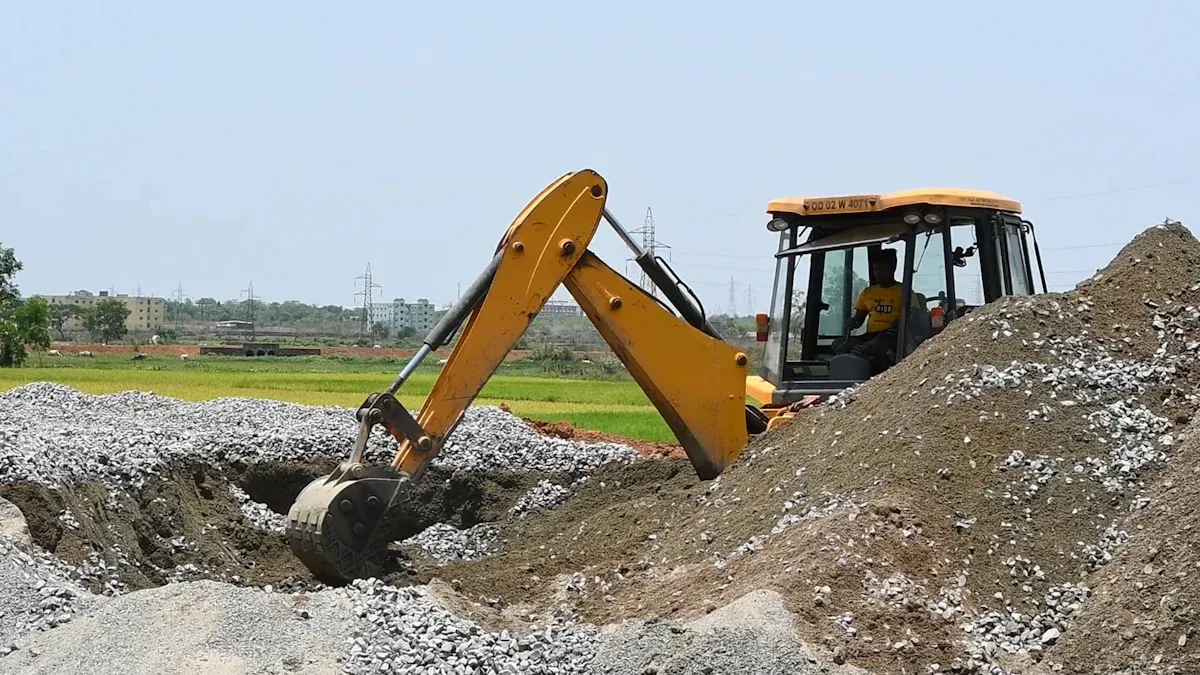
Digging in hard or rocky soil presents unique challenges. You need to adjust your Mini Excavator settings and choose the right attachments to maximize efficiency. These strategies help you tackle tough ground and keep your project moving.
You can improve digging performance by adjusting the bucket angle. Start with a shallow angle to make light penetrations. This technique lets you test soil stability and reduces resistance. As you progress, increase the angle to lift and break up compacted material. Operators often find that changing the bucket stance during different digging stages helps manage resistance. When the bucket reaches its deepest point, resistance peaks. Adjusting the angle at this stage can make a significant difference.
Tip: Always keep the bucket teeth sharp. Dull teeth increase resistance and slow down your work.
Switching to a higher power mode boosts hydraulic force. You should use this setting when you encounter dense or rocky soil. Begin with standard power for initial penetration. If the Mini Excavator struggles, shift to maximum power. This adjustment helps the machine break through tough layers. Monitor engine temperature and fuel consumption during high-power operation. Overuse of maximum power can lead to overheating or increased fuel costs.
Selecting the right bucket is crucial for hard soil. Toothed buckets work best for compacted, rocky ground. Their design allows them to cut through dense material efficiently. Trenching buckets, which are long and narrow with sharp teeth, excel in gravel and compacted soil. Rock buckets offer heavy-duty performance for abrasive materials. They handle large rocks and dense earth, making them ideal for quarry or demolition work. Standard buckets suit softer soils but struggle in hard conditions.
| Attachment Type | Best Use Case | Performance in Hard Soil | Durability | Typical Projects |
|---|---|---|---|---|
| Toothed Bucket | Compacted, rocky soil | High | Medium | General excavation |
| Trenching Bucket | Gravel, compacted soil | High | Medium | Utility trenching |
| Rock Bucket | Large rocks, abrasive soil | Exceptional | High | Quarry, demolition |
| Standard Bucket | Soft soil | Low | Low | Landscaping |
Note: Operator experience plays a major role in digging effectiveness. Skilled operators adjust bucket stance and technique to overcome resistance.
Ripper attachments break up compacted soil and hard surfaces. You should use a ripper before switching to a bucket in extremely tough conditions. The ripper loosens the ground, making it easier for the Mini Excavator to dig. This method reduces wear on buckets and improves overall efficiency. Rippers are especially useful in clay, rocky terrain, or when you need to break up old concrete.
A site manager faced a challenge with hard clay and scattered rocks during a utility trenching project. The Mini Excavator struggled with a standard bucket, causing delays and excessive fuel use. The manager took these steps:
The project finished ahead of schedule. Fuel costs dropped by 20%. Equipment wear decreased. The team shared their experience on Reddit’s Heavy Equipment forum and referenced best practices from Equipment World.
Callout: Matching the right attachment and settings to soil conditions saves time and money.
Uneven trenches can slow your project and create safety risks. You can solve these problems by focusing on track and blade alignment, as well as refining your operator technique. These steps help you achieve straight, level trenches and reduce costly rework.
Proper alignment keeps your Mini Excavator on the correct path. You should always check offset marks before starting. This habit ensures your machine follows the planned trench line. Adjusting the blade angle based on soil and terrain improves digging efficiency. You can avoid drifting off course and maintain trench quality.
You need to level your tracks before each pass. Place the machine on stable ground and use the blade to create a flat surface. Lower the blade until it touches the ground, then adjust until the cab feels balanced. This step prevents the excavator from tilting, which can cause uneven trench depth.
Set the blade at the right angle for the soil type. In soft soil, keep the blade slightly raised to avoid digging too deep. For rocky or compacted ground, lower the blade for extra stability. Adjust the blade as you move along the trench to maintain a consistent depth.
Tip: Regularly check the blade for wear. A damaged blade can lead to uneven cuts and extra maintenance.
Your technique plays a major role in trench quality. You should focus on bucket depth and trench wall consistency. Small adjustments make a big difference.
Maintain a steady bucket depth throughout the trench. Use the machine’s depth gauge if available. Avoid changing the bucket angle too often. A study from 2023 found that 68% of trenching accidents result from incorrect bucket angles. Each soil type requires a specific angle for safe and efficient digging. Practice keeping the bucket at the same depth for each pass.
Keep a safe distance from trench walls. NIOSH recommends a distance equal to the trench depth plus two feet. This practice prevents collapses and keeps spoil piles away from the edge. OSHA standards require containment systems for spoil piles over five feet. Neglecting these rules can lead to trench failures.
Common Causes of Uneven Trenches:
How Alignment Influences Trench Quality:
| Error Type | Impact on Trench Quality | Solution |
|---|---|---|
| Incorrect bucket angle | Uneven depth, accidents | Match angle to soil type |
| Poor track alignment | Crooked trench | Use offset marks, level tracks |
| Improper blade position | Inconsistent depth | Adjust blade for soil/terrain |
| Unsafe wall distance | Collapse risk | Maintain recommended spacing |
A utility crew faced repeated issues with uneven trenches. The operator noticed the trench depth varied and the walls collapsed in some sections. The team reviewed their process:
After these changes, trench quality improved. The crew reduced rework and avoided safety incidents. They shared their experience on Reddit’s Heavy Equipment forum and referenced best practices from OSHA’s trenching safety page.
Callout: Consistent alignment and careful technique help you create safe, straight trenches every time.
Modern Mini Excavator models offer advanced control features that help you achieve precise digging results. You can take advantage of these technologies to improve accuracy, reduce errors, and boost productivity on every job.
Proper calibration of your controls ensures that your bucket responds exactly as you intend. You should focus on two main factors: sensitivity and response time.
Control sensitivity determines how much movement the joystick translates into bucket action. High sensitivity allows for quick adjustments, but it can make fine movements challenging. Low sensitivity provides smoother control, which is ideal for detailed work.
| Sensitivity Level | Typical Use Case | Operator Feedback | Error Rate (%) |
|---|---|---|---|
| High | Bulk excavation | Fast, less precise | 12 |
| Medium | General digging | Balanced | 7 |
| Low | Finish grading | Smooth, precise | 3 |
Tip: Adjust sensitivity based on the task. Use lower sensitivity for finish work and higher settings for fast digging.
Response time measures how quickly the bucket reacts to your input. Fast response times help you work efficiently, but they can lead to overcorrection if not managed carefully. Slower response times allow for more deliberate movements.
| Response Time (ms) | Application | Operator Satisfaction (%) |
|---|---|---|
| 50 | Trenching | 82 |
| 100 | Grading | 90 |
| 200 | Precision digging | 96 |
Note: Load-sensing technology and electro-hydraulic controls in modern machines enhance both sensitivity and response time, giving you smoother and more accurate operation.
You need to master fine movements to achieve clean cuts and avoid mistakes. Advanced features and proven techniques make this easier.
Smooth bucket operation depends on steady joystick input and the use of assistive technologies. Indicate systems provide real-time feedback, helping you set target depth and slope. This feedback reduces fatigue and increases accuracy. Swing Assist automates swing speed, allowing you to hit designated points consistently during repetitive tasks.
Overcorrection can ruin trench walls or create uneven surfaces. E-Fence sets boundaries for your work area, preventing you from digging outside safe zones. Bucket Assist maintains the last known bucket angle, ensuring accurate cuts and a high-quality finish.
Callout: Use these features to reduce errors and improve finish quality. Practice steady movements and rely on feedback systems for best results.
A crew struggled with uneven trench bottoms and wasted time correcting mistakes. The operator recalibrated control sensitivity to a lower setting for finish grading. He used Indicate for real-time depth feedback and activated Bucket Assist to maintain a consistent angle. The team reduced error rates by 60% and completed the project ahead of schedule. For more tips, visit Equipment World or join discussions on Reddit’s Heavy Equipment forum.
Actionable Tip: Always test control settings before starting a new task. Adjust sensitivity and response time to match the job requirements.
Hydraulic and power issues can slow down your Mini Excavator and lead to costly repairs. You need to monitor fluid levels and inspect hoses and connections regularly. These steps help you maintain strong performance and avoid unexpected breakdowns.
Hydraulic fluid powers the movement of your machine. Low or contaminated fluid can cause sluggish operation, overheating, and leaks. You should check fluid levels every day before starting work.
Start by parking your Mini Excavator on level ground. Lower the bucket and set controls to neutral. Shut off the engine and remove the ignition key. Look at the hydraulic fluid sight gauge or dipstick. The fluid should reach the recommended mark and appear clean. Cloudy or dark fluid signals contamination. Regular checks of fluid levels support efficient operation and can extend the life of your machine by up to 25%. Daily inspections help prevent breakdowns and keep your work smooth.
If the fluid is low, refill it with the correct hydraulic oil. Use a clean funnel and avoid introducing dirt or debris. Fill slowly and check the level often. Do not overfill, as this can cause pressure problems. After refilling, run the engine for a few minutes and recheck the level. Proper fluid levels help prevent overheating and maintain power.
Tip: Always use the manufacturer’s recommended hydraulic oil. Contaminants in the fluid can damage seals and pumps.
Hoses and connections carry hydraulic fluid throughout your Mini Excavator. Worn or loose hoses can lead to leaks, reduced power, and overheating. You should inspect these parts regularly and address any issues right away.
Begin by inspecting the entire machine for missing parts, loose clamps, or hoses that rub against each other. Tighten any loose connections using the correct tools. Make sure not to bend or apply pressure to pipelines. Secure clamps and supports to prevent hoses from moving during operation.
Replace any hoses that show signs of wear, cracks, or leaks. Shut off the engine and relieve hydraulic pressure before removing old hoses. Install new hoses with proper fittings and check for leaks after starting the engine. Worn seals or cracked hoses often cause hydraulic fluid leaks and reduced power.
Common Hydraulic and Power Issues in Mini Excavators:
| Issue | Frequency (%) | Typical Cause |
|---|---|---|
| Hydraulic fluid leaks | 38 | Worn seals, cracked hoses |
| Reduced power/sluggishness | 27 | Low fluid, blocked hoses, worn pump |
| Overheating | 22 | Heavy use, lack of oil cooler |
| Contaminated fluid | 13 | Poor maintenance, dirty environment |
Note: Blocked or restricted hoses, incorrect pressure relief valve settings, and continuous heavy use can also lead to performance problems.
A crew noticed their Mini Excavator lost power and overheated during a long trenching job. They followed these steps:
The team reduced downtime and improved efficiency. They shared their experience on Reddit’s Heavy Equipment forum and learned more about hydraulic maintenance from Equipment World.
Callout: Regular inspections and quick repairs keep your Mini Excavator running strong and safe.

You can keep your Mini Excavator running smoothly and avoid costly downtime by following a solid preventative maintenance routine. Simple daily checks and smart habits help you catch small issues before they become big problems.
Start each day with a thorough inspection. This routine helps you spot wear, leaks, or damage early. Use this checklist to guide your daily walk-around:
| Daily Check | Description |
|---|---|
| Inspect the Undercarriage | Look for signs of damage or excessive wear on tracks and rollers. Clean debris to prevent buildup. |
| Check Fluid Levels | Ensure hydraulic oil, engine oil, and coolant are at appropriate levels. Top up if necessary. |
| Examine the Attachments | Check for cracks, wear, or damage on attachments. Ensure they are securely fastened. |
| Test the Controls | Run the machine and check all control functions for responsiveness and unusual noises. |
| Monitor the Gauges | Ensure all gauges and warning lights are functioning correctly and watch for unusual readings. |
Tip: A daily inspection takes less than 10 minutes but can save hours of downtime.
You should follow the maintenance schedule in your operation manual. Most experts recommend these service intervals:
| Task | Interval | Impact on Longevity (%) |
|---|---|---|
| Engine Oil Change | Every 250 hours | +20 |
| Hydraulic Filter Replacement | Every 500 hours | +18 |
| Track Tension Adjustment | Every 100 hours | +15 |
| Air Filter Cleaning | Every 100 hours | +12 |
| Fuel Filter Replacement | Every 250 hours | +10 |
Regular service at these intervals can extend machine life by up to 25%. For more details, check out Equipment World’s maintenance guides or join discussions on Reddit’s Heavy Equipment forum.
Always let your machine warm up before heavy use. Start the engine and let it idle for a few minutes. This step allows oil to circulate and parts to reach operating temperature. Cold starts can cause extra wear on hydraulic systems and engines.
You can prevent most breakdowns by following these best practices:
Note: Consistent maintenance routines help you avoid unexpected failures and keep your Mini Excavator in top condition.
A construction crew adopted a strict daily and weekly maintenance routine. Each morning, the operator completed a checklist covering undercarriage, fluids, and attachments. The team changed oil and filters at recommended intervals and kept a log of all maintenance. Over six months, the machine experienced zero unplanned breakdowns. Service costs dropped by 30%, and productivity increased. The crew shared their routine on industry forums and encouraged others to follow similar schedules.
Callout: Preventative maintenance is your best tool for maximizing uptime and protecting your investment.
For more tips and community advice, visit Equipment World or join the conversation on Reddit’s Heavy Equipment forum.
You can solve most mini excavator problems by following a structured troubleshooting process. Start with a visual inspection. Look for leaks, worn hoses, or damaged attachments. Check fluid levels and monitor gauges for abnormal readings. Listen for unusual noises during operation. Test all controls to confirm responsiveness. If you notice reduced power or jerky movements, inspect the hydraulic system and connections. Tighten loose fittings and replace damaged hoses. Clean filters and check for blockages. Document each step to track progress and identify patterns.
Use this quick reference guide to address common issues:
Tip: Keep a daily log of inspections and repairs. This habit helps you spot recurring problems and plan maintenance.
| Common Issue | Quick Fix | When to Call a Pro |
|---|---|---|
| Hydraulic leak | Tighten/replace hoses | Persistent leaks |
| Jerky movements | Calibrate controls | No improvement |
| Slow digging | Check fluid/filter | Engine/hydraulic failure |
| Uneven trench | Adjust alignment | Structural damage |
| Overheating | Refill fluids/clean | Repeated overheating |
You should seek professional help when basic troubleshooting does not resolve the issue. Regular inspections help you catch visible damage early. Watch for signs of wear that suggest repairs are needed. Monitor for operational inefficiencies, such as persistent power loss or repeated breakdowns. If you notice any of these problems, contact a certified technician.
Note: Proper maintenance improves efficiency and extends the life of your mini excavator. Regular checks help prevent breakdowns and reduce repair costs. Some issues require expert repair, even with routine maintenance.
A crew noticed their mini excavator lost power and produced jerky movements during a trenching job. The operator performed a visual inspection and found a worn hydraulic hose. He replaced the hose and checked fluid levels. The problem persisted, so he calibrated the controls and cleaned the filters. After these steps, the machine operated smoothly. The team documented the process and shared their experience on Reddit’s Heavy Equipment forum and learned more from Equipment World.
Callout: Systematic troubleshooting saves time and money. If problems continue, call a professional to avoid costly repairs.
You can solve most mini excavator digging problems by following a clear process. Start with daily inspections, check fluid levels, and look for leaks or worn parts. Regular maintenance, including filter changes and greasing pivot points, keeps your machine running longer. Operator training and safe techniques improve results and reduce mistakes. Use ergonomic controls and respond quickly to issues for smoother digging. Share your own troubleshooting tips or questions below—your experience helps others succeed.
Check hydraulic fluid levels first. Inspect hoses for leaks or damage. Clean filters and ensure the bucket teeth are sharp. If the problem continues, consult a technician.
Level the tracks before each pass. Adjust the blade position for stability. Use the depth gauge to keep the bucket at a consistent depth. Practice steady movements for straight trench walls.
Low hydraulic fluid or blocked filters often cause overheating. Clean the cooling system and refill fluids. Avoid running the machine at maximum power for long periods.
Switch to a toothed or rock bucket. Use a ripper attachment to break up tough ground. Increase power mode only when needed. Monitor engine temperature during heavy digging.
Inspect hoses and connections daily before starting work. Look for cracks, leaks, or loose fittings. Replace damaged hoses immediately to prevent breakdowns.
You may notice jerky bucket movements or slow response times. Test the controls for accuracy. Adjust sensitivity settings to match your task. Calibrate controls regularly for smooth operation.
Keep a safe distance from trench edges. Place spoil piles away from the trench. Use containment systems for deep trenches. Follow safety guidelines to prevent collapses.
Call a technician if you see persistent leaks, repeated power loss, or unusual noises after basic troubleshooting. Professional help ensures safe and reliable repairs.







-1.png)