Dobrodošli na Shandong Qilu Industrial Co., Ltd

 Slovenian
 English
 Arabic
 Bulgarian
 Bengali
 Czech
Czech
 Danish
 German
 Greek
Greek
 Spanish
 Finnish
 French
 Hindi
Hindi
 Croatian
 Hungarian
 Indonesian
 Italian
 Japanese
 Korean
 Lithuanian
 Dutch
Dutch
 Norwegian
 Polish
 Portuguese
 Romanian
 Russian
 Slovak
 Swedish
 Thai
Thai
 Turkish
 Ukrainian
 Vietnamese
 Tagalog
 Malay
Malay
 Estonian
 Catalan
 Latvian
 Urdu
Urdu
 Serbian
 Persian
 Swahili
 Albanian
 Armenian
 Icelandic
 Bosnian
 Luxembourgish
 Afrikaans
Slovenian English
Arabic
Bulgarian
Bengali
Czech
Danish
German
Greek
Spanish
Finnish
French
Hindi
Croatian
Hungarian
Indonesian
Italian
Japanese
Korean
Lithuanian
Dutch
Norwegian
Polish
Portuguese
Romanian
Russian
Slovak
Swedish
Thai
Turkish
Ukrainian
Vietnamese
Tagalog
Malay
Estonian
Catalan
Latvian
Urdu
Serbian
Persian
Swahili
Albanian
Armenian
Icelandic
Bosnian
Luxembourgish
Afrikaans
Afrikaans
Slovenian English
Arabic
Bulgarian
Bengali
Czech
Danish
German
Greek
Spanish
Finnish
French
Hindi
Croatian
Hungarian
Indonesian
Italian
Japanese
Korean
Lithuanian
Dutch
Norwegian
Polish
Portuguese
Romanian
Russian
Slovak
Swedish
Thai
Turkish
Ukrainian
Vietnamese
Tagalog
Malay
Estonian
Catalan
Latvian
Urdu
Serbian
Persian
Swahili
Albanian
Armenian
Icelandic
Bosnian
Luxembourgish
Afrikaans
Načrt čiščenja snega Skid Steer za kmetijska dvorišča, vrata hleva in dostop do opreme
Praktičen načrt čiščenja snega z drsnim krmilom za kmetijska dvorišča, vrata hleva, dostop do opreme, postavitev pilotov, zimski pregled in varno delovanje nakladalnika.
A skid steer snow clearing plan should be made before the first push. Farm yards have barn doors, fuel access, feed routes, parked equipment, ice patches, drains, gates, and people moving through the same space. The operator needs a pattern that clears access without trapping snow where it will create the next problem.
QiLu Machinery stranke pregledovanje možnosti nakladalnika z drsnim krmilom should think about winter work as a layout problem. A compact loader can turn tightly, but tight turning is not the same as good snow management. Pile location, visibility, traction, and bucket height decide whether the yard stays usable.
This guide uses practical winter equipment habits supported by general safety thinking from OSHA in NIOSH.
Plan Pile Locations Before Pushing Snow
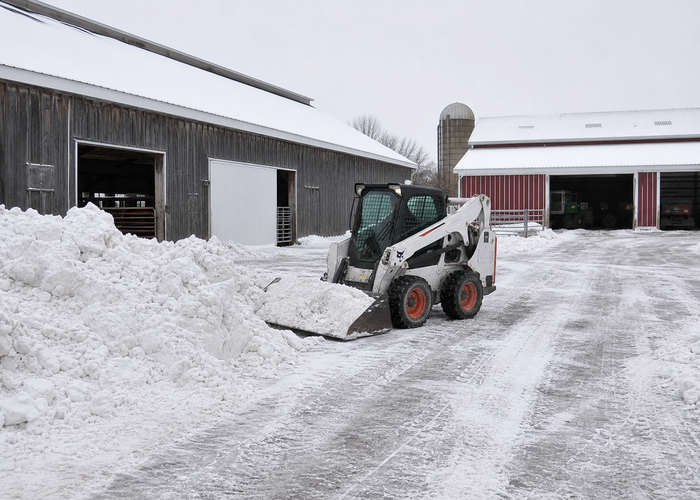
Snow piles should not block doors, drains, gates, fuel tanks, emergency access, sight lines, or future plowing space. A convenient pile today can become a frozen wall after the next storm. Decide where snow will go before the loader starts moving.
Leave room for meltwater. If piles drain across a lane and refreeze, the yard becomes more dangerous after clearing. Watch low spots and avoid pushing snow against walls or equipment that needs ventilation or access.
Winter Inspection Before Startup
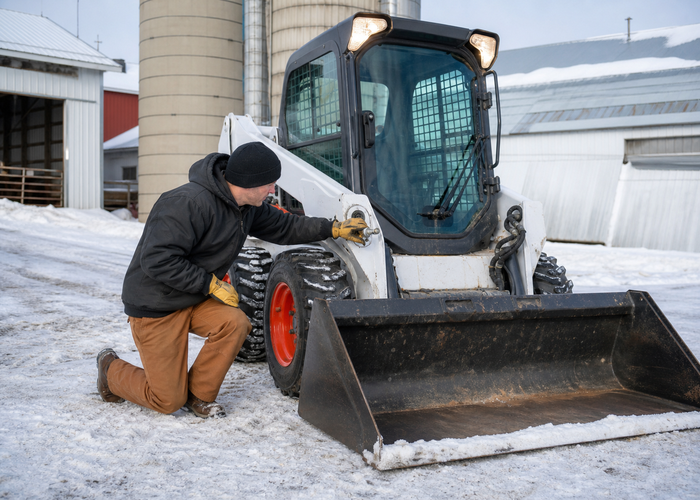
Cold weather makes small issues larger. Check tires, lights, wipers, cab visibility, bucket edge, hydraulic couplers, fuel level, battery condition, and attachment pins. Clean windows and lights before work begins, not after visibility becomes a problem.
If the loader uses chains, tracks, or a snow pusher, inspect them before the first push. A loose chain or damaged cutting edge can ruin a cleared surface and stop the job when the yard is already blocked.
Travel Lanes, Doors, and Equipment Access
Clear primary lanes first: barn doors, feed routes, fuel access, emergency lane, and equipment exits. Secondary parking or storage areas can wait. A yard that looks half-cleared but keeps essential movement open is more useful than a yard that is tidy in the wrong places.
For equipment planning, compare winter yard work with skid steer loader applications in navodila za uporabo opreme.
Operate Slowly and Keep the Bucket Low
Snow hides curbs, ruts, tools, hoses, frozen manure, and uneven pavement. Keep the bucket low, travel slowly, and avoid ramming piles. Impact loads can damage the machine, attachment, door frames, or hidden objects.
Visibility changes constantly. Blowing snow, fogged glass, low sun, and night work can reduce the operator?s view. Stop and clean windows when needed. Do not keep pushing with a guess about what is in front of the bucket.
When people or animals enter the yard, stop. Winter clothing and engine noise make communication harder. A loader should not move until the route is clear again.
After-Storm Review
After clearing, walk the yard. Check whether drains are open, doors can swing, equipment can exit, and snow piles leave room for another storm. Mark ice patches and treat them before traffic polishes them harder.
Record problem areas: drifting corners, weak traction, blocked drains, poor visibility, and pile locations that failed. These notes improve the next storm response.
Short Snow Clearing Checklist
Inspect machine, choose pile locations, clear primary lanes, keep bucket low, avoid hidden obstacles, protect doors and drains, stop for people, check ice, and record changes for the next storm.
Scenarij polja: Kako načrt spremeni delovni dan
Dober načrt opreme spremeni prvo uro dela Namesto vožnje neposredno v nalogo, operater prebere tla, preveri stroj, preuči pot, potrdi razdaljo opazovalca in se odloči, kaj naj bi prvi varni prehod dosegel. Ta kratek premor pogosto preprečuje dolge zamude, ki izhajajo iz kolesnic, poškodovanih priključkov, blokiranega dostopa, slabe drenaže ali stroja, ki ga je treba pozneje obnoviti.
Delo je treba opisati v običajnem jeziku polja.Katera površina se varuje? Kje se bo material premaknil? Kaj se zgodi, če se tla zmehčajo? Kateri rob, ograja, vrata, jarek ali pobočje ne morejo biti poškodovani? Kateri del poti mora ostati odprt za drugo opremo? Zaradi teh vprašanj je izbira stroja bolj praktična kot preprosta primerjava konjskih moči ali teže.
Pravila za komunikacijo in zaustavitev operaterja
Vsako delo potrebuje pravilo ustavitve, ki ga vsi razumejo Operater naj se ustavi, ko stroj ravna drugače, ko se spremeni pot, ko oseba vstopi v delovno cono, ko je cev ali zatič videti narobe, ko je vidljivost slaba ali ko se načrtovani prvi prehod ne ujema več z resničnim terenom.Predčasna ustavitev je strokovna odločitev, ne znak negotovosti.
Pomočniki bi morali stati tam, kjer jih operater lahko vidi, nikoli med strojem in fiksnim predmetom.Ko je potreben opazovalec, se dogovorite o signalih, preden se stroj premakne. Če signal ni jasen, mora operater ustaviti in ponastaviti komunikacijo, namesto da ugiba.
Inšpekcijski namigi med delom
Nekatere težave se pojavijo samo pod obremenitvijo Dovoz je lahko videti čvrst, dokler rezilo ne začne vleči gramoza.Korenina se lahko zdi ohlapna, dokler ne dvigne dela trate.Snežni kup je lahko videti neškodljiv, dokler ne blokira vrat, odtoka, rezervoarja za gorivo ali poti opreme.Upravljavec bi moral te spremembe obravnavati kot informacije in prilagoditi načrt.
Zapisi so uporabni, ko zajamejo trenutek, ko se je nekaj spremenilo.Zapišite stanje površine, nastavitev pritrditve, obnašanje stroja, vreme in rezultat. Pri več opravilih te opombe pokažejo, katera nastavitev deluje, katera pot povzroča škodo in katera pritrditev prihrani čas.
Viri za načrtovanje in opombe, bogate s povezavami
Za notranje načrtovanje primerjajte nalogo s QiLu Machinery vsi strojni izdelki, rešitve za uporabo izdelkov, stran aplikacije opreme, in stroji blog. Te strani pomagajo povezati eno samo opravilo s širšim voznim parkom opreme, namesto da bi izbrali stroj ločeno.
Za zunanjo referenco uporabite vire za splošno varnost in načrtovanje lokacije iz OSHA, NIOSH, USDA NRCS smernice za zdravje tal, Varnostni viri kmetije University of Minnesota Extension, in CDC kmetijski varnostni viri. Ti viri ne nadomeščajo priročnika za uporabo, vendar krepijo iste navade: najprej preglejte, zaščitite ljudi, preberite tla in se ustavite, ko stroj opozori.
Vodenje evidenc, ki dejansko pomaga
Uporaben zapis je lahko kratek: datum, upravljavec, stroj, pritrditev, stanje tal, delovni cilj, nenavadna opazovanja in nadaljnje ukrepanje.Pomemben del je pregled vzorca. Če se isti pas izpere, ista koreninska površina poškoduje travo ali isti snežni kup blokira dostop, je treba načrt spremeniti pred naslednjim delom.
Upravitelji naj ponavljajoče zapiske spremenijo v dejanja. To dejanje je lahko popravilo, boljša pot, drugačna pritrditev, izboljšanje drenaže ali nova točka za usposabljanje. Opomba, ki ni nikoli pregledana, je samo shranjevanje; pregledana opomba postane boljši čas delovanja.
Match the Attachment to the Yard Layout
The right snow attachment depends on the yard more than on the storm total alone. A bucket is flexible when snow must be lifted, stacked, or carried away from a doorway. A snow pusher can move volume quickly across an open lane, but it needs room to turn and a planned pile location. A blade can angle windrows away from access routes, but the operator must avoid building frozen ridges where equipment needs to cross later.
Before the storm season, walk the yard and mark tight gates, livestock paths, fuel points, drains, door swing areas, and places where snow piles reduced visibility in previous winters. This walk turns attachment choice into a layout decision. It also helps the operator decide where to begin when the next storm arrives before daylight or during a busy feeding schedule.
Decision Table for Snow Clearing Choices
| Yard condition | Priority move | Čemu se izogniti |
|---|---|---|
| Open lane to barn doors | Clear a straight access path first, then widen it | Piling snow where doors, loaders, or feed wagons must turn |
| Drains or low spots | Keep snow piles away and open meltwater paths | Creating refreeze lanes across daily traffic routes |
| Parked equipment line | Push snow outward before it freezes around tires or tracks | Stacking snow against machines that may need emergency access |
| Mixed people and animals | Stop movement until the route is clear and visible | Backing through blind corners or relying on sound warnings only |
Traction, Visibility, and Cold-Weather Maintenance
Snow work punishes weak maintenance habits. Tires or tracks need usable tread, lights need to be clean, hydraulic couplers need to be seated, and the operator needs a clear view before moving. Cold starts also demand attention to battery condition, fuel quality, and warm-up routine. A machine that runs well in summer can become difficult to control when visibility, traction, and hydraulic response all change at once.
General safety references from OSHA in NIOSH are helpful reminders, but the machine manual and the actual yard plan should guide the final routine. Keep a simple pre-storm checklist in the cab or shop: inspect cutting edge, tires or tracks, lights, wipers, mirrors, cab heater, attachment lock, hydraulic leaks, backup alarm, and fuel level.
Design the Push Pattern for the Next Storm
A good snow clearing plan protects future capacity. If every storm is pushed to the nearest edge, the yard can run out of storage space halfway through winter. Instead, choose pile zones that leave expansion room, preserve sight lines, and drain away from daily travel lanes. When snow must be stacked, build piles where falling chunks or refreeze will not block doors, drains, fuel tanks, or emergency access.
The first pass should open the most important route, not the easiest route. On a farm yard, that may mean feed access, livestock care, fuel, a service door, or the route needed to move another machine. Once the essential lane is open, the operator can widen turns, clear secondary parking, and tidy edges. For fleet planning, compare this work with možnosti nakladalnika z drsnim krmilom, machinery application solutions, in the full QiLu Machinery product range.
Common Winter Mistakes
The most common mistake is pushing snow too close to buildings. It feels efficient in the moment, but it can block ventilation, hold moisture against walls, prevent doors from opening, and create ice where meltwater runs back into traffic. Another mistake is leaving small ridges across gateways. Once those ridges freeze, they become obstacles for tractors, trailers, and people walking in poor light.
A third mistake is ignoring after-storm inspection. The yard may look clear from the cab, but a walkaround can reveal blocked drains, polished ice, buried hoses, or piles that will narrow the next turn. Record those findings in the same place the crew tracks maintenance. Over time, the notes show which pile locations work and which corners need markers, gravel repair, or better lighting.
Buyer Questions for Winter-Ready Skid Steer Work
When evaluating a skid steer for winter yard duty, ask about visibility, cab comfort, hydraulic flow, tire or track options, attachment compatibility, service access, lighting, and transport between sites. A machine that is comfortable and visible in winter often gets used more consistently and with better control. A machine that is hard to see from or difficult to start becomes a bottleneck during storms.
Winter work also overlaps with year-round chores. The same loader may move feed, bedding, pallets, gravel, soil, or landscape material after the snow melts. The stran aplikacije opreme in stroji blog are useful internal references for connecting snow clearing to broader farm and property maintenance needs.
Praktična pogosta vprašanja
Kako je treba uporabljati ta vodnik? Uporabite ga kot pomoč pri načrtovanju skupaj s strojnim priročnikom, pravili lokacije in operaterjevo presojo na terenu.
Kaj naj bi ustavilo delo? Ustavi za nestabilno ravnanje, poškodovane zatiče, puščajoče cevi, nejasno vidljivost, mimoidoče v delovnem območju, nepričakovano premikanje tal ali kakršno koli stanje, ki ga operater ne more pojasniti.
Kako lahko majhna posadka ostane dosledna? Kontrolni seznam imejte v bližini stroja, vsak dan uporabljajte ista pravila za zaustavitev in vsaj tedensko preglejte kratke zapiske o opravilih.
A skid steer snow clearing plan works when it keeps tomorrow in mind. Clear the lane, protect doors and drains, leave room for the next storm, and document the spots that always need attention.