Welcome to Shandong Qilu Industrial Co., Ltd

 English
 Arabic
 Bulgarian
 Bengali
 Czech
Czech
 Danish
 German
 Greek
Greek
 Spanish
 Finnish
 French
 Hindi
Hindi
 Croatian
 Hungarian
 Indonesian
 Italian
 Japanese
 Korean
 Lithuanian
 Dutch
Dutch
 Norwegian
 Polish
 Portuguese
 Romanian
 Russian
 Slovak
 Slovenian
 Swedish
 Thai
Thai
 Turkish
 Ukrainian
 Vietnamese
 Tagalog
 Malay
Malay
 Estonian
 Catalan
 Latvian
 Urdu
Urdu
 Serbian
 Persian
 Swahili
 Albanian
 Armenian
 Icelandic
 Bosnian
 Luxembourgish
 Afrikaans
English Arabic
Bulgarian
Bengali
Czech
Danish
German
Greek
Spanish
Finnish
French
Hindi
Croatian
Hungarian
Indonesian
Italian
Japanese
Korean
Lithuanian
Dutch
Norwegian
Polish
Portuguese
Romanian
Russian
Slovak
Slovenian
Swedish
Thai
Turkish
Ukrainian
Vietnamese
Tagalog
Malay
Estonian
Catalan
Latvian
Urdu
Serbian
Persian
Swahili
Albanian
Armenian
Icelandic
Bosnian
Luxembourgish
Afrikaans
Afrikaans
English Arabic
Bulgarian
Bengali
Czech
Danish
German
Greek
Spanish
Finnish
French
Hindi
Croatian
Hungarian
Indonesian
Italian
Japanese
Korean
Lithuanian
Dutch
Norwegian
Polish
Portuguese
Romanian
Russian
Slovak
Slovenian
Swedish
Thai
Turkish
Ukrainian
Vietnamese
Tagalog
Malay
Estonian
Catalan
Latvian
Urdu
Serbian
Persian
Swahili
Albanian
Armenian
Icelandic
Bosnian
Luxembourgish
Afrikaans
Skid Steer Snow Clearing Plan for Farm Yards, Barn Doors, and Equipment Access
A practical skid steer snow clearing plan for farm yards, barn doors, equipment access, pile placement, winter inspection, and safe loader operation.
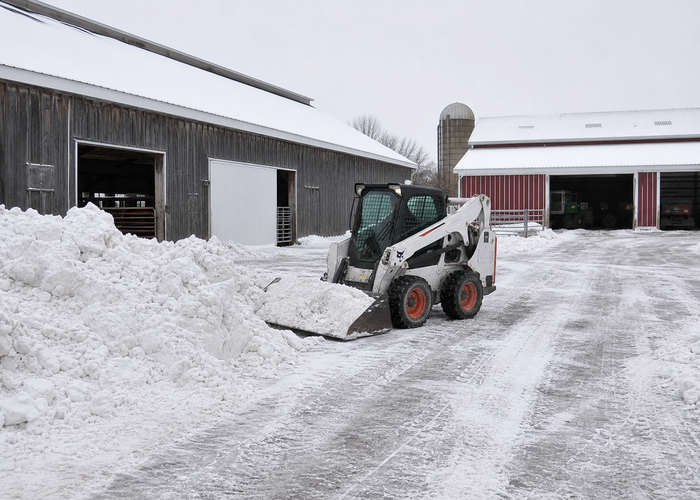
A skid steer snow clearing plan should be made before the first push. Farm yards have barn doors, fuel access, feed routes, parked equipment, ice patches, drains, gates, and people moving through the same space. The operator needs a pattern that clears access without trapping snow where it will create the next problem.
QiLu Machinery customers reviewing skid steer loader options should think about winter work as a layout problem. A compact loader can turn tightly, but tight turning is not the same as good snow management. Pile location, visibility, traction, and bucket height decide whether the yard stays usable.
This guide uses practical winter equipment habits supported by general safety thinking from OSHA and NIOSH.
Plan Pile Locations Before Pushing Snow
Snow piles should not block doors, drains, gates, fuel tanks, emergency access, sight lines, or future plowing space. A convenient pile today can become a frozen wall after the next storm. Decide where snow will go before the loader starts moving.
Leave room for meltwater. If piles drain across a lane and refreeze, the yard becomes more dangerous after clearing. Watch low spots and avoid pushing snow against walls or equipment that needs ventilation or access.
Winter Inspection Before Startup
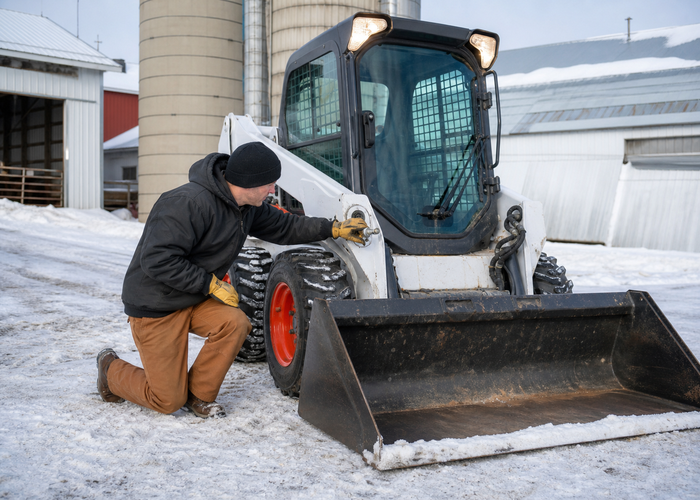
Cold weather makes small issues larger. Check tires, lights, wipers, cab visibility, bucket edge, hydraulic couplers, fuel level, battery condition, and attachment pins. Clean windows and lights before work begins, not after visibility becomes a problem.
If the loader uses chains, tracks, or a snow pusher, inspect them before the first push. A loose chain or damaged cutting edge can ruin a cleared surface and stop the job when the yard is already blocked.
Travel Lanes, Doors, and Equipment Access
Clear primary lanes first: barn doors, feed routes, fuel access, emergency lane, and equipment exits. Secondary parking or storage areas can wait. A yard that looks half-cleared but keeps essential movement open is more useful than a yard that is tidy in the wrong places.
For equipment planning, compare winter yard work with skid steer loader applications and equipment application guidance.
Operate Slowly and Keep the Bucket Low
Snow hides curbs, ruts, tools, hoses, frozen manure, and uneven pavement. Keep the bucket low, travel slowly, and avoid ramming piles. Impact loads can damage the machine, attachment, door frames, or hidden objects.
Visibility changes constantly. Blowing snow, fogged glass, low sun, and night work can reduce the operator?s view. Stop and clean windows when needed. Do not keep pushing with a guess about what is in front of the bucket.
When people or animals enter the yard, stop. Winter clothing and engine noise make communication harder. A loader should not move until the route is clear again.
After-Storm Review
After clearing, walk the yard. Check whether drains are open, doors can swing, equipment can exit, and snow piles leave room for another storm. Mark ice patches and treat them before traffic polishes them harder.
Record problem areas: drifting corners, weak traction, blocked drains, poor visibility, and pile locations that failed. These notes improve the next storm response.
Short Snow Clearing Checklist
Inspect machine, choose pile locations, clear primary lanes, keep bucket low, avoid hidden obstacles, protect doors and drains, stop for people, check ice, and record changes for the next storm.
Field Scenario: How the Plan Changes the Workday
A good equipment plan changes the first hour of work. Instead of driving directly into the task, the operator reads the ground, checks the machine, studies the route, confirms bystander distance, and decides what the first safe pass should accomplish. This short pause often prevents the long delays that come from rutting, damaged attachments, blocked access, poor drainage, or a machine that has to be recovered later.
The job should be described in ordinary field language. What surface is being protected? Where will material move? What happens if the ground softens? Which edge, fence, doorway, ditch, or slope cannot be damaged? Which part of the route must stay open for other equipment? These questions make the machine choice more practical than a simple horsepower or weight comparison.
Operator Communication and Stop Rules
Every job needs a stop rule that everyone understands. The operator should stop when the machine handles differently, when the route changes, when a person enters the work zone, when a hose or pin looks wrong, when visibility is poor, or when the planned first pass no longer matches the real ground. Stopping early is a professional decision, not a sign of uncertainty.
Helpers should stand where the operator can see them, never between the machine and a fixed object. When a spotter is needed, agree on signals before the machine moves. If the signal is unclear, the operator should stop and reset communication rather than guess.
Inspection Clues During the Job
Some problems appear only under load. A driveway may look firm until the blade begins to pull gravel. A root may seem loose until it lifts a section of lawn. A snow pile may look harmless until it blocks a door, drain, fuel tank, or equipment path. The operator should treat these changes as information and adjust the plan.
Records are useful when they capture the moment something changed. Write down the surface condition, attachment setting, machine behavior, weather, and result. Over several jobs, those notes show which setup works, which route creates damage, and which attachment saves time.
Planning Resources and Link-Rich Notes
For internal planning, compare the task with QiLu Machinery’s all machinery products, product application solutions, equipment application page, and machinery blog. These pages help connect a single job to the wider equipment fleet instead of choosing a machine in isolation.
For external reference, use general safety and site-planning resources from OSHA, NIOSH, USDA NRCS soil health guidance, University of Minnesota Extension farm safety resources, and CDC agricultural safety resources. These resources do not replace the operator manual, but they reinforce the same habits: inspect first, protect people, read the ground, and stop when the machine gives a warning.
Recordkeeping That Actually Helps
A useful record can be short: date, operator, machine, attachment, ground condition, work goal, unusual observations, and follow-up action. The important part is reviewing the pattern. If the same lane washes out, the same root area damages turf, or the same snow pile blocks access, the plan needs to change before the next job.
Managers should turn repeated notes into action. That action may be a repair, a better route, a different attachment, a drainage improvement, or a new training point. A note that is never reviewed is just storage; a reviewed note becomes better uptime.
Match the Attachment to the Yard Layout
The right snow attachment depends on the yard more than on the storm total alone. A bucket is flexible when snow must be lifted, stacked, or carried away from a doorway. A snow pusher can move volume quickly across an open lane, but it needs room to turn and a planned pile location. A blade can angle windrows away from access routes, but the operator must avoid building frozen ridges where equipment needs to cross later.
Before the storm season, walk the yard and mark tight gates, livestock paths, fuel points, drains, door swing areas, and places where snow piles reduced visibility in previous winters. This walk turns attachment choice into a layout decision. It also helps the operator decide where to begin when the next storm arrives before daylight or during a busy feeding schedule.
Decision Table for Snow Clearing Choices
| Yard condition | Priority move | What to avoid |
|---|---|---|
| Open lane to barn doors | Clear a straight access path first, then widen it | Piling snow where doors, loaders, or feed wagons must turn |
| Drains or low spots | Keep snow piles away and open meltwater paths | Creating refreeze lanes across daily traffic routes |
| Parked equipment line | Push snow outward before it freezes around tires or tracks | Stacking snow against machines that may need emergency access |
| Mixed people and animals | Stop movement until the route is clear and visible | Backing through blind corners or relying on sound warnings only |
Traction, Visibility, and Cold-Weather Maintenance
Snow work punishes weak maintenance habits. Tires or tracks need usable tread, lights need to be clean, hydraulic couplers need to be seated, and the operator needs a clear view before moving. Cold starts also demand attention to battery condition, fuel quality, and warm-up routine. A machine that runs well in summer can become difficult to control when visibility, traction, and hydraulic response all change at once.
General safety references from OSHA and NIOSH are helpful reminders, but the machine manual and the actual yard plan should guide the final routine. Keep a simple pre-storm checklist in the cab or shop: inspect cutting edge, tires or tracks, lights, wipers, mirrors, cab heater, attachment lock, hydraulic leaks, backup alarm, and fuel level.
Design the Push Pattern for the Next Storm
A good snow clearing plan protects future capacity. If every storm is pushed to the nearest edge, the yard can run out of storage space halfway through winter. Instead, choose pile zones that leave expansion room, preserve sight lines, and drain away from daily travel lanes. When snow must be stacked, build piles where falling chunks or refreeze will not block doors, drains, fuel tanks, or emergency access.
The first pass should open the most important route, not the easiest route. On a farm yard, that may mean feed access, livestock care, fuel, a service door, or the route needed to move another machine. Once the essential lane is open, the operator can widen turns, clear secondary parking, and tidy edges. For fleet planning, compare this work with skid steer loader options, machinery application solutions, and the full QiLu Machinery product range.
Common Winter Mistakes
The most common mistake is pushing snow too close to buildings. It feels efficient in the moment, but it can block ventilation, hold moisture against walls, prevent doors from opening, and create ice where meltwater runs back into traffic. Another mistake is leaving small ridges across gateways. Once those ridges freeze, they become obstacles for tractors, trailers, and people walking in poor light.
A third mistake is ignoring after-storm inspection. The yard may look clear from the cab, but a walkaround can reveal blocked drains, polished ice, buried hoses, or piles that will narrow the next turn. Record those findings in the same place the crew tracks maintenance. Over time, the notes show which pile locations work and which corners need markers, gravel repair, or better lighting.
Buyer Questions for Winter-Ready Skid Steer Work
When evaluating a skid steer for winter yard duty, ask about visibility, cab comfort, hydraulic flow, tire or track options, attachment compatibility, service access, lighting, and transport between sites. A machine that is comfortable and visible in winter often gets used more consistently and with better control. A machine that is hard to see from or difficult to start becomes a bottleneck during storms.
Winter work also overlaps with year-round chores. The same loader may move feed, bedding, pallets, gravel, soil, or landscape material after the snow melts. The equipment application page and machinery blog are useful internal references for connecting snow clearing to broader farm and property maintenance needs.
Practical FAQ
How should this guide be used? Use it as a planning aid together with the machine manual, site rules, and the operator’s field judgement.
What should stop the job? Stop for unstable handling, damaged pins, leaking hoses, unclear visibility, bystanders in the work area, unexpected ground movement, or any condition the operator cannot explain.
How can a small crew stay consistent? Keep the checklist near the machine, use the same stop rules every day, and review short job notes at least weekly.
A skid steer snow clearing plan works when it keeps tomorrow in mind. Clear the lane, protect doors and drains, leave room for the next storm, and document the spots that always need attention.