Email: [email protected] Whatsapp: +8618266768780
Email: [email protected] Whatsapp: +8618266768780

Purchasing a skid steer loader is a significant investment for any business involved in construction, landscaping, or agriculture. With the wide variety of models and features available, making an informed decision is crucial to ensure you buy the best skid steer loader for your needs. This comprehensive guide will walk you through the essential factors to consider, ensuring you make the right choice.

Before diving into the specifics of how to buy the best skid steer loader, it’s important to understand what a skid steer loader is and how it functions. A skid steer loader is a versatile, compact piece of equipment featuring lift arms that can be fitted with various attachments, making it a crucial asset in a wide range of industries, including construction, landscaping, agriculture, and more. These machines are renowned for their maneuverability and ability to operate in tight spaces, which significantly enhances their usability on various job sites.
Skid steer loaders are designed with a unique steering system. Unlike traditional vehicles, skid steer loaders use differential steering, meaning the wheels on each side of the loader can move at different speeds and directions. This allows the machine to perform zero-radius turns, making it exceptionally agile and ideal for confined spaces where other machinery might struggle to operate.
One of the standout features of skid steer loaders is their ability to accommodate a wide variety of attachments. This versatility transforms the loader from a simple digging machine into a multi-functional powerhouse capable of handling numerous tasks. Common attachments include buckets for digging and scooping, augers for drilling, trenchers for digging narrow trenches, pallet forks for moving materials, and hydraulic hammers for breaking concrete. The ability to quickly switch between these attachments allows operators to tackle diverse projects with a single machine.
Skid steer loaders come in various sizes and power capacities to meet different operational needs. Smaller models are ideal for residential and small-scale commercial projects where maneuverability is more important than sheer power. Larger models, on the other hand, are built to handle heavy-duty tasks on large construction sites, providing the necessary power and lifting capacity to move substantial amounts of material quickly and efficiently.
When discussing skid steer loaders, two primary lift types are commonly referenced: radial lift and vertical lift. Radial lift skid steer loaders have a single pivot point on the lift arm, making them ideal for ground-level work such as digging and grading. They offer excellent reach at mid-lift heights, which is beneficial for tasks like dumping materials over walls. Vertical lift skid steer loaders, in contrast, have an additional pivot point that allows the lift arms to move straight up and down. This design provides better stability and reach at full lift height, making vertical lift models better suited for loading materials onto trucks or lifting pallets.
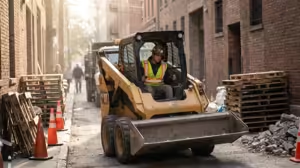
The compact size and maneuverability of skid steer loaders make them indispensable in urban environments and other confined spaces. Their ability to turn within their own footprint allows them to navigate areas that larger machines cannot. Furthermore, their robust construction and powerful engines enable them to handle challenging tasks, from heavy lifting to precise grading. The versatility provided by interchangeable attachments makes skid steer loaders a cost-effective investment, as one machine can perform multiple roles on a job site.
Modern skid steer loaders are designed with operator safety and comfort in mind. Enclosed cabs with climate control systems protect operators from the elements and reduce fatigue during long work hours. Advanced safety features, such as rollover protective structures (ROPS) and falling object protective structures (FOPS), ensure that the operator is shielded from potential hazards. Additionally, enhanced visibility from the cab and ergonomic controls contribute to more efficient and safer operation.
To buy the best skid steer loader, you must thoroughly evaluate your specific requirements and how the machine will be used. This involves a comprehensive analysis of various factors to ensure that the chosen skid steer loader will meet your operational demands and provide optimal performance. Here are some key considerations to help you assess your needs effectively:
First and foremost, consider the type of work you will be performing with the skid steer loader. Different tasks may require different specifications and attachments. For instance, if your primary activities involve heavy lifting and material handling, you will need a loader with a high operating capacity and robust lift arms. On the other hand, if you are engaged in tasks like grading, digging, or landscaping, you might prioritize features like precision control, maneuverability, and the availability of specific attachments such as buckets or trenchers.
The physical characteristics of your worksite play a crucial role in determining the right skid steer loader. Consider the following factors:
How often and how long you will be using the skid steer loader impacts the type of machine you should purchase. For occasional use, a mid-range model might suffice, offering a balance between cost and capability. However, for intensive, daily operations, investing in a high-performance model with durable components and a reliable engine is crucial to minimize downtime and maintenance costs.
Identify the specific features and attachments that will enhance your productivity and efficiency. Common features to consider include:
While the initial purchase price is a major consideration, it is equally important to evaluate the total cost of ownership over the machine’s lifespan. This includes ongoing expenses such as fuel, maintenance, repairs, insurance, and potential downtime. Create a detailed budget that accounts for these factors to ensure that the skid steer loader you choose is financially viable in the long term.
Consider the future needs of your business and whether the skid steer loader you are buying can accommodate potential growth or changes in your operations. Investing in a versatile machine with the capability to handle a variety of tasks and attachments can provide greater value and adaptability as your business evolves.
Finally, consult with industry experts, operators, and colleagues who have experience with skid steer loaders. Their insights and recommendations can provide valuable perspectives on the most suitable models and features for your specific needs. Additionally, many dealers offer demonstrations or test drives, allowing you to experience the machine’s performance firsthand before making a final decision.
| Factor | Considerations | Examples |
|---|---|---|
| Nature of Work | Type of tasks the loader will perform | Heavy lifting, material handling, grading, digging |
| Worksite Environment | Space constraints, terrain type, and accessibility | Tight spaces, rough terrain, easy transportation |
| Frequency and Duration of Use | How often and how long the loader will be used | Occasional use, daily operations |
| Specific Features and Attachments | Necessary features and compatibility with attachments | High-flow hydraulics, cab comfort, lift path |
| Budget and Total Cost of Ownership | Initial cost, ongoing expenses (fuel, maintenance, insurance), and depreciation | $5,000 – $25,000 purchase, $1,000 – $5,000 maintenance |
| Future-Proofing Investment | Ability to handle future growth and changing operational needs | Versatility, compatibility with various attachments |
| Consulting Experts and Operators | Insights from industry experts, operators, and colleagues | Recommendations, firsthand experience |
Selecting a reputable brand and dealer is crucial when you buy the best skid steer loader. Well-known brands like Bobcat, Caterpillar, and John Deere offer reliable machines and excellent customer support. When choosing a dealer, look for one with a solid reputation for service and support, as well as convenient locations for parts and maintenance.
Owning a skid steer loader involves regular maintenance to ensure optimal performance and longevity. When buying, consider the availability of spare parts, ease of maintenance, and the support provided by the dealer. A good warranty can also provide peace of mind.
Buying the best skid steer loader requires a significant financial investment, and it is crucial to plan your financing and budgeting carefully to ensure you make a sustainable and cost-effective purchase. Understanding the full financial implications and exploring various financing options will help you make an informed decision. Here are some detailed considerations to guide you through the financing and budgeting process:
The initial purchase price of a skid steer loader can vary widely depending on the model, brand, and features. It is important to set a realistic budget that aligns with your financial capacity while also considering the quality and capabilities of the machine. Cheaper options might save money upfront but could result in higher maintenance and operating costs over time.
There are several financing options available to help manage the cost of buying a skid steer loader. Each option has its own advantages and considerations:
Paying the full amount upfront is the simplest option and eliminates any future financing obligations. This approach can be beneficial if you have sufficient capital and want to avoid interest payments. However, it also ties up a significant amount of cash that could be used for other business operations.
Equipment loans are a common way to finance the purchase of a skid steer loader. These loans typically offer fixed interest rates and repayment terms ranging from a few years to a decade. The key benefits of equipment loans include:
Leasing is an attractive option for businesses that prefer to avoid the large upfront costs associated with purchasing. Lease agreements can be structured in various ways, such as:
Leasing offers flexibility, but the total cost over time may be higher than purchasing outright.
Rent-to-own agreements allow you to rent the skid steer loader with an option to purchase it at the end of the rental period. This can be a good way to test the equipment before committing to a full purchase. Part of the rental payments usually goes toward the purchase price, making it easier to transition from renting to owning.
When budgeting for a skid steer loader, it is essential to consider the total cost of ownership (TCO) beyond the initial purchase price. TCO includes all the expenses related to operating and maintaining the machine over its useful life. Key components of TCO are:
Regular maintenance is crucial to keep the skid steer loader in optimal condition. Budget for routine services such as oil changes, filter replacements, and inspections. Additionally, consider potential repair costs for wear and tear or unexpected breakdowns.
Fuel is a significant ongoing expense for operating a skid steer loader. Estimate your fuel usage based on the machine’s fuel efficiency and the number of hours it will be operated. Fluctuating fuel prices should also be factored into your budget.
Insuring your skid steer loader protects against potential losses from accidents, theft, or damage. The cost of insurance will vary based on factors such as the machine’s value, your location, and the coverage level.
Depreciation represents the loss in value of the skid steer loader over time. While it is a non-cash expense, understanding depreciation helps in assessing the machine’s resale value and planning for future equipment upgrades.
Investing in operator training can improve efficiency and safety, reducing the likelihood of accidents and equipment misuse. Additionally, factor in the labor costs associated with hiring skilled operators.
Creating a detailed financial plan that includes all these expenses will help you understand the overall investment required and the potential return on investment (ROI). Calculate the ROI by comparing the cost of the skid steer loader with the revenue or savings it generates for your business. This analysis will help you determine if the investment is worthwhile and how long it will take to recoup the costs.
If you are unsure about the best financing option or need help with budgeting, consider consulting with financial advisors or equipment financing specialists. They can provide valuable insights and tailored solutions based on your business’s financial health and objectives.

Before finalizing your purchase, arranging for a test drive or demonstration of the skid steer loader is a crucial step. This hands-on experience will provide invaluable insights into the machine’s performance, comfort, and ease of use, ensuring that you buy the best skid steer loader for your needs. Here are some detailed considerations and steps to follow when scheduling test drives and demonstrations:
A test drive allows you to directly assess the skid steer loader’s capabilities in real-world conditions. This practical evaluation helps you determine whether the machine meets your operational requirements and provides the necessary performance for your tasks. Test drives can reveal potential issues or limitations that may not be apparent from specifications or brochures alone.
To arrange a test drive, contact your local dealer or manufacturer representative. Most reputable dealers will be happy to set up a demonstration at their facility or on your job site. Here are some tips for scheduling a test drive:
During the test drive, pay close attention to the following aspects to ensure the skid steer loader meets your expectations:
After the test drive, gather feedback from all participants and compare notes. Discuss the machine’s performance, comfort, and any issues encountered. Consider the following questions:
Use the insights gained from the test drive to make an informed decision. Compare the performance of different models if you tested more than one, and weigh the pros and cons of each. Consider how well each machine aligns with your operational needs and budget.
After the test drive, follow up with the dealer to discuss any questions or concerns that arose during the demonstration. Reputable dealers will be willing to address any issues and may offer additional support or customization options to meet your needs.
Buying the best skid steer loader requires careful consideration of your specific needs, the machine’s features, and the support provided by the dealer. By following this comprehensive guide, you can make an informed decision that will enhance your productivity and efficiency on the job site.
The most important feature depends on your specific needs, but engine power and operating capacity are crucial for performance and productivity.
Yes, skid steer loaders are versatile and can be used for various tasks with the appropriate attachments.
Regular maintenance should be performed as recommended by the manufacturer, typically after every 250 hours of operation.
The decision to buy or lease depends on your financial situation and how frequently you will use the machine. Leasing can be a good option for short-term or seasonal needs.
Consider the types of tasks you need to perform and select attachments that are compatible with your skid steer loader and suitable for those tasks.



-1.png)