Բարի գալուստ Shandong Qilu Industrial Co., Ltd

 Armenian
 English
 Arabic
 Bulgarian
 Bengali
 Czech
Czech
 Danish
 German
 Greek
Greek
 Spanish
 Finnish
 French
 Hindi
Hindi
 Croatian
 Hungarian
 Indonesian
 Italian
 Japanese
 Korean
 Lithuanian
 Dutch
Dutch
 Norwegian
 Polish
 Portuguese
 Romanian
 Russian
 Slovak
 Slovenian
 Swedish
 Thai
Thai
 Turkish
 Ukrainian
 Vietnamese
 Tagalog
 Malay
Malay
 Estonian
 Catalan
 Latvian
 Urdu
Urdu
 Serbian
 Persian
 Swahili
 Albanian
 Icelandic
 Bosnian
 Luxembourgish
 Afrikaans
Armenian English
Arabic
Bulgarian
Bengali
Czech
Danish
German
Greek
Spanish
Finnish
French
Hindi
Croatian
Hungarian
Indonesian
Italian
Japanese
Korean
Lithuanian
Dutch
Norwegian
Polish
Portuguese
Romanian
Russian
Slovak
Slovenian
Swedish
Thai
Turkish
Ukrainian
Vietnamese
Tagalog
Malay
Estonian
Catalan
Latvian
Urdu
Serbian
Persian
Swahili
Albanian
Icelandic
Bosnian
Luxembourgish
Afrikaans
Afrikaans
Armenian English
Arabic
Bulgarian
Bengali
Czech
Danish
German
Greek
Spanish
Finnish
French
Hindi
Croatian
Hungarian
Indonesian
Italian
Japanese
Korean
Lithuanian
Dutch
Norwegian
Polish
Portuguese
Romanian
Russian
Slovak
Slovenian
Swedish
Thai
Turkish
Ukrainian
Vietnamese
Tagalog
Malay
Estonian
Catalan
Latvian
Urdu
Serbian
Persian
Swahili
Albanian
Icelandic
Bosnian
Luxembourgish
Afrikaans
Բեռնիչ բալաստի սխալներ, որոնք դարձնում են գյուղատնտեսական տրակտորը լանջերին անվտանգ
Տրակտորային բեռնիչի բալաստի անվտանգության, թեքության իրազեկման, հետեւի հակակշիռի ընտրության, ցածր դույլով ճանապարհորդության եւ նախազգուշացնող նշանների գործնական ուղեցույց գյուղատնտեսական նյութերի մշակման ժամանակ:.
A useful tractor loader ballast safety is less about making a tractor look tidy and more about catching small faults before they become field delays. On a busy farm morning, ten quiet minutes around the machine can protect the operator, the implement, and the crop schedule. This guide is written for owners and operators who use a գյուղատնտեսական տրակտոր բեռնիչ աշխատանքի, հնձելու, տեղափոխելու, հողագործության եւ ամենօրյա կոմունալ աշխատանքների համար:.
QiLu Մեքենաների գնորդները հաճախ համեմատում են ձիաուժը եւ կցորդները առաջին հերթին՝ բայց իրական սեփականության փորձը կախված է կրկնվող ստուգումների: Տրակտորը՝ որը մեկնարկում է՝ ղեկավարում է՝ կանգ է առնում՝ բարձրացնում՝ սառչում եւ միանում կանխատեսելիորեն ավելի հեշտ է օգտագործել՝ քան ավելի մեծ մեքենա՝ որը զարմացնում է օպերատորին: Նույն սովորությունը նաեւ օգնում է մեքենան համապատասխանեցնելիս տրակտորային կիրառման լուծումներ կամ որոշել, թե որ գործիքը պետք է օգտագործվի նախ երկար աշխատանքային օրվա ընթացքում:.
Հետեւյալ բաժինները կենտրոնանում են գործնական որոշումների վրա, այլ ոչ թե ապրանքանիշի պահանջների վրա: Նրանք համատեղում են դաշտային առօրյան հանրային անվտանգության հիշեցումների հետ այնպիսի աղբյուրներից, ինչպիսիք են OSHA տրակտորների շահագործման անվտանգության ուղեցույց, NIOSH գյուղատնտեսական անվտանգության ռեսուրսներ, ՝ եւ համալսարանի ընդլայնման ուղեցույց: Օգտագործեք գաղափարները որպես աշխատանքային շրջանակ եւ միշտ հետեւեք հատուկ օպերատորի ձեռնարկը տրակտորի եւ իրականացնել ձեր առջեւ:.
Why Loader Ballast Changes the Whole Tractor
Loader work changes the tractor from a pulling machine into a mobile lever. The bucket, load, loader arms, front axle, rear axle, tire contact patch, and ballast all interact. A light load can still become dangerous when the bucket is high, the ground is uneven, or the tractor turns downhill too quickly.
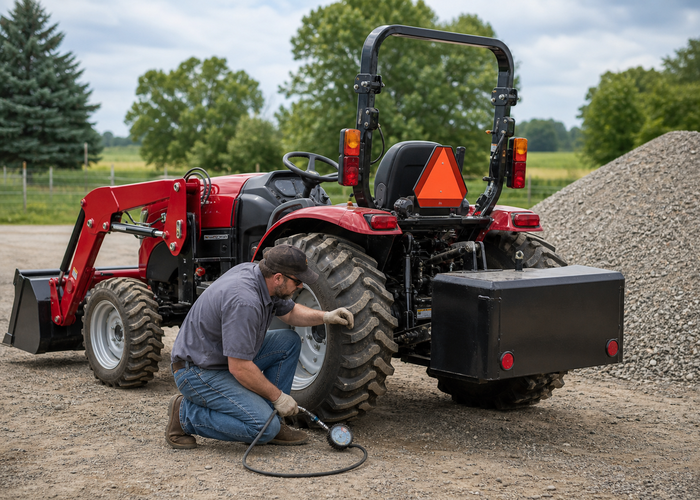
The first mistake is treating rear ballast as optional. A front-end loader transfers weight forward, reduces rear tire grip, and can make steering and braking unpredictable. Rear ballast, wheel weights, filled tires, or a heavy rear implement help restore balance, but they must be matched to the tractor and the loader rating.
The second mistake is driving with the bucket too high. A raised bucket lifts the center of gravity and makes a small obstacle feel larger than it is. Carry material low, travel slowly, avoid sudden turns, and lower the attachment before leaving the seat. These habits are simple because they need to work under pressure.
Rear Counterweight, Tire Pressure, and Load Size
Inspect the route before loading. Holes, ruts, wet grass, loose gravel, hidden curbs, and small slopes can change the tractor faster than the operator expects. If the job requires crossing a slope, reconsider the route or move less material per trip. Stability is cheaper than speed.
Հասարակական անվտանգության գործակալությունները շարունակում են կրկնել նույն հաղորդագրությունը, քանի որ գյուղատնտեսական տրակտորները կենտրոնացնում են քաշը, հզորությունը, պտտվող լիսեռները, հիդրոտեխնիկան եւ մարդկային դատողությունը մեկ մեքենայի մեջ:. Penn State Extension տրակտորի անվտանգության ուղեցույց եւ Մինեսոտայի համալսարանի Extension տրակտորային անվտանգության նյութ երկուսն էլ շեշտում են, որ անվտանգ աշխատանքը սկսվում է նախքան աշխատանքը սկսելը: Լավագույն ստուգաթերթը պատի պաստառ չէ: դա հաջորդականություն է, որը օպերատորը կարող է իրականում կատարել տրակտորի կողքին:.
Գնման թիմի համար նույն մտածողությունը նաեւ բարելավում է ճշգրտման ընտրությունը: Գնորդը վերանայում է բոլոր մեքենաների արտադրանքները պետք է հարցնել՝ թե ինչպես է տրակտորը ստուգվի՝ սպասարկում՝ միացված եւ պահվում: Մեքենան՝ որը համապատասխանում է աշխատանքին՝ բայց չի կարող հեշտությամբ ստուգվել՝ կհրավիրի բաց թողնված քայլեր: Հենց այստեղ են հանդիպում արտադրանքի ընտրությունը եւ ամենօրյա պրակտիկան:.
Երբ աշխատանքը ներառում է բազմաթիվ գործիքներ՝ քայլեք ամբողջ աշխատանքային շղթայով: Նայեք տրակտորին, իրականացմանը, ճանապարհորդության երթուղին, բեռնման կետին, թեքությանը, դարպասի լայնությանը եւ շրջադարձային տարածությանը: Եթե առաջադրանքը կախված է բեռնիչից, PTO-ն կամ հիդրավլիկ կցորդիչը ներառում է այդ համակարգը առաջին ստուգման ժամանակ, այլ ոչ թե սպասում, մինչեւ տրակտորն արդեն տեղում լինի:.
Loader attachment choice also matters. A bucket full of wet soil, gravel, manure, snow, or mulch does not weigh the same. Pallet forks can move the center of gravity farther forward than a bucket. Grapples and bale spears create their own risks. The correct ballast for one task may be inadequate for another.
Route Planning for Slopes and Soft Ground
Before lifting, check the loader pins, quick-attach latch, hydraulic hoses, cylinders, cutting edge, and tire pressure. Look for hose rub, damaged fittings, bent brackets, and uneven tire inflation. A loader should raise, curl, dump, and lower smoothly before the tractor travels under load.
Use four-wheel drive according to the machine instructions, but do not let it create false confidence. Traction helps the tractor move; it does not cancel gravity or raise the rollover threshold. Brakes, steering, and load control still depend on ground contact and careful speed.
If another worker is nearby, agree on hand signals or stop points before the tractor moves. The safest spotter is not close to the bucket. They should stand outside the travel path and never between the tractor, a wall, a trailer, a gate, or a pile of material.
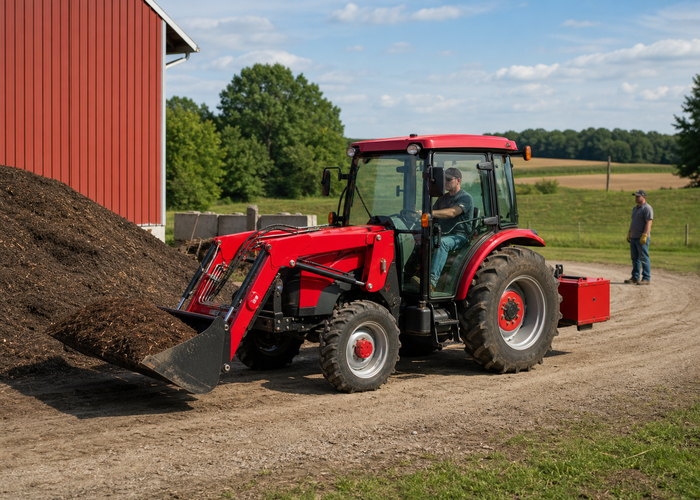
For buyers, loader work should influence tractor size, tire choice, hydraulic flow, wheelbase, rear ballast options, and implement package. A tractor that looks strong in a brochure may feel wrong if the rear end is too light for the jobs that happen every week.
For operators, the most useful rule is to stop when the tractor feels different. Rear wheels getting light, steering becoming vague, a tire slipping unexpectedly, or the bucket pulling the tractor sideways are not normal annoyances. They are warnings that the setup or route needs to change.
Keep the work area boring. Level staging, clear approaches, low travel height, smaller loads, and fewer bystanders rarely look dramatic, but they finish more jobs. Loader safety is built from ordinary choices repeated before they are needed.
When the workday ends, park with the loader and implement lowered, relieve hydraulic pressure as directed by the manual, clean packed material from the bucket, and inspect for new leaks or damage. Tomorrow?s safe start often depends on what the operator noticed at shutdown today.
How Operators Can Catch Instability Early
Լավ առօրյան բավական պարզ է ճնշումը գոյատեւելու համար: Պահպանեք ստուգաթերթը բանալու, գործիքների տուփի, վառելիքի կետի կամ սպասարկման վայրի մոտ: Պահեք պահեստային կցորդիչները, լինչի կապում, ձեռնոցներ, խանութի սրբիչներ եւ անվադողերի ճնշման գործիքներ, որտեղ դրանք իրականում օգտագործվում են: Ավելի մեծ նավատորմի պլանավորման համար նույն գրառումները կարող են աջակցել ծառայության որոշումներին QL 60HP տրակտոր, որ QL 904B տրակտոր, եւ այլ սարքավորումներ խառը բակում:.
Վերջնական փորձարկումն այն է, թե արդյոք օպերատորը կարող է բացատրել կանգառի վիճակը: Եթե հայտնվում է արտահոսք, վնասված պաշտպանիչ, անվադողերի ցածր մակարդակ, չամրացված քորոց, նախազգուշական լույս, անսովոր ձայն կամ անկայուն բեռ, ճիշտ պատասխանը դադարեցնելն ու պատճառը շտկելն է:. Միսսուրիի համալսարանի գյուղատնտեսական մեքենաների սպասարկման ուղեցույց իսկ ընդլայնման այլ հրապարակումները սահմանում են սպասարկումը որպես կանխարգելման սովորություն, այլ ոչ թե թղթային վարժություն:.
The safest loader setup is the one that makes the job feel uneventful. Correct rear ballast, low bucket travel, careful route choice, and realistic load size keep the tractor predictable. When a tractor starts to feel light, fast, or sideways, the right answer is not more confidence. It is a safer setup.
Rear ballast should be treated as part of the loader system, not as an accessory that happens to fit the three-point hitch. The loader capacity, front axle rating, tire type, wheelbase, terrain, and material density all influence the amount and kind of counterweight needed. A ballast box is compact and predictable. A rear implement may be useful, but its weight, length, and ground clearance can change how the tractor turns and stops. Filled tires add stability but do not replace all rear counterweight for every loader job.
Material weight is often underestimated. A bucket of dry mulch, wet clay, gravel, snow, manure, compost, firewood, or stone can vary dramatically even when the bucket looks equally full. Moisture is the hidden multiplier. The safest operator learns to take smaller bites, especially when working on soft ground or near slopes. A full bucket is not a goal if the tractor becomes hard to steer, brake, or hold level.
Slope work requires route planning before the bucket is loaded. Whenever possible, travel straight up or down gentle grades rather than turning across them. Avoid sudden stops, keep the bucket low, and never use loader lift height to compensate for poor positioning. If a task cannot be done without crossing an uncomfortable side slope, move the material to a flatter staging area with smaller loads or choose a different machine. The job should be adjusted before the tractor feels unstable.
Tire choice and pressure affect loader behavior more than many new owners expect. Agricultural tires, industrial tires, and turf tires grip and flex differently. Underinflated fronts can squat under loader weight; overinflated rears can reduce traction. If the tractor uses liquid ballast, confirm both rear tires are filled consistently. Uneven inflation or ballast can make the tractor lean or pull when the loader is loaded.
Shutdown, Parking, and Next-Day Inspection
Loader controls should be smooth, not abrupt. A sharp curl, dump, or lift movement can shift the load and surprise the operator. Practice on level ground with a modest load before working near a trailer, wall, ditch, or slope. Keep one hand ready for steering and one for controlled loader movement. If the loader drifts, chatters, or drops unexpectedly, stop and inspect hydraulics before continuing.
Parking discipline matters after loader work too. Lower the bucket flat to the ground, lower rear ballast or implements, relieve pressure as directed, and park away from children, livestock, or vehicle paths. A raised loader parked for convenience creates a stored-energy hazard. A lowered, clean, inspected loader makes the next job safer before it even starts.
Դաշտային օգտագործման նշումներ
Loader work should also be reviewed after near misses. If the rear wheels became light, the tractor slid, a load spilled unexpectedly, or an operator felt uncomfortable on a route, write down the material, terrain, tire condition, ballast setup, and bucket height. That record helps the farm decide whether to change ballast, reduce load size, improve the travel path, train operators again, or choose another machine for that job.
Կառավարիչների համար առավել օգտակար գրառումը ոչ թե կատարյալ արխիվ է՝ այլ օրինաչափություն՝ որը կարող է գործել: Եթե նույն անվադողը կորցնում է ճնշումը՝ նույն կցորդիչը արտահոսում է՝ նույն օպերատորը հայտնում է անկայուն բեռնաթափման՝ կամ նույն գործիքը դժվար է կցել՝ ֆերմա գտել է ուսուցման կամ պահպանման առաջնահերթություն: Վերանայել շաբաթական նշումները՝ լեզուն պարզ պահել եւ կրկնակի դիտարկումները վերածել վերանորոգման՝ պահպանման փոփոխությունների կամ օպերատորի հիշեցումների՝ նախքան զբաղված սեզոնը դժվարացնում է յուրաքանչյուր փոքր անսարքություն շտկելը:.
A good loader policy also defines where loads should not be carried. Avoid operating close to ditch edges, pond banks, soft shoulders, recently filled trenches, manure pits, or traffic lanes unless the site has been prepared and the operator has a clear escape path. The ground that supports an empty tractor may not support a loaded front axle. When the surface is questionable, reduce the load, improve the route, or use equipment better suited to the site.
For more context before specifying a loader tractor, review QiLu Machinery’s տրակտորների կատեգորիա, տրակտորային կիրառման լուծումներ, եւ QL 60HP տրակտոր page. Operators can also compare the safety logic with OSHA tractor guidance, University of Minnesota Extension tractor safety resources, եւ NIOSH գյուղատնտեսական վնասվածքների կանխարգելման ռեսուրսներ.
Գործնական ՀՏՀ
Որքա՞ն հաճախ պետք է օգտագործվի տրակտորային ստուգաթերթը: Օգտագործեք կարճ քայլք յուրաքանչյուր աշխատանքային ժամանակահատվածից առաջ եւ ավելի մանրամասն ստուգում՝ երբ աշխատանքը փոխվում է՝ երբ գործիքը կցվում է՝ փոխադրումից հետո՝ կամ տրակտորը մեկ ուրիշի կողմից շահագործելուց հետո: Բանն է հետեւողականությունը՝ ոչ թե թղթաբանության ծավալը:.
Warning Signs That Mean Stop and Reconfigure
Ի՞նչը պետք է անհապաղ դադարեցնի աշխատանքը: Կանգ առեք ակտիվ հեղուկի արտահոսքի, արգելակի խնդիրների, ղեկի հետ կապված խնդիրների, վնասված պաշտպանիչների, բացակայող կցորդների, նախազգուշական լույսերի, անկայուն բեռների, անսովոր թրթռումների, գերտաքացած համակարգերի, վնասված անվադողերի կամ օպերատորին անվստահություն պատճառող որեւէ պայմանի համար: Հետաձգված վերանորոգումն ավելի էժան է, քան վնասված տրակտորը կամ վիրավոր աշխատողը:.
Արդյո՞ք նույն ստուգաթերթը պետք է օգտագործվի յուրաքանչյուր գործիքի համար: Պահպանեք տրակտորների ընդհանուր ստուգաթերթը, այնուհետեւ ավելացրեք կարճ իրականությանը հատուկ բաժին: Բեռնիչի աշխատանքը, PTO աշխատանքը, հնձումը, ճանապարհային ճանապարհորդությունը եւ հողագործությունը բացահայտում են տարբեր ռիսկեր: Մի քանի կենտրոնացված գծեր ավելի օգտակար են, քան մեկ ընդհանուր ձեւ, որը փորձում է ծածկել բոլոր հնարավոր իրավիճակները:.
Ո՞րն է լավ ստուգաթերթի ձախողման ամենատարածված պատճառը: Ստուգաթերթը ձախողվում է՝ երբ այն պահվում է մեքենայից հեռու՝ գրված լեզվով օպերատորները չեն օգտագործում կամ շատ երկար են առավոտյան առօրյայի համար: Պահեք այն տեսանելի՝ գործնական եւ միացված իրական կանգառի պայմաններին:.
Մեքենաների ավելի գործնական թեմաների համար վերանայեք QiLu մեքենաների բլոգ եվ ավելի լայն արտադրանքի կիրառման լուծումներ էջեր: Ֆերմայի տրակտորը վաստակում է իր պահվածքը, երբ այն ընտրվում է իրական աշխատանքի համար, ստուգվում է իրական աշխատանքից առաջ եւ գործում է բավականաչափ կարգապահությամբ՝ վաղվա համար պատրաստ տուն վերադառնալու համար:.