Email: [email protected] Whatsapp: +8618266768780
Email: [email protected] Whatsapp: +8618266768780

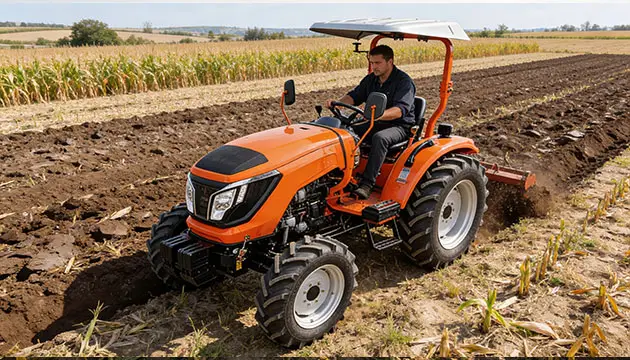
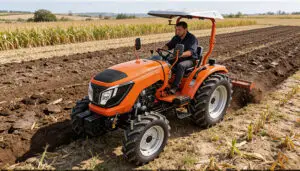
Choosing the wrong tractor horsepower for a vegetable operation is one of the fastest ways to lose money before a single crop reaches market.
That stalled-out moment — mid-pass through a heavy clay subsoil, implement buried, tires spinning — is a nightmare every vegetable grower dreads. It’s also entirely avoidable when you understand the core paradox of vegetable farm power: more isn’t always better, but less is almost always worse. The 60-90HP range is often considered the industry-standard sweet spot for diversified vegetable operations, balancing raw capability with precision and soil health.
Vegetable farming demands a fundamentally different power profile than general homesteading or pasture management. Mowing and light loader work require modest horsepower. Subsoiling compacted layers, pulling a spader through heavy ground, or shaping raised beds with a power harrow are an entirely different category of demand. A grower who sizes down to save on purchase price often discovers that their tractor simply cannot maintain consistent ground speed under load — and inconsistent speed means uneven bed preparation, inconsistent transplant spacing, and wasted inputs across every pass.
Under-sizing is a yield problem, not just a comfort problem. On the other end of the spectrum, over-sizing introduces its own serious risk. Larger tractors carry significantly more weight, and compaction damage to vegetable soils translates directly to reduced yields in root-sensitive crops like carrots, beets, and parsnips. The math cuts both ways.

According to University of Vermont Extension, tractors in the 60HP to 100HP range are the primary workhorse for diversified vegetable operations — powerful enough for primary tillage, yet precise enough for cultivation work. For growers researching the best compact tractor for small farm use that scale commercially, this range consistently outperforms both smaller utility models and larger row-crop machines.
The reason this range works so well goes deeper than raw numbers — and it starts with how vegetable soils behave under a working tractor.
4WD isn’t a luxury on a vegetable farm — it’s the mechanical difference between consistent stands and costly replanting.
Traction loss in tilled soil is a problem that catches many growers off guard when they’re evaluating the best size tractor for vegetable farming. Vegetable ground is typically tilled to a high tilth — a loose, finely broken structure that’s ideal for germination but notoriously unforgiving for drive wheels. In that environment, a 2WD tractor under load behaves more like a spinning top than a working machine. Rear wheels dig in, forward momentum slows, and ground speed becomes erratic.
That last point matters enormously in vegetable production. Consistent ground speed is non-negotiable for transplanting accuracy. Automatic transplanters drop plugs at timed intervals, meaning any hesitation or slippage translates directly into uneven in-row spacing. Uneven spacing wastes inputs, complicates cultivation passes, and ultimately reduces marketable yield.
According to PennState Extension, four-wheel drive is essential for vegetable farms to maintain traction when pulling heavy implements through loose, tilled soil. The front axle doesn’t just assist — it actively pulls the tractor forward while the rear axle pushes, distributing load and dramatically reducing slip. Understanding how horsepower and drive type interact on different implement loads helps clarify why underpowered or 2WD machines struggle as operations scale.
Several common vegetable implements specifically demand 4WD engagement to function correctly:
With those traction demands established, the next question is which horsepower range delivers enough engine output to drive these implements without compromising the agility a vegetable operation requires.
The best all-around tractor for a small farm sits squarely in the 60-90HP range — powerful enough to handle serious field work, compact enough to stay nimble.
As Growing for Market Magazine puts it, “for most small to mid-sized vegetable operations, a tractor with 60 to 90 horsepower provides the ideal balance of power for heavy tillage and the agility needed for tight headquarter turns.” That balance isn’t accidental — it’s the product of matching machine weight, wheelbase, and output to the specific demands of diversified vegetable production.
Agility and traction aren’t opposites in this class — they coexist. A tractor in this range carries enough mass to maintain ground contact during deep tillage passes without the excessive footprint that makes turning at row ends a five-point maneuver. Tight headlands, a constant challenge on smaller acreage, become manageable rather than a daily frustration.
Implement compatibility is another reason this range wins. Standard 6-foot rototillers, flail mowers, and bedding tools are engineered around tractors in this HP class. Undersized machines struggle to maintain consistent PTO RPM under load, which shows up immediately in uneven till depth and ragged seedbeds. A 70HP unit, by contrast, runs these implements in their design envelope — consistently, without lugging.
Hydraulic capacity tells a similar story. Running a toolbar with multiple hydraulic row markers, coulters, or transplanter units demands stable flow. Machines below 50HP often sacrifice RPM to keep the hydraulic circuit pressurized, creating a performance ceiling that becomes apparent fast.
Future-proofing matters most when evaluating long-term machinery decisions — and this is where the gap between a 25HP compact and a 70HP utility tractor becomes a business decision. The smaller machine limits your implement options permanently. A tractor in the 60-90HP class grows with the operation, accommodating expanded acreage, cover crop programs, or additional cash crops without requiring an immediate trade. Understanding total ownership costs across machine classes helps explain why buying for where your farm is heading — not just where it is today — typically delivers better return on investment.
That said, raw horsepower and implement compatibility are only part of the equation. What often goes unexamined is what the tractor’s weight is doing to the ground beneath it — and that cost compounds silently across every growing season.
Machinery choice isn’t just a fuel-cost decision — it’s a yield decision, and the numbers make that point with uncomfortable clarity.
Compaction from heavy machinery may reduce vegetable crop yields significantly due to restricted root growth and poor water infiltration, according to University of Minnesota Extension research. For a market gardener running tight margins, that statistic isn’t an agronomic footnote — it’s the difference between a profitable season and a devastating one.
Restricted root growth is where compaction does its quietest damage. When soil pore spaces collapse under repeated passes, carrot taproots fork, brassica roots struggle to anchor, and pepper plants can’t access the moisture depth they need during dry spells. Surface symptoms show up late — by the time a grower notices stunted plants, the yield loss has already been locked in at the soil level.
This is precisely where power-to-weight ratio becomes a meaningful design spec, not just a brochure talking point. A well-engineered 60-90HP tractor delivers the drawbar pull needed for primary tillage without carrying the dead weight that pushes compaction deeper into the profile. The 60-90HP tractor benefits extend beyond raw horsepower — lighter chassis engineering combined with adequate torque means less ground pressure per pass, which matters cumulatively across an entire growing season.
Tire configuration is the practical lever growers can adjust immediately. Wider, lower-pressure flotation tires spread the machine’s footprint across a larger contact patch, reducing the pounds-per-square-inch transferred to the soil surface. Some operators running raised vegetable beds also use implement ballasting strategies to redistribute weight more evenly across axles.
The right machine protects your soil season after season — and how you source that machine, whether through a local dealer or a factory-direct channel, shapes how much customization you can actually get on those tire and hydraulic specs.
Sourcing factory direct agricultural machinery is reshaping how small vegetable farms control costs — and the shift is accelerating for good reason.
For years, the default path was simple: visit a local dealer, pick from whatever was on the lot, and absorb the markup. That model made sense when logistics were complicated and technical support meant a phone call to a regional rep. Today, the calculus has changed. Manufacturers like Shandong Qilu Industrial integrate pre-sale customization directly into their production workflow, which means farmers can specify hydraulic flow rates, rear hitch configurations, and tire widths suited to raised vegetable beds — before the machine ships. That’s not a luxury reserved for large operations. It’s now table stakes for anyone serious about matching equipment to field conditions.
Getting the right spec from the start eliminates expensive retrofits down the road. For vegetable producers working narrow beds at precise row spacings, a dealer’s standard floor model rarely fits without compromise. Factory-direct sourcing closes that gap. Three practical advantages stand out for SMB farmers:
On the performance question, “value-tier” pricing no longer signals compromised engineering. Modern mid-range tractors from reputable manufacturers routinely meet the duty cycles that vegetable farms demand. Pairing the right power unit with well-matched first-season implements compounds that value further.
As procurement evolves, so does the technology embedded in the machines themselves — and 2025 is bringing some genuinely useful advances to the vegetable farming sector.
Modern tractor technology is moving faster than most growers realize, and the 60–90HP range is where the most practical innovations are landing first.
High-clearance design has become one of the most significant shifts for late-season vegetable production. Machines like the TS6 and the Tilmor 520 cultivating tractor are redefining what precision cultivation looks like for small-scale growers — allowing operators to pass over established crop rows without canopy damage well into the growing season. For growers managing tight row spacing on vegetable beds, that added clearance directly protects revenue that older flat-deck designs simply couldn’t preserve.
Remote-controlled implements are also gaining traction on farms with challenging terrain or highly repetitive cultivation passes. In practice, this reduces operator fatigue on steep slopes or narrow field ends — conditions common in California, the Pacific Northwest, and the mid-Atlantic region. What was once exclusive to large row-crop operations is now filtering into mid-range horsepower categories where vegetable farmers actually work.
Precision GPS integration in modern mid-range tractors is another area separating today’s factory-direct models from yesterday’s bargains. Sub-inch accuracy guidance systems — previously a premium add-on — are increasingly standard or affordable add-ons on current-year builds. Paired with improved diesel engine efficiency, which routinely delivers 10–15% better fuel economy than comparable engines from a decade ago, the operating cost picture shifts meaningfully in favor of newer equipment. Farmers comparing current mid-range tractor options across the leading compact tractor brands will find that fuel savings alone can offset a meaningful portion of the purchase premium over time.
These technology gains aren’t cosmetic — they’re stacking up to real dollars across a season. That context matters as we turn to a common mistake growers make when trying to manage upfront costs.
Buying a used tractor to save money upfront is one of the most common — and costly — mistakes vegetable growers make when scaling their operations.
The real price of a “bargain” tractor isn’t on the sticker; it’s buried in downtime, parts searches, and hydraulic limitations that quietly erode your margins season after season.
Hidden maintenance costs are the first place older units bite back. Legacy machines from well-known brands — even respected names — accumulate wear in ways that aren’t obvious at purchase. Seals, bearings, and injection components on high-hour diesels can cascade into expensive repairs. As Team Tractor notes, diesel engines offer superior torque and longevity for heavy farm work, but only when maintained — and older units often arrive with deferred service histories that transfer directly to you.
Hydraulic flow rates are the second, less-discussed problem. Modern bed-forming, transplanting, and cultivation equipment is engineered around contemporary hydraulic standards. Vintage tractors commonly deliver 8–12 GPM, while current 60–90HP models routinely provide 15–25 GPM. That gap isn’t cosmetic — it affects implement response time, precision, and ultimately your throughput per acre.

Parts availability compounds the risk further. Discontinued models from even major manufacturers can leave growers waiting weeks for imported components during peak season. A snapped hydraulic fitting or a failed PTO seal becomes a harvest-threatening delay when the part sits on backorder.
This is where total cost of ownership (TCO) reframes the decision entirely. A new factory-direct tractor — especially one backed by direct manufacturer support as explored in earlier sections — typically carries lower five-year TCO than a used machine purchased at a $12,000–$18,000 discount. Understanding how compact equipment performs across different working environments reinforces why build quality and support infrastructure matter far beyond the initial transaction.
| Factor | Used Legacy Unit | New Factory-Direct |
|---|---|---|
| Reliability | Variable; history unknown | Warranty-backed; consistent |
| Tech / Hydraulics | Older flow rates; limited compatibility | Modern GPM; implement-ready |
| Price / TCO | Low sticker; high 5-yr cost | Higher upfront; lower long-term |
With this fuller picture of true ownership costs in mind, the next step is translating these insights into a clear purchasing framework for your operation.
Selecting the right tractor for vegetable farming comes down to one principle: buy the machine that earns its keep across every task, every season, without compromise.
The 60–90HP range remains the most versatile investment a vegetable grower can make. It delivers enough torque for deep tillage and bed preparation while staying maneuverable enough for precision cultivation in tight row spacings. Growers who push below this range often find themselves underpowered at critical points in the season — transplanting windows don’t wait, and an undersized tractor creates costly bottlenecks. As explored in earlier sections, the hidden costs of the wrong machine compound quickly.
4WD should be a non-negotiable standard, not an upgrade you weigh against the sticker price. High-tilth vegetable beds — by design — create loose, uneven surface conditions that two-wheel-drive tractors handle poorly. Traction loss mid-row wastes fuel, damages bed structure, and slows your operation when time matters most. According to community discussions among experienced growers, 4WD consistently ranks as the single feature growers wish they had prioritized from the start.
Customization options for bed width matter more than most buyers anticipate. Vegetable operations rarely run a single row configuration — crop rotation, market demand, and planting density all shift throughout the year. A tractor that accommodates adjustable axle widths and variable implement mounting points protects your flexibility. The evolution of tractor capabilities over recent decades has made this kind of adaptability increasingly accessible, even at the factory-direct level.
Finally, long-term value comes from support structures, not just specifications. Warranties and manufacturer-backed technical access reduce your exposure to the repair cost spiral that makes older and underpowered machines so expensive over time. As Shandong Qilu Industrial puts it, industry leadership means committing to “sales, innovation, performance and support” — and for a grower scaling production, that full-package commitment is exactly what separates a sound investment from a liability. The next section explores precisely how that support structure works in practice.
Choosing the right tractor partner matters as much as choosing the right horsepower — and that’s where purpose-built engineering closes the gap between a good harvest and a great one.
Shandong Qilu Industrial offers a range of agricultural tractors from 60HP to 90HP designed to handle diverse terrains and demanding job sites — precisely the sweet spot this article has examined from every angle. That alignment isn’t a coincidence; it’s the result of engineering around how vegetable operations actually work in the field. Whether you’re managing raised beds with tight row spacing, running a bed former ahead of transplanting, or pulling a toolbar cultivator between crop rows, a Qilu machine in this range delivers the torque and footprint balance that protects your soil structure while keeping your schedule on track.
Row spacing customization is one of the most practical advantages Qilu brings to vegetable growers. Standard factory configurations can be adapted for specific bed widths — a detail that matters enormously when your crop layout is fixed and your cultivation passes need to clear canopy without bruising plants. This kind of fit-to-farm flexibility is rarely available through a regional dealer lot, but it’s standard practice when buying factory-direct.
Global support infrastructure removes another barrier that often concerns buyers sourcing equipment internationally. Qilu’s 24-hour technical support means a question raised at 10 p.m. during peak season doesn’t have to wait until the next business day — a real operational advantage when downtime costs more than the repair itself.
The case for the 60–90HP range has been built section by section throughout this article: the right power band, the right implement compatibility, and the right return on capital for mid-scale vegetable production. What remains is taking the next step. Visit qilumachinery.com to request a factory-direct quote and explore customization options matched to your specific operation.
-1.png)