Welcome to Shandong Qilu Industrial Co., Ltd

 English
 Arabic
 Bulgarian
 Bengali
 Czech
Czech
 Danish
 German
 Greek
Greek
 Spanish
 Finnish
 French
 Hindi
Hindi
 Croatian
 Hungarian
 Indonesian
 Italian
 Japanese
 Korean
 Lithuanian
 Dutch
Dutch
 Norwegian
 Polish
 Portuguese
 Romanian
 Russian
 Slovak
 Slovenian
 Swedish
 Thai
Thai
 Turkish
 Ukrainian
 Vietnamese
 Tagalog
 Malay
Malay
 Estonian
 Catalan
 Latvian
 Urdu
Urdu
 Serbian
 Persian
 Swahili
 Albanian
 Armenian
 Icelandic
 Bosnian
 Luxembourgish
 Afrikaans
English Arabic
Bulgarian
Bengali
Czech
Danish
German
Greek
Spanish
Finnish
French
Hindi
Croatian
Hungarian
Indonesian
Italian
Japanese
Korean
Lithuanian
Dutch
Norwegian
Polish
Portuguese
Romanian
Russian
Slovak
Slovenian
Swedish
Thai
Turkish
Ukrainian
Vietnamese
Tagalog
Malay
Estonian
Catalan
Latvian
Urdu
Serbian
Persian
Swahili
Albanian
Armenian
Icelandic
Bosnian
Luxembourgish
Afrikaans
Afrikaans
English Arabic
Bulgarian
Bengali
Czech
Danish
German
Greek
Spanish
Finnish
French
Hindi
Croatian
Hungarian
Indonesian
Italian
Japanese
Korean
Lithuanian
Dutch
Norwegian
Polish
Portuguese
Romanian
Russian
Slovak
Slovenian
Swedish
Thai
Turkish
Ukrainian
Vietnamese
Tagalog
Malay
Estonian
Catalan
Latvian
Urdu
Serbian
Persian
Swahili
Albanian
Armenian
Icelandic
Bosnian
Luxembourgish
Afrikaans
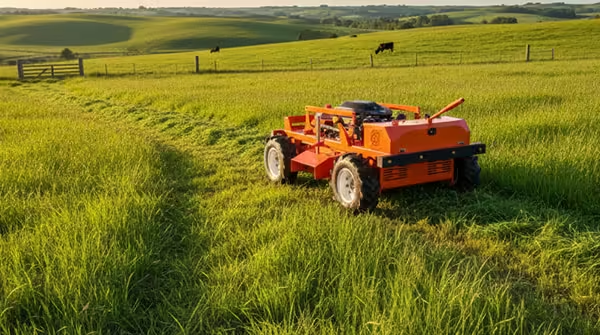
Beyond the Traditional Mower: The Future of Lawn Care Tech
Lawn care technology has crossed a threshold — and the manufacturers that recognize this shift are redefining what a mower can do.
The modern lawn mower’s story stretches back over a century, from hand-pushed reel cutters first popularized in the late 1800s to the gas-powered rotary machines that dominated the 20th century. For decades, innovation was incremental — a slightly more powerful engine here, a wider cutting deck there. But the pace of change today is categorically different. The U.S. lawn mower market is projected to reach $9.79 billion by 2032, growing at a 5.40% CAGR, a signal that consumer demand is accelerating alongside technology.
The shift isn’t just about power — it’s about intelligence. Younger homeowners, particularly Millennials and Gen Z, are pushing the market toward smart home integration, battery-electric platforms, and autonomous operation. They expect their outdoor tools to behave like the rest of their connected devices — responsive, efficient, and low-maintenance. Gas engines and manual adjustments no longer meet that standard.
This is precisely the context in which the QL-R1200 arrives. It isn’t simply a new model from a traditional manufacturer trying to keep pace. It represents the convergence of precision hardware engineering and sophisticated software systems — the kind of dual competency that separates forward-thinking manufacturers from those still iterating on 20th-century blueprints. For context on how earlier robotic platforms set the stage, this comparison of cutting approaches illustrates how quickly the baseline has shifted.
Choosing the right manufacturer today means evaluating more than build quality — it means assessing whether a company genuinely understands both the mechanical demands of turf care and the software architecture that makes autonomous precision possible. That’s the standard the QL-R1200 was built to meet, and the next section examines exactly how its performance holds up.
Why the QL-R1200 is Redefining Performance Standards
The QL-R1200 represents a fundamental shift in what a serious lawn mower manufacturer can deliver — combining surgical cutting precision with structural durability that makes breakdowns a rare exception rather than a recurring frustration.
Cutting efficiency begins at the blade level. The QL-R1200 uses a multi-blade deck configuration engineered to maintain consistent overlap across the entire cutting path. This isn’t just about achieving a clean aesthetic stripe — it’s about cutting uniformity that directly supports turf health. As the University of Kentucky College of Agriculture notes, mowing below the optimum species height restricts root development and makes grass more susceptible to heat and drought damage. The QL-R1200’s height adjustment system holds its calibration across uneven surfaces, reducing the risk of accidental scalping on slopes or transitions between terrain types.
Callout: The QL-R1200’s deck stabilization system actively compensates for terrain changes in real time, keeping blade height consistent even across contoured landscapes — a feature rarely found at this price tier.
Durability engineering reduces long-term maintenance costs significantly. A common frustration with standard zero-turn models is that components — belts, spindles, and deck hardware — wear faster under heavy use. The QL-R1200 addresses this through reinforced spindle housings and commercial-grade belt routing that distributes load more evenly. In practice, this translates to fewer unexpected failures, which is why users searching for reliable options before committing to repairs consistently point to build quality as the deciding factor.
Terrain adaptability sets the QL-R1200 apart from conventional zero-turn designs. Standard zero-turn models excel on flat, open turf but struggle with inclines, wet grass, and transitional surfaces. The QL-R1200’s wider wheelbase and revised weight distribution allow it to handle moderate slopes without the rear-wheel slip that plagues lighter alternatives. For users managing mixed terrain — think turf transitions, drainage slopes, or property edges — this stability isn’t a luxury. It’s a core performance requirement.
Precision engineering, taken together, doesn’t just protect the machine — it protects the lawn itself. That same commitment to output quality naturally raises a broader question: what happens when performance standards intersect with environmental ones?
The Environmental Mandate: Moving Beyond Gas Emissions
Traditional gas-powered mowers carry a pollution cost that most homeowners never see on their monthly bill — but the environment absorbs every bit of it.
According to the U.S. Environmental Protection Agency, a gas-powered lawn mower running for one hour generates as much VOC and nitrogen oxide emissions as 11 new cars running for the same duration. That staggering figure has prompted state legislatures — California most aggressively — to introduce or pass outright bans on the sale of new gas-powered outdoor equipment. Other states are watching closely, and manufacturers who aren’t already pivoting are falling behind.
Modern lawn mower manufacturers are adapting fast, redesigning power systems to meet tightening regulations without sacrificing the torque that professional landscapers and serious homeowners demand. This shift isn’t cosmetic. It’s a fundamental re-engineering of how cutting power gets delivered — moving from combustion to high-efficiency electric drive systems that produce zero direct emissions at the point of use.
The QL-R1200’s power architecture reflects exactly this philosophy. Its battery-driven system delivers sustained torque comparable to gas alternatives while eliminating the ongoing costs — and frustrations — of fuel, oil changes, and carburetor-related lawn mower repair services services calls that sideline traditional equipment mid-season. In practice, operators report cleaner starts, consistent power output across varying grass densities, and dramatically lower maintenance intervals.
Eco-friendly performance used to mean compromise. That’s no longer true. Key environmental advantages modern electric-drive systems offer include:
- Zero direct VOC or nitrogen oxide emissions during operation
- Significantly reduced noise pollution in residential areas
- Lower total lifecycle carbon footprint when charged from renewable sources
- Elimination of fuel storage risks and oil disposal requirements
Understanding efficient mowing techniques amplifies these gains further — because a cleaner machine operated intelligently delivers both environmental and performance dividends. As regulations tighten and consumer expectations evolve, the next logical step involves rethinking not just how mowers are powered, but whether they need a human operator at all.
The Rise of Autonomous Mowing and Robotic Technology
Robotic mowing is no longer a novelty — it’s the fastest-growing product segment in lawn care, reshaping how homeowners and professionals approach yard maintenance. According to Mordor Intelligence, the robotic lawn mower market is projected to grow at a compound annual growth rate of 18.4% through 2031, a figure that reflects genuine demand rather than hype.
The labor shortage is accelerating this shift. The landscaping industry has struggled for years to recruit and retain seasonal workers, and rising labor costs make traditional mowing crews increasingly expensive. Autonomous mowers solve this directly — a robotic unit can complete a routine mowing cycle overnight, unsupervised, freeing human workers for higher-skill tasks like edging, pruning, and client consultations. In practice, a property that once required two crew hours per visit can often be maintained with a fraction of that manual commitment when automation handles the base mowing.
Smart mowers differ from conventional walk-behinds in more ways than just power source. Where a traditional mower demands constant operator input — direction, speed, overlap management — a smart mower uses GPS boundary mapping, sensors, and onboard algorithms to navigate independently. Wire-free models equipped with LiDAR navigation take this further, handling complex yard layouts without physical perimeter cables. The result is consistent cut quality regardless of operator experience.
The QL-R1200 is designed with this workflow reality in mind. Property managers who shopping for lawn mowers at this performance tier expect seamless scheduling integration, remote monitoring, and low-intervention operation across large lots. The QL-R1200’s smart connectivity features align directly with those expectations, making it a practical fit for modern multi-property operations rather than a single-home novelty.
What makes this technology compelling isn’t just convenience — it’s consistency. And as we’ll explore next, where and how a mower is built has everything to do with whether that consistency holds over years of real-world use.
Decoding Manufacturing: Are Modern Mowers Still Made in the USA?
Where a mower is built — and by whose standards — shapes everything from blade durability to long-term reliability in ways most buyers don’t consider until something breaks.
American lawn care manufacturing has a longer history than most people realize. American Lawn Mower Co has been a staple of the industry since 1895, building its reputation on reel mower technology that prioritized mechanical simplicity and longevity. That legacy set a benchmark for domestic production: tightly controlled tolerances, accessible parts, and machines built to outlast a few seasons of hard use.
Fast forward to today, and the landscape is far more complicated. When homeowners search for local lawn mower companies, they’re often surprised to discover that many heritage American brands have shifted significant portions of their manufacturing overseas — or rely on globally sourced components even when final assembly happens stateside. A common question that surfaces in product forums is whether Ariens mowers are still made in the USA. Ariens does maintain domestic assembly operations in Brillion, Wisconsin, but like most large manufacturers, its supply chain pulls components from multiple countries. That’s neither unusual nor inherently problematic — but it does mean “made in America” requires careful reading of the fine print.
Global supply chains create both opportunity and risk. Standardized international components can reduce cost, but they can also introduce inconsistencies in tolerances and material quality if oversight is weak. In practice, what separates a well-built machine from a mediocre one isn’t geography alone — it’s the manufacturing specification enforced at every stage.
This is where Qilu Machinery’s approach stands apart. Rather than competing on price through material compromises, Qilu focuses on high-spec manufacturing standards that prioritize structural integrity and consistent performance. If you’re comparing robotic and traditional options side by side, build quality — not brand origin — is the metric that matters most.
“The question isn’t where a mower is made — it’s whether the manufacturer holds every component to a standard that performs under real-world conditions.”
That standard also has direct implications for how long your equipment stays out of the repair shop — a topic worth examining closely.
Maintenance and Longevity: Reducing Your Repair Burden
Better engineering doesn’t just improve performance — it directly reduces how often a machine pulls you away from your yard and toward a repair shop.
The machines that fail least are the ones built with failure in mind from the start. Traditional mowers carry well-documented weak points: deck corrosion, carburetor buildup, worn drive belts, and blade spindle failures that compound over time. Homeowners searching “lawn mower repair services services near me” on a Saturday morning know this frustration firsthand. Legacy designs, including those tracing back to the era of the American Lawn Mower Company established in 1895, established mechanical frameworks that modern budget mowers still echo — and still break down in the same predictable ways.
Build quality is where next-generation machines like the QL-R1200 create measurable separation. Reinforced cutting decks, brushless motor architecture, and weather-resistant enclosures reduce the core failure points that send traditional mowers into the shop after two or three seasons. Brushless motors, in particular, eliminate the carbon brush wear that degrades conventional motors over time — a quiet but significant engineering upgrade that translates directly into fewer service interruptions.
Part accessibility matters just as much as build quality. A machine is only as reliable as its support ecosystem. Manufacturers who publish clear parts diagrams, maintain stocked replacement inventories, and offer responsive technical support give owners a practical path to self-service repairs — keeping downtime short when something does eventually need attention. You can review how different mower types handle long-term upkeep to see where autonomous designs hold a structural advantage.
Proactive maintenance remains the most cost-effective insurance for any high-performance machine. Blade inspections, sensor cleaning, and scheduled software updates catch small issues before they compound. As A.J. Powell Jr., Extension Turf Specialist, notes, scalping a lawn by removing too much top growth at once can stop root growth entirely — a reminder that cutting height settings and blade condition directly affect both turf health and machine stress. These practical upkeep habits keep equipment running at peak efficiency season after season.
Understanding build quality and maintenance protocols is foundational — but knowing how to apply that knowledge when you’re standing in a showroom or browsing spec sheets is where smart buying decisions actually get made.
How to Shop for Lawn Mowers in a Saturated Market
Shopping for a mower today means filtering through hundreds of models, competing spec sheets, and marketing claims that rarely tell the whole story.
The brand name on the deck matters far less than the engineering underneath it. When evaluating any professional-grade mower, focus on these criteria before you commit:
- Engine emissions compliance — Traditional garden equipment engines often operate without the strict emissions regulations applied to the automotive industry, according to the U.S. EPA. Models with cleaner combustion technology signal better long-term engineering discipline.
- Cutting system design — Blade tip speed, deck airflow, and discharge management determine actual cut quality, not horsepower ratings alone.
- Drivetrain transparency — A manufacturer willing to publish torque curves and transmission specs is one confident in its product.
- Parts availability and service network — Impressive specs mean nothing if replacement components take six weeks to arrive.
Platform trade-offs shape your real-world experience. Zero-turn models offer speed on open terrain but demand operator skill on slopes. Walk-behinds remain the most versatile option for irregular residential lots. Autonomous mowers, meanwhile, solve the time problem entirely — and remote-controlled mowing technology is maturing faster than most consumers realize.
One important caveat worth noting: local lawn mower companies near you may stock a reliable but narrow selection, often weighted toward established lines rather than newer tech-forward designs. Questions like “are Ariens mowers made in the USA” reflect a smart instinct to dig into origin and manufacturing standards — apply that same scrutiny to every brand you consider.
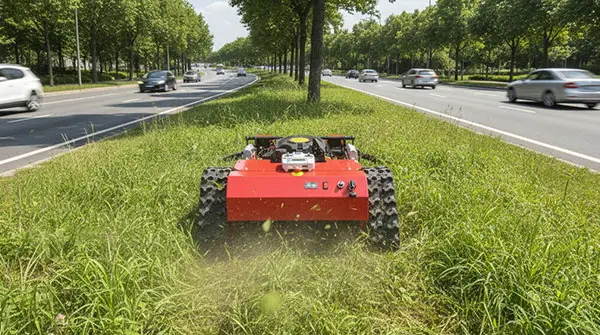
When vetting technical specifications, cross-reference the manufacturer’s published data against independent dealer documentation. Models like those built for efficiency on uneven terrain demonstrate how transparent spec-to-performance alignment separates genuine innovation from glossy packaging. With these filters in place, the decision ahead becomes considerably clearer.
The Bottom Line: What You Need to Know
The next generation of lawn care is defined by efficiency, automation, and smarter engineering — and the equipment you choose determines how well you keep up.
As covered throughout this article, the decisions you make at the point of purchase ripple outward for years. Choosing a tech-forward manufacturer isn’t just a preference — it’s a long-term financial strategy. Machines built with brushless motors, precision cutting systems, and durable construction handle more demanding conditions while requiring fewer repairs over time. That math becomes especially clear when labor rates and parts costs continue to climb.
Automation is increasingly central to that equation. According to Mordor Intelligence, the adoption of autonomous mowing technology is accelerating directly because of labor shortages in the landscaping sector — a structural problem that isn’t going away. The QL-R1200 is engineered specifically for this reality: high-efficiency, low-emission performance that reduces dependence on manual operation without sacrificing cut quality.
Proper mowing height remains one of the most underrated variables in lawn health. Research consistently shows that cutting too short stresses root systems and reduces drought resistance — a concern that grows more relevant as climate patterns shift. Equipment that offers precise, adjustable height settings gives you direct control over one of the most impactful factors in long-term turf health.
Here’s what this section distills down to:
- The QL-R1200 is built for high-efficiency, low-emission performance suited to modern lawn demands.
- Automation addresses labor shortages by reducing manual dependency without sacrificing results.
- Mowing height directly affects root depth and how well your lawn survives drought conditions.
- Tech-forward equipment from manufacturers with proven engineering cuts long-term costs by minimizing repair frequency.
Still have questions about specific models, manufacturing origins, or how autonomous mowers stack up against traditional zero-turns? The next section addresses the most common ones directly.
Frequently Asked Questions About Modern Lawn Care
Choosing the right mower raises practical questions that go beyond spec sheets — here are clear, direct answers to the ones homeowners ask most.
Are Ariens mowers manufactured in the USA?
Yes. Ariens is headquartered in Brillion, Wisconsin, and manufactures its zero-turn mowers and snow blowers domestically. For buyers who prioritize American-made equipment, that manufacturing footprint is a meaningful differentiator worth factoring into a purchase decision.
What brands does Ariens make?
Ariens operates two primary consumer-facing brands: Ariens and Gravely. The Ariens line targets residential users who want reliability without commercial complexity, while Gravely is engineered for heavier-duty applications — including commercial landscaping and large acreage. Both brands share core engineering DNA but are positioned for different performance tiers.
How does the QL-R1200 compare to traditional zero-turn mowers?
The gap is significant. Where conventional zero-turns demand an operator on-board, the QL-R1200 is built around remote-controlled operation — reducing physical strain and eliminating operator fatigue on long mowing sessions. A deeper breakdown is available in this direct QL-R1200 versus traditional mowers comparison. The short answer: the QL-R1200 delivers comparable cutting performance with meaningfully lower labor input, which is exactly what the next generation of lawn care demands.
Where can I find reliable lawn mower repair services services?
Start with the manufacturer’s certified dealer network — both Ariens and Gravely publish dealer locators on their websites. For general maintenance guidance before a repair bill arrives, resources like the Lawn Care Is Too Much Work? video walk through upkeep basics that can extend the life of almost any mower.
The right equipment — maintained well and matched to your property — is still the foundation of efficient lawn care.